
Tag: decarbonisation

What can be made from captured carbon?

The combination of a heatwave and an entertaining world cup campaign put big demands on Great Britain’s beer supplies this summer. But European-wide carbon dioxide (CO2) shortages put a hold on that celebratory atmosphere as word spread that a lack of bubbles could result in the country running out of beer.

The drinks business managed to hold out, but the threat of long term CO2 shortages still lingers over the continent. One possible – and surprising – solution could lie in electricity generation, thanks to the capturing and storing of its carbon emissions.

Carbon capture and storage (CCS) is one of the key technologies in need of development to allow nations to meet their Paris Agreement goals. It has the potential to stop massive amounts of emissions entering the atmosphere, but it also raises the question: what happens to all that carbon once it’s captured?

Drax recently met with the British Beer & Pub Association to discuss using some of the carbon it plans to capture in its upcoming trial of Bioenergy Carbon Capture and Storage (BECCS) to keep the fizz in drinks.

It’s a novel solution to a potential problem, but it’s just one of the many emerging possibilities being developed around the world.

Smarter sneakers

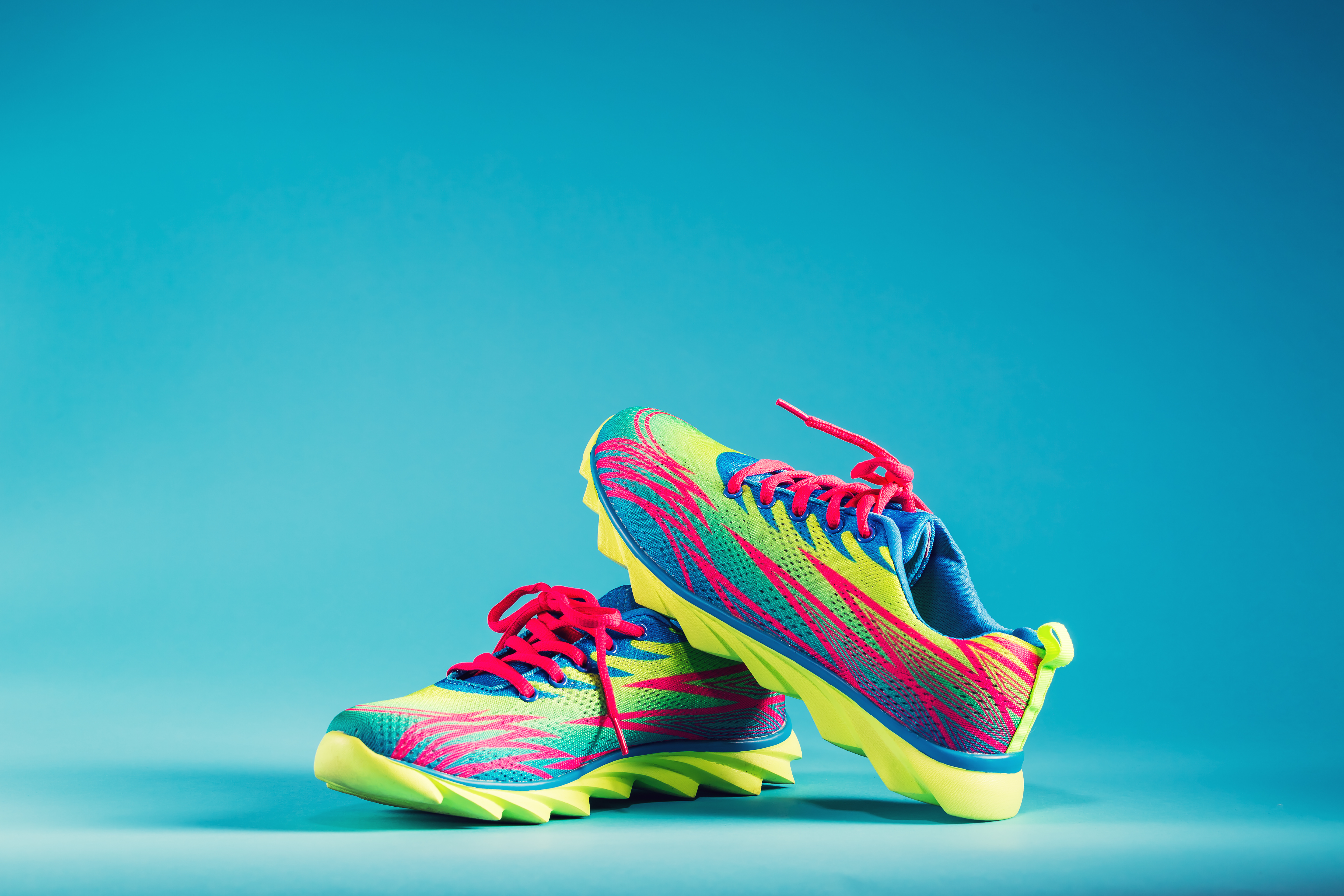
Carbon capture is all about reducing carbon footprints – a phrase energy company NRG interpreted quite literally by creating ‘The Shoe Without A Footprint’. The white trainer was created to showcase the abilities of carbon capture, use and storage (CCuS) and is made of 75% material produced from captured emissions that have been turned into polymers, a molecular structure similar to plastics.

Only five pairs of the sneakers were created as part of NRG’s Carbon XPrize competition to find uses for captured carbon. However, they remain symbolic of the versatility offered by captured and stored carbon and its potential to contribute to the manufacture of everyday objects.

Better furniture

Finding an alternative to plastics is one of the key ways of facilitating a move away from global dependencies on crude oil. Sustainable materials company Newlight uses captured CO2 or methane emissions to create a bioplastic called AirCarbon –  a thermopolymer, which means it can be melted down and reshaped.

The company has teamed up with IKEA, which will buy 50% of the 23,000 tonnes of bioplastic Newlight’s plant produces per year. It’s part of the Swedish furniture giant’s efforts to increase the amount of recycled materials it uses and means upcycled carbon could soon be appearing in millions of homes around the world.

Cleaner concrete

If the shoes people walk around on can be made from captured carbon, so too can the cities they walk within. Making concrete is a notoriously dirty process. Cement, the main binding agent in concrete, is thought to contribute to as much as 5% of the world’s greenhouse gas emissions, but this could change thanks to clever use and implementation of carbon capture technology.

At one level, CCS can be introduced to capture emissions from the manufacturing process. On another, the CO2 captured can be used as a raw material from which to create the concrete, effectively ‘locking in’ carbon and storing it for the long term.

Teams of engineers, material scientists and economists at UCLA who have worked on the problem for 30 years have succeeded in creating construction materials from CO2 emissions in lab conditions using 3D printing technology. Now it’s just a matter of scaling it up to industrial usage.

A metal alternative

Carbon nanotubes are stronger than steel but lighter than aluminium, which makes them a hugely useful material. They’re currently used in jets, sports cars and even in industrial structures, but producing them can be expensive and, until recently, could not utilise CO2 for manufacture. A team from George Washington University is changing that.

Its C2CNT technology splits captured CO2 into oxygen and carbon in a molten carbonate bath using electrolysis. From here the carbon is repurposed into carbon nanotubes at a high rate and lower cost than previous methods.

Future fuels

Transportation is one of the major emitters of carbon around the world, so any way it can be reduced or re-used in this field will be a huge positive. Carbon recycling company LanzaTech has developed a way to do this via a process that uses anaerobic bacteria to ferment emissions into cleaner chemicals and fuels.

Its first facility, opening this year in China, will create fuel-grade bioethanol that can be blended with gasoline to create vehicle fuel, or even converted into jet fuel with 65% lower greenhouse gas emissions.

Aviation, too, can benefit from carbon recycling through the creation of synthetic crude oil and gas using CO2. Technology company Sunfire is developing processes that combine hydrogen (set to become a major part of industry and transport) and biogenic CO2, (emissions from natural sources), to create synthetic hydrocarbons that could fuel planes.

From Silicon Valley to Valles Marineris

Earth isn’t the only place humans are innovating around carbon capture – at least, right now. With the race to send men and women to Mars stepping up, the challenges of dealing with its inhospitable atmosphere (which is 95% CO2) and ensuring a minimal human impact to the planet are becoming more acute. Carbon capture and use presents an opportunity to tackle both.

Californian company Opus 12 has developed a device that recycles CO2 from ambient air and industrial emissions and turns it into fuels and chemicals using only electricity and water. The device has the CO2 conversion power of 37,000 trees (or 64 football fields of dense forest) packed into the volume of a suitcase, and can convert CO2 into 16 different products.
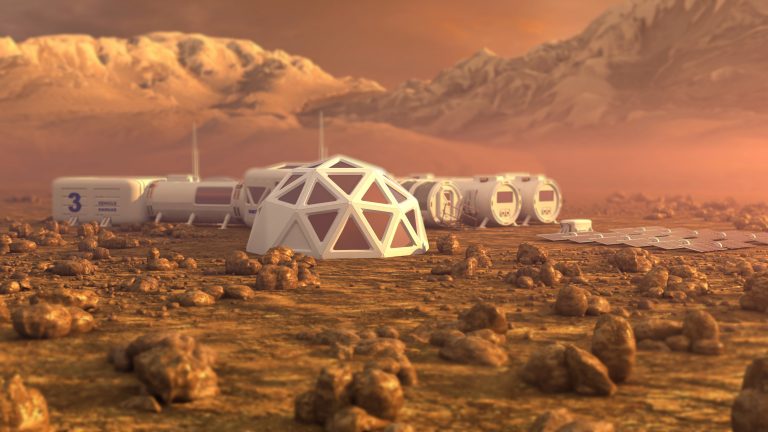
In the long-term, the technology might provide critical services for human colonies on the Red Planet by capturing and using CO2 from the atmosphere or any future Mars-based factories. The Opus 12 device can also use ice (buried on the planet in places that could be accessible to astronauts) to convert Mars CO2 into plastic to make bricks and tools, methane that can form rocket fuel, and feedstocks for microbes to create medicine or food.

Turning pollution into possibilities

Many of these technologies are in their infancy, but the possibilities they present are very real. In fact, Drax’s upcoming trial of BECCS will see it capture and store as much as a tonne of carbon every day.

The proliferation of this technology in industry and electricity production – and the resultant increase in captured carbon – will help encourage more companies to see CO2 emissions as an opportunity for revenue while helping countries meet their Paris Agreement emissions goals.

Learn more about carbon capture, usage and storage in our series:

Joined at the volts: what role will interconnectors play in Great Britain’s electricity future?

For more than 50 years Great Britain has been electrically connected to Europe. The first under-sea interconnector between British shores and the continent was installed in 1961 and could transmit 160 megawatts (MW) of power. Today there is 4 gigawatts (GW) in interconnector capacity between Great Britain, France, Ireland and the Netherlands – and there’s more on the way.

By the mid-2020s some estimates suggest interconnector capacity will reach 18 GW thanks to new connections with Germany, Denmark and Norway. The government expects imports to account for 22% of electricity supply by 2025, up from 6% in 2017.

This increased connectivity is often held up as a means of securing electricity supply and while this is largely true, it doesn’t tell the full story.

In fact, this plan could risk creating a dependency on imported electricity at a time when flexibility and diversity of power sources are key to meeting demand in an increasingly decentralised, decarbonising system.

Great Britain needs to be connected and have a close relationship with its European neighbours, but this should not come at the expense of its power supply, power price or ongoing decarbonisation efforts. Yet these are all at risk with too great a reliance on interconnection.

To secure a long term, stable power system tomorrow, these issues need to be addressed today.

Unfair advantage

At their simplest, interconnectors are good for the power system. They connect the relatively small British Isles to a significant network of electricity generators and consumers. This is good for both helping secure supply and for broadening the market for domestic power, but the system in which interconnectors operate isn’t working.

Since 2015 interconnectors have had the right to bid against domestic generators in the government’s capacity market auctions.

The government uses these auctions to award contracts to generators that can provide electricity to the grid through existing or proposed facilities. The original intention was also to allow foreign generators to participate. As an interim step, the transmission equipment used to supply foreign generators’ power into the GB market – interconnectors – have been allowed to take part. In practice, interconnectors end up with an economic advantage over other electricity producers.

Firstly, interconnectors are not required to pay to use the national transmission system like domestic generators are. This charge is paid to National Grid to cover the cost of installation and maintenance of the substations, pylons, poles and cables that make up the transmission network. Plus the cost of system support services keeping the grid stable. Interconnectors are exempt from paying these despite the fact imported electricity must be transported and balanced within England, Scotland and Wales in the same way as domestic electricity.

Secondly, interconnectors don’t pay carbon tax in the GB energy market. The Carbon Price Floor is one of the cornerstones of Great Britain’s decarbonisation efforts and has enabled the country’s electricity system to become the seventh least carbon-intense of the world’s most power intensive systems in 2016, up from 20th in 2012.

Interconnectors themselves do not emit carbon dioxide (CO2) in Great Britain, but this does not mean they are emission-free. France’s baseload electricity comes largely from its low-carbon nuclear fleet, but the Netherlands and Ireland are still largely dependent on fossil fuels for power. Because the European grid is so interconnected even countries which don’t yet have a direct link to Great Britain, such as Germany with its high carbon lignite power stations, also contribute to the European grid’s supply. The Neuconnect link is planned to connect Germany and GB in the late 2020s.

Not being subject to the UK’s carbon tax – only to the European Union’s Emissions Trading System (EU ETS) which puts a much lower price on CO2 – imported power can be offered cheaper than domestic, lower-carbon power. This not only puts Great Britain at risk of importing higher carbon electricity in some cases, but also exporting carbon emissions to our neighbours when their power price is higher to that in the GB market..

This prevents domestic generators from winning contracts to add capacity or develop new projects that would secure a longer-term, stable future for Great Britain. In fact, introducing more interconnectivity could in some cases end up leading to supply shortages, be they natural or market induced.

Under peak pressure

The contracts awarded to interconnectors in the capacity market auctions treat purchased electricity as guaranteed. But, any power station can break down – any intermittent renewable can stop generating at short notice. Supply from neighbouring countries is just the same.

Research by Aurora found that historically, interconnectors have often delivered less power than the system operator assumed they would and on occasion exported power at times of peak demand. This happened recently during the Beast of the East, when low temperatures across the continent drove electricity demand soaring.

This European-wide cold spell meant Ireland and France (which has a largely electrified heating system) experienced huge electricity demand spikes, driving power prices up.

As a result, for much of the time between 27 and 28 February Great Britain exported electricity to France to capitalise on its high prices. This not only led to more fossil fuels being burned domestically, but it meant less power was available domestically at a time when our own demand was exceptionally high. Even when the interconnectors do flow in our direction they cannot provide crucial grid services like inertia so our large thermal power stations are often still needed.

It is difficult to say for certain how interconnectors will function during times of high demand in the future due to a lack of long-term data, but that which we do know and have seen suggests they don’t always play to the country’s best interests.

There is still an important role for interconnectors on the Great Britain grid, but to deliver genuine value the system needs to be fairer so they don’t skew the market.

Where interconnectors fit into the future

Interconnectors bring multiple benefits to our power system. They can help with security of supply by bringing in more power at times of systems stress, with the right system in place they can help reduce the need to rely on domestic fossil fuels and enable more renewable installation, and if electricity is being generated cheaper abroad, they can also create opportunities to reduce costs for consumers.

However, the correct framework must be put in place for interconnectors to bring such benefits while allowing for domestic projects that can help secure the country’s electricity supply.

As a start, interconnectors should be reclassified – known as de-rating – to compete with technologies on an equal footing.

Drax’s proposed OCGT plants, which can very quickly start up and provide the grid with the power and balancing services it needs, before switching off again, could offer a more reliable route to grid stability than such overwhelming dependence on interconnectors will. In addition, the coal-to-gas and battery plans at Drax Power Station, would prove to be a highly flexible national asset.

New gas and interconnectors should be able to compete fairly with one another. Policymakers should facilitate a system that allows competing technologies to exist in a cost beneficial way. Both interconnectors and domestic thermal power generators can play their part in creating stability, transitioning towards a decarbonised economy and fitting within the UK’s industrial strategy.

In 1961, when the first interconnector was switched on it marked a new age of continental co-operation. Five decades on we should not forget this goal. In an ever more complex grid, what we need is different technologies, systems and countries working together to achieve a flexible, stable and cleaner power system for everyone.

Europe’s kicking its coal habit

From Roman mines to the fuel behind the continent-wide industrial revolution, Europe has a long history with coal. But with reducing carbon and other greenhouse gas emissions, now firmly on the global agenda, Europe’s love for coal is rapidly declining.

Collectively, the EU aims for renewable sources to account for 20% of gross final energy consumption by 2020 and 27% by 2030. Countries in and outside the EU, as well as businesses and organisations, are setting ambitious targets to phase out coal as part of the UK and Canada-led Powering Past Coal Alliance, which Drax recently signed up to.

European CountriesCoal-free date
(according to Europe Beyond Coal *updated September 2020*)
Austria 🇦🇹 2020
France 🇫🇷 2022
Portugal 🇵🇹2023
UK 🇬🇧2024
Ireland 🇮🇪 Italy 🇮🇹 2025
Greece 🇬🇷2028
Finland 🇫🇮 Netherlands 🇳🇱 2029
Denmark 🇩🇰 Hungary 🇭🇺 Portugal 🇵🇹2030
Germany 🇩🇪2038
Czech Republic 🇨🇿 Spain 🇪🇸Phase out under discussion
Bosnia Herzegovina🇧🇦 Bulgaria 🇧🇬 Croatia 🇭🇷 Kosovo🇽🇰Montenegro 🇲🇪 Poland 🇵🇱 Romania🇷🇴Serbia🇷🇸 Slovakia 🇸🇰Slovenia 🇸🇮 Spain 🇪🇸 Turkey 🇹🇷No phase out date
Belgium 🇧🇪 Cyprus 🇨🇾 Estonia 🇪🇪 Iceland 🇮🇸 Latvia 🇱🇻 Lithuania 🇱🇹 Luxembourg 🇱🇺 Malta 🇲🇹 Norway 🇳🇴 Sweden 🇸🇪Switzerland 🇨🇭No coal in electricity mix

This movement is not only being fuelled by an increased capacity in wind and solar generation, but also by other low-carbon energy sources enabling countries to kick their coal habits.

Aiming for 100% renewable

As myth after myth is dispelled about renewables, there are countries proving it is possible to power a modern developed nation entirely through renewable energy sources.

Up in the northern-most reaches of Europe, Iceland already generates all its electricity from renewable sources. This is split between 75% hydropower and 25% geothermal power. Geothermal not only offers a renewable source of electricity but also hot water for heating the volcanic island nation.

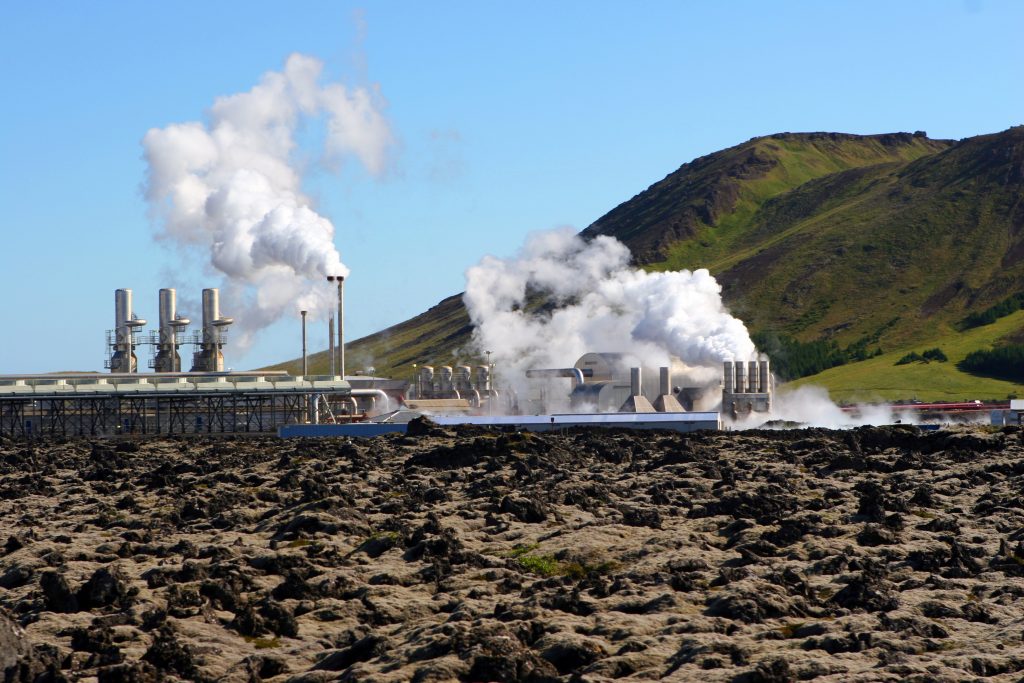
A geothermal power station steams on a cold day in Iceland

Hydropower is also a key contributor to Norway’s renewable ambitions. With more than 31 gigawatts (GW) of installed hydropower capacity, Norway is able to rely on it as a source of electricity and export its plentiful oil and natural gas reserves to countries still dependent on fossil fuels.

Many parts of Europe are well suited to hydropower, with reliable rainfall and the mountainous topography necessary to construct dams and power stations. Parts of Austria, Romania and Georgia also make substantial use of hydropower as a source of electricity.

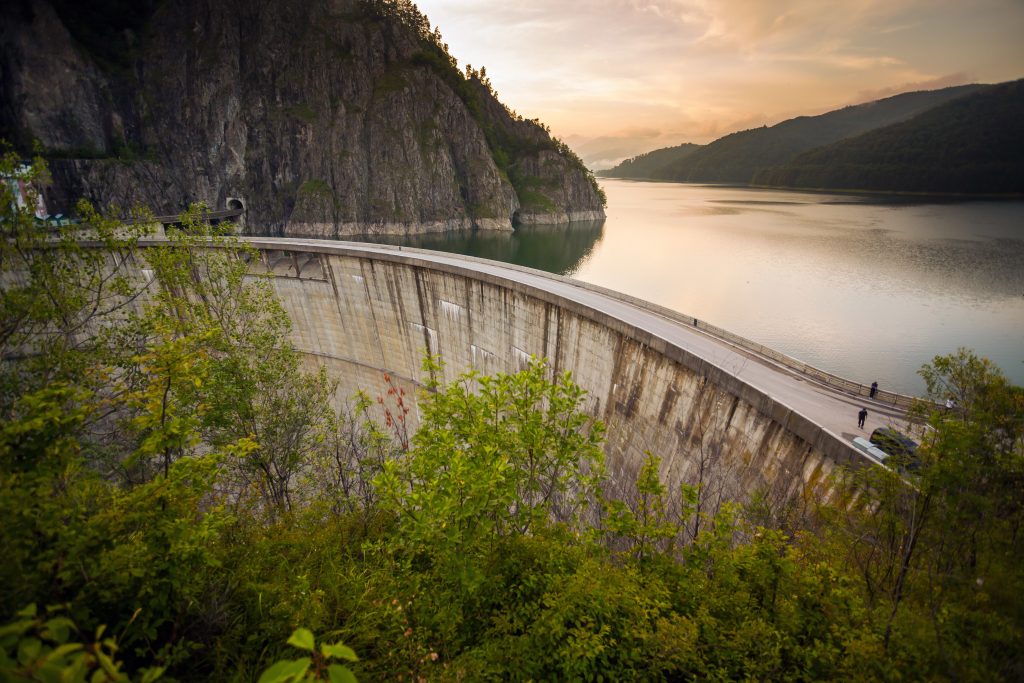
Artificial Lake behind the Bicaz Dam at sunset, Romania

For countries without this access to large-scale hydropower, it’s the increased installation of renewables that holds the key to eliminating the need for coal.

Growing renewable generation

Last year saw electricity generation from renewable sources overtake that from coal for the first time thanks to continuous expansion of wind, solar and biomass capacity around the continent.

Between 2010 and 2017, generation from wind, solar and biomass installations in EU countries more than doubled from 302 terawatt hours (TWh) to 670 TWh, according to Eurostat, driven primarily by an increase in wind capacity. As a source of renewable electricity wind has already proved capable of generating major portions of a country’s demand –managing to meet 44% of Denmark’s overall demand in 2017. This was after previously producing a 40% electricity surplus one day for the country, allowing it to export the emission-free electricity to neighbours.

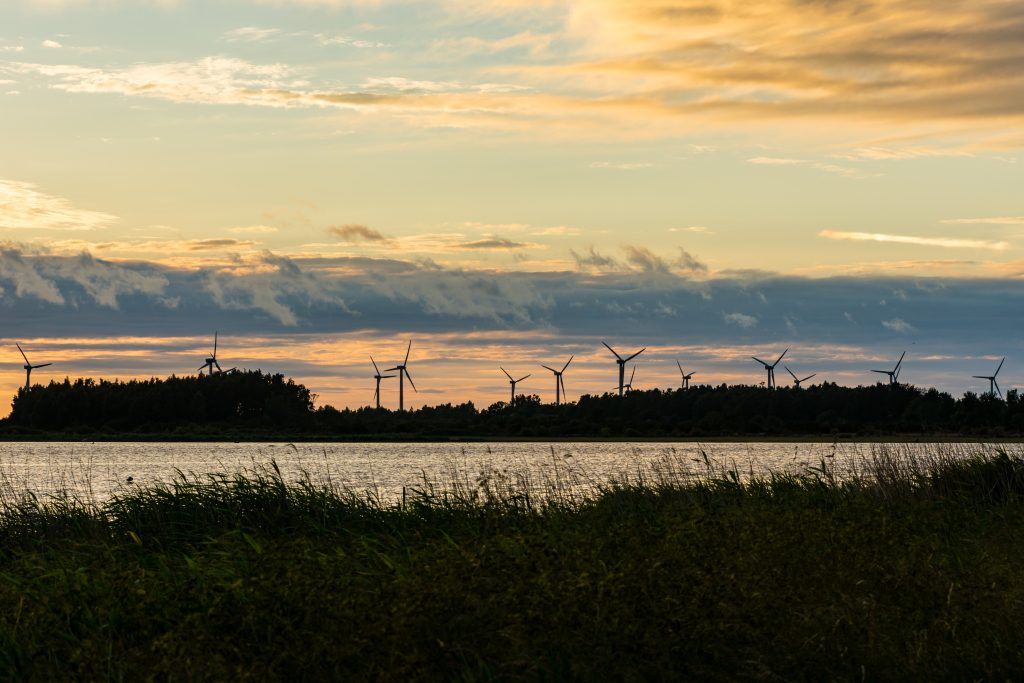
Wind turbines on the east coast of Sweden

Across the EU, generation from wind more than doubled from 150 TWh to 364 TWh from 2010 to last year, while solar generation grew five times from 23 TWh to 119 TWh and biomass jumped from 129 TWh to 196 TWh. By contrast, coal and lignite fell from 818 TWh to 669 TWh.

These renewable electricity sources, along with hydropower, now account for 30% of EU countries’ collective electricity generation. And while coal generation continues to drop, other low carbon energy sources, particularly nuclear, still play essential roles in many European energy systems.

From coal to low carbon

Sweden is one of the leaders in renewable electricity generation, setting 2040 as the date to move to totally renewable energy. However, while it currently counts 6.5 GW of wind capacity installed and has already exceeded its 2020 renewable generation goals, the country’s 10 nuclear reactors still make up 40% of its electricity output. Sweden aims to phase-nuclear out of its energy mix, but this will force it to import more power from neighbours to meet demand.

France is even more dependent, with nuclear making up 75% of its electricity production and earning more than €3 billion a year for the country in exports. It aims to reduce its nuclear generation to 50% with president Emmanuel Macron claiming continued nuclear generation offers “the most carbon-free way to produce electricity with renewables.”

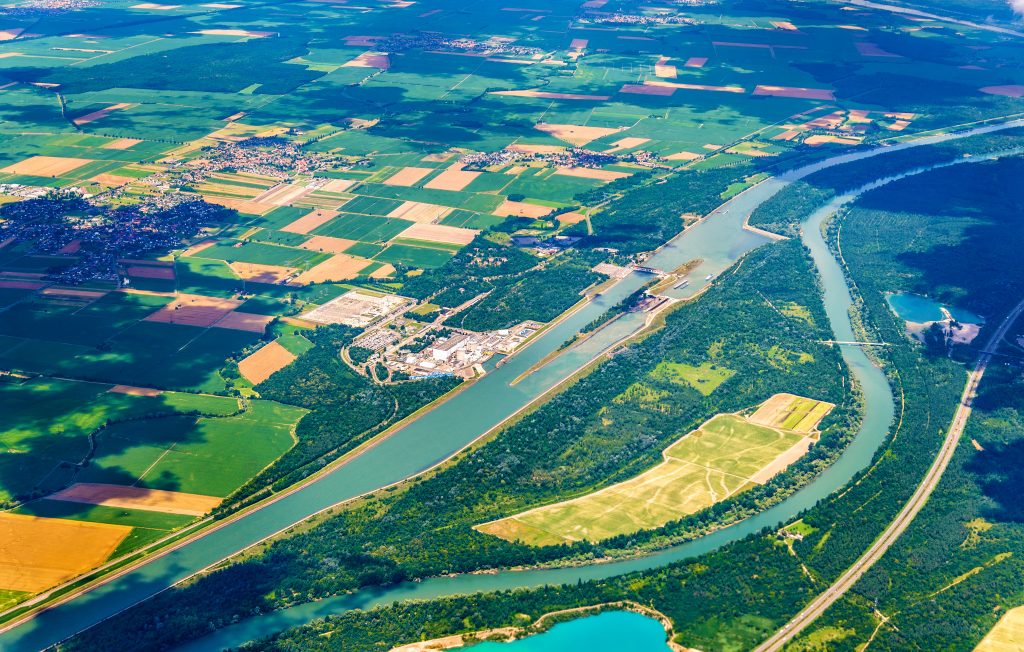
Fessenheim Nuclear and Hydroelectric Power Plants in Alsace, France

As a reliable and low-carbon source of electricity, the most modern nuclear power stations add a certain amount of flexibility to grids enabling greater adoption of intermittent renewable sources. Across the EU nuclear made up a quarter of electricity generation in 2017.

Gas in the transition

Much more flexible than nuclear, gas plays an essential role in many countries. It accounted for 19% of electricity generation in the EU last year and produces around half the CO2 and just one tenth of the air pollutants of coal. Gas turbines can begin generating electricity at full power in just 30 minutes from a cold start, or 10 minutes from warm standby, allowing it to plug any gaps in demand left by intermittent renewables. Its ability to provide many system services such as reserve power and frequency response will see it play an important transition role over the coming decades, until cleaner technologies are able to take over.

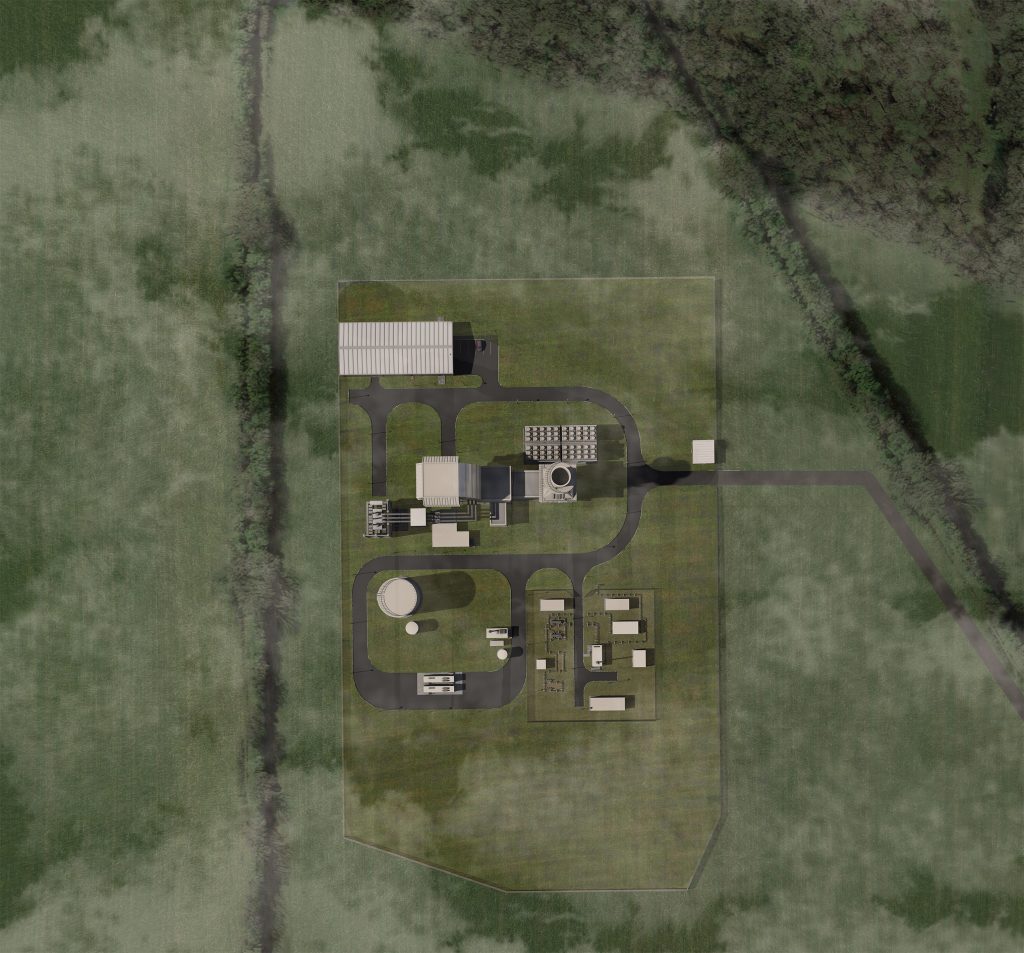
Artist’s impression of a Drax rapid-response gas power station (OCGT) with planning permission

Coal is not gone yet, making up 11% of EU’s electricity generation in 2017, but the momentum behind decarbonisation is keeping Europe on track to meet its ambitious emissions target and take the final step away from coal.

The electric transport revolution

With rapid technological improvements and falls in battery prices, improving performance and reducing the cost, experts predict that by 2050, 90% of new-build cars will be powered by electricity.

However, it’s not only roads where transport is decarbonising; electricity may soon power more of the world’s trains, plus its planes and boats.

Taking trains forward

The electrification of the rail industry has arguably been in the making for a lot longer than EVs but there’s still progress to be made. Trains are already one of the most-efficient modes of long-distance transport, and Network Rail claims electric models’ carbon emissions are 20% to 35% lower than diesel trains. Electric trains also accelerate and brake faster than diesel-powered models, and cause less wear to tracks.

Electrified trains are already commonplace in many parts of the world – Japan’s famously fast and reliable Shinkansen railways are electric. Meanwhile in the UK, less than 50% of the rail network is electrified, with Transport Secretary Chris Grayling’s recent ‘pause’ on development casting doubts on previous ambitious plans to electrify 850-miles of track.

Nevertheless, advancements are still being made to enable the sector to utilise solar energy as an alternative to the national power grid. The concept would prove cost effective and reduce the carbon footprint of trains even further.

According to a report by climate change charity 10:10 and researchers at Imperial College’s Energy Futures Lab, rail companies could cut their annual running costs by millions of pounds through installing their own trackside solar panels to power electric trains directly. With companies spending around £500 million a year on power, the savings on self-generation would enable them to cut fares for passengers, as well as emissions.

Take off for electric planes

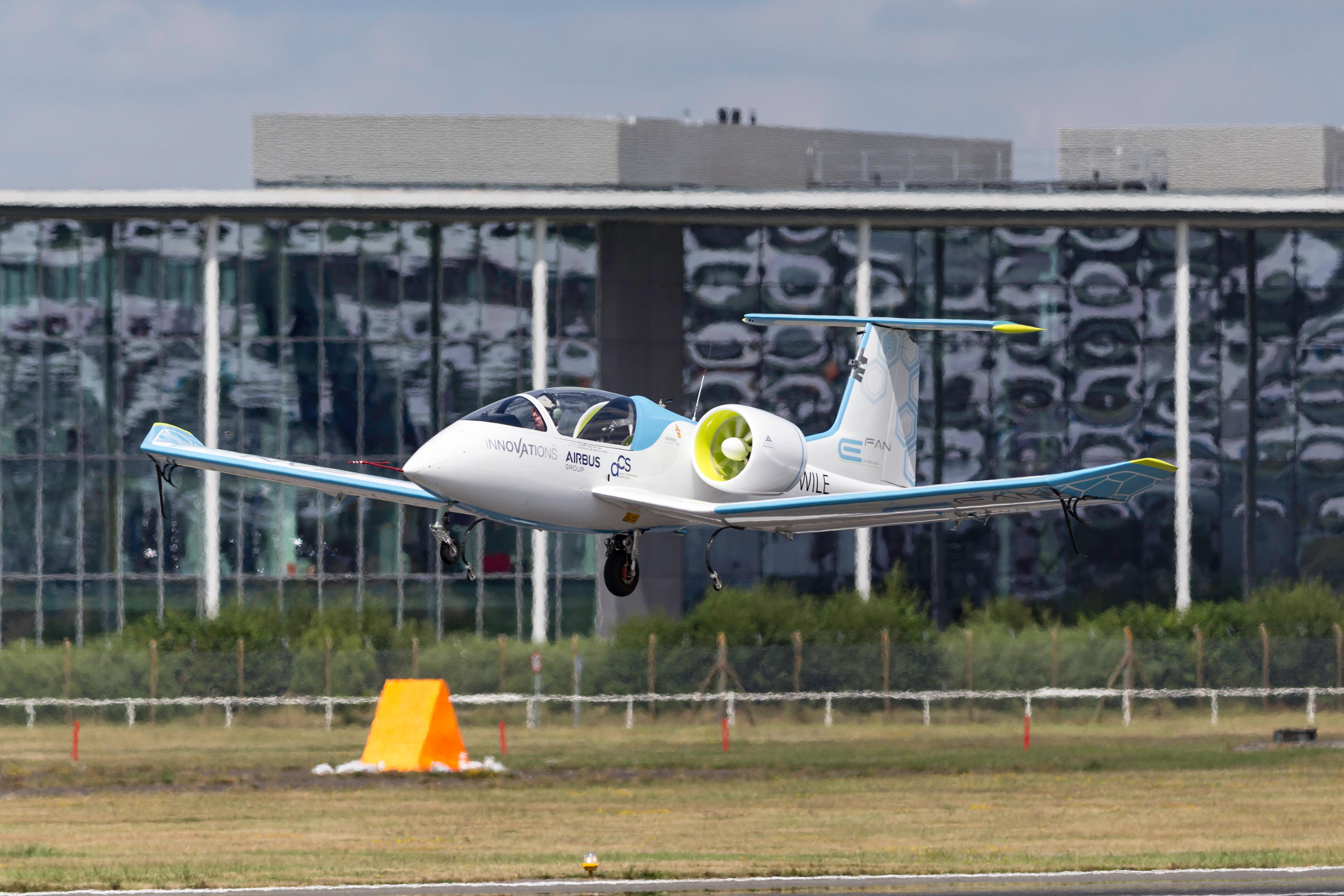
Of all transport modes, air travel has made the least progress in electrification but there’s hope yet. Airbus, Rolls-Royce and Siemens recently teamed up to develop the technology needed to create electrically-powered aircraft. The companies plan to fly a demonstrator aircraft with one of its existing jet engines replaced by an electric unit in 2020.

Paul Stein, chief technology officer at Rolls-Royce, said: “Aviation is the last frontier of the electrification of transport. It could lead to a step change in the way we fly with greater efficiency and less noise.”

These proposed hybrid-electric aircraft are not powered by on-board batteries like EVs but with a gas turbine that generates electricity to drive the propellers. This could reduce fuel consumption by up to 10%, predicted Mark Cousin, head of flight demonstration at Airbus.

Moving to electric aircraft would also help the aviation industry meet EU targets of a 60% reduction in emissions of carbon dioxide (CO2) by 2020, as well as 90% less nitrogen oxides and a noise reduction of around 75%.

UK-based airline EasyJet also announced it could be flying electric planes within a decade and is teaming up with US firm Wright Electric to build battery-powered aircraft.

According to EasyJet, the move would enable battery-powered aeroplanes to travel short-haul routes such as London to Paris and Amsterdam, and Edinburgh to Bristol. Wright Electric is aiming for an aircraft range of 335 miles, which would cover the journeys of about a fifth of EasyJet passengers. The challenge comes in making lithium-ion batteries light and safe enough for the air.

The airline said this was the next step in making air travel less harmful for the environment, after cutting carbon emissions per passenger kilometre by 31% between 2000 and 2016. Wright Electric claims that electric planes will save up to 15% in fuel burn and CO2 emissions, be 50% quieter and 10% cheaper for airlines to buy and operate, with the cost saving potentially passed on to passengers.

Testing new waters

There’s a lot of buzz coming out of the maritime industry too. Every year marine transport emits 1,000 million tonnes of CO2, which is why the International Maritime Organization (IMO) has agreed that a reduction of 50% should come by 2050 compared with 2008 levels. Although the deal fell short of more ambitious targets preferred by those ranging from the European Union to environmental NGOs, the IMO did also commit to pursue efforts toward phasing out CO2 emissions entirely.

As Paris Agreement goals to cut carbon dioxide emissions loom, businesses around the world are innovating.


Small fleets of battery-powered boats designed for fjords and inland waterways in Norway, Belgium and the Netherlands are preparing to set sail, including some able to run autonomously without a crew.

Dutch company Port-Liner is also gearing up to launch the first fully-electric, emission-free barges in Europe. Dubbed ‘Tesla’ ships, Port-Liner Chief Executive Officer Ton van Meegen claims these barges would be the first in the world to sail on carbon-neutral batteries. The first six barges alone are expected to remove 23,000 trucks from the roads annually in the Netherlands, replacing them with zero-emission methods of transport.

China also recently launched an electric cargo ship to haul coal which, whilst not doing much for its ambitions to cut pollution, will at least eliminate shipping emissions from diesel engines. Electric ships may not yet be the norm globally but progress is underway to cut the 2.5% of global greenhouse emissions that result from the maritime transport industry.

Once a far-flung fantasy in some areas, electrified transport is fast becoming a reality. EVs and rail are leading the way, but it’s clear the electric transport revolution has a long way to travel.

Building a sustainable business

The UK energy sector is changing rapidly. The boundaries between users, suppliers and generators are blurring as energy users are choosing to generate their own energy and are managing their energy use more proactively while, conversely, generators are increasingly seeing users as potential sources of generation and providers of demand management.

“The UK is undergoing an unprecedented energy revolution with electricity at its heart – a transition to a low-carbon society requiring new energy solutions for power generation, heating, transport and the wider economy”

In that context, our Group’s purpose is to help change the way energy is generated, supplied and used for a better future. This means that sustainability, in its broadest sense, must be at the very core of what we do. Successful delivery of our purpose depends on all our people, across all our businesses, doing the right thing, every day. With the right products and services, we can go even further and help our customers make the right, sustainable energy choices.

As our businesses transform and we embrace a larger customer base, different generation technologies and operate internationally, the range of sustainability issues we face is widening and becoming more complex. At the same time, the range of stakeholders looking to Drax for responsible leadership on sustainability is increasing. The need for transparency is greater than ever, so our website’s sustainability section provides a comprehensive insight into the Group’s environmental, social and governance management and performance during 2017.

Some of the highlights include:

  • Carbon reduction: I am pleased that, in 2017, the proportion of our energy generation from renewable sources remained high. 65% of our generation during the year came from sustainable biomass and accounted for 15% of the country’s overall renewable generation. We maintained our rigorous and robust approach to ensure that we only ever use biomass that is sustainably produced and legally sourced.
  • People: Another key achievement was the roll out of our people strategy to 2020 – One Drax – which focuses on talent to deliver on our strategic and operational objectives.
  • Safety: The health and safety of all our employees and contractors is of paramount importance to Drax. While the Group’s safety incident rate remained on target in 2017, the fire at our biomass rail unloading facilities in December did cause an outage, with disruption lasting into 2018. It highlighted once again that the risks of generating using biomass must be mitigated through robust safety procedures and a risk-based plant investment and maintenance programme. Safety therefore remains at the centre of our operational philosophy and we are determined to do even better.
  • Customers: Our business to business (B2B) Energy Supply business received recognition for their dedication to customer service. Opus Energy won “Utilities Provider of the Year” at the British Small Business Awards 2017.

We initiated a process which would allow us to participate in the United Nations Global Compact (UNGC). We are committed to the initiative and its ten principles, which align with our culture of doing the right thing.

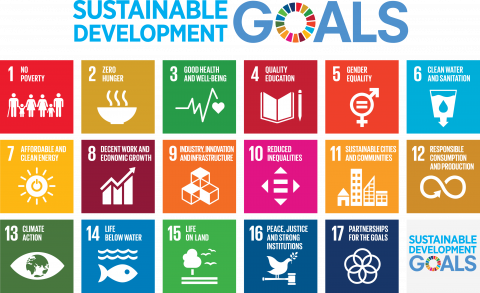
Our website’s sustainability section also sets out our commitment to achieving the United Nations’ Sustainable Development Goals through our operations, the services we deliver to our customers and in partnership with others.

Global ambitions and goals are important, but so too are our ambitions for our local and regional communities. As such, we have played a key role in the UK Northern Powerhouse Partnership, initiatives such as POWERful Women and a comprehensive programme of stakeholder engagement.

“Sustainability, in its broadest sense, must be at the very core of what we do”

Finally, I do not believe any organisation, however well intentioned, can get its commitment to sustainability perfect on its own and I am very keen for Drax to learn from people reading our website’s sustainability section. It sets out what we see as our achievements and aspects in which we believe we need to do better. I would like to invite any stakeholder with an interest to comment on what we’re doing and help us improve where we can. Feedback can be submitted at Contact us or via our Twitter account or Facebook page.

Read the Chief Executive’s Review in the Drax Group plc annual report and accounts

The sustainable development goals

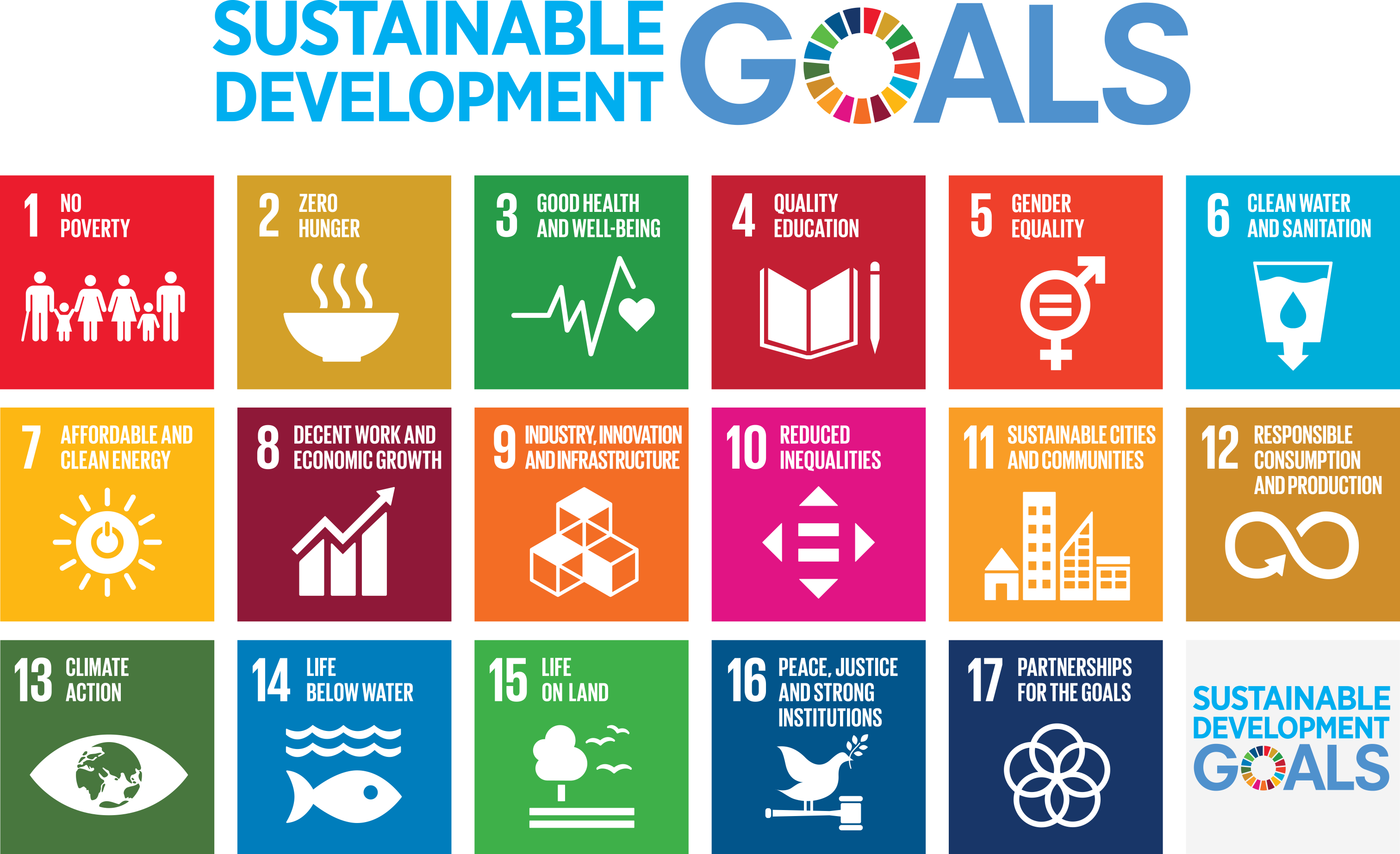
In 2015, the United Nations launched 17 Sustainable Development Goals (SDGs) to end poverty, protect the planet and ensure prosperity for all by 2030. At Drax, improved performance has guided our business purpose for over four decades. We are committed to play our part in achieving the UN SDGs through our operations, the services we deliver to our customers and in partnership with others.

Drax Group has the most significant impact on the Global Goals listed below:

Affordable and clean energy

We provide 6% of the UK’s electricity and play a vital role in helping change the way energy is generated, supplied and used as the UK moves to a low-carbon future. In 2017, 65% of the electricity we produced came from biomass, rather than coal. Our B2B Energy Supply businesses encourage customers to be more sustainable, including through the provision of reliable, renewable electricity at no premium compared to fossil fuel-generated electricity.

Customers

Low Carbon

Decent work and economic growth

We directly employ over 2,500 people in the United Kingdom and United States and their health, safety and wellbeing remains our highest priority. Our B2B Energy Supply business offers energy solutions and value-added services to industrial, corporate and small business customers across the UK.

Society

Industry, innovation and infrastructure

We develop innovative energy solutions to enable the flexible generation and lower-carbon energy supply needed for a low-carbon future. We also innovate to improve the efficiency of our operations and increase our production capacity, notably in our biomass supply chain. Our B2B Energy Supply business offers “intelligent sustainability” and innovative products and services to our customers.

Customers

Low Carbon

Climate action

Our electricity generation activities are a source of carbon emissions. We are committed to helping a low-carbon future by moving away from coal and towards renewable and cleaner fuels, including biomass electricity generation and our planned rapid-response gas plants. We also help our business customers to be more sustainable through the supply of renewable electricity.

Low Carbon

Life on land

We source sustainable biomass for our electricity generation activities and engage proactively with our supply chain to ensure that the forests we source from are responsibly managed. We work closely with our suppliers and through tough screening and audits ensure that we never cause deforestation, forest decline or source from areas officially protected from forestry activities or where endangered species may be harmed.

Low Carbon

Sourcing

Environment

Partnerships for the goals

We engage with stakeholders regularly and build relationships with partners to raise our standards and maximise what can be achieved. Our collaborations align closely with our business, purpose and strategy.

Stakeholder Engagement

Society

Commitment to the UNGC

In 2017, we initiated a process which will allow us to participate in the United Nations Global Compact (UNGC) a global sustainability initiative and we will evidence progress next year. We made progress in preparing for participation outlined in the following sections:

Human rights

We seek to safeguard fundamental human rights for our employees, contractors and anyone that is affected by our business. We ensure that our suppliers apply high standards to protect human rights.

Modern Slavery Statement

Labour

We have policies and standards in place to safeguard our employees and contractors. We respect our employees’ rights in areas such as freedom of association and collective bargaining and we do not tolerate forced, compulsory or child labour. We are committed to providing a safe and healthy workplace for all our people and we strive to prevent discrimination and promote diversity in our workforce.

People

Environment

As a generator and supplier of electricity, we take our responsibility to protect the environment very seriously. We have transformed our generation business and are seeking to further reduce our environmental impact. We focus on reducing our emissions to air, discharges to water, disposal of waste, and on protecting biodiversity and using natural resources responsibly. We have invested heavily in lower-carbon technology as we continue to transition away from coal to renewable and lower-carbon fuels.

Customers

Low Carbon

Environment

Anti-corruption

We do not tolerate any forms of bribery, corruption or improper business conduct. Our “Doing the Right Thing” framework sets out the ethical principles our people must uphold, which is supported by the Group corporate crime policy. Our strict ethical business principles apply to all employees and contractors and we expect the same high standards from anyone we do business with.

Ethics and Integrity

How Great Britain’s breakthrough year for renewables could have powered the past

After a year of smashing renewable records, Great Britain’s electricity system is less dependent on fossil fuels than ever before. Over the course of 2017, low-carbon energy sources, including nuclear as well as renewables, accounted for half of all electricity production.

The finding comes from Electric Insights, a quarterly research paper on Britain’s power system, commissioned by Drax and written by researchers from Imperial College London. The latest report highlights how Great Britain’s electricity system is rapidly moving away from fossil fuels, with coal and gas dropping from 80% of the electricity mix in 2010 to 50% in 2017.

It’s an impressive change for eight years, but it’s even more dramatic when compared to 60 years ago.

Powering the past with renewables

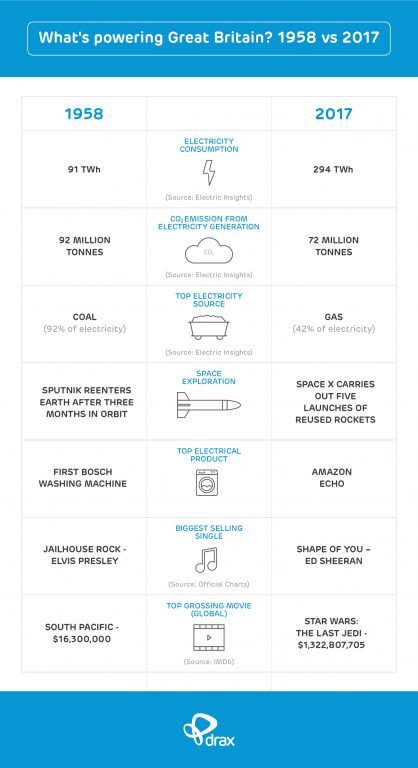
In 2017 renewable output grew 27% over 2016 and produced 96 terawatt hours (TWh) of electricity –  enough to power the entire country in 1958.

Back then Great Britain was dependent on one fuel: coal. It was the source of 92% of the country’s power and its high-carbon intensity meant emissions from electricity generation sat at 93 million tonnes of carbon dioxide (CO2). Compare that to just three million tonnes of CO2 emissions from roughly the same amount of power generated in 2017, just by renewables.     

Today the electricity system is much more diverse than in 1958. In fact, with nuclear added to renewable generation, 2017’s total low-carbon capacity produced enough power to fulfil the electricity needs of 1964’s Beatlemania Britain.

But what’s enabled this growth in renewable generation? One answer, as Bob Dylan explained a year earlier, is blowin’ in the wind.

Read the full article here: Powering the past.


Stormy weather powering Great Britain

Wind power experienced a watershed year in 2017. Thanks to blusterier weather and a wave of new wind farm installations coming online, wind generation grew 45% between 2016 and 2017.

Windfarms, both onshore and offshore, produced 15% of the entire country’s electricity output in 2017, up from 10% in 2016. The 45 TWh it generated over the course of the year was almost double that of coal – and there’s potential for this to increase in 2018 as more capacity comes online.

The 1.6 gigawatts (GW) of new offshore wind turbines installed in Great Britain last year accounted for 53% of the net 3.15 GW installed across Europe. With large offshore farms at Dudgeon and Race Bank still being commissioned, the 3.2 GW of total new operating capacity registered in 2017 across offshore as well as onshore wind is on course to grow.

Co-author of the article, RenewableUK’s Head of External Affairs Luke Clark, said:

“These figures underline that renewables are central to our changing power system. Higher wind speeds and a jump in installed capacity drove a dramatic increase in the amount of clean power generated. Alongside breaking multiple records for peak output, wind energy continued to cut costs.”

As wind power is dependent on weather conditions, it is intermittent in its generation. But in 2017, more than one storm offered ideal conditions for wind turbines. During Q4 there were three named storms as well as the remnants of a hurricane all battering the British Isles, all of which helped push average wind speeds 5% higher than in 2016. While calculating wind power based on wind speed is complex, windier weather means more power – monthly average wind speed is proportional to monthly average power output from wind farms.

While the 2017 annual average wind speed of 10.1mph, was in line with the country’s long-term average, wind generation was not consistent across the year. In Q4 wind output was close to an average of 7 GW. By contrast, between May and August it was closer to 4 GW. Thankfully these calmer months saw longer hours of daylight, allowing solar power to compensate.

Read the full article here: Wind power grows 45%


Driving down carbon emissions

The knock-on effect of an increase in renewable generation is a drop in the carbon intensity of electricity production and in 2017 this reached a new low.

Across the year, carbon emissions, including those from imported sources, totalled 72 million tonnes, down 12% from 2016. This decrease is equal to 150 kg of CO2 saved per person, or taking 4.7 million cars off the roads. The least carbon intensive period of the quarter came just after midnight in the early hours of Monday 2 October, when it measured a record low of 56 grammes per kilowatt hour (g/kWh) thanks to low fossil fuel generation and high levels of renewables.

Over the whole year there were 139 hours when carbon intensity dipped below 100 g/kWh. This generally required 50% of the electricity mix to come from renewable sources and demand to be lower than 30 GW. For carbon intensity to dip under 100 g/kWh on a more permanent basis, greater renewable capacity will be required as demand rises.

Read the full article here: Carbon emissions down 12%


Interconnectors meeting future demand

Electricity demand in Great Britain has been on the decline since 2002, primarily due to more efficient buildings and appliances, and a decline in heavy manufacturing. However, this is expected to change over the coming years as more electric vehicles are introduced and the heating system is electrified to help meet 2050 carbon emissions targets.

While installing greater renewable capacity will be crucial in meeting this demand with low-carbon power, interconnectors will also play a significant role, particularly from France, which boasts a large nuclear (and low-carbon) capacity.

However, electricity sales through interconnectors are often based on day-ahead prices rather than the live market, which can lead to trades that aren’t reflective of demand on each sides of the channel.

In Q4 there were eight half-hours when demand was very high (more than 50 GW), yet power was being exported. This occurred despite day-ahead prices suggesting traders would lose money due to lower demand in France and the cost of using the interconnector. It highlights the need for improvements in inter-network trading as Great Britain increases its intermittent renewable generation and looks to a greater reliance on importing and exporting power.

Read the full article here: Moving electricity across the channel


Great Britain’s electricity system continues to break its renewable records each year and heading into 2018 this is likely to continue. Wind and solar power will continue to grow as more installations come online and a fourth coal unit at Drax will be upgraded to sustainable biomass, which could lead to another breakthrough year. Regardless, 2017 will be a tough one to beat.

Explore the data in detail by visiting ElectricInsights.co.uk

Commissioned by Drax, Electric Insights is produced independently by a team of academics from Imperial College London, led by Dr Iain Staffell and facilitated by the College’s consultancy company – Imperial Consultants.