



Tag: customers

Half year results for the six months ended 30 June 2022

RNS Number: 6883T
Drax Group plc
(“Drax” or the “Group”; Symbol:DRX)

Six months ended 30 JuneH1 2022H1 2021
Key financial performance measures
Adjusted EBITDA (£ million)(1)(2)225186
Continuing operations225165
Discontinued operations – gas generation-21
Net debt (£ million)(3)1,1011,029
Adjusted basic EPS (pence)(1)20.014.6
Interim dividend (pence per share)8.47.5
Total financial performance measures from continuing operations
Operating profit (£ million)20784
Profit before tax (£ million)20052

Drax CEO, Will Gardiner [click to view/download]

Will Gardiner, CEO of Drax Group, said:

“As the UK’s largest generator of renewable power by output, Drax plays a critical role in supporting the country’s security of supply. We are accelerating our investment in renewable generation, having recently submitted planning applications for the development of BECCS at Drax Power Station and for the expansion of Cruachan Pumped Storage Power Station.

“As a leading producer of sustainable wood pellets we continue to invest in expanding our pellet production in order to supply the rising global demand for renewable power generated from biomass. We have commissioned new biomass pellet production plants in the US South and expect to take a final investment decision on up to 500,000 tonnes of additional capacity before the end of the year.

“As carbon removals become an increasingly urgent part of the global route to Net Zero, we are also making very encouraging progress towards delivering BECCS in North America and progressing with site selection, government engagement and technology development.

“In the UK and US we have plans to invest £3 billion in renewables that would create thousands of green jobs in communities that need them, underlining our position as a growing, international business at the heart of the green energy transition.”

Financial highlights

  • Adjusted EBITDA £225 million up 21% (H1 2021: £186 million)
  • Strong liquidity and balance sheet – £539 million of cash and committed facilities at 30 June 2022
    • Expect to be significantly below 2 times Net Debt to Adjusted EBITDA by the end of 2022
  • Sustainable and growing dividend – expected full year dividend up 11.7% to 21.0 p/share (2021: 18.8 p/share)
    • Interim dividend of 8.4 p/share (H1 2021: 7.5 p/share) – 40% of full year expectation
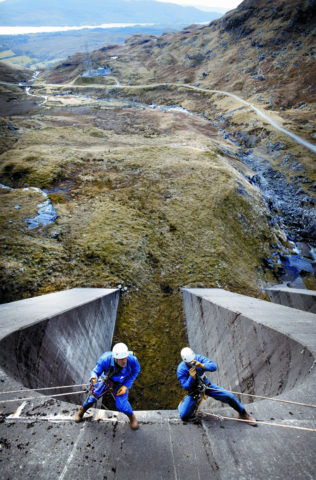
Engineers at Cruachan Power Station

Progress with strategy in H1 2022

  • To be a global leader in sustainable biomass – targeting 8Mt of capacity and 4Mt of sales to 3rd parties by 2030
    • Addition of 0.4Mt of operational pellet production capacity
    • New Tokyo sales office opened July 2022
  • To be a global leader in negative emissions
    • BECCS – UK – targeting 8Mt of negative emissions by 2030
    • Planning application submitted and government consultation on GGR business models published with power BECCS business model consultation expected “during the summer”
    • BECCS – North America – targeting 4Mt of negative emissions by 2030
    • Ongoing engagement with policy makers, screening of regions and locations for BECCS
  • To be a leader in UK dispatchable, renewable power
    • >99% reduction in scope 1 and 2 emissions from generation since 2012
    • UK’s largest generator of renewable power by output – 11% of total
    • Optimisation of biomass generation and logistics to support security of supply at times of higher demand
    • Planning application submitted for 600MW expansion of Cruachan and connection agreement secured

Outlook for 2022

  • Expectations for full year Adjusted EBITDA unchanged from 6 July 2022 update which reflected optimisation of biomass generation and logistics to support UK security of supply this winter when demand is high, a strong pumped storage performance and agreement of a winter contingency contract for coal

Future positive – people, nature, climate

  • People
    • Diversity and inclusion programme – inclusive management, promoting social mobility via graduates, apprenticeships and work experience programmes
    • Continued commitment to STEM outreach programme
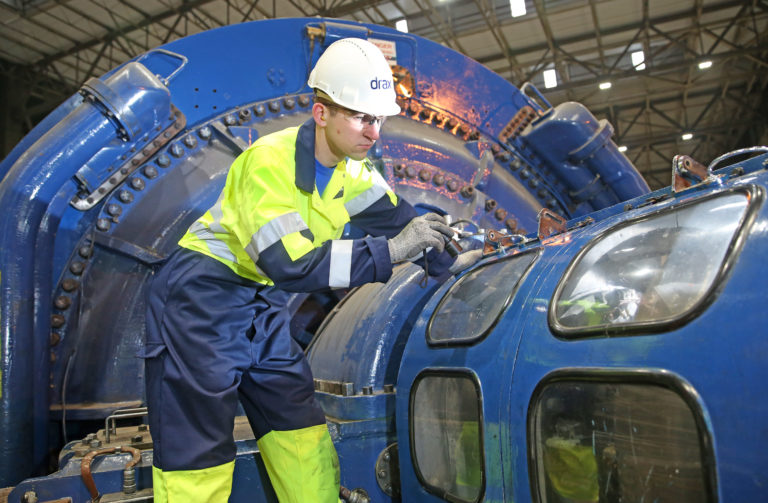
An apprentice working in the turbine hall at Drax Power Station, North Yorkshire

  • Nature and climate
    • Science-based sustainability policy fully compliant with current UK and EU law on sustainable sourcing and aligned with UN guidelines for carbon accounting
    • Biomass produced using sawmill and forest residuals, and low-grade roundwood, which often have few alternative markets and would otherwise be landfilled, burned or left to rot, releasing CO2 and other GHGs
    • Increase in sawmill residues used by Drax to produce pellets – 67% of total fibre (FY 2021: 62%)
    • 100% of woody biomass produced by Drax verified against SBP, SFI, FSC®(4) or PEFC Chain of Custody certification with third-party supplier compliance primarily via SBP certification

Operational review

Pellet Production – increased production, flexible operations to support UK generation, addition of 0.4Mt of capacity 

  • Adjusted EBITDA up 13% to £45 million (H1 2021: £40 million)
    • Pellet production up 54% to 2.0Mt (H1 2021: 1.3Mt) (including Pinnacle since 13 April 2021)
  • Addition of c.0.4Mt of new production capacity
    • Commissioning of Demopolis and Leola, expect to reach full production capacity in H2 2022
  • Total $/t cost of $146/t(5) – 2% increase on 2021 ($143/t(5))
    • Increase in utility costs in Q2-22 (>20% increase)
    • Fuel surcharge – barge and rail to port (> 10% increase)
    • Commissioning costs at Demopolis and Leola plants
    • Net reduction in other costs, inclusive of optimisation of supply chain to meet reprofiling of Generation
    • No material change in fibre costs
  • Areas of focus for further savings – wider range of sustainable biomass fibre, continued focus on operational efficiency and improvement, capacity expansion, innovation and technology
  • Continue to target final investment decision on up to 0.5Mt of new capacity in H2 2022

Generation – increased recognition of value of long-term security of supply from biomass and pumped storage

  • Adjusted EBITDA from continuing operations £205 million up 24% (H1 2021: £165 million)
    • Optimisation of biomass generation and logistics to support security of supply at times of higher demand
    • Summer – lower power demand, lower power generation and sale of reprofiled biomass
    • Winter – maximise biomass deliveries to support increased generation at times of higher demand
    • Four small, planned biomass outages completed in H1, supporting higher planned generation in H2-22
    • Strong portfolio system support performance (balancing mechanism, ancillary services and optimisation)
    • Higher cost of sales – logistics optimisation, biomass and system costs
  • Six-month extension of coal at request of UK government – winter contingency contract for security of supply
    • Closure of coal units in March 2023 following expiration of agreement with ESO at end of March 2023
    • Fixed fee and compensation for associated costs, including coal
    • Remain committed to coal closure and development of BECCS, with no change to expected timetable
  • As at 21 July 2022, Drax had 25.4TWh of power hedged between 2022 and 2024 on its ROC and hydro generation assets at an average price of £95.9/MWh, with a further 2.3TWh equivalent of gas sales (transacted for the purpose of accessing additional liquidity for forward sales from ROC units and highly correlated to forward power prices) plus additional sales under the CfD mechanism
Contracted power sales 21 July 2022202220232024
ROC (TWh(6))11.78.84.5
Average achieved £ per MWh87.298.3109.5
Hydro (TWh)0.30.1-
-Average achieved £ per MWh133.1242.0-
Gas hedges (TWh equivalent)(0.1)0.51.9
-Pence per therm361.0145.8135.0
Lower expected level of ROC generation in 2023 due to major planned outages on two units

Customers – renewable power under long-term contracts to high-quality I&C customers and decarbonisation products

  • Adjusted EBITDA of £24 million (H1 2021: £5 million loss) – continued improvement following impact of Covid-19
    • principally in the SME business
    • Includes benefit of excess contracted power sold back into merchant market
  • Continued development of Industrial & Commercial (I&C) portfolio
    • 9TWh of power sales – 21% increase compared to H1 2021 (5.7TWh)
    • Focusing on key sectors to increase sales to high-quality counterparties supporting generation route to market
    • Energy services to expand the Group’s system support capability and customer sustainability objectives
  • SME – increasingly stringent credit control in SME business to reflect higher power price environment

Other financial information

  • Total operating profit from continuing operations of £207 million (H1 2021: £84 million), including £130 million mark-to-market gain on derivative contracts and £27 million of exceptional costs
  • Total profit after tax from continuing operations of £148 million includes an £8 million non-cash charge from revaluing deferred tax balances following confirmation of UK corporation tax rate increases from 2023 (H1 2021: £6 million loss including a £48 million non-cash charge from revaluing deferred tax balances)
  • Capital investment of £60 million (H1 2021: £71 million) – primarily maintenance
    • Full year expectation of £290–£310 million, includes £120 million for Open Cycle Gas Turbine projects, £20 million BECCS FEED and site preparation, and £10 million associated with new pellet capacity, subject to final investment decision (FID)
  • Depreciation and amortisation of £121 million (H1: £89 million) reflects inclusion of Pinnacle for a full six months, plant upgrades and accelerated depreciation of certain pellet plant equipment in line with planned capital upgrades
  • Group cost of debt below 3.6%
  • Cash Generated from Operations £185 million (H1 2021: £138 million)
  • Net Debt of £1,101 million (31 December 2021: £1,044 million), including cash and cash equivalents of £288 million (31 December H1 2021: £317 million)
    • Continue to expect Net Debt to Adjusted EBITDA significantly below 2 times by end of 2022, reflecting optimisation of generation and logistics to deliver higher levels of power generation and cash flows in H2 2022

View complete half year report

View Investor Presentation

Webcast Live Event

Half year results for the six months ended 30 June 2021

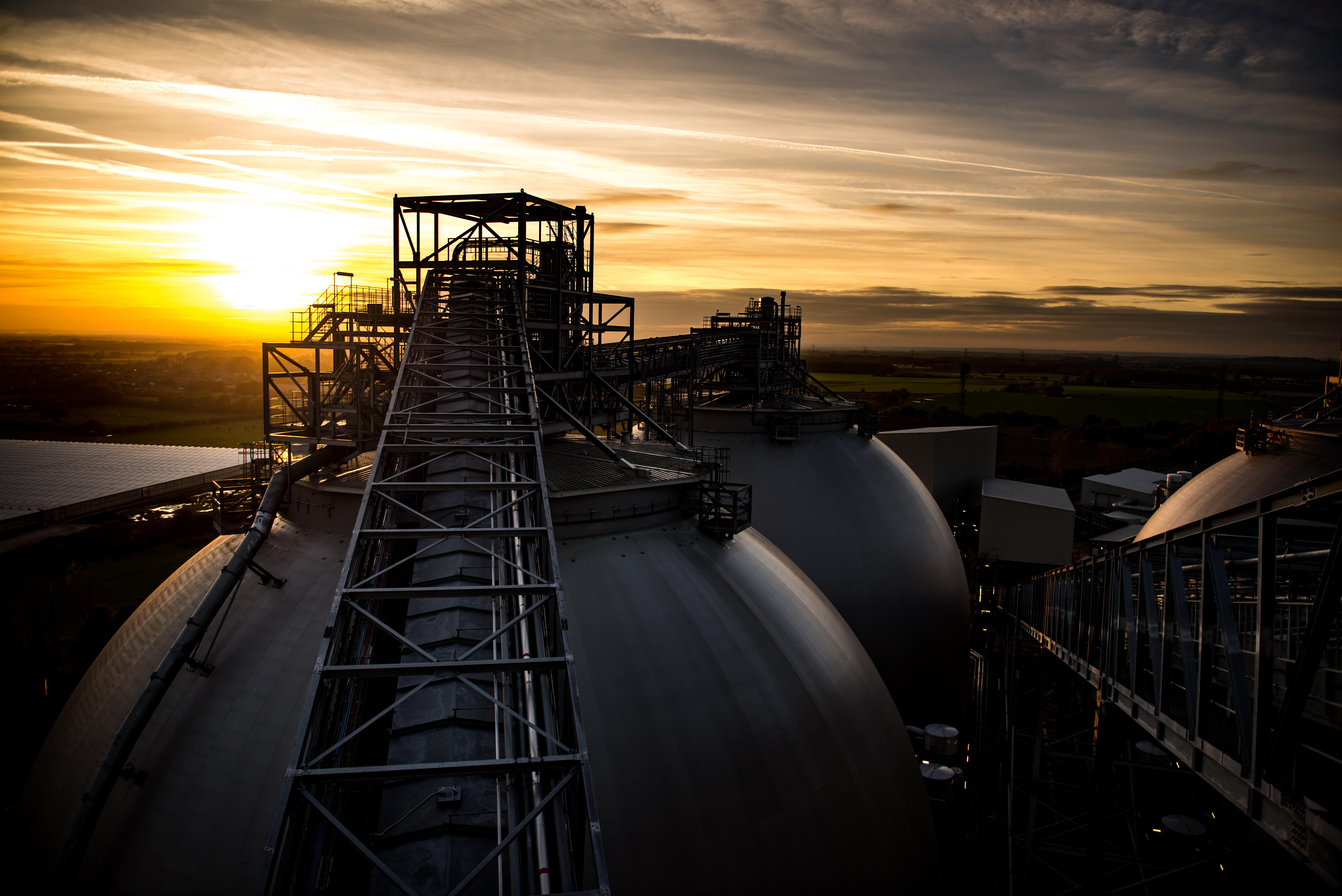
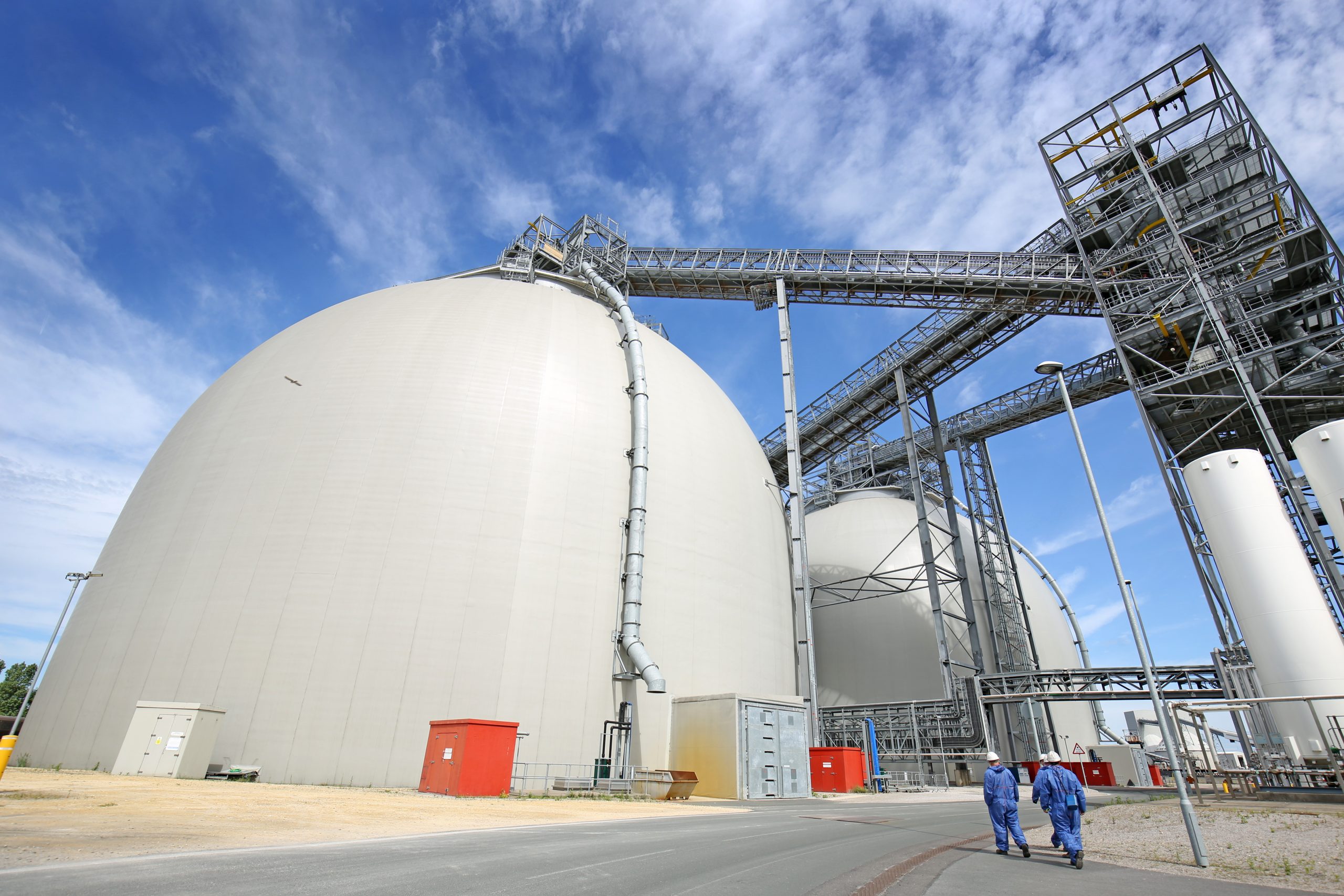
Engineers walking in front of sustainable biomass wood pellet storage dome at Drax Power Station, June 2021

RNS Number: 8333G
Drax Group plc
(“Drax” or the “Group”; Symbol:DRX)

Six months ended 30 JuneH1 2021H1 2020
Key financial performance measures
Adjusted EBITDA (£ million)(1)(2)186179
Continuing operations165160
Discontinued operations – gas generation2119
Net debt (£ million)(3)1,029792
Adjusted basic EPS (pence)(1)14.610.8
Interim dividend (pence per share)7.56.8
Total financial performance measures from continuing operations
Operating profit / (loss) (£ million)84(57)
Profit / (loss) before tax (£ million)52(85)

Will Gardiner, CEO of Drax Group, said:

“We have had a great first half of the year, transforming Drax into the world’s leading sustainable biomass generation and supply company as well as the UK’s largest generator of renewable power.

“The business has performed well, and we have exciting growth opportunities to support the global transition to a low-carbon economy.

Drax Group CEO Will Gardiner in the control room at Drax Power Station

Drax Group CEO Will Gardiner in the control room at Drax Power Station

“Drax has reduced its generation emissions by over 90%, and we are very proud to be one of the lowest carbon intensity power generators in Europe – a huge transformation for a business which less than a decade ago operated the largest coal power station in Western Europe.

“In the past six months we have significantly advanced our plans for Bioenergy with Carbon Capture and Storage (BECCS) in the UK and globally. By 2030 Drax could be delivering millions of tonnes of negative emissions and leading the world in providing a critical technology needed to tackle the climate crisis.

“We are pleased to be announcing a 10% increase in our dividend, and we remain committed to creating long-term value for all our stakeholders.” 

Financial highlights

Pinnacle named ship

  • Adjusted EBITDA from continuing and discontinued operations up £7 million to £186 million (H1 2020: £179 million)
  • Acquisition of Pinnacle Renewable Energy Inc. (Pinnacle) for cash consideration of C$385 million (£222 million) (enterprise value of C$796 million) and sale of gas generation assets for £186 million
  • Strong liquidity and balance sheet
    • £666 million of cash and committed facilities at 30 June 2021
    • Refinancing of Canadian facilities (July 2021) with lower cost ESG facility following Pinnacle acquisition
  •  Sustainable and growing dividend – expected full year dividend up 10% to 18.8 pence per share (2020: 17.1p/share)
    • Interim dividend of 7.5 pence per share (H1 2020: 6.8p/share) – 40% of full year expectation

Strategic highlights

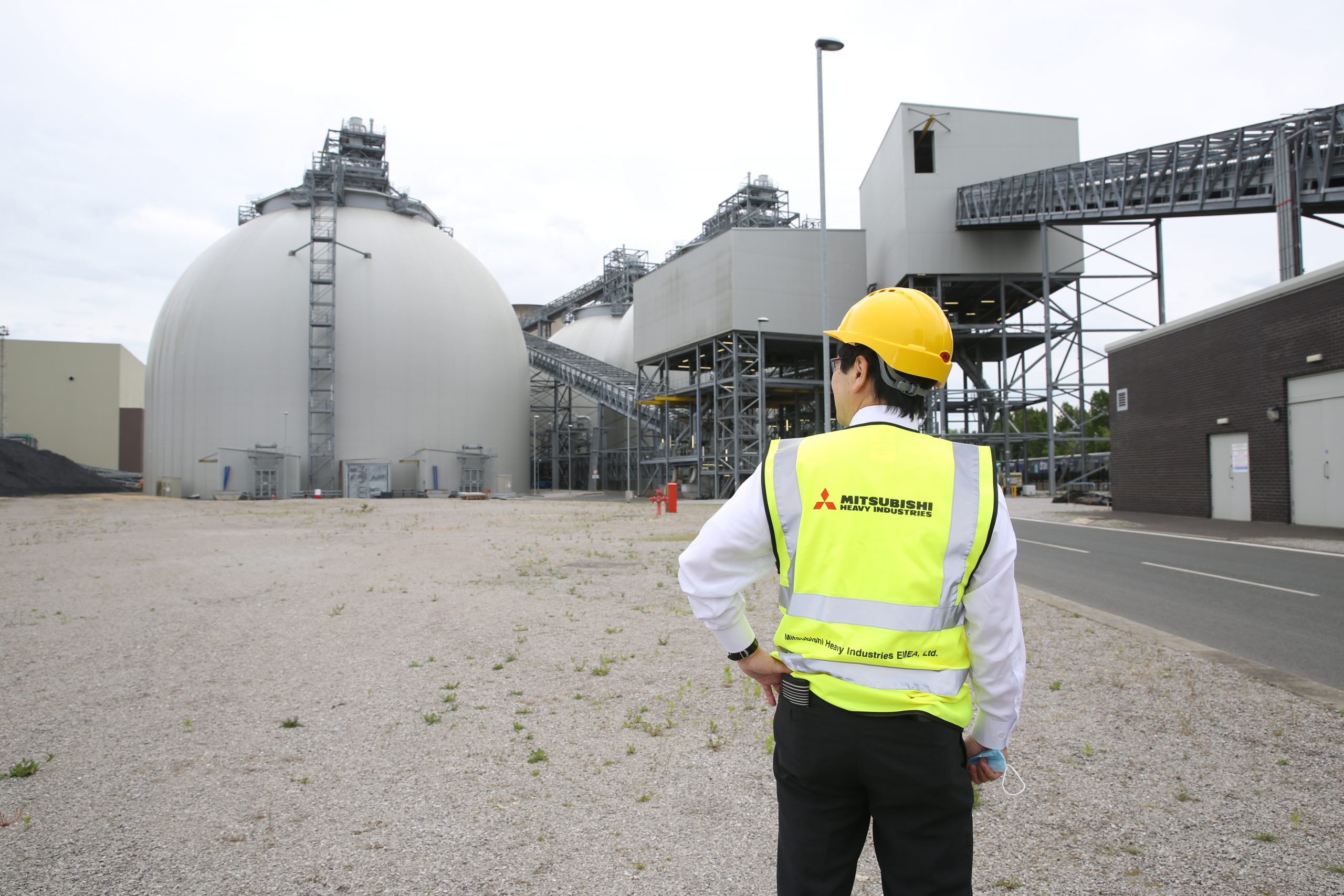
Kentaro Hosomi, Chief Regional Officer EMEA, Mitsubishi Heavy Industries (MHI) at Drax Power Station, North Yorkshire

Kentaro Hosomi, Chief Regional Officer EMEA, Mitsubishi Heavy Industries (MHI) at Drax Power Station, North Yorkshire

  • Developing complementary biomass strategies for supply, negative emissions and renewable power
  • Creation of the world’s leading sustainable biomass generation and supply company
    • Supply – 17 operational plants and developments across three major fibre baskets with production capacity of 4.9Mt pa and $4.3 billion of long-term contracted sales to high-quality customers in Asia and Europe
    • Generation – 2.6GW of biomass generation – UK’s largest source of renewable power by output
  • >90% reduction in generation emissions since 2012
    • Sale of gas generation assets January 2021 and end of commercial coal March 2021
  • Development of BECCS
    • Planning application submitted for Drax Power Station and technology partner (MHI) selected
    • Participation in East Coast Cluster – phase 1 regional clusters and projects to be selected from late 2021
    • Partnerships with Bechtel and Phoenix BioPower evaluating international BECCS and biomass technologies
  • System support – option to develop Cruachan from 400MW to over 1GW – commenced planning approval process

 Outlook

  • Adjusted EBITDA, inclusive of Pinnacle from 13 April 2021, full year expectations unchanged

Operational review

Pellet Production – acquisition of Pinnacle, capacity expansion and biomass cost reduction

close-up of truck raising and lowering

  • Sustainable sourcing
    • Biomass produced using forestry residuals and material otherwise uneconomic to commercial forestry
    • Science-based sustainability policy fully compliant with current UK, EU law on sustainable sourcing aligned with UN guidelines for carbon accounting
    • All woody biomass verified and audited against FSC®(4), PEFC or SBP requirements
  • Adjusted EBITDA (including Pinnacle since 13 April 2021) up 60% to £40 million (H1 2020: £25 million)
    • Pellet production up 70% to 1.3Mt (H1 2020: 0.8Mt)
    • Cost of production down 8% to $141/t(5) (H1 2020: $154/t(5))
  • Near-term developments in US Southeast (2021-22)
    • Commissioning of LaSalle expansion, Demopolis and first satellite plant in H2
  • Other opportunities for growth and cost reduction
    • Increased production capacity, supply of biomass to third parties and expansion of fuel envelope to include lower cost biomass

Generation – flexible and renewable generation

  • 12% of UK’s renewable electricity, strong operational performance and system support services
  • Adjusted EBITDA down 14% to £185 million (H1 2020: £214 million)
    • Biomass – Lower achieved power prices and higher GBP cost of biomass reflecting historical power and FX hedging
    • Strong system support (balancing mechanism, Ancillary Services and optimisation) of £70 million (H1 2020: £66 million) – additional coal operations and continued good hydro and pumped storage performance, in addition to coal operations
    • Coal – utilisation of residual coal stock in Q1 2021 and capture of higher power prices
  • Pumped storage / hydro – good operational and system support performance
    • £34 million of Adjusted EBITDA (Cruachan, Lanark, Galloway schemes and Daldowie) (H1 2020: £35 million)
  • Ongoing cost reductions to support operating model for biomass at Drax Power Station from 2027
    • End of commercial coal operations in March, formal closure September 2022 – reduction in fixed cost base
    • Major planned outage for biomass CfD unit – August to November 2021 – including third turbine upgrade delivering improved thermal efficiency and lower maintenance cost, supporting lower cost biomass operations
    • Trials to expand range of lower cost biomass fuels – up to 35% load achieved in test runs on one unit
  • Strong contracted power position – 29.3TWh sold forward at £52.1/MWh 2021-2023. Opportunities to capture higher power prices in future periods, subject to liquidity
As at 25 July 2021202120222023
Fixed price power sales (TWh) 15.99.14.3
-      CfD(6)3.80.6-
-      ROC10.88.44.0
-      Other1.30.10.3
At an average achieved price (£ per MWh)51.752.452.7

Customers – renewable electricity and services under long-term contracts to high-quality I&C customer base


  • Adjusted EBITDA loss of £5 million inclusive of £10-15 million impact of Covid-19 (H1 2020 £37 million loss inclusive of £44 million impact of Covid-19)
  • Continuing development of Industrial & Commercial (I&C) portfolio
    • Focusing on key sectors to increase sales to high-quality counterparties supporting generation route to market
    • Energy services expand the Group’s system support capability and customer sustainability objectives
  • Closure of Oxford and Cardiff offices as part of SME strategic review and the rebranding of the Haven Power I&C business to Drax
  • Continue to evaluate options for SME portfolio to maximise value and alignment with strategy

Other financial information

  • Total operating profit from continuing operations of £84 million including £20 million mark-to-market gain on derivative contracts and acquisition related costs of £10 million and restructuring costs of £2 million
  • Total loss after tax from continuing operations of £6 million including a £48 million charge from revaluing deferred tax balances following announcement of future UK tax rate changes
  • Total loss after tax from continuing operations of £6 million including a £48 million charge from revaluing deferred tax balances following confirmation of UK corporation tax rate increases from 2023
  • Capital investment of £71 million (H1 2020: £78 million) – continued investment in biomass strategy
    • Full year expectation of £210–230 million, includes pellet plant developments – LaSalle expansion, satellite plants and commissioning of Demopolis
  • Group cost of debt now below 3.5% reflecting refinancing of Canadian facilities in July 2021
  • Net debt of £1,029 million (31 December 2020: £776 million), including cash and cash equivalents of £406 million (31 December 2020: £290 million)
    • 5x net debt to Adjusted EBITDA, with £666 million of total cash and committed facilities (31 December 2020: £682 million)
    • Continue to expect around 2.0x net debt to Adjusted EBITDA by end of 2022
View complete half year report View investor presentation Listen to webcast

Full year results for the twelve months ended 31 December 2020

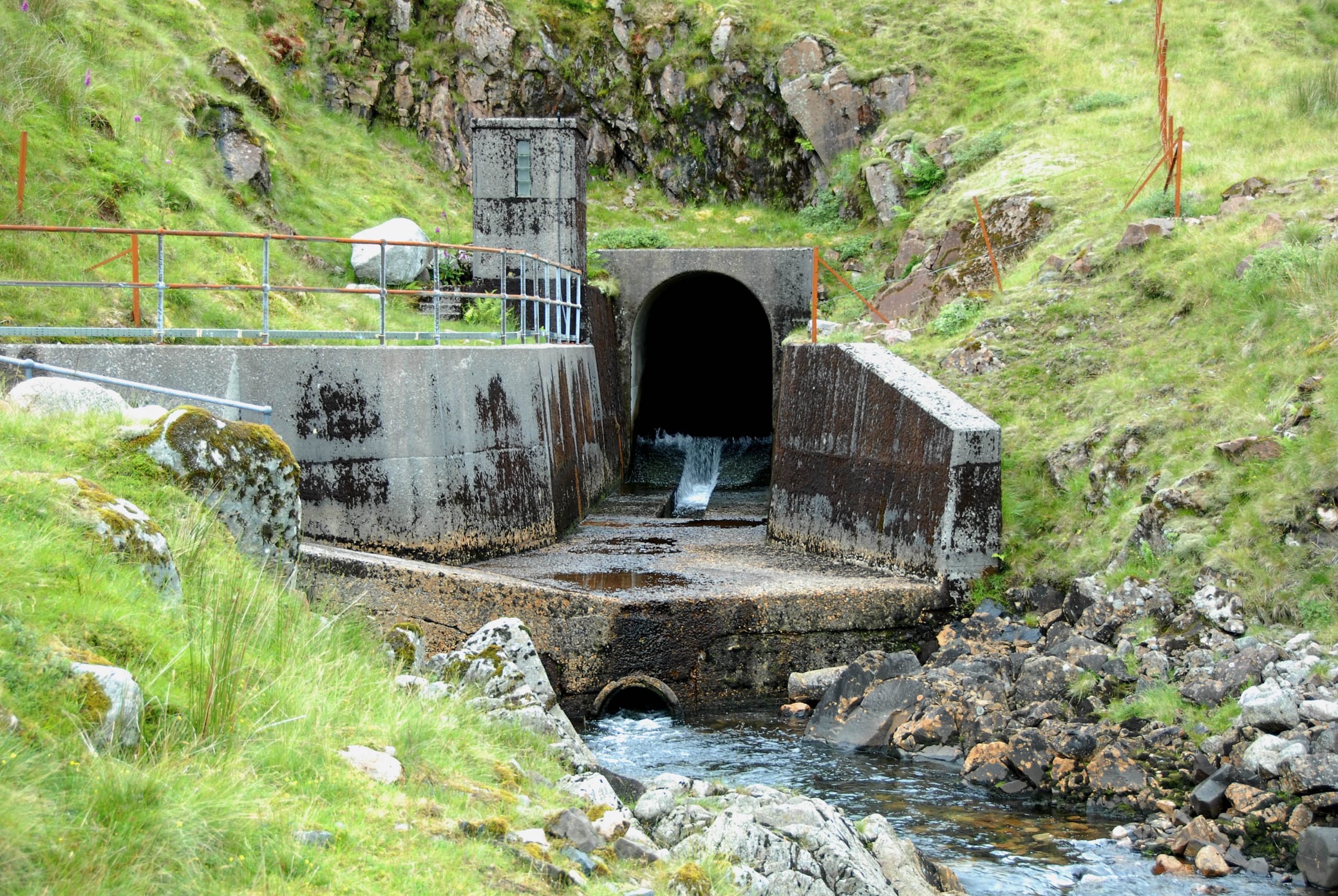
Water outlet into Loch Awe from Cruachan Power Station

Drax Group plc
(“Drax” or the “Group”; Symbol:DRX)
RNS Number : 2751Q

Twelve months ended 31 December20202019
Key financial performance measures
Adjusted EBITDA (£ million) (1)(2)412410
Continuing operations366371
Discontinued operations – gas generation4639
Cash generated from operations (£ million)413471
Net debt (£ million) (3)776841
Adjusted basic EPS (pence) (1)29.629.9
Total dividend (pence per share)17.115.9
Total financial performance measures
Coal and other asset obsolescence charges(239)-
Operating (loss) / profit (£ million)(156)48
Loss before tax (£ million)(235)(16)

Financial highlights

  • Adjusted EBITDA from continuing and discontinued operations up £2 million to £412 million (2019: £410 million)
    • Includes estimated impact of Covid-19 of around £60 million, principally SME customers
    • Strong performance in Pellet Production and Generation
  • Strong cash generation and balance sheet
    • 1.9 x net debt to Adjusted EBITDA, with £682 million of cash and committed facilities at 31 December 2020
    • New carbon-linked RCF, Eurobond and infrastructure facilities with maturities to 2030 and reduced cost of debt
  • Sustainable and growing dividend up 7.5% to 17.1 pence per share (2019: 15.9 pence per share)
    • Proposed final dividend of 10.3 pence per share (2019: 9.5 pence per share)

Operational highlights

  • Pellet Production – 7% increase in production, improved quality and 5% reduction in cost
  • Generation – 11% of UK’s renewable electricity, strong operations and system support performance
  • Customers – lower demand and an increase in bad debt provisions, principally SME customers
  • Sustainability – sale of gas assets, end of coal generation, CDP Climate A- rating (2019: C) and TCFD Supporter
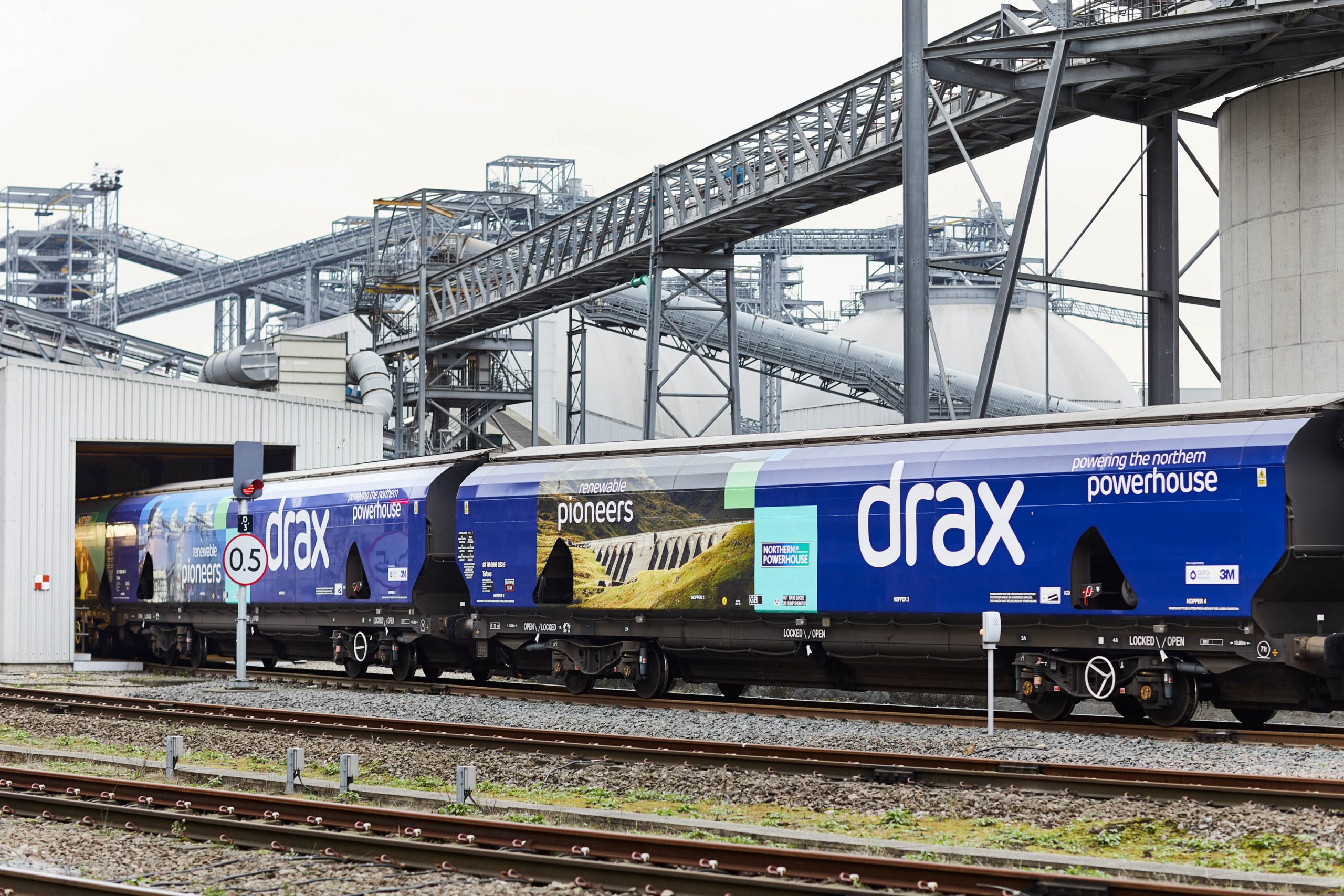
Train carrying sustainably sourced compressed wood pellets arriving at Drax Power Station in North Yorkshire

Train carrying sustainably sourced compressed wood pellets arriving at Drax Power Station in North Yorkshire [click to view/download]

Will Gardiner, CEO of Drax Group said:

“Drax has supported its customers, communities and employees throughout the Covid-19 pandemic and I want to thank colleagues across the Group for their commitment and hard work over the last year. We have delivered strong results, a growing dividend for shareholders and excellent progress against our business strategy.

Drax Group CEO Will Gardiner

Drax Group CEO Will Gardiner in the control room at Drax Power Station [Click to view/download]

“Our focus is on renewable power. Our carbon intensity is one of the lowest of all European power generators. We aim to be carbon negative by 2030 and are continuing to make progress. We are announcing today that we will not develop new gas fired power at Drax. This builds on our decision to end commercial coal generation and the recent sale of our existing gas power stations.

“The proposed acquisition of Pinnacle Renewable Energy will position Drax as the world’s leading sustainable biomass generation and supply business, paving the way for us to develop bioenergy with carbon capture and storage (BECCS) – taking us even further in our decarbonisation.”

2021 outlook

  • Targeting carbon negative
    • No new gas generation at Drax Power Station, retain options for system support gas in next capacity auction
    • Completion of sale of existing gas generation (January 2021) and end of commercial coal (March 2021)
  • Progressing biomass strategy
    • Proposed acquisition of Pinnacle Renewable Energy Inc. (Pinnacle) – supports long-term options for third-party supply, BECCS and biomass generation
    • BECCS – commencement of DCO planning process, potential FEED study and clarity on regional clusters

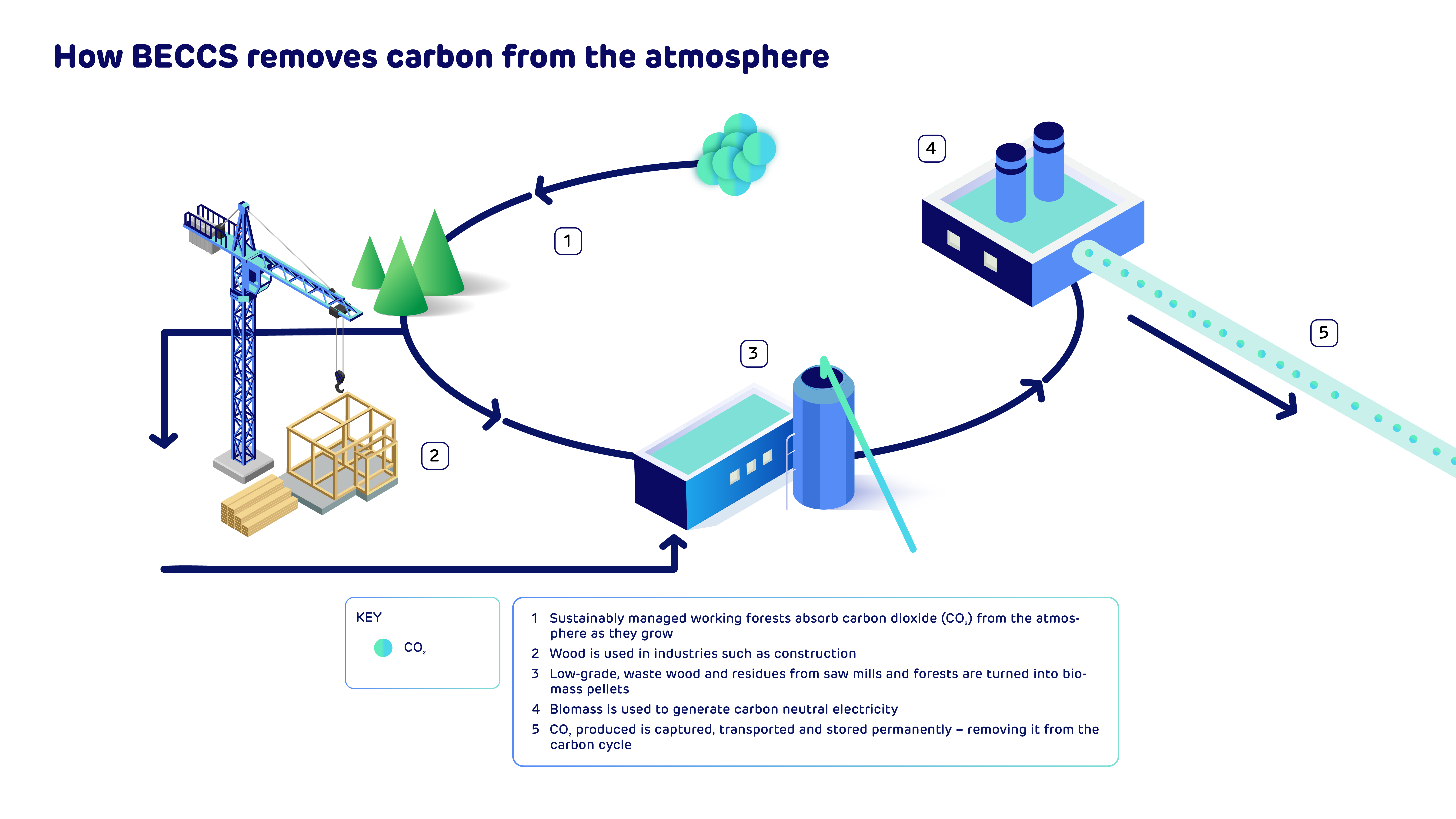
Infographic: How BECCS removes carbon from the atmosphere

  • Operations
    • Major planned outage on CfD unit and continued impact of Covid-19 on SME customers
    • Strong contracted power sales (2021–2023) 24.4TWh at £48.5/MWh

Operational review

Pellet Production – capacity expansion, improved quality and reduced cost

  • Adjusted EBITDA up 63% to £52 million (2019: £32 million)
    • Pellet production up 7% to 1.5Mt (2019: 1.4Mt)
    • Reduction in fines (larger particle-sized dust)
    • Cost of production down 5% to $153/t(4) (2019: $161/t(4))
  • Cost reduction plan – targeting $35/t (£13/MWh(5)) saving vs. 2018 on 1.9Mt by 2022 – annual savings of $64 million
    • $28 million of run-rate savings from projects delivered 2019-2020
    • Low-cost fibre, LaSalle (improved rail infrastructure, woodyard and sawmill co-location) and HQ relocation
    • $36 million of additional run-rate savings to be delivered by end of 2022
    • Expansion of Morehouse plant completed Q4 2020
    • Expansion of Amite and LaSalle, increased use of low-cost fibre and improved logistics
  • Additional savings from $40 million investment in three 40kt satellite plants in US Gulf – commissioning from 2021, with potential for up to 0.5Mt – targeting 20% reduction in pellet cost versus current cost

 Power Generation – flexible and renewable generation

  • Adjusted EBITDA up 9% to £446 million (2019: £408 million)
    • Biomass generation up 5% to 14.1TWh (2019: 13.4TWh) – record CfD availability (Q2 2020 – 99.5%)
    • Good commercial availability across the portfolio – 91% (2019: 88%)
    • Strong contracted position provided protection from lower demand and reduction in ROC(6) prices
    • Includes £46 million from discontinued gas (2019: £39 million)
Water cooling tower at Drax Power Station

Water cooling tower at Drax Power Station [click to view/download]

  • System support (balancing mechanism, Ancillary Services and optimisation) of £118 million (2019: £120 million)
    • Hydro and gas – one-off hydro contracts in 2019, offset by higher demand for system support services in 2020
    • Lower level of biomass activity due to higher value in generation market
    • 2019 included benefit of buying back coal generation
  • Pumped storage / hydro – excellent operational and system support performance

    • £73 million of Adjusted EBITDA (Cruachan, Lanark Galloway schemes and Daldowie) (2019: £71 million)
Aqueduct supplying water into the reservoir at Cruachan pumped hydro storage plant in Scotland

Aqueduct supplying water into the reservoir at Cruachan pumped hydro storage plant in Scotland [click to view/download]

  • Coal – 8% of output in 2020 and short-term increase in carbon emissions – utilisation of coal stock by March 2021
  • Covid-19 – business continuity plan in place to ensure continued operation and two major outages completed

Customers – managing the impact of Covid-19 on SME customers

  • Customer service employeeAdjusted EBITDA loss of £39 million (2019: £17 million profit) inclusive of estimated £60 million impact of Covid-19
    • Reduced demand, MtM loss on pre-purchased power and increase in bad debt, principally SME customers
    • Continue to evaluate SME options to maximise value and alignment with strategy
  • Development of Drax Customers Industrial & Commercial portfolio – increased sales to high-quality counterparties providing revenue visibility, while supporting the Group’s flexible and renewable energy proposition
  • Renewable and energy services expand Group system support capability and customer sustainability objectives

Other financial information

  • Total operating loss from continuing operations of £156 million reflects:
    • £70 million MtM loss on derivative contracts
    • £239 million obsolescence charges, principally coal (includes £13 million associated with decision not to develop new gas generation at Drax Power Station)
    • £34 million of costs associated with coal closure (redundancy, pensions and site reparations), with annual run-rate savings once complete of c.£30-35 million
  • Total loss after tax of £158 million includes £18 million reduced valuation of deferred tax asset resulting from UK Government’s reversal of previously announced corporation tax rate change (adjusted impact of £14 million, 3.5 pence per share)
  • Capital investment of £183 million(7) – continued invest in biomass strategy, some delay into 2021 due to Covid-19
    • 2021 expected investment of £190-210 million (excludes proposed acquisition of Pinnacle), includes expansion of LaSalle and Amite pellet plants and satellite plant development
  • Net debt of £776 million, including cash and cash equivalents of £290 million (31 December 2019: £404 million)
      • 1.9 x net debt to EBITDA, with £682 million of total cash and total committed facilities
      • Expect around 2 x net debt to EBITDA by end of 2022 inclusive of proposed acquisition of Pinnacle


View complete full year report View investor presentation Listen to webcast

Half year results for the six months ended 30 June 2020

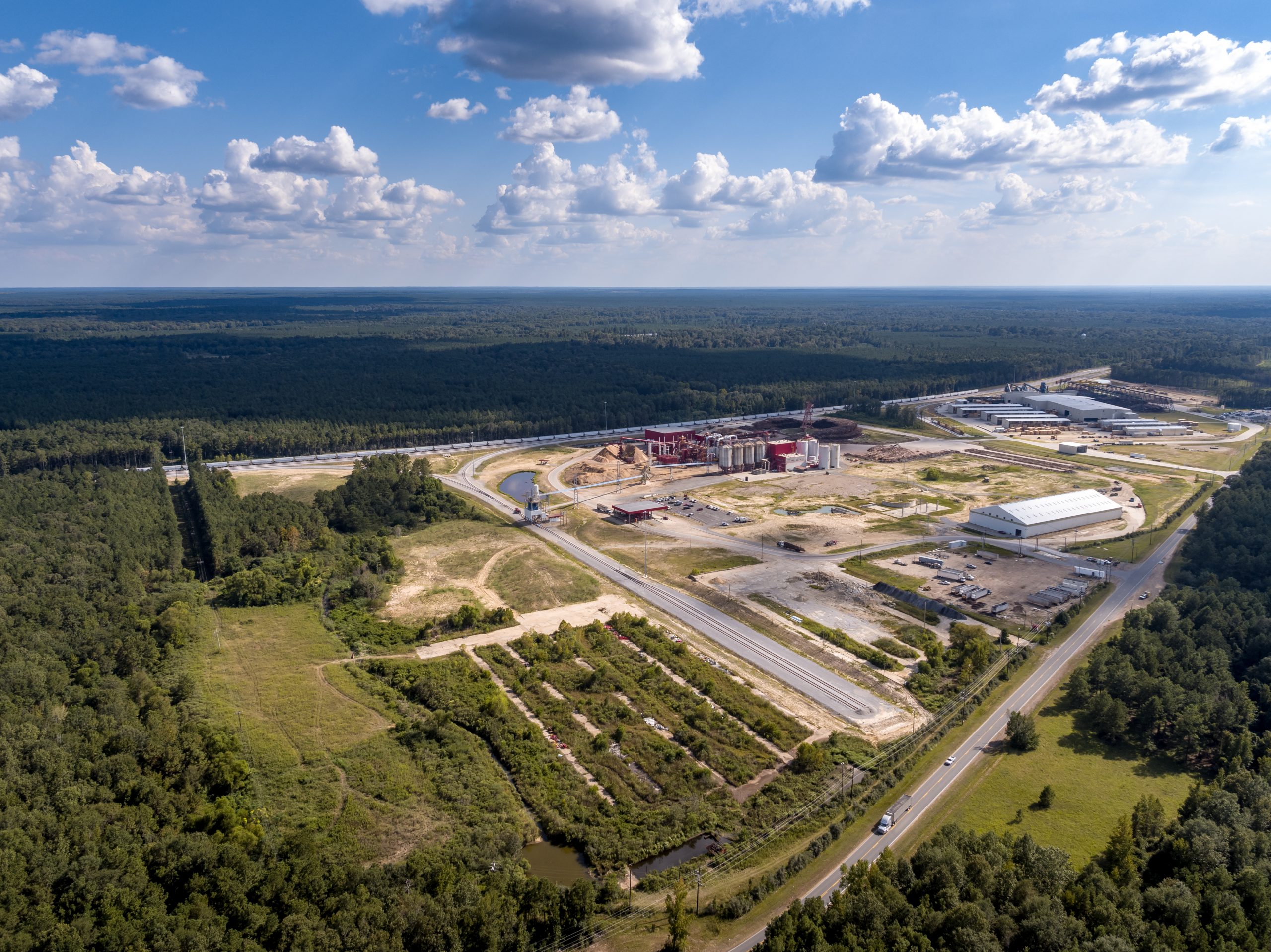
LaSalle BioEnergy (centre) and co-located sawmill (right), Louisiana

RNS Number : 3978U
Drax Group PLC (Symbol: DRX)

Six months ended 30 JuneH1 2020H1 2019
Key financial performance measures
Adjusted EBITDA (£ million) (1)(2)179138
Cash generated from operations (£ million)226229
Net debt (£ million) (3)792924
Interim dividend (pence per share)6.86.4
Adjusted basic earnings per share (pence) (1)10.82
Total financial performance measures
Coal obsolescence charges-224-
Operating (loss) / profit (£ million)-3234
(Loss) / profit before tax (£ million)-614
Basic (loss) / earnings per share (pence)-141

Financial highlights

  • Group Adjusted EBITDA up 30% to £179 million (H1 2019: £138 million)
    • Includes estimated £44 million impact of Covid-19, principally in Customers SME business
    • £34 million of capacity payments (H1 2019: nil) following re-establishment of the Capacity Market
    • Strong biomass performance in both Pellet Production and Generation
  • Strong cash generation and balance sheet
    • £694 million of cash and total committed facilities
    • Extended £125 million ESG CO2 emission-linked facility to 2025
    • DBRS investment grade rating
  • Sustainable and growing dividend
    • Expected full year dividend up 7.5% to 17.1 pence per share (2019: 15.9 pence per share), subject to good operational performance and impact of Covid-19 being in line with current expectations
    • Interim dividend of 6.8 pence per share (H1 2019: 6.4 pence per share) – 40% of full year
Biomass storage dome with conveyor in the foreground, Drax Power Station, North Yorkshire

Biomass storage dome with conveyor in the foreground, Drax Power Station, North Yorkshire [Click to view/download]

Operational highlights

  • Biomass self-supply – 9% reduction in cost, 15% increase in production and improved quality vs. H1 2019
  • Generation – 11% of UK’s renewable electricity, strong operational performance and system support services
  • Customers – lower demand and an increase in bad debt provisions, principally in SME business

Progressing plans to create a long-term future for sustainable biomass

  • Targeting five million tonnes of self-supply at £50/MWh(4) by 2027 from expanded sources of sustainable biomass
    • Plan for $64 million ($35/t, £13/MWh(4)) annual savings on 1.85Mt by 2022 vs. 2018 base
    • Investment in new satellite plants in US Gulf – targeting 20% reduction in pellet cost versus current cost
  • BECCS(5) – developing proven and emerging technology options for large-scale negative emissions
  • End of coal operations – further reduction in CO2 emissions and lower cost operating model for biomass

Outlook

  • Full year Adjusted EBITDA, inclusive of c.£60 million estimated impact of Covid-19, in line with market consensus
  • Evaluating attractive investment options for biomass growth: cost reduction and capacity expansion
  • Strong contracted power sales (2020–2022) 34TWh at £51.4/MWh and high proportion of non-commodity revenues

Will Gardiner, CEO of Drax Group said:

“With these robust half-year results, Drax is delivering for shareholders with an increased dividend while continuing to support our employees, communities and customers during the Covid-19 crisis.

Drax Group CEO Will Gardiner

Drax Group CEO Will Gardiner in the control room at Drax Power Station [Click to view/download]

“As well as generating the flexible, reliable and renewable electricity the UK economy needs, we’re delivering against our strategy to reduce the costs of our sustainable biomass and we’re continuing to make progress pioneering world-leading bioenergy with carbon capture technologies, known as BECCS, to deliver negative emissions and help the UK meet its 2050 net zero carbon target.

“National Grid stated this week that the UK can’t reach net zero by 2050 without negative emissions from bioenergy with carbon capture and storage. BECCS delivers for the environment and also provides an opportunity to create jobs and clean economic growth in the North and around the country.”

Operational review

Pellet Production – capacity expansion, improved quality and reduced cost

  • Adjusted EBITDA up 213% to £25 million (H1 2019: £8 million)
    • Pellet production up 15% to 0.75Mt (H1 2019: 0.65Mt) – impact of adverse weather in H1 2019
    • Cost of production down nine per cent to $154/t(6) (H1 2019: $170/t(6))
    • Reduction in fines (larger particle-sized dust) in each cargo
  • Cost reduction plan – targeting $64 million ($35/t, £13/MWh(4)) annual savings on 1.85Mt by 2022 vs. 2018 base
    • Expect to deliver $27 million of annual savings by end of 2020 – a saving of $18/t vs. 2018
    • Greater use of low-cost fibre, LaSalle (improved rail infrastructure, woodyard and sawmill co-location) and relocation of HQ from Atlanta to Monroe
    • Savings from projects to be delivered in 2020-2022
    • 35Mt capacity expansion (LaSalle, Morehouse and Amite), increased use of low-cost fibre, improved logistics and other operational enhancements
  • $40 million investment in three 40kt satellite plants in US Gulf – commissioning from 2021, potential for up to 0.5Mt
    • Use of Drax infrastructure and sawmill residues – targeting 20% reduction in pellet cost versus current cost
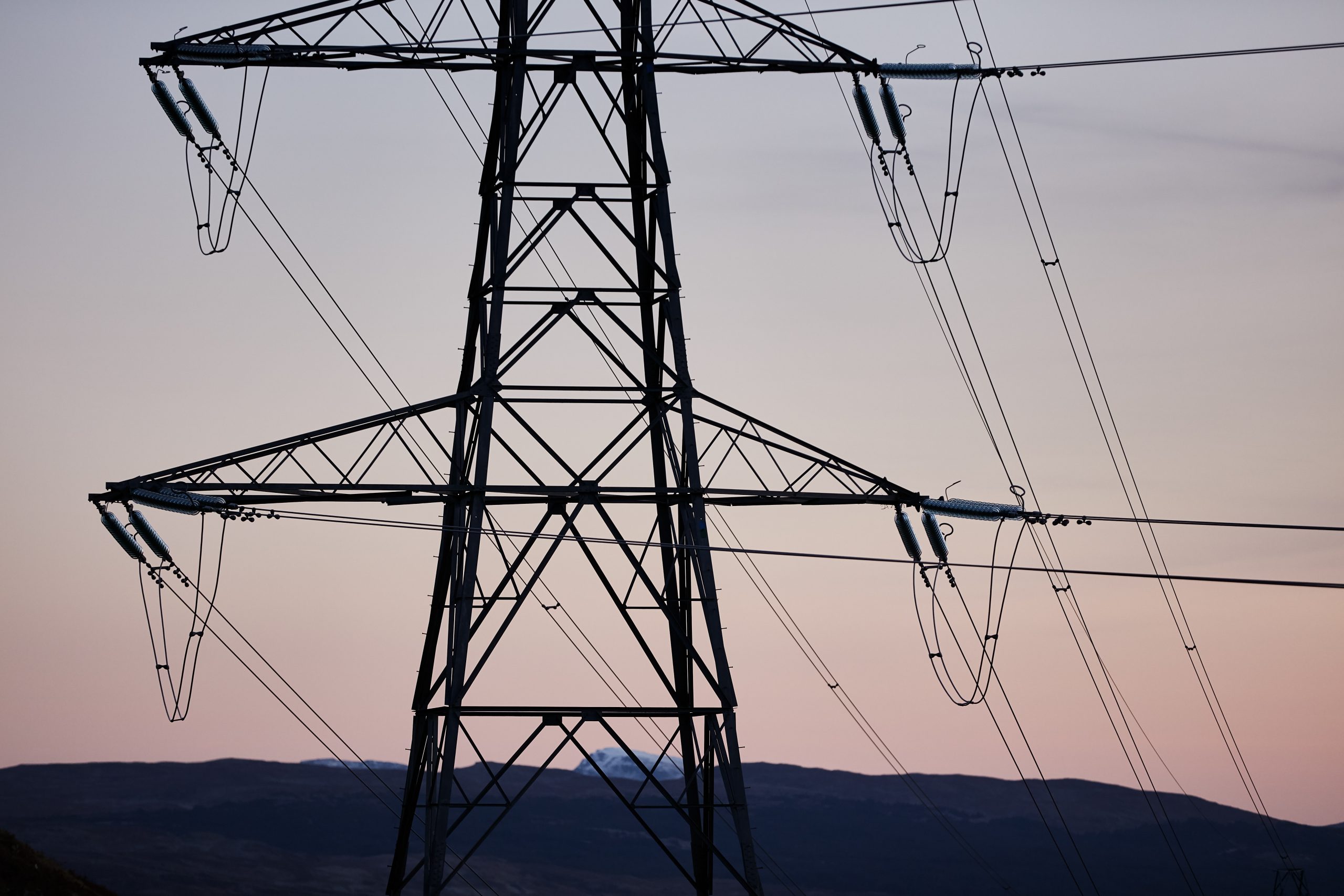
Power lines and pylon above Cruachan Power Station, viewed from Ben Cruachan above

Power lines and pylon above Cruachan Power Station, viewed from Ben Cruachan above [Click to view/download]

Power Generation – flexible, low-carbon and renewable generation

  • Adjusted EBITDA up 45% to £214 million (H1 2019: £148 million)
    • Limited impact from Covid-19 – strong contracted position provided protection from lower demand, reduction in ROC(7) prices offset by increased system support services
    • £34 million of Capacity Market income (H1 2019: nil; £36 million in relation to H1 2019 subsequently recognised in H2 2019 following re-establishment of the Capacity Market)
    • £54 million of Adjusted EBITDA from hydro and gas generation assets (H1 2019: £36 million)
    • System support (Balancing Market, ancillary services and portfolio optimisation) up 8% to £66 million (H1 2019: £61 million)
    • Good commercial availability across the portfolio – 91% (H1 2019: 87%)
  • Covid-19 – business continuity plan in place to ensure safe and uninterrupted operations
  • Biomass generation up 16% to 7.4TWh (H1 2019: 6.4TWh)
    • Strong supply chain (impact of adverse weather in H1 2019) and record CfD availability (Q2 2020 – 99.5%)
  • Pumped storage / hydro – excellent operational and system support performance
  • Gas – excellent operational and system support performance, Damhead Creek planned outage underway
  • Coal – 10% of output in H1 2020 – utilisation of coal stock before end of commercial generation (March 2021)

Customers – managing the impact of Covid-19 on SME business

  • Adjusted EBITDA loss of £37 million (H1 2019: £9 million profit) inclusive of estimated £44 million impact of Covid-19 – reduced demand, MtM loss on pre-purchased power and increase in bad debt, principally in SME business

  • Covid-19 – implemented work from home procedures to allow safe and continuous operations and customer support
  • Good performance in Industrial and Commercial market – new contracts with large water companies providing five-year revenue visibility, while supporting the Group’s flexible, renewable and low-carbon proposition
  • Monitoring and optimisation of portfolio to ensure alignment with strategy

Other financial information

  • Total financial performance measures reflects £108 million MtM gain on derivative contracts, £224 million coal obsolescence charges and £10 million impact (£6 million adjusted impact) from UK Government’s reversal of previously announced corporation tax rate reduction resulting in revaluation of deferred tax asset and increased current tax charge
    • Additional c.£25–£35 million for coal closure costs expected to be reported as exceptional item in H2 2020 when coal consultation process is further advanced
  • Capital investment – continuing to invest in biomass strategy, some delay in investment due to Covid-19
    • H1 2020: £78 million (H1 2019: £60 million)
    • Full year expected investment £190–£210 million (was £230–£250 million), includes 0.35Mt expansion of existing pellet plants and $20 million initial investment in satellite plants ($40 million in total)
  • Net debt of £792 million, including cash and cash equivalents of £482 million (31 December 2019: £404 million)
    • Remain on track for around 2.0x net debt to Adjusted EBITDA by end of 2020

View complete half year report

View analyst presentation

Listen to webcast

View/download main image. Caption: LaSalle BioEnergy (centre) and co-located sawmill (right), Louisiana


Robust trading and operational performance; 2020 Adjusted EBITDA currently in line with consensus; delivering for all stakeholders

Drax employee in PPE in front of biomass storage dome

RNS Number : 4161K
Drax Group plc
(“Drax” or the “Company”; Symbol: DRX)

Highlights

  • Robust trading and operational performance in first three months of 2020

  • Strong contracted forward power sales supporting 2020-21 earnings visibility

  • 2020 full year Adjusted EBITDA(1) currently in line with consensus(2) inclusive of £60 million estimated potential impact from Covid-19

  • Principally lower power demand and increased bad debt risk in Customers business

  • Lower ROC(3) recycle prices in Generation, partially offset by system support services

  • Strong balance sheet at 31 March 2020 – net debt: £818 million, available cash and committed cash facilities: £663 million

  • 2019 final dividend of 9.5 pence per share (£37 million) to be paid in respect of 2019 performance, as previously announced – subject to shareholder approval at AGM

  • Strategic focus remains on biomass supply chain expansion and cost reduction

Electricity pylon near Cruachan Power Station, Argyll and Bute

Electricity pylon near Cruachan Power Station, Argyll and Bute [Click to view/download]

Will Gardiner, Drax Group CEO, said:

“With our strong balance sheet, robust trading and operational performance, and resilient sustainable biomass supply chain, Drax is in a strong position to support its employees, business customers and communities during the Covid-19 crisis, while continuing to generate returns for shareholders.

Drax Group CEO Will Gardiner

Drax Group CEO Will Gardiner in the control room at Drax Power Station. Click to view/download.

“As an important part of the UK’s critical national infrastructure, we recognise our responsibility to support the country’s response to Covid-19. We have strong business continuity plans in place and are in close contact with the UK Government. Our dedicated teams across England, Scotland and Wales, supported by our US biomass colleagues and business partners, are working around the clock to generate and supply the flexible, low-carbon and renewable electricity the UK needs, not least to the 250,000 businesses, including care homes, hospitals and schools we supply.

“The Group is also providing support for communities and others affected by Covid-19.

“Nevertheless, it is still early in this pandemic. As Covid-19 continues to develop, we remain vigilant in looking to protect all our stakeholders and will report further if there are significant changes to our outlook for 2020.”

Trading, operational performance and outlook

The trading and operational performance of the Group has been robust in the first three months of 2020.

While the impact of Covid-19 is still unfolding, the Group’s expectations for 2020 Adjusted EBITDA are currently in line with consensus inclusive of an estimated potential impact from Covid-19 of £60 million, principally in relation to its Customers business.

Full year expectations for the Group remain underpinned by good operational availability for the remainder of 2020.

In the Customers business, the consequences of Covid-19 are only now starting to become visible. It is expected to result in reduced demand and a potential increase in bad debt, which represents a major sensitivity, particularly in the SME(4) market. As a result, Drax has significantly increased its expectation of potential customer business failures and higher bad debt.

Assuming the continued impact of Covid-19 throughout 2020, Drax now expects a full year Adjusted EBITDA loss for the Customers business. The Group will closely monitor the impact on the Customers business and update the market accordingly.

In Generation, the Group’s expectations for the full year reflect a reduction in ROC recycle prices resulting from reduced power demand. Drax expects to partially offset this through increased activity in system support services across its generation portfolio.

The performance of the Generation business is dependent on the continuation of biomass deliveries to Drax Power Station. Biomass generation is currently the most material area of activity for the Group and a protracted suspension of the supply chain could lead to lower levels of biomass generation, resulting in a reduction in the Group’s expectations for the full year. At present there has been no impact from Covid-19 and the Group has a good supply of biomass throughout the supply chain, which continues to be robust and functioning well.

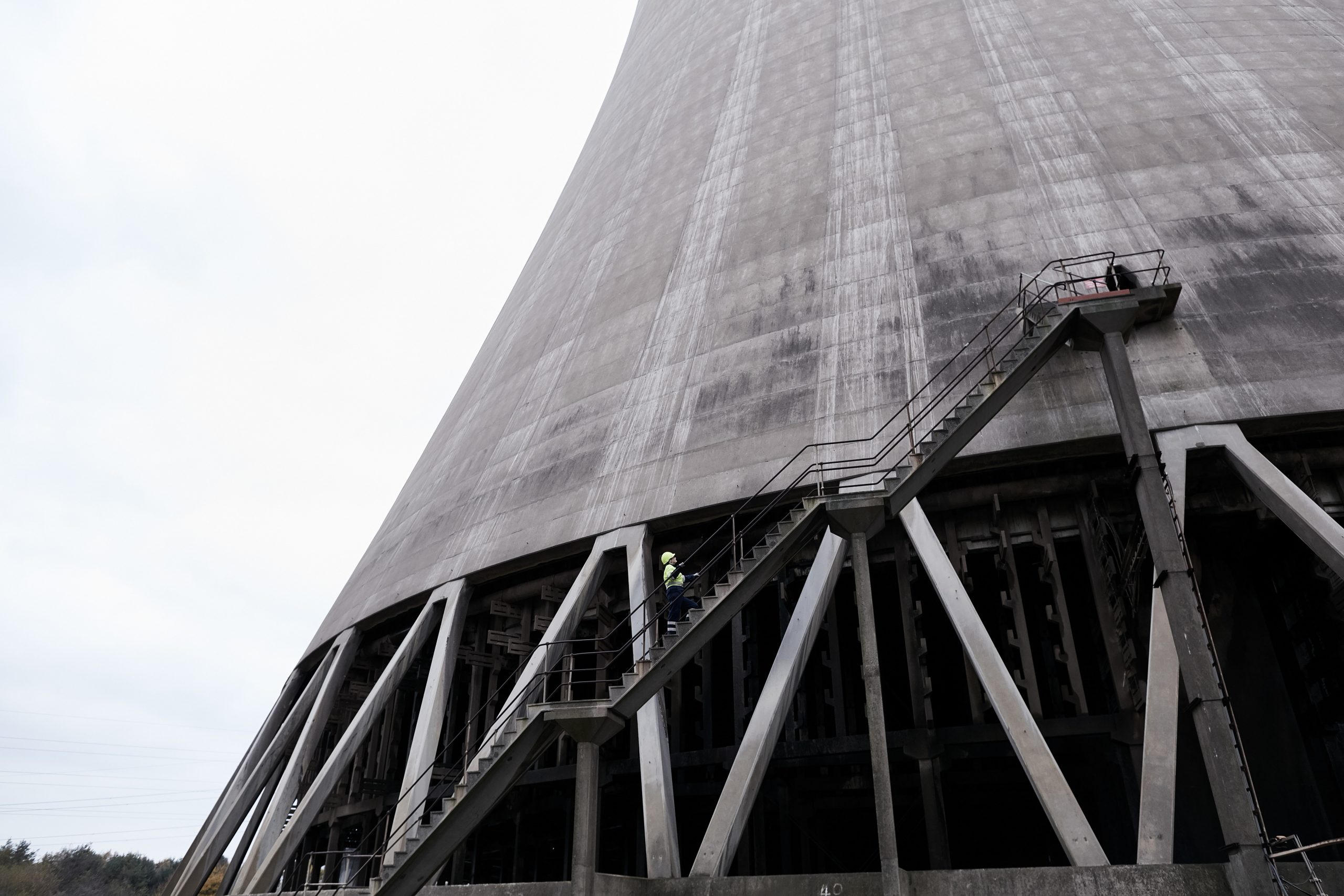
Engineer climbs cooling tower at Drax Power Station

Engineer climbs cooling tower at Drax Power Station [Click to view/download]

Generation

During the first three months of 2020 Drax’s generation portfolio performed well with good asset availability and optimisation of generation underpinning a strong financial performance.

The business benefits from a strong forward power sales position through 2022 which, combined with index-linked renewable schemes and capacity payments, provides a high level of earnings visibility, helping to protect the business from the current weakness in UK power prices.

In response to Covid-19, Drax has implemented robust business continuity procedures across its sites to protect employees and contractors and ensure continued operation. In addition to operating strategically important infrastructure, the components of the Group’s UK supply chain are considered key sectors allowing continued operation.

The Group’s biomass supply chain has a high level of operational redundancy designed to mitigate any potential disruption. Drax sources biomass from suppliers across North America and Europe, including the Group’s own facilities in Louisiana and Mississippi. In the UK, Drax utilises dedicated port facilities at Hull, Immingham, Tyne and Liverpool, with a capacity of eleven million tonnes, providing supply chain capacity in excess of the Group’s annual biomass usage of over seven million tonnes.

Sustainable biomass wood pellets destined for Drax Power Station unloaded from the Zheng Zhi bulk carrier at ABP Immingham

Sustainable biomass wood pellets destined for Drax Power Station unloaded from the Zheng Zhi bulk carrier at ABP Immingham [Click to view/download]

Drax Power Station has 300,000 tonnes of biomass storage capacity. Taken together with volumes throughout its supply chain the Group currently has visibility of over one million tonnes of biomass in transit – enough to operate the CfD(5) unit on its own for over four months, subject to managing deliveries to Drax Power Station.

Biomass generation has performed well in the first three months of 2020. Whilst Covid-19 has not had any measurable impact on biomass generation to date, a sustained reduction in electricity demand could result in a reduction in ROC recycle prices in the current compliance period. The Group has adjusted its expectations for the full year but the precise impact will be dependent on the depth and duration of any reduction in demand. Drax expects to partially offset this through increased activity in system support services across its generation portfolio.

Engineer at Cruachan Power Station

Engineer at Cruachan Power Station [Click to view/download]

The Group’s hydro assets have performed well, particularly the pumped storage business, primarily driven by activity in the system support services market. As previously disclosed, Cruachan Pumped Storage Power Station was successful in a tender process run by the system operator to procure inertia and reactive power services. The contract is worth up to c.£5 million per year over six years and is expected to commence during the second quarter of 2020. This was the first tender of its kind and reflects the growing importance of system support services as the generation market becomes increasingly supplied by intermittent renewable power sources. The system operator is expected to conduct further tenders over the coming year.

Thermal generation is performing in line with Drax’s expectations.

Pellet Production

LaSalle BioEnergy wood pellet manufacturing plant in Louisiana

LaSalle BioEnergy wood pellet manufacturing plant in Louisiana [Click to view/download]

Pellet Production has performed well in the first three months of 2020.

At present there has been no disruption to production caused by Covid-19, although the State of Louisiana is experiencing a high number of cases. The semi-automated nature of the pellet production process limits the need for individuals to be in contact with each other and this has been enhanced by robust business continuity procedures to further reduce the risk to employees and contractors.

Drax continues to monitor developments closely and notes that energy, rail, port and forestry are designated key sectors in the USA allowing continued operation.

Customers

The Group’s Customers business, which sells power, gas and energy services to the I&C(6) and SME markets has seen a significant reduction in demand as a result of Covid-19. The Group has been working to assess the potential impact of this demand reduction, the increased risk of business failure and bad debt. The impact is expected to be most pronounced in the SME market, which represents c.30 percent of monthly billing. The impact is expected to be partially mitigated by credit insurance in respect of certain customers.

Balance sheet

At 31 December 2019 Drax had £404 million of cash, which increased to £454 million at 31 March 2020.

The Group’s plan for 2020 included capital investment of £230-£250 million, with half of this assigned to strategic investment in biomass expansion and cost reduction. Whilst the Group continues to see its biomass strategy as both a primary long and short-term source of value, Drax is reviewing the timing of its investment programme in 2020 and in the short-term investment is expected to be lower.

At 31 March 2020 net debt had reduced to £818m million and Drax continues to target around 2 x net debt to EBITDA for the full year.

The Group has available cash and committed facilities of £663 million including a cash line available within a £315 million Revolving Credit Facility (RCF), which is currently undrawn and matures in April 2021. The Group has an ESG facility with final maturity in 2022 and a £350m sterling bond which matures in 2022. The Group has a further $500 million fixed rate USD bond maturing in 2025 and infrastructure private placement loans maturing through 2024-2029.

The Group’s facilities include a maintenance covenant which, if triggered, requires a minimum EBITDA level requirement around 40% of 2020 current consensus Adjusted EBITDA. Customary covenants apply to all other facilities.

The Group’s rolling five-year foreign exchange hedge book continues to provide protection from the recent weakness in sterling to 2025. The Group actively manages risk limits with counterparties providing forward foreign exchange contracts and the current weakness in sterling has led to the rebasing of a number of contracts, resulting in the acceleration of cash flows from these contracts to the benefit of Drax.

Contracted power sales

As at 16 April 2020, the power sales contracted for 2020, 2021 and 2022 were as follows:

202020212022
Power sales (TWh) comprising:16.79.64.3
– Fixed price power sales (TWh) 17.110.14.3
Of which CfD unit (TWh)3.8
At an average achieved price (£ per MWh)53.249.448
– Gas hedges (TWh)-0.4-0.5-
At an achieved price (pence per therm)1.732-

Merchant power prices remain an important part of the Group’s earnings, but by focusing on flexible, renewable and low-carbon generation, which includes index-linked renewable schemes, capacity payments and system support services, the impact of power prices has reduced.

Exposure to merchant power prices by generation asset class

  • Biomass CfD – power produced by this unit is remunerated based on an index-linked strike price and underpinned by a private law contract which runs until March 2027. At baseload the unit is expected to produce over 5TWh per year. The current strike price is c.£116/MWh and taken together with a biomass cost at or below c.£75/MWh gives a margin of over £40/MWh and an annual contribution to gross profit of over £200 million, with daily cash settlement in 30 days
  • Biomass ROC – ROC buyout prices are index-linked and extend to March 2027, acting as a premium on UK power prices. The buyout price for the current compliance period is £50.05 per ROC. Annual generation is in the region of 9-10 TWh, with the associated power sold up to two years forward, providing strong earnings visibility over the period 2020-21
  • Hydro – a small but profitable volume of merchant power generation (144MW) with zero fuel cost
  • Pumped storage – operates in the system support services market and carries little net exposure to merchant power prices
  • Coal – commercial generation will end in March 2021, ahead of which date Drax will utilise its residual coal stock to realise further cash flows
  • Gas – the Group’s mid-merit CCGT(7) assets have power forward sales for 2020. To the extent that gas prices continue to set the price of power, the clean spark spread from these assets is expected to be maintained at or around current levels in future periods
Engineer working in PPE at Rye House Power Station in Hertfordshire

Engineer working in PPE at Rye House Power Station in Hertfordshire [Click to view/download]

Investment in biomass to increase capacity and reduce cost

Biomass sustainability remains at the heart of the Group’s activities and building a long-term future for sustainable biomass remains the Group’s strategic objective. Drax remains focused on reducing biomass costs to a level which makes biomass generation in the UK economically viable when the existing renewable schemes end in 2027.

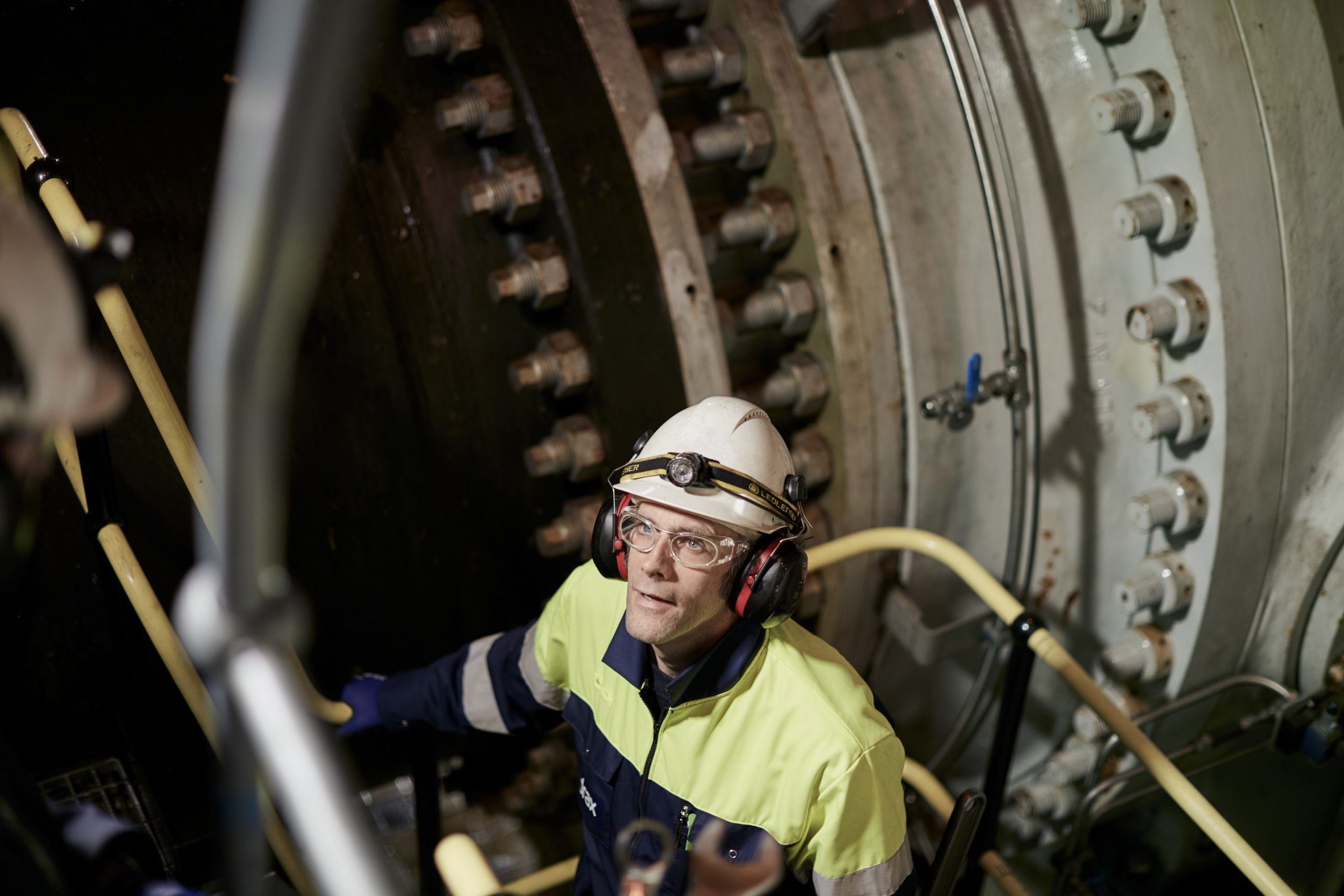
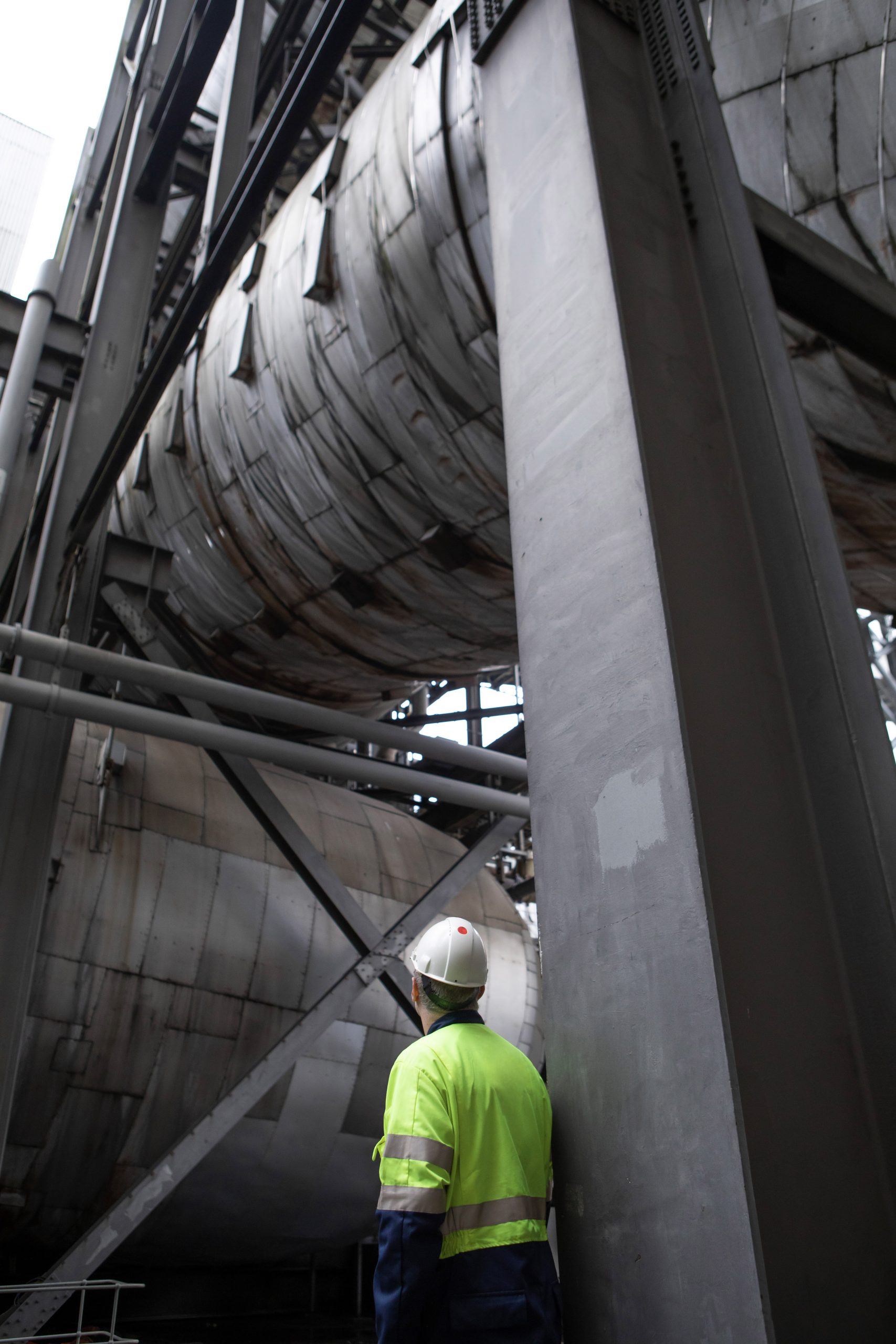
Innovation engineer looks up at flue gas desulphurisation unit. The massive pipe above him could be used to transport more than 90% of the carbon captured in the BECCS power generation process.

An engineer looks up at flue gas desulphurisation unit (FGD) at Drax Power Station. The massive pipe would transport flue gas from the Drax boilers to the carbon capture and storage (CCS) plant for CO2 removal of between 90-95%. [Click to view/download]

The Group is targeting five million tonnes of self-supply capacity by 2027 (1.5 million today, plus 0.35 million tonnes in development), with greater scope for operational leverage and cost reduction. These savings will be delivered through further optimisation of existing biomass operations, greater utilisation of low-cost wood residues and an expansion of the fuel envelope to incorporate other low-cost renewable fuels across its expanded self-supply chain. Drax remains alert to sector opportunities for organic and inorganic growth.

By 2027 these activities would enable Drax to develop a biomass generation business operating without the current renewable schemes and potentially the development of BECCS(8), subject to the right support from the UK Government. Drax notes the incremental progress and support announced for carbon capture and storage at the UK Government’s Budget in March 2020.

These efforts support the Group’s ambition to become a carbon negative company by 2030.

In addition, the Group is exploring options to service biomass demand in other markets – Europe, North America and Asia.

Capital allocation and dividend

The Group remains committed to its capital allocation policy established in 2017, through which it aims to maintain a strong balance sheet; invest in the core business; pay a sustainable and growing dividend and return surplus capital beyond investment requirements.

A final dividend of 9.5 pence per share in respect of 2019 performance was proposed at the 2019 Full Year Results on 27 February 2020 and, subject to shareholder approval at today’s Annual General Meeting, will be paid on 15 May 2020.

An interim dividend of 6.4 pence per share was paid in October 2019, making the total dividend in relation to 2019 performance 15.9 pence per share.

In determining the continued appropriateness of the dividend, the Board has considered a range of factors – trading performance, current liquidity, the outlook for the year in the context of Covid-19, as well as the steps being taken to support all stakeholders. The Board believes payment of the final dividend remains consistent with the Group’s commitment to stakeholders.

Drax will update on its expectations for the 2020 full year dividend at the 2020 interim results on 29 July 2020.

Enquiries:

Drax Investor Relations: Mark Strafford

+44 (0) 1757 612 491

Media:

Drax External Communications: Ali Lewis

+44 (0) 7712 670 888

Website: www.drax.com

END

Full year results for the twelve months ended 31 December 2018

Biomass domes
RNS Number: 0765R
Drax Group PLC
Adjusted(1)Total
Twelve months ended 31 December20182017 Restated(2)20182017 Restated(2)
Key financial performance measures
EBITDA (£ million)(3)250229
Profit / (loss) before tax (£ million)37514(204)
Basic earnings / (loss) per share (pence)10.40.75.0(41.3)

Good financial performance

  • Group Adjusted EBITDA up 9% to £250 million
  • Continued strong cash generation and balance sheet
    • 3x net debt to Adjusted EBITDA (2017: 1.6x net debt to Adjusted EBITDA)
    • Net cash from operating activities of £311 million (2017: £315 million)
    • Net debt(4) of £319 million (2017: £367 million)
  • Dividend growth – 15% increase in dividend per share – 14.1 pence per share (2017: 12.3 pence per share)
  • £50 million share buy back programme completed
  • Total profit before tax of £14 million includes gains principally related to foreign currency hedging of £38 million (2017: Total loss before tax of £204 million including unrealised losses of £177 million)

Dam and reservoir, Cruachan Power Station

Acquisition of ScottishPower Generation has accelerated strategy

  • 6GW multi-site, multi-technology portfolio of pumped storage, hydro and gas
  • Strong strategic fit with UK’s need for flexible, low carbon and renewable generation
  • High quality earnings with expected returns significantly in excess of weighted average cost of capital

Good progress with strategic initiatives

  • Successful low-cost conversion of fourth biomass unit
  • Third US biomass pellet plant commissioned and fully operational
  • Progress with biomass cost reduction programme including sawmill co-location and rail spur development
  • Commenced BECCS(5) pilot project and equity investment in C-Capture – technology proven with CO2 captured
  • Development of B2B Energy Supply customer and IT platform

Outlook

  • Continued growth in Adjusted EBITDA, cash generation and dividend
  • Integration of ScottishPower Generation
  • Continue to expect Capacity Market to be reinstated on same or similar basis
  • Attractive investment options for growth: biomass cost reduction, biomass capacity expansion and new gas

Will Gardiner, Chief Executive of Drax Group plc, said:

“Drax is now one of the leading generators of flexible, low carbon and renewable electricity in the UK. As the grid decarbonises, our ability to support intermittent renewables will become increasingly important as we strive to deliver our purpose of enabling a zero carbon, lower cost energy future.

“Drax performed well in 2018. Our commitment to operating safely and sustainably remains at our core. We commissioned our third pellet production plant, which contributed to our good results. After a difficult first quarter for our Power Generation business, we delivered strong availability and financial results. Whilst the year was challenging for our B2B Energy Supply business, we continued to grow our customer base and are investing in the significant opportunity created by smart meters.

“We are confident in our ability to continue growing our earnings and advancing our strategy through the year. We have attractive investment opportunities throughout our business, and while short-term uncertainty over the Capacity Market remains, we look forward to developing those opportunities in a disciplined fashion.”

Operational review

Pellet ProductionFocus on good quality pellets at lowest cost

  • Adjusted EBITDA of £21 million (2017: £6 million)
    • 64% increase in production to 1.351 million tonnes (2017: 0.822 million tonnes)
    • LaSalle Bioenergy (LaSalle) commissioned and fully operational – 0.5Mt pellet capacity – performing well
    • 10% reduction in cost per tonne
  • Biomass cost reduction initiatives – future benefits
    • Co-location and offtake agreement with Hunt Forest Products for low-cost sawmill residues at LaSalle
    • LaSalle rail spur – $10/tonne reduction in transport cost to Baton Rouge port facility – commissioning 2019
    • Relocation of administration from Atlanta to Monroe – greater operational focus and savings

Power GenerationOptimisation of portfolio, system support services and development of decarbonisation projects

  • Adjusted EBITDA of £232 million (2017: £238 million)
    • Impact of rail unloading outage and generator outage on one ROC(6) unit in Q1 2018
    • Lower margins from coal generation – coal and carbon costs
    • System support revenue of £79 million (2017: £88 million) – specific Black Start contract in Q1 2017
    • Suspension of Capacity Market – £7 million of revenues not accrued in Q4 2018
    • Optimisation of ROC generation, biomass operations and procurement of third party biomass volumes
    • Biomass earnings benefited from conversion of fourth unit and insurance proceeds on historic outages
  • Electricity output (net sales) down 8% to 18.3TWh (2017: 20.0TWh)
    • 75% of generation from biomass (2017: 65%)
  • Strong biomass availability – 91% (2017: 79%)
    • Reduced biomass generation in Q1 2018 offset by strong unit availability Q2-Q4 2018

B2B Energy SupplyProfitable business, growth in customer meters, challenging market environment

  • Adjusted EBITDA of £28 million (2017: £29 million)
    • 5% increase in customer meters to 396,000 (2017: 376,000)
    • Increase in bad debt and provisioning reflecting challenging environment
    • Mutualisation of renewable costs associated with competitor failure
    • Higher gas costs due to weather and mutualisation
    • Benefit of full year of Opus Energy (2017: 10.5 months)
    • 22% growth in gross profit to £143 million (2017: £117 million)
  • Development of flexibility and system support market
  • Continued investment in next generation systems to support growth and operational efficiency

Group financial information

  • Total basic earnings per share of 5.0 pence, includes write-off of coal-specific assets (£27 million) following fourth biomass unit conversion, costs associated with acquisition and on-boarding of ScottishPower Generation, restructuring costs in Opus Energy and Pellet Production (£28 million), and unrealised gains on derivative contracts (£38 million)
  • Tax credit of £6 million includes benefit of Patent Box claims – corporation tax rate of 10% on profits arising from the use of biomass innovation
  • Capital investment of £142 million
    • Maintaining operational performance (£55 million), enhancement (£40 million), strategic (£35 million) and other (£12 million)
  • Net debt of £319 million, including cash and cash equivalents of £289 million (31 December 2017: £367 million)

View complete full year report

View analyst presentation

Register and watch 9am webcast of presentation

‘3D’ to drive an energy revolution

Think of the phrase ‘3D’ and may people instantly think of video games, television or cinema, along with the special glasses you needed to watch it.

But another form of 3D is, I believe, going to be at the heart of the energy revolution which is rapidly gathering place.

The three Ds in this case are Data, Diversification and Decarbonisation. Together, they will transform the way businesses buy, use and sell their energy, help companies take control of their energy use and save money and also play a key part in our journey towards a zero carbon, lower cost energy future.

We’re already seeing some real innovations in the energy sector. Our trial of a storage battery with a customer of Opus Energy is an example, offering a farming business in Northampton the chance to sell stored energy generated by solar panels back to the grid at times of peak demand – a potential new revenue stream.

But other innovations and advances will maintain the pace of change and data will be at the core of this now the new generation of smart meters are being installed in businesses, revolutionising customer relationships with their energy suppliers.

The data from the new meters will finally give customers insight into where and when they use energy. Suppliers will have to work much more closely with customers to help them access new opportunities for cost savings, access to new markets and even new revenue streams.

An example would be a restaurant. With the data smart meters will provide, the restaurant’s supplier will be able to tell the owners how their energy use compares to the local competition and where improvements can be made.

The detail could go as far as identifying whether the restaurant’s equipment is older and less efficient, whether rivals have installed newer kit or whether other businesses are switching off their equipment earlier or using it at different, cheaper times.

Using energy during the peak weekday morning and early evening hours is often the most expensive time to do so. Data will give businesses the insight into how they can use energy more efficiently and when they use it, offering them the chance to avoid buying at peak times whenever possible and driving efficiencies.

This is why Haven Power’s trading team is now working closely with GridBeyond. The partnership allows our customers to trade the power they produce as well as optimise their operations to help balance the grid at times of peak demand. The really smart thing is that in doing so, customers are reducing their energy costs and making their operations more sustainable.

Trading desks at Haven Power’s Ipswich HQ

The way demand changes and is managed by businesses and consumers on a diversified power system will also be key. The business energy sector is already diversifying as many customers are able to generate and store their own power but the next step is for more customers to be paid to reduce their usage at peak times.

Think of a busy time for the National Grid – half time in the FA Cup Final or after the results in Strictly Come Dancing. Previously, the grid would have to pay a power station to ramp up generation to meet demand but these days, customers are paid to reduce demand for 30 minutes or so – in effect becoming a huge virtual power station.

This has happened for some time of course with larger, industrial customers but now, smaller companies can benefit from this too, thanks to the data and insight they will have from their smart meters. This empowers customers and puts them, not the energy companies, in control of the key decisions about their energy.

A close, advisory relationship between energy suppliers and their customers will become ever more important to make sure business can choose to avoid the high demand periods, and maximises use during the lower, cheaper times. In fact, I can see a time when customers will end up paying more for insight and advice than they do for the power they buy – and they’ll save money overall in doing so.

And if we get all this right, it will help drive one of the most important of the three Ds – decarbonisation.

Sustainability is increasingly becoming a primary focus for businesses and demand for renewable energy is growing because it is now cost-effective. That will help us in our drive towards a zero carbon future as more and more renewable energy comes onstream, though the UK will continue to need power generated from more flexible assets as well.

So there are huge opportunities out there to transform our energy landscape but they have to be viewed positively. The smart metering programme can be viewed as a regulatory burden or it can be seen as an opportunity. We take the positive view.

Likewise, batteries were once the preserve of massive companies only but now, as technology develops, they are becoming available for smaller firms too. The more we can innovative on a larger scale, the more the technology will work its way into smaller markets too, adding momentum to the energy revolution.

The opportunities are huge. If we get it right, so too will be the benefits to one of the biggest priorities of all – the work to decarbonise the UK and create the lower carbon future we all want.