




Tag: energy policy

Drax enters formal discussions with UK Government on large-scale Power BECCS

Drax has been invited to enter formal bilateral discussions with the Government immediately, to move the project forward and ensure the Government is able to fulfil its restated commitment to achieving 5Mtpa of engineered Greenhouse Gas Removals (GGRs) by 2030. Drax believes that BECCS at Drax Power Station is the only project that can enable the Government to achieve this goal(1). The Government has also committed to publish its biomass strategy by the end of June 2023 which will set out how the technology could be deployed.

During 2022 carbon removal projects, including Power BECCS, were progressed in parallel with the Track 1 process for gas, hydrogen and industrial CCS projects. While Power BECCS and other shortlisted projects are not included in the immediate Track 1 process, the Government has confirmed that in 2023 it will set out a process for the expansion of Track 1 and has today launched Track 2. BECCS is eligible for both.

Separately, the Government has stated that it will work closely with electricity generators currently using biomass to facilitate a transition to Power BECCS.

The Government has also confirmed that its response to the Power BECCS business model consultation, which took place in 2022, will be published imminently, providing further clarity on the delivery of BECCS as soon as possible.

Drax Group CEO, Will Gardiner said:

“Delivery of BECCS at Drax Power Station will help the UK achieve its net zero targets, create thousands of jobs across the north and help ensure the UK’s long-term energy security.

“We note confirmation that our project has met the Government’s deliverability criteria and Government remains committed to achieve 5Mtpa of engineered Greenhouse Gas Removals by 2030 – a goal that cannot be achieved without BECCS at Drax Power Station. We will immediately enter into formal discussions with Government to take our project forward.

“With the right engagement from Government and swift decision making, Drax stands ready to progress our £2bn investment programme and deliver this critical project for the UK by 2030.”

The Government recognises the important role which BECCS will play in delivering net zero and aims to deploy 5Mt of engineered CO2 removals per annum from BECCS and other engineered GGR technologies by 2030, rising to 23Mt in 2035 and up to 81Mt in 2050 to keep the UK on a pathway to meet its legislated climate targets, The Sixth Carbon Budget and net zero.

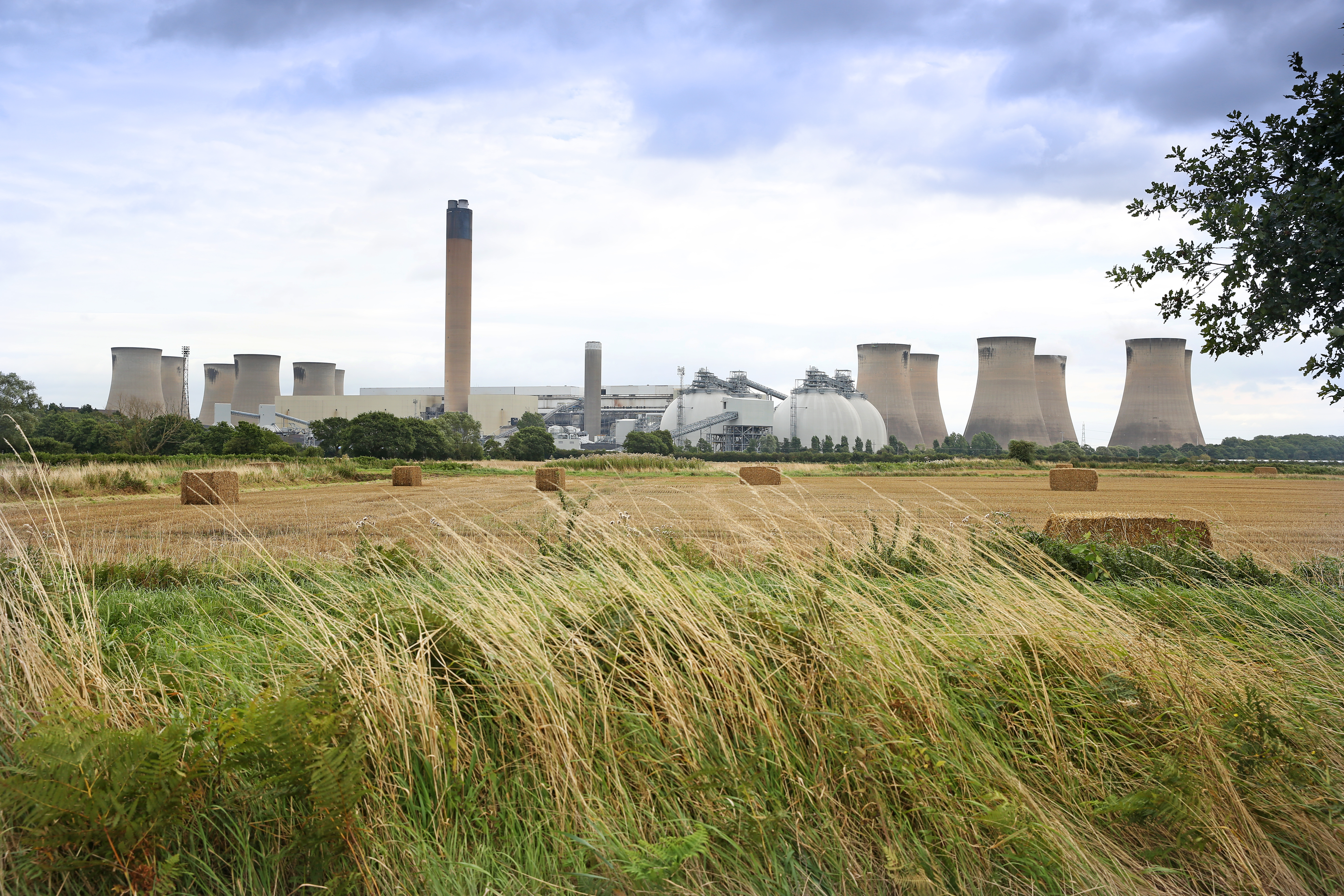
Drax Power Station is the UK’s largest single source of renewable electricity and BECCS is the only technology that can produce reliable renewable power, provide system support services and permanently remove CO2 at scale. 

Coal closure

Drax continues to expect to close its two legacy coal units at the end of March 2023.

Notes

(1)  In its Energy White Paper, Government noted that biomass is unique amongst renewable technologies in the wide array of applications in which it can be used as a substitute for fossil-fuel based products and activities, along with its ability to deliver permanent carbon removals.

Government recognises that biomass is one of the UKs most valuable tools for reaching net zero emissions while maintaining energy security.

Biomass is the only large-scale source of dispatchable, renewable electricity and Drax power station in Yorkshire is the largest provider of secure supply in the UK’s electricity system. Its renewable biomass generation provides 2.6GW of electricity, representing 4% of the UK’s dispatchable capacity and supplies millions of homes and businesses with dispatchable, reliable power. 

The project at Drax Power Station is expected to be the world’s biggest engineered carbon removal project, permanently removing 8Mt of CO2 from the atmosphere every year by 2030.

The project would see the addition of post combustion carbon capture to two of the existing biomass units, using sustainable biomass and technology from Drax’s technology partner, Mitsubishi Heavy Industries. Captured CO2 would be transported and permanently stored by the Group’s partners in the East Coast Cluster.

Vivid Economics concluded that it could deliver £370 million of economic benefit for the UK during construction, creating and supporting more than 10,000 jobs during peak construction.

Recent Baringa research also demonstrates that Drax is the UK’s largest source of energy security and will continue to play a vital role in the UK security of supply in to the late 2020s.

Drax aims to source 80% of materials and services for the project from British businesses and is also working with British Steel to explore opportunities for its UK production facilities to supply a proportion of the steel needed for BECCS.

A link to the Government’s announcement can be found here.

Enquiries:

Drax Investor Relations: Mark Strafford

+44 (0) 7730 763 949

Media:

Drax External Communications: Chris Mostyn
+44 (0) 7548 838 896

Reapproval of UK Capacity Market

Drax Power Station

Following formal confirmation from the UK Government, Drax expects the Capacity Market to be re-instated shortly, with full retrospective payments made for the capacity provided. Capacity payments due to Drax for 2019 and since the suspension of the Capacity Market in 2018 are £75 million. Drax expects these to be included in 2019 EBITDA.

Drax expects the decision will allow future Capacity Market auctions to take place in early 2020. Drax retains options for new gas generation, which could be developed subject to appropriate clearing prices in future Capacity Market auctions.

A link to the European Commission’s decision is provided below.

https://europa.eu/rapid/press-release_IP-19-6152_en.htm

Will Gardiner, Drax Group CEO said:

“This is great news for the UK energy system. The capacity market helps to ensure Britain has the flexible and reliable power generating capacity needed to support the economy as it continues to decarbonise, keeping the lights on at the lowest cost for millions of homes and businesses.

“We will be prequalifying a number of Drax’s flexible and reliable power stations, as well as some of our development projects, later this year with a view to participating in the capacity markets auctions in 2020.”

Enquiries:

Drax Investor Relations: Mark Strafford

+44 (0) 1757 612 491

Media:

Drax External Communications: Matt Willey

+44 (0) 203 943 4306

Website: www.drax.com

END

RNS Number : 0491R

‘3D’ to drive an energy revolution

Think of the phrase ‘3D’ and may people instantly think of video games, television or cinema, along with the special glasses you needed to watch it.

But another form of 3D is, I believe, going to be at the heart of the energy revolution which is rapidly gathering place.

The three Ds in this case are Data, Diversification and Decarbonisation. Together, they will transform the way businesses buy, use and sell their energy, help companies take control of their energy use and save money and also play a key part in our journey towards a zero carbon, lower cost energy future.

We’re already seeing some real innovations in the energy sector. Our trial of a storage battery with a customer of Opus Energy is an example, offering a farming business in Northampton the chance to sell stored energy generated by solar panels back to the grid at times of peak demand – a potential new revenue stream.

But other innovations and advances will maintain the pace of change and data will be at the core of this now the new generation of smart meters are being installed in businesses, revolutionising customer relationships with their energy suppliers.

The data from the new meters will finally give customers insight into where and when they use energy. Suppliers will have to work much more closely with customers to help them access new opportunities for cost savings, access to new markets and even new revenue streams.

An example would be a restaurant. With the data smart meters will provide, the restaurant’s supplier will be able to tell the owners how their energy use compares to the local competition and where improvements can be made.

The detail could go as far as identifying whether the restaurant’s equipment is older and less efficient, whether rivals have installed newer kit or whether other businesses are switching off their equipment earlier or using it at different, cheaper times.

Using energy during the peak weekday morning and early evening hours is often the most expensive time to do so. Data will give businesses the insight into how they can use energy more efficiently and when they use it, offering them the chance to avoid buying at peak times whenever possible and driving efficiencies.

This is why Haven Power’s trading team is now working closely with GridBeyond. The partnership allows our customers to trade the power they produce as well as optimise their operations to help balance the grid at times of peak demand. The really smart thing is that in doing so, customers are reducing their energy costs and making their operations more sustainable.

Trading desks at Haven Power’s Ipswich HQ

The way demand changes and is managed by businesses and consumers on a diversified power system will also be key. The business energy sector is already diversifying as many customers are able to generate and store their own power but the next step is for more customers to be paid to reduce their usage at peak times.

Think of a busy time for the National Grid – half time in the FA Cup Final or after the results in Strictly Come Dancing. Previously, the grid would have to pay a power station to ramp up generation to meet demand but these days, customers are paid to reduce demand for 30 minutes or so – in effect becoming a huge virtual power station.

This has happened for some time of course with larger, industrial customers but now, smaller companies can benefit from this too, thanks to the data and insight they will have from their smart meters. This empowers customers and puts them, not the energy companies, in control of the key decisions about their energy.

A close, advisory relationship between energy suppliers and their customers will become ever more important to make sure business can choose to avoid the high demand periods, and maximises use during the lower, cheaper times. In fact, I can see a time when customers will end up paying more for insight and advice than they do for the power they buy – and they’ll save money overall in doing so.

And if we get all this right, it will help drive one of the most important of the three Ds – decarbonisation.

Sustainability is increasingly becoming a primary focus for businesses and demand for renewable energy is growing because it is now cost-effective. That will help us in our drive towards a zero carbon future as more and more renewable energy comes onstream, though the UK will continue to need power generated from more flexible assets as well.

So there are huge opportunities out there to transform our energy landscape but they have to be viewed positively. The smart metering programme can be viewed as a regulatory burden or it can be seen as an opportunity. We take the positive view.

Likewise, batteries were once the preserve of massive companies only but now, as technology develops, they are becoming available for smaller firms too. The more we can innovative on a larger scale, the more the technology will work its way into smaller markets too, adding momentum to the energy revolution.

The opportunities are huge. If we get it right, so too will be the benefits to one of the biggest priorities of all – the work to decarbonise the UK and create the lower carbon future we all want.

Fourth biomass unit conversion

RNS Number : 1114C
Drax Group PLC

Drax welcomes the UK Government response to the consultation on cost control for further biomass conversions under the Renewable Obligation scheme, which will enable Drax to convert a fourth unit to biomass.

The response proposes that, rather than imposing a cap on ROC(1) support for any future biomass unit conversions, a cap would be applied at the power station level across all ROC(1) units. This would protect existing converted units and limit the amount of incremental ROCs attributable to additional unit conversions to 125,000 per annum.

The response would enable Drax to optimise its power generation from biomass across its three ROC units under the cap, whilst supporting the Government’s objective of controlling costs under the Renewable Obligation scheme.

Drax will now continue its work to deliver the low cost conversion of a fourth biomass unit, accelerating the removal of coal-fired generation from the UK electricity system, whilst supporting security of supply.

Drax plans to complete the work on this unit as part of a major planned outage in the second half of 2018, before returning to service in late 2018. The capital cost is significantly below the level of previous conversions, re-purposing the existing co-firing facility on site to deliver biomass to the unit.

The unit will likely operate with lower availability than the three existing converted units, but the intention is for it to run at periods of higher demand, which are often those of higher carbon intensity, allowing optimisation of ROC(1) generation across three ROC(1) accredited units. The CfD(2) unit remains unaffected.

Will Gardiner, Chief Executive of Drax Group, commented:

“We welcome the Government’s support for further sustainable biomass generation at Drax, which will allow us to accelerate the removal of coal from the electricity system, replacing it with flexible low carbon renewable electricity.”

“We look forward to implementing a cost-effective solution for our fourth biomass unit at Drax.”

Enquiries:

Investor Relations:

Mark Strafford

+44 (0) 1757 612 491

Media:

Ali Lewis

+44 (0) 1757 612 165


Website: www.drax.com

Notes

  1. Renewable Obligation Certificate
  2. Contract for Difference

END