Tag: investors

This is how you unload a wood chip truck

Truck raising and lowering

A truck arrives at an industrial facility deep in the expanding forestland of the south-eastern USA. It passes through a set of gates, over a massive scale, then onto a metal platform.

The driver steps out and pushes a button on a nearby console. Slowly, the platform beneath the truck tilts and rises. As it does, the truck’s cargo empties into a large container behind it. Two minutes later it’s empty.

This is how you unload a wood fuel truck at Drax Biomass’ compressed wood pellet plants in Louisiana and Mississippi.

What is a tipper?

“Some people call them truck dumpers, but it depends on who you talk to,” says Jim Stemple, Senior Director of Procurement at Drax Biomass. “We just call it the tipper.” Regardless of what it’s called, what the tipper does is easy to explain: it lifts trucks and uses the power of gravity to empty them quickly and efficiently.

The sight of a truck being lifted into the air might be a rare one across the Atlantic, however at industrial facilities in the United States it’s more common. “Tippers are used to unload trucks carrying cargo such as corn, grain, and gravel,” Stemple explains. “Basically anything that can be unloaded just by tipping.”

Both of Drax Biomass’ two operational pellet facilities (a third is currently idle while being upgraded) use tippers to unload the daily deliveries of bark – known in the forestry industry as hog fuel, which is used to heat the plants’ wood chip dryers – sawdust and raw wood chips, which are used to make the compressed wood pellets.

close-up of truck raising and lowering

How does it work?

The tipper uses hydraulic pistons to lift the truck platform at one end while the truck itself rests against a reinforced barrier at the other. To ensure safety, each vehicle must be reinforced at the very end (where the load is emptying from) so they can hold the weight of the truck above it as it tips.

Each tipper can lift up to 60 tonnes and can accommodate vehicles over 50 feet long. Once tipped far enough (each platform tips to a roughly 60-degree angle), the renewable fuel begins to unload and a diverter guides it to one of two places depending on what it will be used for.

“One way takes it to the chip and sawdust piles – which then goes through the pelleting process of the hammer mills, the dryer and the pellet mill,” says Stemple. “The other way takes it to the fuel pile, which goes to the furnace.”

The furnace heats the dryer which ensures wood chips have a moisture level between 11.5% and 12% before they go through the pelleting process.

“If everything goes right you can tip four to five trucks an hour,” says Stemple. From full and tipping to empty and exiting takes only a few minutes before the trucks are on the road to pick up another load.

Efficiency benefits

Using the power of gravity to unload a truck might seem a rudimentary approach, but it’s also an efficient one. Firstly, there’s the speed it allows. Multiple trucks can arrive and unload every hour. And because cargo is delivered straight into the system, there’s no time lost between unloading the wood from truck to container to system.

Secondly, for the truck owners, the benefits are they don’t need to carry out costly hydraulic maintenance on their trucks. Instead, it’s just the tipper – one piece of equipment – which is maintained to keep operations on track.

However, there is one thing drivers need to be wary of: what they leave in their driver cabins. Open coffee cups, food containers – anything not firmly secured – all quickly become potential hazards once the tipper comes into play.

“I guess leaving something like that in the cab only happens once,” Stemple says. “The first time a trucker has to clean out a mess from his cab is probably the last time.”

3 ways decarbonisation could change the world

Mitigating climate change is a difficult challenge. But it’s one well within the grasp of governments, companies and individuals around the world if we can start thinking strategically.

On the behalf of the German government, The Internal Energy Agency (IEA) and the International Renewable Energy Agency (IRENA) have jointly published a report outlining the long-term targets of a worldwide decarbonisation process, and how those targets can be achieved through long-term investment and policy strategies.

At the heart of the report is a commitment to the ‘66% two degrees Celsius scenario’, which the report defines as, ‘limiting the rise in global mean temperature to two degrees Celsius by 2100 with a probability of 66%’. This is in line with the Paris Agreement, which agreed on limiting global average temperature increase to below two degrees Celsius.

Here are three of the findings from the report that highlight how decarbonisation could change the world.

The energy landscape will change – and that’s a good thing

Decarbonisation will by definition mean reducing the use of carbon-intensive fossil fuels. Today, 81% of the world’s power is generated by fossil fuels. But by 2050, that will need to come down to 39% to meet the 66% two degrees Celsius scenario, according to the report. But, this doesn’t mean all fossil fuels will be treated equally.

Coal will be the most extensively reduced, while other fossil fuels will be less affected. Oil use in 2050 is expected to stand at 45% of today’s levels, but will likely still feature in the energy landscape due its use in industries like petrochemicals.

Gas will likely also remain a key part of the energy makeup, thanks to its ability to provide auxiliary grid functions like frequency response and black-starting in the event of grid failure.

Renewables like biomass will likely play an increasing role here as well, particularly when combined with carbon capture and storage (CCS) technology.

Overall, renewable energy sources will need to increase substantially. In the report’s global roadmap for the future, renewables make up two thirds of the primary energy supply. Reaching this figure will be no mean feat – it will mean renewable growth rates doubling compared with today.

Everyday electricity use will become more efficient 

The report highlights the need for ‘end-use’ behaviour to change. This can mean everyday energy users choosing to use a bit less heat, power and fuel for transport in our day-to-day activities, but a bigger driver of change will be by investment in better, more efficient end-use technology – the technology, devices and household appliances we use every day.

In fact, the study argues that net investment in energy supply doesn’t need to increase beyond today’s level – what needs to increase is investment in these technologies. For instance, by 2050, 70% of new cars must be electric cars to meet decarbonisation targets.

Infrastructure design could also be improved for energy efficiency – smart grids, battery storage and buildings retrofitted with energy efficient features such as LED lighting will be essential. There’s also the possibility of increased use of cleaner building materials and processes – for example, constructing large scale buildings out of wood rather than carbon-intensive materials such as concrete and steel.

Decarbonisation will cost, but not decarbonising will cost more

The upfront costs of meeting temperature targets will be substantial. A case study used in the report estimates that $119 trillion would need to be spent on low-carbon technologies between 2015 and 2050. But it also suggests another $29 trillion may be needed to meet targets.

However, failure to act could mean the world will pay out an even higher figure in healthcare costs, or in other economic costs associated with climate change, such as flood damage or drought. Therefore, the sum for decarbonisation could end up costing between two and six times less than what failing to decarbonise could cost.

On top of this, the new jobs (including those in renewable fuel industries that will replace those lost in fossil fuels) and opportunities that will be created between 2015 and 2050 could add $19 trillion to the global economy. More than that, global GDP could be increased by 0.8% in 2050, thanks to added stimulus from the low carbon economy.

Achieving a cleaner future won’t be easy – it requires planning, effort, and the will to see beyond short-term goals and think about the long-term benefits. But as the report demonstrates, get it right and the results could be considerable.

Why we need the whole country on the same frequency

Electricity frequency

The modern world sits on a volatile, fizzing web of electricity. In 2015 the UK consumed roughly 303 terawatt hours (TWh) of electricity, according to government statistics. That’s an awful lot of power humming around and, in this country, we take it for granted that electricity is controlled. This means the power supply coming into your home or place of work is reliable and won’t trip your fuse box. In short, it means your mobile phone will keep on charging and your washing machine will keep on spinning.

But generating and circulating electricity at safe, usable levels is not an easy task. One of the most overlooked aspects of doing this is electrical frequency – and how it’s regulated.

What is electrical frequency?

To understand the importance of frequency, we need to understand a couple of important things about power generation. Generators work by converting the kinetic energy of a spinning turbine into electrical energy. In a steam-driven generator (like those at Drax Power Station), high pressure steam turns a turbine, which turns a rotor mounted inside a stator. Copper wire is wound around the rotor energised with electricity, this turns it into an electromagnet with a north and south pole.

The stator is made up of large, heavy duty copper bars which enclose the rotor. As the rotor turns, its magnetic field passes through the copper bars and induces an electric current which is sent out onto the transmission system.

As the magnetic field has a north and south pole, the copper bars experience a change in direction of the magnetic field each time the rotor turns. This makes the electric current change direction twice per revolution and is called an alternating current (AC). There are in fact three sets of copper bars in the stator, producing three electrical outputs or phases termed red, yellow and blue.

Electrical frequency is the measure of the rate of that oscillation and is measured in the number of changes per second – also called hertz (Hz). A generator running at 3,000 rpm, with two magnetic poles, produces electricity at a frequency of 50Hz.
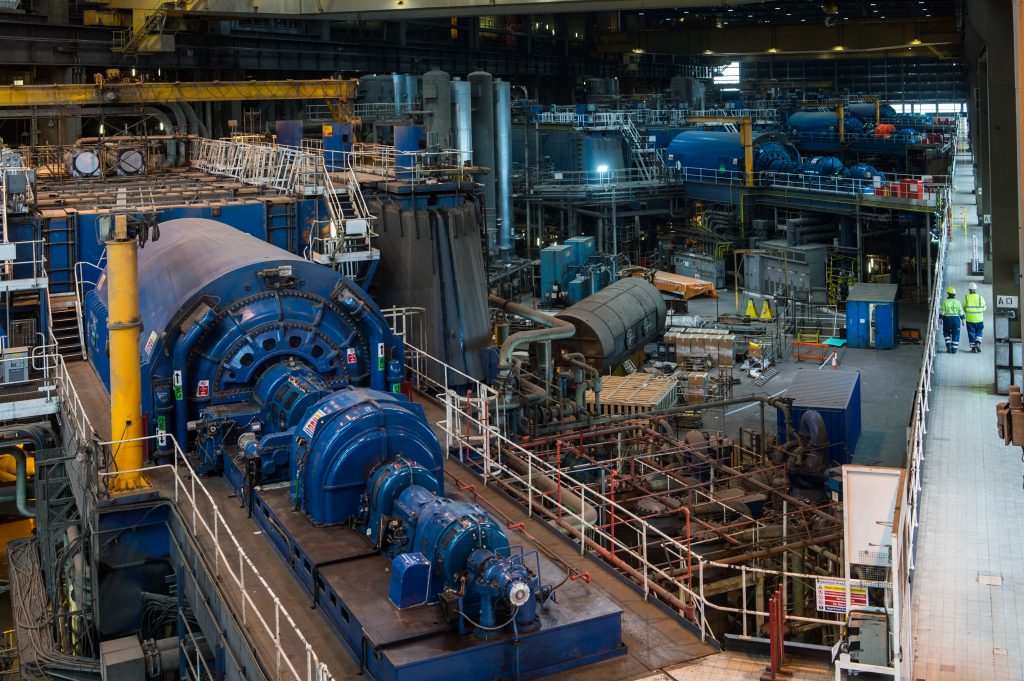
Turbine Hall at Drax Power Station

Why is this important? 

Maintaining a consistent electrical frequency is important because multiple frequencies cannot operate alongside each other without damaging equipment. This has serious implications when providing electricity at a national scale.

The exact figure is less important than the need to keep frequency stable across all connected systems. In Great Britain, the grid frequency is 50Hz. In the US, it’s 60Hz. In Japan, the western half of the country runs at 60Hz, and the eastern half of the country runs at 50Hz – a string of power stations across the middle of the country steps up and down the frequency of the electricity as it flows between the two grids.

Sticking to one national frequency is a team effort. Every generator in England, Scotland and Wales connected to the high voltage transmission system is synchronised to every other generator.

When the output of any of the three phases – the red, yellow or blue – is at a peak, the output from all other phases of the same colour on every other generating unit in Great Britain is also at a peak. They are all locked together – synchronised – to form a single homogenous supply which provides stability and guaranteed quality.

How is frequency managed?

The problem is, frequency can be difficult to control – if the exact amount of electricity being used is not matched by generation it can affect the frequency of the electricity on the grid.

For example, if there’s more demand for electricity than there is supply, frequency will fall. If there is too much supply, frequency will rise. To make matters more delicate, there’s a very slim margin of error. In Great Britain, anything just 1% above or below the standard 50Hz risks damaging equipment and infrastructure. (See how far the country’s frequency is currently deviating from 50 Hz.)

Managing electrical frequency falls to a country’s high voltage transmission system operator (the National Grid in the UK). The Grid can instruct power generators like Drax to make their generating units automatically respond to changes in frequency. If the frequency rises, the turbine reduces its steam flow. If it falls it will increase, changing the electrical output – a change that needs to happen in seconds.

In the case of generating units at Drax Power Station, the response starts less than a second from the initial frequency deviation. The inertial forces in a spinning generator help slow the rate of frequency change, acting like dampers on car suspension, which minimises large frequency swings.

Frequency on a fast-changing system

Not all power generation technologies are suited for providing high quality frequency response roles and as the UK transitions to a lower-carbon economy, ancillary services such as stabilisation of frequency are becoming more important.

Neither solar nor wind can be as easily controlled. It’s possible to regulate wind output down or hold back wind turbines to enable upward frequency response when there is sufficient wind.

Similarly, solar panels can be switched on and off to simulate frequency response. As solar farms are so widely dispersed and tend to be embedded – meaning they operate outside of the national system, it is not as easy for National Grid to instruct and monitor them. Both wind and solar have no inertia so the all-important damping effect is missing too. Using these intermittent or weather-dependent power generation technologies to help manage frequency can be expensive compared to thermal power stations.

Nor are the current fleet of nuclear reactors flexible – nuclear reactors in Great Britain were designed to run continuously at high loads (known as a baseload power). Although they cannot deliver frequency response services, the country’s nuclear power stations do provide inertia.

UK plug on blue wall

Twenty times faster

Thermal power generation technologies such as renewable biomass or fossil fuels such as coal and gas are ideal for frequency response services at scale, because they can be easily dialled up or down. As both the fuel supply to their boilers and steam within their turbines can be regulated, the 645 MW thermal power units at Drax have the capability to respond to the grid’s needs in as little as half a second or less, complete their change in output in under one second and maintain their response for many minutes or even hours.

Before the introduction of high volumes of wind and solar generation almost all generators (excluding nuclear) running on the system could provide frequency response. As these generators are increasingly replaced by intermittent technologies, the system operator must look for new services to maintain system stability.

An example is National Grid’s recent Enhanced Frequency Response tender, which asked for a solution that can deliver frequency stabilisation in under a second – 20 times faster than the Primary Response provided by existing thermal power stations. Drax was the only participating thermal power station, however all contracts were all won by battery storage projects.

Frequency future

Given the decline in fossil fuel generation and uncertainty around our power makeup in future decades, National Grid is consulting on how best to source services such as frequency response. The ideal scenario for National Grid is one where services can be increasingly sourced from reliable, flexible and affordable forms of low carbon generation or demand response.

The next generation of nuclear power stations, as with some already operating in France, can provide frequency response services. However the first of the new crop, Hinkley C, is around a decade away from being operational. Likewise, solar or wind coupled with battery, molten salt or flywheel storage will provide an increasing level of flexibility in the decades ahead as storage costs come down.

Thanks to power generation at Drax with compressed wood pellets, a form of sustainable biomass, Britain has already begun moving into an era where lower carbon frequency response can begin to form the foundation of a more reliable and cleaner system.

This story is part of a series on the lesser-known electricity markets within the areas of balancing services, system support services and ancillary services. Read more about black startsystem inertiareserve power and reactive power.  View a summary at The great balancing act: what it takes to keep the power grid stable and find out what lies ahead by reading Balancing for the renewable future and Maintaining electricity grid stability during rapid decarbonisation.

How sustainable biomass crosses the Atlantic to power the nation

In the UK, we’re so accustomed to using electricity we rarely think of the journey it takes from power station to plug.

In fact, electricity must travel across a network of cables, wires and substations before it makes it from the power stations generating it to the homes and businesses using it. At Drax Power Station, which supplies 16% of Great Britain’s renewable power, there’s another journey that takes place even before the electricity leaves the power station.

This journey – the journey of more than half of the compressed wood pellet fuel Drax uses to generate electricity – has its origins in the expanse of forestland in the southern USA.

From forest to fuel

The journey starts in the huge, working forests of the southern states of the USA where low value wood – such as the thinnings cleared as part of a forests’ growing cycle – is collected in a responsible and sustainable way to make high density wood pellets, which Drax Power Station uses to produce more than 60% of its electricity.

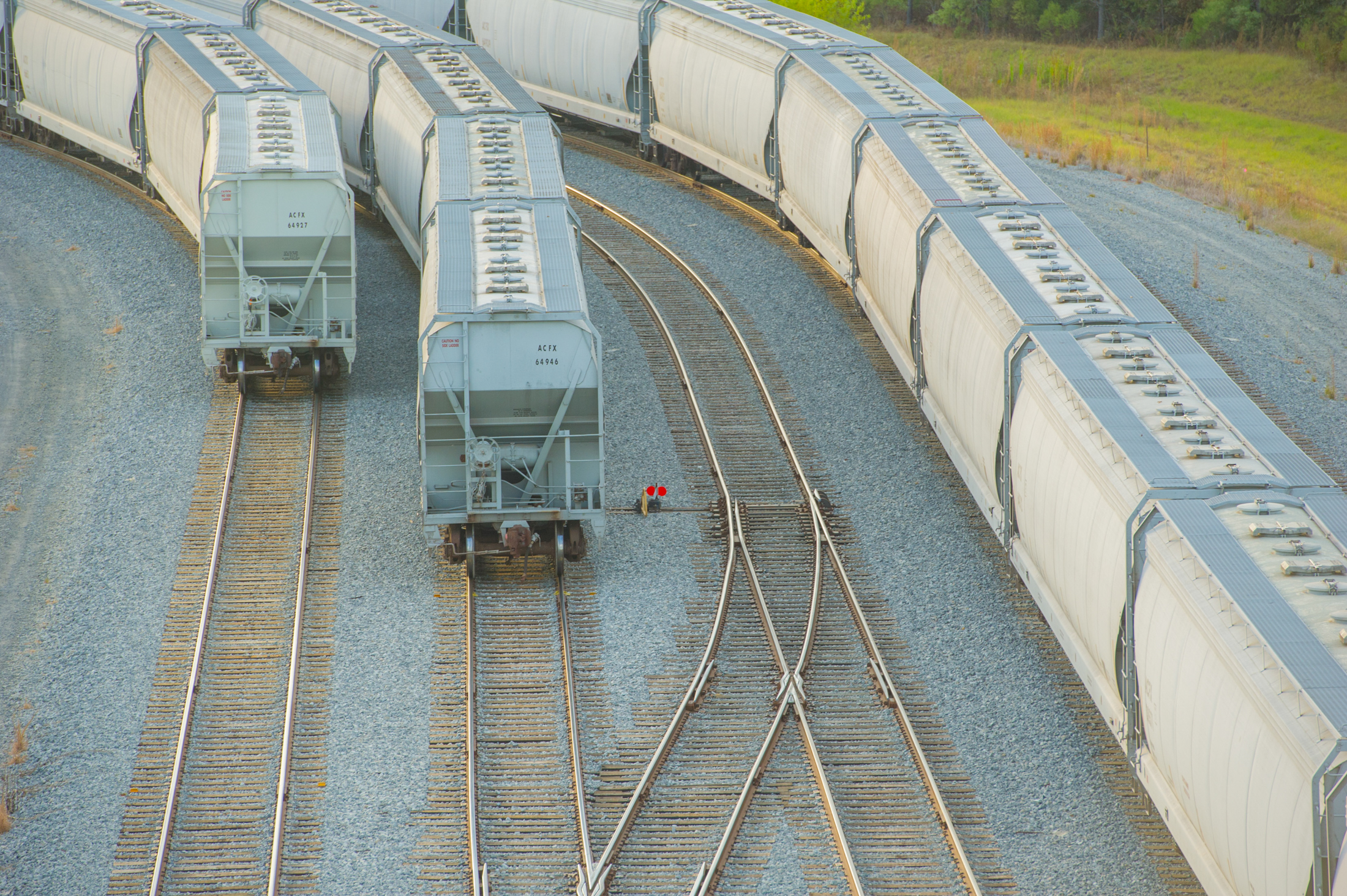
Drax Group’s own pellet manufacturer, Drax Biomass, produces around 15% of the power station’s renewable fuel. After pelletisation locally at its Amite and Morehouse facilities, located in Louisiana and Mississippi respectively, the biomass is transported to Drax Transit at the Port of Greater Baton Rouge, on the Mississippi River. From Morehouse, trains made up of closed-top grain cars, each capable of carrying 120 tonnes, transport the pellets 221 miles to Baton Rouge. At Amite, just 60 miles from Baton Rouge, fuel-efficient trucks carry 25-tonne loads between plant and port.

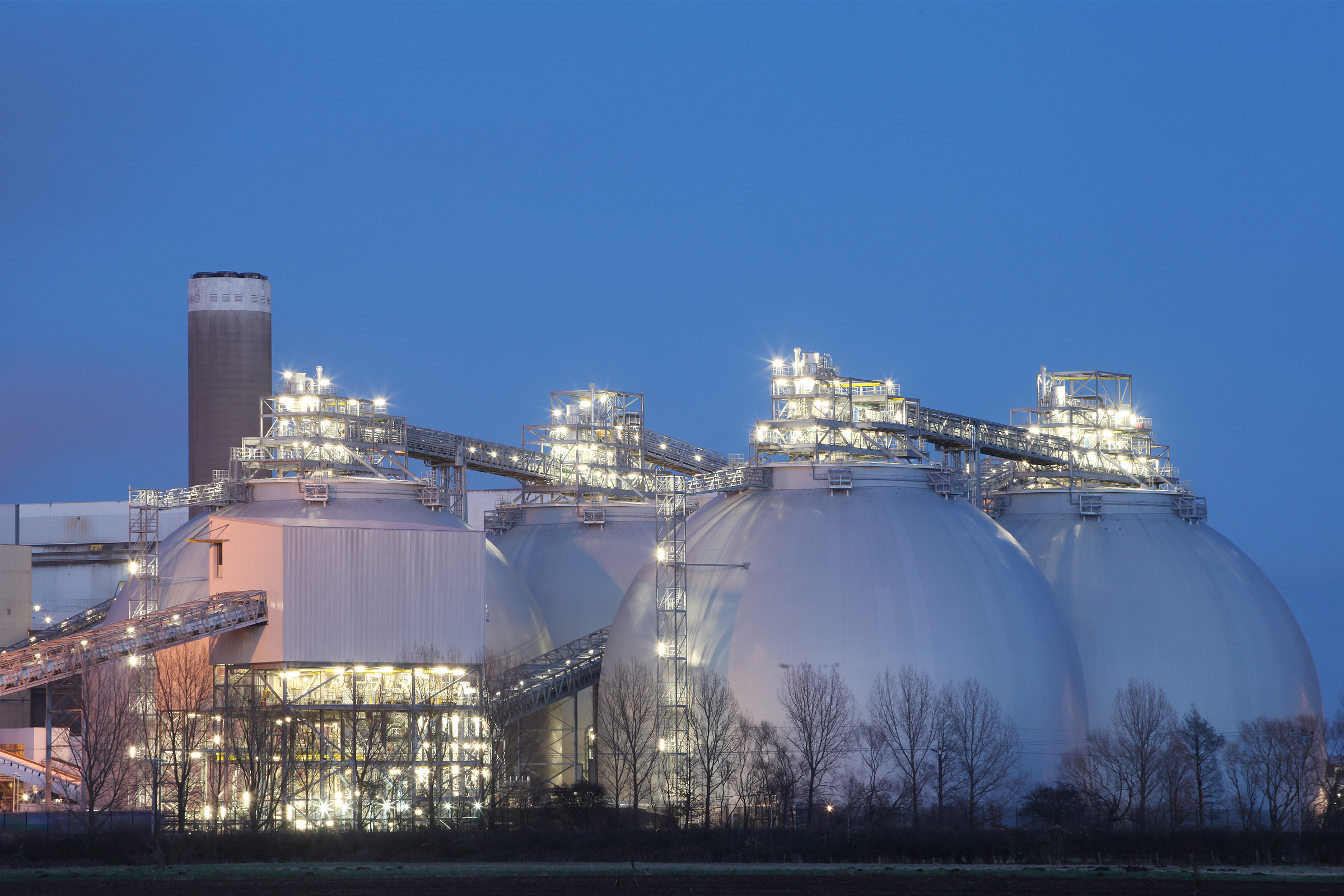
Once at the port, the truck and train cargoes are unloaded into one of two biomass storage domes – each holding 40,000 tonnes of biomass – before being loaded into the ships for their transatlantic journey.

A boat arrives at Peel Ports in Liverpool

From port to port

Drax uses a range of ships to carry the pellets on their 8,000-mile journey to the UK, ranging from big ‘Coastal’ ships, capable of hauling 20,000 tonnes, to truly massive Panamax ships, more than a quarter of a kilometre in length and capable of carrying up to 80,000 tonnes.

The ships leave the port and spend 24 hours travelling the 200 miles down the Mississippi River into the Gulf of Mexico, around Florida, and into the Atlantic. From here, it’s a 19-day voyage to reach ports in the UK. To put that into perspective, it took Columbus more than two months to make his first trip across the Atlantic.

The ships pull into ports in Tyne, Hull, Immingham and Liverpool, where they are unloaded. At the bespoke biomass port facility at Peel Ports in Liverpool an Archimedean screw removes the pellets from the ship’s holds and transports them onto a conveyer belt, which loads them onto trains. These four ports can process up to 12 million tonnes of biomass every year, combined.

From port to power station

Like the stateside journey, Drax uses trains to carry its cargo from port to power plant. The difference on the UK side, however, is that the UK trains were designed specifically to carry biomass wood pellets. Clever design and engineering was used to maximise the space inside each carriage and ensure the trains carry large loads despite UK rail restrictions.

These trains carry the pellets across the country (and even over the Pennines for trains coming from Liverpool) to Drax Power Station in Selby, North Yorkshire. Roughly 14 trains arrive at the plant every day and collectively unload about 20,000 tonnes of pellets every day, from Monday to Saturday. A system of conveyor belts carry these pellets to one of Drax’s four giant biomass storage domes, each capable of housing about 80,000 tonnes of pellets.

Then, when needed, the conveyor system takes the pellets on their final journey: into the furnace. The pellets are combusted, which boils water to create steam, which turns a turbine connected to a generator, which then feeds electricity to the national grid. The electricity travels across miles of cables, and wires, through substations and transformers, and finally into your power socket.

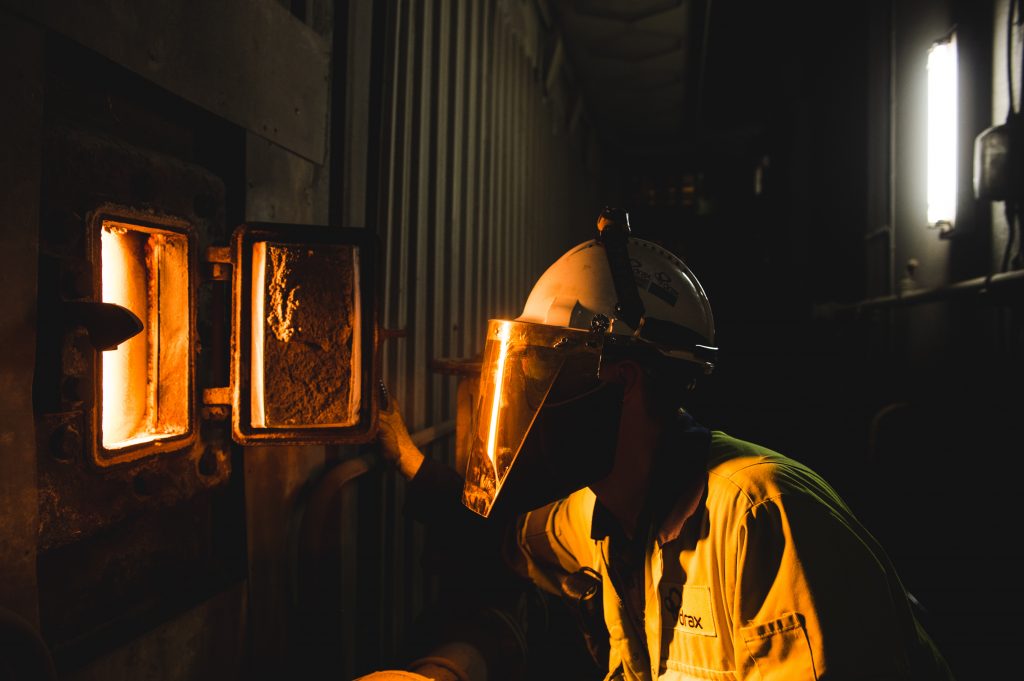
An engineer looking into a Drax furnace

Long journey, low emissions

Despite the number of miles travelled, the journey of biomass is tracked and managed to ensure the Drax Power Station supply chain is as low-carbon as possible. The result is that, even with all supply chain emissions considered, the power generated has a carbon emissions profile that is more than 80% lower than coal.

It might be one of the most impressive supply chains involved in powering this island – but it’s not the only one to travel thousands of miles. The journey of biomass to England joins liquefied natural gas (LNG) shipped from the Middle East, coal from Colombia and solar panels manufactured in China – imports that ensure we have readily available access to power on our shores.

Capital Markets Event and Trading Update

RNS Number : 1264I
Drax Group PLC
(Symbol: DRX)

Capital markets event

Drax is today hosting a capital markets event for investors and analysts.

The event will provide an update on the Group’s strategy, outlining a plan for 2025 EBITDA in excess of £425(1) million – more than a third of which is expected to come from Retail (>£80 million) and Biomass Supply (>£75 million) operations. This will be delivered by maximising the opportunities from the existing portfolio of assets and targeted value creative investment in long-term growth opportunities, underpinned by a robust financial model and capital allocation plan.

The event will provide further insight into the Group’s three areas of operation and how these support the strategy:

Retail – an annuity-like income stream with profitable SME(2)and I&C(3) businesses; 

Generation – visible biomass earnings, flexible operations, the development of options for rapid response gas and long-term opportunities to repurpose coal assets; and

Biomass Supply – lower cost, good quality pellets, with visible earnings and the capacity to provide at least 30 per cent of the Group’s fuel requirements.

These activities are underpinned by safety, sustainability, operational excellence and expertise in our markets. Drax is committed to using research and innovation to help reduce supply chain costs, identify new long-term opportunities and to maximise value across the Group.

The event will be led by Dorothy Thompson, Group CEO, supported by the senior management team from across the business.

Dividend policy and capital allocation

Following discussion with shareholders, Drax today announces a new dividend policy.

Drax expects to pay a growing dividend consistent with maintaining its credit rating and investing in its business.

Drax expects to recommend a dividend of £50m with regards to the 2017 financial year. The Board is confident that this dividend is sustainable and expects it to grow from this level as the implementation of the strategy generates an increasing proportion of stable earnings and cash flow. In determining the rate of growth in dividends the Board will take account of future investment opportunities and the less predictable cash flows from the Group’s commodity-based businesses.

If there is a build-up of capital in excess of the Group’s investment needs the Board will consider the most appropriate mechanism to return this to shareholders.

Dorothy Thompson said:

“Britain’s energy market is changing. Drax has embraced these changes with a strategy which will help change the way energy is generated, supplied and used for a better future.

“Through our operations in retail, generation and biomass supply we expect to deliver a significant increase in high quality, visible, contracted earnings for the Group.

“With the optimisation of our existing asset portfolio combined with acquisitions across our markets the strategy is already delivering, allowing the Group to create long-term opportunities in all areas of the business.

“We are confident in the strategy and our ability to deliver high quality earnings, growth and value for shareholders, supported by a strong financial model and clear capital allocation policy, including a sustainable dividend that we expect to grow from a level of £50m in 2017.” 

Trading and Operational Performance

Since publishing our full year results on 16 February 2017, trading conditions in the markets in which we operate have remained unchanged and operational performance has been good.

These factors underpin our expectations for full year EBITDA(4), which remain unchanged.

Capital markets webcast and presentation material

The event will be webcast from 9.30am and the material made available on the Group website at the same time. Joining instructions for the webcast and presentation are included in the links below.

https://cache.merchantcantos.com/webcast/webcaster/4000/7464/16531/90093/Lobby/default.htm

https://www.drax.com/investors/capital-markets-day/


Notes:

(1)   Three business areas, including an assumed central cost, based on £21mactual in 2016.

(2)   Small and Medium-sized Enterprise.

(3)   Industrial and Commercial.

(4)   EBITDA is defined as profit before interest, tax, depreciation, amortisation and unrealised gains and losses on derivative contracts.

THIS ANNOUNCEMENT CONTAINS INSIDE INFORMATION

Enquiries:

Drax Investor Relations:

Mark Strafford

+44 (0) 1757 612 491

+44 (0) 7730 763 949 

Media:

Brunswick:

Simon Maine

Mike Smith

+44 (0) 207 404 5959

Drax External Communications:

Paul Hodgson

+44 (0) 1757 612 026

Website: www.drax.com

Chief Executive comments on capital markets event and trading update

Britain’s energy market is changing. Drax has embraced these changes with a strategy which will help change the way energy is generated, supplied and used for a better future.

Through our operations in retail, generation and biomass supply we expect to deliver a significant increase in high quality, visible, contracted earnings for the Group.

With the optimisation of our existing asset portfolio combined with acquisitions across our markets the strategy is already delivering, allowing the Group to create long-term opportunities in all areas of the business.

We are confident in the strategy and our ability to deliver high quality earnings, growth and value for shareholders, supported by a strong financial model and clear capital allocation policy, including a sustainable dividend that we expect to grow from a level of £50m in 2017.


Further information:

Capital markets day and trading update


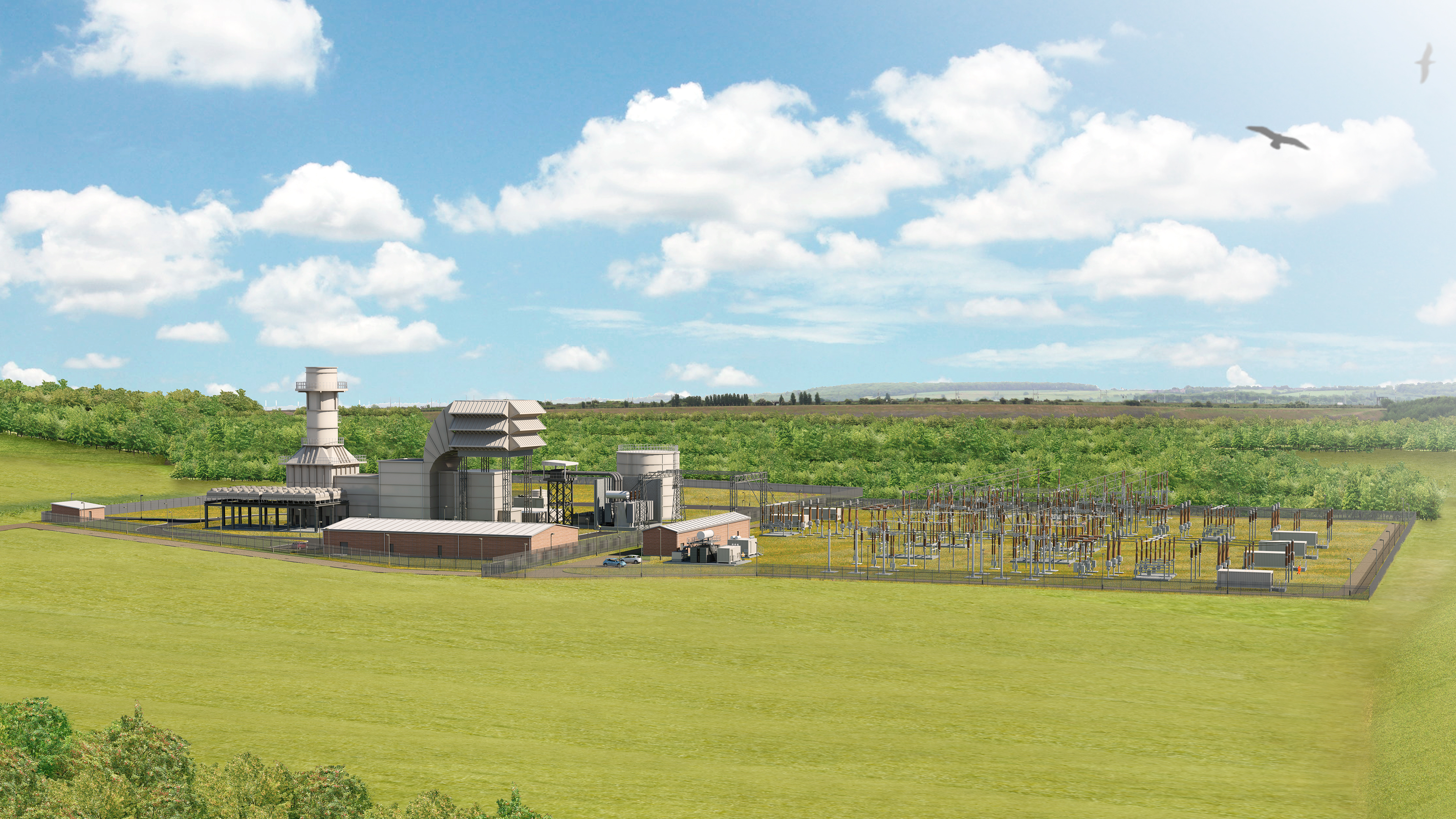
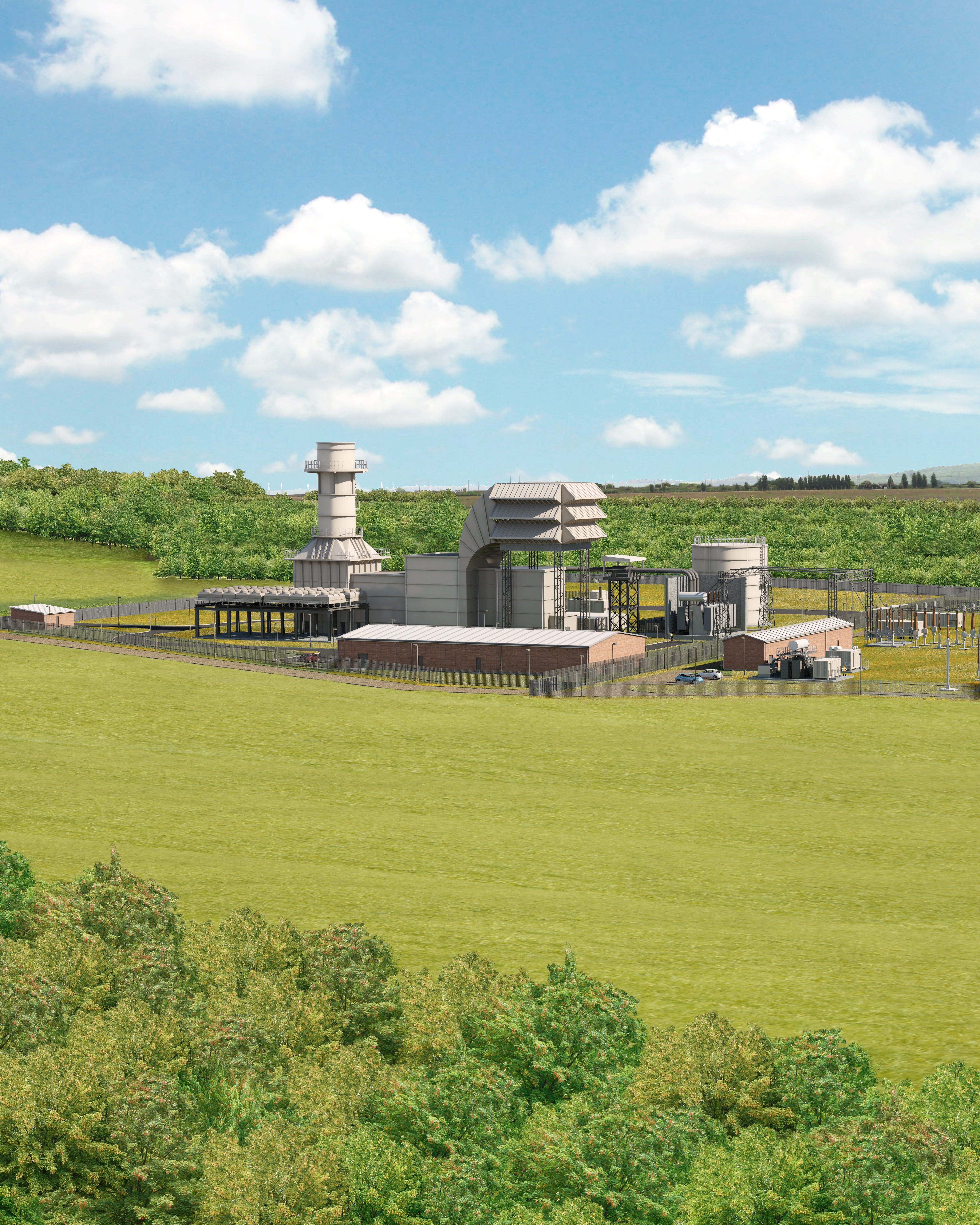
Image: Artist’s impression of a Drax rapid-response gas power station with planning permission

What does the internet of things mean for energy?

Internet of things (IoT) technology, which connects everyday appliances to one another allowing them to collect data and become ‘smart’, presents an exciting view of the modern home or workspace.

The future IoT-enabled office or household is one with autonomous appliances, remote-operated thermostats, and fridges that monitor their contents and reorder supplies when they run low. You may never go hungry again.

There’s arguably an even brighter future for the IoT’s potential in industry – it can bring about value through applications like predictive maintenance and performance optimisation.

On paper these two scenarios – that of industrial optimisation and convenience throughout our daily lives – might seem worlds away. But James Robbins, Chief Information Officer at Drax, is thinking about how to bring them together – particularly when it comes to energy use.

Central to the approach is a question: could a better understanding of how households and businesses use energy change how it’s generated and provided?

The importance of data

At its heart, the IoT is about data. What data you collect and how you use it determines what value you can create, says Robbins. He explains: “Whether you’re talking about the IoT, big data, artificial intelligence [AI] or robotics – they’re all the modernisation of information collection and use.”

And nowhere is this more applicable than at a large-scale power station. “At Drax we’re used to managing what’s basically our own private IoT in the station,” he explains. “The real-time control systems we have for the generators and the Grid are essentially a bunch of sensors tied to a central network.” These sensors collect data from the power station, which then help optimise it for better performance.

The same approach to data collection can have benefits for bill payers, too.

Tracking energy use in the workspace and home

Connected devices like smart meters can bring a precise level of insight into energy usage in the home and places of work, which can benefit both end users and suppliers of heat and power. Electricity generators and heating fuel suppliers can use this data to better manage their output by being able to predict how and when it will be required. For end users, it can help them and their energy suppliers more accurately track what they use, where they use it and how they could use it more efficiently.

For example, using IoT technology a gas or wood pellet for heat supplier may be able to identify that a home can make substantial cost savings just by turning down their heating by one degree. “Sensors and smart technology can give us that insight,” says Robbins.

This level of optimisation is already possible to a degree using existing tools, but Robbins sees a future with greater possibilities. For example, with comprehensive datasets, suppliers can compare business owners’ energy use with others in the same sector and region to highlight efficiencies.

“The whole thing is about making it easier for us to serve the customer,” says Robbins. And the better the dataset, the more exotic the services could be.

“Just looking at meters means we can only really talk to the bill payer. But who else in the home or workplace could we engage with to get them to conserve energy? For instance, we could develop a game for child in the house that’s linked to energy use, where they get points for turning off lights or turning down heating,” he explains.

The gamification of energy use is – at this stage – just an idea, Robbins says, but it is exactly the kind of thing that better data allows energy suppliers and generators to think about.

A challenging journey, but an exciting one

The IoT approach to energy generation and use won’t be without its challenges – security being one major concern. But there will also be substantial technical and standardisation issues any provider keen to leverage IoT must tackle to make it a truly effective technology.

“In the 80s, you couldn’t play a VHS cassette in a Betamax player,” Robbins explains. “The compatibility issue with IoT could be an even bigger problem – all these gadgets need to be built into an architecture that can handle them and make them work together.”

Consider the so-called smart meter that provides data for a customer’s itemised bill. The bill payer is told that a tumble dryer in their home is using a significant proportion of the power they are paying for. The problem is that their appliances and devices have not been meshed together in a way that gives the system sufficient context about the customer’s situation. In the worst-case scenario, the customer asks for a refund and switches supplier because they don’t actually have a tumble dryer.

Robbins and his team are working with Drax suppliers to make sure that compatibility and context don’t become a problem. He aims to ensure that unintended consequences in the Group’s use of IoT are only of the positive variety. By investing in back-office infrastructure that can use big data processing to ingest and analyse meter data down to the 10-second level, Drax can take advantage of smart tech when it arrives in earnest.

It’s an exciting period of technological advancement – but as Robbins is keen to point out, it’s only the start.

“It’ll probably only be over the next few years that we actually begin to really understand how to leverage IoT data, when we pass the tipping point of user adoption. When that happens, we’ll be starting a very exciting journey with a clearer purpose – to spot and solve meaningful problems faced by people and businesses, in context, in real-time.”

Batteries as big as biomass domes?

Renewables are playing a bigger part of our electricity mix as the UK moves towards a low carbon economy. How we ‘plug the gaps’ left by intermittent renewables is among the greatest challenges faced by the energy sector.

Sources like wind and solar are intermittent – they can’t generate electricity all the time. When the sun doesn’t shine or the wind doesn’t blow they lack the fuel needed to generate power and can’t feed into the grid.

This leaves a gap in the UK’s electricity supply that needs to be filled. Today that’s done by sources like coal, gas and biomass which can be dialled up and down to accommodate for the dips and peaks in generation created by changes in demand and the weather.

One alternative being touted as a possible solution is storage and in particular, battery technology. However, creating batteries on a scale big enough to meet our incredible demand is a considerable challenge. It’s a challenge that will be met in a future where giant, affordable batteries are able to store solar power captured in the summer months for use in the winter. But costs would have to come down at an even faster rate than they have done in recent years.

The challenge of building bigger batteries

To demonstrate the size of this challenge, consider the biomass storage domes at Drax Power Station. These effectively operate as giant energy stores with the flexible ability to quickly feed renewable fuel to the power station, which generates electricity on demand.

Our biomass domes can hold 300,000 tonnes of sustainably-sourced compressed wood pellets, the equivalent of 600 GWh worth of electricity. Currently, batteries cost £350 per kWh, meaning at present prices it would cost £210 billion to replace the capacity of all four of our biomass domes using battery power.

Even if battery technology advances dramatically over the next few years that figure is only likely to fall to around £60 billion. Then there is the question of the ancillary services that thermal power stations provide. The batteries of the future may be able to provide these vital services (such as synthetic inertia, short-term reserve and reactive power), but for now, providing these via battery power is prohibitively expensive and in some cases best left to biomass and gas power stations.

We should not underestimate the challenges ahead. The UK’s ever-changing power system will need to balance more electricity generated via wind and solar with affordable solutions that are also reliable, flexible and lower carbon than coal. This is why Drax is developing four rapid-response gas power stations in addition to continuing its investment in biomass generation and supply.

Everything you ever wanted to know about cooling towers

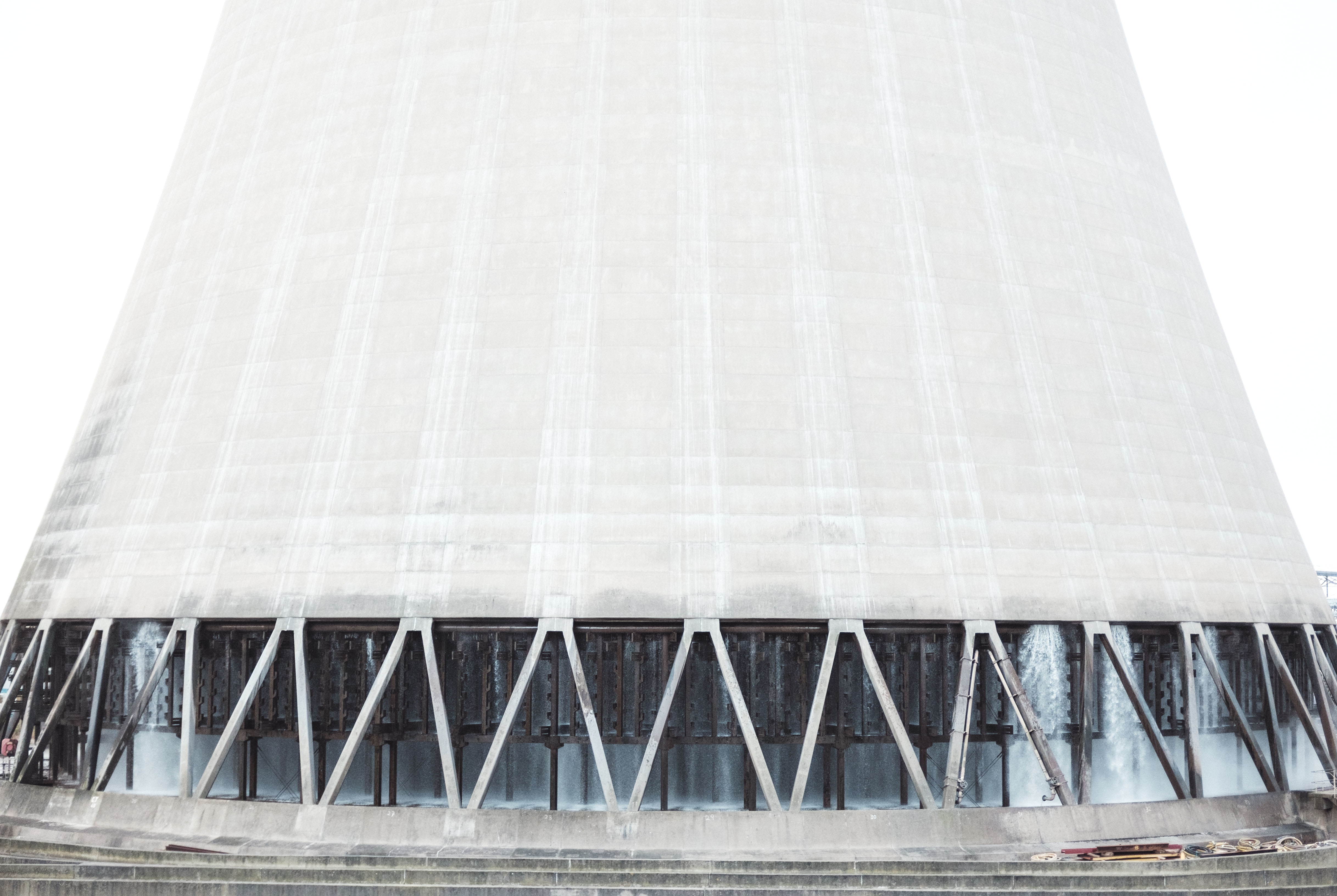
Close up image of Drax cooling tower

Cooling towers aren’t beautiful buildings in the traditional sense, but it’s undeniable they are icons of 20th century architecture. They’re a ubiquitous part of our landscape – each one a reminder of our industrial heritage.

Yet despite the familiarity we have with them, knowledge about what a cooling tower actually does remains limited. A common misconception is that they release pollution. In fact, what they actually release is water vapour – similar to, but nowhere near as hot, as the steam coming out of your kettle every morning. And this probably isn’t the only thing you never knew about cooling towers. 

What does a cooling tower do?

As the name suggests, a cooling tower’s primary function is to lower temperatures – specifically of water, or ‘cooling water’ as it’s known at Drax.

Power stations utilise a substantial amount of water in the generation of electricity. At a thermal power plant, such as Drax, fuel is used to heat demineralised water to turn it to high pressure steam. This steam is used to spin turbines and generate electricity before being cooled by the cooling water, which flows through two condensers on either side of each of the steam turbines, and then returning to the boiler. It is this process that the cooling towers support – and it plays a pivotal role in the efficiency of electricity generation at Drax’s North Yorkshire site.

To optimise water utilisation, some power stations cycle it. To do this, they have cooling towers, of which at Drax there are 12. These large towers recover the warmed water, which then continues to be circulated where chemistry is permitting.

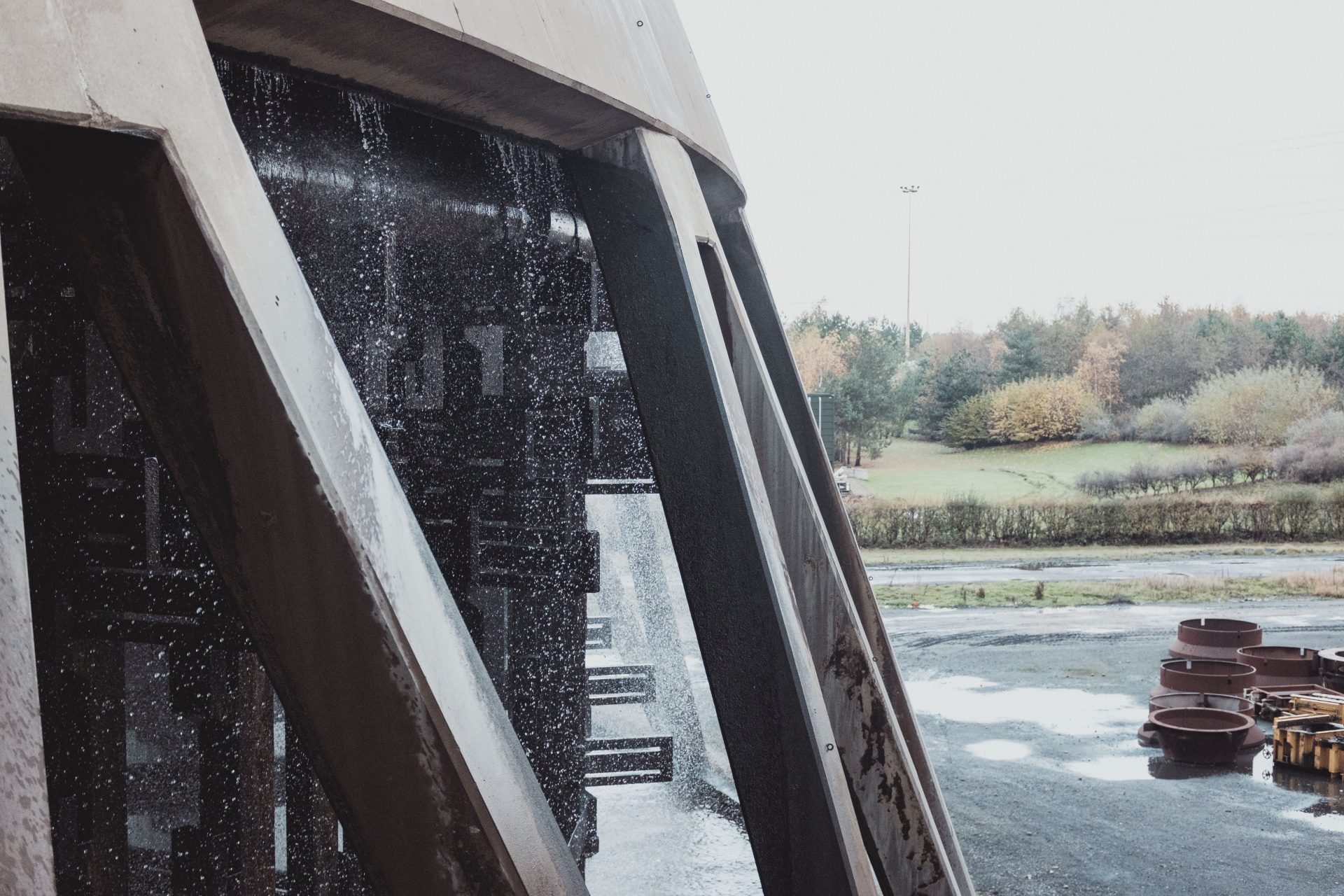
The warmed water (about 40°C) is pumped into the tower and sprayed out of a set of sprinklers onto a large volume of plastic packing, where it is cooled by the air naturally drawn through the tower. The plastic packing provides a large surface area to help cool the water, which then falls in to the large flat area at the bottom of the massive structure called the cooling tower pond.

As the water cools down, some of it (approximately 2%) escapes the top of the tower as water vapour. This water vapour, which is commonly mistakenly referred to as steam, may be the most visible part of the process but it’s only a by-product of the cooling process.

The majority of the water utilised by Drax Power Station is returned back to the environment, either as vapour from the top of the towers or safely discharged back to the River Ouse. Each year, about half of the water removed from the river is returned there. In effect, it is a huge amount of water recycling and in environmental terms, it is not a consumptive process.

Close-up of side of Drax cooling towers

How do you build a cooling tower?

The history of cooling towers as we know them today dates back to the beginning of the 20th century, when two Dutch engineers were the first to build a tower using a ‘hyperboloid’ shape. Very wide on the bottom, curved in the centre and flared at the top, the structure meant fewer materials were required to construct each tower, it was naturally more robust, and it helped draw in air and aid its flow upwards. It quickly became the de facto design for towers across the world.

The Dutch engineers’ tower measured 34 metres, which at the time was a substantial achievement, but as engineering and construction abilities progressed, so too did the size of cooling towers.

Today, each of 12 towers measures 115 metres tall – big enough to fit the dome of St Paul’s Cathedral or the whole of the Statue of Liberty, with room to spare. If scaled down to the size of an egg, the concrete of each cooling tower would be the same thinness as egg shell.

The structures at Drax are dwarfed by the cooling towers at the Kalisindh power plant in Rajasthan, India, the tallest in the world. Each stands an impressive 202 metres tall – twice the height of the tower housing Big Ben and just a touch taller than the UK’s joint fifth tallest skyscraper, the HSBC Tower at 8 Canada Square in London’s Canary Wharf.

The industrial icon of the future

Today’s energy mix is not what is used to be. The increased use of renewables means we’re no longer as reliant on fossil fuels, and this has an effect on cooling towers. Already a large proportion of the UK’s most prominent towers have been demolished, going the same way as the coal they were once in service to. But this doesn’t mean cooling towers will disappear completely.

Power stations such as Drax, which has upgraded four of its boilers to super-heat water with sustainably-sourced compressed wood pellets instead of coal, the dwindling coal fleet, and some gas facilities still rely on cooling towers. As they continue to be part of our energy mix, the cooling tower will remain an icon of electricity generation for the time being. But it’ll be a mantle it shares with biomass domes, gigantic offshore wind turbines and field-upon-field of solar panels – the icons of today’s diverse energy mix.

View our water cooling towers close up. Drax Power Station is open for individual and group visits. See the Visit Us section for further information.