





Tag: investors

How close is Great Britain’s electricity to zero-carbon emissions?

Renewable energy mix, light bulb visual

Demand for electricity might have been 6% lower in the first three months of 2019 than in last year’s first quarter but the demand for lower carbon power is only growing and there’s more pressure than ever for global industries to decarbonise more rapidly.

Aided by a significantly milder winter than last year, Great Britain’s electricity sector continued to make further progress in reducing carbon emissions in the first quarter (Q1) of 2019.

The carbon intensity of Great Britain’s electricity was almost 20% lower in Q1 2019 than in the same period last year. This was driven by a significant decrease in coal usage, with 581 coal-free hours in total over the period – eight times more than in Q1 2018. This trend has only increased, with May seeing the country’s first coal-free week in modern times.

The findings come from Electric Insights, a report commissioned by Drax and written independently by researchers from Imperial College London, that analyses Great Britain’s electricity consumption and looks at what the future might hold.

As public, commercial and political demand for lower carbon emissions mounts, the question for the power system is: can it truly reach zero-emissions?

Keeping a zero-carbon system stable

Quarter after quarter, the carbon intensity of Great Britain’s electricity system has declined. From 545 grams of carbon dioxide (CO2) per kilowatt hour (g/kWh) in Q1 2012, to just over 200 g/kWh last quarter. For a single hour, carbon emissions have fallen as low as just 56 g/kWh. But how soon can that figure reach all the way down to net-zero carbon emissions?

The National Grid’s Electricity System Operator (ESO), believes it could be as soon as 2025. But some serious changes are needed to make it possible for the system to operate safely and efficiently, when you have fewer sources offering balancing services like reserve power, inertia, frequency response and voltage control.

The National Grid ESO believes an approach that establishes a marketplace for trading services holds the solution. The hope is that competition will breed new innovation and bring new technologies such as grid-scale storage and AI into the commercial energy markets, offering reserve power and more accurate forecasting for solar and wind power.

For the meantime, weather-dependent technologies are a key source of renewable electricity in Great Britain, with wind making up more than 20% of all generation in Q1 2019. However, with wind capacity only expected to increase, how should the system react when it’s not an option?

Read the full article, co-authored by Julian Leslie, Head of National Control, National Grid ESO: How low can we go?

We cannot control the weather – but we can harness its power

Today there are around 20 gigawatts (GW) of wind capacity installed around Great Britain, and this is forecast to double to 40 GW in the next seven years. However, average wind output can fluctuate between 2 GW one day and 12 GW the next – as happened twice in January. It highlights the ongoing needs for flexibility and diversity of sources in the electricity system even as it decarbonises.

There are a number of ways to make up for shortfalls in wind generation. The most obvious of which is through other existing sources. There is more solar installed around the county than any source of generation (except gas), at 12.9 GW and sun power helped meet demand during a wind drought last summer. Solar averaged 1.3 GW over the last 12 months, this is more than coal which accounted for 1.1 GW.

However, storage will also be important in delivering low or zero-carbon sources of electricity when there is neither wind nor sufficient sunlight. At present this includes pumped storage and some battery technologies, but in future will include greater use of grid-scale lithium-ion batteries, as well as vehicle-to-grid systems that can take advantage of power stored in idle electric cars.

New fuels, particularly hydrogen, also have the potential to meet demand and help create a wider lower-carbon economy for heating, as well as vehicle fuel, with water as the only emission.

Hydrogen can be produced from natural gas or using excess electricity from renewable sources, or through carbon capture from industrial emissions. It can then be stored for a long time and at scale, before being used to generate electricity rapidly when needed.

Another increasingly important source of Great Britain’s electricity is interconnectors. However, they are not yet being used in a way that can support gaps in the electricity system, with Northern European countries normally all experiencing the same weather – and wind levels – at the same time.

Read the full article: What to do when the wind doesn’t blow?

A bigger future for interconnection

Great Britain added a new power source to its electricity system in Q1 2019, in the form of Belgium. The opening of the £600 million NEMO link between Kent and Zeebrugge added another 1 GW of interconnection capacity.

It joins connections to France, the Netherlands, Northern Ireland and the Republic of Ireland to bring Great Britain’s total interconnection capacity to 5 GW. These links accounted for 7.9% of the 78 terawatt hours (TWh) of electricity consumed over the quarter.

Electricity from imports also set new records for a daily average of 4.3 GW on 24 February, accounting for 12.9% of total consumption, and a monthly average in March when it made up 10.6% of consumption. These records represent the first time Great Britain fell below 90% for electricity self-sufficiency.

With 3.4 GW of new interconnectors under construction coming online by 2022 and 9.1 GW more planned to be completed over the next five years, Great Britain’s neighbours are set to play a growing role in the country’s electricity mix.

However, while interconnectors offer an often cost-effective way for Great Britain to ensure electricity supply meets demand, the carbon intensity of neighbouring countries’ electricity should also be considered.

Read the full article: 10% of electricity now generated abroad

The need for cross-border decarbonisation

The new link to Belgium has imported, rather than exported, electricity every day since it began operations, as Belgium has the lowest natural gas prices in Europe and its power stations pay £16 per tonne less for carbon emissions than their British counterparts. This makes it cheaper to import, and less carbon intense, than electricity from the more coal-dependant Netherlands and Ireland.

Planned links to Germany and Denmark could allow Great Britain to import more renewable power. However, if there is a wind drought across Northern Europe these countries often turn to their emissions-heavy coal or even dirtier lignite sources.
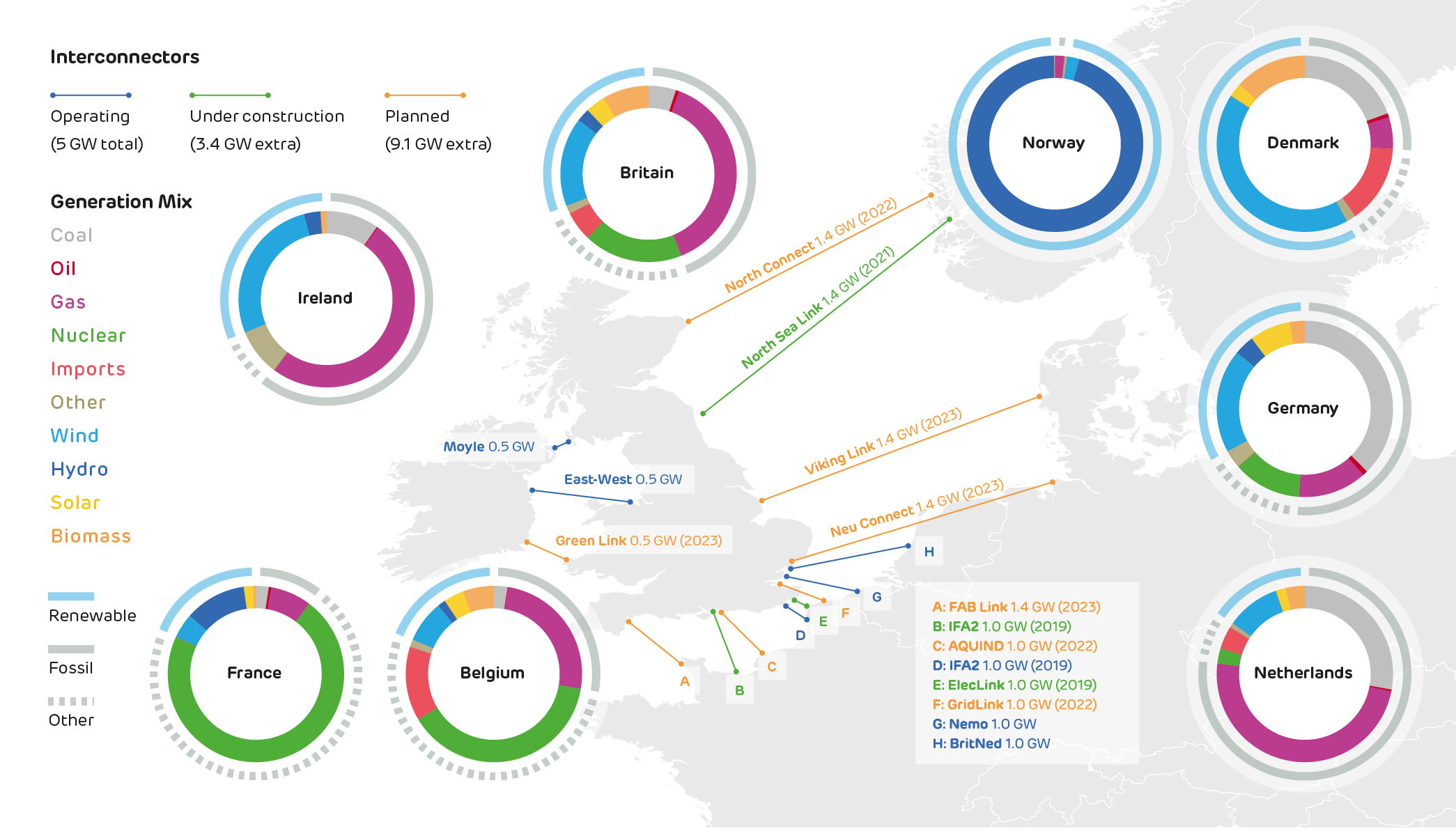
France is currently Great Britain’s cleanest source of imports, mostly using nuclear and renewable generation. However, when the North Sea Link opens in 2021, it will give Great Britain access to Norway’s abundance of hydro-power to plug gaps in renewable generation.

Considering the carbon intensity of Great Britain’s imports is important because the decarbonisation needed to address the global climate change emergency can’t be solved by one country alone. For electricity emissions to go as low as they can it takes collaboration that goes across borders.

Read the full article: Where do Britain’s imports come from?

Explore the quarter’s data in detail by visiting ElectricInsights.co.uk. Read the full report.

Commissioned by Drax, Electric Insights is produced, independently, by a team of academics from Imperial College London, led by Dr Iain Staffell and facilitated by the College’s consultancy company – Imperial Consultants.

Appointment of non-executive director

RNS Number: 4066W
Drax Group PLC

Following appointment, John will also be a member of the Audit, Remuneration and Nomination Committees.

John has extensive engineering and safety experience in the energy industry with over 45 years working across nuclear, electricity and latterly oil and gas sectors. Between 2004 and 2015 John was at BP plc, most recently as Group Head of Engineering & Process Safety, prior to which he worked at the UK utility Powergen plc as Group Engineering Director.

John is Visiting Professor of Nuclear Engineering at The University of Strathclyde and is a Non-Executive Director of Sellafield Ltd, the nuclear site management company based in Cumbria. He also chairs the Sellafield Board Committee on Environment, Health, Safety & Security.

Commenting on the appointment, Philip Cox, Chair of Drax, said:

“I am delighted that John is joining the Board. His extensive experience gained in the energy sectors, focussed on critical operational services at both multi-national and UK based businesses, will strengthen our Board and support Drax as we continue to focus on both growing our capabilities and continuing to deliver operational excellence.”

Other information – John Baxter holds 3,000 ordinary shares in Drax Group plc. such investment was made prior to any association with the Company

ENDS


Full year results for the twelve months ended 31 December 2018

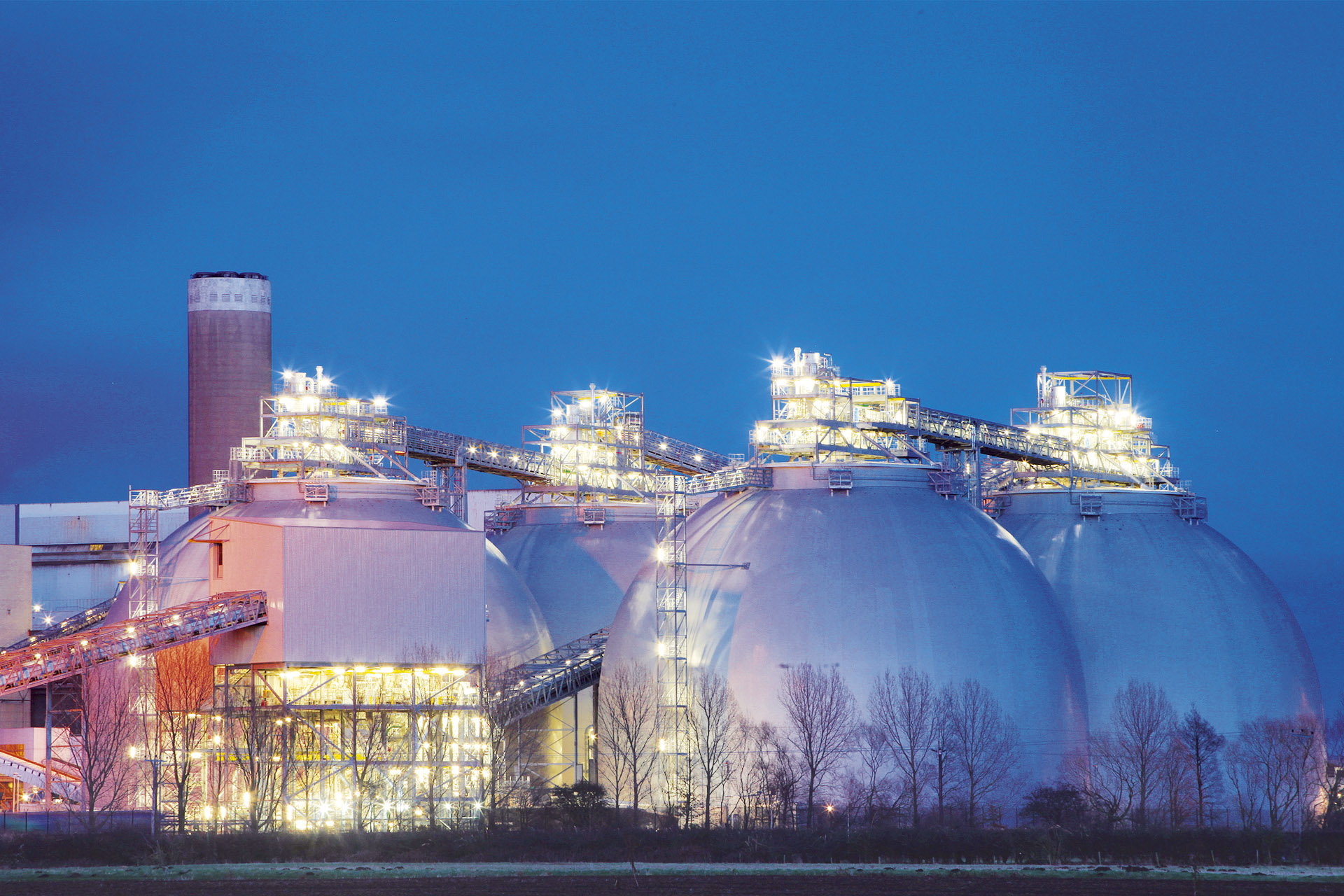
Biomass domes
RNS Number: 0765R
Drax Group PLC
Adjusted(1)Total
Twelve months ended 31 December20182017 Restated(2)20182017 Restated(2)
Key financial performance measures
EBITDA (£ million)(3)250229
Profit / (loss) before tax (£ million)37514(204)
Basic earnings / (loss) per share (pence)10.40.75.0(41.3)

Good financial performance

  • Group Adjusted EBITDA up 9% to £250 million
  • Continued strong cash generation and balance sheet
    • 3x net debt to Adjusted EBITDA (2017: 1.6x net debt to Adjusted EBITDA)
    • Net cash from operating activities of £311 million (2017: £315 million)
    • Net debt(4) of £319 million (2017: £367 million)
  • Dividend growth – 15% increase in dividend per share – 14.1 pence per share (2017: 12.3 pence per share)
  • £50 million share buy back programme completed
  • Total profit before tax of £14 million includes gains principally related to foreign currency hedging of £38 million (2017: Total loss before tax of £204 million including unrealised losses of £177 million)

Dam and reservoir, Cruachan Power Station

Acquisition of ScottishPower Generation has accelerated strategy

  • 6GW multi-site, multi-technology portfolio of pumped storage, hydro and gas
  • Strong strategic fit with UK’s need for flexible, low carbon and renewable generation
  • High quality earnings with expected returns significantly in excess of weighted average cost of capital

Good progress with strategic initiatives

  • Successful low-cost conversion of fourth biomass unit
  • Third US biomass pellet plant commissioned and fully operational
  • Progress with biomass cost reduction programme including sawmill co-location and rail spur development
  • Commenced BECCS(5) pilot project and equity investment in C-Capture – technology proven with CO2 captured
  • Development of B2B Energy Supply customer and IT platform

Outlook

  • Continued growth in Adjusted EBITDA, cash generation and dividend
  • Integration of ScottishPower Generation
  • Continue to expect Capacity Market to be reinstated on same or similar basis
  • Attractive investment options for growth: biomass cost reduction, biomass capacity expansion and new gas

Will Gardiner, Chief Executive of Drax Group plc, said:

“Drax is now one of the leading generators of flexible, low carbon and renewable electricity in the UK. As the grid decarbonises, our ability to support intermittent renewables will become increasingly important as we strive to deliver our purpose of enabling a zero carbon, lower cost energy future.

“Drax performed well in 2018. Our commitment to operating safely and sustainably remains at our core. We commissioned our third pellet production plant, which contributed to our good results. After a difficult first quarter for our Power Generation business, we delivered strong availability and financial results. Whilst the year was challenging for our B2B Energy Supply business, we continued to grow our customer base and are investing in the significant opportunity created by smart meters.

“We are confident in our ability to continue growing our earnings and advancing our strategy through the year. We have attractive investment opportunities throughout our business, and while short-term uncertainty over the Capacity Market remains, we look forward to developing those opportunities in a disciplined fashion.”

Operational review

Pellet ProductionFocus on good quality pellets at lowest cost

  • Adjusted EBITDA of £21 million (2017: £6 million)
    • 64% increase in production to 1.351 million tonnes (2017: 0.822 million tonnes)
    • LaSalle Bioenergy (LaSalle) commissioned and fully operational – 0.5Mt pellet capacity – performing well
    • 10% reduction in cost per tonne
  • Biomass cost reduction initiatives – future benefits
    • Co-location and offtake agreement with Hunt Forest Products for low-cost sawmill residues at LaSalle
    • LaSalle rail spur – $10/tonne reduction in transport cost to Baton Rouge port facility – commissioning 2019
    • Relocation of administration from Atlanta to Monroe – greater operational focus and savings

Power GenerationOptimisation of portfolio, system support services and development of decarbonisation projects

  • Adjusted EBITDA of £232 million (2017: £238 million)
    • Impact of rail unloading outage and generator outage on one ROC(6) unit in Q1 2018
    • Lower margins from coal generation – coal and carbon costs
    • System support revenue of £79 million (2017: £88 million) – specific Black Start contract in Q1 2017
    • Suspension of Capacity Market – £7 million of revenues not accrued in Q4 2018
    • Optimisation of ROC generation, biomass operations and procurement of third party biomass volumes
    • Biomass earnings benefited from conversion of fourth unit and insurance proceeds on historic outages
  • Electricity output (net sales) down 8% to 18.3TWh (2017: 20.0TWh)
    • 75% of generation from biomass (2017: 65%)
  • Strong biomass availability – 91% (2017: 79%)
    • Reduced biomass generation in Q1 2018 offset by strong unit availability Q2-Q4 2018

B2B Energy SupplyProfitable business, growth in customer meters, challenging market environment

  • Adjusted EBITDA of £28 million (2017: £29 million)
    • 5% increase in customer meters to 396,000 (2017: 376,000)
    • Increase in bad debt and provisioning reflecting challenging environment
    • Mutualisation of renewable costs associated with competitor failure
    • Higher gas costs due to weather and mutualisation
    • Benefit of full year of Opus Energy (2017: 10.5 months)
    • 22% growth in gross profit to £143 million (2017: £117 million)
  • Development of flexibility and system support market
  • Continued investment in next generation systems to support growth and operational efficiency

Group financial information

  • Total basic earnings per share of 5.0 pence, includes write-off of coal-specific assets (£27 million) following fourth biomass unit conversion, costs associated with acquisition and on-boarding of ScottishPower Generation, restructuring costs in Opus Energy and Pellet Production (£28 million), and unrealised gains on derivative contracts (£38 million)
  • Tax credit of £6 million includes benefit of Patent Box claims – corporation tax rate of 10% on profits arising from the use of biomass innovation
  • Capital investment of £142 million
    • Maintaining operational performance (£55 million), enhancement (£40 million), strategic (£35 million) and other (£12 million)
  • Net debt of £319 million, including cash and cash equivalents of £289 million (31 December 2017: £367 million)

View complete full year report

View analyst presentation

Register and watch 9am webcast of presentation

Notice of full year results announcement

RNS Number: 5293Q
Drax Group PLC

Notice of Full Year Results announcement

Drax Group plc (“Drax”) confirms that it will be announcing its Full Year Results for the twelve months ended 31 December 2018 on Tuesday 26 February 2019.

Information regarding the results presentation meeting and webcast is detailed below.

Results presentation meeting and webcast arrangements

Management will host a presentation for analysts and investors at 9:00am (UK Time), Tuesday 26 February 2018, at The Lincoln Centre, 18 Lincoln’s Inn Fields, London, WC2A 3ED.

Would anyone wishing to attend please confirm by e-mailing [email protected]
or calling Christopher Laing at FTI Consulting on +44 (0)20 3727 1355.

The meeting can also be accessed remotely via a live webcast, as detailed below. After the meeting, the webcast will be made available and access details of this recording are also set out below.

A copy of the presentation will be made available from 7:00am (UK time) on Tuesday 26 February 2019 for download at: www.drax.com>>investors>>results-reports-agm>> #investor-relations-presentations or use the link https://www.drax.com/investors/results-reports-agm/#investor-relations-presentations

Event Title: Drax Group plc: Full Year Results
Event Date: Tuesday 26 February 2019, 9:00am (UK time)

Webcast Live Event Link:
webcast.merchantcantoscdn.com/webcaster/dyn/4000/7464/16531/111250/Lobby/default.htm

Start Date: Tuesday 26 February 2019
Delete Date: Monday 24 February 2020
Archive Link: webcast.merchantcantoscdn.com/webcaster/dyn/4000/7464/16531/111250/Lobby/default.htm

For further information please contact Christopher Laing on+44 (0)20 3727 1355.

Website: www.drax.com