




Britain’s Blackout

4 December 2019
Drax Group’s ambition is to reach net zero across its value chain by the end of 2040, including steps aimed at decarbonising its supply chains.
We’re committed to enabling a zero carbon, lower cost energy future through engineering, technology and innovation.
We’re building for a sustainable future in how we source our biomass, generate energy, remove carbon dioxide and function as a business.
Read our carbon capture, sustainable bioenergy and power generation stories, as well as thinking from Drax’s leaders and business updates.
Explore a comprehensive guide to our business model and investor relations.
We believe investing in our people goes hand-in-hand with enabling the green energy transformation and positive future growth.
4 December 2019
“Drax’s purpose is to enable a zero-carbon lower cost energy future. We believe sustainable biomass has a long-term critical role to play. That’s why we plan to supply 80 percent of our biomass from our own sources – a significant increase on the 20 percent we currently self-supply. Supplying more of our own biomass will cut costs and reduce supply chain risks, ensuring our biomass power generation remains viable in the long term. When combined with carbon capture it will also enable negative emissions, helping the UK on its path to net zero by 2050.”

Will Gardiner, CEO, Drax Group. Click to view/download in high res.
Drax is today hosting a Capital Markets Day for investors and analysts.
Will Gardiner and his management team will update on how the Group is delivering on its purpose. The day will outline the significant opportunities Drax sees in growing its biomass supply and renewable generation businesses.
As a part of the Group’s key strategic objective of building a long-term future for sustainable biomass, Drax remains focused on opportunities to reduce its cost of biomass to a level which is economic without subsidy in 2027.
These savings will be delivered through further optimisation of existing biomass operations and greater utilisation of low-cost wood residues; an expansion of the fuel envelope to incorporate other renewable fuels and; a significant expansion of self-supply capacity.
Drax is targeting five million tonnes of self-supply capacity by 2027 (1.5 million today, plus 0.35 million tonnes in development), with greater scope for operational leverage and cost reduction. Drax will continue to work with its current suppliers to develop its portfolio.
At the 2019 half year results, Drax announced an investment in low-cost capacity at its existing three sites in the US Gulf, adding 350k tonnes of new capacity by 2021. The capital cost is in the region of £50 million, enabling targeted fuel cost savings in excess of £15/MWh on the additional capacity once commissioned.
Drax is evaluating options to deliver an additional three million tonnes of capacity. These options are expected to deliver returns significantly in excess of the Group’s cost of capital, with strong cash flow generation and a fast payback.
These activities would enable Drax to develop an unsubsidised biomass generation business by 2027, with the option to service wood pellet demand in other markets – Europe, North America and Asia.
Biomass sustainability is at the heart of the Group’s activities and Drax has implemented industry leading processes which support this expansion, encourage forest growth and make a positive contribution to climate change.

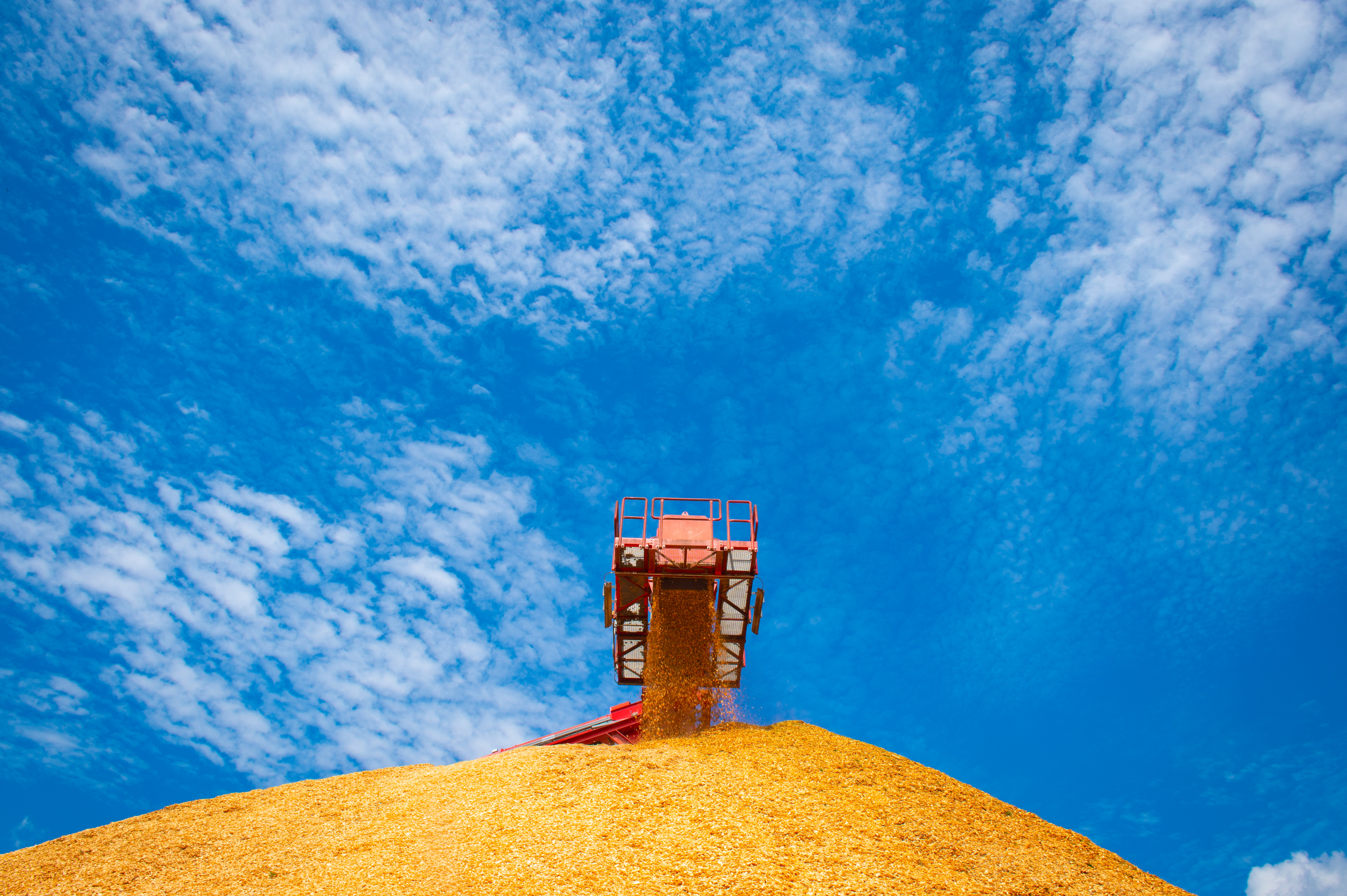
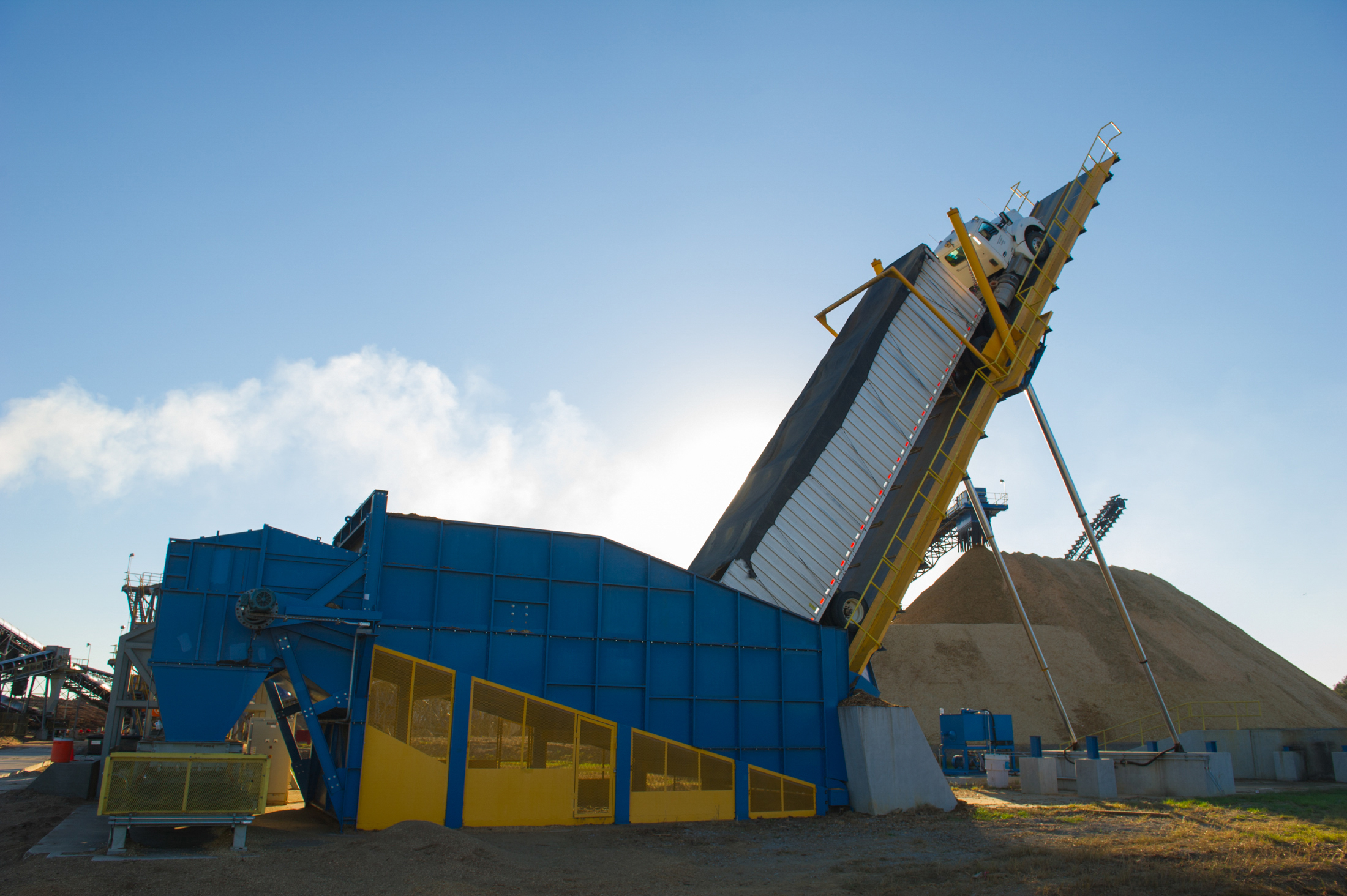
Drax LaSalle BioEnergy wood pellet plant in Louisiana is now co-located with a sawmill. A new rail spur became operational at LaSalle earlier in 2019. Click to view/download.
Drax continues to see flexible gas generation as an enabler of greater renewable and low carbon generation, in addition to supporting the development of hydrogen.
Any investment decision would reflect Drax’s objective of delivering earnings visibility and be underpinned by a 15-year capacity agreement to support a low double-digit rate of return. Drax would consider a range of funding options, including partnerships, consistent with Drax’s balance sheet objective of around 2 x net debt to Adjusted EBITDA(1) over time.
Drax remains committed to the capital allocation policy established in 2017.
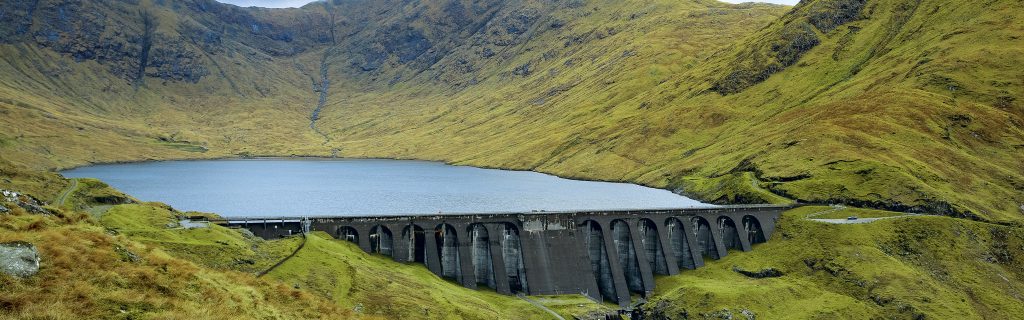
The performance of the assets acquired from Iberdrola in December 2018 has been strong, particularly the pumped storage business which has performed well, driven by the system support market. Drax reiterates the Adjusted EBITDA(1) guidance provided at the time of acquisition, of £90-£110 million in the 2019 financial year.
In July, Drax completed the refinancing of the acquisition bridge facility used to acquire these assets. These facilities now extend the Group’s debt maturity profile to 2029, adding an ESG(2) facility with a mechanism that adjusts the margin based on Drax’s carbon emissions against an annual benchmark. The Group’s cost of debt is now below four percent and below three percent on the new facilities, reflecting the Group’s reduced business risk. The Group continues to identify opportunities to optimise its balance sheet and cash flow.
During the summer, Drax completed major planned outages on two biomass units. Following a delayed return to service, the plan is to run all four ROC(3) units at high utilisation levels in the fourth quarter of 2019.
The outlook for coal generation remains challenging and Drax continues to monitor the situation with regards to future operation, noting that all unabated UK coal generation must close by 2025.
Following formal confirmation from the UK Government, Drax expects the Capacity Market to be re-instated shortly, with full retrospective payments made for the capacity provided. Capacity payments due to Drax for 2019 and since the suspension of the Capacity Market in 2018 are £75 million. Drax expects these to be included in 2019 Adjusted EBITDA(1), with cash settlement in January 2020.
These factors underpin the Group’s expectations for full year Adjusted EBITDA(1), which remain unchanged and around 2 x net debt to Adjusted EBITDA(1) when adjusted to reflect cash payment of retrospective capacity payments received in January 2020.
The event will be webcast from 9.30am and the material made available on the Group’s website at the same time. Joining instructions for the webcast and presentation are included in the links below.
https://view-w.tv/3-1479-22819/en
https://www.drax.com/investors/capital-markets-day/
(1) Earnings before interest, tax, depreciation, amortisation, excluding the impact of exceptional items and certain remeasurements.
(2) Environmental Social and Governance.
(3) Renewable Obligation Certificate.
Website: www.drax.com
END
RNS Number: 8192T
Following formal confirmation from the UK Government, Drax expects the Capacity Market to be re-instated shortly, with full retrospective payments made for the capacity provided. Capacity payments due to Drax for 2019 and since the suspension of the Capacity Market in 2018 are £75 million. Drax expects these to be included in 2019 EBITDA.
Drax expects the decision will allow future Capacity Market auctions to take place in early 2020. Drax retains options for new gas generation, which could be developed subject to appropriate clearing prices in future Capacity Market auctions.
A link to the European Commission’s decision is provided below.
https://europa.eu/rapid/press-release_IP-19-6152_en.htm
“This is great news for the UK energy system. The capacity market helps to ensure Britain has the flexible and reliable power generating capacity needed to support the economy as it continues to decarbonise, keeping the lights on at the lowest cost for millions of homes and businesses.
“We will be prequalifying a number of Drax’s flexible and reliable power stations, as well as some of our development projects, later this year with a view to participating in the capacity markets auctions in 2020.”
Drax Investor Relations: Mark Strafford
+44 (0) 1757 612 491
Drax External Communications: Matt Willey
+44 (0) 203 943 4306
Website: www.drax.com
END
RNS Number : 0491R

In the lead up to the 2019 AGM, the Company undertook initial consultation with major shareholders and received a variety of feedback on both the Resolution and the Company’s approach to engagement with regulators and policymakers including political parties and governments.
Following the AGM, the Board of Directors initiated further engagement to facilitate a clear understanding of the reasons underpinning the votes cast against the Resolution. This included writing to the Company’s largest shareholders and offering to discuss how the Company proposed to respond to points raised during the initial consultation and policy on stakeholder engagement. The Company is grateful to those shareholders that provided feedback at that time.
The Company regularly engages with regulators and policymakers in the UK, Europe and USA (including those associated with political parties and governments) to understand and contribute to discussions on a wide range of matters which are associated with our business and delivering increased value to our shareholders. This approach is detailed on pages 32 and 33 of the 2018 Annual Report as a fundamental aspect of our stakeholder engagement. Political and regulatory risk has been identified by the Board as one of the nine principal risks that the business faces. Activities of this nature are not designed to support any political party or to influence public support for a particular party and would not be thought of as political donations in the ordinary sense of those words.
Reflecting the feedback received from shareholders, it has been determined that within future Annual Reports additional disclosure will be provided. This will describe the forms of engagement that have taken place with regulators and policymakers in the financial year as well as additional disclosure regarding the oversight of that engagement. To assure shareholders of the governance associated with managing engagement and transparency, the Company has also developed and published a policy explaining how stakeholder engagement is undertaken, including oversight and associated reporting.
The term ‘political donation’ is widely defined in the Companies Act 2006 (“the Act”). For clarity, the Company has not made, and does not intend to knowingly make, political donations. The Company continues to believe it is in the best interests of the business and shareholders to renew the authority most recently granted at the 2019 AGM to avoid any inadvertent infringement of the Act.
Prior to 2019, the Company had proposed an authority to spend up to £50,000 under each of the three categories covered by the Act. At the 2019 AGM, Drax sought an authority to spend up to £100,000 under the same three categories which was approved by a majority of shareholders.Nonetheless and reflecting feedback received in connection with the Resolution, at the 2020 and future AGMs the Company will propose an authority to spend up to £100,000 in each of the three categories but will introduce an aggregate cap of £125,000.
Further explanation on these matters, and our ongoing engagement with shareholders, will be included in the 2019 Annual Report and notice of the 2020 AGM.
Drax Investor Relations: Mark Strafford
+44 (0) 1757 612 491
Drax External Communications: Matt Willey
+44 (0) 1757 612 285


28 July 2019

Climate change is the biggest challenge of our time and Drax has a crucial role in tackling it.
All countries around the world need to reduce carbon emissions while at the same time growing their economies. Creating enough clean, secure energy for industry, transport and people’s daily lives has never been more important.
Drax is at the heart of the UK energy system. Recently the UK government committed to delivering a net-zero carbon emissions by 2050 and Drax is equally committed to helping make that possible.
We’ve recently had some questions about what we’re doing and I’d like to set the record straight.
At Drax we’re committed to a zero-carbon, lower-cost energy future.
And we’ve accelerated our efforts to help the UK get off coal by converting our power station to using sustainable biomass. And now we’re the largest decarbonisation project in Europe.
We’re exploring how Drax Power Station can become the anchor to enable revolutionary technologies to capture carbon in the North of England.
And we’re creating more energy stability, so that more wind and solar power can come onto the grid.
And finally, we’re helping our customers take control of their energy – so they can use it more efficiently and spend less.
No. Since 2012 we’ve reduced our CO2 emissions by 84%. In that time, we moved from being western Europe’s largest polluter to being the home of the largest decarbonisation project in Europe.
And we want to do more.
We’ve expanded our operations to include hydro power, storage and natural gas and we’ve continued to bring coal off the system.
By the mid 2020s, our ambition is to create a power station that both generates electricity and removes carbon from the atmosphere at the same time.
Our energy system is changing rapidly as we move to use more wind and solar power.
At the same time, we need new technologies that can operate when the wind is not blowing and the sun is not shining.
A new, more efficient gas plant can fill that gap and help make it possible for the UK to come off coal before the government’s deadline of 2025.
Importantly, if we put new gas in place we need to make sure that there’s a route through for making that zero-carbon over time by being able to capture the CO2 or by converting those power plants into hydrogen.
No.
Sustainable biomass from healthy managed forests is helping decarbonise the UK’s energy system as well as helping to promote healthy forest growth.
Biomass has been a critical element in the UK’s decarbonisation journey. Helping us get off coal much faster than anyone thought possible.
The biomass that we use comes from sustainably managed forests that supply industries like construction. We use residues, like sawdust and waste wood, that other parts of industry don’t use.
We support healthy forests and biodiversity. The biomass that we use is renewable because the forests are growing and continue to capture more carbon than we emit from the power station.
What’s exciting is that this technology enables us to do more. We are piloting carbon capture with bioenergy at the power station. Which could enable us to become the first carbon-negative power station in the world and also the anchor for new zero-carbon cluster across the Humber and the North.
I took this job because Drax has already done a tremendous amount to help fight climate change in the UK. But I also believe passionately that there is more that we can do.
I want to use all of our capabilities to continue fighting climate change.
I also want to make sure that we listen to what everyone else has to say to ensure that we continue to do the right thing.
The £375 million private placement with infrastructure lenders comprises facilities with maturities between 2024 and 2029(2).
The £125 million ESG facility matures in 2022. The facility includes a mechanism that adjusts the margin based on Drax’s carbon emissions against an annual benchmark, recognising Drax’s continued commitment to reducing its carbon emissions as part of its overall purpose of enabling a zero-carbon, lower cost energy future.
Together these facilities extend the Group’s debt maturity profile beyond 2027 and reduce the Group’s overall cost of debt to below 4 percent.
Drax Investor Relations:
Mark Strafford
+44 (0) 1757 612 491
Drax External Communications:
Matt Willey
+44 (0) 7711 376 087
Website: www.drax.com
(1) Drax Corporate Limited drew £550 million under an acquisition bridge facility on 2 January 2019 used to partially fund the acquisition of ScottishPower Generation Limited for initial net consideration of £687 million. £150 million of the acquisition bridge facility was repaid on 16 May 2019.
(2) £122.5 million in 2024, £122.5 million in 2025, £80 million in 2026 and £50 million in 2029.
| Six months ended 30 June | H1 2019 | H1 2018 (restated) |
|---|---|---|
| Key financial performance measures | ||
| Adjusted EBITDA (£ million) | 138 | 102 |
| Net cash from operating activities (£ million) | 197 | 112 |
| Net debt (£ million) | 924 | 366 |
| Interim dividends (pence per share) | 6.4 | 5.6 |
| Adjusted basic earnings per share (pence) | 2 | 1.6 |
| Total financial performance measures | ||
| Operating profit (£ million) | 34 | 12 |
| Profit / (loss) before tax (£ million) | 4 | -11 |
| Basic earnings / (loss) per share (pence) | 1 | -1 |
Will Gardiner, CEO, Drax Group. Click to view high resolution photo.
“Drax Group has delivered strong profit and dividend growth in the first half of the year. Integration of our new Hydro and Gas generation assets is progressing well and the value the Group delivers from supporting the energy system has almost doubled. Drax is supporting British business with innovative new energy services and, despite challenging market conditions, our Customers business continues to grow. Our biomass cost reduction initiative and plans for expanded biomass self-supply are going well.
“Drax wholeheartedly supports the UK’s target of achieving net zero carbon emissions by 2050.”
“Reducing our greenhouse gas emissions by half in the past year underscores Drax’s commitment to this goal. With the right investment and regulatory framework we could go further and Drax could become the world’s first carbon negative power station – something the UK Committee on Climate Change recognises will be crucial.”
 Adjusted EBITDA of £8 million (H1 2018: £10 million)
 Adjusted EBITDA of £9 million (H1 2018: £16 million)
Read full Report | View investor presentation | Sign up or watch webcast | Read press release