Tag: about us

Drax Group plc Chief Executive comments on full year results

Will Gardiner, CEO, Drax Group

We continued to transform the business in 2017, delivering a strong EBITDA performance, in line with expectations. This was delivered by all parts of the business making positive contributions for the first time.

We also made good progress delivering our strategy, which is clear and unchanged. We are increasing biomass self-supply, developing projects to diversify our generation mix and growing our B2B energy supply business.

The UK is undergoing an energy revolution, starting with a significant reduction in carbon emissions, and to support that we are helping to change the way energy is generated, supplied and used.

View full report

View investor relations presentation

Drax Group plc: Full year results for the twelve months ended 31 December 2017

RNS Number : 9871F
Drax Group PLC
Twelve months ended 31 December20172016
Key financial performance measures
EBITDA (£ million)(1)229140
Underlying profit after tax (£ million)(2)321
Underlying earnings per share (pence)(2)0.75.0
Total dividends (pence per share)12.32.5
Net cash from operating activities (£ million)315191
Net debt (£ million)(3)36793
Statutory accounting measures
(Loss) / profit before tax (£ million)(183)197
Reported basic (loss) / earnings per share (pence)(37.2)47.7

All areas of the business contributing to positive EBITDA for the first time

  • EBITDA up 64% to £229 million – improving earnings quality from biomass generation and Opus Energy
    • Pellet Production – EBITDA up £12 million to £6 million – 35% growth in production
    • Power Generation – EBITDA up £64 million to £238 million – contribution from biomass generation
    • B2B Energy Supply – EBITDA up £33 million to £29 million –acquisition of Opus Energy
  • Strong cash flow generation and balance sheet – 1.6x net debt to EBITDA
  • Final dividend of £30 million, representing 60% of the recommended full year – £50 million
  • £50 million share buy back programme consistent with capital allocation policy
  • Statutory loss before tax principally driven by unrealised losses related to foreign currency hedging of £156 million

Delivering strategy and remain on course to hit >£425 million EBITDA target by 2025

  • Accelerated energy supply growth with acquisition and on-boarding of Opus Energy
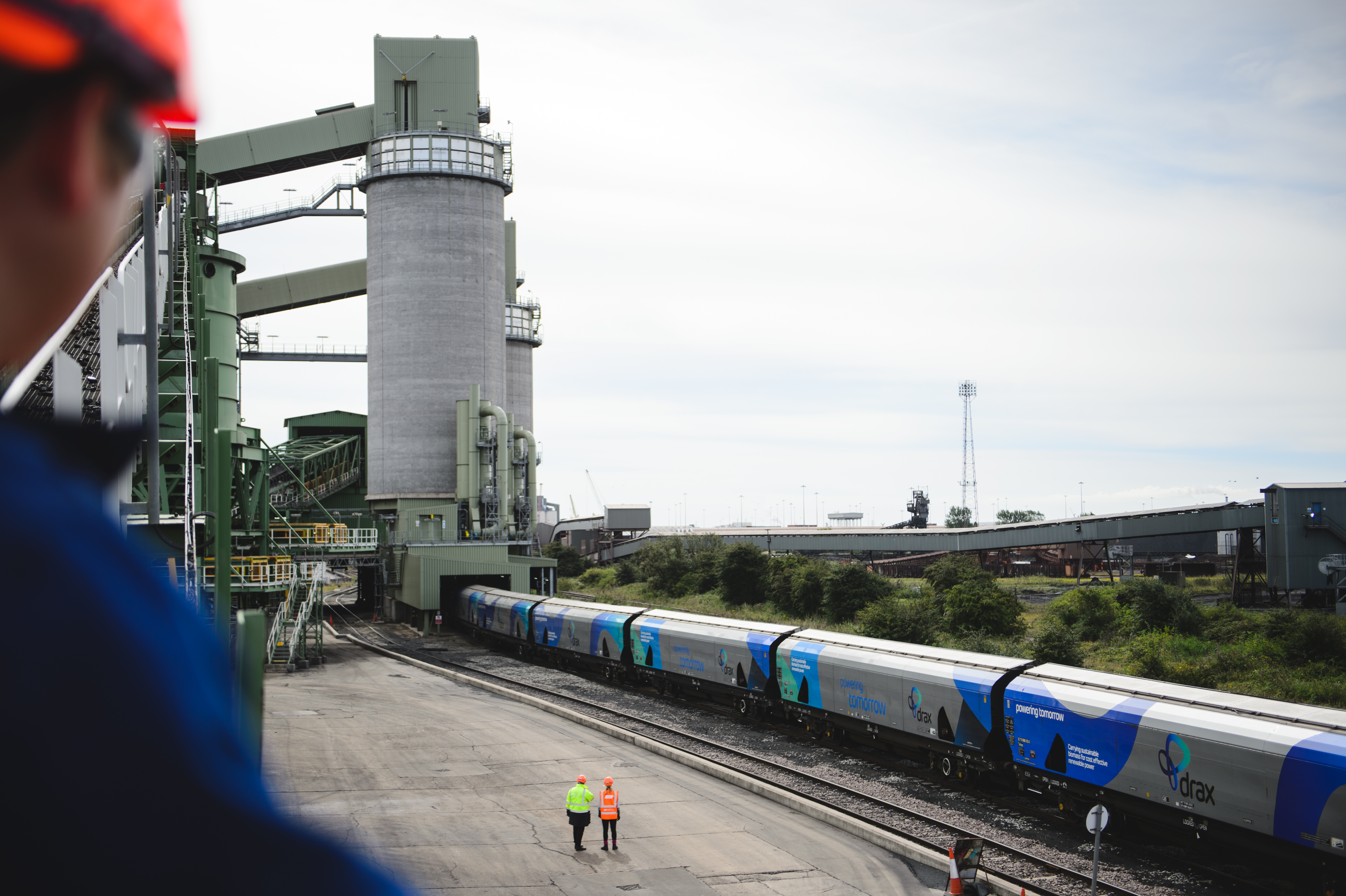
  • Increased biomass self-supply through acquisition and commissioning of third biomass pellet plant, LaSalle Bioenergy
  • Government support received for fourth biomass unit conversion at Drax Power Station
  • Development of options for future generation: coal-to-gas repowering option, two OCGTs (4) to enter next capacity market auction in December 2018

Focused on operational excellence and investment in strategy

  • Continued focus on safety, operational excellence and project development
  • Targeted investment in long-term growth opportunities
  • Continued growth in EBITDA and cash generation
  • Sustainable and growing dividend, with opportunities to return capital in line with policy

Will Gardiner, Chief Executive of Drax Group plc, said:

“We continued to transform the business in 2017, delivering a strong EBITDA performance, in line with expectations. This was delivered by all parts of the business making positive contributions for the first time.

“We also made good progress delivering our strategy, which is clear and unchanged. We are increasing biomass self-supply, developing projects to diversify our generation mix and growing our B2B energy supply business.

“The UK is undergoing an energy revolution, starting with a significant reduction in carbon emissions, and to support that we are helping to change the way energy is generated, supplied and used.”

Notes for analysts and editors

2017 Group Financial Review

  • Underlying earnings per share decreased to 0.7 pence
    • Accelerated depreciation of coal-specific assets, amortisation of intangible assets associated with the acquisition of Opus Energy and an increase in net finance charges.
  • Reported basic earnings per share – a loss of 37 pence, which includes unrealised losses on derivative contracts of £156 million (principally related to the foreign currency hedging programme) in addition to one-off items – transaction costs relating to the acquisition of Opus Energy (£8 million) and refinancing (£24 million)
  • Tax – one-off non-cash charge of £16 million – a reduction in US federal tax rates from 35% to 21% resulting in a revaluation of deferred tax balances, offset by £13 million cash tax credit from UK Patent Box tax regime, which rewards Drax patented innovation in biomass generation
  • Investment in line with guidance
    • Acquisition of Opus Energy (£367 million)
    • Acquisition and commissioning of LaSalle Bioenergy (£48 million)
    • Maintenance and improvement (£133 million) including pellet plant optimisation, strategic spares, Haven Power information systems, research and innovation and Opus Energy office consolidation
    • Continue to expect ongoing maintenance capital investment of £50-60 million per year
  • Net debt of £367 million (31 Dec 2016: £93 million), including cash on hand of £222 million

2017 Operational Review

Pellet ProductionFocus on good quality pellets at lowest cost

  • 35% increase in pellet production to 0.8M tonnes (2016 0.6M tonnes)
  • Low-cost expansion of Amite and Morehouse plants complete
  • Improving operational performance whilst providing supply chain flexibility
  • LaSalle Bioenergy commissioning ahead of plan from November 2017, increasing output through 2018
  • Biomass self-supply increased

Power GenerationFocus on optimisation of existing assets and development of projects

  • Electricity output (net sales) 20.0TWh (2016: 19.6TWh)
  • 65% of generation from renewables (2016: 65%)
  • £88 million from system support and flexibility
  • £90 million capacity market payments secured for 2017-2022

B2B Energy SupplyProfitable business with growth in sales and customer meters

  • 12% increase in customer meter points to more than 375,000
  • 46% of energy sales from renewables
  • Opus Energy EBITDA in line with plan; Haven Power exceeded EBITDA breakeven target
  • Continued investment in next generation IT systems

Notes:

(1)  EBITDA is defined as earnings before interest, tax, depreciation, amortisation and material one-off items that do not reflect the underlying trading performance of the business.

(2)  2017 underlying earnings exclude unrealised losses on derivative contracts of £156 million and material one-off items that do not reflect the underlying performance of the business (2016: unrealised gains of £177 million).

(3)  Borrowings less cash and cash equivalents.

(4)  Open Cycle Gas Turbine.

Contacts

Enquiries:

Drax Investor Relations: Mark Strafford

+44 (0) 1757 612 491

Media:

Drax External Communications: Ali Lewis

+44 (0) 1757 612 165


View full report

View investor relations presentation

Trading update

RNS Number: 0238Z
DRAX GROUP PLC
(Symbol: DRX) 

Trading and Operational Performance

Since publishing its half year results on 19 July 2017, trading conditions in the markets in which Drax operates have remained in line with expectations.

Generation

A major planned outage on the CfD(1) unit was completed in November 2017 and the unit has now returned to service. Both biomass and coal operations are currently performing well.

Retail

Retail operations remain in line with expectations, with the integration of Opus Energy progressing well and continued improvement in profitability at Haven Power.

US biomass self-supply

At the Morehouse and Amite pellet plants, the installation of a further 150K tonnes of capacity – allowing access to incrementally cheaper local wood residues – as part of the previously announced plans to optimise operations, is now complete.

The third pellet plant at LaSalle began commissioning in November 2017, with pellets now being produced and an increase in production scheduled through 2018.

Taking these factors into account and based on good operational availability for the remainder of the year, our expectations remain unchanged.

Contracted Power Sales for 2017 and 2018

As at 7 December 2017, the power sales contracted for 2017 and 2018 were as follows:

20172018
Power sales (TWh) comprising:20.116.8
– Fixed price power sales (TWh)20.115.9
at an average achieved price (per MWh)
at £46.9at £44.1
– Gas hedges (TWh)(2)-0.9
at an achieved price (per therm)
-44.4p

Strategy Update

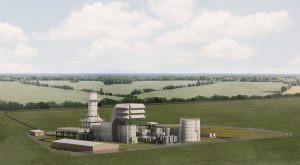
Drax continues to develop options for 1.2GW of new Open Cycle Gas Turbine (OCGT) capacity, providing peaking power and system support services to the grid. The first two projects – Progress Power and Hirwaun Power – will participate in the next capacity market auction in February 2018. Negotiations for engineering and construction contracts are progressing well, with competitive tenders received from a number of providers.

If developed, these projects would be underpinned by a fifteen year, index-linked capacity market contract, extending earnings visibility into the 2030s.

Drax also continues to develop options for its remaining coal assets, including further low cost biomass and coal-to-gas conversions, the latter of which is progressing through a public planning consultation.

Through these options for growth and improved earnings Drax continues its transformation, helping change the way energy is generated, supplied and used for a better future.

Other matters

As part of its core market focus Drax completed the sale of BBE(3) to AMPH(4) in October 2017. Drax retains an equity holding in AMPH(4).

Drax will announce its full year results for the year ending 31 December 2017 on 27 February 2018.

Enquiries

Drax Investor Relations:

Mark Strafford

+44 (0) 1757 612 491

Media

Drax External Communications

Matt Willey

+44 (0) 1757 612 285

Ali Lewis

+44 (0) 1757 612 165

Website: www.drax.com

Notes:

  1. Contract for Difference.
  2. Structured power sales (and equivalents) include forward gas sales, providing additional liquidity for forward sales, highly correlated to the power market and acting as a substitute for forward power sales.
  3. Billington Bioenergy.
  4. Aggregated Micro Power Holdings.

END

Appointment of new non-executive director

RNS Number :5094W
DRAX GROUP PLC
(Symbol: DRX)

The Board of Drax Group plc (“Drax”) is pleased to announce that Nicola Hodson is to be appointed as a Non-Executive Director, with effect from 12 January, 2018.

Nicola served as a Non-Executive Director at Ofgem(1) between January 2015 and July 2017. She is currently Vice President, Global Sales and Marketing, Field Transformation at Microsoft(2), having worked with the company in various roles since 2008, including Chief Operating Officer of its UK business and leading its UK public sector business.

Prior to Microsoft(2) she held senior roles at Siemens, CSC, Ernst & Young and British Nuclear Fuels. She has also been a member of TechUK’s(3) Board since 2012 and was previously a board member of the UK Council for Child Internet Safety (UKCCIS) (4) and the Child Exploitation and Online Protection group (CEOP)(5).

Commenting on the appointment, Philip Cox, Chairman of Drax, said:  “The directors are delighted to welcome Nicola to the Board. Her broad experience gained in the technology, business transformation, energy and consulting sectors, across a range of strategy, marketing and change roles will provide real value as Drax delivers on its strategy to help change the way energy is generated, supplied and used in the UK.”

Nicola added: “The energy sector is changing fast so this is an exciting time to be joining Drax’s Board. I believe Drax is well-placed to grow and support the decarbonisation of the UK economy through low carbon generation and fuel sourcing. I am particularly inspired by the prospect of joining a leading challenger-brand which puts customers at the heart of the business and allows them to maximise the opportunities presented by the emerging energy landscape.”

Nicola has also been appointed as a member of the Company’s Audit, Remuneration and Nomination Committees.

Enquiries:

Drax Investor Relations: Mark Strafford

+44 (0) 1757 612 491

Media:

Drax External Communications: Matt Willey

+44 (0) 1757 612 285

Website: www.drax.com

Notes:

  1. Ofgem is a non-ministerial government department and an independent National Regulatory Authority. Its objective is to protect the interests of electricity and gas consumers by promoting value for money, promoting security of supply and sustainability, supervise markets and competition and regulate government schemes.
  2. Microsoft (Nasdaq “MSFT” @microsoft) is the leading platform and productivity company for the mobile-first, cloud-first world, and its mission is to empower every person and every organization on the planet to achieve more.
  3. TechUK is an organisation that represents its 900 members and drives links with Government.
  4. The UK Council for Child Internet Safety (UKCCIS) is a group of more than 200 organisations drawn from across government, industry, law, academia and charity sectors that work in partnership to help keep children safe online.
  5. The Child Exploitation and Online Protection Group (CEOP) works with child protection partners across the UK and overseas to identify the main threats to children and coordinates activity against these threats to bring offenders to account. We protect children from harm online and offline, directly through National Crime Agency led operations and in partnership with local and international agencies.

END

How many homes can we power with renewables?

Terraced houses at night time on portland dorset

More of Britain’s electricity is coming from renewables than ever before. New offshore wind farms, solar capacity hitting double figures and the reliability of biomass are having a marked effect on the country’s power.

Our electricity make up is more diverse than ever. More than this, it is cleaner. During the first three months of 2017, emissions from power generation were 10% lower than the same period last year and 33% lower than the first quarter of 2015.

And while this is a huge and necessary step in the UK’s efforts towards slowing global warming, it would mean little if renewables weren’t also keeping our lights on. That’s exactly what they are doing – powering businesses, industries and homes across the country. But how many, exactly?

The scale of renewables

In 2015 the total electricity consumption of the UK was 303 TWh. To put that into perspective, that’s roughly enough power to boil 121.1 billion kettles. A quarter of the 360 TWh of electricity generated that year  came from renewables – 84 TWh – a massive 29% increase over 2014. Of that figure, Drax’s biomass units contributed 11.5 TWh, approximately 3% of that year’s total power generation.

So, renewables are big, but how big?

Panoramic photo of modern house with outdoor and indoor lighting, at night

According to the 2011 Census there are 26.4 million households in the UK. Ofgem, the energy regulator, says the average UK household uses roughly 3.1 MWh of electricity a year (the average US household uses approximately 10.8 MWh).

If we were to hypothesise that all the renewable power generated in 2015 had been consumed by UK households, there would be enough to power every single one. And there’d be enough left over to power 600,000 more.

Using just the power generated thanks to sustainably sourced compressed wood pellets at Drax Power Station would be enough to satisfy the equivalent of 4.1 million homes – nearly twice the number of households in Scotland or 800,000 more homes than in the whole of London. 15% of all UK homes could have been powered by just half that one station in Selby, North Yorkshire.

Finding the right mix for the future

Electricity is used to power more than just homes. It powers businesses, transport and infrastructure – almost all parts of our lives are fuelled by electricity. While there may be the hypothetical equivalent to power every single household in the UK with renewables (with room to spare), the reality is there is a far larger nationwide demand that needs to be fulfilled. And this means we can’t rely on renewables alone. Instead, what’s required is an energy mix that also includes other low carbon sources of electricity – backed up by a new fleet of gas power stations and storage that can respond rapidly to changes in demand.

While we’re not yet in a position where we can power all homes all the time using renewables, that day could well be coming. A new report from the International Renewable Energy Agency (IREA) suggests a mix of renewable technologies including biomass and bioenergy with carbon capture and storage (BECCS) could meet the majority of global energy demand across all sectors of the world economy by 2050 – while helping to keep the rise in global temperatures to under two degrees celsius above 1990 levels.

The people behind the power

Drax Group may have been built with Drax Power Station at its core, but today it’s a set of integrated companies, helping to change the way energy is generated, supplied and used, to build a better future.

At the heart of each part of the business – from creating the fuel to power the station’s boilers to managing the supply of electricity, gas and renewable heating fuel to customers – is people.

Here we meet some of those people working behind the scenes.

Robert Gatlin, Operations Supervisor, Amite BioEnergy, Drax Biomass

robert_bw“I was a student in the Process Operations Technology programme at Southwest Mississippi Community College and Drax came to the school to recruit new grads. They were introducing a new technology I’d never heard of and it sparked my interest.

“The idea of using biomass to produce electricity on such a large scale was fascinating, so I joined Drax Biomass in 2014. I was unaware biomass was being used to produce electricity – it’s very exciting to be part of something this big and cutting edge.

“One of the most interesting things I’ve discovered working here is the way moisture affects nearly everything in the pelletising process. We really have to work diligently to ensure our moisture levels are where they need to be in every stage of producing a pellet.”

Rachel Grima, Sustainability Analyst, Drax Group

rachael_bw“I’ve always wanted to work in renewable energy and I studied life cycle analysis during my degree. I started looking for jobs in renewable energy, and as the biggest generator of renewable energy in the UK, Drax was an obvious choice!

“Today my job involves assessing and interpreting sustainability data for all the biomass we use. Our team uses this data to assess if a supplier meets our sustainability policy and regulation.

“I’d never looked very much at transport emissions, so I find it really interesting. You can move 30,000 tonnes of wood pellets in one ship, but it would take over 1,000 trucks to move that many, creating far more greenhouse gas emissions. Since joining the team, I’ve been really surprised to see how driving small efficiencies in a supply chain can create real savings in greenhouse gas emissions.”

Stephen Wilkinson, Turbine Maintenance Technician, Drax Power Station


Stephen Wilkinson, Turbine Maintenance Technician
I’ve always enjoyed building and fixing things. Given that my father and both grandfathers were in engineering – one of them even working at Drax during its construction – I had a strong drive to get into engineering. Living locally, it seemed the biggest and best place to work.

“I’m a Turbine Maintenance Technician, so I act as the link between the turbine support group and the main station planning and maintenance teams. I start the day early by looking through the list of overnight defects, focusing on the turbine area. After this I’m out of the office having a look at the issues to determine whether the station maintenance team or the turbine support group will carry out the repair work. From this point on every day is different.

“The recent changes Drax has made to adapt to a rapidly changing energy market has affected most people at the station. For me, seeing the major turbine upgrades take place has been extremely interesting. I started as an apprentice and then as a fitter, working on the turbine outages, seeing these upgrades first-hand. This has moved on to the point where I have been lucky enough to visit a number of the turbine manufacturing facilities in the UK and Germany.”

Gemma Baker, SME Customer Service Delivery Manager, Haven Power 

gemma-baker_bw

“I joined Haven Power in July 2007 as a Customer Service Advisor. I’d never worked in the energy industry before and thought it sounded interesting – Haven caught my eye as it was a new company which excited me. Being part of and contributing to a growing company was right up my street!

“Now I’m responsible for delivering a consistent and valued account management service to our electricity customers across all the small- to medium enterprise (SME) segments. This includes everything from billing and cash collection, to renewals and query and complaint resolution. I’ve been at Haven for nine and a half years now!”

Sam French, Customer Service Administrator Apprentice, Opus Energy

sam-french_bw

“Before joining [Opus Energy] I didn’t know anything about the energy industry – now I know about different supplier competitors, how an electricity supply contract is agreed and registered, and how we actually apply for a supply. I’ve learnt so much about different aspects of the energy industry, too.

“I haven’t had that much involvement with the Drax Group yet, but I’ve enjoyed looking into the business. I’ve found it really interesting to learn how they’ve managed to transition from a non-renewable company to one that is now producing more renewable than fossil fuel power – which is amazing.”

Amy Carton, Sales and Marketing Executive, Billington Bioenergy

amy_bbe_bw

 “I’m responsible for all aspects of internal and external marketing and communications at Billington Bioenergy, a company which supplies wood pellets to commercial and domestic customers who use them to heat their homes or businesses.

“I try to be environmentally conscious and keep my carbon footprint as low as possible – renewable and sustainable heating comes into this. It’s wonderful to spend my days promoting the merits of renewable heating. It’s a relatively small industry in the UK in comparison to our European counterparts, but this makes what we do here in Billington Bioenergy quite unique.

“There was quite a bit of information to digest when I first started – for example, ENplus regulations, different types of pellets, how wood pellet boilers work… it was a big learning curve!”

Find out about careers and apprenticeships within Drax Group:

Retooling for a post-coal future

The energy system in Great Britain is dramatically changing. Where it was once an industry dominated by coal, a predictable but dirty fuel, now our power increasingly comes from renewables. This is a trend that will continue, forcing more coal off the system.

Drax has a role in this new future of renewable power. We have already converted half of our power station in North Yorkshire to run on renewable biomass, and now, to support the needs of a system increasingly dominated by intermittent renewables like solar and wind, we are developing plans to build four new state-of-the-art flexible power stations – two in England and two in Wales.

Each will be 299 MW in size and powered by gas. Two of them could be producing electricity by 2020. It’s the next step for us in helping change the way energy is generated for a better future.

nrg19-1024x682

Supporting a renewable energy mix

Wind and solar accounted for 15% of Britain’s electricity mix between July and September from an installed capacity that has increased six fold in just six years. Biomass generation at Drax rose from almost nothing to producing 20% the country’s renewable power in the first half of this year. Renewable energy has come on leaps and bounds this decade – perhaps more than anyone ever thought it would.

But as well as being much lower in carbon emissions, renewables like wind and solar operate very differently to the fuels the GB Grid was built on – they’re intermittent. They only work when the sun is shining and the wind is blowing. So when it suddenly becomes still or dark, we need alternatives that plug the gap, deliver power and boost security of supply.

Biomass is one part of how we can do this using lower carbon fuels. Compressed wood pellets (the biomass used at Drax) is a renewable fuel that can be used to generate baseload power that can also be dialled up and down to meet demand. Like coal, it can also provide the ancillary services the Grid needs to stay stable.

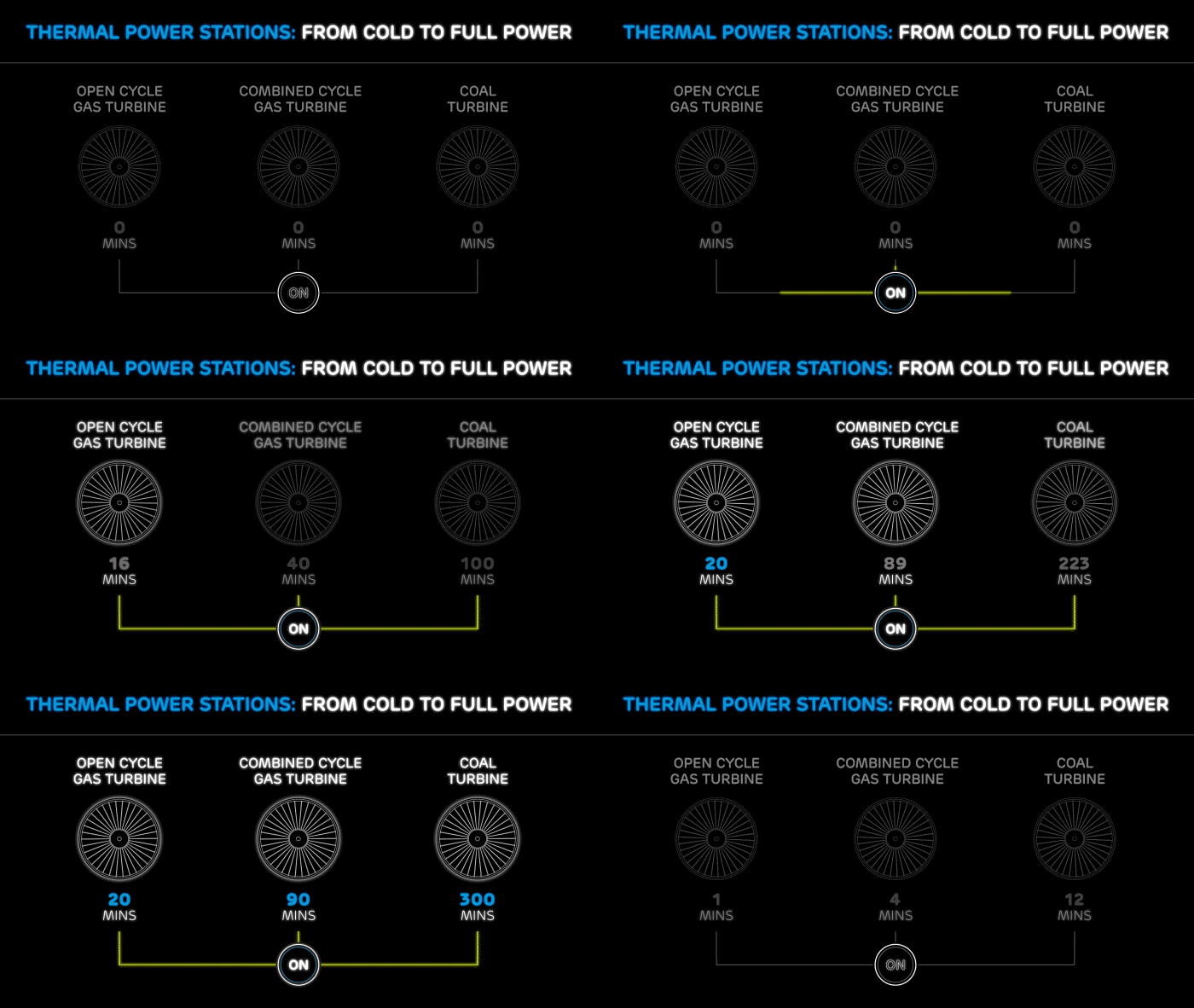
Unlike combined cycle gas turbine (CCGT) power plants, which currently supply roughly 40% of the UK’s power and take 1.5 hours to start up from cold, our new open cycle gas turbine (OCGT) plants are like big jet engines – generating electricity at full power in just 20 minutes from cold or 10 minutes from a warm standby. It’s an incredibly fast turnaround and it’s what the energy network needs.

And because it’s a lower carbon fuel than coal with higher flexibility it will support the UK’s decarbonisation targets – by enabling more wind and solar on the Grid. We plan to use OCGTs to plug the gaps that intermittency creates – essentially flicking the switch on and off at very short notice. We anticipate they would run for no more than 1,500 hours per year – only at times when the electricity system is under stress. Through supporting more intermittent renewables we also help to enable more coal off the system.

A better future for customers

This new future will not only mean changes for us, the generators, but for customers, too.

How energy is supplied and used is evolving, and this is something that Drax can support with the growing retail side of our business.

We’re a company with a wealth of expertise in renewable power and we can use this to help deliver electricity to business customers in a way that caters for today’s market. We’re already doing this with Haven Power, but now we’re extending this with the acquisition of Opus Energy. With this new company as part of Drax Group we will be able to grow our existing retail offering, providing more of the UK’s growing businesses and established industrial and corporates not only with electricity, but also with gas. Our retail offering will provide businesses with a route to sell the power they generate but do not need – plus expertise in how they can use energy more efficiently.

R&D

These are the first steps in a new chapter for Drax. There will be more research and development to come. In the future we’ll be looking at how we can extend our American compressed wood pellet supply business, Drax Biomass, and at the potential for power storage systems.

If we want to continue to be a truly modern energy company that delivers on our aim of changing the way energy is generated, supplied and used for a better future, we need to be able to adapt. It’s always been a part of Drax’s history and it will be a part of our future.

Should the carbon tax be scrapped? Definitely not

Coal field at Drax Power Station

Carbon emissions from electricity consumption in Britain are at their lowest level ever. Each unit of electricity produced now contains less than half the carbon it did four years ago. This pace of decarbonisation is ahead of expectations – it’s also entirely necessary.

Carbon dioxide (CO2) contributes to the warming of the planet and so limiting how much of it is released into the atmosphere is critical. Nowhere is this more important than in the power sector – one that has relied on carbon-intensive fossil fuels like coal for its lifetime.

The UK government has recently ramped up plans to end coal power generation by 2025, and since 2013, one of its methods for doing so has been an economic one: making organisations pay for every tonne of CO2 they release.

It makes carbon emissions an economic disincentive for businesses, but surprisingly, some of CO2’s biggest emitters fully support it – Drax included.

How do you put a price on carbon?

The EU was the first region to put such a scheme in place when, in 2005, it introduced the EU Emissions Trading System (EU ETS). Under this system, energy companies have to buy permits that allow them to emit CO2. But the price of those permits has historically been volatile – dropping as low as below £3 per tonne in 2014.

In 2013 the UK introduced the Carbon Price Floor (CPF), a means of bolstering the EU’s cost of carbon by setting a minimum price on emissions. Currently this is set at £18 per tonne, more than four times the value of an EU carbon permit.

More recently the CPF has become a point of contention as some industries claim it stifles progress and have called for it to be scrapped in the upcoming Autumn Statement.

This opposition has already caused blockers. Plans to raise the CPF to £30 per tonne by 2020 were halted by previous Chancellor George Osborne, who instead froze it at £18 until the end of the decade.
But this view isn’t universally shared. Drax, along with a number of other energy companies, including SSE and Calon Energy, recently wrote to the current Chancellor Philip Hammond to argue to keep the price in place until at least 2025.

In the letter we state the reason for our support plainly: we believe the Carbon Price Floor is central to the UK’s efforts to decarbonise its electricity system. In short, if we want a cleaner future, the CPF needs to remain in place.

Andu Koss Standing in front of turbines

Why price carbon?

Not only does a carbon tax disincentivise using CO2-heavy fuels and processes, it encourages investment in lower carbon and renewable energy sources by making them more cost effective relative to coal, diesel and fuel oil.

More than that, it places the decisions on how to reduce CO2 emissions into the hands of those making them. As long there is a societal cost to global warming, it makes sense to put a cost to the emissions that cause it.

In 2009 Drax began an upgrade of our power station to run on biomass. It was a decision to pursue decarbonisation on our own terms made by people with the knowledge of how best to achieve it. Today three of our six units are powered by compressed wood pellets, which has seen an 80% reduction in carbon emissions when compared to coal.

It’s also a significant revenue driver for the country. The levy is expected to raise £1 billion this year, while globally the World Bank estimates the value of implementing carbon pricing initiatives at a little under $50 billion dollars.

The revenue is significant, but so too are the impacts on emissions. Since 2012, the UK’s carbon emissions have fallen by over 4.5% a year and on May 5th, the country reached a milestone: the first time since 1881 the UK was powered without burning any coal.

This evidence sets out a clear argument. The CPF contributes to reducing carbon emissions, and for this reason it’s important it remains a part of the UK’s decarbonisation strategy. Scrapping it would be a grave error in the UK’s future energy plans and could limit our ability to meet the Paris Agreement targets.

2016 has already been an historic year for the electricity industry in Britain. But if the CPF is scrapped it will become a milestone year for different reasons. Rather than the year in which low-CO2 power generation took a step forward, it will be the year a decarbonised electricity future drifted further from our reach.

My four principles of leadership

1. Have vision  

The first task of any leader is to have the vision for the future of their organisation. This doesn’t mean creating it on his or her own. It means that a leader needs to be ready to challenge assumptions, embrace change, have courage and be brave when necessary.

When I think about this I’m reminded of the challenges we faced when we decided to upgrade our power station in Yorkshire to use compressed wood pellets instead of coal .

In delivering this strategy, we faced three major hurdles:

  • Nobody had ever done it before.  There was no technical solution readily available. We had to create one ourselves using our own engineering know-how.
  • There was no supply chain for the compressed wood pellets. We would need to build our own.
  • Civil servants doubted we could deliver it and regardless, there was no Government support for our vision.

Because we had been so thorough, I knew that we had our facts right. In particular, I was certain that we could produce the same amount of electricity while cutting carbon by 80 per cent.

The only logical conclusion was to drive forward. It would never have happened if we hadn’t been confident about our vision.

I’m particularly proud of the way Drax engineers have developed a world-leading technology to transform the way the UK’s largest power station works without any interruption to supply. In 2015, we generated 7.9% of the UK’s electricity or 26.7 TWh from the one single site in North Yorkshire, according to data in our annual report and from the Department for Energy and Climate Change (DECC). That included 11.5 TWh of compressed wood pellet power – equal to around 13% of the UK’s total renewable electricity (up from 12% a year earlier) or enough to meet the needs of around three million homes (one in every 10 in the country). From the fourth quarter of 2015, we began generating more electricity from sustainable biomass than from coal.

There’s still a long way to go – at least three years if not more – before we can say our work is done, but it’s already a massive achievement.
2. Always be open and approachable

Everyone in your organisation needs to understand what you’re seeking to achieve and why.

For me, being open is also about being honest, approachable and interested in other views. Not just as an individual, but as an entire organisation. As President Obama said while addressing young people on his recent visit to the UK:

“Seek out people who don’t agree with you, and it will also help you to compromise.”

In some instances you need to push forward, while in others you need to compromise. That means a leader needs to trust in their vision while being open to challenges.

At Drax, we know our employees have integrity and can be trusted. At all levels, people need to have highly sensitive information to do their job. This can be a very challenging issue for a company listed on the London Stock Exchange, where a leak could do very serious damage indeed.

When we first listed in 2005, this led to boardroom disagreement. On one side, directors wanted to restrict information to a minimum because they felt this was the best way to limit risk.

As Chief Executive, I strongly disagreed with this. Obviously some things need to be kept confidential, but I really believe that it is important for a leader to be open. In fact, I think one of the key strengths of the Group is our open and frank culture. We have never suffered a significant leak in my time in charge.

3. Together we’re stronger 

A leader’s role is not to take all the decisions. Leadership is about getting the best out of everyone around you. That includes the team you work with on a day-to-day basis, the wider team across the whole organisation, and all your stakeholders.

You never know in advance where the best idea is going to come from. If you’re recruitment is right, you’re surrounded by highly qualified experts.

At Drax, I encourage colleagues to have their say. I am surrounded by people who are willing and able to challenge my views and those of my colleagues on our Executive Committee. I would be silly not to listen to them. We all are more engaged when we’re involved in finding the solution to a problem than when we’re merely dictated to.
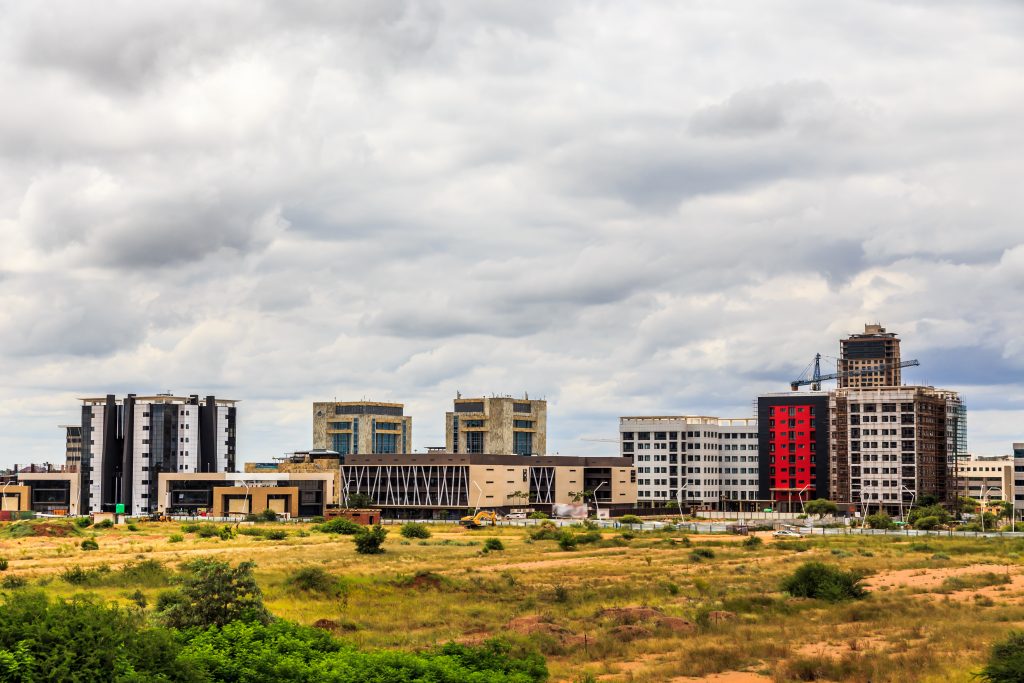
Central business district, Gaborone, Botswana

4. Drive the future  

No leader can wait for events to unfold. You have to drive your organisation forward in order to shape its future. In my opinion, indecision is the worst decision of all.

In my 20s I worked for the National Development Bank of Botswana in Gaborone. The bank provided farmers with short- term loans to buy seed to grow their crops.

One day a farmer who was clearly very poor turned up to see the loan officer who shared an office with me. He hadn’t received his loan, because the loan officer hadn’t processed his application in time. So there were no seeds to plant and no crops for the next season.

For years I blamed the loan officer for the farmer’s misfortune. However, from my practical experience as a leader, I now know better. The loan officer’s manager, who was afraid to reprimand him because he came from a privileged local family, should have had more courage. Because they couldn’t decide how to handle the situation, the company and the community it served suffered. Leadership is not an exact science and nothing can compare to experience.

For the sake of future generations, the world needs to urgently move away from coal. Unlike the manager in Gaborone who jeopardised a farmer’s future, my Drax colleagues and I know our leadership is driving the future towards the decarbonisation of our economy.