






https://www.opusenergy.com/blog/our-contingency-plans-for-coronavirus/
Drax Group’s ambition is to reach net zero across its value chain by the end of 2040, including steps aimed at decarbonising its supply chains.
We’re committed to enabling a zero carbon, lower cost energy future through engineering, technology and innovation.
We’re building for a sustainable future in how we source our biomass, generate energy, remove carbon dioxide and function as a business.
Read our carbon capture, sustainable bioenergy and power generation stories, as well as thinking from Drax’s leaders and business updates.
Explore a comprehensive guide to our business model and investor relations.
We believe investing in our people goes hand-in-hand with enabling the green energy transformation and positive future growth.
https://www.opusenergy.com/blog/our-contingency-plans-for-coronavirus/

Where does our electricity come from? One answer might be the power stations, wind turbines and solar panels that generate it. You might even go as far as to say the wind, sun, water, biomass and gas powering those stations. Or even the network companies transporting that power around the country. But there’s also a very important middle-man in this process: electricity suppliers.
Most of Great Britain gets its power from one of the ‘Big Six’ energy suppliers, which buy electricity from the wholesale market and then sells it to consumers. However, with more businesses and consumers looking for less carbon-intense electricity sources, there are now a whole host of smaller companies taking on the incumbents and offering all-renewable electricity.
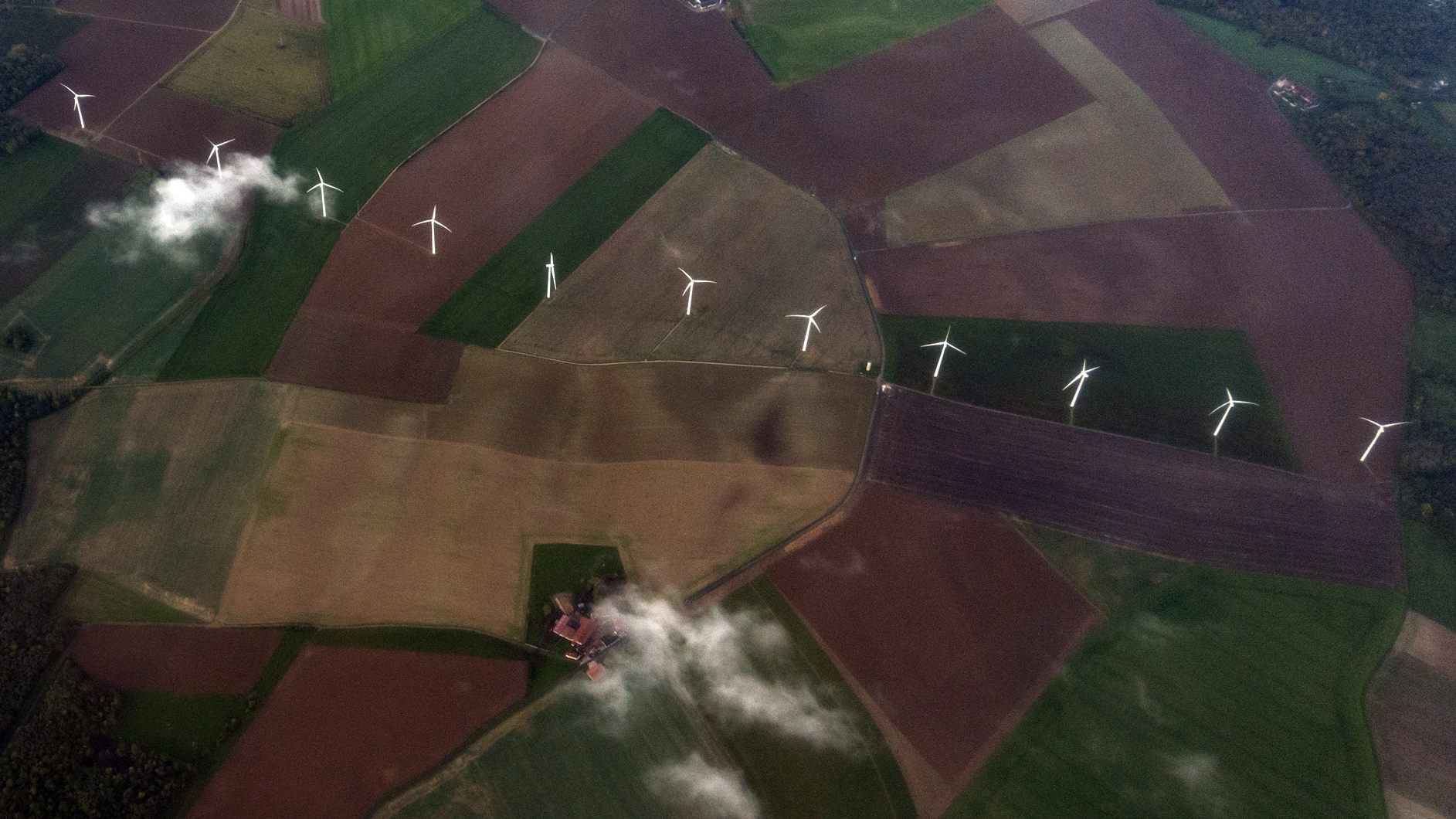
From Ovo to Bulb to Drax’s own Haven Power and Opus Energy, consumers and businesses have more and greener options than ever about where to buy their electricity, with many even offering 100% renewable electricity.
But how do these companies ensure the megawatts powering homes, offices and street lights come from renewable sources?
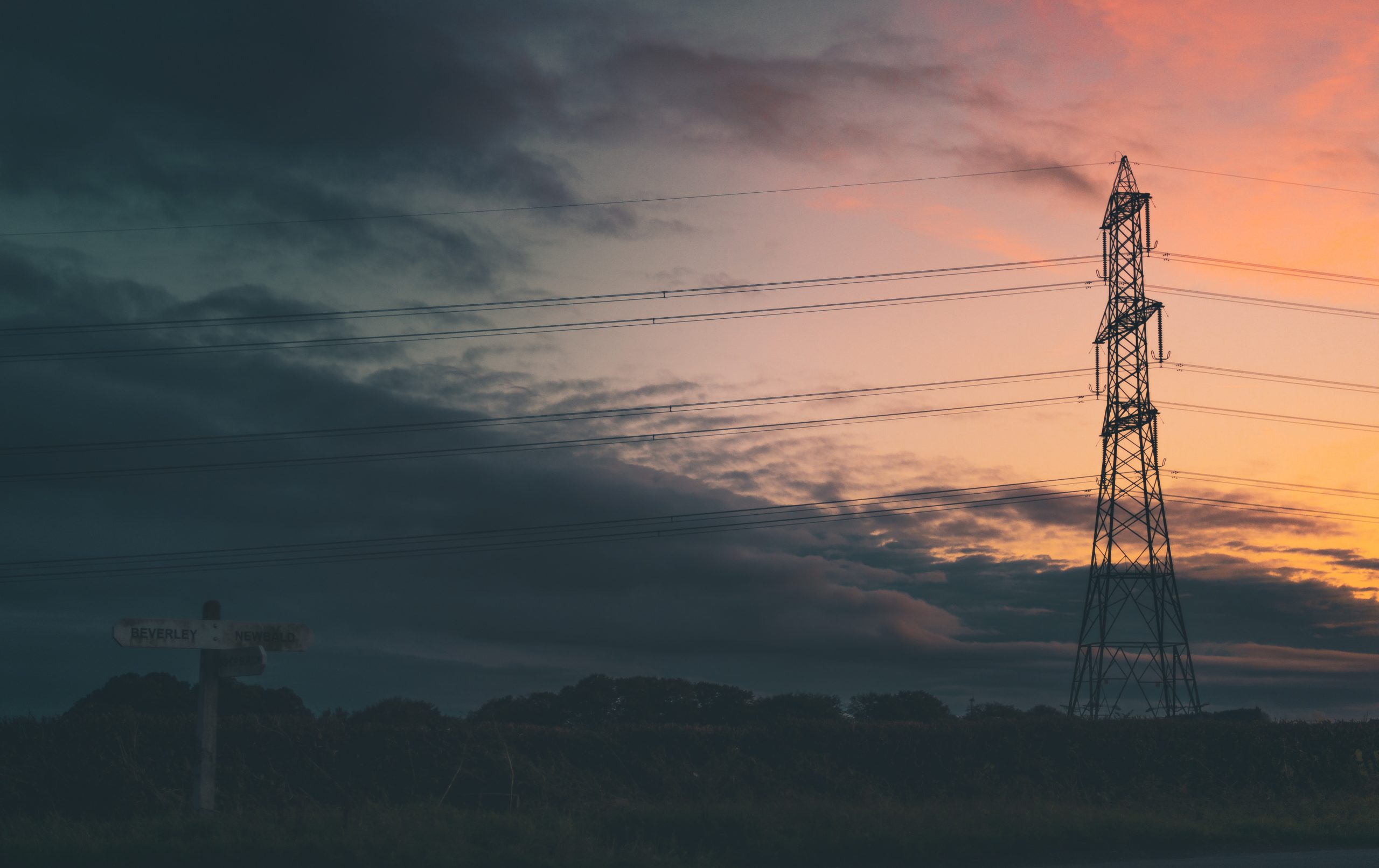
The electricity we use doesn’t just flow through a single cable from a power station to our houses. It travels through what’s called the transmissions system, which is run by National Grid ESO and local distribution network operators.
Apart from off-grid installations like solar panels on buildings, some of which are unable to export their unused power, all the electricity generated by different sources around the country goes into this same system. It means megawatts generated by a wind turbine get mixed up with those generated by a nuclear reactor or a coal power station.
Think of it as a river. Although it is its own entity, it is fed by multiple streams of water coming from different sources. In the case of electricity, megawatts from various generators are fed into a central system, which then enter homes, offices and devices around the country.
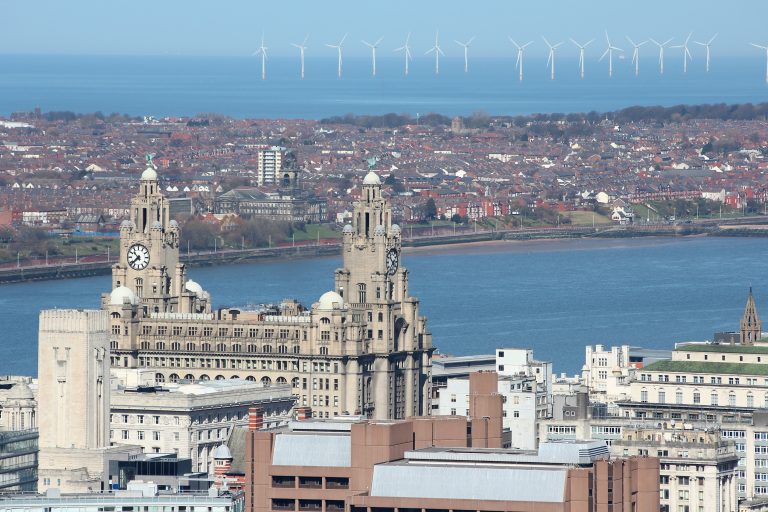
So, what makes green power generated from renewable sources, green power used in homes?
Suppliers can’t control exactly what megawatts you use, but they can influence the makeup of the overall ‘river’ your electricity is pulled from by what electricity they agree to buy and offer to their customers.
Renewable suppliers match the amount of electricity their customers use with the amount they buy from renewable sources. So, if a home uses 4 megawatt-hours (MWh) a year, a supplier will need to ensure it buys an equal amount of power from National Grid, which National Grid sources from generators. If that supplier offers 100% renewable power, it will need to ensure it has the right kinds of deals in place with renewable generators to deliver that amount of power.
It means that while the river of electricity is still a mix from different streams, more of the water will come from renewable streams. Therefore, if more homes and businesses switch to renewable suppliers, more of the overall river will be renewable, which will in turn help to decarbonise the electricity system, enabling a lower-carbon economy.
But how does this fit into the existing electricity business and infrastructure?
But how do suppliers actually buy renewable power from generators?

To understand how suppliers ensure they are buying renewable power you first need to understand how the business works. Or at least, how it used to. The most obvious place to start is with the generators.
Be they gas power stations or an offshore wind farm, the generator is where electricity is produced and are often owned by a supplier.
Suppliers can buy electricity from their own generators, often months or years ahead of delivery. But if there is a shortfall, the supplier can also buy electricity on the wholesale market, where other generators can sell their electricity.
Because suppliers are on a competitive market, their aim is to buy the electricity for the lowest possible price and sell it for more – but at a better rate than rivals. Measures like carbon prices or green incentives help lower the cost of renewable and low-carbon generation, and position it as a more economically viable purchase than more expensive fossil fuels like coal.
Renewable-only suppliers also want to buy electricity as cheap as possible and sell it as affordably as possible. But unlike standard suppliers they only buy electricity from renewable sources.
This can be done by purchasing electricity from independent renewable generators on the wholesale market, or arranged through what are known as Power Purchase Agreements (PPAs) – longer-term contracts between generators and suppliers agreeing on a specific amount of power.
The advantage of these for the renewable generator is it secures revenue for the future, while for the supplier it means a dependable source of electricity. For large installations, these deals are often signed before construction even begins to ensure investors there will be a return.
Transitioning to a low-carbon electricity system, however, is not just about suppliers buying more electricity from renewable sources.

As more businesses, individuals and communities are becoming prosumers and generating their own electricity, the wider role of the supplier in the system is changing.
The government’s feed-in-tariffs financially reward customers for generating their own electricity, even if they don’t export it to the grid. But even small generators can sign deals with suppliers to sell electricity through schemes such as Good Energy’s SmartGen policy, which is open to generators with between 10 and 100 kilowatts (kW) of installed capacity. Similarly Opus Energy helps over 2,100 businesses sell more than 1,100 gigawatt-hours (GWh) of excess wind, solar, anaerobic digestion and hydro power.
For larger prosumer businesses, the relationship with suppliers and the grid is different. Rather than the traditional buying and selling of electricity, it requires a cooperative approach to understand how the prosumer can best utilise their assets.
Beyond increasing the amount of low-carbon electricity, decarbonising the electricity system also means making more efficient use of energy and managing the data that can help improve efficiency. Haven Power’s partnership with Thames Water sees it analyse an average of 68 million half-hour smart meter readings every year, using the data to help the company improve its billing and forecasting. As the wider system becomes more intelligent, suppliers will be able to better forecast how much electricity its customers use and help them reduce their consumption.
The role required of suppliers in a changing system will create opportunities for more renewable and efficient use of electricity. And empower more consumers to get their electricity from low-carbon sources that can help to make the whole country’s electricity greener.
Want a different perspective on the same story? Watch TV’s Jonny Ball explain.

It’s a free and confidential 24-hour service which offers support on anything from financial stress and family and relationship issues to addiction, housing concerns or legal information. There is a phoneline and an app and users can be referred for six sessions of counselling per issue, per year.
Opus Energy ran 15 voluntary workshops to help our leaders understand the benefits of this service and they were attended by 113 managers.
As a result of Opus Energy’s initiative first launched in 2017 to train Mental Health First Aiders, we now have 20 employees qualified to offer a first line of response across the business. They are available to all employees should they would want to speak with a peer about any mental health issues.
A further 16 employees will train as Mental Health First Aiders in 2019.
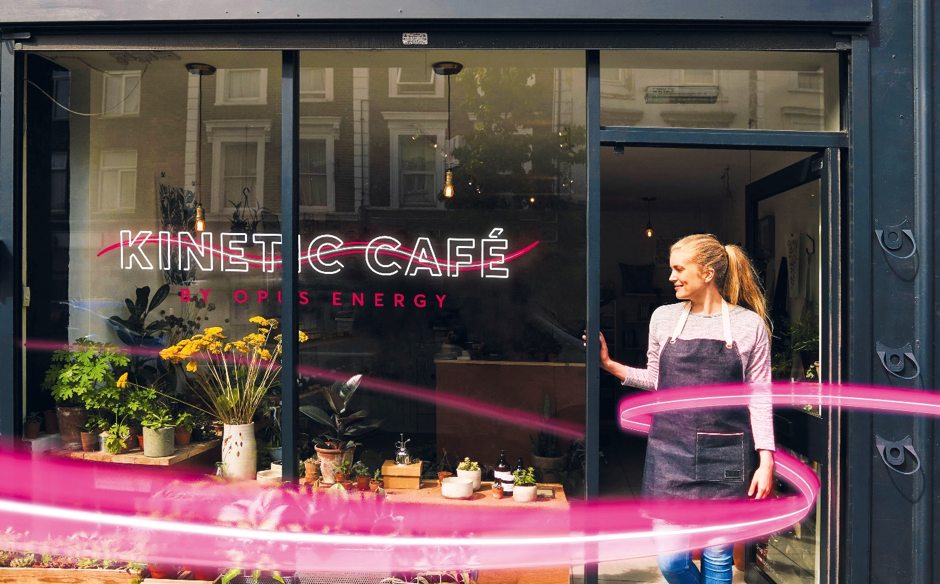
Opus Energy opened a pop-up juice bar, the Kinetic Café in London, for two days in August. Small business owners were served free energetic juice and welcomed to network and share their business challenges, advice and personal experiences in Q&A sessions.
We served over 1,000 juices to customers and visitors who stopped by the café over the course of two days.

“Different people do things different ways,” says Sam Stocks, an apprentice engineer at Drax Power Station. It’s a sentiment echoed by corporate administration apprentice Chloe Carpenter at Opus Energy. Asked to describe her role, she says, “[It’s] a very different kind of job.”
Chloe and Sam are just two of a number of apprentices at Drax Group who are working across the UK. And while they’re proud to do things differently, they do have something in common – they’re all hands-on, practical people who would rather get stuck in on a project than sit still and hear about it in the classroom.
“I chose an apprenticeship over higher education because I’m more of a doing person,” says Molly Fensome, a corporate administration apprentice. Sam agrees. “I like to be hands-on,” he says. “I don’t like being sat in a classroom.”
They are doing things their way – engineering their own futures while growing personally and professionally. And ensuring the future of our energy supply in the process.
For Sam, working at Drax wasn’t just a sensible career move, it was also following in his family’s footsteps. “My grandad worked in the power station industry all his life. [My family] know exactly what I’m like and they knew what type of place this was to work.”
Drax’s transformation from a coal-powered plant to a modern, sustainable electricity company means Sam’s work is building a power framework for future generations, while also paying homage to his grandad’s career.
Jake Dawson, an electrical engineer apprentice, followed a similar path into the power industry. Being born and bred in the area, Drax Power Station has always been a part of his geography. “Because I’m such a local lad it was perfect for me,” he says.
In his role, Jake can play a key part in the region where he grew up. A recent Oxford Economics report shows that Drax contributes £431 million to Yorkshire and the Humber economy and supports over 3,200 jobs.
Drax is a large organisation, but for Chloe finding role models within her team she can look up to and take guidance from has been easy. “Mentoring sessions are relaxed and you build a special bond with that person,” she says. “You can talk to them about work, outside of work – anything. They’ll always be there for you.”
Corporate administration apprentice Matt Donnelly has had a similar experience, adding that he’s seen his confidence grow, and feels he has made lifelong friends in his role.
Ultimately, it’s not just that they are given the right support, but that apprentices are integrated as a part of the company from day one. “My favourite part of my apprenticeship so far is being part of the team,” says Chloe. “Because you feel like you’re not just an apprentice, but you’re also one of them.”
Sam remembers his first day at Drax Power Station: “It was overwhelming, you don’t actually realise how big it is and realise how many people work here. It’s just normal now, if I go anywhere else, I’m thinking, ‘That’s not as big as at work.’”
It’s not just its size that makes the UK’s biggest single site renewable power station stand out, but the potential for career development there. It’s this that Jake had on his mind when he first made the decision to become an apprentice. He was working in an unskilled job with little opportunity, but he knew he had it in him to find something bigger.
His outlook today as a Drax apprentice is very different. “My aim after the four years is to carry on growing as a person, increasing all my skills that I have, and maybe eventually becoming a supervisor or an engineer, who knows?”
This mindset of striving for better is evident across apprentices. It’s what drove them to join the programme in the first place. “Instead of going somewhere like uni and then possibly coming out without a job, you’ve got a job, and you’re actually learning as you’re doing it,” says Sam. “The skill set that I’ve learnt now – I’ll probably go anywhere in the world with it.”
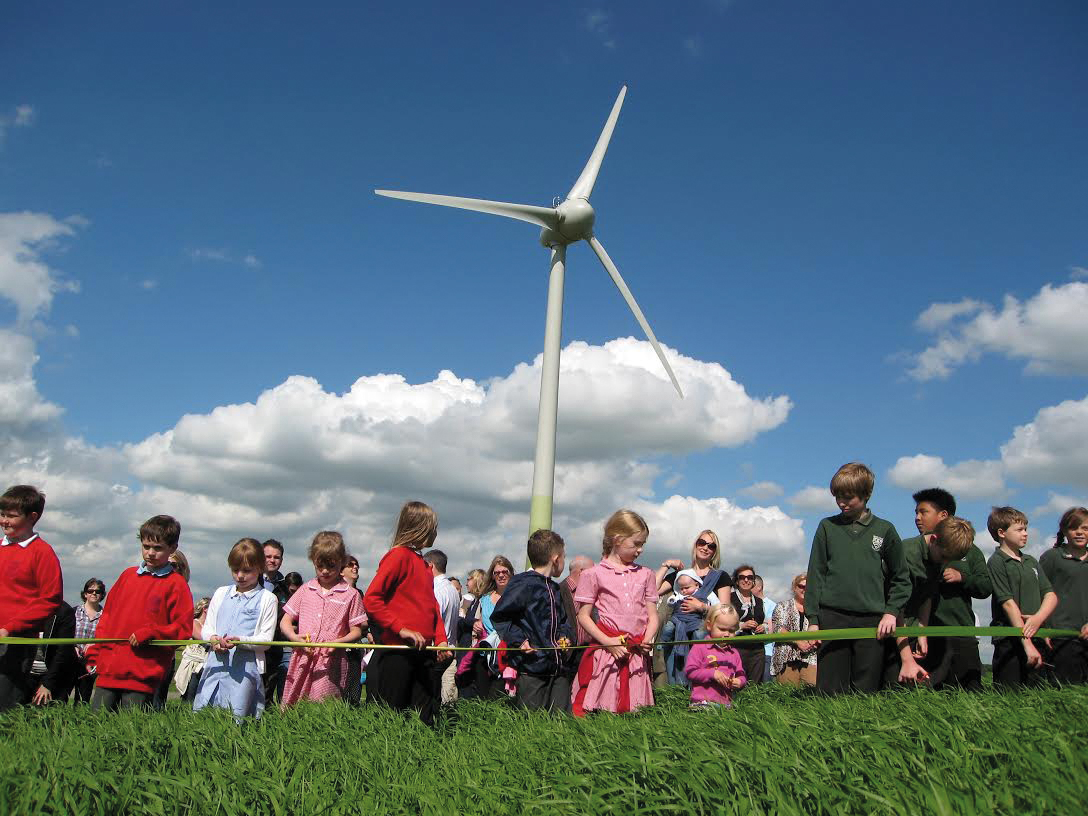
Gamlingay Community Turbine is situated just outside the village of Gamlingay, Cambridgeshire. It is an enterprise privately funded by local residents and businesses. The village installed the turbine for three reasons: to reduce its carbon footprint; to raise money for the community by selling the turbine’s power; and to create a good investment opportunity for individuals and businesses in the area.
Opus Energy offers to purchase power at market-leading prices. The team behind the Community Turbine were seeking a high level of customer service, which is why they chose to sell their power to Opus Energy. Mr Brettle, a director of the project, comments:
“It really came down to how easy it was to talk to Opus Energy. We’re all people with day jobs so don’t have much spare time, and we’re certainly not experts in this area! Opus Energy helped us cut through the jargon and gave us confidence that nothing horrible will happen because we’d missed some technical detail. They made the entire process simple from start to finish.”
Gamlingay Community Turbine Ltd will give 10% of the net income, after all running costs, to a community fund. This will enable them to create a long-term income stream for the local area which will be used to support environmentally friendly projects for the benefit of the whole community.

Our B2B Energy Supply business offers personal account management to our large corporate customers and our employees strive to support customers at every step. We aim to treat customers fairly at all times and commit to being professional, honest and transparent in our interactions.
Both Haven Power and Opus Energy have strict standards, outlined publicly in their respective “treating customers fairly” policies. The statements explain how we communicate with customers, transfer their supply, deal with billing and payment and how we handle complaints. Opus Energy publishes an additional performance standard confirming its commitment to customers. Employees receive regular training on providing a high level of customer service.
When things do go wrong, we are quick to make amends and resolve issues efficiently. We have publicly available complaints procedures and make it clear who to contact. At Opus Energy, complaints are overseen by the Customer Experience Board.
We are proud of the recognition both Haven Power and Opus Energy received for their dedication to customer service in 2017. Haven Power was shortlisted for “Supplier of the Year” at the Energy Awards 2017 and named the UK’s best performing energy supplier by Third Party Intermediaries (TPIs) in this year’s Cornwall Insight Report. Opus Energy won “Utilities Provider of the Year” at the British Small Business Awards 2017 and was shortlisted in the National Business Awards 2017.
We take the privacy and security of our customers’ data seriously. We are committed to maintaining effective and sustainable privacy and security programmes dedicated to ensuring our customers have confidence in our data handling practices.
As part of our commitment in this area, we appointed a Group Data Protection Officer to enhance our privacy compliance. We are in the process of updating our Privacy Compliance Programme to take account of new requirements of the General Data Protection Regulation (GDPR), enforceable in May 2018, and other associated new data protection legislation.
To support our privacy compliance process and organisation policies, we undertook an extensive technical Security Improvement Programme. We implemented industry-leading control measures to protect our customer and employee data by detecting and preventing threats and security breaches.
Programme initiatives included information protection, using protection technology to automatically detect personally identifiable information and protect it from unauthorised access and disclosure. In addition, advanced threat monitoring and analytics measures implemented mean we have layered toolsets designed to detect, identify, respond to and resolve cyber threats and attacks before they can happen.
Founded in 1860, Salisbury Museum is located in a Grade I listed building opposite Salisbury Cathedral. As a charitable, not-for-profit organisation, the museum relies on entry fees, grants, donations and the support of its members to continue its vital work. Finding a business energy supplier that offered the best prices on the market, as well as the right length of contract and good ethics, was important for the museum.
SMEs are a key part of Opus Energy’s business and they know that a business energy service that is as smooth and efficient as possible is a top priority.
Nicola Kilgour-Croft, Finance Manager at Salisbury Museum, commented:
“The switching process went through really smoothly, and the facility to receive invoices via email means I don’t need to spend time on the phone trying to sort out payment. Having 12-month contracts really works for us.
“We were looking for a business energy supplier that offered great value, combined with the right length of contract and good ethics – and Opus Energy ticked all these boxes for us.”
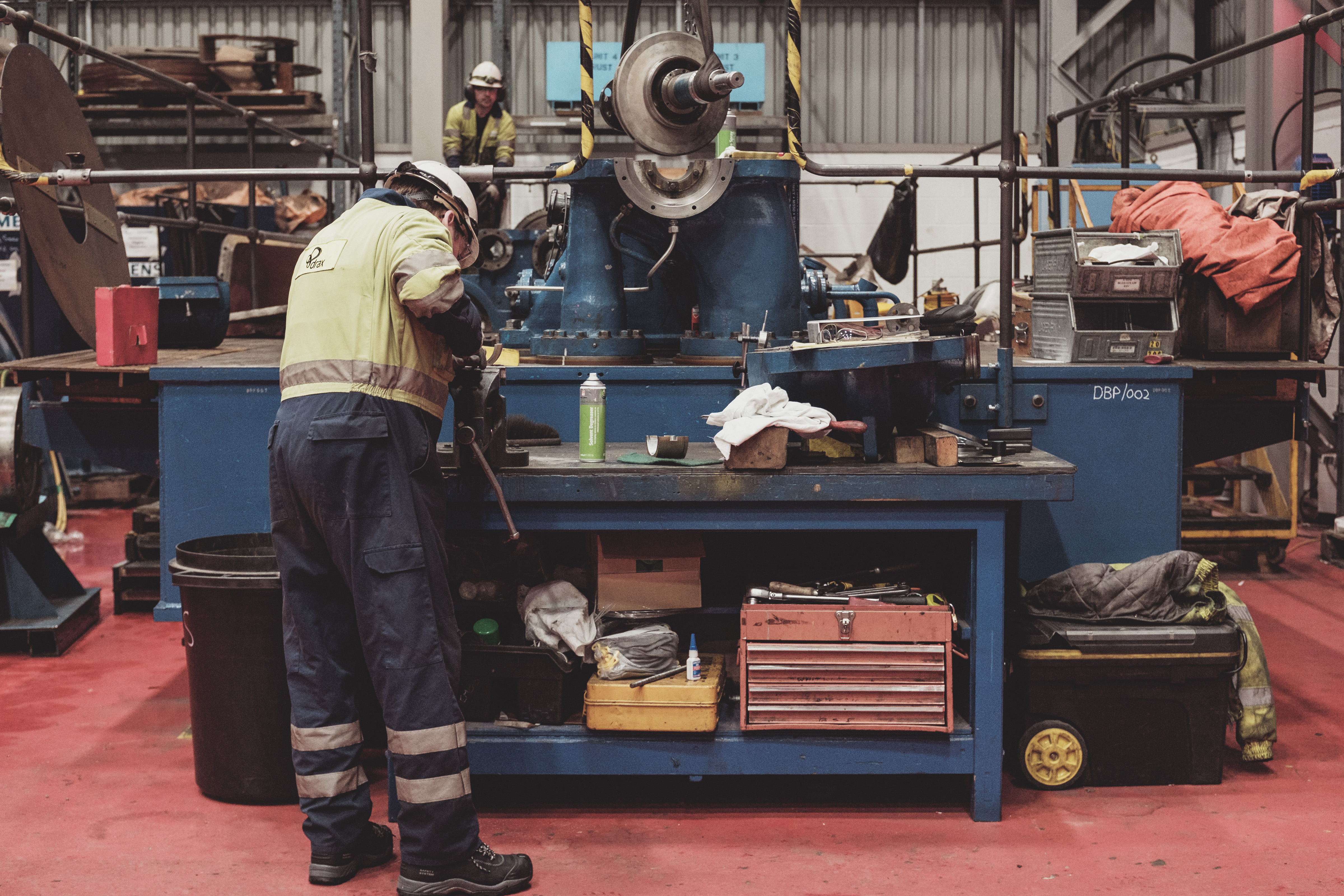
Whether powering homes across Britain or helping stabilise the national grid, Drax Power Station’s impact to our electricity network is far reaching. But it doesn’t stop at generating and supplying power.
A new report by Oxford Economics, commissioned by Drax, has found that in addition to its important role powering Britain, Drax Group also provides an economic boost to areas across the country.
Here are three ways Drax Group contributed to the UK economy in 2016.

Drax Group contributed an estimated £1.67 billion to UK gross domestic product (GDP) in 2016, an increase from £1.24 billion in 2015. Of that figure, £301 million was added directly – as a result of the group’s own activities such as the generating and selling of power.
And while this is an impressive 6.1% increase on 2015, the numbers are even more significant when looking at the benefit beyond the group’s core activities.
In 2016, Drax Group’s spending with external suppliers such as rail freight wagon manufacturer WH Davis and IMServ, which supplies Automated Meter Reading technology to Opus Energy, reached £872 million. A further £36m was spent by these suppliers across their own supply chain to help them provide their services to Drax.
There is an even greater impact when considering how this money filters through employees and suppliers into local retail, leisure and service economies. Something which is especially important when the number of jobs Drax supports is taken into account.
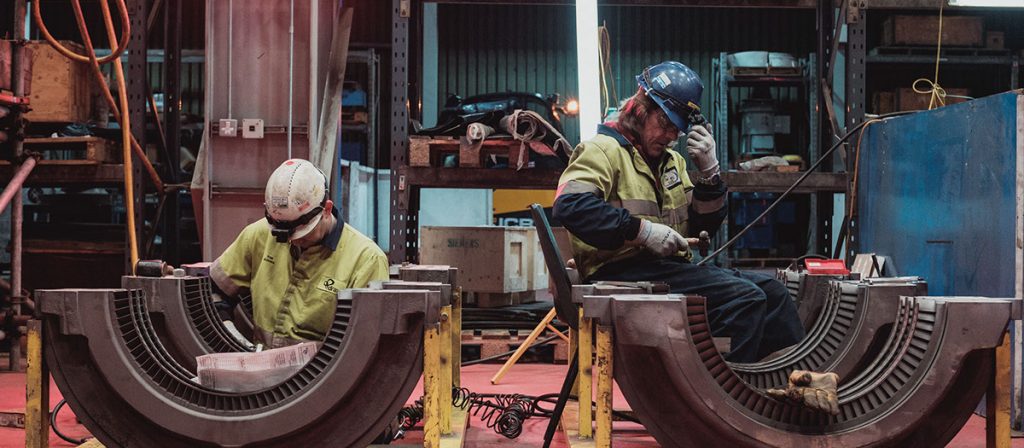
Drax Group directly employed more than 2,000 people in 2016, but across the country it supports far more – 18,500, a significant increase from the 14,150 of 2015.
These jobs are primarily in high-skilled manufacturing, engineering, construction, IT, professional business services and transport. While 3,650 of these were in Drax Power Station’s native Yorkshire and Humber area, this year saw the group’s overall impact extend much further.

Roughly a quarter (£419 million) of Drax’s total contribution to UK GDP was generated in the Yorkshire and the Humber region. When the North West and North East were included, the company impacted the northern economy to the tune of £577m and supported over 6,000 jobs.
Yorkshire and the Humber was closely followed by the East of England, the home of Haven Power, which saw the second highest impact – registering more than £200 million contributed in GVA – and London and the East Midlands.
This is thanks in part to the growing activities of Drax Group companies. Both Haven Power and Opus Energy (which became a part of Drax Group in February 2017), are helping the UK move towards a low carbon future by supplying an increasing amount of British companies with renewable power. With offices in Ipswich, Oxford, Northampton and Cardiff, Haven Power and Opus Energy highlight how Drax Group businesses are direct drivers for local GDP and employment. Opus Energy supported 1,600 jobs and £130 million in GVA in Wales, while Haven Power contributed £232 million to the East of England.
These numbers are noteworthy, but what makes them all the more significant is how this translates into tax revenue. Operations at Drax Group generated an estimated £327 million for the UK’s public purse – equivalent to the salaries of almost 14,000 nurses or 11,900 teachers.
As the group continues to grow – adding new power generation assets to the national electricity transmission system and helping more businesses use renewable power – Drax can increase its positive impact on the UK’s economy and help to make the country’s low-carbon future a reality more quickly.
To find out more about how Drax has benefited the UK’s economy, visit draximpact.co.uk. The full 2016 report can be downloaded here. Interested in a career at Drax Group? Please visit Careers to find out more.