Tag: gas

Acquisition agreement amended to mitigate risk to 2019 capacity payments

RNS Number: 1455J
THIS ANNOUNCEMENT CONTAINS INSIDE INFORMATION

The revised contractual arrangements are designed to mitigate the risk to 2019 capacity payments arising from the recent suspension of the Capacity Market.

Commenting on today’s announcement Will Gardiner, Chief Executive Officer of Drax Group, said:

“The strategic merits of this acquisition remain unchanged and the Board believes there is a compelling logic in our move to add further flexible sources of power to our offering, which will accelerate our ability to deliver our strategic vision of a lower-carbon, lower-cost energy future for the UK.

“The capacity market is a central pillar of the UK’s energy policy and ensures security of supply while minimising costs to consumers. The Government has stated it is working closely with the European Commission to aid their investigation and to reinstate the full capacity market regime, including existing agreements, as soon as possible.

“To mitigate the risk that capacity payments take time to be restored, we have agreed revised terms which provide protection in 2019. Beyond 2019, while reinstatement of the Capacity Market is the most likely outcome, we considered other outcomes, the more plausible of which would still deliver returns in excess of Drax’s weighted average cost of capital.

“The acquisition makes financial and strategic sense, delivering material value to our shareholders through long-term earnings and attractive returns.”

Capacity Market

On 15 November 2018, the General Court of the European Union issued a ruling annulling the European Commission’s 2014 decision not to undertake a more detailed investigation of the UK Government’s scheme establishing the Capacity Market (the “Ruling”). The Ruling imposed a “standstill period” while the European Commission completes a further state aid investigation into the Capacity Market. Payments to generators scheduled under existing capacity agreements and the holding of future capacity auctions have been suspended.

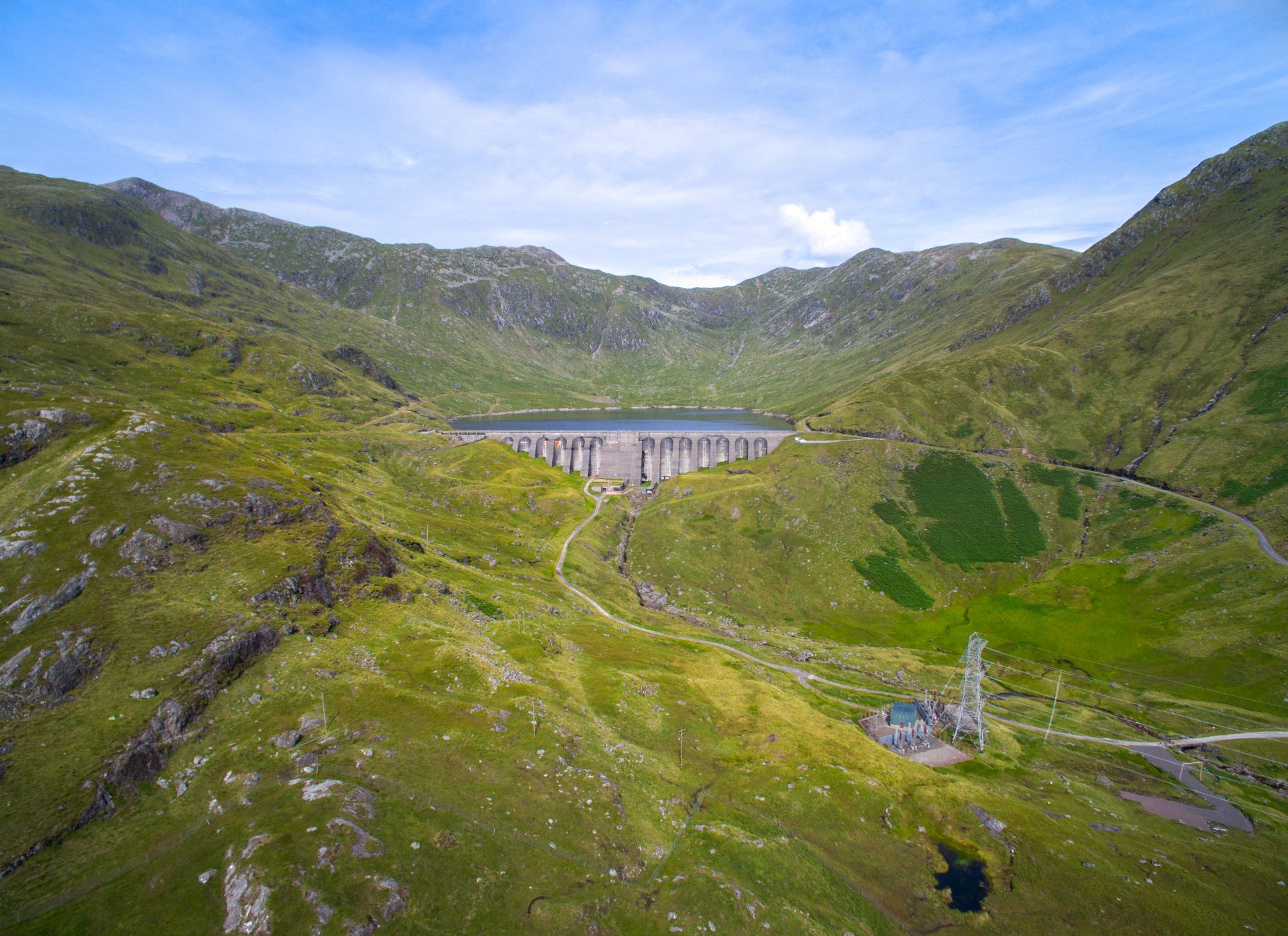
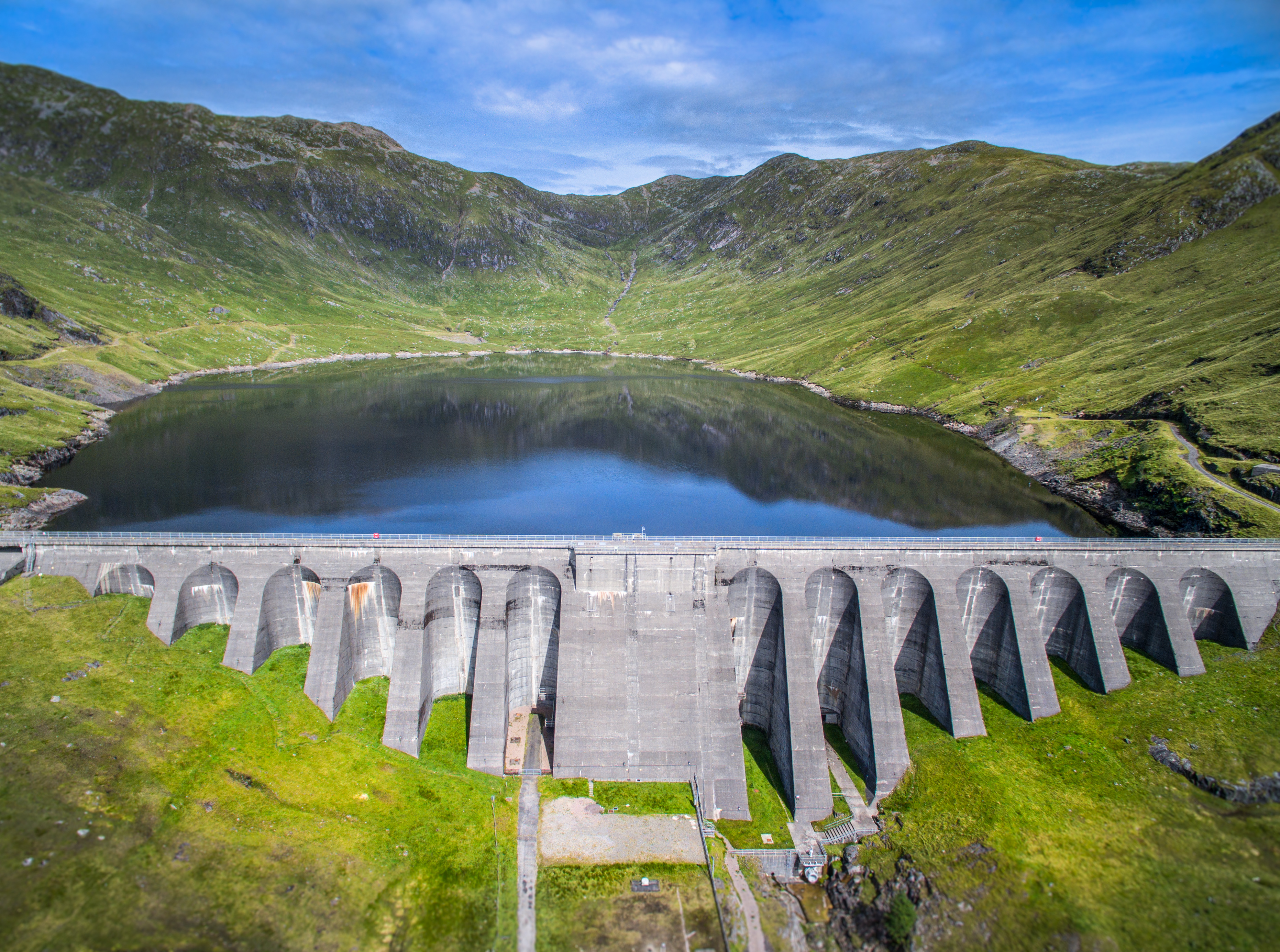
Cruachan Power Station on Loch Awe, Argylle and Bute

Contracted capacity payments make up a significant proportion of the earnings of the Portfolio. For the period from 1 January 2019 to 30 September 2022, the Cruachan pumped storage hydro asset has contracted capacity payments of £29 million, the Galloway run-of-river hydro assets have contracted capacity payments of £5m million, and the Combined Cycle Gas Turbine assets have contracted capacity payments of £122 million in aggregate.

Drax notes the UK Government’s statement in response to the Ruling that it is working closely with the European Commission to aid their investigation and to seek a timely state aid re-approval decision for the Capacity Market. The UK Government also confirmed that the Ruling does not change its belief that Capacity Market auctions are the most appropriate way to deliver secure electricity supplies at the lowest cost and that the Ruling was decided on procedural grounds and did not constitute a direct challenge to the design of the Capacity Market itself.

Based on the information available and legal advice it has received, Drax believes that the most likely outcome is that the European Commission will re-approve the existing Capacity Market in its current or a broadly similar form.

Despite the above, Drax recognises there is some uncertainty whether the contracted capacity payments for the 2018/19 Capacity Market year, which are currently suspended, will be paid by the UK Government. To mitigate the risk that these payments are not received for the 2018/19 Capacity Market year, Drax has agreed with Iberdrola certain amendments to the agreement signed on 16 October 2018.

Arrangements with Iberdrola in respect of 2018/19 capacity payments

Drax and Iberdrola have agreed a risk sharing mechanism in respect of capacity payments for the period 1 January 2019 to 30 September 2019, worth £36 million. If less than 100% of these payments are received and the gross profit of the Portfolio for the full year 2019 (the “2019 Gross Profit”) is lower than expected, Drax will receive a payment from Iberdrola of up to £26 million. The mechanism also gives Iberdrola the opportunity to earn an upside of up to £26 million if less than 100% of these payments are received but the Portfolio performs better than expected in 2019(1).

Under these arrangements, if less than 100% of these capacity payments are received:

  1. Iberdrola will make a payment to Drax if the 2019 Gross Profit is less than £155 million. The payment will be an amount equal to 72% of any shortfall in the 2019 Gross Profit below £155 million. The amount of the payment is capped at the lower of the amount in respect of capacity payments due to the Portfolio but not received and £26 million; and
  2. Drax will make a payment to Iberdrola if the 2019 Gross Profit is more than £165 million. The payment will be an amount equal to 72% of any amount by which the 2019 Gross Profit exceeds £165 million. The amount of the payment is capped at the lower of the amount in respect of capacity payments due to the Portfolio but not received by Drax and £26 million.

If subsequently Drax receives any capacity payments in respect of the period 1 January 2019 to 30 September 2019, Drax will pay 72% of those amounts to Iberdrola capped at the amount paid by Iberdrola to Drax under the mechanism above.

Drax and Iberdrola have agreed that capacity payments due to the Portfolio in respect of the period before completion will be passed through to Iberdrola.

Any payments pursuant to the arrangements with Iberdrola will be cash adjustments to the consideration and not included in EBITDA(2).

Benefits of the acquisition

Based on Drax’s expectations of the position that is most likely to be achieved in relation to the Capacity Market following the Ruling, Drax believes the Acquisition represents an attractive opportunity to create significant value for shareholders and is expected to deliver returns significantly in excess of Drax’s weighted average cost of capital.

Drax has considered other possible outcomes for the Capacity Market which are less likely but may ensue and if they did the financial effects of the Acquisition may be adversely affected.

Drax believes that if the more plausible of these outcomes were to ensue the returns from the Acquisition would still be in excess of the Drax’s weighted average cost of capital.

Drax has not attempted to quantify the effect if the less plausible of these other outcomes were to ensue – if there were no Capacity Market or similar mechanism or if significant structural changes were made to the Capacity Market. Drax sees these as a remote possibility and notes that in those circumstances it believes the loss or reduction of capacity payments could be mitigated by increases in wholesale power prices.

The Acquisition strengthens Drax’s ability to pay a growing and sustainable dividend. Drax remains committed to its capital allocation policy and to its current £50 million share buy-back programme, with £42 million of shares purchased to date.

2019 profit forecast

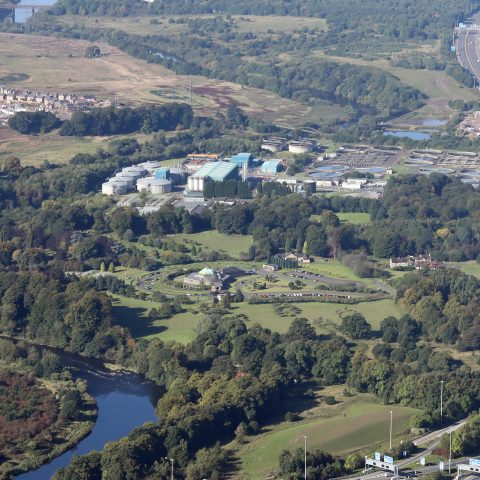
Daldowie Fuel Plant, Glasgow

Based on recent power and commodity prices and assuming that all contracted capacity payments are received, the Portfolio is expected to generate EBITDA in 2019 in a range of £90 million to £110 million, from gross profits of £155 million to £175 million, of which around two thirds is expected to come from non-commodity market sources, including system support services, capacity payments, ROCs(3) and the Daldowie energy-from-waste plant.

If, in light of the Ruling, the contracted capacity payments payable in 2019 in respect of the Portfolio are not received or accrued in 2019, the expected EBITDA for the Portfolio in 2019 would be reduced by up to £47 million (from a range of £90 million to £110 million) down to a range of £43 million to £63 million before considering mitigating factors. Drax believes that the arrangements agreed with Iberdrola mitigate in economic terms the majority of the risk that those suspended capacity payments will not be paid.

Assuming performance in line with current expectations and if all capacity payments due in 2019 are received before the end of 2019, net debt to EBITDA is expected to fall to Drax’s long-term target of around 2x by the end of 2019. If capacity payments are not received in 2019, net debt to EBITDA is expected to fall to around 2x during 2020.

Drax current trading and 2018 outlook

Following the Ruling, £7 million of contracted capacity payments relating to 2018, principally in relation to Drax’s remaining two coal-fired units, will not be paid as and when expected. Taking this into account, and following Drax’s recent good trading performance and assuming continued good operational availability for the remainder of the year, Drax’s full year EBITDA outlook remains in line with previous expectations, with net debt to EBITDA expected to be around 1.5x for the full year, excluding the impact of the Acquisition.

Process

On 1 November 2018, the Competition and Markets Authority informed Drax that it had no further questions in connection with the proposed Acquisition at that stage, which resulted in the competition condition under the Acquisition agreement being satisfied. Completion of the Acquisition is therefore currently expected to occur on 31 December 2018 assuming that the shareholder approval condition is satisfied by that date.

A combined shareholder circular and notice of general meeting containing the unanimous recommendation of the Board to approve the Acquisition will be posted as soon as practicable.

Other matters

Drax expects to announce its full year results for the year ending 31 December 2018 on 26 February 2019.

Notes

  1. Arrangements with Iberdrola in respect of 2018/19 capacity payments – only applicable if less than 100% of these capacity payments are received. Any payments pursuant to the arrangements with Iberdrola will be cash adjustments to the consideration and not included in EBITDA.Implied EBITDA is included in the table for reference only and is not a metric included in the mechanism, which is based on gross profit.
    The amount of the payment is capped at the lower of the amount in respect of capacity payments due to the Portfolio but not received by Drax and £26 million.
    2019 Gross Profit £mImplied EBITDA based on 2019 Gross Profit £mPayment made to / (by) Drax capped at £26m £m*
    119 or lower54 or lower26
    1296419
    1397412
    149844
    155900
    1651000
    175110-7
    185120-14
    195130-22
    201 or higher136 or higher-26

    *Payment made to / (by) Drax will be classified as a cash adjustment to the consideration rather than as gross profit.
  2. EBITDA means earnings before interest, tax, depreciation, amortisation, unrealised profits and losses on derivative contracts and material or one-off items that do not reflect the underlying trading performance of the business. 2019 EBITDA is stated before any allocation of Group overheads.
  3. Renewable Obligation Certificates.

Enquiries

Drax Investor Relations:

Mark Strafford
+44 (0) 1757 612 491
+44 (0) 7730 763 949

Media

Drax External Communications:

Matt Willey
+44 (0) 7711 376 087

Ali Lewis
+44 (0) 7712 670 888

J.P. Morgan Cazenove (Financial Adviser and Joint Corporate Broker)

+44 (0) 207 742 6000
Robert Constant
Jeanette Smits van Oyen
Carsten Woehrn

Royal Bank of Canada (Joint Corporate Broker):

+44 (0) 20 7653 4000
James Agnew
Jonathan Hardy

Acquisition of flexible, low-carbon and renewable UK power generation from Iberdrola

RNS Number : 1562E
Drax Group PLC
THIS ANNOUNCEMENT CONTAINS INSIDE INFORMATION

Highlights

  • A unique portfolio of pumped storage, hydro and gas-fired generation assets
  • Compelling strategic rationale
    • Growing system support opportunity for the UK energy system
    • Significant expansion of Drax’s flexible, low-carbon and renewable generation model
    • Diversified generation capacity – multi-site, multi-technology
    • Opportunities in trading and operations
  • Strong financial investment case
    • High quality earnings
    • Expected returns significantly ahead of Weighted Average Cost of Capital (WACC)
    • Expected EBITDA(1) of £90-110 million in 2019
    • Debt facility agreed, net debt/EBITDA expected to be around 2x by the end of 2019
    • Supportive of credit rating and reduced risk profile for Drax
    • Strengthens ability to pay a growing and sustainable dividend

Will Gardiner, CEO, Drax Group

Commenting on today’s announcement Will Gardiner, Chief Executive Officer of Drax Group, said:

“I am excited by the opportunity to acquire this unique and complementary portfolio of flexible, low-carbon and renewable generation assets. It’s a critical time in the UK power sector. As the system transitions towards renewable technologies, the demand for flexible, secure energy sources is set to grow. We believe there is a compelling logic in our move to add further flexible sources of power to our offering, accelerating our strategic vision to deliver a lower-carbon, lower-cost energy future for the UK.

“This acquisition makes great financial and strategic sense, delivering material value to our shareholders through long-term earnings and attractive returns.

“We are combining our existing operational expertise with the specialist technical skills of our new colleagues and I am looking forward to what we can achieve together.”

A flexible, low-carbon and renewable portfolio

The Portfolio consists of Cruachan pumped storage hydro (440MW), run-of-river hydro locations at Galloway and Lanark (126MW), four CCGT(2) stations: Damhead Creek (805MW), Rye House (715MW), Shoreham (420MW) and Blackburn Mill (60MW), and a biomass-from-waste facility (Daldowie).

Attractive high quality earnings and returns

The Portfolio is expected, based on recent power and commodity prices, to generate EBITDA in a range of £90-110 million, from gross profits of £155 million to £175 million, of which around two thirds is expected to come from non-commodity market sources, including system support services, capacity payments, Daldowie and ROCs(3). Pumped storage and hydro activities represent a significant proportion of the earnings associated with the portfolio. Further information is set out in Appendix 2 of this Announcement.

Capital expenditure in 2019 is expected to be in the region of £30-35 million.

For the year ended 31 December 2017, the Portfolio generated EBITDA of £36 million(4). EBITDA in 2019 is expected to be higher due to incremental contracted capacity payments (c.£42 million), no availability restrictions (Cruachan’s access to the UK grid during 2017 was limited by network transformer works) (c.£8 million), a lower level of corporate cost charged to the portfolio (c.£9 million) and revenues from system support services and current power prices. Gross assets as at 31 December 2017 were £419 million(5).

The Acquisition represents an attractive opportunity to create significant value for shareholders and is expected to deliver returns significantly in excess of the Group’s WACC and to be highly accretive to underlying earnings in 2019.

The Acquisition strengthens the Group’s ability to pay a growing and sustainable dividend. Drax remains committed to its capital allocation policy and to its current £50 million share buy-back programme, with £32 million of shares purchased to date.

Financing the Acquisition

Drax has entered into a fully underwritten £725 million secured acquisition bridge facility agreement to finance the Acquisition. Assuming performance in line with current expectations, net debt to EBITDA is expected to fall to Drax’s long-term target of around 2x by the end of 2019.

Drax expects its credit rating agencies to view the Acquisition as contributing to a reduced risk profile for the Group and to reaffirm their ratings.

Conditions for completion

The Acquisition is expected to complete on 31 December 2018 and is conditional upon the approval of the Acquisition by Drax’s shareholders and clearance by UK Competition and Markets Authority (the “CMA”). A summary of the terms of the Acquisition agreement (the “Acquisition Agreement”) is set out in Appendix 1 to this announcement.

Drax trading and operational performance

Since publishing its half year results on 24 July 2018 Drax has commenced operation of a fourth biomass unit at Drax Power Station, which is performing in line with plan, and availability across biomass units has been good.
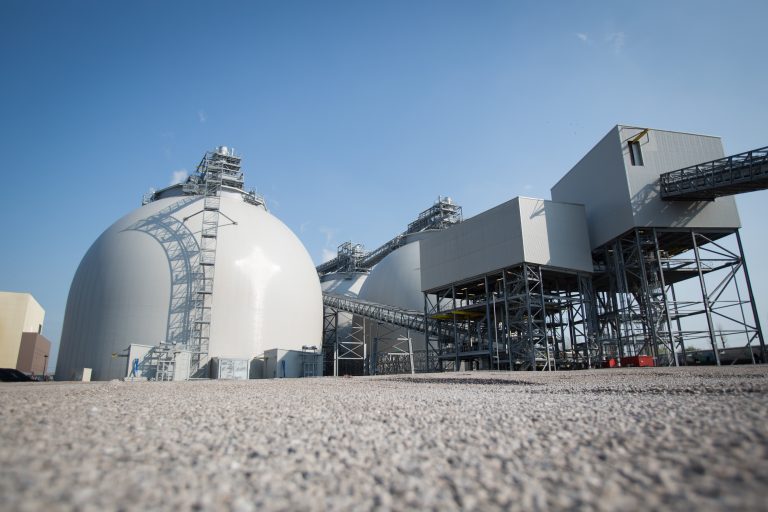
Biomass storage domes at Drax Power Station

Taking these factors into account, alongside a strong 2018 hedged position and assuming good operational availability for the remainder of the year, Drax’s EBITDA expectations for the full year remain unchanged, with net debt to EBITDA now expected to be around 1.5x for the full year, excluding the impact of the Acquisition.

Biomass generation is now fully contracted for 2019.

Contracted power sales at 30 September 2018

201820192020
Power sales (TWh) comprising:18.611.55.7
TWh including expected CfD sales18.615.611.2
– Fixed price power sales (TWh) 18.611.05.1
At an average achieved price (per MWh)at £46.8at £50.4at £48.3
– Gas hedges (TWh)-0.50.6
At an achieved price per therm-43.5p47.4p

Drax intends to hedge up to 1TWh of the commodity exposures in the Portfolio ahead of completion in line with the Group’s existing hedging strategy.

Other matters

In light of the Acquisition and the expected timing of the general meeting to approve it, Drax will postpone the planned Capital Markets Day on 13 November 2018.

Drax expects to announce its full year results for the year ending 31 December 2018 on 26 February 2019.

Enquiries:
Drax Investor Relations: Mark Strafford
+44 (0) 1757 612 491
+44 (0) 7730 763949

Media:
Drax External Communications:
Matt Willey
+44 (0) 7711 376087

Ali Lewis
+44 (0) 77126 70888

J.P. Morgan Cazenove (Financial Adviser and Joint Corporate Broker):
+44 (0) 207 742 6000
Robert Constant
Jeanette Smits van Oyen
Carsten Woehrn

Royal Bank of Canada (Joint Corporate Broker):
+44 (0) 20 7653 4000
James Agnew
Jonathan Hardy


Acquisition presentation meeting and webcast arrangements

Management will host a presentation for analysts and media at 9:00am (UK Time), Tuesday 16 October 2018, at FTI Consulting, 200 Aldersgate, Aldersgate Street, London EC1A 4HD.

Would anyone wishing to attend please confirm by e-mailing [email protected] or calling Christopher Laing at FTI Consulting on +44 (0) 20 3727 1355 / 07809 234 126.

The meeting can also be accessed remotely via a live webcast, as detailed below. After the meeting, the webcast will be made available and access details of this recording are also set out below.

A copy of the presentation will be made available from 9am (UK time) on Tuesday 16 October 2018 for download at: www.drax.com>>investors>>results-reports-agm>> #investor-relations-presentations or use the link below.

Event Title:Drax Group plc: Acquisition of flexible, low-carbon and renewable UK power generation from Iberdrola
Event Date:Tuesday 16 October 2018
Event Time9:00am (UK time)
Webcast Live Event Linkhttps://www.drax.com/investors/16-oct-2018-webcast
020 3059 5868 (UK)
+44 20 3059 5868 (from all other locations)
Start Date:Tuesday 16 October 2018
Delete Date:Monday 14 October 2019
Archive Link:https://www.drax.com/investors/16-oct-2018-webcast

For further information please contact Christopher Laing on +44 (0) 20 3727 1355 / 07809 234 126.

Website: www.drax.com


Acquisition of the Portfolio from Iberdrola

Drax Smart Generation Holdco Limited (“Drax Smart Generation”), a wholly owned subsidiary of Drax, has entered into the Acquisition Agreement with Scottish Power Generation Holdings Limited (the “Seller”), a wholly-owned subsidiary of Iberdrola S.A., for the acquisition of ScottishPower Generation Limited (“SPGEN”), for £702 million in cash.

Strong asset base

The Portfolio principally consists of 2.6GW of assets which are highly complementary to Drax’s existing generation portfolio and play an important role in the UK energy system. The assets include:

Cruachan Pumped Storage Hydro

440MW of large-scale storage and flexible low-carbon generation situated in Argyll and Bute, Scotland.

Cruachan provides a wide range of system support services to the UK energy market, in addition to providing merchant power generation. Cruachan has £35 million of contracted capacity payments for the period 2019 to 2022.

Cruachan, which provides over 35% of the UK’s pumped storage by volume, can provide long-duration storage with the ability to achieve full load in 30 seconds, which it can maintain for over 16 hours, making it a strategically important asset remunerated by a broad range of non-commodity based revenues.


Galloway and Lanark Run-of-River Hydro

126MW of stable and reliable renewable generation situated in South-west Scotland.

Both locations benefit from index-linked ROC revenues extending to 2027 and Galloway, in addition to renewable power generation, operates a reservoir and dam system providing storage capabilities and opportunities for peaking generation and system support services. It also has £4 million of contracted capacity payments for the period 2019 to 2022.


Combined Cycle Gas Generation (CCGT)

1,940MW of capacity at Damhead Creek (805MW), Rye House (715MW) and Shoreham (420MW) all strategically located in South-east England.

These assets provide baseload and/or peak power generation in addition to other system support services and benefit from attractive grid access income associated with their location. The three plants have contracted capacity payments of £127 million for the period 2019 to 2022.

Damhead Creek also benefits from an attractive option for the development of a second CCGT asset, Damhead Creek II, which provides additional gas generation optionality alongside Drax’s existing coal-to-gas repowering and OCGT(6) projects. All options could be developed subject to an appropriate level of support. Damhead Creek II is eligible for the 2019 capacity market auction along with two of Drax’s existing OCGT projects.

Other smaller sites

The portfolio also includes a small CCGT in Blackburn (60MW) and a 50K tonne biomass-from-waste facility in Daldowie, which benefits from a firm offtake contract agreement with Scottish Water until 2026.

Benefits of the Acquisition

A leading provider of flexible, low-carbon and renewable generation in the UK

The UK has a target to reduce carbon emissions by 80% by 2050. The transition to a low-carbon economy requires decarbonisation of heating, transport and generation. This will in turn require additional low-carbon sources of generation to be developed in the UK. As much as 85%(7) of future generation could come from renewables – predominantly wind and solar. This will lead, at times, to high levels of power price volatility and increasing demand for system support services. Managing an energy system with these characteristics will only be possible if it is supported by the right mix of flexible assets to manage volatility, balance the system and provide crucial non-generation services which a stable energy system requires.

The Acquisition is closely aligned with this structural need and the operation of Drax’s existing biomass and gas options which provide the flexibility required to enable higher levels of intermittent renewable generation.

The Acquisition is in line with these system needs and when combined with Drax’s existing flexible, biomass generation and gas options offers the Group increased exposure to the growing need for system support and power price volatility.

Increased earnings potential aligned with generation strategy and UK energy needs

The Acquisition is closely aligned with this structural need and the operation of Drax’s existing biomass and gas options which provide the flexibility required to enable higher levels of intermittent renewable generation.

The Acquisition is in line with these system needs and when combined with Drax’s existing flexible, biomass generation and gas options offers the Group increased exposure to the growing need for system support and power price volatility.

High quality earnings

Two thirds of the gross profits of the Portfolio is expected to come from non-commodity market sources, including system support services, capacity payments, Daldowie and ROCs, in addition to power generation activities. Due to the expected growing demand for these assets and the contract-based nature of many of these services Drax expects to improve long-term earnings visibility through structured non-commodity earnings streams, whilst retaining significant opportunity to benefit from power price volatility.

When combined with renewable earnings and system support from existing biomass generation, the Acquisition is expected to lead to an increase in the quality of earnings.

Diversified generation and portfolio benefits
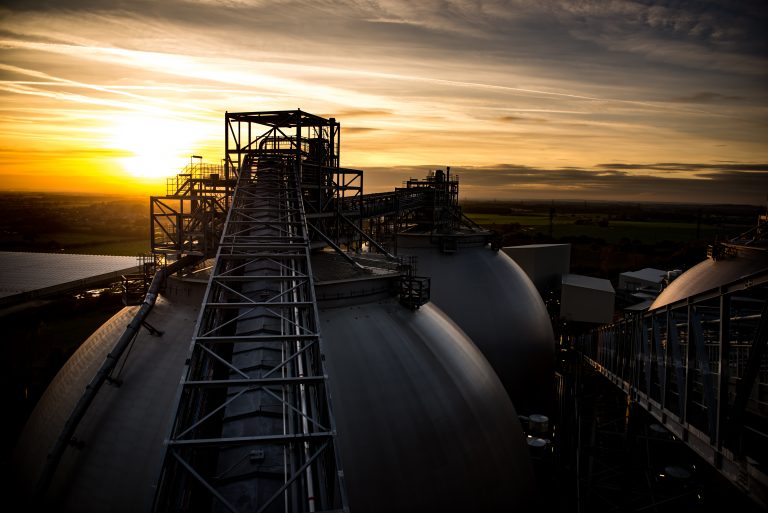
Wood pellet storage domes at Drax Power Station, Selby, North Yorkshire

The Acquisition accelerates Drax’s development from a single-site generation business into a multi-site, multi-technology operator.

With the acquisition of this portfolio, a fall in gas prices could be mitigated by an increase in gas-fired generation reflecting the relative dispatch economics of the different technologies.

Drax expects to benefit from the management of generation across a broader asset base, leveraging the Group’s expertise in the operation, trading and optimisation of large rotating mass generation.

Drax believes that the team operating the Portfolio has a strong engineering culture which is closely aligned with the Drax model and will enhance the Group’s strong capabilities across engineering disciplines.

Around 260 operational roles will transfer to Drax as part of the Acquisition, complementing and reinforcing Drax’s existing engineering and operational capabilities.

Financing and capital structure

Drax has entered into a fully underwritten £725 million secured acquisition bridge facility to finance the Acquisition, with a term of 12 months from the first date of utilisation of the facility (with a seven-month extension option) and interest payable at a rate of LIBOR plus the applicable margin (the “Acquisition Facility Agreement”). The facility is competitively priced and below Drax’s current cost of debt.

Drax will consider its options for its long-term financing strategy in 2019.

Assuming performance in line with current expectations, net debt to EBITDA is expected to return to Drax’s long-term target of around 2x by the end of 2019.

Drax expects credit rating agencies to view the Acquisition as supportive of the rating and contributing to a reduced risk profile for the Group.

Process and integration plan

Drax is progressing a detailed integration plan to combine the Acquisition as part of the existing Power Generation business.

The transaction is subject to shareholder approval. A combined Shareholder Circular and notice of General Meeting will be posted as soon as practicable.

The transaction is expected to complete on 31 December 2018.

Notes:

(1)    EBITDA is defined as earnings before interest, tax, depreciation, amortisation and material one-off items that do not reflect the underlying trading performance of the business. 2019 EBITDA is stated before any allocation of Group overheads.
(2)    Combined Cycle Gas Turbine.
(3)    Renewable Obligation Certificates.
(4)    2017 EBITDA is unaudited and based on the audited financial statements of Scottish Power Generation Limited and SMW Limited, adjusted to exclude results of assets that do not form part of the Portfolio and restated in accordance with Drax accounting policies.
(5)    On an unaudited historic cost basis, inclusive of an historic write down and other changes arising from the application of Drax’s accounting policies, and incorporating intercompany debtors which will be replaced by Drax going forward.
(6)    Open Cycle Gas Turbines.
(7)    Intergovernmental Panel on Climate Change. In a 1.5c pathway renewables are projected to be 70-85% of global electricity in 2050.

IMPORTANT NOTICE

The contents of this announcement have been prepared by and are the sole responsibility of Drax Group plc (the “Company”).

J.P. Morgan Limited (which conducts its UK investment banking business as J.P. Morgan Cazenove) (“J.P. Morgan Cazenove”) and RBC Europe Limited (“RBC”), which are both authorised by the Prudential Regulation Authority (the “PRA”) and regulated in the United Kingdom by the FCA and the PRA, are each acting exclusively for the Company and for no one else in connection with the Acquisition, the content of this announcement and other matters described in this announcement and will not regard any other person as their respective clients in relation to the Acquisition, the content of this announcement and other matters described in this announcement and will not be responsible to anyone other than the Company for providing the protections afforded to their respective clients nor for providing advice to any other person in relation to the Acquisition, the content of this announcement or any other matters referred to in this announcement.

J.P. Morgan Cazenove, RBC and their respective affiliates do not accept any responsibility or liability whatsoever and make no representations or warranties, express or implied, in relation to the contents of this announcement, including its accuracy, fairness, sufficient, completeness or verification or for any other statement made or purported to be made by it, or on its behalf, in connection with the Acquisition and nothing in this announcement is, or shall be relied upon as, a promise or representation in this respect, whether as to the past or the future. Each of J.P. Morgan Cazenove, RBC and their respective affiliates accordingly disclaims to the fullest extent permitted by law all and any responsibility and liability whether arising in tort, contract or otherwise which it might otherwise be found to have in respect of this announcement or any such statement.

Certain statements in this announcement may be forward-looking. Any forward-looking statements reflect the Company’s current view with respect to future events and are subject to risks relating to future events and other risks, uncertainties and assumptions relating to the Company and its group’s, the Portfolio’s and/or, following completion, the enlarged group’s business, results of operations, financial position, liquidity, prospects, growth, strategies, integration of the business organisations and achievement of anticipated combination benefits in a timely manner. Forward-looking statements speak only as of the date they are made. Although the Company believes that the expectations reflected in these forward looking statements are reasonable, it can give no assurance or guarantee that these expectations will prove to have been correct. Because these statements involve risks and uncertainties, actual results may differ materially from those expressed or implied by these forward looking statements.

Each of the Company, J.P. Morgan Cazenove, RBC and their respective affiliates expressly disclaim any obligation or undertaking to supplement, amend, update, review or revise any of the forward looking statements made herein, except as required by law.

You are advised to read this announcement and any circular (if and when published) in their entirety for a further discussion of the factors that could affect the Company and its group, the Portfolio and/or, following completion, the enlarged group’s future performance. In light of these risks, uncertainties and assumptions, the events described in the forward-looking statements in this announcement may not occur.

Neither the content of the Company’s website (or any other website) nor any website accessible by hyperlinks on the Company’s website (or any other website) is incorporated in, or forms part of, this announcement.


Appendix 1

Principal Terms of the Acquisition

The following is a summary of the principal terms of the Acquisition Agreement.

  1. Acquisition Agreement

Parties and consideration

The Acquisition Agreement was entered into on 16 October 2018 between Drax Smart Generation and the Seller. Pursuant to the Acquisition Agreement, the Seller has agreed to sell, and Drax Smart Generation has agreed to acquire, the whole of the issued share capital of SPGEN for £702 million, subject to certain customary adjustments in respect of cash, debt and working capital.

Drax Group Holdings Limited has agreed to guarantee the payment obligations of Drax Smart Generation under the Acquisition Agreement. Scottish Power UK plc has agreed to guarantee the payment obligations of the Seller under the Acquisition Agreement.

Conditions to Completion

The Acquisition is conditional on:

  • the approval of the Acquisition by Drax shareholders, which is required as the Acquisition constitutes a Class 1 transaction under the Listing Rules (the “Shareholder Approval Condition”); and
  • the CMA having indicated that it has no further questions at that stage in response to pre-Completion engagement by Drax or the CMA having provided a decision that the Acquisition will not be subject to a reference under the UK merger control regime.

Completion is currently expected to occur on 31 December 2018 assuming that the conditions are satisfied by that date.

Termination for material reduction in available generation capacity

Drax Smart Generation has the right to terminate the Acquisition Agreement upon the occurrence of a material reduction in available generation capacity at any of the Cruachan, Galloway and Lanark or Damhead Creek facilities which subsists, or is reasonably likely to subsist, for a continuous period of three months. The right of Drax Smart Generation to terminate in these circumstances is subject to the Seller’s right to defer Completion if the relevant material reduction in available generation capacity can be resolved by end of the month following the anticipated date of Completion.

Break fee

A break fee of £14.6 million (equal to 1% of Drax’s market capitalisation at close of business on the day before announcement) is payable if the Shareholder Approval Condition is not met, save where this is as a result of a material reduction in available generation capacity as described above.

Pre-completion covenants

The Seller has given certain customary covenants in relation to the period between signing of the Acquisition Agreement and completion, including to carry on the SPGEN business in the ordinary and usual course.  The Seller will carry out certain reorganisation steps prior to completion.

Pension liabilities

Drax Smart Generation has agreed to assume the accrued defined benefit pension liabilities associated with the employees of the SPGEN group as at the date of signing the Acquisition Agreement. Following Completion, the SPGEN group will continue to participate in the Seller’s group defined benefit pension scheme, known as the ScottishPower Pension Scheme (“SPPS”) for an interim period of 12 months unless agreed otherwise (the “Interim Period”) while a new pension scheme is set up by the SPGEN group for the benefit of its employees (the “New Scheme”).

At the end of the Interim Period, the SPPS trustees will be requested to transfer from the SPPS to the New Scheme an amount of liabilities (and corresponding share of assets) agreed between the Seller and Drax Smart Generation (or failing agreement, an amount determined by an independent actuary) in respect of the past service liabilities relating to the SPGEN group employees.  If the amount of assets transferred to the New Scheme does not match the amount agreed (or independently determined), there will be a true-up between the Seller and Drax Smart Generation.

If the SPPS trustees do not make any transfer to the New Scheme within the period of 18 months following the Interim Period (unless this was caused by a breach of the Acquisition Agreement by the Seller), Drax Smart Generation has agreed to pay £16 million (plus base rate interest) to the Seller as compensation for the SPPS liabilities not taken on by the New Scheme.

Seller’s warranties, indemnities and tax covenant

The Seller has provided customary warranties in the Acquisition Agreement.  The Seller also has provided Drax Smart Generation with indemnities in respect of certain specific matters, including for any losses associated with the reorganisation referred to above.  A customary tax covenant is also provided in the Acquisition Agreement.

  1. Transitional Services Agreement

The Seller and SPGEN will enter into a transitional services agreement effective at Completion. The specific nature, terms and charges relating to the services to be provided will be agreed between the Seller and SPGEN prior to Completion. The Seller will also provide assistance in relation to the extraction and separation of the SPGEN group from the systems of the Seller and integration of the SPGEN group onto the systems of the Drax Group.


Appendix 2

Profit Forecast

Profit forecast for the Portfolio for the year ending 31 December 2019 including bases and assumptions.

The Portfolio is expected, based on recent power and commodity prices, to generate EBITDA in a range of £90-110 million (“Profit Forecast”), and gross profits of £155 million to £175 million, of which around two thirds is expected to come from non-commodity market sources, including system support services, capacity payments, Daldowie and ROCs. Pumped storage and hydro activities represent a significant proportion of the earnings associated with the portfolio.

For the purpose of the Profit Forecast, EBITDA is stated before any allocation of Group overheads (as these will be an allocation of the existing Drax Group cost base which is not expected to increase as a result of the acquisition of the Portfolio).

Basis of preparation

The Profit Forecast has been compiled on the basis of the assumptions stated below, and on the basis of the accounting policies of the Drax Group adopted in its financial statements for the year ended 31 December 2017. Subsequent accounting policy changes include the application of IFRS15 and IFRS9 which are not initially expected to change the EBITDA results of the Portfolio. It also does not reflect the impact of IFRS16 which would apply in respect of the 2019 Annual Report and Accounts.

The Profit Forecast has been prepared with reference to:

  • Unaudited 2017 financial statements based on the audited financial statements of Scottish Power Generation Limited and SMW Limited, adjusted to exclude results of assets that do not form part of the Portfolio and restated in accordance with Drax accounting policies
  • The audited financial statements of the entities forming the Portfolio for the year ending 31 December 2017
  • The unaudited management accounts of the Portfolio for the nine months ending 30 September 2018
  • And on the basis of the projected financial performance of the Portfolio for the year ending 31 December 2019

The Profit Forecast is a best estimate of the EBITDA that the Portfolio will generate for a future period of a year in respect of assets and operations that are not yet under the control of Drax. Accordingly the degree of uncertainty relating to the assumptions underpinning the Profit Forecast is inherently greater than would be the case for a profit forecast based on assets and operation under the control of Drax and/or which covered a shorter future period. The Profit Forecast has been prepared as at today and will be updated in the shareholder circular.

The forecast cost base reflects the expectations of the Drax Directors of the operating regime of the Portfolio under Drax’s ownership and the central support it will require.

Principal assumptions

The Profit Forecast has been prepared on the basis of the following principal assumptions:

Assumptions within management’s control

  1. There is no change in the composition of the Portfolio.
  2. There is no material change to the manner in which these assets are operated.
  3. There are no material changes to the existing running costs / operating costs of the Portfolio.
  4. There will be no material restrictions on running each of the assets in the Portfolio other than those that would be envisaged in the ordinary course.
  5. No material issues with the migration of services including trading and information technology from Scottish Power to Drax.
  6. No hedges are transferred as part of the Transaction.
  7. Transaction costs and one-off costs associated with the Integration are not included.

Assumptions outside of management’s control

  1. The acquisition of the Portfolio is completed on 31 December 2018.
  2. There is no material change to existing prevailing UK macroeconomic and political conditions prior to 31 December 2019.
  3. There are no material changes in market conditions in electricity generating market and no change to the UK energy supply mix.
  4. There are no material changes in legislation or regulatory requirements (e.g. ROCs, capacity market, grid charges) impacting the operations or accounting policies of the Portfolio.
  5. There are no changes to recent market prices for clean spark spread, power, carbon and other commodities.
  6. There is no material change from the historical 10-year average rainfall.
  7. There are no material adverse events that have a significant impact on the financial performance of any of the acquired assets, including any more unplanned outages than would be expected in the ordinary course.
  8. Prior to completion, the business will be operated in the ordinary course.
  9. There are no material issues with the transitional services provided by Scottish Power to Drax pursuant to the TSA, including the migration of such services to Drax.
  10. There is no material change in the management or control of the Drax group.


END

Coal comeback pushes up UK’s carbon emissions

UK coal production

10-year high gas prices1 have prompted a resurgence in coal-fired power across Britain – and with it a 15% increase in carbon emissions from electricity generation.

If coal-fired electricity remains cheaper than gas-fired (as analysts predict), we could see the first year-on-year rise in carbon emissions from Britain’s power sector in six years. This highlights the importance of retaining a strong carbon price if we are to ensure the successful decarbonisation of the power system is not reversed.

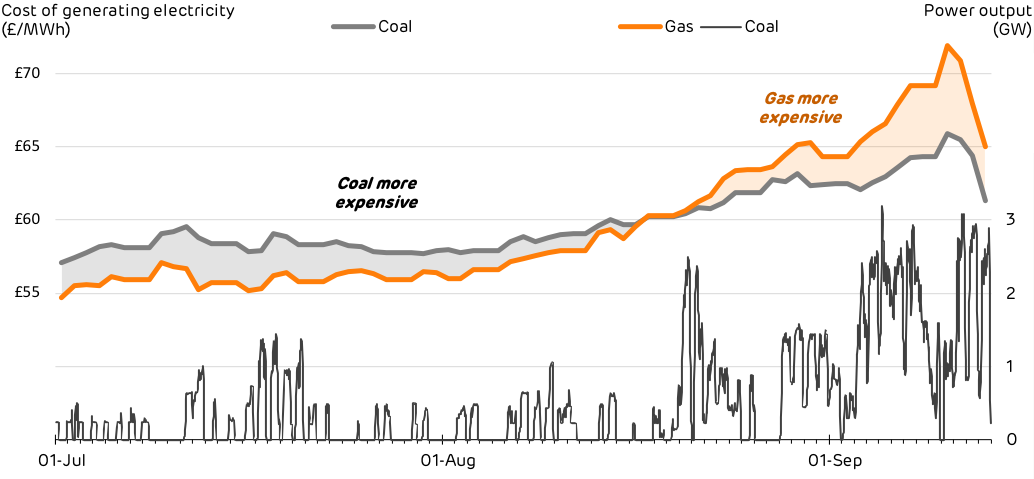
After dropping to a historic low of just 0.2 GW during June and July, Britain’s coal power generation doubled in August, and has shot up to 2 GW during the first week of September.  The last time coal output was this high was during the Beast from the East, when temperatures plummeted in March.

With these coal power stations running instead of more efficient gas plants, Britain is producing an extra 1,000 tonnes of carbon dioxide (CO2) every hour.2  Carbon emissions from electricity generation are up 15% as a result.  These coal plants are not running solely because they are needed to meet peak demand, but because gas prices have risen sharply and carbon prices have not kept up, making coal power stations more economic to run than gas-fired ones.

It became cheaper to generate power from coal than from gas (see thick lines, chart below) in late August.  Even though carbon prices now double the cost of generating electricity from coal,3 coal plants are consistently “in the money” at the moment, meaning they can generate power profitably all day and night.

Estimated cost of generating electricity from coal and gas in Quarter 3 (thick lines), and the output from coal power stations in Britain (thin line)

Estimated cost of generating electricity from coal and gas in Quarter 3 (thick lines), and the output from coal power stations in Britain (thin line)

The cost of emitting CO2 has increased sharply, up 45% so far this year due to the ongoing rally in European Emissions Trading Scheme (EU ETS) prices.  Rising carbon prices should make gas more economical to burn as it emits less than half the CO2 of coal.

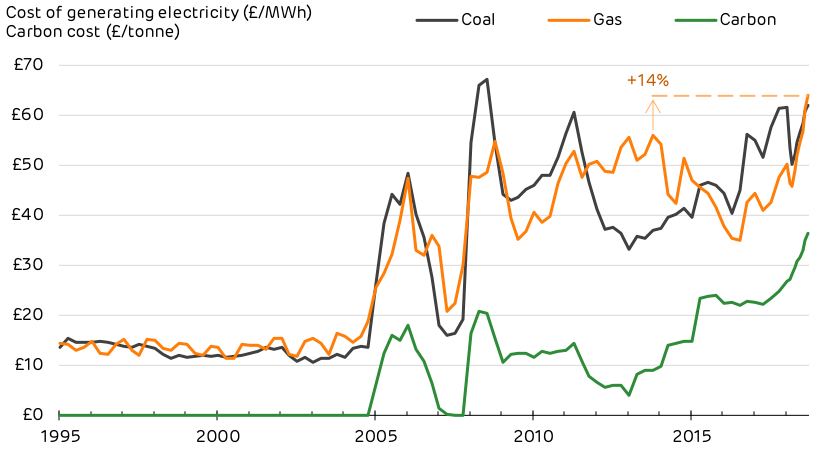
However, wholesale gas prices have also risen 40% since the start of the year, as supplies and storage are squeezed in the run up to winter.  Gas prices are at a ten-year high, currently 14% above their previous quarterly-average peak back in 2013 (see chart below).  These rising costs are feeding through into wholesale power prices, which have risen by a third over the past year to hit £60/MWh.

The cost of generating electricity and carbon cost

The estimated cost of generating electricity from fossil fuels over the last 20 years, along with the cost of emitting CO2.

Britain’s carbon price strengthened dramatically through 2014–15 due to the government implementing a Carbon Price Support scheme.  This caused gas to become competitive against coal for power generation, leading to carbon emissions from the power sector halving.  Unless Britain’s carbon price can once again make up the gap between coal and gas prices, we risk rolling back some of the world-leading gains made on cleaning up our electricity system.

The Committee on Climate Change has made it clear that power is the only sector that is pulling its weight when it comes to decarbonising the UK.  Clean electricity could power low-carbon vehicles and heating, but this opportunity will be wasted if the electricity comes from high-carbon coal.

UK electricity system

So what can be done?  The sharp rise in gas prices hints at a lack of flexibility in the energy system.  Britain came uncomfortably close to gas shortages in March, in part due to the closure of the country’s largest gas storage site.  With nearly half of the electricity generated in Britain coming from gas, plus five-sixths of household heat, diversifying into other – cleaner – energy sources would help insulate consumers and businesses from price spikes.

No one country has the power to determine international fuel prices.  Several factors have come together to push up gas prices, including a lack of transmission capacity, depleted stores of gas after the long hot summer and a lack of wind power increased output from gas-fired stations. Suppliers which don’t wish to be caught short after the Beast from the East, are also stocking up on gas.

Any knee-jerk reaction to try and lower the cost of electricity (for example, slashing the cost of carbon emissions) may only have a short-term impact, and could easily lead to longer-term damage (such as the resurgence of coal) which would require further interventions in the future.

Britain does have control over its carbon price. Its power stations and industry currently pay the Emissions Trading System price (determined on the Europe-wide market) which has fluctuated wildly over the past week between €25 (£22) and €19 (£17) per tonne, plus £18 per tonne in Carbon Price Support which goes to the Treasury.  This needs to be maintained or strengthened further to save the power system from backsliding, and to show strong climate leadership on the international stage.

Explore this data live on the Electric Insights website

View Drax Power CEO Andy Koss’ comment

Commissioned by Drax, Electric Insights is produced independently by a team of academics from Imperial College London, led by Dr Iain Staffell and facilitated by the College’s consultancy company – Imperial Consultants.


[1] The three-month average cost of generating electricity from gas exceeded £60/MWh for the first time since 2009.  Short-term price spikes have been higher than this, such as the first week of March during the Beast from the East.

[2] Extra generation from coal reduces the output from gas plants, which are their main competitors, as nuclear, wind and solar already run as much as possible.  Calculation based on 1934 MW of coal generation (the average during the first week of September) emitting 937 gCO2 per kWh (1812 tonnes per hour) instead of gas generation which would have emitted 394 gCO2 per kWh (762 tonnes per hour).

[3] The coal that must be burnt to produce 1 MWh of electricity now costs around £31, and the CO2 pollution costs an extra £31 on top.  For comparison, producing 1 MWh of electricity from gas costs £50 for the fuel and £15 for the CO2.

The quarter when weather dictated Great Britain’s electricity

As summer arrives in Great Britain, bringing the hottest May Day Bank Holiday on record, it’s hard to believe March saw the coldest spring day since records began. But that’s exactly what happened during the six days the ‘Beast from the East’ hit Europe.

From 26 February to 3 March Great Britain’s weather sunk to a once-in-a-decade level of cold, dipping on 1 March when thermometers dropped to an average of -3.8 degrees Celsius across central England. These extreme conditions drove electricity demand up 10%, as darker days required extra lighting and more people plugged in energy-intensive electric heaters to keep warm.

After successive years of milder winters, January to March made for a period in which the weather played a pivotal role in dictating how the country’s electricity was generated, according to Electric Insights, a quarterly report commissioned by Drax and written by researchers from Imperial College London.

The report highlights how despite the storm disrupting power transmission in parts of the country, and sensationalist headlines suggesting lights could go out at any moment, the electricity system held up well in the adverse conditions.

The Beast from the East tests energy security

The sub-zero temperatures, brutal wind and Siberian-level snow blizzards that hit Great Britain for six days between February and March proved a real test for the electricity system. The evening of 1 March saw demand reach 53.3 GW – its highest peak in three years. This had a knock-on effect on the hour-ahead price of electricity, which was 50% higher during March than the same period in 2017.

The weather had a notable impact on the types of generation needed to power the county, with fossil fuels playing an important role at the expense of carbon emission levels. Over the six-day cold spell, fossil fuels averaged between 20-25 GW of electricity generation.

Coal accounted for almost 10% of the total electricity mix across the quarter, in part because of rising gas prices, which made it a more economical fuel. Gas, however, remained the biggest power source accounting for just shy of 40% of all electricity.

What is most significant about this Q1 2018 fossil fuel usage, is that even in such extreme weather, coal and gas generation was still 16% and 2% lower, respectively, than the same quarter in 2017.

This drop is the result of increased renewable capacity allowing wind generation to grow by almost 40% and make up just short of 20% of the electricity mix.

Read the full articles here: 

Rampant wind leads renewable generation

The conditions brought by the storm where particularly favourable to wind generation, which hit new peak-generation levels of 13 GW on 17 January and then 14 GW on 17 March. Over the full quarter wind power production reached 15,560 GWh, 30 GWh more than nuclear, the nearest low carbon source. This increase comes in part as a result of a 19% increase in installed capacity around the country since Q1 2017, but also thanks to the grid getting better at making use of it.

During the six sub-zero days of the quarter, wind contributed a minimum of 4.4 GW, crucial at a time when other power sources appeared vulnerable. For example, heavy snowfall blocked solar panels from the sun leaving it contributing just 2% of the electricity mix over the quarter.

Nuclear power fared better and made up just shy of 20% of generation, but was held back by two routine reactor maintenances while a third shut on the quarter’s coldest day due to seaweed clogging a plant’s cooling system. Biomass ran solidly throughout the cold spell, contributing 4% of the total electricity generation mix.

The opening of a new 2.2 GW cable connecting Scotland – where there is 7.7 GW of installed capacity – to North Wales saved National Grid some £9 million a month in constraint payments across the first quarter.

Read the full articles:

Did the country almost run out of gas?

One of the most headline-grabbing events from the cold spell was National Grid’s decision to issue a ‘Gas Deficit Warning’ on the morning of 1 March, suggesting supplies could run out before the end of the day.

With 83% of British households depending on gas for heating and gas turbines accounting for a significant portion of the country’s electricity generation, the announcement drew considerable press attention.

However, National Grid explained domestic gas users would unlikely be impacted and it would work with industrial partners to make more gas available to meet demand. This clearly had the desired effect, with as much as 19 GW of spare gas capacity ending up available that day. The warning was withdrawn the following morning and gas generation averaged 11 GW, more than any other source, between 26 February and 3 March.

Nevertheless, European-wide demand for gas sent prices soaring and making it more economical to burn coal, which generated roughly 10 GW a day on average over the six-day period of 26 February to 3 March.

Read the full article: Running low on gas

The extreme weather of Q1 2018 highlighted the stability of Great Britain’s overall power system. But even as the country continues to move towards greater renewable generation, fossil fuels continue to play an important part of electricity mix when demand peaks.

Explore the data in detail by visiting ElectricInsights.co.uk. Read the full report.

Commissioned by Drax, Electric Insights is produced independently by a team of academics from Imperial College London, led by Dr Iain Staffell and facilitated by the College’s consultancy company – Imperial Consultants.

Europe’s kicking its coal habit

From Roman mines to the fuel behind the continent-wide industrial revolution, Europe has a long history with coal. But with reducing carbon and other greenhouse gas emissions, now firmly on the global agenda, Europe’s love for coal is rapidly declining.

Collectively, the EU aims for renewable sources to account for 20% of gross final energy consumption by 2020 and 27% by 2030. Countries in and outside the EU, as well as businesses and organisations, are setting ambitious targets to phase out coal as part of the UK and Canada-led Powering Past Coal Alliance, which Drax recently signed up to.

European CountriesCoal-free date
(according to Europe Beyond Coal *updated September 2020*)
Austria 🇦🇹 2020
France 🇫🇷 2022
Portugal 🇵🇹2023
UK 🇬🇧2024
Ireland 🇮🇪 Italy 🇮🇹 2025
Greece 🇬🇷2028
Finland 🇫🇮 Netherlands 🇳🇱 2029
Denmark 🇩🇰 Hungary 🇭🇺 Portugal 🇵🇹2030
Germany 🇩🇪2038
Czech Republic 🇨🇿 Spain 🇪🇸Phase out under discussion
Bosnia Herzegovina🇧🇦 Bulgaria 🇧🇬 Croatia 🇭🇷 Kosovo🇽🇰Montenegro 🇲🇪 Poland 🇵🇱 Romania🇷🇴Serbia🇷🇸 Slovakia 🇸🇰Slovenia 🇸🇮 Spain 🇪🇸 Turkey 🇹🇷No phase out date
Belgium 🇧🇪 Cyprus 🇨🇾 Estonia 🇪🇪 Iceland 🇮🇸 Latvia 🇱🇻 Lithuania 🇱🇹 Luxembourg 🇱🇺 Malta 🇲🇹 Norway 🇳🇴 Sweden 🇸🇪Switzerland 🇨🇭No coal in electricity mix

This movement is not only being fuelled by an increased capacity in wind and solar generation, but also by other low-carbon energy sources enabling countries to kick their coal habits.

Aiming for 100% renewable

As myth after myth is dispelled about renewables, there are countries proving it is possible to power a modern developed nation entirely through renewable energy sources.

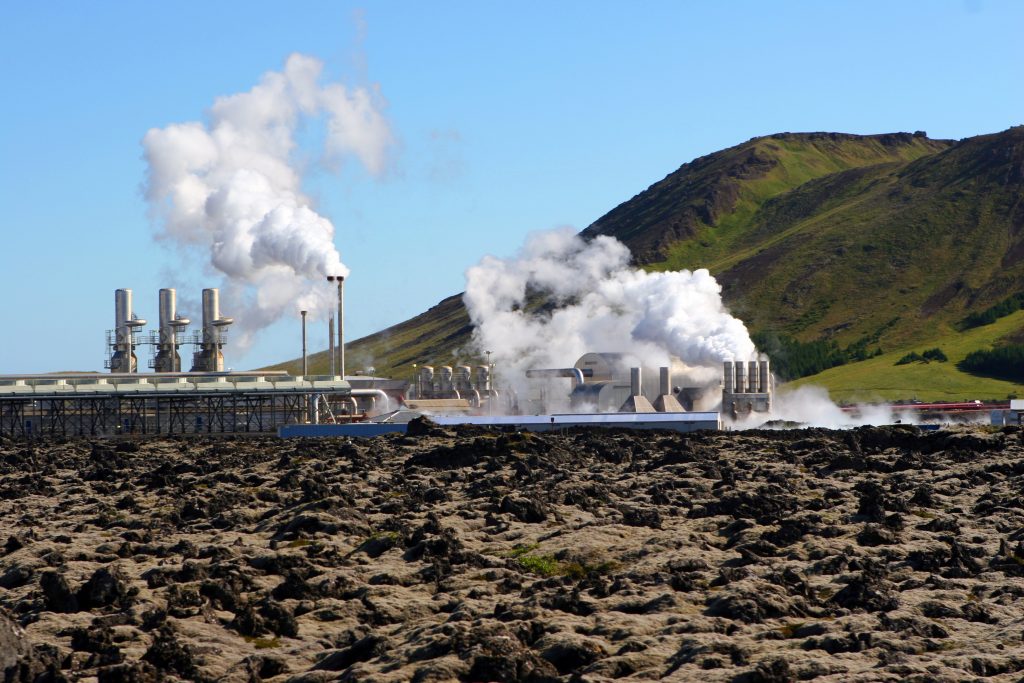
Up in the northern-most reaches of Europe, Iceland already generates all its electricity from renewable sources. This is split between 75% hydropower and 25% geothermal power. Geothermal not only offers a renewable source of electricity but also hot water for heating the volcanic island nation.

A geothermal power station steams on a cold day in Iceland

Hydropower is also a key contributor to Norway’s renewable ambitions. With more than 31 gigawatts (GW) of installed hydropower capacity, Norway is able to rely on it as a source of electricity and export its plentiful oil and natural gas reserves to countries still dependent on fossil fuels.

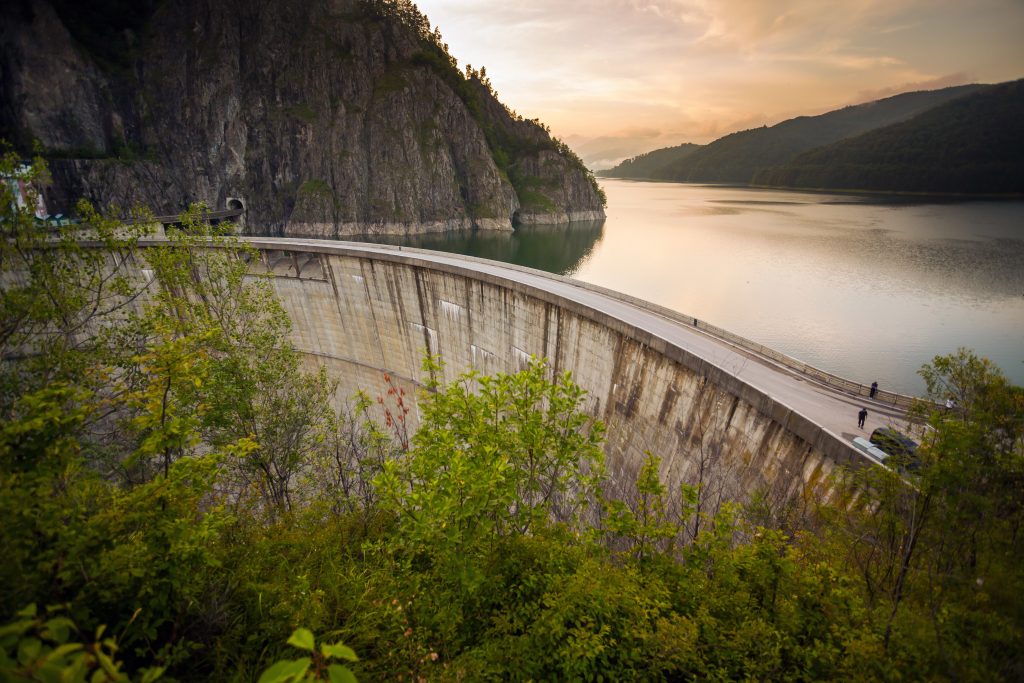
Many parts of Europe are well suited to hydropower, with reliable rainfall and the mountainous topography necessary to construct dams and power stations. Parts of Austria, Romania and Georgia also make substantial use of hydropower as a source of electricity.

Artificial Lake behind the Bicaz Dam at sunset, Romania

For countries without this access to large-scale hydropower, it’s the increased installation of renewables that holds the key to eliminating the need for coal.

Growing renewable generation

Last year saw electricity generation from renewable sources overtake that from coal for the first time thanks to continuous expansion of wind, solar and biomass capacity around the continent.

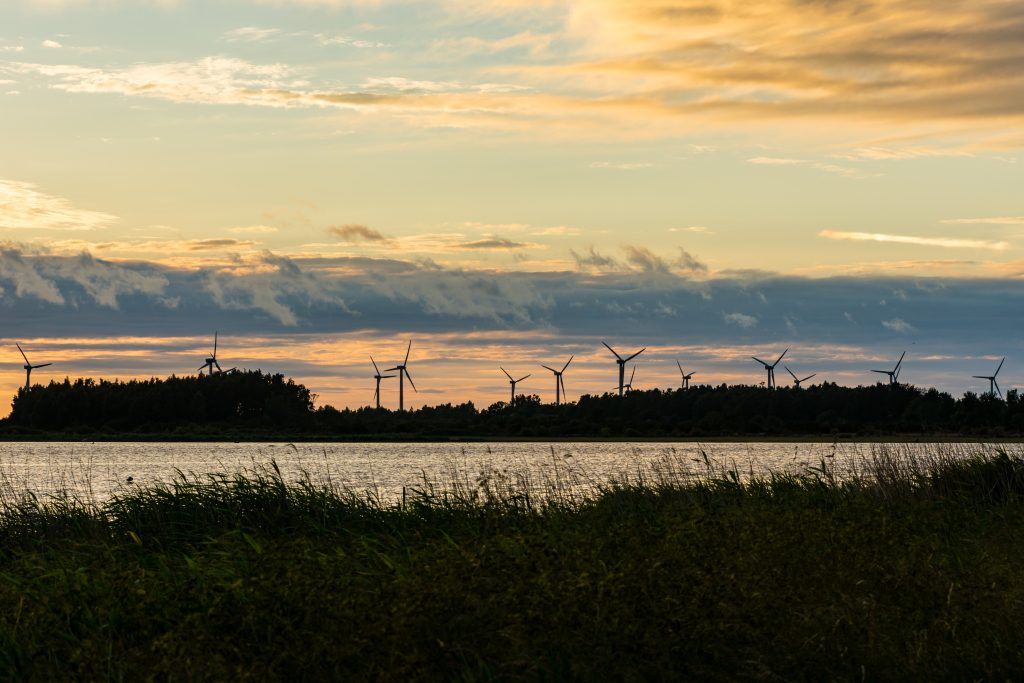
Between 2010 and 2017, generation from wind, solar and biomass installations in EU countries more than doubled from 302 terawatt hours (TWh) to 670 TWh, according to Eurostat, driven primarily by an increase in wind capacity. As a source of renewable electricity wind has already proved capable of generating major portions of a country’s demand –managing to meet 44% of Denmark’s overall demand in 2017. This was after previously producing a 40% electricity surplus one day for the country, allowing it to export the emission-free electricity to neighbours.

Wind turbines on the east coast of Sweden

Across the EU, generation from wind more than doubled from 150 TWh to 364 TWh from 2010 to last year, while solar generation grew five times from 23 TWh to 119 TWh and biomass jumped from 129 TWh to 196 TWh. By contrast, coal and lignite fell from 818 TWh to 669 TWh.

These renewable electricity sources, along with hydropower, now account for 30% of EU countries’ collective electricity generation. And while coal generation continues to drop, other low carbon energy sources, particularly nuclear, still play essential roles in many European energy systems.

From coal to low carbon

Sweden is one of the leaders in renewable electricity generation, setting 2040 as the date to move to totally renewable energy. However, while it currently counts 6.5 GW of wind capacity installed and has already exceeded its 2020 renewable generation goals, the country’s 10 nuclear reactors still make up 40% of its electricity output. Sweden aims to phase-nuclear out of its energy mix, but this will force it to import more power from neighbours to meet demand.

France is even more dependent, with nuclear making up 75% of its electricity production and earning more than €3 billion a year for the country in exports. It aims to reduce its nuclear generation to 50% with president Emmanuel Macron claiming continued nuclear generation offers “the most carbon-free way to produce electricity with renewables.”

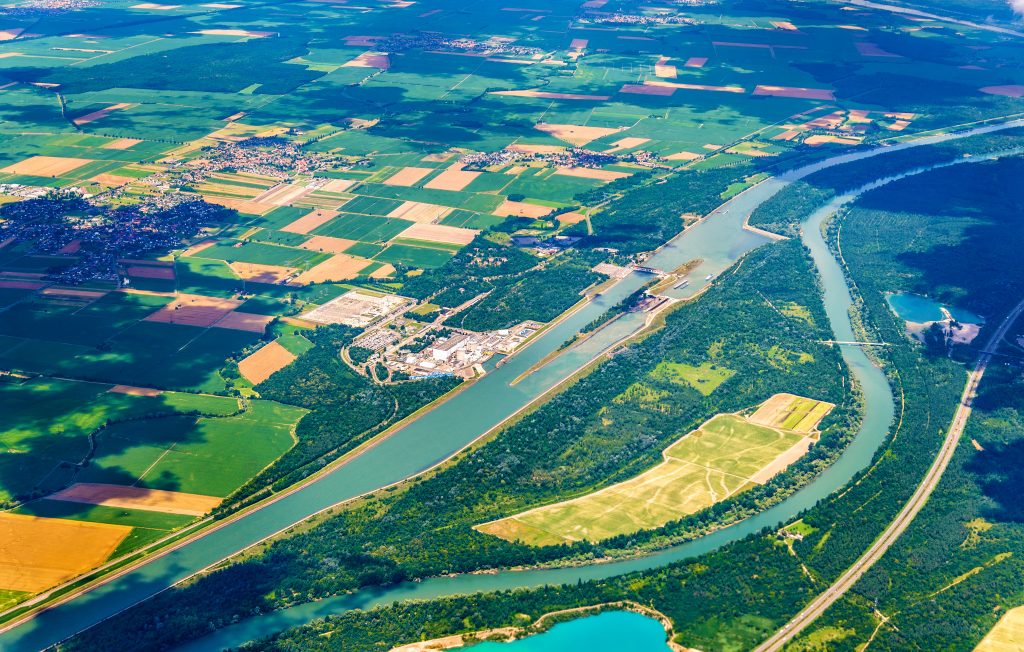
Fessenheim Nuclear and Hydroelectric Power Plants in Alsace, France

As a reliable and low-carbon source of electricity, the most modern nuclear power stations add a certain amount of flexibility to grids enabling greater adoption of intermittent renewable sources. Across the EU nuclear made up a quarter of electricity generation in 2017.

Gas in the transition

Much more flexible than nuclear, gas plays an essential role in many countries. It accounted for 19% of electricity generation in the EU last year and produces around half the CO2 and just one tenth of the air pollutants of coal. Gas turbines can begin generating electricity at full power in just 30 minutes from a cold start, or 10 minutes from warm standby, allowing it to plug any gaps in demand left by intermittent renewables. Its ability to provide many system services such as reserve power and frequency response will see it play an important transition role over the coming decades, until cleaner technologies are able to take over.

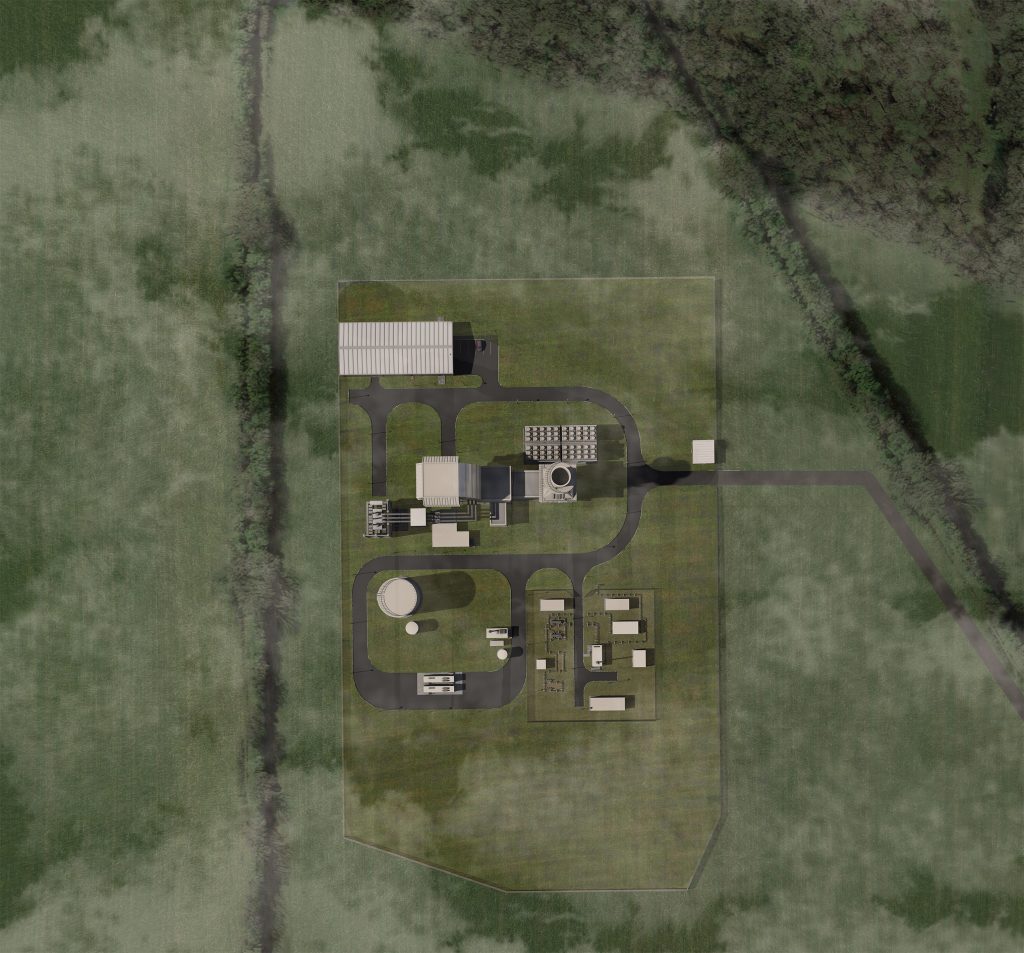
Artist’s impression of a Drax rapid-response gas power station (OCGT) with planning permission

Coal is not gone yet, making up 11% of EU’s electricity generation in 2017, but the momentum behind decarbonisation is keeping Europe on track to meet its ambitious emissions target and take the final step away from coal.

Listening to local communities

Over the course of the year, we held many meetings and outreach events with the communities living in proximity to our gas-fired power station projects, including:

  • Millbrook Power, Bedfordshire: 160 people attended public exhibitions hosted by Drax in the villages neighbouring the project: Marston Moretaine, Stewartby, Ampthill and Lidlington. We also held a series of briefings with local elected representatives and interest groups. The feedback we received helped to inform the application we subsequently submitted to the Planning Inspectorate.
  • Progress Power, Suffolk: We held two roundtables with local landowners and politicians in Eye Community Centre in July and October to introduce Drax Group and better understand the community’s perception of the project. Further roundtables will take place in 2018 to involve local people in the design of the power station and sub-station.
  • Repower project, Drax Power Station: 120 people attended informal consultation events in Selby Town Hall, Drax Sports and Social Club and Junction in Goole. The sessions provided an opportunity for the Drax project team to discuss our plans with the community and identify the key issues of interest to them, ahead of the formal statutory stage of public consultation taking place in Q1 2018.
  • Rapid-response gas plants in Wales: We worked with Rhondda Cynon Taf Country Borough Council to discharge our planning obligations in relation to the Hirwaun Power project. We also started meeting with local stakeholders ahead of our statutory consultation on the Abergelli Power project in 2018.

Understanding the pounds behind the power

Editor’s note: On 21st September 2017 the Board announced that Will Gardiner would replace Dorothy Thompson as Chief Executive, Drax Group as of 1st January 2018. Read the announcement to the London Stock Exchange. This story was written by Will two months prior to that announcement and remains unedited below.

The UK electricity market used to be simpler. Coal, gas and nuclear plants generated energy and fed power into the National Grid. Retail companies then delivered that power to homes and businesses across the country thanks to regional distribution network operators. Today, it’s not as simple. The energy system of Great Britain has grown more complex – it needed to.

The push to lower carbon emissions led to the introduction of an array of different power generation technologies and fuels to the energy mix. These all generate power in different ways, at different times and in different conditions. Added to this are government schemes that have changed how this is all funded. In short, our electricity market is now more complex.

Drax Group has transformed itself to align with this new system. It is now an energy company with complementary operations across its supply chain – sourcing fuel, generating 17% of Great Britain’s renewable power and then selling much of that electricity directly to business customers in the retail market. This has fundamentally changed both how we do business and the financial mechanisms behind the business.

Where are we now?

Drax’s financial and operating strategies are very much inter-linked. Shifting how we generate energy changes how we generate revenue. The company is structured according to a set of distinct business segments, each of which is treated in a slightly different way.

The generation business

Drax has adapted its business model to the UK government’s regulatory framework, which through successive administrations has broadly promoted investment in renewable and low carbon power generation. Three of our six electricity generation units – accounting for 68% of our output in the first half of 2017 – have been upgraded from coal to produce renewable electricity from sustainable compressed wood pellets. These units are a core part of Britain’s renewable energy mix. Guaranteed income from the third unit conversion has given us a significantly higher degree of earnings visibility and reduced our exposure to commodity prices.

H1, 2017: 10.7 TWh total generation; 7.3 TWh biomass generation

Our coal generation units no longer provide 24/7 baseload electricity. This means we primarily use our coal generation as a support system. When the grid needs it we can ramp up and down coal generation responding to demand and ancillary service needs. Our renewable generation units do this too. Ultimately, however, our long-term goal is to convert the remaining coal units – either to renewables or to gas. Our Research and Innovation team is currently looking into how we might be able to do this, but early indications show that coal-to-gas conversion could be an attractive option for delivering flexible and reliable generation capacity for the UK.

Drax Power is doing well and generated £137m of EBITDA in the first half of this year, a £51m increase compared to the first half of 2016.

We are confident about the projected growth of our power generation business to £300 million EBITDA by 2025. That plan is aided by our move into rapid response gas – a technology that can meet urgent needs of a power system that includes an increasing amount of weather-dependent renewables. Two of the four rapid response gas projects we’re developing are ready to bid for 15-year capacity market contracts this coming February. They are designed to start up from cold faster than coal and combined cycle gas turbine (CCGT) units. These small-yet-powerful plants will respond to short-term power market price signals and be capable of providing other, ancillary services to further enhance security of supply.

These projects should add an attractive additional source of earnings to our generation business. They also will have attractive characteristics, as a significant element of their earnings will come from the capacity market – guaranteed government income for 15 years.

The retail business

We directly serve the retail market through Haven Power, which supplies renewable electricity primarily to industrial and commercial customers. Last week we announced that Haven Power was able to break-even six months ahead of schedule. Retail is an area we’re growing, and in February 2017 we acquired Opus Energy, the largest non-domestic UK energy company by meters installed outside the Big Six. This has had a marked effect – today we’re the largest challenger B2B energy retailer in the UK.

There is a healthy and regular annuity coming in through the existing retail business, and we believe this can generate £80 million of EBITDA by 2025, which, together with our growing biomass supply business, will make up a third of our earnings. We demonstrated good progress in the first half of the year, earning £11m of EBITDA.

The biomass business

Our two operational wood pellet manufacturing plants in Louisiana and Mississippi are progressing well. They are both still ramping up to full production and have seen marked improvements in pellet quality and production.

We are looking to grow our US business and as part of this we’ll need to build on the recent addition of LaSalle BioEnergy with further acquisitions. Expansion will grow our capacity for the self-supply of pellets from 15% to 30% of Drax Power Station’s requirements, adding an additional one million tonnes of production.

In the second half of 2017, we expect the profitability of Drax Biomass to increase. LaSalle will be commissioned in the first half of 2018 and reach capacity in 2019.

What’s next?

The energy landscape continues to change and we’ll need to change with it. Phasing out coal entirely is priority number one. For this we’ll continue to look at options. How and when we can convert more units to sustainable biomass depends on trials that we are conducting at Drax Power Station during 2017-18. The right government support would also make further conversions cost effective.

We also recognise that it’s important to look at alternative possibilities for our remaining coal units. This is why we are seeking planning permission to convert one or more of our 645 MW (megawatt) coal units to 1,300 MW of gas. Such an upgrade would be at a discount to a new-build, combined cycle gas turbine (CCGT) power station of equivalent capacity. And that’s simply because we would use much of the existing infrastructure and equipment.

Another major prospect is in the technology space and so we’re continuing to invest in research and innovation. Batteries and storage are a huge opportunity for us – both in how they could benefit our retail customers, and how they could provide solutions for large-scale centralised energy systems. In short, it’s an area with huge potential. We welcome the government’s recent initiatives designed to stimulate the development of battery technology, as well as encourage the use of electric vehicles.

Drax has gone through a period of considerable change and that will continue as we meet the UK’s low-carbon energy demands. We are improving the quality of our earnings, reducing our exposure to commodities, and positioning to take advantage of future opportunities. As we told investors in June, if we deliver on these plans, we can expect >£425 million of EBITDA in 2025.

Taxing coal off the system

In the Spring Budget 2017, the Chancellor announced that the Government remains committed to carbon pricing. Philip Hammond’s red book revealed that from 2021-22 ‘the Government will target a total carbon price and set the specific tax rate … giving businesses greater clarity on the total price they will pay.’ Further details on carbon prices are to be ‘set out at Autumn Budget 2017’.

Researchers at Imperial College London have modelled what would have happened during 2016 with no carbon tax and also with an increased carbon tax. They have compared both with what actually happened. Their conclusion?

No carbon tax would mean:

  • More coal
  • Less gas
  • Higher emissions.

A higher carbon tax would mean:

  • Less coal
  • More gas
  • Lower emissions

Since it was announced in 2011, the Carbon Price Support (CPS) has encouraged generators and industry to invest in lower carbon and renewable technologies. It has also forced coal generators to fire their boilers only when they are really needed to meet demand, such as during the winter months or at times of peak demand and still or overcast weather conditions during the summer months.

The introduction of the carbon price has meant that gas power stations, which are less carbon intensive than coal, have jumped ahead of coal in the economic merit order of energy generation technologies and produced a greater share of the UK’s power. The same is the case for former coal generation units that have since upgraded to sustainable biomass – three such units at Drax Power Station result in savings in greenhouse gas (GHG) emissions of at least 80%.

A coal cliff edge?

The Carbon Price Support has resulted in significant savings in the country’s greenhouse gas emissions, helping the UK meet its international climate change commitments. Removing or reducing the CPS too soon and Britain’s power mix risks going back in time. It would improve the economics of coal and encourage Britain’s remaining coal power stations to stay open for longer creating a risk to security of supply through a ‘cliff edge’ of coal closures in the mid-2020s. Changing the economics to favour coal also makes it harder to reach the UK government’s goal of bringing a new fleet of gas power stations online.

What if …

Dr Iain Staffell from the Centre for Environmental Policy at Imperial College London has modelled a scenario in which the Carbon Price Support did not exist in 2016. “If the government had abolished all carbon pricing, we would probably have seen a 20% increase in the power sector’s carbon emissions,” said Staffell.

“Removing the Carbon Price Support would have the equivalent environmental impact of every single person in the UK deciding to drive a car once a year from Land’s End to John o’Groats.”

Without the Carbon Price Support, emissions from electricity consumption would be 20% higher, meaning an extra 250 kg per person (equivalent to driving a car 800 miles).

Running the numbers

The Carbon Price Support is capped at £18/tCO2 until 2021. In his Budget on 8th March 2017, Chancellor Philip Hammond – rightly, in the view of Drax – confirmed the government’s commitment to carbon pricing. Using data from National Grid and Elexon and analysis from Dr Iain Staffell, Electric Insights shows how coal power generation was only needed last winter when electricity demand was greater than could be produced by other technologies alone. Coal was only used at times of peak demand because it was among the most expensive energy technologies, in part due to the CPS.

What if that wasn’t the case and the government had decided to scrap the CPS before that point in time? More coal is burnt, particularly during the daytimes – on average coal produces 2,500 MW more over this week (equivalent to four of Drax Power Station’s six generation units).

And what does Dr Iain Staffell’s model suggest would have happened if the cap was doubled to £36/tCO2? The change is stark. Even for a week in the winter, with an average temperature across the country of 8.6oC, to see coal generation reduced so much compared to the actual CPS of £18/tCO2 or the £0/tCO2 scenario model, illustrates the impact of the Carbon Price Support.

Could bill payers save?

One argument for reducing the Carbon Price Support – or scrapping it altogether – is the possibility that consumers and non-domestic electricity bill payers would save money. It’s worth noting that apparent savings for electricity bill payers are lowered when the whole way that power is priced is accounted for, by the time it reaches homes and businesses.

“Carbon price support does increase the cost of wholesale power,” says Staffell. “But if you add the extra taxes, other renewable and low carbon support measures, transmission and balancing charges and fees imposed by electricity suppliers, the overall impact on consumer bills is modest. So, if the government abolished all carbon pricing, we could expect a 1 p/kWh reduction in our tariffs, but a 21% increase in our carbon emissions.”

As a report by economic consultancy NERA and researchers from Imperial College London has already shown, there are other ways to save bill payers money, while encouraging a low carbon future. Their analysis published in early 2016 found that households and businesses could save £2bn if the government considered the whole system cost of electricity generation and supply when designing its competitions for support under its Contracts for Difference (CfD) scheme.

2016, redux

Without the Carbon Price Support, the UK wouldn’t have managed to send carbon emissions back to 19th century levels.

So if 2016 was played out one more time but with no Carbon Price Support:

  • Coal generation would have increased by 102% (28 terawatt-hours) to 56 TWh
  • Gas generation would have decreased by 21% (-27 TWh) to 101 TWh
  • Carbon emissions would have risen by 21% (16 million tonnes of carbon dioxide) to 92MT CO2
  • The carbon intensity of the grid would have increased by 20% from 290 gCO2/kWh to 349 gCO2/kWh

And if 2016 had seen a doubling of the CPS to £36/tCO2:

  • Coal generation would have decreased by 47% (-12.9 TWh) to 14.7 TWh
  • Gas generation would have increased by 9% (11.8 TWh) to 139.5 TWh
  • Carbon emissions would have decreased by 10% (7.3 MT CO2) to 68.6 MT CO2
  • The carbon intensity of the grid would have decreased by 9% from 290 gCO2/kWh to 263 gCO2/kWh

The two scenarios presented above only modelled the impact of no or a higher Carbon Price Support on nuclear, coal and gas power supply. In the real-world, changes to the Carbon Price Support would also impact on energy technologies that operate under the Renewables Obligation (RO) such as two of Drax’s three biomass units and much of the country’s other renewable capacity. CPS changes would also likely impact imports and storage.

While no analysis is perfect this clearly illustrates the significantly negative impact that scrapping or reducing the Carbon Price Support would have on the UK’s decarbonisation agenda. It also highlights the benefits that the government’s decision to remain committed to carbon pricing will deliver.

Commissioned by Drax, Electric Insights is produced independently by a team of academics from Imperial College London, led by Dr Iain Staffell and facilitated by the College’s consultancy company – Imperial Consultants.

Chief Executive comments on full year results

We are playing a vital role in helping change the way energy is generated, supplied and used as the UK moves to a low carbon future.

With the right conditions, we can do even more, converting further units to run on compressed wood pellets. This is the fastest and most reliable way to support the UK’s decarbonisation targets, whilst minimising the cost to households and businesses.

In a challenging commodity environment Drax has delivered a good operational performance with 65% renewable power generation.


The acquisition of Opus Energy and rapid response open cycle gas turbine projects are an important step in delivering our strategy, diversifying our earnings base and contributing to stronger, long-term financial performance across the markets in which we operate.


Related documents: