Tag: sustainability

Building a 21st century port

In its long history, the Port of Liverpool has dealt with a number of industries. It’s a port characterised by its ability to adapt to the needs of the time. In 1715 it emerged as one of the world’s first ever wet docks. In the 18th century it was used as a hub for the slave trade.

When slavery was abolished in the early 19th century, Liverpool switched to bringing in the goods of the thriving Empire, such as cotton. When goods like cotton dried up, it switched to the fuel of the Industrial Revolution: coal.

Now as the world (and the UK government) moves away from fuels like coal and towards lower-carbon and renewable resources, the Port of Liverpool needed to adapt once again.

Gary Hodgson, Chief Operating Officer at Peel Ports, explains: “About three years ago everyone was asking, ‘What happens after coal?’”

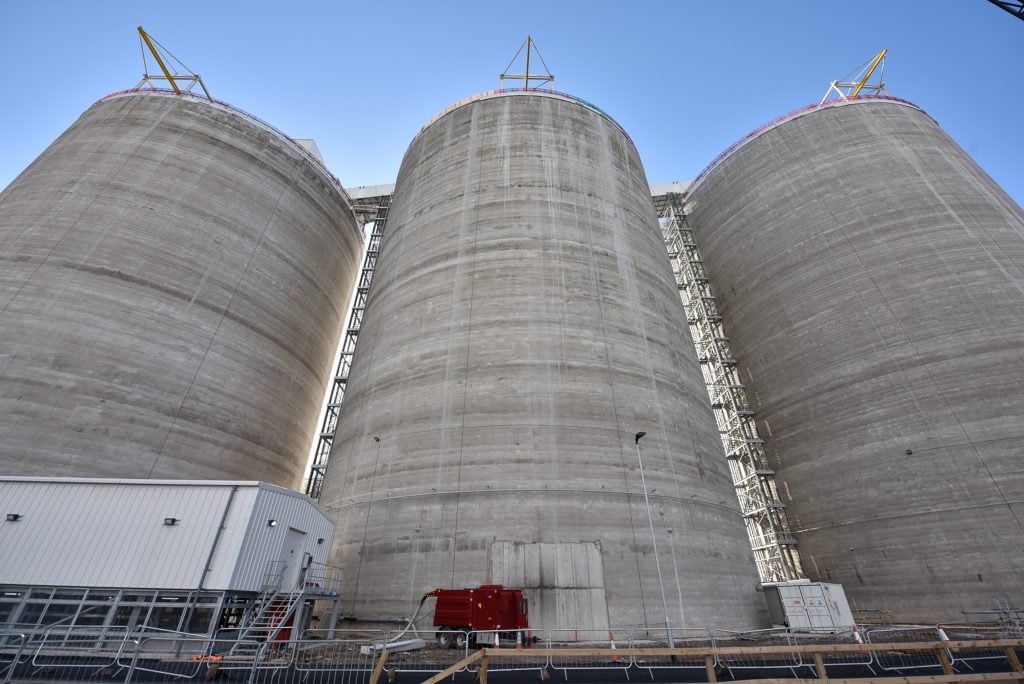
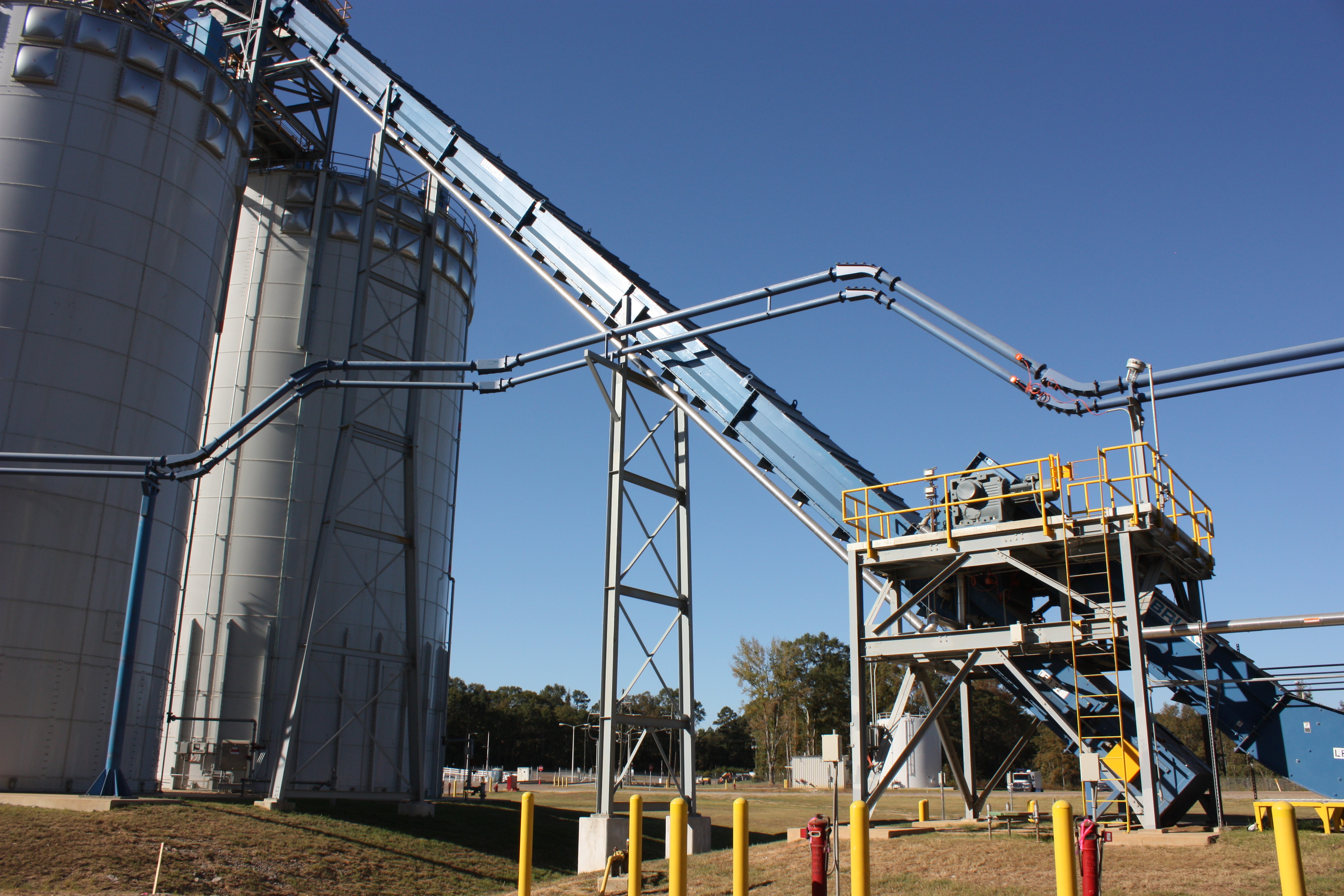
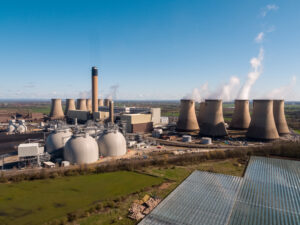
Biomass silos at the Port of Liverpool

What happens after coal?

Peel Ports is one of the biggest operators of Liverpool’s shipping infrastructure, including Liverpool Port. Seeing that the future of coal was finite, it recognised there was a need for a port that could bring in alternative, renewable fuels.

At the same time Drax was looking for a logistics partner to facilitate the importing of compressed wood pellets. Since 2009 Drax Power Station had begun a process of upgrading its coal-fired boilers to run on sustainable biomass, sourced from huge, well-established working forests. More than this, it had plans to set up its own pellet manufacturing plants in the US South and needed to import large quantities of wood pellets.

The relationship with Peel Ports and Liverpool was obvious. This began a £100 million investment that helped transform the region’s port-station transport infrastructure.

“It’s about working in partnerships with companies,” says Hodgson. “Working this way helps develop solutions that really work.”

The central element of the partnership between Drax and Peel Ports was a radical redesigning of the technical infrastructure. Not only do compressed wood pellets have fundamentally different physical properties to other fuels like coal, they are more combustible and need to be handled safely.

For the three-million-tonne-capacity facility that Peel Ports and Drax wanted to build, innovative supply chain solutions had to be developed.

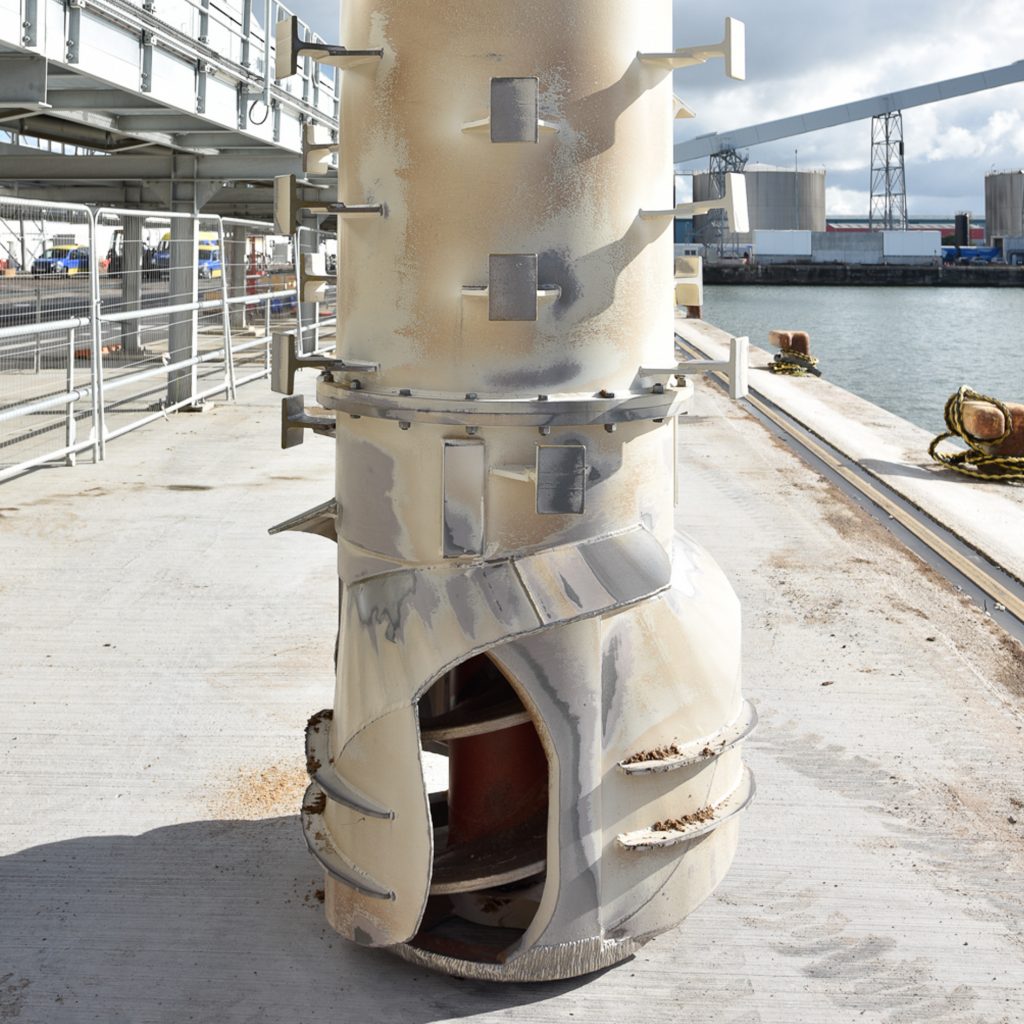
A tool used to transfer compressed biomass pellets

Shifting biomass in bulk

The first challenge was getting the high-density pellets off giant ships. For this, Peel and Drax designed a solution that uses an Archimedean screw – a long tube with a spiral winding up the inside that allows liquids, or materials that can behave like a liquid (like wood pellets), to defy gravity and travel upwards.

At the top of the screw, the pellets are emptied onto a conveyor belt and carried to one of three purpose-built silos tailored to safely storing thousands of tonnes of biomass.

Here the pellets wait until another conveyor belt deposits them onto specially-design biomass trains where they are transported across the peaks of the Pennines to Drax Power Station near Selby in North Yorkshire.

Each step at the port is automated, designed with supreme efficiency in mind by a team of Drax and Peel Port engineers. End-to-end, port to power station, the whole process can take as little as 12 hours.

Drax biomass ship in the Port of Liverpool

A new chapter for the north

In the varied history of the Port of Liverpool the new facility is another chapter, one that is helping transform the logistics infrastructure and the economic growth of the North West.

Now open and operational, the facility directly employs 50 people – around 500 additional contractors have worked on the project during its construction and development. More than that, it’s an investment in the country’s energy future. It secures a fourth port for Drax –  three others are on the east coast – helping with security of supply.

“We made this investment because we recognised this as the future of the energy mix of the country,” Hodgson explain. “We can’t just rely on one form of power – there has to be an energy mix and we see biomass as a key part of that.”

Forests, sustainability and biomass – the expert’s view

It was a forestry catastrophe that first inspired Matthew Rivers’ interest in forests.

Dutch Elm trees, an iconic part of the UK landscape for over 250 years were becoming infected with a fatal and fast-spreading disease. The race was on to save them.

A schoolboy in North London at the time, Rivers joined the after curricular school team tasked with saving its trees – first by injecting them with insecticide, and when that didn’t work, by felling and replanting them. It was an early foundation in how forests work and the challenges of keeping them healthy.

Decades later, Rivers is Director of Corporate Affairs at Drax. It’s a role he finds himself in following a career as a forester, helping to manage forestry businesses, and supporting the setting up of wood product manufacturing plants.

His own estimation of his working life is a humble one, however. “I think I’m probably a failed farmer,” he says.

“A forester always plants in hope.”

Rivers studied forestry at university in Scotland before taking up jobs in the forestry industry across the UK, Uruguay and Finland. Working in this industry, he says, is one that requires patience.

“In the UK we’re talking about 30- or 40-year growth cycles. The trees I planted at the start of my career are only just coming to maturity now,” he explains.

But more than the long investment of time, being a forester relies on faith. “A forester always plants in hope,” he says. When a forester plants a tree, he or she most commonly does not know who the end customer will be.

So when the call came from Drax for a forestry expert to help guide the company through an important transformation – upgrading the power station from coal to biomass – the challenge was one he was ready to take.

“Drax already had ambitions of converting three boilers to run on biomass. That would mean consuming tonnes of compressed wood pellets,” he says. The business needed a supply, and Rivers was drafted in to set this up.

As part of the supply solution, and Chaired by Rivers, Drax set up Drax Biomass, a pellet manufacturing business in the USA that makes and supplies compressed wood pellets to Drax Power Station.

Setting up its own manufacturing plant not only means Drax needs to rely on fewer external suppliers, but also that it can use the learnings about the technologies, the economics and the sourcing of the process to continually hone its supply chain.

To operate responsibly and receive governmental support, Drax has to be sustainable, and this is particularly important when it comes to where and how it sources its fuel. This comes with its own challenges.

No universal definition of sustainability

“To my understanding, there is no universal definition of sustainability,” says Rivers. So how do you proof your business for an unclear entity?

“At its heart, sustainability is about not doing anything today that would prejudice doing the same thing for the next generation or generations to come.”

A responsibly managed forest is one that is as healthy, productive, diverse and useful in 100 or 500 years’ time as it is today. They key to this, is to think of forests as a whole.

Rivers explains: “Think about a single tree – you fell it and use it to heat your home over one winter. But it’s going to take perhaps 30 years for that tree to grow back,” he says. “What do you do for the next 30 years?”

“In a sustainably managed forest you have all different ages of tree represented – one thirtieth devoted to each age- and, when you use an older tree to warm you in winter, you plant a replacement. That way, for every year you’ll have trees reaching maturity ready to provide your power.” It’s a cycle that, if managed responsibly, keeps delivering a useful resource as well as maintaining the health of the forest.

Rivers continues: “Sustainability is the very nature of what a forester does; because if we don’t take care of our forests, and ensure we have a crop to harvest year after year, we lose our livelihood.”

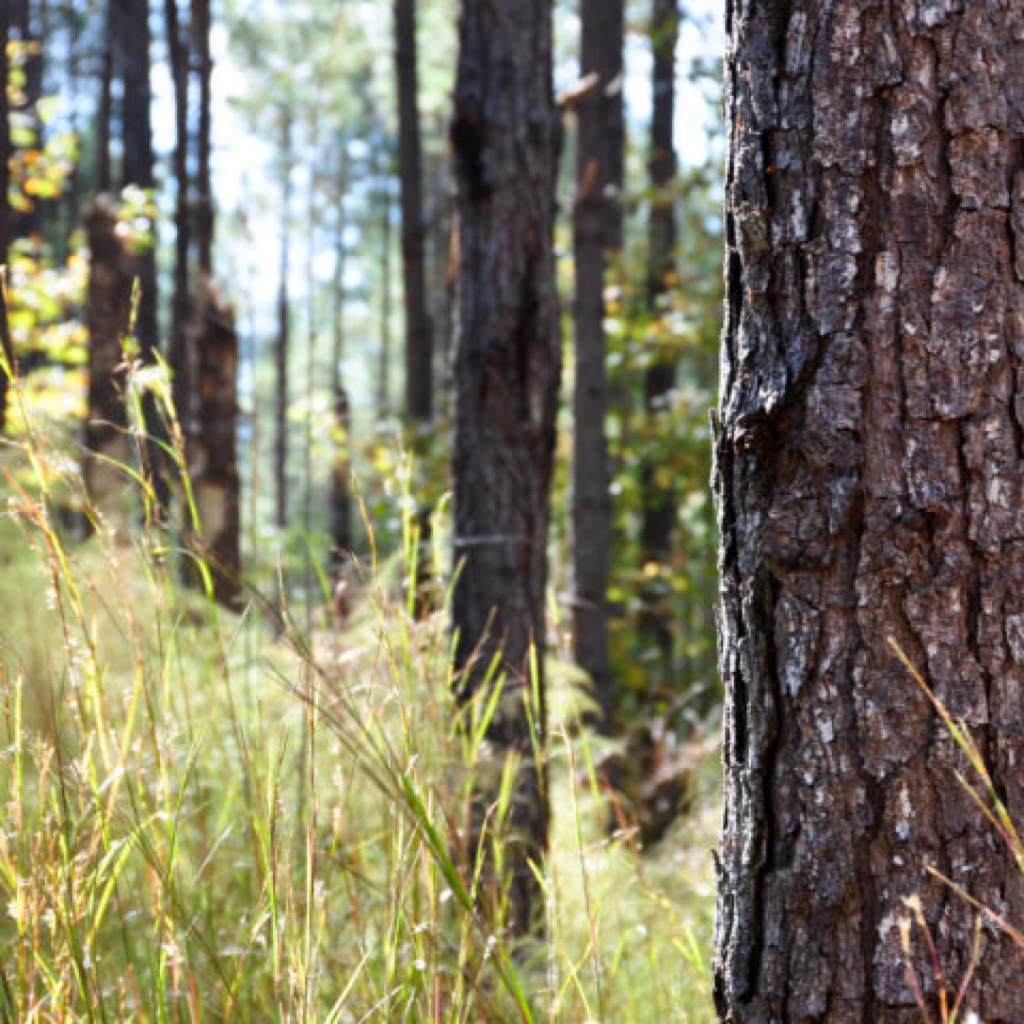
forests_trees_growing_for_winter_heating_smh4nj

Becoming a private forester

Two decades ago, Rivers completed a loop he started decades ago amidst the Dutch Elm crisis and became a forest owner himself. In Scotland, he bought, and now manages, his own private forest.

“We’ve had kids’ birthday parties, we’ve dug out a pond, we harvest chanterelles in the autumn – there’s a millennium capsule buried somewhere,” he says.

It’s not only a family heirloom. It’s a place for him to exercise a passion – maintaining and managing a responsible and healthy forest.


Forbes: Drax joint-second most trustworthy company in Europe

I’m delighted that Drax Group plc has been named by Forbes magazine and MSCI ESG Research as one of the 50 most trustworthy companies in Europe.

In fact, Drax came joint second across the whole continent among companies judged who ‘consistently demonstrated transparent accounting practices and solid corporate governance’.

It’s a massive tribute to everyone involved with Drax that world-leading business experts have recognised our commitment to trust and integrity in this way.

Of course, that commitment goes much further than our accounting practices alone. (I believe my British colleagues would say that it runs right through Drax like the writing in a stick of rock.)

Indeed, it was one of the reasons I was so honoured to be asked to join Drax as CFO. From my very first meeting with CEO Dorothy Thompson, I could see that Drax would always strive do the right thing, in the right way.

That’s just as true for our sustainability data as it is for our business data.

It was our commitment to doing the right thing that led Drax to take on the decision to convert Drax power station from coal to compressed wood pellets.

It is our commitment to doing the right thing that means Drax is reducing emissions by over 80 per cent while giving people and businesses all over the UK the reliable, renewable power that they need.

And we know we can save bill-payers money at the same time.

The UK is lagging far behind the rest of Europe when it comes to generating energy from compressed wood pellets. Drax is committed to bringing us closer to the European average, while helping us move from the fossil fuels of the past to the renewables of the future. And yes, you can trust us on that.

Sustainable Biomass Program – proving biomass is sustainable

I was honoured to be able to accept the Excellence in Bioenergy award recently. Not for myself, but on behalf of all my colleagues at Drax who have worked so hard to make a reality of our shared plan to generate reliable, renewable electricity. Our achievements are truly a team effort.

In 2015, Drax became a predominantly biomass-fuelled power station.

We now generate more electricity at Drax power station from compressed low-grade wood pellets than from coal – between three and four per cent of the UK’s entire demand every day.

It’s a major triumph for all the brilliant engineers involved in converting the plant and everyone who has helped secure the incredibly complex supply chain that keeps it running.

But we truly believe that this is only the beginning for sustainable biomass.

Sustainable biomass is the ideal fuel to help the world decarbonise in an affordable and reliable way. It can support other renewables like wind and solar when the elements are against them and backup power is needed.

Because it can be created by upgrading existing coal-fired power stations, it can be added to the electricity grid in a fraction of the time and for a fraction of the cost of building new power stations. Why should the UK only build brand-new gas and nuclear power stations when existing coal power stations can be upgraded to low carbon, renewable tech? At Drax, we have shown how engineers working at what once was the biggest coal power station in western Europe can use their expertise to work with compressed wood pellet power generation.

And it can save bill payers billions of pounds when the true costs of bringing other renewables on stream are taken into account.

The industry’s greatest challenge right now is in proving that all the biomass we use is truly sustainable.

At Drax we have proven the sustainability of the biomass we use time and time again. But we can and will do more to ensure that standards right across the industry are always equally high.

We cannot underestimate the importance of sustainability. No corners can be cut. We must all join together and meet this challenge. Because without sustainable biomass there will be no industry at all. Without sustainable biomass in a balanced energy system with other renewables and low carbon technologies, the Paris climate change summit commitments may not be reached.

This is why the Sustainable Biomass Program is so important. The SBP has developed a certification framework  to provide assurance that woody biomass is sourced from legal and sustainable sources.

By working with the SBP, all of us in the industry alongside hard working families and businesses stand to benefit. Which is why all of us at Drax welcome its inception, and look forward to working with the SBP to help build a growing and healthy industry that helps our society transition to the renewable fuels of the future.

May 2017 update: the SBP has changed its name to the Sustainable Biomass Program — you can read its first annual report here.