







RNS Number: 5698T
Drax Group plc
(“Drax” or the “Group”; Symbol:DRX)
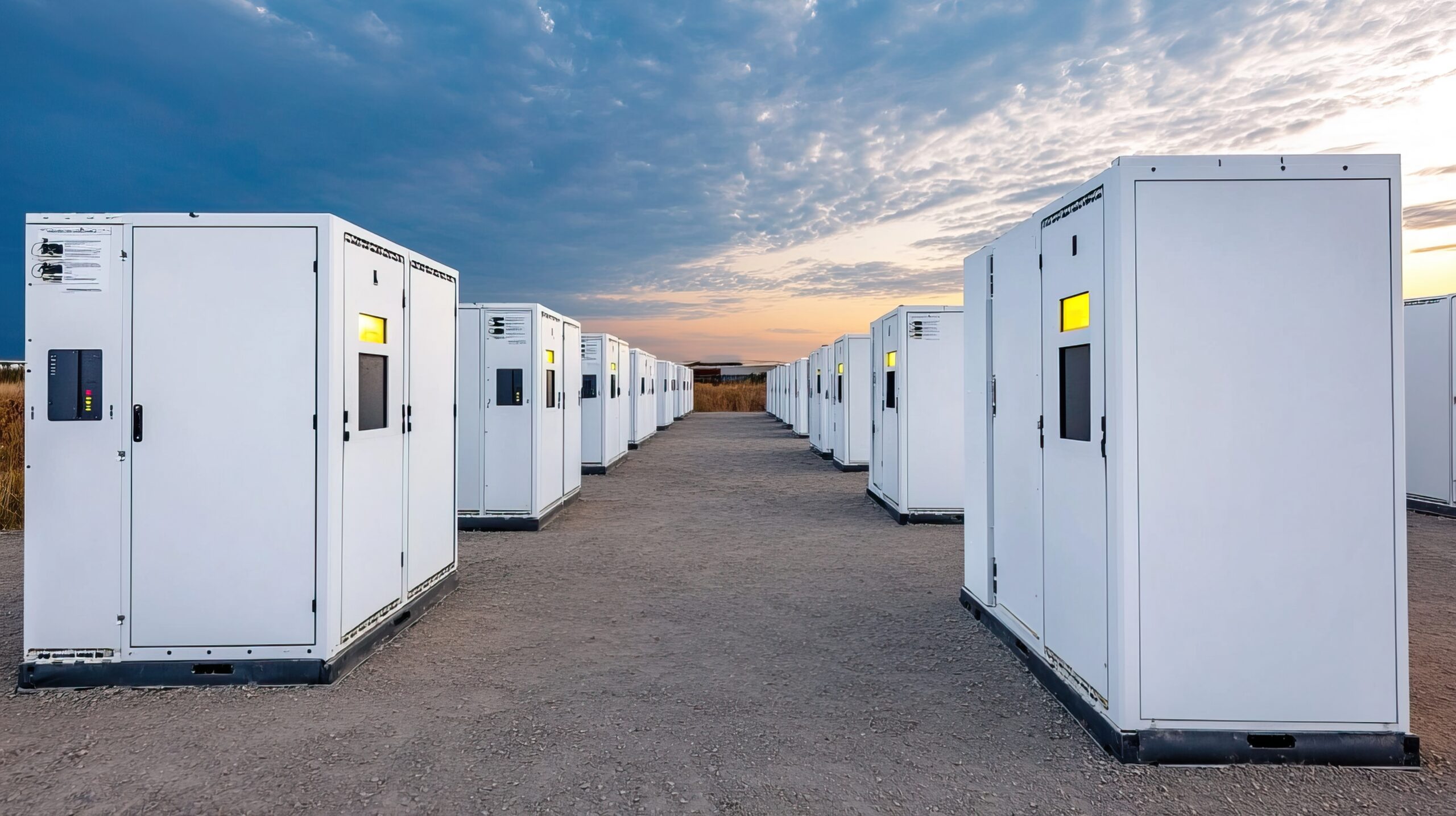
Drax is pleased to announce that it has signed a tolling agreement with Zenobē Coalburn Limited (“Zenobē”, an independent Battery Energy Storage Systems “BESS” developer)(1), for 200MW (800MWh) of new BESS capacity.
Highlights
- Tolling agreement for 200MW 4-hour duration BESS at Coalburn, Scotland
- No upfront capital cost – construction, maintenance and availability risk sits with Zenobē
- 15-year tolling agreement with no indexation
- Contract provides Drax with full operational control and dispatch rights
- Protected grid connection, targeting a Commercial Operation Date (COD) in 2028
- Expected returns significantly ahead of Drax’s Weighted Average Cost of Capital(2)
- Strong strategic fit
- Aligned with Drax’s FlexGen strategy, adding short duration and fast response capability
- Complements Drax’s investments in physical ownership of BESS and asset optimisation
- Closely aligned with UK energy objectives of energy security and decarbonisation
Drax Group Chief Executive Officer, Will Gardiner, said: “Flexible Generation technologies like battery storage support a secure, affordable and clean energy system for British homes and businesses. This new BESS tolling agreement, alongside our other recent tolling agreement and acquisitions of Flexitricity and three battery storage developments, shows we are building momentum in delivering a gigawatt-scale pipeline of battery storage opportunities.
“We are focused on allocating capital to growth and value creation opportunities across our FlexGen portfolio that are aligned with the UK’s energy needs, underpinned by strong cash generation and attractive returns for shareholders.”
Under the agreement Zenobē will retain responsibility for construction, maintenance and availability of the asset during the contract period. In return Drax will pay a fixed annual tolling fee over the agreed term of 15 years from the COD, in return for full operational control and dispatch rights, and retaining all revenues (excluding Capacity Market and certain other ancillary revenues).
Drax sees the agreement as an attractive opportunity to provide additional BESS capacity for the Group’s FlexGen portfolio without an up-front capital payment, alongside physical ownership of BESS assets(3) and the tolling agreement announced in January 2026(4). The agreement is subject to Zenobē taking a final investment decision on the project (expected within six months of the date of the agreement) and achieving commercial operations.
Strategic fit – aligned with UK energy needs and Drax FlexGen business
Drax is developing a GW scale pipeline of BESS opportunities comprised of (1) physical assets and (2) the capabilities to optimise owned and third-party assets with the provision of route to market, floor and tolling structures.
In October 2025, Drax signed an agreement with Apatura Limited to acquire three BESS projects, which when fully commissioned will provide capacity totalling 260MW(3). In January 2026 Drax announced the acquisition of Flexitricity, providing an optimisation platform for the development of the Group’s FlexGen business, including BESS(5), and a tolling agreement for 250MW with Fidra(4).
Taken together, Drax now has agreements in place for 710MW (c.1.8GWh) of tolling contracts and physical assets, in addition to a pipeline of additional opportunities.
Notes:
- Zenobē | Discover Zenobē
- The cash flow that Drax expects to generate over the life of the contract when compared to the present value of the annual toll payments is expected to deliver a return significantly above Drax’s WACC.
- Acquisition of 260MW 2-hour BESS portfolio – 07:00:11 30 Oct 2025 – DRX News article | London Stock Exchange
- Tolling agreement for 250MW (500MWh) of BESS – 07:00:05 30 Jan 2026 – DRX News article | London Stock Exchange
- Acquisition of Asset Optimisation Platform – 07:00:06 21 Jan 2026 – DRX News article | London Stock Exchange
Enquiries:
Drax Investor Relations:
Mark Strafford
[email protected]
+44 (0) 7730 763 949
Chris Simpson
[email protected]
+44 (0) 7923 257 815
Media:
Drax External Communications:
Chris Mostyn
[email protected]
+44 (0) 7743 963 483
Kieran Wilson
[email protected]
+44 (0) 7729 092 807
Website: www.drax.com
Forward-looking statements
This announcement may contain certain statements, expectations, statistics, projections and other information that are, or may be, forward-looking. The accuracy and completeness of all such statements, including, without limitation, statements regarding the future financial position, strategy, projected costs, plans, beliefs, and objectives for the management of future operations of Drax Group plc (“Drax”) and its subsidiaries (“the Group”), are not warranted or guaranteed. By their nature, forward-looking statements involve risk and uncertainty because they relate to events and depend on circumstances that may occur in the future. Although Drax believes that the statements, expectations, statistics and projections and other information reflected in such statements are reasonable, they reflect Drax’s current view and no assurance can be given that they will prove to be correct. Such events and statements involve risks and uncertainties. Actual results and outcomes may differ materially from those expressed or implied by those forward-looking statements.
There are a number of factors, many of which are beyond the control of the Group, which could cause actual results and developments to differ materially from those expressed or implied by such forward-looking statements. These include, but are not limited to, factors such as: projects achieving the required milestones, including delivery of required equipment, access to the requisite resources and completion of connections to enable operation within expected timeframes, future revenues being lower than expected; increasing competitive pressures in the industry; uncertainty as to future investment and support achieved in enabling the realisation of strategic aims and objectives; and/or general economic conditions or conditions affecting the relevant industry, both domestically and internationally, being less favourable than expected, including the impact of prevailing economic and political uncertainty; the impact of conflicts around the world; the impact of cyber-attacks on IT and systems infrastructure (whether operated directly by Drax or through third parties); the impact of strikes; the impact of adverse weather conditions or events such as wildfires; and changes to the regulatory and compliance environment within which the Group operates. We do not intend to publicly update or revise these projections or other forward-looking statements to reflect events or circumstances after the date hereof, and we do not assume any responsibility for doing so.
END