




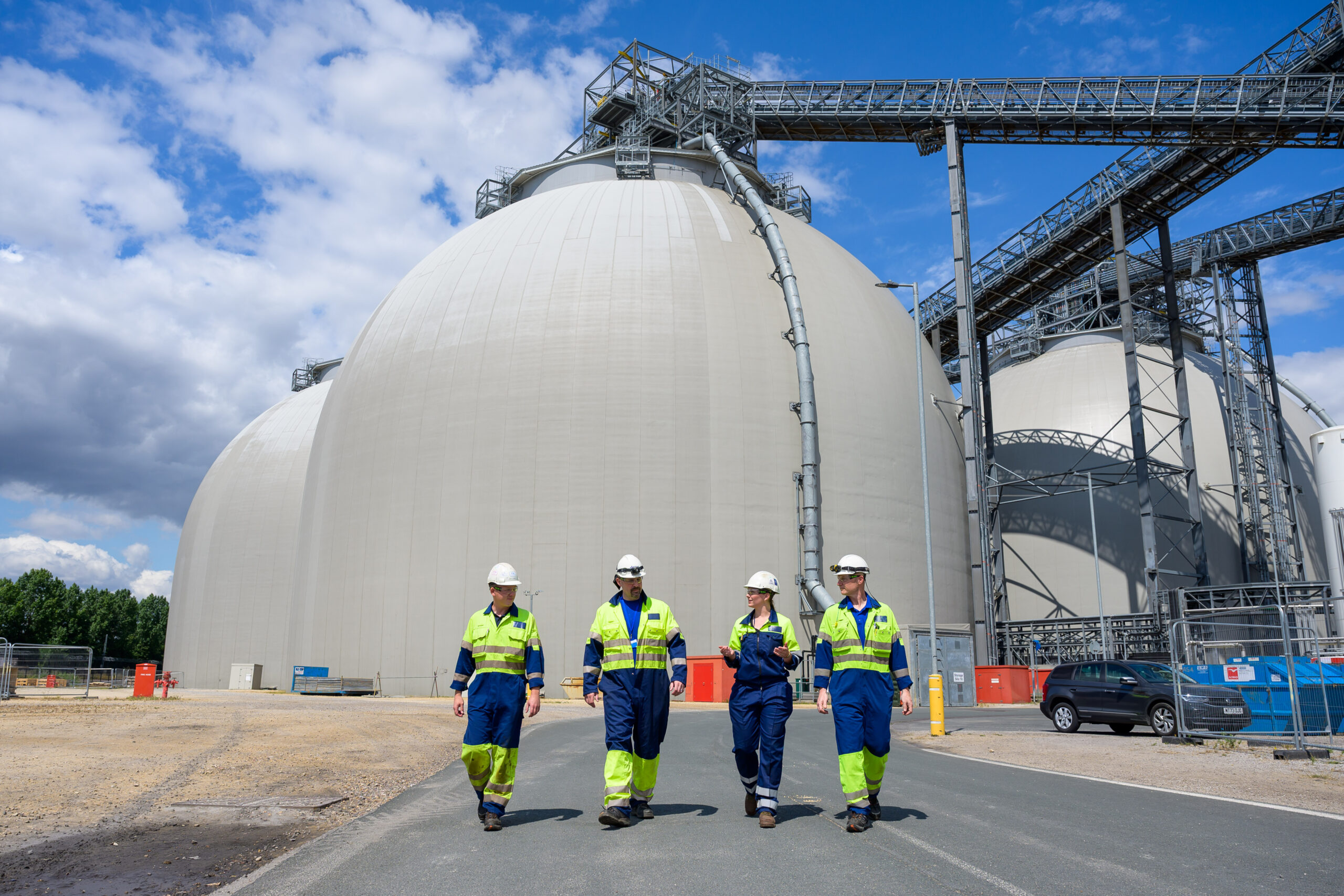
Tag: Drax Power Station

Trading Update – Strong performance and options to invest

RNS Number: 0978L
Drax Group plc
(“Drax” or the “Group”; Symbol:DRX)

Highlights

  • Strong performance – FlexGen(1), Pellet Production and Biomass Generation
  • Full year 2025 expectations for Adj. EBITDA(2) around the top end of consensus estimates(3)

Adj. EBITDA and free cash flow targets from existing business

  • Continuing to target post 2027 Adj. EBITDA of £600-700 million pa(4)
  • Targeting £3 billion of free cash flow(5) from the existing business (2025 to 2031), supporting:
    • >£1 billion returns to shareholders
    • Up to c.£2 billion for options to invest in growth

Options to invest in growth – energy security, data centres and flexible, renewable energy

  • FlexGen – flexible, renewable energy, including GW scale pipeline of BESS(6) opportunities
  • Drax Power Station site – development of options to utilise 4GW of capacity and grid access
    • Planning application in development for potential option for c.100MW data centre
    • Ambition to grow to >1GW data centre post 2031
    • Potential to further develop system support capabilities and FlexGen

Drax Group CEO, Will Gardiner said:

“It is vital that the UK maintains its energy security and delivers affordable routes to decarbonisation into the 2030s and beyond. Drax stands ready to invest in and grow our portfolio to deliver the renewable and flexible power the country needs while also supporting economic growth in the communities where we operate.

“By 2050, demand for power is expected to double, while secure gas generation reduces and intermittent renewable generation increases, meaning more dispatchable and reliable generation will be required to help keep the lights on when the wind isn’t blowing and the sun isn’t shining.

“Aligned to the UK’s future energy needs and underpinned by a strong balance sheet, good cash generation, and a disciplined approach to capital allocation, we are working to maximise the value of our existing portfolio, while driving growth over the short, medium and long term.

“Our year to date operational and financial performance has been strong, and we are focused on delivering c.£3 billion of free cash flow between 2025 and 2031, which can support investment in energy security, data centres and flexible, renewable energy underpinning long-term value creation and returns to shareholders.”

Full year expectations

Reflecting a strong performance across the Group in the second half of 2025, Drax now expects 2025 full year Adj. EBITDA to be around the top end of consensus estimates(3). Full year expectations remain subject to continued good operational performance.

Generation contracted power sales

As at 9 December 2025, Drax had c.£2.3 billion of contracted forward power sales between 2025 and Q1 2027 on its Renewables Obligation (RO) biomass, pumped storage and hydro generation assets. RO generation is fully hedged for 2025 and 2026, with over £1 billion of associated ROCs.

Contracted power sales as at 9 December 2025202520262027Total
Net RO, hydro and gas (TWh)(7)10.710.92.223.7
Average achieved £ per MWh(8)117.176.779.495.1
Contract for Difference (CfD) (TWh)4.81.8-6.5

Capital returns

In October 2025, the Group completed a £300 million share buyback programme which had commenced in August 2024. The Group subsequently began a £450 million share buyback programme (first announced in July 2025), with an initial £75 million tranche. In aggregate, during 2025, up to 9 December 2025, the share buyback programmes have purchased c.33 million shares for c.£216 million. The total number of voting rights in Drax Group, excluding treasury shares, as at 9 December 2025 was c.341 million. In October 2025 an interim dividend of 11.6 pence per share was paid, totalling c.£40 million.

Outlook

Adj. EBITDA and free cash flow targets from existing business

The Group is continuing to target post 2027 Adj. EBITDA of £600-700 million pa before development expenditure. Delivery of this target is underpinned by disciplined cost management and an operating model adapted to reflect the structure of the recently signed low-carbon, dispatchable CfD agreement with the Low Carbon Contracts Company (a UK Government body) for Drax Power Station, combined with a high-performance culture.

Reflecting growing UK power demand, combined with an increased system reliance on intermittent and inflexible generation, Drax expects to grow its FlexGen business to comprise a greater proportion of total Adj. EBITDA over time.

Open Cycle Gas Turbines (OCGTs) will be a key component of the FlexGen portfolio. The flexibility of these grid balancing assets can enable the increased use of intermittent renewables across the UK system, supporting energy security and a reduction in net carbon emissions. Reflecting these factors, Drax now expects to retain these assets as a part of its FlexGen portfolio.

Taking strong cash flows from the current business (2025-2026) together with targeted Adj. EBITDA (2027-2031), plus working capital, less maintenance capex, interest and tax, Drax is targeting free cash flow of c.£3 billion (2025-2031)(5).

The Group’s capital allocation policy remains unchanged. Drax expects to initially allocate >£1 billion of free cash flow to shareholder returns (2025-2031). This is inclusive of the ongoing £450 million three-year share buyback programme and the continuation of its long-standing policy to pay a sustainable and growing dividend, through which the dividend per share has grown on average by 11% pa since 2017.

Drax expects to allocate up to c.£2 billion to incremental investment, primarily in the flexible and renewable energy the UK needs, as well as opportunities to maximise value from the Drax Power Station site.

Returns to shareholders and investment for growth follow a capital ranking process which aims to maximise risk adjusted returns to shareholders.

Options to invest in growth – FlexGen – flexible, renewable energy

The UK National Energy System Operator’s Future Energy Scenarios indicate a doubling of power demand by 2050, via electrification and new sources of demand, including data centres. At the same time, the continued decarbonisation of the system is leading to a greater reliance on intermittent renewables. The system is becoming cleaner but more volatile, driving a growing need for dispatchable power and system support services, creating long-term earnings opportunities for, and value from, the Group’s FlexGen assets. While the trend is clear, it is hard to forecast from year to year, being dependent on weather and associated renewable activity as much as underlying commodity prices.

This position informs the Group’s view on the value of its FlexGen portfolio and opportunities for growth which can support energy security and the continued deployment of renewables. Since acquisition of the pumped storage and hydro assets in 2018, utilisation of these assets has increased significantly, delivering a five-year payback.

Pumped Storage and Hydro

An £80 million investment to refurbish and upgrade two units at Cruachan Power Station is progressing, with an initial planned outage programme through 2025. The project, which is underpinned by 15-year Capacity Market agreements worth over £220 million (c.£15 million Adj. EBITDA pa), will add 40MW of additional capacity by 2027 and improve unit operations. An additional planned outage programme associated with a transformer upgrade is expected to complete shortly.

OCGTs

Drax expects to take commercial control of the first of the three OCGTs (Hirwaun Power) in Q1 2026. The unit is now commissioning and receiving capacity market payments. The second and third sites are expected to commence commissioning in 2026.This is later than originally planned, primarily due to delays in grid connection by the relevant authorities.

Inclusive of the OCGTs Drax remains committed to its validated SBTi(9) targets and continues to assess options to realise this commitment.

BESS

The Group sees BESS as an important new technology for its FlexGen portfolio, adding fast response capabilities to long duration pumped storage and OCGT assets, which could allow the portfolio to provide a wider range of system support services to the grid.

Drax is developing a GW scale pipeline of BESS opportunities comprised of (1) physical assets and (2) the capabilities to optimise third-party assets with the provision of route to market, floor and tolling structures. In this regard, Drax already provides a route to market for c.2,000 embedded third-party renewable assets with capacity of c.800MW via its Energy Solutions business.

In October 2025, Drax signed an agreement with Apatura Limited (“Apatura”) to acquire three BESS projects, which when fully commissioned will provide capacity totalling 260MW. Drax will pay a fixed amount of £157.2 million in staged payments between 2025 and 2028, reflecting construction milestones and including payments to Apatura linked to their delivery of the projects. The acquisition of the Marfleet (England) and Neilston (Scotland) projects is now complete, with the acquisition of the East Kilbride (Scotland) project expected to be finalised in 2026.

The Group is also assessing options for other renewables, which can complement its FlexGen model.

Options to invest in growth – Drax Power Station Site

The Drax Power Station site comprises over 1,000 acres and 4GW of capacity and grid access, with 2.6GW of active dispatchable generation, cooling systems, and proximity to the UK fibre network.

The Group is focused on options to maximise value from the site, which could utilise multiple generation technologies including its existing biomass generation as well as flexible, renewable energy, to continue to support energy security, while potentially meeting the power demands of a large-scale data centre and in the long-term the potential for carbon removals from BECCS(10).

Data centre

Drax is considering a range of options for the site which could utilise its existing land, grid access, active generation, cooling solutions, site security, location and skilled workforce to meet the needs of data centre developers.

Drax is preparing a planning application to support the potential option for a first phase data centre of c.100MW on land identified at Drax Power Station, using existing infrastructure and transformers previously used to support coal generation to import power directly from the grid (front-of-the-meter). This could support the operation of a data centre at Drax Power Station as soon as 2027.

In November 2025, Drax signed a CfD agreement with the UK Government to provide c.6TWh of biomass generation pa between April 2027 and March 2031 – equivalent to c.30% of baseload output – with a strike price of £109.90/MWh (2012 real). In addition to the option to produce additional merchant generation above the cap and for system support and ancillary services, the agreement includes a mechanism for Drax to request up to 500MW to power a data centre during this period. This is subject to agreement with the UK Government, taking into account a number of factors, including value for money for consumers, energy security, and sustainability.

In the long term Drax is assessing options for over 1GW of data centre capacity, which is expected to utilise existing generation capabilities at Drax Power Station to provide a distributed (behind-the-meter) energy solution with around-the-clock renewable power directly to a data centre under a long-term Power Purchase Agreement, subject to necessary consents.

Any decision to develop data centres at Drax Power Station will require a full assessment of the capital cost and investment case as well as establishment of the commercial and development structures, including joint ventures.

Pellet Production

In the medium term, the Group’s US business is well underpinned by sales into the UK. The Group’s Canadian business, which primarily sells pellets into Asia, is expected to be more challenged, which has contributed to the decision to close Drax’s pellet plant in Williams Lake. Against this backdrop the Group does not currently expect to invest in additional capacity in the short to medium term, including the paused Longview project.

In the long term, Drax remains positive on biomass’ role in industrial decarbonisation and carbon removals via its Elimini business. Drax is continuing to assess options for own-use and third-party sales, from existing and new markets, including Sustainable Aviation Fuel, which could represent a major market opportunity from 2030 onwards.

Other matters

Drax will report its full year results on Thursday 26 February 2026.

Notes:

  1. Flexible Generation (FlexGen) is currently comprised of the Group’s pumped storage and hydro assets, three OCGT plants which are expected to enter commercial service in 2026 and an Energy Solutions business which provides renewable energy and services to I&C customers as well as a route to market for small renewable assets.
  2. Earnings before interest, tax, depreciation, amortisation, excluding the impact of exceptional items and certain remeasurements. Adj. EBITDA includes the Electricity Generator Levy (EGL).
  3. As of 4 December 2025, analyst consensus for 2025 Adj. EBITDA was £902 million, with a range of £892 – £909 million. The details of this consensus are displayed on the Group’s website.
    Consensus – Drax Global
  4. Excludes investment opportunities including development expenditure in Elimini, Innovation, Capital Projects and Other.
  5. Free cash flow pre-dividend, including targets for post 2027 Adj. EBITDA, c.£0.5 billion working capital inflow from end of RO scheme, maintenance capex, interest, taxes and EGL.
  6. Battery Energy Storage System.
  7. Includes <0.1TWh of structured power sales in 2026 and 2027 (forward gas sales as a proxy for forward power), transacted for the purpose of accessing additional liquidity for forward sales from RO units and highly correlated to forward power prices.
  8. Presented net of cost of closing out gas positions at maturity and replacing with forward power sales.
  9. Science Based Targets Initiative.
  10. Bioenergy with Carbon Capture and Storage.

Enquiries:

Drax Investor Relations:
Mark Strafford
[email protected]
+44 (0) 7730 763 949

Chris Simpson
[email protected]
+44 (0) 7923 257 815


Media:

Drax External Communications:
Chris Mostyn
[email protected]
+44 (0) 7743 963 483

Andy Low
[email protected]
+44 (0) 7841 068 415

Website: www.Drax.com

Forward Looking Statements

This announcement may contain certain statements, expectations, statistics, projections, and other information that are, or may be, forward looking. The accuracy and completeness of all such statements, including, without limitation, statements regarding the future financial position, strategy, projected costs, plans, beliefs, and objectives for the management of future operations of Drax Group plc (“Drax”) and its subsidiaries (the “Group”), are not warranted or guaranteed. By their nature, forward-looking statements involve risk and uncertainty because they relate to events and depend on circumstances that may occur in the future. Although Drax believes that the statements, expectations, statistics and projections and other information reflected in such statements are reasonable, they reflect Drax’s current view and no assurance can be given that they will prove to be correct. Such events and statements involve risks and uncertainties. Actual results and outcomes may differ materially from those expressed or implied by those forward-looking statements. There are a number of factors, many of which are beyond the control of the Group, which could cause actual results and developments to differ materially from those expressed or implied by such forward-looking statements. These include, but are not limited to, factors such as: future revenues being lower than expected; increasing competitive pressures in the industry; uncertainty as to future investment and support achieved in enabling the realisation of strategic aims and objectives; and/or general economic conditions or conditions affecting the relevant industry, both domestically and internationally, being less favourable than expected, including the impact of prevailing economic and political uncertainty, the impact of conflict including those in the Middle East and Ukraine, the impact of cyber-attacks on IT and systems infrastructure (whether operated directly by Drax or through third parties), the impact of strikes, the impact of adverse weather conditions or events such as wildfires, changes to the regulatory and compliance environment within which the Group operates. Drax do not intend to publicly update or revise these projections or other forward-looking statements to reflect events or circumstances after the date hereof, and we do not assume any responsibility for doing so.

END
 

Community voices – Selby, North Yorkshire

At Drax, we believe the energy transition can and should benefit everyone. As part of our People Positive pillar, laid out in our Sustainability Framework, we’re seeking to make tangible improvements to the lives and livelihoods of the communities we operate in. This goes beyond providing jobs at Drax sites — it requires social investment, collaboration, education and long-term support.

DPS is the largest power station in the UK and located near Selby in North Yorkshire. In 2024 it provided the grid with enough power for five million homes – equivalent to every home in London, or Wales and Scotland combined. We also support the wider community by investing in local projects in North Yorkshire and beyond.

For us, sustainability isn’t about words, it’s about action. Constant tireless action to benefit climate, nature and people. 

Hear more from the local community voices in Selby, North Yorkshire.

Sam Wright, Principal & Chief Executive, Heart of Yorkshire Education Group

Talks about the proximity to Drax and the supporting role it plays for Selby College.

Diana Taylor, Managing Director, Future Humber

Speaking about Drax’s focus on community, building prosperity and local skills and talent.

Ben Shingler, Innovation Research Manager, Drax

Outlines Drax’s outreach into the community and the impact this can have.

Voices from the wider community

What Drax means to the local community.

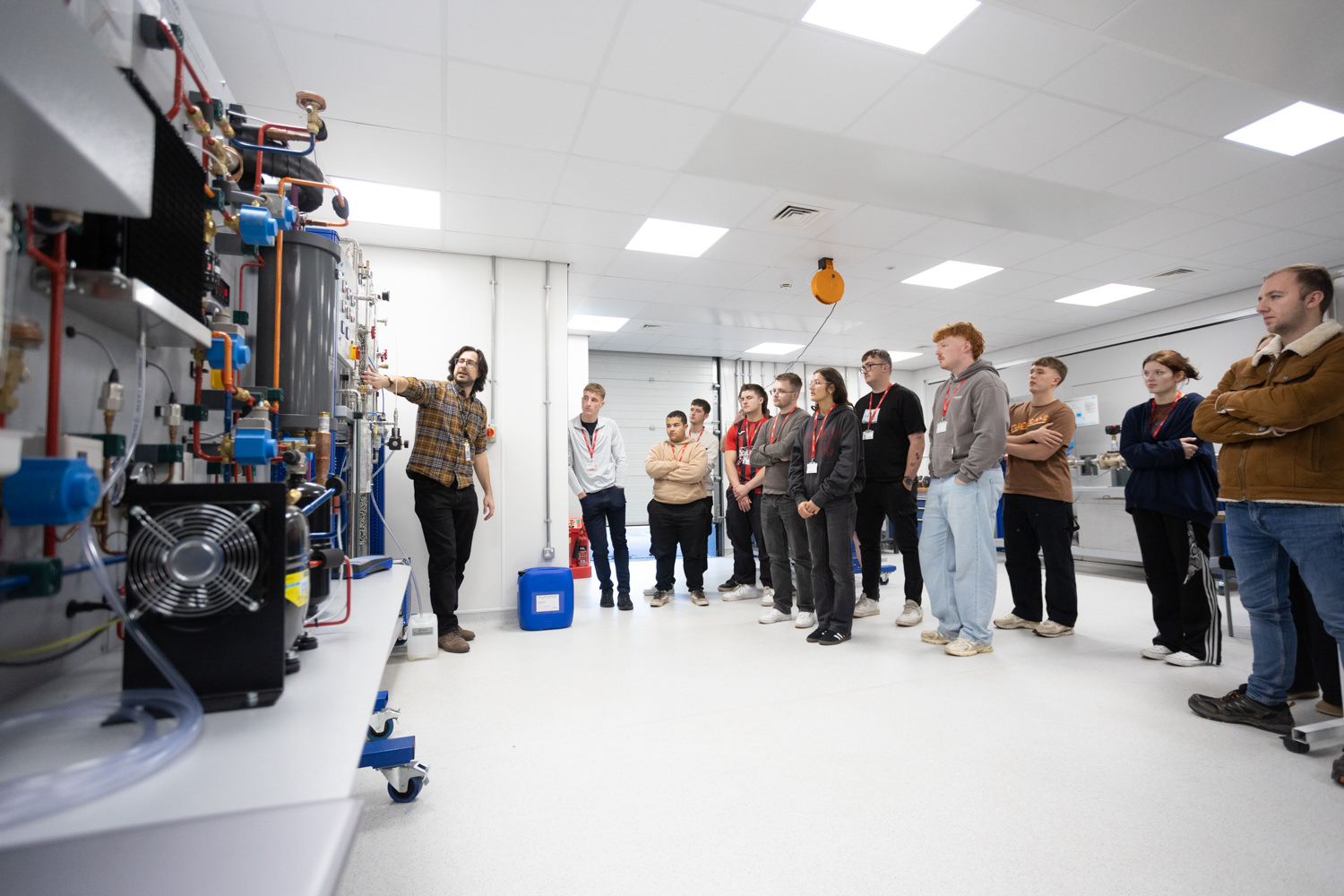
Featured image caption: Selby students take part in a carbon capture and storage bootcamp at Selby College.

Price matters – lowering the cost of the energy transition

  • Analysis by Baringa shows that Drax Power Station, operating under a new low-carbon dispatchable CfD, will lower the costs of the UK clean energy transition between 2027 and 2031 by £1.6 to 3.1bn, compared with a scenario without Drax.
  • When there isn’t enough electricity from weather dependent renewables to meet demand, Drax will step in to increase generation.
  • This brings down the amount of costly ‘standby’ capacity the Government needs to buy on the capacity market to avoid shortages
  • It also makes the UK less reliant on gas and imports via interconnectors, reducing the upwards influence they have on the wholesale cost of energy.
  • By displacing gas, Drax will reduce emissions from the electricity sector by approximately 4 MtCO2 between 2027 and 2031 – equivalent to taking 1.5 million diesel or petrol cars off the road.   

Over the next six years, the UK will increasingly rely on electricity generated by intermittent renewables and, by 2030, wind and solar will provide the majority of our electricity.

Drax Power Station will play an essential supporting role, stepping up generation when windless, gloomy weather causes wind and solar output to drop, and stepping down again to balance the grid when the weather changes.

As a clean energy source, its flexibility to do this is rare. Nuclear, for instance, provides a steady flow of clean electricity, but it can’t be turned up and down in the same way Drax’s biomass generation units can.

The Government has designed a new low carbon dispatchable CfD to support Drax’s flexible generation between 2027 and 2031.

Analysis by Baringa shows that this lowers the costs of the clean energy transition between 2027 and 2031 by between £1.6 – 3.1bn. There are two major factors in this: lower capacity market costs and Drax’s impact on the wholesale costs of electricity. These are explained in more detail below.

Reduced capacity market payments

The capacity market is colloquially referred to as the UK’s black out prevention system. It works by paying some energy generators to have extra ‘standby’ capacity available, which can then be drawn on when there is a shortage of electricity.

Prices in the capacity market vary from year to year and are affected by the amount of existing guaranteed capacity in the market – the more that there is, the less that needs to be procured in the capacity market, and the lower the price.

Drax Power Station provides 2.6GW of capacity. That’s more than any other single source in the UK and more than double the capacity of the average gas power station. It’s also more than the combined capacity of the UK’s two largest operational nuclear power stations – Heysham 2 and Torness (2.4 GW). *

Having it on the system brings down prices in the capacity market as the Government needs to purchase less capacity. Baringa estimate that this saves the UK between £640m and £1bn from 2027 to 2031.

Reduced wholesale energy cost

Electricity generated at Drax Power Station will make the UK less reliant on gas and interconnector imports. Both are typically expensive, particularly in the winter months when high demand in the UK and Europe, as well as Asia, pushes up prices.

For instance, when the UK was hit with a period of cold, gloomy windless weather in early January, demand increased as supply from wind and solar plummeted and the UK called on additional gas and imports to fill the gap. Power prices briefly surged to £2,900/MWh (40 times their average) as a result.

Research by Baringa estimates that Drax Power Station will reduce gas generation by around 4.3% and imports by almost 4.9%. This brings down the wholesale electricity price, saving £1.8bn compared to a counterfactual scenario without Drax, and potentially more if the price of gas is higher than anticipated.

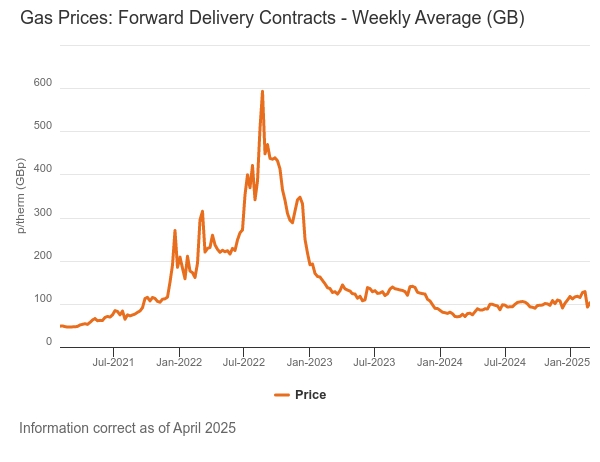
Drax Power Station also reduces the UK’s exposure to ongoing price volatility in these markets, which influences the wholesale prices of energy in the UK on an ongoing basis. For example, the price of gas shot up by 130% when Russia invaded Ukraine in 2022 and, as the graph below shows, it continues to fluctuate.

Displacing gas reduces fossil fuel use and cuts carbon

Displacing gas not only has a price benefit, it lowers fossil fuel use. In the case of the low-carbon, dispatchable CfD with Drax, reducing emissions from the energy sector by 1 million tonnes CO2e per year (4 MtCO2e over the course of the four-year term). This equates to c.5% of total power sector emissions and is equivalent to taking 1.5 million diesel or petrol cars off the road.

Overall, as the UK moves to a clean energy system, Drax makes sense for consumers and the climate. Beyond 2030 there is also the potential to add carbon capture and storage technology to Drax Power Station, converting it to BECCS. This could create the world’s largest carbon removal facility; saving the UK £15bn on its path to net zero and helping position us at the leading edge of an exciting new technology area that will be critical to meeting global climate targets.

Report: ‘Value for money assessment of the low carbon dispatchable CfD for Drax Power Station’, Baringa (2025) can be read in full here


The UK must not squander its energy legacy

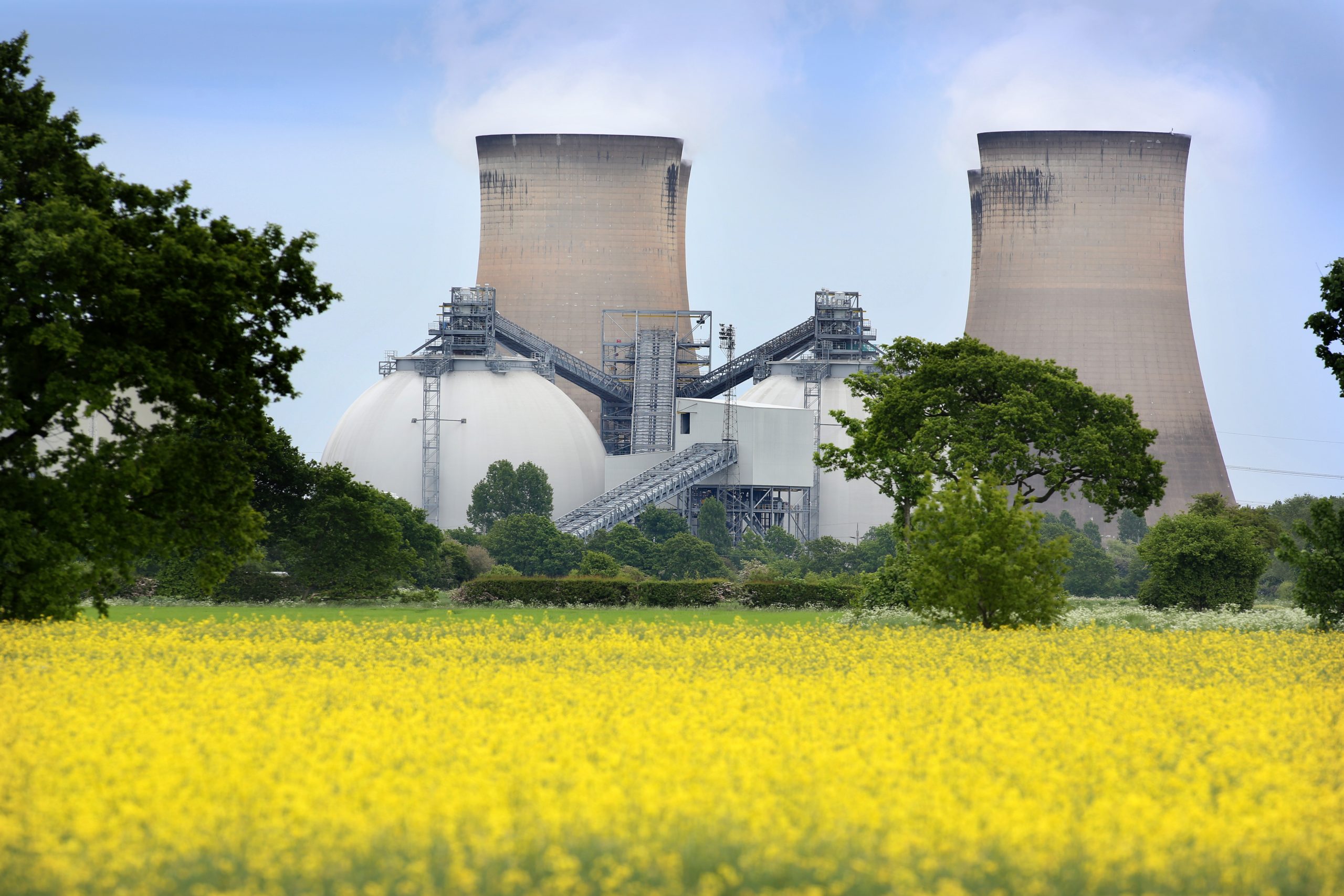
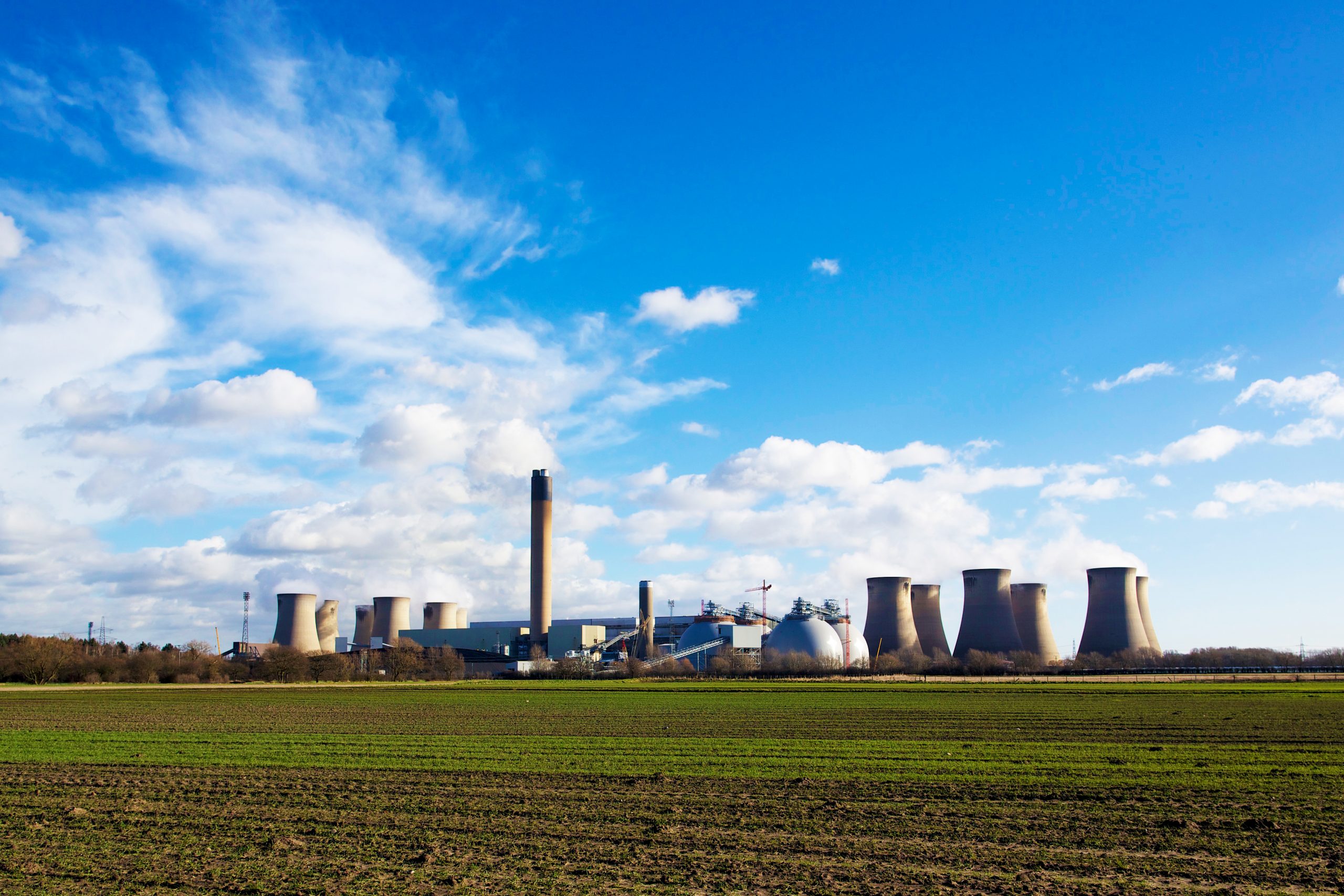
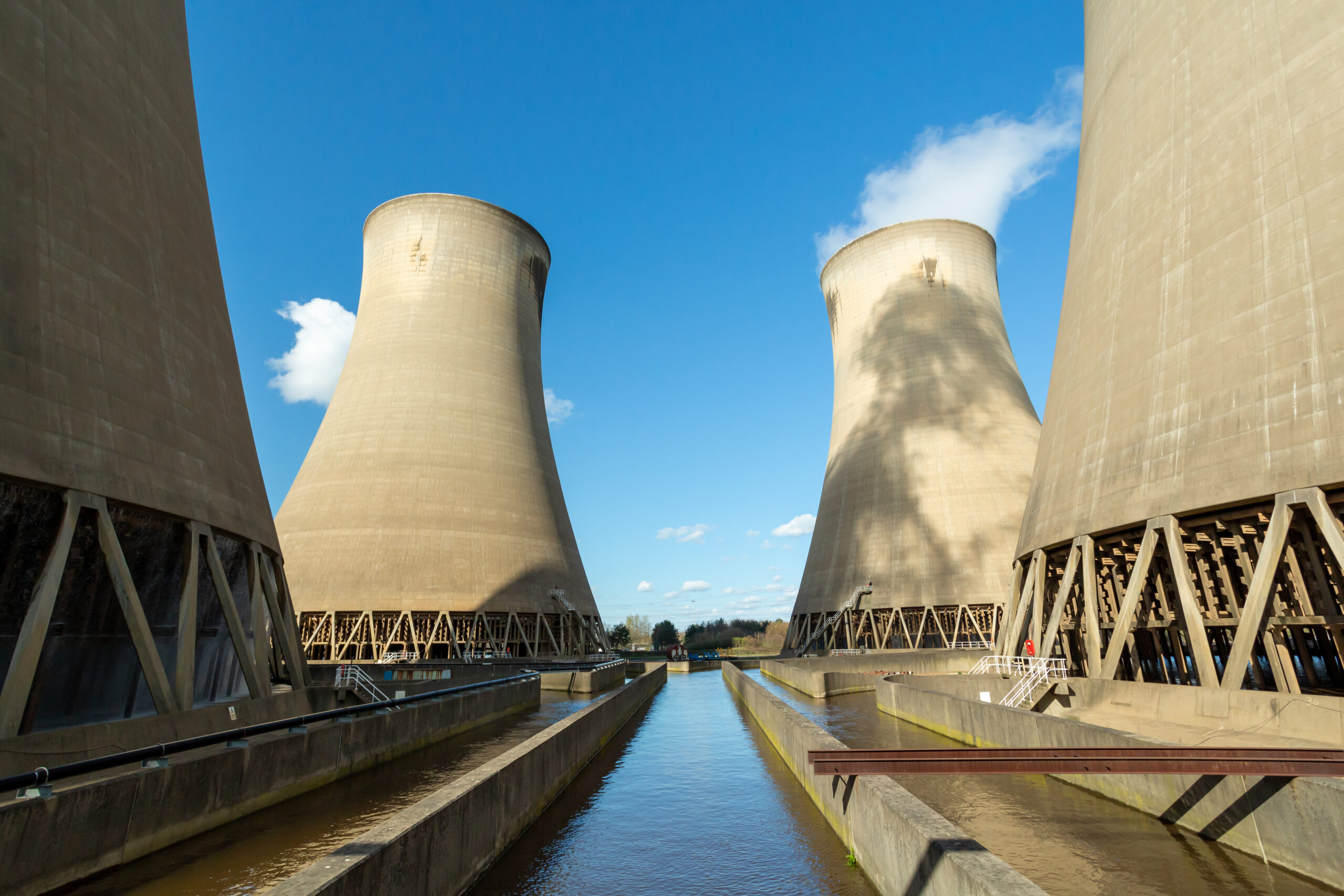
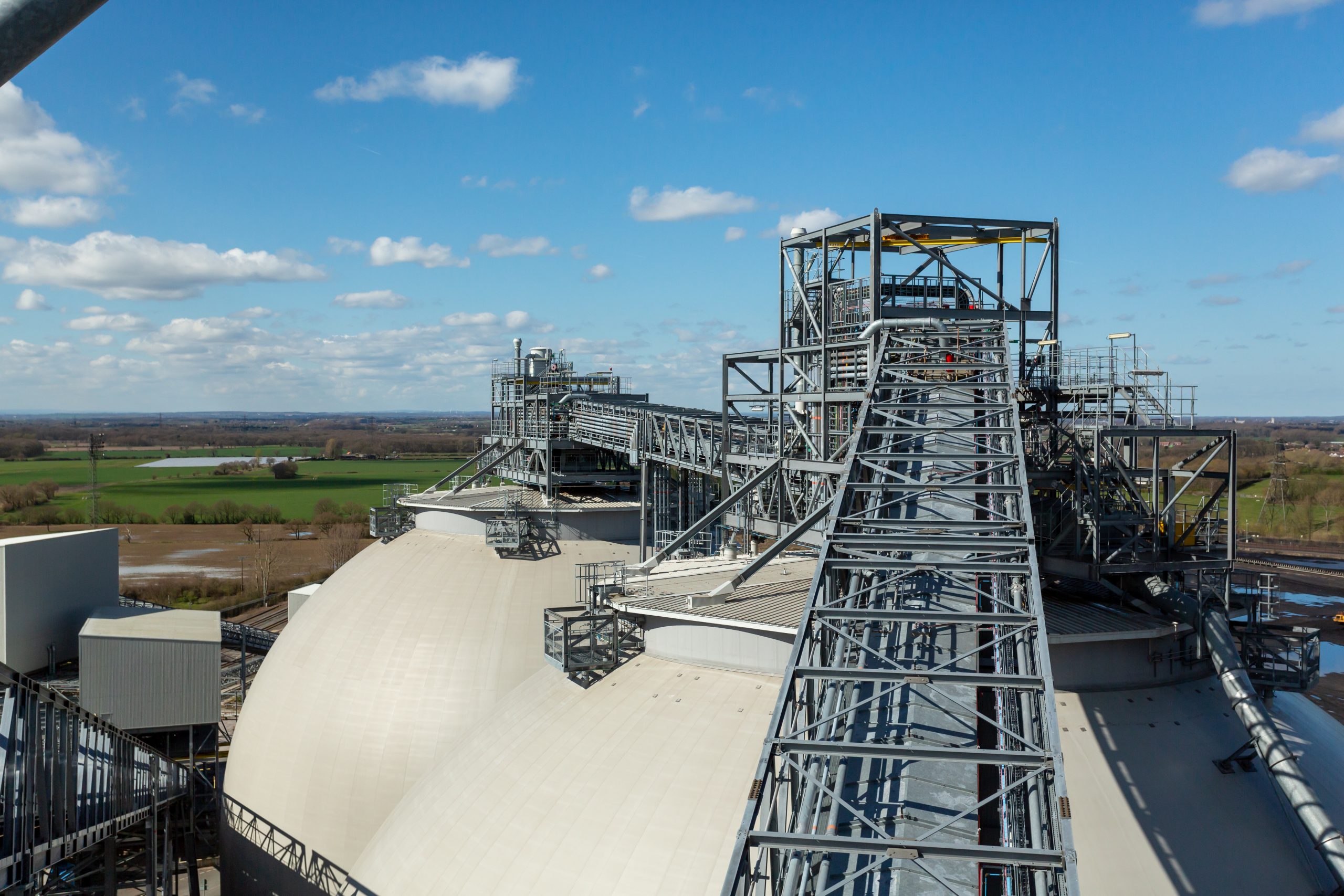
Biomass storage domes and water cooling towers at Drax Power Station in North Yorkshire

This article appeared in the Yorkshire Post on  24 October 2024

Many of the original climate change heroes live and work here in Yorkshire and it is these men and women who have worked so hard to keep the lights on whilst also ensuring that Britain became the first major economy to halve its emissions.

However, whilst this may sound like an encouraging accolade, the new Government has inherited a challenging situation where Britain is now lagging behind on delivering its targets for generating renewable energy and stopping climate change.

The UK’s carbon budgets are a legacy that the Conservative Party should be proud of and the legally binding targets that the last Government committed to form the basis of a set of world leading pathways that, if delivered, will make a meaningful contribution to slowing decarbonisation and ultimately improve everyone’s quality of life.

Critically, they also underpin long-term energy forecasts which demonstrate that global electricity usage is expected to more than double by 2050.

Both Government and industry will have to work closely together to ensure that billions of pounds of investment is made into the UK in order to enable the delivery of the renewable energy infrastructure required to power this increase in demand.
This is most true here in Yorkshire and the Humber, where due to the legacy of our fossil fuel industries, we have the biggest decarbonisation opportunity of any region.

The decisions businesses are making drive economic growth, support thousands of high-quality jobs and signal that the nation is also open to foreign investment.

In Government, the Conservative Party understood the value of this long-term perspective but in opposition they currently seem more focused on short term political calculations that put them in danger of spoiling their legacy.

Last week the former Energy Secretary, Claire Coutinho, set alight the Conservative Party’s proud record of introducing carbon budgets and rowed back on her work to put the policies in place to meet them when she was Secretary of State.

She singled out Yorkshire’s Drax Power Station as being surplus to the country’s requirements, despite it powering 4 million homes and providing 4% of the country’s total power and 8% of its renewable electricity. Crucially, she neglected to say what could replace this significant amount of renewable and reliable generation capacity.

Everyone who works at Drax Power Station is proud of our 50-year history, the role we play today in delivering dispatchable, renewable power to the country when it needs it, not just when the wind is blowing and the sun is shining, and the ongoing contribution it can make to tackling climate change.

The transformation of the site from the country’s largest coal-fired power station into the single biggest source of renewable power, saw its carbon emissions slashed by 99% and in turn made a significant contribution to the UK meeting its current climate targets.

And now we want to go even further, by installing the game changing carbon removals technology, bioenergy with carbon capture and storage (BECCS) at the site.

BECCS at Drax will make it significantly easier for the country to meet its short and long-term climate targets, deliver the new Government’s 2030 clean electricity grid and, critically, our binding carbon budgets.

As the National Energy System Operator and Government work at pace to set out and implement their plans for the sector, we are ready to engage positively to play our part in a solution that delivers the essential objectives of security of supply, grid stability and decarbonisation.

The UK needs a consistent and assured energy strategy that keeps the lights on, delivers the decarbonisation agenda that society needs and wants, and stimulates economic growth and prosperity.

A statement from Will Gardiner, CEO of Drax Group

“The Conservative Party’s decision is reckless and irresponsible. It is deeply disappointing that they now care more about political point scoring than the country’s ongoing energy security and ability to meet net zero.

“In Government, the party acknowledged the key role Drax Power Station, the country’s largest source of renewable power, plays in keeping the lights on for millions of homes and businesses when the wind doesn’t blow and the sun doesn’t shine.

“As Secretary of State for DESNZ, Claire Coutinho’s name is on the planning approval for Drax’s plans for BECCS at the Selby site. The decision letter clearly stated that the project will support the transition to net zero by 2050.

“Her comments will upset Drax Power Station colleagues who work tirelessly to power the UK. It will also lead to concerns across our country-wide supply chain and among other UK based biomass generators.

“Our priority is working in partnership with the Government who is focused on safeguarding the UK’s energy security and delivering net zero.”


[Carbon Capture Magazine article] Spiking Energy Demand

This story first appeared in Carbon Capture Magazine.

By Raj Swaminathan, Senior Vice President at Drax.

While there’s little debate that the greenhouse gas emissions that sit at the heart of our planet’s unprecedented warming come from fossil fuel consumption and other human activities, clawing back these carbon outputs is a multi-faceted issue. In addition to efforts to transition to renewable power sources like wind, solar, and biomass, which remain essential to mitigating this crisis, leading scientists agree that reducing emissions is not sufficient; we must go further and faster with carbon removals.

It’s estimated that we’ll need to capture and store as much as 9.5 billion metric tons of CO2 every year by 2050 to reverse legacy emissions enough to achieve international climate targets, according to the IPCC. Today, carbon removal facilities only capture a fraction of the emissions generated across the planet, and we urgently need a spectrum of high-quality solutions to scale our ability to remove carbon from the atmosphere.

At the same time, spiking energy demand – driven largely by the growing needs of data centers, particularly those underpinning artificial intelligence (AI) and blockchain technology, as well as new industrial and manufacturing facilities – also means we need to increase generation capacity rapidly to avoid an energy security crisis. This becomes more difficult to achieve through intermittent sources like wind and solar alone, which can’t be turned up and down when the grid is strained, opening an opportunity for solutions that can provide renewable, baseload power while permanently removing carbon from the atmosphere to fill this vital need.

Bioenergy with CCS – a critical technology for decarbonization

Bioenergy with carbon capture and storage (BECCS) is a carbon removal technology that uses sustainably sourced biomass to generate renewable energy while permanently sequestering the carbon underground. Because BECCS is one of the only renewable sources that can generate baseload power around the clock, seven days a week, it can serve as the backbone of renewable power grids for when the sun isn’t shining, or the wind isn’t blowing – a role fossil fuels often fill today.

At the same time, BECCS captures post-combustion carbon at the stack and pipelines it into geologic storage, permanently securing it underground. These high-quality carbon removals are more straightforward to measure in comparison with other solutions like nature-based removals, making it much simpler to quantify the overall impact achieved.

Compared to other carbon capture technologies, BECCS also has more diversified revenue streams – including renewable power generation, government incentives for carbon storage, and the sale of carbon dioxide removals (CDR) credits to offset emissions for other companies and industries. Because of this diversification, BECCS not only provides a clearer path to profitability but also offers a high-quality CDR at a much lower price point than alternatives like direct air capture (DAC). This results in a more sustainable and scalable path to adoption.

Due to these advantages, BECCS is positioned to do much of the heavy lifting regarding carbon removals, but it doesn’t replace the need for additional carbon capture and renewable energy solutions. Technologies like DAC, while costlier to operate today, will play an important role in helping to reverse legacy emissions as well; in fact, BECCS could even power DAC facilities to ensure they’re running on renewable energy. The same is true for renewable power technologies – we need far more wind and solar capacity in addition to BECCS.

Pioneering BECCS in the US and UK

Drax believes that BECCS will be integral to decarbonizing the power sector and hard-to-abate industries. To this end, Drax has launched a new independent business unit this year that is focused on becoming the global leader in large-scale carbon removals. This business unit will oversee the development and construction of Drax’s new-build BECCS plants in the US and internationally, and it will work with a coalition of strategic partners to focus on an ambitious goal of removing at least 6 Mt of CO2 per year from the atmosphere.

Previously, Drax successfully completed two BECCS pilots at Drax Power Station, the UK’s largest power station that contributes approximately 4 percent of Britain’s generation output and 11 percent of its renewables. The Drax team is now working to outfit Drax Power Station with BECCS technology that will remove an estimated 8 Mtpa of carbon while generating 10 TWh of power. This is slated to be the first carbon-negative power station in the world and is key to achieving Drax’s goal of becoming a carbon-negative company.
Drax is also pursuing an initial target in the U.S. to have two BECCS plants built and operating by the 2030s. These will be the first large-scale, biomass-fueled power stations in North America, generating an estimated total of 4 Twh of power while sequestering approximately 6 Mt of CO2 per year.

BECCS is an essential technology to help achieve global decarbonization targets. While it doesn’t replace the need for additional carbon capture and renewable power generation alternatives, its unique advantages can help reverse carbon pollution from the past while meeting the energy demands of the future.

Track-1 expansion process update

As part of the update, DESNZ set out its draft expectation to run the Track-1 extension and Track-2 processes in parallel, subject to T&S capacity and ministerial sign off. Following the designation of the Viking CCS cluster as a Track-2 cluster in July 2023, there are now two potential routes which could support the Drax Power Station BECCS project and wider CCS in the Humber region by 2030 – the East Coast Cluster and Viking CCS cluster.

DESNZ also set out an indicative timeline that shortlisted projects would commence negotiations from Autumn 2024. DESNZ will now receive feedback on its draft proposals pending further updates and the publication of final guidance in due course.

Will Gardiner, Drax CEO, said:

“The Government’s statements are a helpful step forward not just for BECCS in the UK, but for the wider fight against climate change. We can only reach net zero by investing in critical, new green technologies such as BECCS. I welcome the Government’s draft position and urge them to progress with both Track-1 expansion and Track-2 processes in parallel this winter”.

Separately, in August 2023 the UK Government published a Biomass Strategy which set out its position on the use of biomass in the UK’s plans for delivering net zero. The Biomass Strategy outlined the potential “extraordinary” role which biomass can play across the economy in power, heating and transport, including a priority role for BECCS, which is seen as critical for meeting net zero plans due to its ability to provide large-scale carbon dioxide removals. This is in addition to formal bilateral discussions between Drax and the Government in relation to a potential bridging mechanism between the end of the current renewable schemes in 2027 and the commissioning of BECCS at Drax Power Station.

Enquiries:

Drax Investor Relations:
Mark Strafford
+44 (0) 7730 763 949

Media:

Drax External Communications:
Aidan Kerr
+44 (0) 0784 909 0368

Website: www.Drax.com

END

Biomass and BECCS are essential in the UK’s journey to Net Zero

The Strategy provides an important steer on the short-, medium- and long-term use of biomass in the UK’s 2050 Net Zero target.

With the Government’s Strategy in hand, I am more certain than ever on two things.  First, that there remains a clear and powerful role for biomass and BECCS in helping the UK balance harder to abate sectors, like aviation, and reach Net Zero.

And secondly, that bioenergy with carbon capture and storage (BECCS) has a vital role to play in our global energy transition – and that Drax is well placed to deliver.

Why we should be confident

In developing the Strategy, the Government has considered several factors including: availability of biomass and the priorities for end use; impacts on air quality; the sustainability of biomass use; as well as the role of BECCS in helping to reach our long-term climate goals.

The ‘Priority Use Framework’ evaluates where biomass would be most sustainably and efficiently used across sectors, given supply constraints. This framework is an important tool, which has been developed with four key principles in mind; sustainability; air quality; the circular economy and resource efficiency; and ability to support us getting to Net Zero.

Critically, the Priority Use Framework states that:

  1. In the short-term (2020s) government will continue to facilitate sustainable biomass deployment through a range of incentives and requirements covering power, heat and transport
  2. In the medium-term (to 2035) government intends to further develop biomass use for utilities such as heat and power with a view to where possible transition to BECCS
  3. Biomass for use in BECCS should be prioritised in the long term (to 2050)

It’s very encouraging to see Government recognise the important role that biomass plays in our energy transition in both the short and medium term, as well as its prioritisation of BECCS in the long term.

Although there are various routes for deploying BECCS across different industries, the strategy further prioritises the deployment of BECCS on existing biomass generation plants with established supply chains, further supported by the development of the Power-BECCS business model for the first BECCS projects.

The Strategy is also promising as it presents an evidence-driven basis for long-term policy stability and I believe if the Government continues in this direction, it will draw investment to the UK’s bioenergy industry.

Why this is critical for the country

Biomass has already played an important role in supporting energy security while helping the UK decarbonise, displacing fossil fuels with a source of renewable, dispatchable power. Our work has also made a significant contribution to the UK economy, adding an estimated £1.8 billion to the UK GDP and supporting 17,800 jobs in 2021 alone.

And, looking to the future, BECCS presents an enormous opportunity to the UK.

Early investment in this critical technology has the potential to support energy security, and climate targets whilst creating jobs and making the UK a leader in the potentially trillion-dollar global CDR market.

This work needs to happen now – nearly all realistic pathways to limit warming to 1.5C require the carbon removal technology and renewable power BECCS offers, and expert voices at the UN’s Intergovernmental Panel on Climate Change, the UK’s Climate Change Committee, and Forum for the Future have said that carbon removals will be needed to address the climate crisis.

Today’s Strategy is a clear signal from Government that they recognise the importance of BECCS and the urgency with which we must employ it within the UK.

Why this is encouraging for Drax

Drax is an international, growing, sustainable business at the heart of global efforts to deliver Net Zero and energy security and I believe the Strategy we have seen from Government today is a clear indication of their support for the work that we do.

With BECCS, Drax has the ability to become a global leader in carbon removals technology. We are engaged in formal discussions with the UK Government about the project and, providing these are successful, we plan to invest billions in transforming Drax Power Station into the world’s largest carbon removals project. The prioritisation of BECCS within the Priority Use Framework shows the Government is aligned to this vision.

As we look forward

We welcome the Government’s Biomass Strategy and will continue to unpack what it means for our business over the coming days and weeks with a mind to our next steps.

Government must now ensure that as it progresses its consultation on biomass sustainability that that process is equally evidence-driven and ensures that science-based methods drive the policy forward. We hope to continue to work alongside Government to support these efforts.

Our formal discussions with the UK Government on BECCS and a ‘bridging mechanism’ to support the transition to BECCS have been productive, but to realise the scale of the ambition included in the Government’s Strategy, we need commitment through the delivery of a clear business model that supports BECCS.

Today’s support from Government brings us a big step closer and we look forward to continuing the work.

Will Gardiner
CEO
Drax

Read RNS here