




Archives: Press Release

Drax Power Station contributes over £350m to the economy of Yorkshire and the Humber

New research by leading consultancy, Oxford Economics, The Economic Impact of Drax Power Station in the UK, demonstrates the key role the power station plays in the economies of Selby and Ainsty, Yorkshire and the Humber and the UK.

The report, utilising data from 2021, shows that the North Yorkshire site, including its supply chain, contributed £735m to UK GDP. It also supported 7,130 jobs across the country and delivered a total contribution of £154m in taxes to the UK.

The research also found that in the constituency of Selby and Ainsty, 901 people were directly employed by the power station, a further 290 jobs were supported and it contributed £278m to local GDP.

Across Yorkshire and the Humber, the combined impact of Drax Power Station was £358m with 2,580 jobs supported.

The power station is the largest dispatchable renewable power station in the UK and across its four biomass units it can supply enough power for the equivalent of five million homes. In March this year, almost 50 years of coal generation ended at Drax Power Station.

Between October 2021 and 2022, Drax Group generated 11% of the UK’s renewable electricity. In addition, the business produced on average 19% of the UK’s renewables at times of peak demand and up to 70% on certain days.

Richard Gwilliam, Chair of the Humber Energy Board and UK BECCS Programme Director at Drax Group, said:

“This research underscores the critical role that Drax Power Station plays regionally and nationally. In Yorkshire and the Humber, our power station has created thousands of jobs and contributed hundreds of millions of pounds to its GDP while helping maintain energy security.

“We have been generating power at our North Yorkshire site for nearly 50 years and, providing we get the right support from the UK Government for our bioenergy with carbon capture and storage (BECCS) plans, we could be doing the same for another 50.”

James Bedford, Senior Economist, Oxford Economics, said:

“Our research demonstrates the significant contribution that Drax Power Station makes to the UK economy and Yorkshire and the Humber.

“In 2021, it supported a £358 million contribution to GDP in the region and over 2,500 jobs. Much of this was within the constituency of Selby and Ainsty, where it supported a £278 million contribution to GDP, equivalent to 12% of the local economy.”

BECCS is the only technology that can deliver reliable, secure and renewable power while permanently removing carbon dioxide from the atmosphere.

Providing Drax gets the right support from the UK Government, the company plans to build two BECCS units at Drax Power Station by 2030 which could remove 8Mt of CO2 from the atmosphere per year.

The development of BECCS at the Selby power station could see up to 10,000 jobs created and supported at the project’s peak, help maintain energy security and help meet the UK’s legally binding Net Zero targets.

Read the full report here: https://www.drax.com/wp-content/uploads/2023/07/Drax_UK_Power_Station_.pdf

ENDS

Notes to Editors:

Media contacts:

Andy Low
Media Manager
E: [email protected]
T: 07841 068 415

About Drax:

Drax Group’s purpose is to enable a zero carbon, lower cost energy future and in 2019 announced a world-leading ambition to be carbon negative by 2030, using bioenergy with carbon capture and storage (BECCS) technology.

Drax’s around 3,000 employees operate across three principal areas of activity – electricity generation, electricity sales to business customers and compressed wood pellet production and supply to third parties. For more information visit www.drax.com

Power generation:

Drax owns and operates a portfolio of renewable electricity generation assets in England and Scotland. The assets include the UK’s largest power station, based at Selby, North Yorkshire, which supplies five percent of the country’s electricity needs.

Having converted Drax Power Station to use sustainable biomass instead of coal it has become the UK’s biggest renewable power generator and the largest decarbonisation project in Europe. It is also where Drax is piloting the groundbreaking negative emissions technology BECCS within its CCUS (Carbon Capture Utilisation and Storage) Incubation Area.

Its pumped storage, hydro and energy from waste assets in Scotland include Cruachan Power Station – a flexible pumped storage facility within the hollowed-out mountain Ben Cruachan.

The Group also aims to build on its BECCS innovation at Drax Power Station with a target to deliver 4 million tonnes of negative CO2 emissions each year from new-build BECCS outside of the UK by 2030 and is currently developing models for North American and European markets.

Pellet production and supply:

The Group has 18 operational pellet plants and developments with nameplate production capacity of around 5 million tonnes a year.

Drax is targeting 8 million tonnes of production capacity by 2030, which will require the development of over 3 million tonnes of new biomass pellet production capacity. The pellets are produced using materials sourced from sustainably managed working forests and are supplied to third party customers in Europe and Asia for the generation of renewable power.

Drax’s pellet plants supply biomass used at its own power station in North Yorkshire, England to generate flexible, renewable power for the UK’s homes and businesses, and also to customers in Europe and Asia.

Customers: 

Drax supplies renewable electricity to UK businesses, offering a range of energy-related services including energy optimisation, as well as electric vehicle strategy and management.

To find out more go to the website www.energy.drax.com

Drax Foundation pledges £1.5m to help UK schools save energy and reduce their carbon footprint

The firm, which owns Drax Power Station near Selby, established the Drax Foundation earlier this year to provide grant funding to non-profit organisations in the regions where it operates.  

The installation of energy-efficient LED lighting initiative is currently being piloted at the following five schools local to Drax’s operations in England:  

  • Barwic Parade Community Primary School in Selby 
  • Kirk Sandall Junior School in Doncaster  
  • Selby Abbey Primary School 
  • Triangle Primary School in Sowerby Bridge 
  • Great Clacton Junior School in Clacton-on-Sea 

It is estimated that these schools will save on average £8,600 per year from reduced energy bills, which can then be reinvested back into the school and children’s education.  

The full rollout of the LED lighting and solar panel schemes and energy saving and education programme is planned for later this year, with a focus on rural communities and areas of low social mobility, particularly in and around the communities where Drax operates. Schools wishing to submit an expression of interest should contact [email protected]  

Will Gardiner, CEO Drax Group, said: “The Drax Foundation is committed to giving back to the communities where we operate, and the new initiative will provide schools with practical, tangible ways to save money and reduce their carbon footprint. It’s important that children start thinking about these issues from a young age as energy usage and its impact is set to become an increasingly relevant topic in their future.” 

Kathy Thompson, Executive Headteacher at Kirk Sandall Junior School, said: “It’s so important that businesses support their communities and this initiative by the Drax Foundation is a really great way to help us save money, especially at the moment when energy costs and prices in general are so high. It also teaches pupils about the impact we have on our environment and how we can act responsibly to save energy.” 

The Drax Foundation was launched in March this year to award  grants of up to £50,000 for established non-profit organizations. 

Organisations and initiatives that meet Drax’s funding and selection criteria are encouraged to visit www.drax.com/community to learn more about the Foundation and submit an initial expression of interest. 

ENDS 

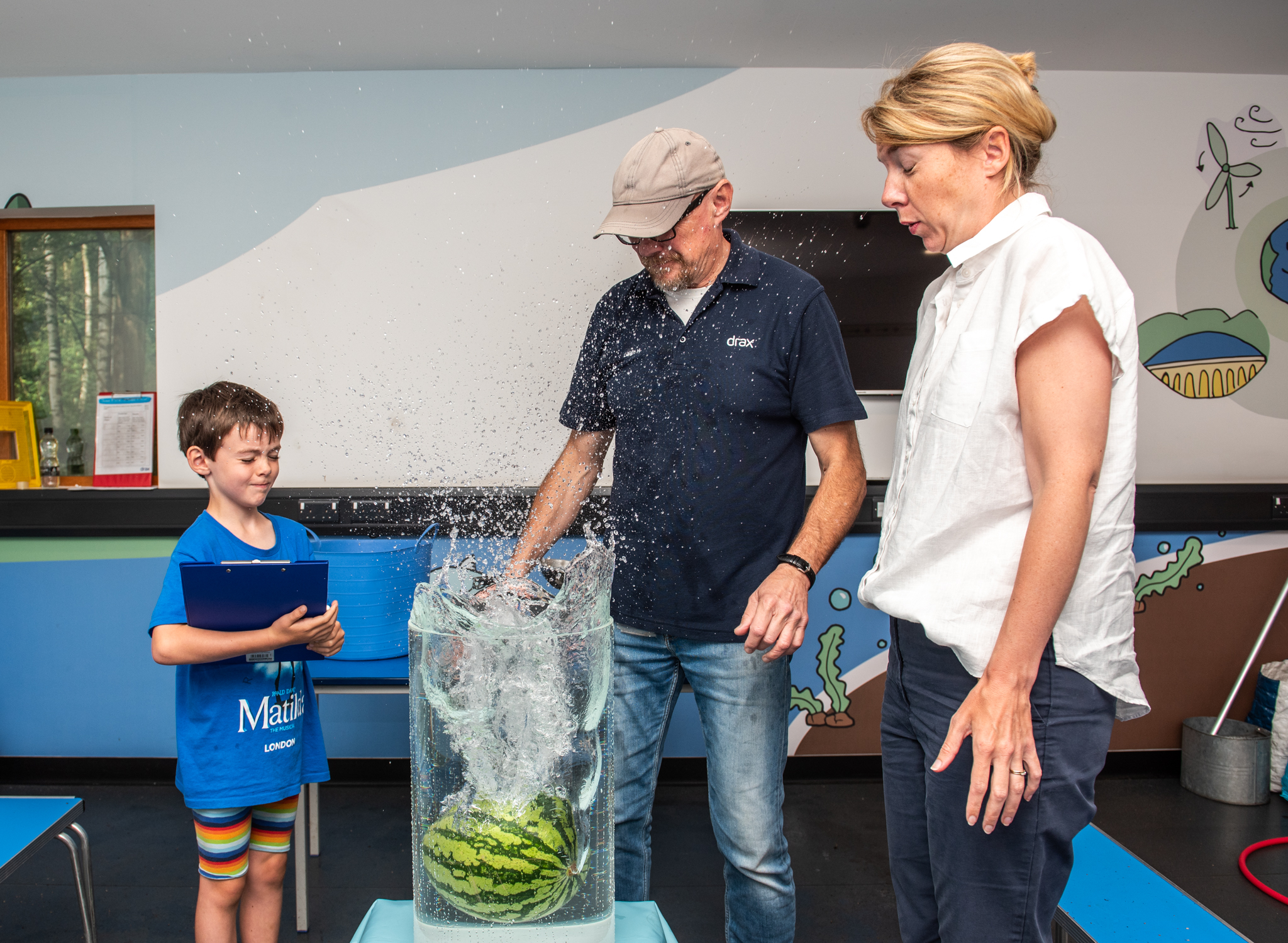
Pic caption 1: Pupils at Kirk Sandall Junior School with Drax Head of Community Shona King, Executive Headteacher Kathy Thompson and Head of School Ash Eastwood  

Pic caption 2: Pupils at Barwic Parade Community Primary School, Headteacher XX and Drax UK Community & Education Manager Jane Breach 

Media contacts: 

Andy Low
Media Manager
E: [email protected]
T: 07841 068 415

About Drax  

Drax Group’s purpose is to enable a zero carbon, lower cost energy future and in 2019 announced a world-leading ambition to be carbon negative by 2030, using bioenergy with carbon capture and storage (BECCS) technology.  

Drax’s around 3,000 employees operate across three principal areas of activity – electricity generation, electricity sales to business customers and compressed wood pellet production and supply to third parties. For more information visit www.drax.com 

Power generation:  

Drax owns and operates a portfolio of renewable electricity generation assets in England and Scotland. The assets include the UK’s largest power station, based at Selby, North Yorkshire, which supplies five percent of the country’s electricity needs.   

Having converted Drax Power Station to use sustainable biomass instead of coal it has become the UK’s biggest renewable power generator and the largest decarbonisation project in Europe. It is also where Drax is piloting the groundbreaking negative emissions technology BECCS within its CCUS (Carbon Capture Utilisation and Storage) Incubation Area.  

Its pumped storage, hydro and energy from waste assets in Scotland include Cruachan Power Station – a flexible pumped storage facility within the hollowed-out mountain Ben Cruachan.   

The Group also aims to build on its BECCS innovation at Drax Power Station with a target to deliver 4 million tonnes of negative CO2 emissions each year from new-build BECCS outside of the UK by 2030 and is currently developing models for North American and European markets. 

Pellet production and supply:

The Group has 19 operational pellet plants and developments with nameplate production capacity of around 5 million tonnes a year. 

Drax is targeting 8 million tonnes of production capacity by 2030, which will require the development of over 3 million tonnes of new biomass pellet production capacity. The pellets are produced using materials sourced from sustainably managed working forests and are supplied to third party customers in Europe and Asia for the generation of renewable power.  

Drax’s pellet plants supply biomass used at its own power station in North Yorkshire, England to generate flexible, renewable power for the UK’s homes and businesses, and also to customers in Europe and Asia. 

Customers:    

Drax supplies renewable electricity to UK businesses, offering a range of energy-related services including energy optimisation, as well as electric vehicle strategy and management.  

To find out more go to the website energy.drax.com 

To find out more information about the Drax Foundation go to the website www.drax.com/community   

Drax responds to the UK emissions trading scheme (ETS) reforms July 2023

Ross McKenzie, Drax’s Interim Group Director of Corporate Affairs, said:

“This announcement positions the UK as the potential home of one of the largest compliance markets for carbon removals in the world and we are delighted that the Government intends to include engineered Greenhouse Gas Removals (GGRs) in the UK ETS.

“The development of such a market is an important step towards deploying large-scale carbon removal technologies such as Bioenergy with Carbon Capture and Storage (BECCS). These technologies are essential in the fight against climate change as they permanently remove more carbon dioxide from the atmosphere than they emit.

“With the right support from the UK Government, Drax plans to invest billions into delivering BECCS at our power station in North Yorkshire. This would enable the plant to simultaneously remove millions of tonnes of carbon dioxide from the atmosphere whilst also strengthening UK energy security through generating reliable, renewable power when the wind isn’t blowing, or the sun is not shining.”

Drax responds to Jonathon Porritt’s ‘BECCS Done Well’ report

The report, ‘BECCS Done Well: conditions for success for bioenergy with carbon capture and storage’, presents thirty conditions for bioenergy with carbon capture and storage (BECCS) which, if met, will enable BECCS to be ‘done well’, delivering positive outcomes for climate, nature, and people.

Drax Group Chief Sustainability Officer, Alan Knight, said,

“If the world is to meet the global climate challenge, carbon removal technologies like BECCS need to be up and running at scale, as quickly as possible. However, what is arguably more important than the quantity of BECCS required is the quality of the BECCS delivered. To realise the transformational benefits BECCS could bring, we need to ensure it is implemented well – adhering to strict criteria and carefully monitored.”

“In our response to the ‘BECCS Done Well’ report, we have addressed the criteria presented by Jonathon Porritt and the High-Level Panel on how to implement BECCS in a way that delivers positive outcomes for climate, nature and people.”

The ‘BECCS Done Well’ report was prepared at the request of Drax Group CEO, Will Gardiner, who invited Jonathon Porritt, environmental campaigner, to convene a High-Level Panel to conduct an independent inquiry into BECCS. The panel, chaired by Jonathon Porritt, convened Brad Gentry of the Yale School of Environment, Stuart Haszeldine of the University of Edinburgh and Clare O’Neill acting as an independent consultant, with Forum for the Future serving as secretariat.

Jonathon Porritt, Co-Founder of Forum for the Future said,

“As members of the High-Level Panel, we’re impressed at the level of detail in the responses from Drax to the 30 Conditions we put forward in our Report in November last year. And we’re pleased that the vast majority of these responses are positive.”

“As is now beginning to be recognised, the whole area of ‘Bioenergy with Carbon Capture and Storage’ is becoming more and more material in the debate about Carbon Dioxide Removals and Negative Emissions Technologies. We believe Drax has positioned itself in the vanguard of this debate, ensuring both policy-makers and potential competitors understand fully what ‘done well’ really means.”

BECCS exists in a complex ecosystem of land use, biodiversity, social factors, economics, carbon reduction and now, carbon removal.  Each of these factors must be considered, and trade-offs carefully managed if BECCS is to play a meaningful role in achieving our climate change targets.

Drax aims to become a leader in global BECCS with the aim of removing 14 million tonnes of CO2 a year by 2030. The technology has a critical role to play in helping nations reach their decarbonisation goals, while also supplying jobs and boosting economies – but this potential is not yet being met.

Drax Group CEO, Will Gardiner, said,

“This work by Jonathon Porritt and an independent panel of experts shows that BECCS can be done well and is a prime example of the progress we can make when we engage in constructive conversations on potentially vital climate solutions.”

“Our commitment to this work underscores our ambition to be a world-leading, sustainability-driven company, at the forefront of the fight against climate change and it will inform our strict sustainability, socioeconomic and environmental standards for future global BECCS projects.”

Drax is currently accelerating progress on the development of global BECCS projects. We are in formal discussions with the UK Government to secure the right support from them to deliver BECCS at Drax Power Station, and have selected two sites in the US, with nine more under evaluation.

Our full response to “BECCS done well: conditions for success for bioenergy with carbon capture and storage is available here.

Government backs carbon capture pilot at Drax’s CCUS incubation site

The new carbon capture project, Project MONET, will test metal-organic frameworks (MOF) based Negative Emissions Technology. The project was awarded support from DESNZ through Call 2 of the Department’s CCUS Innovation 2.0 competition, which aims to accelerate the development of next generation CCUS technology.

Drax has a strong relationship with Promethean and in 2022 collaborated with the company at the North Yorkshire incubation site to test MOF-based carbon capture.

Drax’s incubation site has also previously hosted a carbon capture project by Mitsubishi Heavy Industries (MHI) and Leeds-based company C-Capture. Drax plans to use MHI’s carbon capture technology for its bioenergy with carbon capture and storage (BECCS) power plants, including its proposals to develop two BECCS units at Drax Power Station.

Jason Shipstone, Chief Innovation Officer, Drax Group, said:

“Congratulations to all at Promethean Particles and Project MONET on securing this award from DESNZ. We have a strong relationship with Promethean and we are pleased to continue to support their work at our CCUS incubation site at Drax Power Station.

“Scientific consensus is increasingly clear – the planet cannot solve the climate crisis without carbon removals. Providing we secure the right support from the UK Government, our ambition is to harness what we have learned piloting carbon removals technologies in North Yorkshire and create two BECCS units at Drax Power Station which could remove 8Mt of CO2 per annum from our atmosphere.

“We are excited by the opportunities for MOF-based carbon capture and this new project will help us better understand the performance and future applications for the technology. MOFs have the potential to be deployed to help decarbonise Drax’s supply chain and contribute to our mission of enabling a zero carbon, lower cost, energy future.”

James Stephenson, Chief Executive Officer of Promethean, said:

“We are extremely proud that project MONET has been chosen by DESNZ as one of the winners of this competition. Carbon removal is now a necessity in limiting the devastating effects of climate change. MOF-based carbon capture can help enable broader adoption of this critical technology.

“Our manufacturing technology uniquely enables the production of these exciting materials at the scale and cost necessary to make them a viable industrial solution. I would like to thank the Drax team for their continued support of our technological advancement. The incubation area is a huge help in the application development of MOF-based CCS systems.”

ENDS                                                 

Media contacts:

Andy Low
Media Manager
E: [email protected]
T: 07841 068 415

About Drax:

Drax Group’s purpose is to enable a zero carbon, lower cost energy future and in 2019 announced a world-leading ambition to be carbon negative by 2030, using bioenergy with carbon capture and storage (BECCS) technology.

Drax’s around 3,000 employees operate across three principal areas of activity – electricity generation, electricity sales to business customers and compressed wood pellet production and supply to third parties. For more information visit www.drax.com

Power generation:

Drax owns and operates a portfolio of renewable electricity generation assets in England and Scotland. The assets include the UK’s largest power station, based at Selby, North Yorkshire, which supplies five percent of the country’s electricity needs.

Having converted Drax Power Station to use sustainable biomass instead of coal it has become the UK’s biggest renewable power generator and the largest decarbonisation project in Europe. It is also where Drax is piloting the groundbreaking negative emissions technology BECCS within its CCUS (Carbon Capture Utilisation and Storage) Incubation Area.

Its pumped storage, hydro and energy from waste assets in Scotland include Cruachan Power Station – a flexible pumped storage facility within the hollowed-out mountain Ben Cruachan.

The Group also aims to build on its BECCS innovation at Drax Power Station with a target to deliver 4 million tonnes of negative CO2 emissions each year from new-build BECCS outside of the UK by 2030 and is currently developing models for North American and European markets.

Pellet production and supply:

The Group has 18 operational pellet plants and developments with nameplate production capacity of around 5 million tonnes a year.

Drax is targeting 8 million tonnes of production capacity by 2030, which will require the development of over 3 million tonnes of new biomass pellet production capacity. The pellets are produced using materials sourced from sustainably managed working forests and are supplied to third party customers in Europe and Asia for the generation of renewable power.

Drax’s pellet plants supply biomass used at its own power station in North Yorkshire, England to generate flexible, renewable power for the UK’s homes and businesses, and also to customers in Europe and Asia.

Customers: 

Drax supplies renewable electricity to UK businesses, offering a range of energy-related services including energy optimisation, as well as electric vehicle strategy and management.

To find out more go to the website www.energy.drax.com
About Promethean:

Promethean Particles is a UK-based, global pioneer, leading the industrial-scale manufacture of metal-organic frameworks (MOFs) and specialty nanomaterials. The Company is primarily focused on developing the use of MOFs in the fight against climate change, particularly for carbon capture and storage (“CCS”) applications. When compared to existing technologies, MOF-based carbon capture has the potential to deliver significant advantages; increased energy-efficiency, lower process complexity, smaller operating footprint, and an improved EHS profile. Other applications for the Company’s materials include water harvesting, gas separation and storage, green hydrogen catalysis, and high-efficiency thermal fluid additives.

Promethean has developed a range of patented continuous-flow reactors, which dramatically improve throughput and cost whilst increasing process reliability and consistency. The company operates a 1,000 tonnes per year reactor at its site in Nottingham, UK – the world’s largest continuous multi-nanomaterial manufacturing plant.

Promethean is collaborating with several different organisations to test MOFs in real-world environments and measure carbon capture effectiveness. Results from completed studies have been exciting, demonstrating that MOFs can significantly increase the efficiency and cost-effectiveness of CCS and leading to further projects. Larger-scale MOF-based CCS demonstration units are now planned on the path to full-scale implementation.

Drax welcomes CCC’s call for faster progress in delivering UK carbon removals and confirms decommissioning of coal units will continue

  • Drax welcomes Climate Change Committee report which argues for greater pace from the UK Government on delivering Net Zero targets and more progress on delivering carbon removals technology.
  • The company has also confirmed that the decommissioning of its coal units at Drax Power Station (DPS) will continue and they will not be available this winter.

Drax Group (Drax), the renewable energy business, today welcomes the Climate Change Committee’s (CCC) report, Progress in Reducing UK Emissions – 2023, and its recommendation that if Government wants to deliver on its climate targets it must deliver specific policy which supports the development of carbon removals projects in this country.

In 2022, Drax provided around 11% of the UK’s renewable energy and it plays a vital role in maintaining the country’s energy security.

Drax’s ambition is to invest billions in carbon removal projects in the UK and the US through game-changing technology – bioenergy with carbon capture and storage (BECCS).

Drax Group CEO, Will Gardiner, said:

“The CCC’s report is welcome as it is a holistic view of the scale of the challenge facing us all in reaching Net Zero, as well as acknowledging the vital role that carbon removals technologies like BECCS will play in getting us there. We support its recommendation that faster progress is needed to reach the UK’s ambitious carbon removals targets.

“With the right support from the UK Government, we plan to invest billions into delivering BECCS at our power station in Yorkshire. Our formal discussions with the UK Government on BECCS deployment and parallel discussions about a ‘bridging mechanism’ to support the transition to BECCS have been productive and we are looking forward to continuing these in the coming months.

“We also await the publication of the UK Government’s biomass strategy, which we hope will reinforce the critical role that BECCS will play in energy security and decarbonisation, as well as timelines for the deployment of initial BECCS projects in the UK.”

The company has also confirmed today that the decommissioning of its two remaining coal units at Drax Power Station will continue and that they will not be available to generate power this winter.

This confirmation follows a recent request by National Grid ESO to explore the possibility of extending coal generation at Drax Power Station but concluded that due to a combination of technical, maintenance and staffing reasons, the extension of coal over this winter was not possible.

The company first announced in April this year that after almost 50 years of coal power generation at Drax Power Station, its coal units would close.

ENDS                                                 

Media contacts:

Chris Mostyn
Head of Media Relations
E: [email protected]
T: 07548 838 896

Andy Low
Media Manager
E: [email protected]
T: 07841 068 415

About Drax:

Drax Group’s purpose is to enable a zero carbon, lower cost energy future and in 2019 announced a world-leading ambition to be carbon negative by 2030, using bioenergy with carbon capture and storage (BECCS) technology.

Drax’s around 3,000 employees operate across three principal areas of activity – electricity generation, electricity sales to business customers and compressed wood pellet production and supply to third parties. For more information visit www.drax.com

Power generation:

Drax owns and operates a portfolio of renewable electricity generation assets in England and Scotland. The assets include the UK’s largest power station, based at Selby, North Yorkshire, which supplies five percent of the country’s electricity needs.

Having converted Drax Power Station to use sustainable biomass instead of coal it has become the UK’s biggest renewable power generator and the largest decarbonisation project in Europe. It is also where Drax is piloting the groundbreaking negative emissions technology BECCS within its CCUS (Carbon Capture Utilisation and Storage) Incubation Area.

Its pumped storage, hydro and energy from waste assets in Scotland include Cruachan Power Station – a flexible pumped storage facility within the hollowed-out mountain Ben Cruachan.

The Group also aims to build on its BECCS innovation at Drax Power Station with a target to deliver 4 million tonnes of negative CO2 emissions each year from new-build BECCS outside of the UK by 2030 and is currently developing models for North American and European markets.

Pellet production and supply:
The Group has 18 operational pellet plants and developments with nameplate production capacity of around 5 million tonnes a year.

Drax is targeting 8 million tonnes of production capacity by 2030, which will require the development of over 3 million tonnes of new biomass pellet production capacity. The pellets are produced using materials sourced from sustainably managed working forests and are supplied to third party customers in Europe and Asia for the generation of renewable power.

Drax’s pellet plants supply biomass used at its own power station in North Yorkshire, England to generate flexible, renewable power for the UK’s homes and businesses, and also to customers in Europe and Asia.

Customers: 

Drax supplies renewable electricity to UK businesses, offering a range of energy-related services including energy optimisation, as well as electric vehicle strategy and management.

To find out more go to the website www.energy.drax.com


Drax Foundation donates over £320k to support STEM education and community initiatives in UK and North America

The Foundation supports education and skills development for non-profit organisations and social enterprises in the regions where it operates and runs two grant cycles a year. Today Drax has announced that £323,000 of funding has been awarded across the UK, US and Canada as part of the first round of grants since the Foundation was launched in March 2023. 

Shona King, Drax Head of Community, said: “We are passionate about giving back to the communities we operate in and earlier this year we launched the Drax Foundation as part of an exciting new chapter in how we deliver positive social impact. We are pleased to announce that our initial £323,000 grant awards will support 13 projects across the UK and North America which work to support STEM education or to enhance green spaces and biodiversity.” 

Drax Foundation is focused on funding initiatives that support education and skills development in Science Technology Engineering and Maths (STEM), as well as those that improve green spaces and enhance biodiversity within local communities. Funding is available for organisations ranging from smaller community-led projects to larger grants of £50,000 for established non-profit organizations. 

Priority is given to organisations that deliver programmes for under-served and under-represented groups, advance gender equality and support indigenous communities. 

Of the total, almost £90,000 has been split between three different organisations near to Drax Power Station in Yorkshire and the Humber;  

  • NYBEP (North Yorkshire Business and Education Partnership) who work with schools and businesses to develop STEM programmes 
  • Don Catchment Rivers Trust which offers Community-led conservation and nature-based STEM education for children 
  • Toranj Tuition, a Hull-based organisation established to stimulate social mobility and to facilitate equal opportunities for adults and children through our educational programmes. 

£50,000 has been awarded to two different projects near to Drax’s hydro operations in Scotland; 

£10,000 has been awarded to Speakers for Schools which offers STEM programming focussed on ‘green skills’ for the future in Northampton and Ipswich where Drax’s two energy supply businesses Opus Energy and Drax Energy Solutions are based. 

Over US $100,000 has been awarded to four different projects in the US where Drax owns several pellet plants and has recently opened its BECCS headquarters; 

Over CAD $150,000 has been awarded to three different projects near to Drax’s pellet operations in Canada; 

  • The Exploration Place to develop a STEM outreach program in schools and among First Nations communities in the Prince George region 
  • Connected North to offer STEM learning for First Nations communities across Yukon, Northwest Territories, BC, Alberta, Saskatchewan, Manitoba and Ontario 

Organisations and initiatives that meet Drax’s funding and selection criteria are encouraged to visit www.drax.com/community  to learn more about the Foundation and submit an initial expression of interest. 

The Drax Foundation is a donor advised fund administered by the Charities Trust (an independently registered charity with the UK Charity Commission, charity no. 327489) 

ENDS 

Pic caption 1: Gulf Coast Center for Ecotourism & Sustainability

Pic caption 2: Kirkcudbright Dark Space Planetarium offers fun and interactive STEM activities for young people

Pic caption 3: Galveston Bay Foundation volunteers taking part in a river clean-up

Media contacts: 

Megan Hopgood   
Communications Officer
E: [email protected]
T: 07936 350 175

About Drax  

Drax Group’s purpose is to enable a zero carbon, lower cost energy future and in 2019 announced a world-leading ambition to be carbon negative by 2030, using bioenergy with carbon capture and storage (BECCS) technology.  

Drax’s around 3,000 employees operate across three principal areas of activity – electricity generation, electricity sales to business customers and compressed wood pellet production and supply to third parties. For more information visit www.drax.com 

Power generation:  

Drax owns and operates a portfolio of renewable electricity generation assets in England and Scotland. The assets include the UK’s largest power station, based at Selby, North Yorkshire, which supplies five percent of the country’s electricity needs.   

Having converted Drax Power Station to use sustainable biomass instead of coal it has become the UK’s biggest renewable power generator and the largest decarbonisation project in Europe. It is also where Drax is piloting the groundbreaking negative emissions technology BECCS within its CCUS (Carbon Capture Utilisation and Storage) Incubation Area.  

Its pumped storage, hydro and energy from waste assets in Scotland include Cruachan Power Station – a flexible pumped storage facility within the hollowed-out mountain Ben Cruachan.   

The Group also aims to build on its BECCS innovation at Drax Power Station with a target to deliver 4 million tonnes of negative CO2 emissions each year from new-build BECCS outside of the UK by 2030 and is currently developing models for North American and European markets. 

Pellet production and supply:

The Group has 19 operational pellet plants and developments with nameplate production capacity of around 5 million tonnes a year. 

Drax is targeting 8 million tonnes of production capacity by 2030, which will require the development of over 3 million tonnes of new biomass pellet production capacity. The pellets are produced using materials sourced from sustainably managed working forests and are supplied to third party customers in Europe and Asia for the generation of renewable power.  

Drax’s pellet plants supply biomass used at its own power station in North Yorkshire, England to generate flexible, renewable power for the UK’s homes and businesses, and also to customers in Europe and Asia. 

Customers:    

Drax supplies renewable electricity to UK businesses, offering a range of energy-related services including energy optimisation, as well as electric vehicle strategy and management.  

To find out more go to the website energy.drax.com 

Delegation of Japanese industry and embassy officials visit Drax Power Station

  • The group was joined by the Counsellor of Energy and Infrastructure for the British Embassy in Tokyo, among other officials from the UK Department for Business and Trade, and industry leaders.
  • Drax is committed to its growth in Japan and Asia, supporting the decarbonisation of the region and providing a dispatchable, renewable energy option.

A delegation of officials from the British Embassy in Tokyo and Japanese industry have been welcomed to Drax Power Station – the country’s single-largest generator of renewable electricity. The group included the British Embassy in Tokyo’s Counsellor on Energy and Infrastructure as well as a delegation of Japanese supply chain partners, customers, and industry representatives.

The group met with Vaughan Bassett, Senior Vice President of Biomass Sales and Logistics at Drax, to learn more about Drax’s operations and conversion to sustainable biomass – a radical move that transformed the business into Europe’s largest single-site decarbonisation project. They were also interested in Drax’s global leadership in bioenergy with carbon capture and storage (BECCS) – including plans for BECCS at Drax to permanently remove eight million tonnes of CO2 from the atmosphere each year by 2030, whilst supporting the creation of a new global industry in the UK, delivering tens of thousands of jobs in a new green economy.

The delegation included officials from the British Embassy in Tokyo, the UK Department for Business and Trade, NYK Bulk & Projects Carriers – a dry bulk carrier and current charter vessel supplier to Drax, Sumitomo Corporation – a major Japanese trading company and current customer of Drax, and a major Japanese utility currently using biomass.

Vaughan Bassett, Senior Vice President of Biomass Sales and Logistics at Drax said,

“We were thrilled to welcome today’s delegation from Japan so they could see the benefits of sustainable biomass first hand.”

“At Drax Power Station, we have reduced our fossil fuel emissions by around 99% in the last decade as a result of our conversion from coal to sustainably sourced biomass and have plans to become carbon negative with BECCS. We believe BECCS has a vital role to play in future on the journey to Net Zero, and we hope the group will take away the learnings and confidence to aid in their expansion of sustainable biomass and BECCS in Japan.”

Over the last decade, Japan has made substantial progress in developing an efficient, resilient, and sustainable energy system, however it is still heavily reliant on fossil fuels. To achieve its aim of carbon-neutrality by 2050 the country will need to accelerate the development of low-carbon technologies, address regulatory and institutional barriers and further enhance competition in its energy markets.

Umair Choudhry, Energy and Infrastructure Counsellor for the British Embassy in Tokyo said,

“It was inspiring to visit Drax Power Station and have the opportunity to take in the scale and ambition of the operation.”

Drax is committed to its growth in Japan and Asia with an ambitious target of doubling the sale of sustainably sourced biomass in Japan, supporting decarbonization and providing a safe, stable renewable energy option.

Global policy support is increasing for BECCS which Drax believes will become a world leading solution for large-scale carbon removals. Drax aims to be a global leader in BECCS and is advancing plans for global BECCS sites.

Drax has identified its first preferred site for new-build BECCS in the US South and has over ten more potential sites under evaluation. The UK Government has also confirmed its commitment to support the deployment of large-scale Power BECCS (Bioenergy with Carbon Capture and Storage) projects by 2030.

ENDS

Media contacts:

Sloan Woods
Media Manager
E: [email protected]
T: 07821665493

Picture Caption:

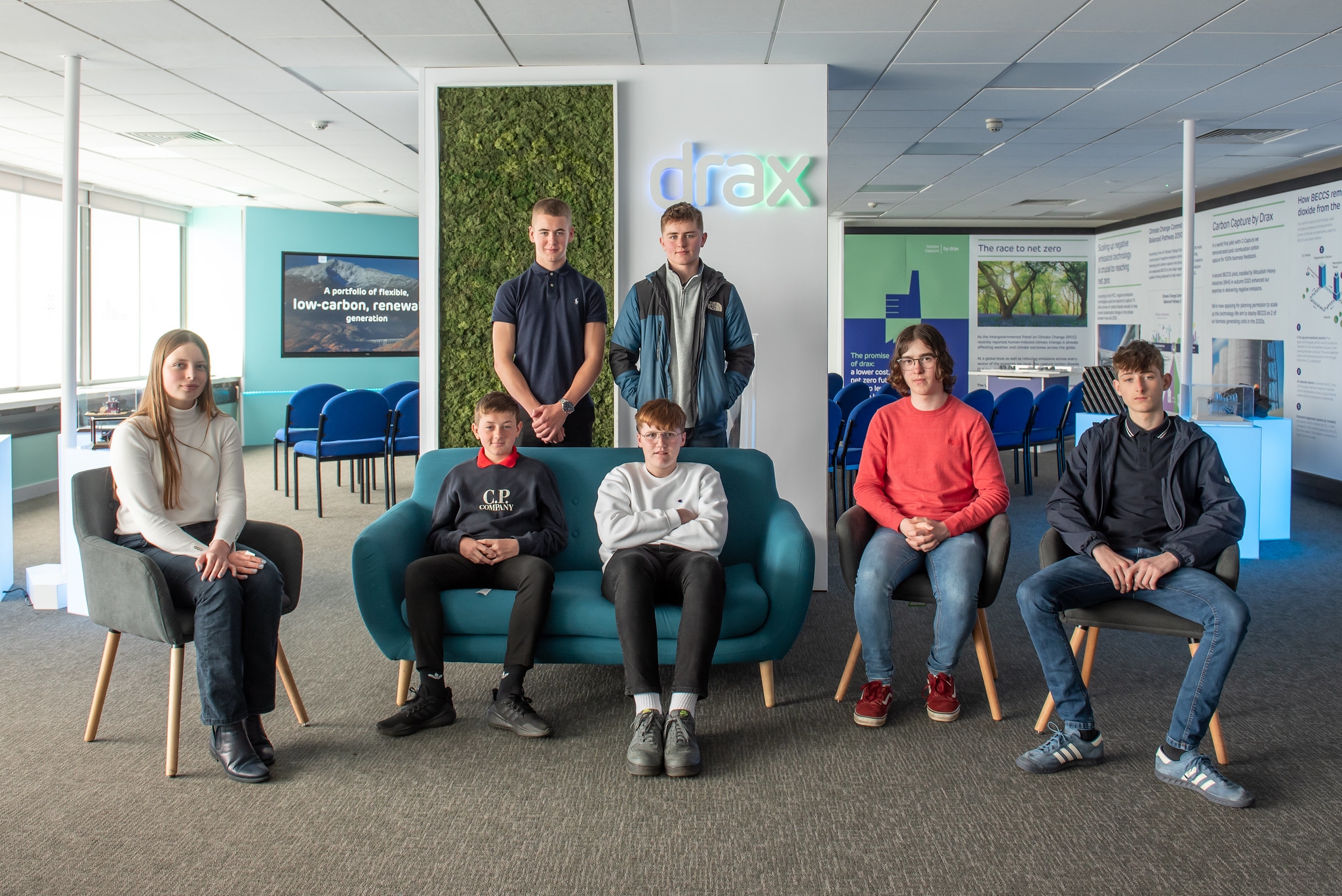
  • Japanese industry and diplomatic officials stand alongside Drax colleagues in the Drax Power Station Visitors’ Center in Selby, York.

Editor’s Notes:

  • Drax Group, the world’s leading producer and user of sustainable biomass, aims to increase its wood pellet production capacity from 5 million tonnes a year to 8 million tonnes a year by 2030, supporting global efforts to displace fossil fuels and decarbonise energy systems.
  • Drax is committed to its growth in Japan with a dedicated Tokyo-based team of biomass experts and an ambitious yet achievable target of doubling the sale of sustainable biomass.
  • Drax sees Japan as a potential market leader in Asia and beyond, supporting decarbonization and providing a safe, stable renewable energy option.
  • As a supplier of sustainable biomass pellets to customers in Asia and Europe, and with more than a decade of experience in converting the UK’s biggest coal-fired power station to use sustainable biomass, Drax is uniquely placed to support Japan as it further decarbonises its economy and energy system.
  • Drax is also pioneering bioenergy with carbon capture and storage (BECCS), an essential carbon removals technology which provides renewable energy while also permanently removing carbon dioxide from the atmosphere.
  • The transition to biomass not only supports the development of renewable energy but it also unlocks future BECCS projects in Japan which can utilize Japan’s technological expertise in carbon removals – driving innovation and securing high-quality jobs.
  • Long term policy support is needed for successful coal to biomass conversions and BECCS.

About Drax

Drax Group’s purpose is to enable a zero carbon, lower cost energy future and in 2019 announced a world-leading ambition to be carbon negative by 2030, using bioenergy with carbon capture and storage (BECCS) technology.

Drax’s around 3,000 employees operate across three principal areas of activity – electricity generation, electricity sales to business customers and compressed wood pellet production and supply to third parties. For more information visit www.drax.com

Power generation:

Drax owns and operates a portfolio of renewable electricity generation assets in England and Scotland. The assets include the UK’s largest power station, based at Selby, North Yorkshire, which supplies five percent of the country’s electricity needs.

Having converted Drax Power Station to use sustainable biomass instead of coal it has become the UK’s biggest renewable power generator and the largest decarbonisation project in Europe. It is also where Drax is piloting the groundbreaking negative emissions technology BECCS within its CCUS (Carbon Capture Utilisation and Storage) Incubation Area.

Its pumped storage, hydro and energy from waste assets in Scotland include Cruachan Power Station – a flexible pumped storage facility within the hollowed-out mountain Ben Cruachan.

The Group also aims to build on its BECCS innovation at Drax Power Station with a target to deliver 4 million tonnes of negative CO2 emissions each year from new-build BECCS outside of the UK by 2030 and is currently developing models for North American and European markets.

Pellet production and supply:

The Group has 19 operational pellet plants and developments with nameplate production capacity of around 5 million tonnes a year.

Drax is targeting 8 million tonnes of production capacity by 2030, which will require the development of over 3 million tonnes of new biomass pellet production capacity. The pellets are produced using materials sourced from sustainably managed working forests and are supplied to third party customers in Europe and Asia for the generation of renewable power.

Drax’s pellet plants supply biomass used at its own power station in North Yorkshire, England to generate flexible, renewable power for the UK’s homes and businesses, and also to customers in Europe and Asia.

Customers: 

Drax supplies renewable electricity to UK businesses, offering a range of energy-related services including energy optimisation, as well as electric vehicle strategy and management.

To find out more go to the website www.energy.drax.com

A very British way to save the planet

Four weeks after passing the Inflation Reduction Act, President Biden gathered a crowd of 1500 activists, CEOs, politicians, and celebrities on the South Lawn of the White House to mark his most significant political win to date – ushering into law the largest programme of clean energy investment in history.

The Inflation Reduction Act comprises an eye watering $370 billion to kickstart investment in technologies like carbon removals and renewables.  According to researchers at Princeton University, it will reduce America’s emissions by more than 6 billion tonnes by 2030 while incentivising around 120GW of clean energy projects each year. Goldman Sachs estimates it could spur as much as $11 trillion in infrastructure investment by 2050.

Biden’s approach has turned heads overseas.  For businesses, including my own, the investment opportunities are transformative for both companies and the climate.  At Drax, we are pioneering bioenergy with carbon capture and storage, or BECCS – a technology that generates renewable power while removing carbon dioxide from the atmosphere.  We have now selected our first two sites in the US, which will remove 6 million tonnes of carbon from atmosphere each year by 2030, and we have a further 9 sites in development.  The provisions in the Inflation Reduction Act, namely that to award companies that capture and store carbon dioxide with an $85 per ton credit, make the US an attractive place to be.

Governments have been far less enthusiastic about the legislation, driven by a concern that the lure of Biden’s tax incentives will syphon away domestic industries.  The UK has been particularly robust in its response, with Chancellor Jeremy Hunt stating he won’t go “toe-to-toe” with America in a “distortive global subsidy race”.  Instead, he said, he will focus on creating a “pro-growth regulatory regime”, which will be “different and better”.  What that means, he promised, will be spelled out at his forthcoming autumn statement.

As an American who has lived and worked in London for the past 26 years, I have become accustomed to the British way of doing things.  If in America the squeaky wheel gets the grease, then in the UK the tallest poppy is sure to be cut down.  Which is to say the Chancellor has a point. There is no use in, nor any need for, the UK to go toe-to-toe in a subsidies war with America.  Firstly, even in the best of economic circumstances it will never win; but secondly, and more importantly, the UK’s long term, disciplined approach to driving climate action while preserving energy security has resulted in a regulatory rulebook rich with opportunity to make Britain a clean energy powerhouse if we choose to make it so.

Researchers from Imperial College London have estimated that if the UK is to claim that mantle it must unlock £80bn in clean energy infrastructure investment. According to the Climate Change Committee, a similar level of investment could deliver more than £1 trillion of economic value.  Better still, Britain is bursting with potential projects in hydrogen, long duration energy storage and carbon removals to name a few, and by tweaking our existing regulatory rulebook we can make them a reality.

Take for example the Contract for Difference (CfD). While it will never grab headlines, it has helped Britain’s power system decarbonise faster than any other G7 nation.  Expanding CfDs to new technologies like BECCS would enable companies like Drax get on an invest more than £2bn in BECCS technology here in the UK. The concept of a CfD is simple and has been used extensively in the generation of renewable power. Government enables upfront capital investment in large infrastructure projects by stabilising the revenue companies receive for the power these projects produce.  If the market price of power is below the government stabilised level, companies receive the difference.  If it is above, companies pay back.  Being a private law contract, the CfD provides high levels of investor certainty while helping guard consumers against spikes in energy prices -delivering a public good that is a good deal for the public.  According to think tank Onward, from November 2021 to January 2022, CfDs paid back £114 million to consumers – a figure that could rise as high as £10.5 billion per year by 2027.

Then there is our emissions trading system, or ETS.  The UK was among the first nations in the world to put a price on carbon emissions back in 2002.  Last year alone the Treasury netted over $1.4 billion from the UK’s ETS by charging emitters for every tonne of carbon dioxide from the atmosphere.  In the coming months, Government will set out how it intends to reform the ETS, providing an opportunity to re-structure it with green infrastructure investment at its core. One option is to enable negative emissions to play a role inside the system by allowing companies to purchase credits from companies that remove carbon dioxide instead of simply paying government to emit.  Doing so would mean meeting our climate change targets more efficiently and more affordably, while creating and sustaining thousands of British jobs.

Britain’s strategic advantage rests in 15 years of political consensus that tackling climate change can both benefit our planet and our economy.  The Climate Change Act of 2008, which put in place legally binding carbon reduction targets, passed in the House of Commons with near unanimity. Since then, successive governments have introduced progressive law and regulation such as the CfD and ETS to reduce Britain’s emissions while keeping our economy growing and our energy supplies secure.

Across the Atlantic, however, America has been unable to develop the same policy options – held back by a deep-seated political divide on climate change and a seemingly inseverable relationship with fossil fuels.  The Inflation Reduction Act has the potential to change that.  When Joe Biden spoke on the South Lawn of the White House, he was keen to position the law as something more than just a package of subsidies.  For him, it is a fundamental restatement of what matters to modern America: “Today offers proof that the soul of America is vibrant, the future of America is bright, and the promise of America is real.”

In Britain, tackling climate change has always mattered.  We’ve literally written the rulebook on it. With America now at the table, the question for the UK is, can we write the next chapter in time?