






Archives: Press Release

UK battery storage capacity surpasses nuclear power for the first time

  • Battery projects becoming increasingly important in balancing Britain’s electricity system
  • Growing demand from AI and electrification is increasing the need for flexible energy infrastructure

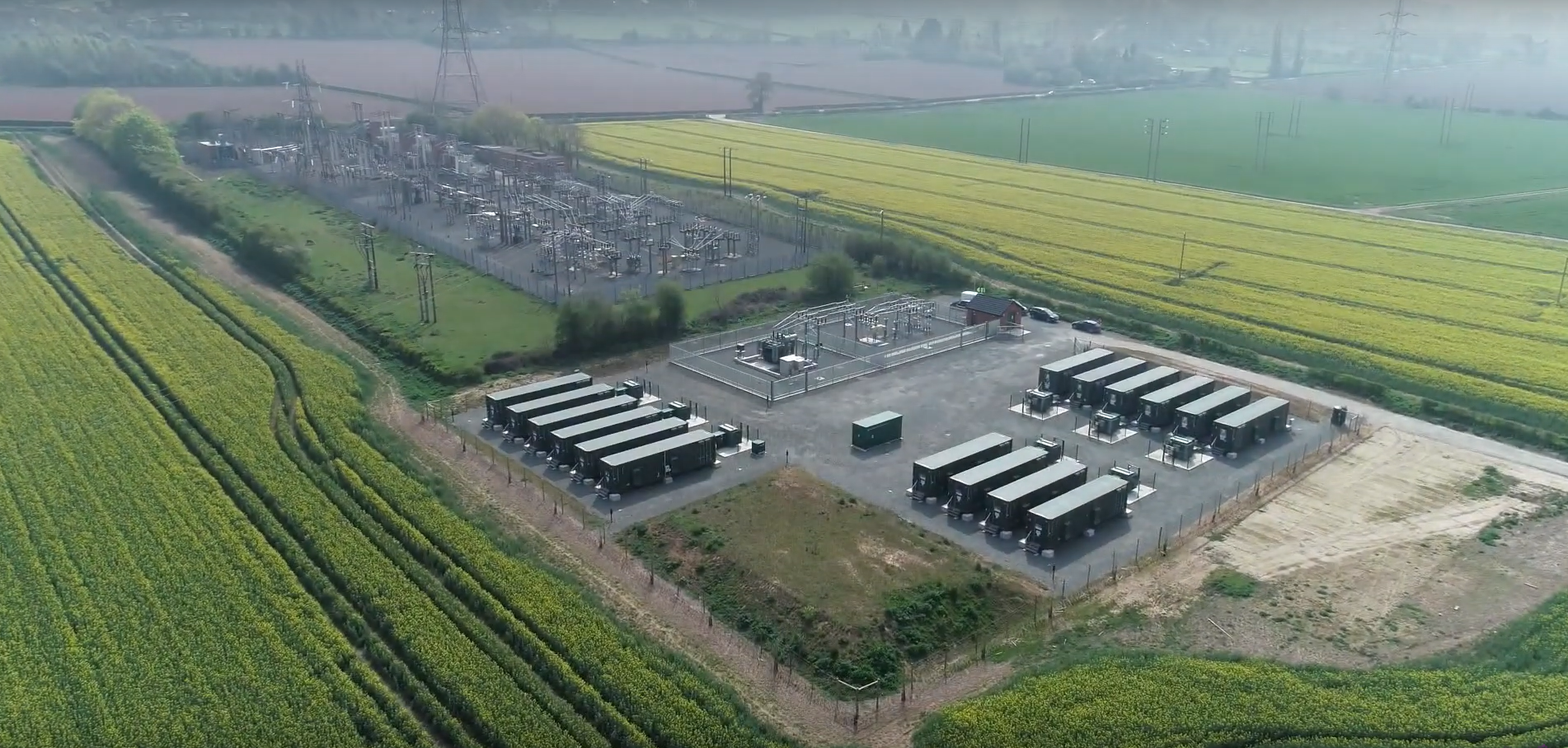
Battery storage has reached a major milestone in Britain’s energy transition, with installed battery energy storage system (BESS) capacity surpassing the country’s nuclear generating capacity for the first time, according to the latest analysis from Drax Electric Insights.

The report, produced independently by academics from Imperial College London and commissioned by Drax, highlights the growing role battery storage is playing in supporting Britain’s electricity system as demand for flexible power continues to grow.

Installed battery capacity has risen from just 10 MW to nearly 7 GW in under a decade, now exceeding the combined capacity of Britain’s nuclear reactor fleet.
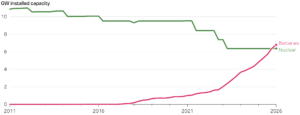
Britain’s Nuclear and Battery Storage capacity since 2011 (GW)

While batteries and nuclear power serve different roles within the energy system, the milestone underlines the rapid pace of investment in storage technologies. Batteries are increasingly helping to balance supply and demand, absorb electricity when it is abundant and release it when it is needed most.

Dr Iain Staffell, lead author of the report and Associate Professor in Sustainable Energy at Imperial College London, said:

“Battery storage has become one of the fastest-growing parts of Britain’s electricity system. The fact that installed battery capacity has now surpassed nuclear generating capacity demonstrates just how rapidly storage technologies are scaling.

“As the power system evolves, batteries are playing an increasingly important role in maintaining reliability, managing network constraints and supporting a more flexible electricity grid. They are already changing how the system operates on a day-to-day basis.”

Analysis also points to rising electricity demand from AI data centres and wider electrification across the economy, increasing the need for technologies that can provide flexibility and support grid stability.

The report highlights how battery projects can respond to changes in system conditions within seconds, helping grid operators manage fluctuations, reduce network constraints and support the UK’s energy security.

Ian Kinnaird, FlexGen Assets Director at Drax said:

“Battery storage is moving from a supporting technology to a critical part of Britain’s energy infrastructure. While nuclear power continues to provide an important source of baseload generation, batteries are becoming indispensable in helping the electricity system operate efficiently and reliably.

“The rapid growth of battery storage reflects the increasing value of flexibility across the power system. As electricity demand grows, batteries will play an ever-greater role in supporting economic growth, enabling new technologies and strengthening Britain’s energy resilience, alongside other forms flexible generation.”

For more information and to access the report, visit Drax Electric Insights.

ENDS

Media contacts:

Kieran Wilson
E: [email protected] 
T: 07729092807

About Drax

Drax’s purpose is to enable a zero carbon, lower cost energy future. Our strategic aims are to be a UK leader in flexible, renewable generation and a global leader in sustainable biomass pellet production.

Our operations

Drax owns and operates a portfolio of flexible, low-carbon and renewable UK power assets – biomass, hydro, pumped storage and OCGT generation – which provide dispatchable power and system support services to the electricity grid.

We are the UK’s largest source of renewable power by output, and Drax Power Station is the UK’s largest single source of renewable electricity by output.

Through our pellet production facilities in North America, Drax is a leading integrated producer of sustainable biomass.

Drax supplies renewable electricity to UK industrial and commercial customers, offering a range of energy-related services including energy optimisation, as well as electric vehicle strategy and management.
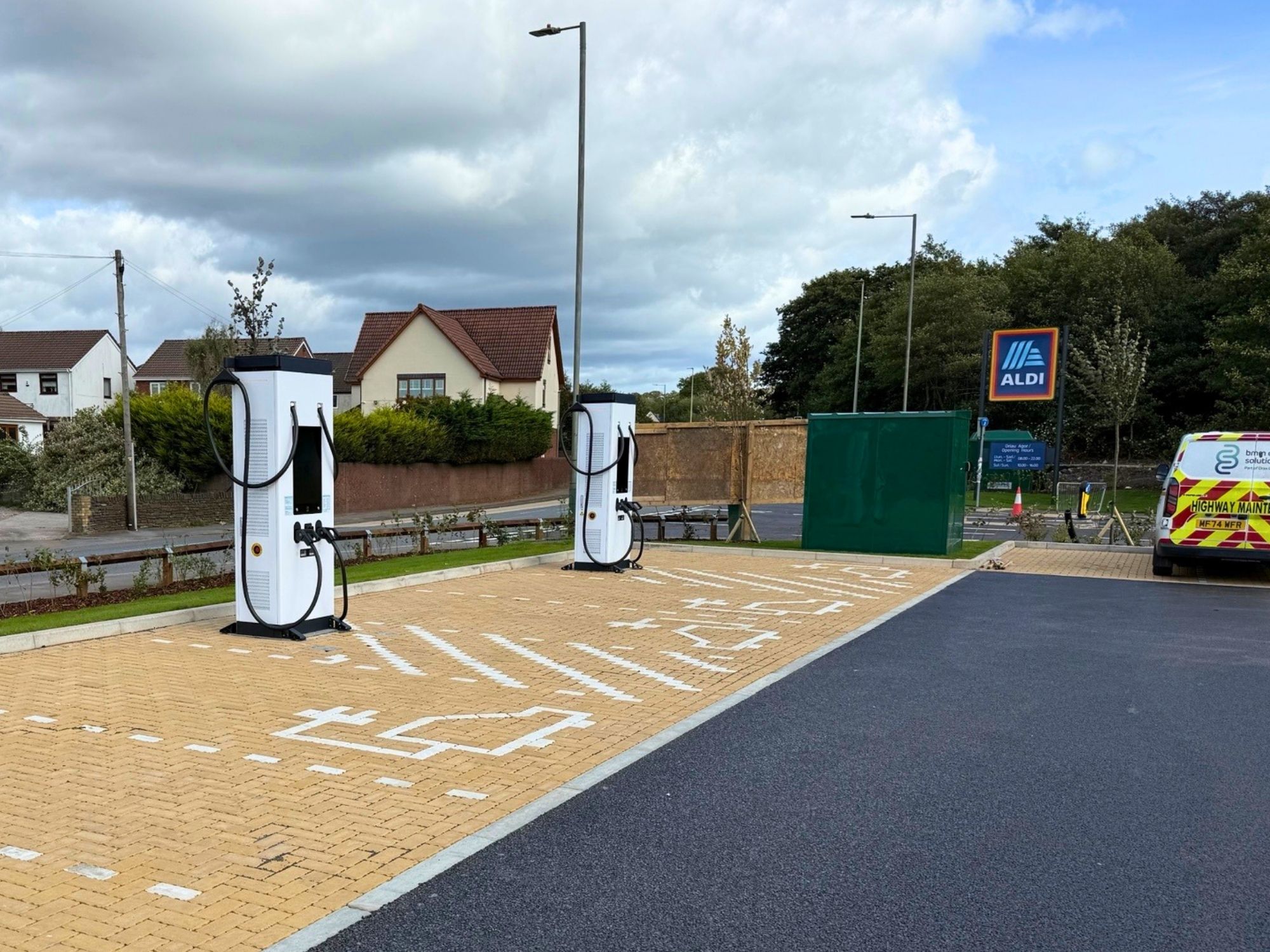

Aldi powers up new EV charging network at UK stores

Aldi shoppers will soon find it even easier to charge their electric cars while they pick up their groceries, thanks to a new partnership with EV charging infrastructure experts Drax Electric Vehicles.

The supermarket has transitioned around 1,200 electric vehicle (EV) chargers at more than 250 stores across the UK over to Drax, giving customers a quick and convenient way to top up during their shop.

New charging facilities have been installed at over 30 stores across the UK, including Aldi’s Diss store in Norfolk, alongside locations in Eastbourne, Durham and Yate near Bristol.

In addition to upgrading its existing charging network, Aldi will also install chargers at around 20 new stores each year as part of its ongoing expansion plans.

All newly built Aldi stores will offer a mix of fast and rapid chargers, with two AC fast chargers supporting four bays up to 22kW and up to two DC rapid chargers supporting four bays up to 160kW at each site – so customers can choose the option that suits their journey.

Charging will be competitively priced at 40p per kWh for fast charging and 62p per kWh for rapid charging. Customers can check availability, view charging costs and pay through the Charge Assist app, or simply use contactless card payment on the newly installed chargers, with no subscription needed.

Jonathan Neale, Managing Director of National Real Estate at Aldi UK, said: “We’re committed to making sustainable choices more accessible for our customers, and we know many are looking for affordable, reliable and convenient ways to charge their cars. By expanding EV charging at more of our stores, we’re helping to make that easier – and offering great-value charging while they shop.”

Adam Hall, Energy Services Director at Drax Electric Vehicles, said: “Aldi’s expansion of EV charge points across its stores demonstrates how rapidly these amenities are becoming integral to the retail sector.

“Drax EVs is proud to have been chosen by Aldi to operate its charge point network and assist with the installation of further charging facilities. By acting now, Aldi is helping cut emissions and ensure its sites are well-equipped to service the needs of the growing community of EV drivers in the years to come.”

The expansion reinforces Aldi’s long-term commitment to sustainability and supports the UK’s transition to electric vehicles, with the government targeting the end of new petrol and diesel car sales by 2030.

Learn more at energy.drax.com

Drax and Energy Sparks recognised at Third Sector Business Charity Awards for helping schools tackle energy costs

A partnership between Drax, Energy Sparks and schools across the UK has won the Third Sector Business Charity Award for ‘Best Response to the Cost of Living Crisis’, recognising a three-year collaboration that has helped schools reduce energy costs, cut carbon emissions and improve climate education for thousands of young people. 

The award celebrates the impact of projects funded through the Drax Foundation, supporting schools in underserved communities to become more energy efficient through energy-saving technology, education and behaviour change initiatives. 

Since 2023, Drax has worked with Energy Sparks, a charity that helps schools reduce energy consumption through data-driven energy analysis tools and education programmes. 

This year’s funding alone has enabled 150 schools to access Energy Sparks’ energy management tools, resources and education programmes at no cost, engaging up to 50,000 children. Participating schools are on track to save more than £1 million in energy bills and reduce CO2 emissions by 1,500 tonnes during the 2025/26 school year. 

Shona King, Head of Social Impact at Drax said: “We’re incredibly proud that our partnership with Energy Sparks and schools across the UK has been recognised through the Third Sector Business Charity Awards. 

“This collaboration is helping schools reduce costs at a time when budgets continue to face pressure, while also supporting pupils to develop a greater understanding of sustainability, energy efficiency and green skills. By combining practical energy-saving measures with education, we’re helping schools create lasting benefits for both their communities and the environment.” 

Dr Claudia Towner, CEO and Programme Director at Energy Sparks, said: “The ongoing funding from the Drax Foundation will allow participating schools to embed energy saving behaviours across their school communities and provide more opportunities for children and young people to develop green skills.” 

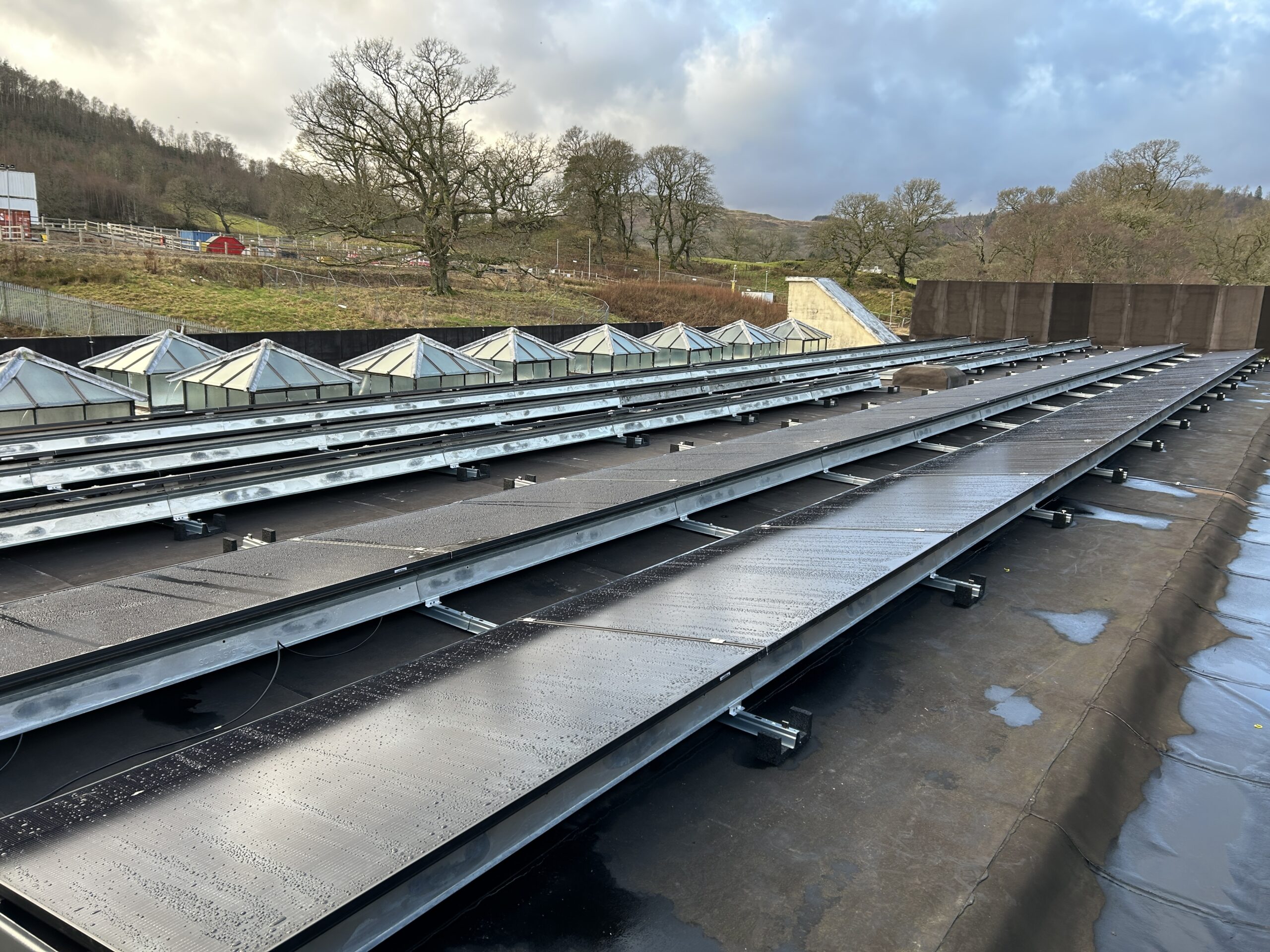
Alongside this, Drax has concluded a three-year programme installing LED lighting and solar panels in 54 schools located in communities where Drax operates across England and Scotland. 

Between 2023 and 2025, participating schools reduced energy bills by a combined total of around £1 million while cutting carbon emissions by 1,684 tonnes CO2e. Schools taking part in the programme achieved an average annual reduction of 64% in electricity bills and a 62% reduction in CO2 emissions. 

Bernadette McMillan, Head Teacher at Taynuilt Primary School, said: “The new LED lighting and solar panels will help us to save money on our energy bills, which is critical when the cost of fuel is so high. It’s also a great opportunity to engage the children about practical measures to address energy efficiency and climate change.” 

ENDS 

Notes to editors  

Media contacts: 

Kieran Wilson 
E: [email protected]  
T: 07729092807 

About Drax  

Drax’s purpose is to enable a zero carbon, lower cost energy future. Our strategic aims are to be a global leader in both carbon removals and sustainable biomass pellet production, and to be a UK leader in dispatchable, renewable generation. 

Our operations 

Drax owns and operates a portfolio of flexible, low-carbon and renewable UK power assets – biomass, hydro, and pumped storage generation – which provide dispatchable power and system support services to the electricity grid.  

We are the UK’s largest source of renewable power by output, and Drax Power Station is the UK’s largest single source of renewable electricity by output. 

Through our pellet production facilities in North America, Drax is a leading integrated producer of sustainable biomass. Drax has 18 operational and development pellet production sites which will have a nameplate capacity of around 5.4 million tonnes once expansions are complete.  

Drax supplies renewable electricity to UK industrial and commercial customers, offering a range of energy-related services including energy optimisation, as well as electric vehicle strategy and management. 

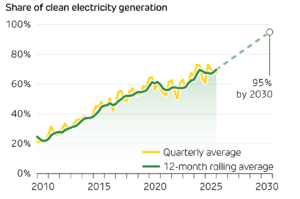
Analysis – low emission energy reshapes Britain’s grid

  • Britain’s electricity system came within touching distance of operating without fossil fuels for the first time this Spring
  • The UK is now the most interconnected large power system in Europe
  • AI data centres can provide flexible grid support to help keep the lights on and spread the cost of infrastructure investment.

According to the latest analysis from Drax Electric Insights, the country’s energy system continued its rapid state of change as fossil fuel generation dropped to historic lows, with the grid coming close to operating without fossil fuels for the first time in April.

The report, produced independently by academics from Imperial College London and commissioned by Drax, found that Britain’s grid reached a new milestone in April 2026, with electricity generation from fossil fuels falling below 1 GW for the first time ever.

The findings come amid growing geopolitical pressure on global energy markets following disruption to oil and LNG supplies through the Strait of Hormuz, reinforcing the importance of reducing Britain’s reliance on imported fossil fuels.

The report highlights how Britain’s rapid growth in wind, solar and battery storage may help to shield consumers from global gas price shocks, alongside the UK Government’s plans to decouple electricity prices from gas.

Analysis also points to mounting pressure from AI-driven electricity demand. Government forecasts show Britain requires at least 6 GW of AI-capable data centres by 2030, equivalent to the output of four large nuclear reactors.

The report argues that AI infrastructure will need to become more “grid-friendly” if Britain is to meet both its economic and climate ambitions.

Around 140 proposed UK data centre projects are currently seeking approximately 50 GW of grid connections – equivalent to Britain’s entire peak electricity demand. The analysis suggests future developments should be located closer to areas with strong grid connections and abundant low-carbon generation, while making greater use of flexible demand management technologies.

However, the report does highlight that if designed and operated effectively, data centres can help ease pressure on the grid – by using electricity when there is spare network capacity available – and reducing power consumption when the grid is under pressure to stabilise the system and reduce costs.

Despite being an island, Great Britain has quietly become one of Europe’s most interconnected electricity systems. Britain now has more than 10GW of interconnector capacity linking it to neighbouring countries. It is the only large power system in Europe to have reached 10% of its capacity as interconnectors, overtaking Germany.

Dr Iain Staffell, lead author of the report and Associate Professor in Sustainable Energy at Imperial College London, said:

“Britain’s power system is changing at extraordinary speed. Just a few years ago, running the grid with almost no fossil fuels would have seemed unimaginable.

“What we are seeing now is that clean electricity is no longer only a climate story – it is increasingly about energy security, affordability and economic resilience.

“The recent disruption to global fossil fuel markets shows how risky it is to remain dependent on imported oil and gas. Expanding domestic clean power, storage and flexibility is Britain’s clearest route towards insulating itself from future energy shocks.”

The report also highlights the growing role of electricity interconnectors and battery storage in balancing Britain’s increasingly renewable power system.

Britain can now import up to one-third of national electricity demand through cross-border power links, while battery projects are helping to absorb excess renewable generation and smooth electricity price volatility.

However, whilst interconnectors can provide a useful backup system for our own domestic generation, importing electricity can leave the grid vulnerable to price spikes and geopolitical issues.

Lee Dawes, Chief Operating Officer at Drax, said:

“Britain’s electricity system is entering a new era. Renewable generation, battery energy storage systems (BESS), and flexible technologies are all becoming critical to maintaining secure, affordable power.

“Interconnectors continue to provide the UK with flexibility and the ability to manage short-term supply risk, but it is important that we prioritise developing our own renewable generation, long duration energy storage and BESS assets, to mitigate the risks from relying on energy imports.

“As electricity demand grows from AI, transport and heating, the challenge will be ensuring the grid can expand quickly enough to support economic growth while continuing to reduce emissions and strengthen energy security.

“The progress we are seeing demonstrates the importance of investing in a diverse mix of renewable and flexible technologies that can help keep the system stable as Britain transitions away from fossil fuels.”

The report also notes that growing renewable output is already changing electricity market dynamics, with periods of surplus power increasingly leading to free or discounted electricity for consumers during weekends and other low-demand periods.

For more information and to access the full report, visit Drax Electric Insights.

ENDS

Media contacts:

Kieran Wilson
E: [email protected]
T: 07729092807

About Drax

Drax’s purpose is to enable a zero carbon, lower cost energy future. Our strategic aims are to be a global leader in both carbon removals and sustainable biomass pellet production, and to be a UK leader in dispatchable, renewable generation.

Our operations

Drax owns and operates a portfolio of flexible, low-carbon and renewable UK power assets – biomass, hydro, and pumped storage generation – which provide dispatchable power and system support services to the electricity grid.

We are the UK’s largest source of renewable power by output, and Drax Power Station is the UK’s largest single source of renewable electricity by output.

Through our pellet production facilities in North America, Drax is a leading integrated producer of sustainable biomass. Drax has 18 operational and development pellet production sites which will have a nameplate capacity of around 5.4 million tonnes once expansions are complete.

Drax supplies renewable electricity to UK industrial and commercial customers, offering a range of energy-related services including energy optimisation, as well as electric vehicle strategy and management.
The Princess Royal visits Cruachan ‘Hollow Mountain’ Power Station to mark its 60th anniversary

The Princess Royal visits Cruachan Power Station

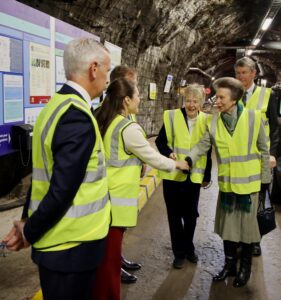
The Princess Royal visited Drax Group’s Cruachan ‘Hollow Mountain’ Power Station, near Oban in Argyll, on Monday to unveil a commemorative plaque marking the 60th anniversary of its opening.

Carved into the granite interior of Ben Cruachan, the plant was the first large-scale reversible pumped storage hydro facility in the world when it was opened by the late Queen Elizabeth II in 1965. Today it continues to play a vital role in balancing the electricity grid and supporting the UK’s transition to net zero through storing excess renewable electricity at times of low demand.

The unveiling was conducted by HRH The Princess Royal, who was welcomed to the site by Will Gardiner, Chief Executive Officer of Drax Group, alongside other Drax colleagues and representatives from the local community.

Will Gardiner, Drax Group CEO, said: “Cruachan is an engineering marvel that has stood the test of time. As Britain builds the clean energy system of the future, flexible assets like Cruachan will be absolutely central to keeping the lights on. We are deeply honoured to welcome Her Royal Highness to mark this milestone, and to celebrate the generations of skilled people who have operated and maintained this extraordinary station over the past six decades.”

The Princess Royal visits Cruachan Power Station

Drax Group has recently made an £80 million investment in the site to refurbish the plant and increase its generating capacity. Two of Cruachan’s generating units will be refurbished alongside the replacement of all four of the plant’s main inlet water valves. Each water valve weighs as much as three double decker buses, and in one minute can transport enough water to fill an Olympic swimming pool.

Cruachan supports the national grid by releasing water from its upper reservoir to flow through its turbines and into Loch Awe below. The flow of water rotates the turbine which in turn rotates a generator to produce electricity. Excess electricity from the grid can at other times be used to drive the turbine in the opposite direction, to pump water from Loch Awe up into the upper reservoir, storing for use later like a giant water battery.

New dawn for solar power at historic hydro site

Renewable energy pioneer Drax has completed the first in a series of solar power installations across its historic Galloway and Lanark hydropower schemes in Scotland.

The state-of-the-art panels have been installed on the roof of Glenlee power station in Galloway as part of an £850,000 investment by Drax. Around 1,500 panels will be fitted as part of the project by Drax’s project partner Geo Green Power. The renewable electricity generated by the panels will mainly be used to meet the hydro scheme’s own power needs, helping to cut an estimated 500 tonnes of CO2 through displacing the need for fossil-fuel generation from the national grid.

The initiative is a positive step towards realising Drax’s commitment of achieving net zero emissions across its value chain by the end of 2040.

Mike Wynd, Drax’s Head of Hydro, said: “This is an exciting new chapter for Drax’s historic Lanark and Galloway schemes. By combining modern solar panels with our mature hydro systems, we’re moving the company closer to its net zero by 2040 ambitions.

“These power stations have made a remarkable contribution to Scotland’s energy needs, generating renewable electricity for almost a century. Through this solar power project, we are setting them up for a bright future for many more years to come.”

James Cunningham, Managing Director, Geo Green Power, said: “We’re delighted to be working alongside Drax, a household name in the energy industry, reducing their carbon footprint and assisting in their continued efforts to improve the organisations sustainability.”

Both schemes are two of the most historically important hydro facilities in Scotland. Lanark was completed in 1927 and is designated as a site of national architectural importance. The much larger Galloway scheme, which consists of six power stations and eight dams, also has protected status owing to its “finely detailed Modernist classical design”.

ENDS

Media contacts:

Aidan Kerr
E[email protected]

About Drax

Drax’s purpose is to enable a zero carbon, lower cost energy future. Our strategic aims are to be a global leader in both carbon removals and sustainable biomass pellet production, and to be a UK leader in dispatchable, renewable generation.

Our operations

Drax owns and operates a portfolio of flexible, low-carbon and renewable UK power assets – biomass, hydro, and pumped storage generation – which provide dispatchable power and system support services to the electricity grid.

We are the UK’s largest source of renewable power by output, and Drax Power Station is the UK’s largest single source of renewable electricity by output.

Through our pellet production facilities in North America, Drax is a leading integrated producer of sustainable biomass. Drax has 18 operational and development pellet production sites which will have a nameplate capacity of around 5.4 million tonnes once expansions are complete.

Drax supplies renewable electricity to UK industrial and commercial customers, offering a range of energy-related services including energy optimisation, as well as electric vehicle strategy and management.

Ultra Yorkshire makes first transatlantic voyage delivering biomass pellets to support UK energy security

  • Vessel was powered by B100 biofuel from Baton Rouge to Port of Liverpool – reducing the journey’s CO2 emissions by around 90%
  • Drax has concluded a new contract with Ultrabulk to March 2031 which contains commitments to lower transport emissions each year

The M.V. Ultra Yorkshire, a Handymax carrier, which was launched and named as part of Drax Power Station’s 50th anniversary celebrations, docked for the first time in the UK.

The vessel is operated by Ultrabulk, a leading global dry bulk business and a long-term partner of Drax Group.

It arrived at the Port of Liverpool in recent weeks, completing its first transatlantic voyage, with a cargo of over 29,000 tonnes of biomass pellets for rail transport to Drax Power Station.

The Selby power station is an important part of UK energy security; it uses biomass pellets to generate renewable power and in 2025 supplied about 5% of the country’s electricity.

Drax Group, the owners of Drax Power Station, is committed to reaching net zero across its value chain by 2040 including by reducing its supply chain emissions, like those from shipping and transportation. In 2024 and 2025, Drax signed agreements for all GB Railfreight and DB Cargo trains to Drax Power Station to run using hydro-treated vegetable oil (HVO) – estimated to reduce rail freight emissions by 90%.

The Ultra Yorkshire’s journey from the Port of Greater Baton Rouge to the Port of Liverpool, which is owned by Peel Ports Group, was powered by B100 biofuel. Compared to standard maritime fuels, like VLSFO or ULSGO, this meant the vessel emitted around 90% less CO2 over the course of the journey.

Drax has recently signed a new contract with Ultrabulk through to March 2031. The new deal includes a mechanism, possibly one of the first of its kind, to reduce carbon emissions year on year over the course of the agreement from sea freight journeys.

Mark Gibbens, Head of Logistics at Drax Group, said: “We were delighted to welcome the Ultra Yorkshire to the Port of Liverpool on its maiden transatlantic voyage. Ultrabulk is one of our long-standing supply chain partners and they play a critical role in ensuring that Drax Power Station can keep the lights on for millions of homes and businesses across the UK, no matter the weather.

“Our new contract with Ultrabulk shows that we are taking action to decarbonise our supply chain and we are proud that M.V. Ultra Yorkshire was able to complete the journey from Baton Rouge to the Port of Liverpool using biofuel to significantly reduce its impact on the environment.”

Hans-Christian Olesen, CEO of Ultrabulk, said: “Our team is incredibly proud that Drax have chosen to continue their contract with Ultrabulk. Over the years, Drax has proven to be on the cutting edge of environmental transition.

“We have a strong partnership with Drax and we continue working on new ideas with them to transform supply chains. The first B100 transatlantic transport of biomass for both Drax and Ultrabulk, on our own M.V. Ultra Yorkshire, is a great example of this. We are looking forward to jointly keep pushing the boundaries for what is possible in decarbonisation.”

Phil Hall, Mersey Port Director at Peel Ports Group, said: “It’s a proud moment to have welcomed such an impressive vessel to the Port of Liverpool on her first UK visit

“This voyage demonstrates the impact of collaboration in reducing emissions, with the use of B100 biofuel delivering a significant reduction in CO2 emissions on the journey.

“At Peel Ports Group, we are committed to helping our customers achieve more sustainable operations and initiatives like this highlight the positive impact that such partnerships can have across the supply chain.”

ENDS

Notes to editors:

Additional drone photos and video of Ultra Yorkshire docked at the Port of Liverpool are available on request.

Media contacts:

Andy Low
E: [email protected]
T: 07841 068415

About Drax

Drax’s purpose is to enable a zero carbon, lower cost energy future. Our strategic aims are to be a global leader in both carbon removals and sustainable biomass pellet production, and to be a UK leader in dispatchable, renewable generation.

Our operations

Drax owns and operates a portfolio of flexible, low-carbon and renewable UK power assets – biomass, hydro, and pumped storage generation – which provide dispatchable power and system support services to the electricity grid.

We are the UK’s largest source of renewable power by output, and Drax Power Station is the UK’s largest single source of renewable electricity by output.

Through our pellet production facilities in North America, Drax is a leading integrated producer of sustainable biomass. Drax has 18 operational and development pellet production sites which will have a nameplate capacity of around 5.4 million tonnes once expansions are complete.

Drax supplies renewable electricity to UK industrial and commercial customers, offering a range of energy-related services including energy optimisation, as well as electric vehicle strategy and management.
About Ultrabulk

Ultrabulk is a leading global dry bulk operator, offering a broad range of shipping services to accommodate customers needs in the Panamax, Supramax and Handysize segments as well as specialized services.

Ultrabulk A/S Denmark is a subsidiary of Ultranav, a privately owned group of shipping companies for over six decades, headquartered in Chile and operating globally with offices in 20 countries.

About Peel Ports Group  

Peel Ports Group is the UK’s second largest port operator, owning and operating six of the UK’s most important ports (Liverpool, Heysham, Manchester Ship Canal, Medway (Sheerness / Chatham), Clydeport and East Anglia). It also operates a container terminal in Dublin and owns BG Freight Line, which provides short sea container services between the UK, Ireland and mainland Europe and Peel Ports Logistics, one of the UK’s leading shipping and freight forwarders.

Peel Ports handles approximately 70 million tonnes of cargo every year. 14% of the total UK major ports traffic flows through ports operated by the Group. Headquartered in Liverpool, it employs around 2,000 staff.

www.peelports.com

Drax Foundation funding to support over 118,000 people and drive community impact across UK, US and Canada

Drax Foundation, the charitable arm of renewable energy company Drax, has published its Social Impact Report 2025, revealing a £3.1 million investment in communities and non-profit organisations, supporting more than 118,000 people across the UK, United States and Canada.

Working with 251 non-profit organisations and community groups, Drax Foundation funding is helping to deliver practical support for households, create opportunities for young people, and improve local environments in the communities where it operates.

Shona King, Head of Social Impact at Drax said: “Our work in 2025 shows the difference strong partnerships can make in local communities. By working closely with organisations at a grassroots level, we’re helping people build skills, reduce energy costs and access nature – delivering meaningful support where it is needed most.

“We’re proud to have supported over 118,000 people and remain committed to partnering with organisations who create a lasting and positive social impact.”

Key achievements from 2025 include:

  • Supporting over 118,000 beneficiaries through funded programmes
  • Delivering £3.1 million in charitable giving
  • Funding 251 non-profit organisations and community groups
  • Reaching 45,000 people through more than 1,000 community engagement activities

Tackling energy costs and fuel poverty

With energy affordability remaining a critical issue across the globe, Drax Foundation supported programmes have delivered significant cost savings and support:

  • Schools achieved an average 64% reduction in electricity bills
  • Around £1 million in energy costs was saved across participating schools
  • 1,156 households have been supported with fuel poverty services

Dr Claudia Towner, CEO of Energy Sparks, said: “The ongoing funding from the Drax Foundation will allow participating schools to embed energy saving behaviours across their school communities and provide more opportunities for children and young people to develop green skills.”

Drax also partnered with the Fuel Bank Foundation in 2025, to support families in crisis, helping more than 1,100 households access emergency fuel vouchers and advice, with many reporting improved wellbeing.

Matthew Cole, CEO of the Fuel Bank Foundation, said: “The emergency fuel vouchers create the breathing space that the advice provided by Fuel Bank can be acted upon and, where appropriate, we will also offer an onward referral for additional support.”

Investing in future skills and education

The Drax Foundation has continued to invest in future talent and skills development through partnerships with organisations, including Teach First and community programmes in the UK and North America:

  • 28,140 children participated in STEM education programmes
  • 2,260 adults engaged in skills and employability initiatives
  • 155 in-school STEM sessions delivered by employees

In the US, Drax Foundation funding supported Southern University in Louisiana, helping to expand access to STEM learning and urban forestry programmes for students from underrepresented communities.

Robert Easly Jr., Director of Advancement at the Southern University Ag Centre, said: “This funding reinforced a critical message: agriculture is more than just farming, it is innovation, sustainability and leadership for the future.”

In North Yorkshire, near to Drax Power Station, Foundation funding has directly supported employability workshops through SKILLZ, a local organisation who help to build confidence and career readiness for young people.

Kirsty Copley, Company Director at SKILLZ, said: “Support from the Drax Foundation enabled us to run our first 10-week employability group mentoring programme… young people developed employability and soft skills, including teamwork, problem-solving, confidence, job searching, CV writing and interview skills.”

Driving environmental and nature-based outcomes

Drax Foundation supported projects also delivered significant environmental impact across its regions.

In Yorkshire, Drax partnered with the Canal & River Trust to tackle invasive species along the Selby Canal, funding volunteer programmes and specialist removal work.

Sean McGinley, Regional Director at the Canal & River Trust, said: “This funding has enabled us to bring in a specialist team and equipment earlier than usual – stopping the weed before it took hold – and to purchase a floating pontoon, enabling safe access to hard-to-reach areas.”

In another UK conservation initiative, Drax supported the reintroduction of 74 endangered corncrakes in the Lower Derwent Valley, helping restore biodiversity in one of the country’s most important grassland habitats.

Across all nature-based programmes:

  • 34,862 people engaged in nature-based learning
  • 15,000 people gained improved access to green spaces

ENDS++

Read the full Drax Foundation Social Impact Report here

Notes to editors

  • The Drax Foundation Social Impact Report outlines Drax’s community investment and impact across the UK, US and Canada.
  • All 2025 impact figures are projected based on programme data, and will be independently verified in 2026.

Media contacts:

Kieran Wilson
E: [email protected] 
T: 07729092807

About Drax

Drax’s purpose is to enable a zero carbon, lower cost energy future. Our strategic aims are to be a global leader in both carbon removals and sustainable biomass pellet production, and to be a UK leader in dispatchable, renewable generation.

Our operations

Drax owns and operates a portfolio of flexible, low-carbon and renewable UK power assets – biomass, hydro, and pumped storage generation – which provide dispatchable power and system support services to the electricity grid.

We are the UK’s largest source of renewable power by output, and Drax Power Station is the UK’s largest single source of renewable electricity by output.

Through our pellet production facilities in North America, Drax is a leading integrated producer of sustainable biomass. Drax has 18 operational and development pellet production sites which will have a nameplate capacity of around 5.4 million tonnes once expansions are complete.

Drax supplies renewable electricity to UK industrial and commercial customers, offering a range of energy-related services including energy optimisation, as well as electric vehicle strategy and management.

Local families enjoy an eggs-cellent time at Skylark Nature Reserve

Organised by Drax’s Community and Education team, the event welcomed more than 300 attendees and offered a range of hands-on activities designed to connect visitors with the natural environment while promoting sustainable practices.

Visitors of all ages took part in interactive sustainability workshops, including making biodegradable plant pots from recycled newspaper, encouraging environmentally friendly gardening habits. Young explorers also enjoyed the “Notice Nature” orienteering challenge, which combined physical activity with environmental learning as participants navigated the reserve’s diverse habitats to answer nature-based questions.

Seasonal highlights included a woodland walk Easter quiz, guiding families through the reserve while engaging them with local flora and fauna, as well as a giant marble run challenge that introduced STEM concepts in a fun and accessible way.

The event also raised £146 in support of the Yorkshire Swan and Wildlife Rescue Hospital through voluntary donations and proceeds from the on-site café, reinforcing Drax’s commitment to supporting local causes.

Nick Robinson, Community & Education Manager at Drax, said:

“We were delighted to welcome so many families to the Skylark Centre for this year’s spring event. It’s a great example of how we can bring communities together while encouraging people of all ages to engage with nature and think about sustainability in a practical, hands-on way. Supporting local organisations like the Yorkshire Swan and Wildlife Rescue Hospital is also an important part of being a good neighbour, and we’re pleased the event could contribute to that.”

The Spring at the Skylark Centre event highlights Drax’s ongoing commitment to community engagement and environmental education, providing opportunities for local residents to connect with nature while learning more about sustainability.

ENDS

Media contacts:

Kieran Wilson
E: [email protected] 
T: 07729092807

About Drax

Drax’s purpose is to enable a zero carbon, lower cost energy future. Our strategic aims are to be a global leader in both carbon removals and sustainable biomass pellet production, and to be a UK leader in dispatchable, renewable generation.

Our operations

Drax owns and operates a portfolio of flexible, low-carbon and renewable UK power assets – biomass, hydro, and pumped storage generation – which provide dispatchable power and system support services to the electricity grid.

We are the UK’s largest source of renewable power by output, and Drax Power Station is the UK’s largest single source of renewable electricity by output.

Through our pellet production facilities in North America, Drax is a leading integrated producer of sustainable biomass. Drax has 18 operational and development pellet production sites which will have a nameplate capacity of around 5.4 million tonnes once expansions are complete.

Drax supplies renewable electricity to UK industrial and commercial customers, offering a range of energy-related services including energy optimisation, as well as electric vehicle strategy and management.