RNS Number: 4793C
Drax Group plc
(“Drax” or the “Group”; Symbol:DRX)
Highlights
- Good operational performance across the Group
- Full year 2026 expectations for Adj. EBITDA(1) in line with consensus estimates(2)
- £450m buyback – first £75m tranche complete, second £75m tranche to commence May 2026
- Final dividend of 17.4 pence per share, subject to shareholder approval at today’s AGM
- Flexitricity acquisition complete
Drax Group CEO, Will Gardiner, said:

Will Gardiner, Drax Group CEO
“We have started the year well and have delivered a good operational performance across the Group, supporting UK energy security at a critical time for the country. Our assets, colleagues and supply chain partners have been working hard to help keep the lights on for millions of UK households and businesses through a period of acute geopolitical uncertainty.
“We are at a key moment of transition in our business and in the UK’s energy system. With our first battery storage projects and the commissioning of our first OCGT unit progressing, we are growing our UK FlexGen portfolio.
“We are excited about the potential opportunities to invest further to help the country meet its growing energy needs. We believe these opportunities could create value for stakeholders and offer attractive returns for shareholders, in line with our capital allocation policy.”
Full year expectations
Drax continues to expect 2026 full year Adj. EBITDA to be in line with consensus estimates(2). Full year expectations remain subject to continued good operational performance.
Impact of conflict in the Middle East
The Group’s focus on flexible, dispatchable generation and renewables enables it to support a secure, lower cost UK power system, which can continue to decarbonise, by allowing more intermittent renewables to operate and helping to reduce the UK’s exposure to higher gas prices and reliance on imported power.
The Group produces on average over 5% of the UK’s electricity and around 10% of its renewable power, up to 18% at times of peak demand and on certain days over 50%(3). The Group’s supply chain has a high level of operational redundancy, with limited exposure to underlying commodity prices, sourcing biomass primarily from North America, including from the Group’s own facilities in the US South.
To help maximise output at times of high demand, the Group is continuing to optimise generation across its portfolio to deliver power when it is needed most.
Regulatory update
In April 2026, the UK Government announced its intention to remove the UK Carbon Price Support (CPS) mechanism from April 2028, which has been used over the last decade to encourage a reduction in fossil fuel use, contributing to the phase out of coal generation from the UK power system. The change to CPS does not change the Group’s expectations.
In January 2023, the UK Government introduced the Electricity Generator Levy (EGL) in response to higher wholesale power prices. In April 2026, the Government announced an extension of the scheme beyond March 2028 and an increase in the levy. Drax does not currently expect to pay any EGL in 2026 and does not expect it to have any impact on Adj. EBITDA in 2026. From April 2027 Drax Power Station will operate under a CfD agreement which is not subject to the EGL.
FlexGen
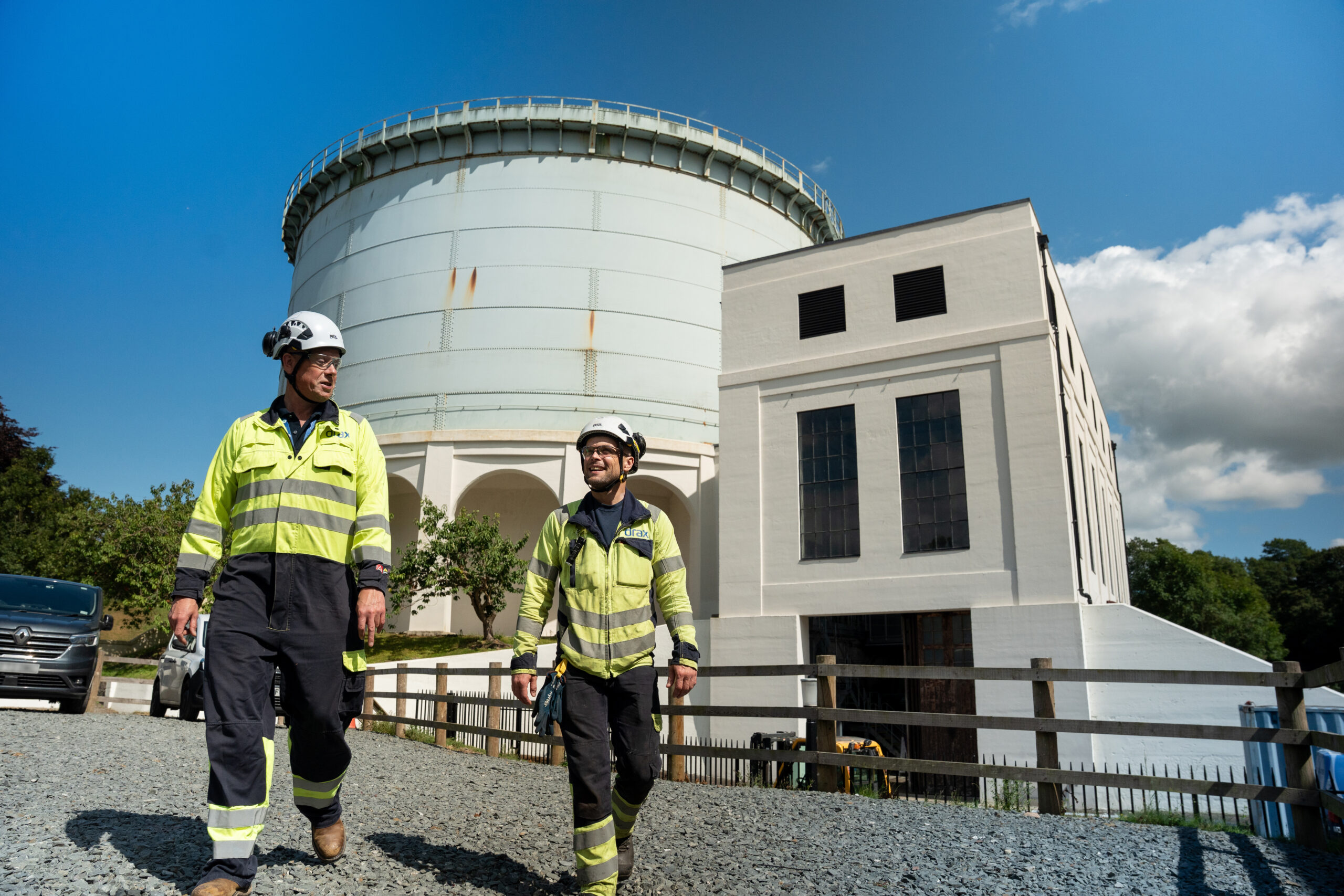
Pumped Storage – Cruachan Power Station
Units 1 and 2 are continuing to perform well, providing flexible power generation and a wide range of system support services.
An investment to refurbish and upgrade two units is progressing, with units 3 and 4 undertaking a planned outage programme through 2026 and 2027. The project is underpinned by a 15-year Capacity Market agreement worth over £220 million(4) (c.£15 million Adj. EBITDA pa) and will add 40MW of additional capacity and improve unit operations.
In late December 2025, a grid connection failure caused by assets owned by Scottish Power Energy Networks (SPEN) has resulted in an ongoing forced outage on units 3 and 4. SPEN is working with Drax to restore the connection.
Open Cycle Gas Turbines (OCGTs)
Drax expects to assume control of Hirwaun Power Station (Hirwaun), in South Wales, shortly. Hirwaun is the first of three 299MW OCGT plants which Drax is developing in England and Wales.
Battery Energy Storage System (BESS)
In March 2026, Drax completed the acquisition of Flexitricity, an optimiser of flexible energy assets, with a scalable platform expected to support the Group’s ambition to develop a GW scale pipeline of BESS opportunities. Flexitricity’s capabilities complement acquisitions and agreements put in place by Drax between October 2025 and February 2026 for c.710MW(5) (c.1.8GWh) of physical assets and tolling contracts, for total commitments of c.£500 million. Operations are expected to commence from the end of 2027.
Drax is continuing to explore a pipeline of additional opportunities.
Capacity Market agreements
In March 2026, Drax provisionally secured agreements to provide a total of 434MW of capacity (de-rated 399MW) principally from its pumped storage and hydro assets(6). The agreements are for the delivery period October 2029 to September 2030, at a price of £27/kW/year(7), with income of c.£11 million in that period. These are in addition to agreements for existing assets which extend to September 2029.
Taken together with existing agreements for pumped storage, hydro and OCGTs, Drax has c.£650 million of index-linked Capacity Market agreements, providing high-quality earnings which extend visibility of the Group’s contracted earnings to 2043.

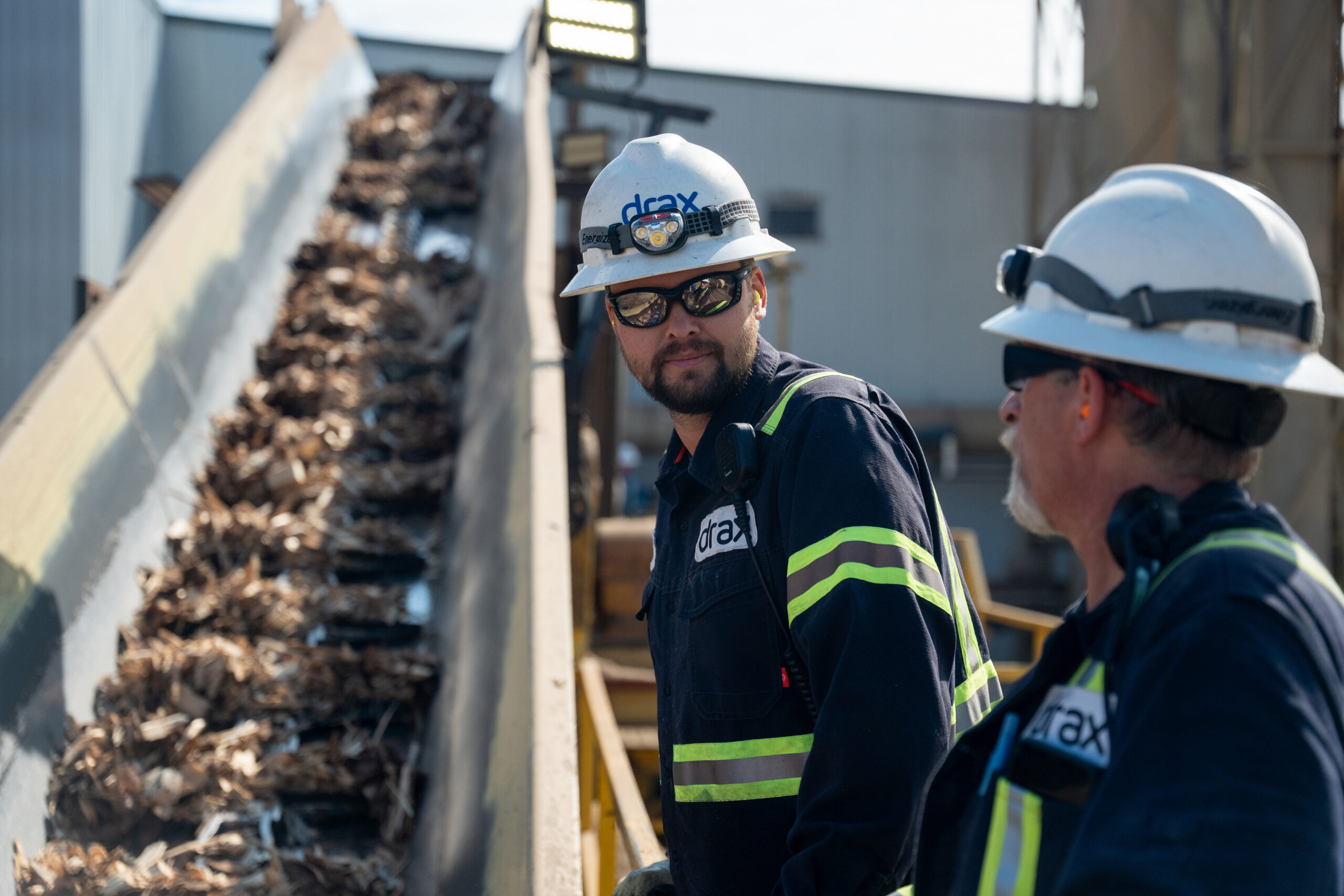
Pellet Production
The Group’s Pellet Production business is performing well, with a continued focus on cost reduction in its US operations, supporting UK energy security via biomass generation at Drax Power Station. A strategic review of the Group’s Canadian operations is ongoing.
Against the backdrop of growing demand for energy security Drax continues to see long-term potential for new and existing markets for bioenergy, which can offer an alternative to fossil fuels, including in the production of sustainable aviation fuels and other industrial processes.
Biomass Generation
Drax Power Station, the UK’s largest single source of 24/7 renewable power, is performing well, supporting UK energy security with flexible and reliable renewable power generation and a wide range of system support services. A major planned outage on one unit is scheduled for the summer.
Generation contracted power sales
As at 28 April 2026, Drax had over £1 billion of contracted forward power sales between 2026 and 2028 on its Renewables Obligation (RO) biomass, pumped storage and hydro generation assets, with over £800 million of associated ROCs. RO generation is fully hedged for 2026. Since its last update on 26 February 2026, the Group has continued to optimise output as the market has moved, adding 0.2TWh (net) to this position at an average price of £200.9/MWh.
| Contracted power sales as at 28 April 2026 | 2026 | 2027 | 2028 | Total |
| | | | |
| Net RO, hydro and gas (TWh)(8) | 11.1 | 2.1(9) | 0.2 | 13.4 |
| Average achieved £ per MWh(10) | 79.7 | 79.4 | 70.6 | 79.6 |
| Contract for Difference (CfD) (TWh) | 2.9 | - | - | 2.9 |
Capital returns
In July 2025, Drax announced a share buyback programme for the purchase of up to £450 million of Drax shares. The programme commenced in October 2025 with a first £75 million tranche, which completed in April 2026. A second £75 million tranche is expected to commence in May 2026.
The total number of voting rights in Drax Group, excluding treasury shares, as at 28 April 2026 was c.336.2 million.
In February 2026, a final dividend of 17.4 pence per share was proposed, subject to approval at the 2026 Annual General Meeting (today, 30 April 2026).
Strategy
Drax is continuing to assess opportunities to invest in energy security, primarily in flexible and renewable energy in the UK, which could support earnings growth.
The Group continues to evaluate opportunities to maximise value from the Drax Power Station site, including the potential for a c.100MW data centre (with an ambition to grow to a >1GW data centre post 2031), as well as other generation sources.
The Group is also assessing options for other renewables projects to complement its portfolio.
Other matters
Drax will report its half year results on Thursday 30 July 2026.
Notes:
- Earnings before interest, tax, depreciation, amortisation, excluding the impact of exceptional items and certain remeasurements.
- As of 23 April 2026, analyst consensus for 2026 Adj. EBITDA was £665 million, with a range of £643 – £682 million. The details of this consensus are displayed on the Group’s website. Consensus – Drax Global
- Measured by output Q1 2025 to Q4 2025. Source: Drax and Elexon
- 2025, real-terms.
- In October 2025, Drax signed an agreement with Apatura Limited to acquire three BESS projects, which when fully commissioned will provide capacity totalling 260MW. All transactions have now completed and are expected to begin entering service from late 2027 onwards.
In February 2026, Drax signed tolling agreements with Fidra and Zenobē for 450MW (1.3GWh) of BESS. Under the agreements Fidra and Zenobē will retain responsibility for construction, maintenance and availability of the asset during the contract period. In return Drax will pay a fixed annual tolling fee from the commercial operation date, in return for full operational control and dispatch rights, and retaining all revenues (excluding Capacity Market and certain other ancillary revenues). The assets are expected to enter service from 2028.
- Cruachan Pumped Storage (units 1 and 2), the Lanark and Galloway hydro schemes (Bonnington, Carsfad, Drumjohn, Earlstoun, Kendoon, Stonebyres, Tongland) and three small legacy gas turbines at Drax Power Station.
- Capacity Market T-4 2029/30 auction real clearing price, with clearing price indexed to UK CPI prior to Delivery Year.
- Includes 0.1TWh of structured power sales in 2026 (forward gas sales as a proxy for forward power), transacted for the purpose of accessing additional liquidity for forward sales from RO units and highly correlated to forward power prices.
- Contracted power sales to March 2027 for biomass units operating under the RO, after which the units will operate under a CfD mechanism.
- Presented net of cost of closing out gas positions at maturity and replacing with forward power sales.
Enquiries:
Drax Investor Relations:
Mark Strafford
[email protected]
+44 (0) 7730 763 949
Chris Simpson
[email protected]
+44 (0) 7923 257 815
Media:
Drax External Communications:
Chris Mostyn
[email protected]
+44 (0) 7743 963 483
Andy Low
[email protected]
+44 (0) 7841 068 415
Website: www.Drax.com
Forward Looking Statements
This announcement may contain certain statements, expectations, statistics, projections, and other information that are, or may be, forward looking. The accuracy and completeness of all such statements, including, without limitation, statements regarding the future financial position, strategy, projected costs, plans, beliefs, and objectives for the management of future operations of Drax Group plc (“Drax”) and its subsidiaries (the “Group”), are not warranted or guaranteed. By their nature, forward-looking statements involve risk and uncertainty because they relate to events and depend on circumstances that may occur in the future. Although Drax believes that the statements, expectations, statistics and projections and other information reflected in such statements are reasonable, they reflect Drax’s current view and no assurance can be given that they will prove to be correct. Such events and statements involve risks and uncertainties. Actual results and outcomes may differ materially from those expressed or implied by those forward-looking statements. There are a number of factors, many of which are beyond the control of the Group, which could cause actual results and developments to differ materially from those expressed or implied by such forward-looking statements. These include, but are not limited to, factors such as: future revenues being lower than expected; increasing competitive pressures in the industry; uncertainty as to future investment and support achieved in enabling the realisation of strategic aims and objectives; and/or general economic conditions or conditions affecting the relevant industry, both domestically and internationally, being less favourable than expected, including the impact of prevailing economic and political uncertainty, the impact of conflict including those in the Middle East and Ukraine, the impact of cyber-attacks on IT and systems infrastructure (whether operated directly by Drax or through third parties), the impact of strikes, the impact of adverse weather conditions or events such as wildfires, changes to the regulatory and compliance environment within which the Group operates. Drax do not intend to publicly update or revise these projections or other forward-looking statements to reflect events or circumstances after the date hereof, and we do not assume any responsibility for doing so.
END