



Archives: Press Release

Biomass sets new UK power generation records

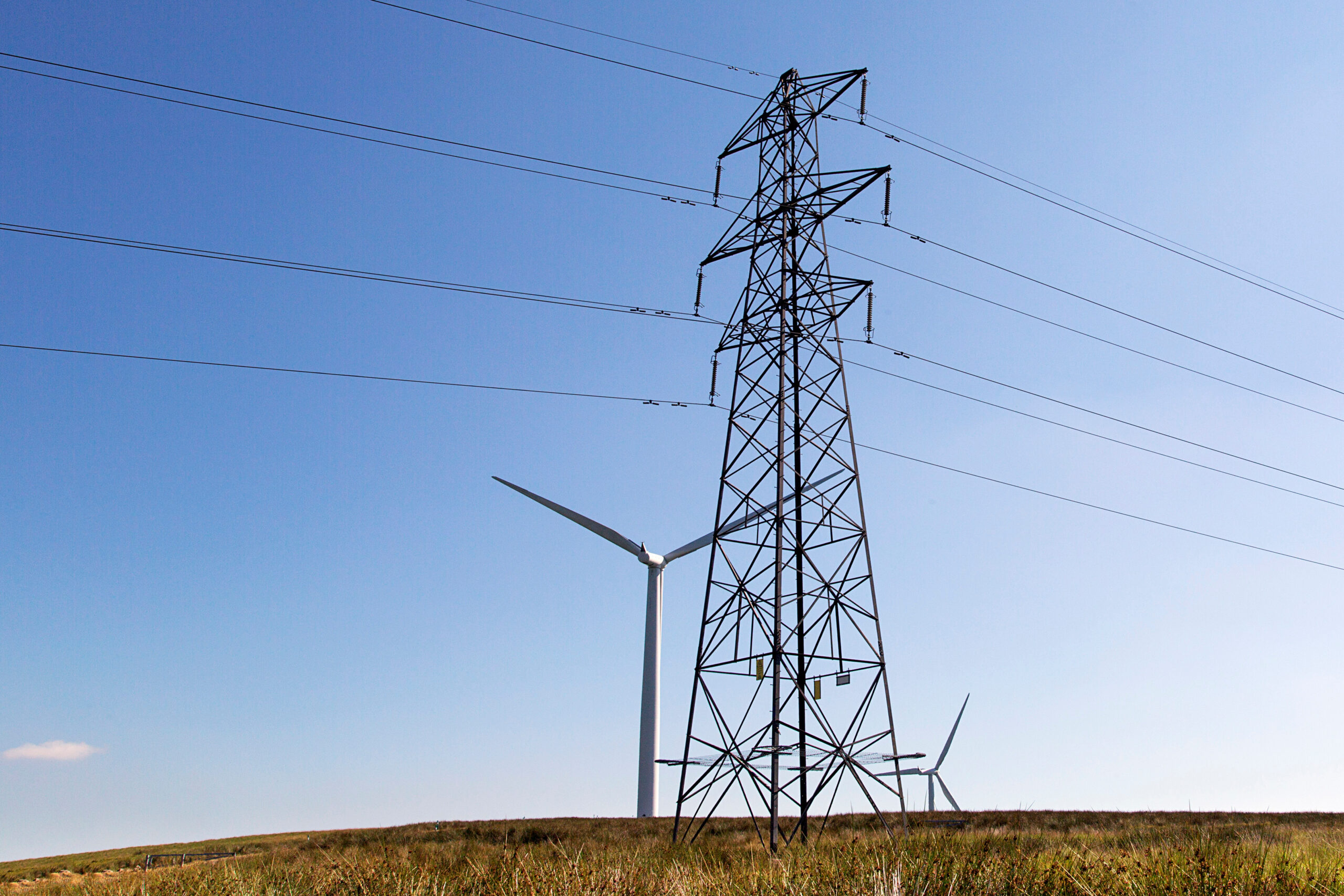
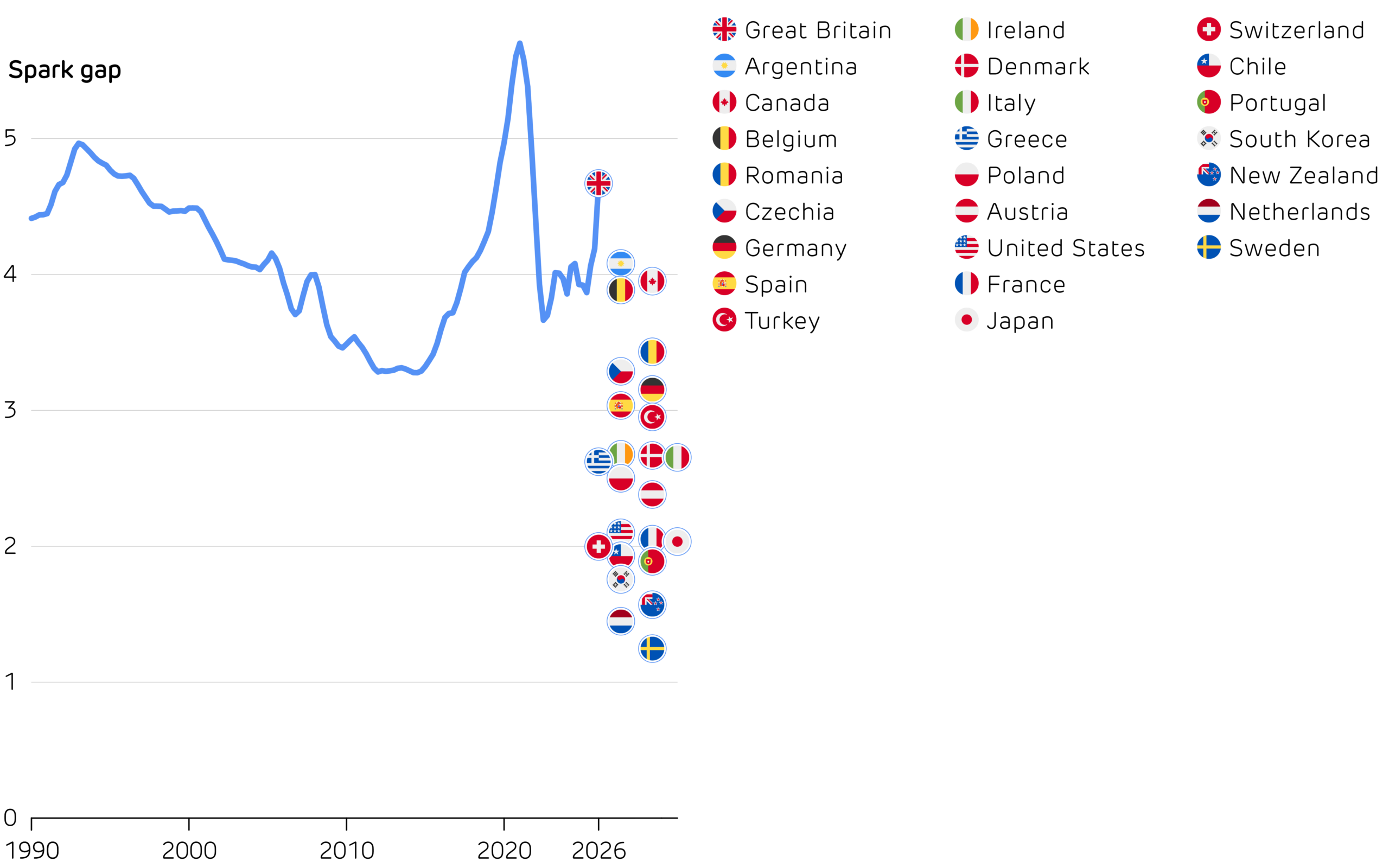
The findings are from a new report which highlights the growing influence Britain’s weather now has on supply and demand for electricity, and ultimately how much it costs. It is expected that the gap between demand for power and the supply from weather-dependent sources of electricity, such as wind and solar, could grow to as much as 75 GW during still winter days by 2035. This is because demand is set to rise steeply in the coming years through the growth of electric vehicles, heat pumps and data centres. 

The report, produced by academics from Imperial College London and commissioned by Drax, shows that almost a fifth (17%) of the UK’s electricity was supplied from biomass power stations during a dark, still September morning as demand spiked. Biomass also provided its largest ever monthly share of power in July, and a new daily output record was also set in the same month. 

“Obsessing about the weather has long been a national pastime for Brits,” says Dr Iain Staffell, lead author of Electric Insights at Imperial College London. 

“Now there is another reason to keep up to date with the forecast, as electricity prices are increasingly influenced by the weather. Storms, heatwaves, snow, and periods of no wind all have big impacts on both how we get our electricity and how much we pay for it. 

“Power demand is rising at its fastest rate for ten years as we swap petrol and diesel cars for electric vehicles and new data centres power more of our lives online. Bridging the gaps in supply when the wind is not blowing or the sun is not shinning is the ultimate test for our electricity system. It’s clear we need more dispatchable power sources plugged into the grid in the coming years to meet these challenges.” 

Britain’s biomass power sector is a diverse mix of generators of different sizes and utilising a range of feedstocks from waste wood to compressed wood pellets, agricultural and energy crops, like willow, miscanthus, and straw, to biogas and biofuels. 

The largest biomass electricity generator is Drax Power Station near Selby in North Yorkshire. Once Western Europe’s largest coal-fired power station, it has been transformed into the UK’s single largest generator of renewable electricity. Earlier this month, it reached an agreement with the UK Government to support power generation through to March 2031.  

Our four generating units can supply electricity whatever the weather is like,”explains Lee Dawes, Drax’s Chief Operations Officer.

“We have a global supply chain and the capability to store hundreds of thousands of tonnes of sustainablebiomass pellets on site. This means when the country needs us, we are there to deliver the power it needs.

Drax Power Station also delivers significant system support services beyond the dispatchable power it provides. These range from managing voltage support and taking care of stability constraints in parts of the network, to supporting grid inertia.With the country having fewer traditional power stations, these services are becoming even more important as intermittent renewables can’t provide them.

“Our new contract with the UK Government means we will be supporting the country’s energy security for many years to come, delivering a net saving for consumers compared to alternative sources of dispatchable generation.” 

ENDS

Media contacts:

Aidan Kerr
Drax Group Media Manager
E[email protected]
T: 07849090368

Editor’s Notes

About Drax

Drax’s purpose is to enable a zero carbon, lower cost energy future. Our strategic aims are to be a global leader in both carbon removals and sustainable biomass pellet production, and to be a UK leader in dispatchable, renewable generation.

Our operations

Drax owns and operates a portfolio of flexible, low-carbon and renewable UK power assets – biomass, hydro, and pumped storage generation – which provide dispatchable power and system support services to the electricity grid.

We are the UK’s largest source of renewable power by output, and Drax Power Station is the UK’s largest single source of renewable electricity by output.

Through our pellet production facilities in North America, Drax is a leading integrated producer of sustainable biomass. Drax has 18 operational and development pellet production sites which will have a nameplate capacity of around 5.4 million tonnes once expansions are complete.

Drax supplies renewable electricity to UK industrial and commercial customers, offering a range of energy-related services including energy optimisation, as well as electric vehicle strategy and management.

Our future

Drax is progressing options for carbon removals using bioenergy with carbon capture and storage (BECCS) technology globally and at our UK biomass power station. We are progressing plans to develop 7 million tonnes of carbon removals through BECCS by 2030.

In 2024, we launched Elimini, a US-based company to lead our global efforts to deliver carbon removals at scale. Elimini’s purpose is to remove carbon for good. To achieve this, it is convening engineers, environmentalists, communities, investors, and innovators to scale the market for carbon removals, with the aspiration of transforming our economies from carbon emitters to carbon removers. For more information, visit elimini.com.

Drax Community Fund gives Selby Preschool financial boost to help secure its future

The donation, made through Drax’s Community Fund, will help to secure the future of an early years setting that provides essential support to families in one of Selby’s most deprived areas.

In addition to the donation, Drax has offered pro-bono advice and guidance to help the preschool strengthen its long-term sustainability. This includes support with identifying future funding opportunities, developing community partnerships and building wider networks of support across the local area.

Selby Preschool plays a crucial role in providing a safe and nurturing environment for young children while supporting parents and carers through affordable childcare and family-focused services. However, financial pressures had left the preschool in urgent need of additional support to remain open and continue serving the local community.

Kim Webb-Fryer, Manager, Selby Community Preschool, said:

“Selby Community Preschool has been at the heart of Selby for over 30 years, supporting generations of families. Like many small charities, we’ve faced some real challenges in recent years. Still, with resilience, dedication, and the incredible support of our new friends at Drax, we’re feeling hopeful for the future. Their generosity enables us to continue providing a safe, nurturing, and affordable preschool for local children and families who need us the most. We’re proud of our long history in Selby and, with this support, we look forward to being here for the next 30 years and beyond.”

Nick Robinson, Drax’s UK Community & Education Manager, said:

“Selby Preschool is an important part of the local community, offering children a positive start in life and supporting families who rely on its care and services. Through the Drax Community Fund, we’re proud to play a part in helping to safeguard its future and provide guidance to help it build long-term resilience. Our place-based approach to community investment means we’re committed to supporting the people, projects and organisations that make a real difference in and around Selby.”

The donation reflects Drax’s ongoing commitment to place-based investment in the Selby area, supporting projects that deliver meaningful social and educational impact for local communities.

ENDS

Media contacts:

Kieran Wilson
E: [email protected] 
T: 07729092807

Editor notes

About Drax

Drax’s purpose is to enable a zero carbon, lower cost energy future. Our strategic aims are to be a global leader in both carbon removals and sustainable biomass pellet production, and to be a UK leader in dispatchable, renewable generation.

Drax is the UK’s largest source of renewable power by output, and one of the largest producers of sustainable biomass globally. Drax is progressing options for carbon removals using bioenergy with carbon capture and storage (BECCS) technology. For more information on our power generation, pellet production, and retail energy solutions operations, visit drax.com.

In 2024, we launched Elimini, a US-based company to lead our global efforts to deliver carbon removals at megaton scale. Elimini’s purpose is to remove carbon for good. For more information, visit elimini.com.

Drax’s response to Guardian article on Stand.earth report on Canadian biomass

In response to an article published by The Guardian regarding our Canadian sustainable biomass operations, Miguel Veiga-Pestana, Drax’s Chief Sustainability Officer, wrote to the newspaper outlining the facts behind our Canadian supply chain. An extract of it was published by The Guardian on 21 November 2025 and it is published in full below:

The environmental non-profit Stand.earth fails to see the wood from the trees when it comes to the Canadian forestry industry and Drax’s limited role within it (Drax still burning 250-year-old trees sourced from forests in Canada, experts say, 9 November). We do not own forests or sawmills, and we do not decide what areas are approved for harvesting.

The vast majority (81%) of our Canadian fibre came from sawdust and other sawmill residues created when sawmills produce wood products used in construction and other industries in 2024. The remaining 19% of our fibre came from forest residues, including low-grade roundwood, tops, branches and bark.

Forests in British Columbia are harvested for lumber by timber companies under strict regulations set by the province’s government in joint decision-making with indigenous First Nations. Around 94% of the province’s forests are on public land, and it is a legal requirement for these sites to be reforested in a free-growing condition. Leaving Canada’s forests unmanaged is not the answer to preserving these landscapes. We witnessed this in Jasper, Alberta last year when a wildfire on unmanaged land led to $880m in damages and significant amounts of CO2 released into the atmosphere.

The fibre highlighted in Stand.earth’s report was low-grade roundwood, which was rejected by sawmills following approved harvesting. Without the biomass sector using this harvest residue, it would likely be controllably burned on site to help mitigate wildfire risk. It is far better to positively use this residual fibre to generate renewable electricity. None of the fibre highlighted in this report came from a designated old growth management area or old growth deferral area.


Detailed response to the Guardian article claims:

Guardian article:

“The report, by Stand.earth, a Canadian environmental non-profit, claims that a subsidiary of Drax Group received hundreds of truckloads of whole logs at its biomass pellet sites throughout 2024 and into 2025, which were likely to have included trees that were hundreds of years old.”

The report claims that the company received 90 truckloads of logs sourced from “old-growth forests” in the Skeena region of British Columbia, home to some of Canada’s largest undeveloped wilderness areas.

Stand.earth claims that in 2024 and 2025 Drax received at least an additional 425 truckloads of whole logs from “cutblocks” – areas of forest land designated for timber harvesting – which contained old-growth forests.

The report claims that 63 of these loads came from three cutblocks that contained more than 90% old-growth forest, “meaning that this purchase almost certainly contained old growth”.

It added that the remaining 362 lorry loads of whole logs came from 22 cutblocks in the Skeena region that were more than 80% old growth, meaning that it was “likely” they contained old growth.

Drax response:

In advance of the publication of their research, we informed Stand.earth, through the Guardian newspaper, that it appeared they were analysing our operations at a timbermark (TM)2 level and not at the more granular cut block level.

10 out of the 25 TMs provided to Drax by Stand.earth/The Guardian had no identifiable OGMA and/or OGDA areas when assessed using the BC Government’s Technical Advisory Panel data layer, which suggests that the report’s author may be using outdated or non-authoritative data sources 

None of the fibre purchased by Pinnacle Renewable Energy Inc., a subsidiary within the Drax Group between January 2024 and July 2025 from the timber marks (TMs) provided by Stand.earth/The Guardian contained any material from protected old growth (OGMA) or deferred old growth forest stands (OGDA) 

Cutblock level data is not available in the public domain and therefore any analysis of our biomass operations in Canada which relies solely on TM level-data  cannot be conclusively relied on to confirm that fibre sourced from the TMs in question included OGMA and/or OGDA areas, as this can only be determined by analysis of cutblocks from where fibre was sourced. 

There are numerous OGDA data sources released by the B.C. Government, but the one source used by industry and government at the operational level is:  Old Growth Technical Advisory Panel (TAP) – Priority Deferral Areas – Datasets – Data Catalogue  

This source is what we use to define “no-go” areas in accordance with Drax’s commitment to not source directly from designated areas of old growth. Drax originally made the decision in October 2023 to stop sourcing wood fibre directly from OGDAs and OGMAs. This has be incorporated as a commitment into the Drax Biomass Sourcing Policy which was published in March 2025. 

This commitment uses cutblock level assessment for OGMA and OGDA and is only applicable to forest based raw materials. Cutblock level assessments are important to avoid unnecessary burning of slash debris.  

For example: a cutting permit, which is identified by a TM, can contain several cutblocks, up to 10 or more in some cases. By assessing at the cutblock level we ensure that material in blocks that do not contain mapped protected or deferred old growth are utilized which prevents unnecessary burning of slash debris. Burning of slash debris contributes to smoke which contributes to poor air quality in the surrounding communities and while Drax cannot utilize all slash debris out in the forest, the implementation of our commitment to sourcing biomass which avoids direct sourcing from designated areas of old growth allows us to help improve air quality caused by the burning of slash debris.  

Our raw material purchases are third party audited by several auditors annually in addition to several internal audits. 

Guardian article:

The report’s findings suggest that the power plant was burning “irreplaceable” trees even as its owners lobbied the UK government for the additional green energy subsidies, which were granted earlier this week.

Drax response:

Drax does not own forests or sawmills, does not harvest forests and has no influence over the decision-making process as to what fibre will be utilised in third party timber processing.    Forests in British Columbia are harvested for lumber by timber companies under strict regulations set by the province’s government in joint decision making with indigenous First Nations. Around 94% of the province’s forests are on public land, and it is a legal requirement for these sites to be reforested in a free-growing condition.  

Guardian article:

“The company has claimed that it sources wood only from “well‐managed, sustainable forests” to manufacture the pellets that are shipped from its sites in Canada and the US to be burned at its UK power plant.

“But these claims have been questioned by Britain’s energy regulator and the Financial Conduct Authority after a BBC Panorama documentary in 2022 reported that Drax had cut down primary forests in Canada to turn into wood pellets.”

Drax response:

Ofgem found no evidence that our biomass failed to meet the sustainability criteria of the Renewables Obligation (RO) scheme, nor that the Renewable Obligation Certificates we received for the renewable power we produced had been provided incorrectly.

Guardian article:

“Old-growth forests are defined by the local government as areas that include trees older than 250 years in slow-growth ecosystems, or older than 140 years in ecosystems in which trees are replaced more quickly.

“Drax said in October 2023 it had stopped sourcing wood from areas designated by the government of British Columbia as “protected” or “deferred” old-growth forest stands, but it did not dispute that it was still sourcing wood from other sites containing old growth.”

Drax response:

In line with our 2025 Biomass Sourcing Policy, none of the fibre highlighted in the report came from a designated Old Growth Management Area or Old Growth Deferral Area. The fibre highlighted in Stand.earth’s report was low-grade roundwood which was rejected by sawmills following approved harvesting.  

Guardian article:

The region where Drax is operating is an area where we’ve tracked a disproportionate amount of logging in high-risk forests with our satellite monitoring system Forest Eye. With how logging works here in BC, there isn’t really a way for Drax to be operating in these areas and not include old-growth forests in their wood supply. The people of the UK should know that the risk of old-growth trees being cut down to produce wood pellets is higher than ever.

Drax response:

Drax does not own forests or sawmills, does not harvest forests and has no influence over the decision-making process as to what fibre will be utilised in third party timber processing.  Forests in British Columbia are harvested for lumber by timber companies under strict regulations set by the province’s government in joint decision making with indigenous First Nations.

Guardian article:

As part of the investigation, Hansen visited a biomass pellet production site, owned by a Canadian subsidiary of Drax, where the company’s reliance on whole logs was apparent.

“It was quite stark. The yards are sprawling and there were huge piles of logs there. These were large, healthy trees of different ages. We saw some trees which had been scorched by fire, but they were still alive when they were cut, which was apparent by the oozing sap.”

Drax response:

Any low-grade roundwood purchased by Pinnacle Renewable Energy Inc., a subsidiary within the Drax Group (Drax), was rejected by the forest company who originally conducted the harvesting.

Drax does not own forests or sawmills, does not harvest forests and has no influence over the decision-making process as to what fibre will be utilised in third party timber processing.

Log rejection in the forest can occur for a variety of reasons including dimensions, defects, wood rot, shape and species.

Without a market for the low-grade woody fibre from forests, this material may be burnt on site at sawmills or may be left as slash (piles of timber damaged or otherwise unsuitable for lumber mills and other woody debris). Removal of debris is a tactic used as part of a wider set of activities to mitigate wildfire risk and the spreading of disease and pests in Canadian forests. But it is not a good climate or economical outcome to burn forest residue in forests or at the roadside. We believe it is far better to positively use this residual fibre to generate renewable electricity.

The Government of British Columbia states that increasing the use of lower quality fibre during primary harvesting operations “is a significant priority for the government and forest sector in British Columbia” and that increasing the use of residual fibre “supports new and existing forest industries that use lower quality timber, mitigates future timber supply shortfalls and reduces carbon emissions and smoke through decreased slash burning of post-harvest waste.” 


More information on Canadian forest management:

WPAC (Wood Pellet Association of Canada) published an article calling out “misleading claims about Canada’s wood pellet industry that have surfaced again in international media.”

Gordon Murray, the Executive Director of the WPAC said, “These portrayals ignore the broader context of Canadian forest management and misrepresent how Canada’s pellet industry works within an integrated forest sector.”

Read the full article


Drax strengthens partnership with Selby High School by enabling alternative provision at Skylark Centre

The initiative will offer a sustainable, high-quality learning environment for students with untapped potential, whose needs may be better met through a flexible, more tailored education approach.

The cost and logistics of alternative provision are frequently a burden on school budgets, and solutions that are sustainable over the long term are rare. Under the new agreement, Selby High School will use the Skylark Centre every Monday from 9.30 am to 2.30 pm, and on Fridays from 12.30 pm to 2.30 pm, continuing the long-standing local partnership between the school and Drax.

Set within a nature reserve, the Skylark Centre offers a calm and stimulating learning space that helps students re-engage with their studies. In addition to literacy and numeracy classes, students will take part in hands-on and outdoor-based activities, benefitting their emotional wellbeing and personal development. They may also volunteer at the Skylark Centre or support nearby initiatives, including work with the Yorkshire Swan Rescue Hospital and the ongoing maintenance of the natural area.

Sarah Wardell, Assistant Principal for Inclusion, Selby High School said:

“At the Skylark Centre in Drax we offer an Alternative Provision programme for students at Selby High School, to help them engage with their school curriculum. The Skylark Centre is a fully equipped learning space within a nature reserve. We provide a nurturing learning environment with opportunities for physical activity, hands-on learning and connection with nature, and students also take part in literacy and numeracy classes. We aim to re-engage students with their learning and improve emotional wellbeing, whilst providing an enjoyable and engaging curriculum. Collaborative activities, such as den building, scientific projects and nature walks, promote resilience, build confidence and enhance social skills which raises self-esteem and provides a sense of achievement. Students have loved their time here and there have been many first experiences of being immersed in nature.”

Nick Robinson, Drax’s UK Community & Education Manager, said:

“We are delighted to support Selby High School in expanding its alternative provision through the Skylark Centre. We believe that learning environments embedded in nature can make a real difference in helping young people reconnect with their education, offering a setting that nurtures both intellect and wellbeing. Our hope is this partnership will provide a stable, inspiring platform for students to thrive, while reinforcing Drax’s commitment to supporting education and community in the region.”

This initiative reaffirms Drax’s ambition to contribute positively to the communities in which it operates, backing educational, environmental and social programmes that help young people flourish.

ENDS

Media contacts:

Kieran Wilson
E: [email protected] 
T: 07729092807

Editor notes

About Drax

Drax’s purpose is to enable a zero carbon, lower cost energy future. Our strategic aims are to be a global leader in both carbon removals and sustainable biomass pellet production, and to be a UK leader in dispatchable, renewable generation.

Drax is the UK’s largest source of renewable power by output, and one of the largest producers of sustainable biomass globally. Drax is progressing options for carbon removals using bioenergy with carbon capture and storage (BECCS) technology. For more information on our power generation, pellet production, and retail energy solutions operations, visit drax.com.

In 2024, we launched Elimini, a US-based company to lead our global efforts to deliver carbon removals at megaton scale. Elimini’s purpose is to remove carbon for good. For more information, visit elimini.com.

Historic Scottish hydro power station set for £15M upgrade

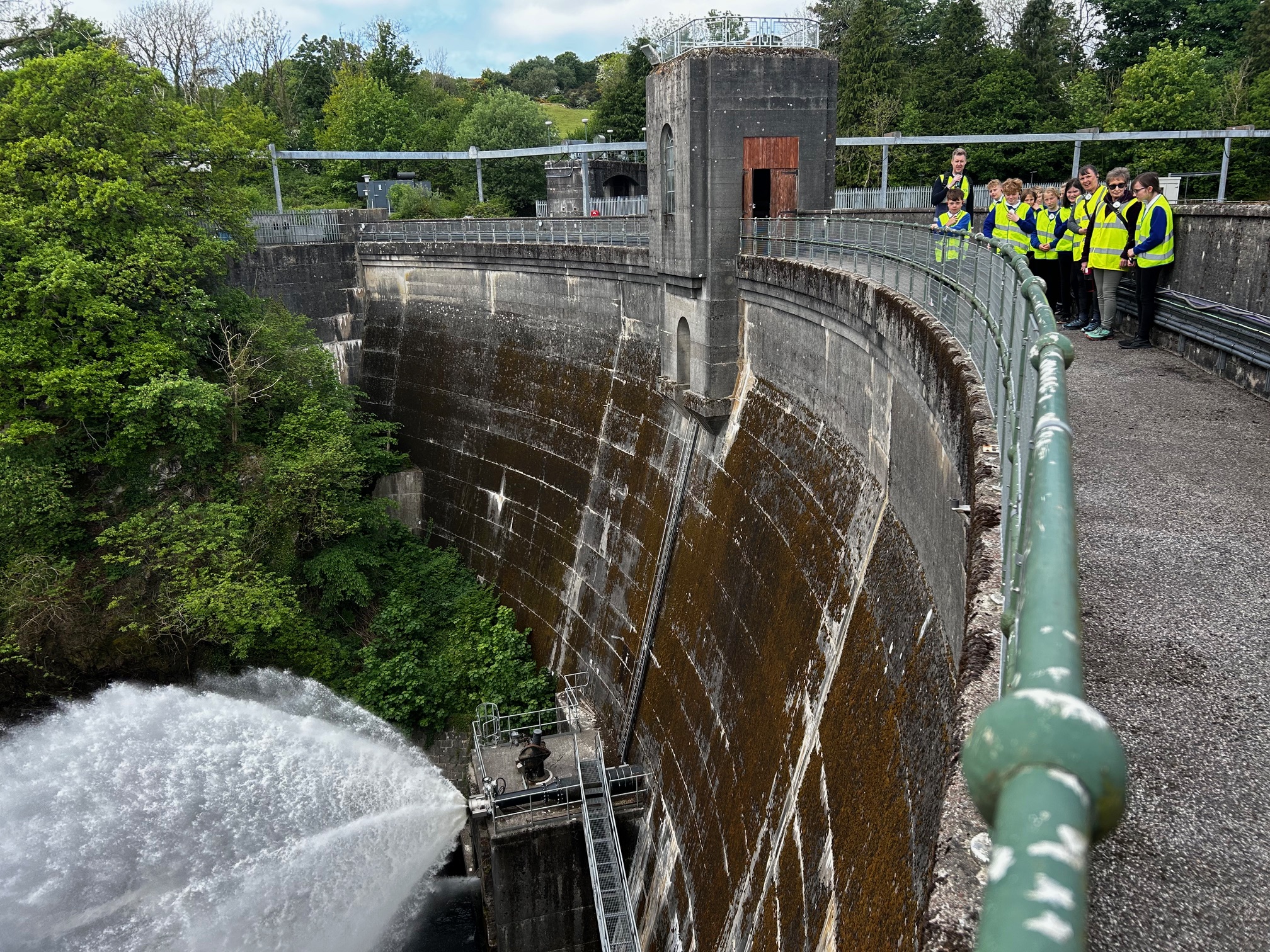
Constructed in the 1930s, Glenlee’s two 12MW generating units are powered by water stored in the huge Clatteringshaws Reservoir. With over 30 million tonnes of water stored annually, Glenlee is one the scheme’s most flexible and valuable assets.

Drax has appointed UK-based Quarzelec as the main contractor for the upgrade project. Quartzelec is a leading independent electrical engineering group delivering solutions and services in both UK and global markets and is a technical authority in rotating electrical machines.

Ian Kinnaird, Drax’s FlexGen Assets Director, said: “Glenlee has been generating renewable electricity for almost a century, and this major refurbishment will help it continue to do so for many years to come.”

“While Galloway’s power stations may have been constructed decades ago, the homegrown renewable electricity they generate has never been more important. This multi-million-pound investment by Drax will ensure it is generating renewable power for many years to come.”

Andrew Dawson, Head of Engineering at Quartzelec’s HQ Facility, Rugby, UK said: “We are very proud to be given the opportunity to continue our long-term relationship with Drax on a project as significant as this. Our technical expertise is deeply rooted in the hydro and wider power generation market, and we are delighted that we can continue to develop the UK’s renewable power schemes.”

The major upgrade to the two units will improve their operability and reliability, lengthening their lifespan. Drax’s investment is underpinned by the award of 15-year capacity market agreement worth around £20 million.

Drax is also progressing an £80 million upgrade of its iconic ‘Hollow Mountain’ Cruachan pumped storage hydro plant in Scotland.

ENDS

Media contacts:

Aidan Kerr
Drax Group Media Manager
E: [email protected]
T: 07849090368

Editor’s Notes

About Drax

Drax’s purpose is to enable a zero carbon, lower cost energy future. Our strategic aims are to be a global leader in both carbon removals and sustainable biomass pellet production, and to be a UK leader in dispatchable, renewable generation.

Our operations

Drax owns and operates a portfolio of flexible, low-carbon and renewable UK power assets – biomass, hydro, and pumped storage generation – which provide dispatchable power and system support services to the electricity grid.

We are the UK’s largest source of renewable power by output, and Drax Power Station is the UK’s largest single source of renewable electricity by output.

Through our pellet production facilities in North America, Drax is a leading integrated producer of sustainable biomass. Drax has 18 operational and development pellet production sites which will have a nameplate capacity of around 5.4 million tonnes once expansions are complete.

Drax supplies renewable electricity to UK industrial and commercial customers, offering a range of energy-related services including energy optimisation, as well as electric vehicle strategy and management.

Our future

Drax is progressing options for carbon removals using bioenergy with carbon capture and storage (BECCS) technology globally and at our UK biomass power station. We are progressing plans to develop 7 million tonnes of carbon removals through BECCS by 2030.

In 2024, we launched Elimini, a US-based company to lead our global efforts to deliver carbon removals at scale. Elimini’s purpose is to remove carbon for good. To achieve this, it is convening engineers, environmentalists, communities, investors, and innovators to scale the market for carbon removals, with the aspiration of transforming our economies from carbon emitters to carbon removers. For more information, visit elimini.com.

Low-carbon dispatchable CfD contract agreement

RNS Number :  1955G
Drax Group plc
(“Drax” or the “Group”; Symbol:DRX)

Highlights

  • Contract signed with UK Government (Low Carbon Contracts Company – LCCC) for operation of Drax Power Station (DPS) post March 2027 subject to usual CfD conditions precedent
  • No significant changes from Heads of Terms agreed in February 2025
    • Contract period April 2027 to March 2031
    • CfD scheme with a strike price of £109.90/MWh (2012, real) applied to all four biomass units
    • 6TWh pa generation collar with flexible operation to support high and low demand periods
    • Opportunity for unrestricted merchant generation above collar


Drax confirms that it has signed an agreement with the LCCC for a low-carbon dispatchable CfD to cover all four biomass units at DPS over the period April 2027 to March 2031, with a strike price of £109.90/MWh (2012, real). The terms are substantively as announced in the Heads of Terms (February 2025).

The strike price has reduced from the price referenced in the Heads of Terms, to reflect favourable movements in exchange rates which are expected to reduce the overall cost of biomass, resulting in no material impact on expectations for Adj. EBITDA, which remain unchanged.

Drax Group CEO, Will Gardiner, said:

“We are pleased to have agreed this new contract with the UK Government, which will support UK energy security into the 2030s and deliver a net saving for consumers compared to alternative sources of dispatchable generation.

“The agreement will support the rollout of intermittent renewable generation across the UK and provides options to ensure Drax Power Station continues to play a long-term role in the regional economy and UK energy system.

“Independent analysis by Baringa estimates savings of up to £3.1 billion over the four-year term, all while ensuring Drax Power Station keeps the lights on for millions of homes and businesses, no matter the weather.”

Details of the low-carbon dispatchable CfD

Under the agreement DPS will sell c.6TWh of power annually against a season ahead reference price (as per the current CfD scheme) and then seek to maximise generation from its four units at times of high demand and reduce generation at times of low demand, using the station’s flexibility to support UK energy security and capture higher prices (similar to their operation under the Renewable Obligation Certificate scheme). The agreement allows for additional merchant generation above 6TWh, system support and ancillary services, where Drax continues to play an active role.

The agreement includes enhanced biomass sustainability requirements, including that all biomass used at Drax Power Station is sustainably sourced and verified through monitoring, reporting, and verification requirements, including enhanced auditing of the biomass supply chain. Drax welcomes these enhancements to its existing procedures, which demonstrate the Group’s commitment to delivering climate, nature and people positive outcomes.

Enquiries:

Drax Investor Relations:
Mark Strafford
[email protected]
+44 (0) 7730 763 949

Chris Simpson
[email protected]
+44 (0) 7923 257 815

Media:
Drax External Communications:
Chris Mostyn
[email protected]
+44 (0) 7743 963 483

Andy Low
[email protected]
+44 (0) 7841 068 415

Website: www.drax.com

This announcement contains inside information for the purposes of Article 7 of the Market Abuse Regulation (EU) No 596/2014 which is part of UK law by virtue of the European Union (Withdrawal) Act 2018, as amended (“MAR”). The person responsible for the release of this information was Hillary Berger (Group General Counsel).

Forward-looking statements

This announcement may contain certain statements, expectations, statistics, projections and other information that are, or may be, forward-looking. The accuracy and completeness of all such statements, including, without limitation, statements regarding the future financial position, strategy, projected costs, plans, beliefs, and objectives for the management of future operations of Drax Group plc (“Drax”) and its subsidiaries (“the Group”), are not warranted or guaranteed. By their nature, forward-looking statements involve risk and uncertainty because they relate to events and depend on circumstances that may occur in the future. Although Drax believes that the statements, expectations, statistics and projections and other information reflected in such statements are reasonable, they reflect Drax’s current view and no assurance can be given that they will prove to be correct. Such events and statements involve risks and uncertainties. Actual results and outcomes may differ materially from those expressed or implied by those forward-looking statements.

There are a number of factors, many of which are beyond the control of the Group, which could cause actual results and developments to differ materially from those expressed or implied by such forward-looking statements. These include, but are not limited to, factors such as: future revenues being lower than expected; increasing competitive pressures in the industry; uncertainty as to future investment and support achieved in enabling the realisation of strategic aims and objectives; and/or general economic conditions or conditions affecting the relevant industry, both domestically and internationally, being less favourable than expected, including the impact of prevailing economic and political uncertainty; the impact of conflicts around the world; the impact of cyber-attacks on IT and systems infrastructure (whether operated directly by Drax or through third parties); the impact of strikes; the impact of adverse weather conditions or events such as wildfires; and changes to the regulatory and compliance environment within which the Group operates. We do not intend to publicly update or revise these projections or other forward-looking statements to reflect events or circumstances after the date hereof, and we do not assume any responsibility for doing so.

END


Iconic ‘Hollow Mountain’ power station celebrates 60 years of keeping Scotland’s lights on

The underground plant is one of just four pumped storage hydro power stations in the whole of the UK – playing a critical role in stabilising the national grid.

Since its opening by Queen Elizabeth II on 15 October 1965, Cruachan Power Station has powered homes and businesses across Scotland. Cruachan stores excess power from the grid and then generates it back into the system when it is needed like a giant water battery.

Thousands of people participated in the construction of the power station. Those who took part in the drilling, blasting, and clearing of rocks from inside the mountain earned the affectionate nickname of ‘Tunnel Tigers.’ Since its completion, generations of schoolchildren have ventured into the underground facility to see where the Tigers once roared through granite to build this iconic piece of Scottish engineering.

Six decades on from its opening, its current owners Drax are investing £80 million to upgrade and refurbish the plant. Once completed in 2027, the plant will be able to generate even more power, making it even more important to the country’s national grid.

Ian Kinnaird, Drax’s FlexGen Assets Director, said: “As we have celebrated Cruachan’s diamond anniversary throughout the year, I have heard from so many people who have a special place in their heart for this unique power station. Each year at our award-winning visitor centre we encounter people who have wonderful stories and memories of working at the site or passing through on a memorable school trip.”

“Drax believes Cruachan has a bright future as well as a history and a legacy to be proud of. We are investing £80 million in upgrading and refurbishing the plant so it can play a role in stabilising the national grid for many more decades to come.”

The upgrade project will see the generating capacity of two of the plant’s four units increased to raise the facility’s total generating capacity to 480 MWs.

ENDS

Media contacts:

Kieran Wilson
E[email protected]
T: 07729092807


Editor notes

About Drax

Drax’s purpose is to enable a zero carbon, lower cost energy future. Our strategic aims are to be a global leader in both carbon removals and sustainable biomass pellet production, and to be a UK leader in dispatchable, renewable generation.

Our operations

Drax owns and operates a portfolio of flexible, low-carbon and renewable UK power assets – biomass, hydro, and pumped storage generation – which provide dispatchable power and system support services to the electricity grid.

We are the UK’s largest source of renewable power by output, and Drax Power Station is the UK’s largest single source of renewable electricity by output.

Through our pellet production facilities in North America, Drax is the world’s second largest producer of sustainable biomass. Drax has 18 operational and development pellet production sites which will have a nameplate capacity of around 5.4 million tonnes once expansions are complete.

Drax supplies renewable electricity to UK industrial and commercial customers, offering a range of energy-related services including energy optimisation, as well as electric vehicle strategy and management.

Our future

Drax is progressing options for carbon removals using bioenergy with carbon capture and storage (BECCS) technology globally and at our UK biomass power station. We are progressing plans to develop 7 million tonnes of carbon removals through BECCS by 2030.

In 2024, we launched Elimini, a US-based company to lead our global efforts to deliver carbon removals at megaton scale. Elimini’s purpose is to remove carbon for good. To achieve this, it is convening engineers, environmentalists, communities, investors, and innovators to scale the market for carbon removals, with the aspiration of transforming our economies from carbon emitters to carbon removers. For more information, visit elimini.com.

Drax and NGIS launch new partnership to map carbon stocks of Drax’s North American biomass sourcing areas

Drax is a producer, user and seller of biomass pellets. It owns and operates Drax Power Station, which is the UK’s largest single source of renewable power. In 2024, the site generated over 5% of the country’s electricity using biomass pellets primarily sourced from North America.

The new agreement highlights the progress Drax is making on the commitments the company set in its Sustainability Framework, including delivering evidence on forest carbon stocks in all its principal biomass feedstock sourcing areas by the end of 2026.

Miguel Veiga-Pestana, Drax Group Chief Sustainability Officer, said: “We are proud to launch this new partnership with NGIS. This agreement will help us deliver on the commitments we set in our Sustainability Framework including taking action, with our supply chain, to being deforestation, degradation and conversion free.

“We hope this new data of the carbon stock of our sourcing areas can help increase global confidence in biomass as a sustainable resource. It will help inform our work with our suppliers and help us to deliver on our sustainable biomass commitments.

“Sustainable biomass is a secure renewable energy source that can be used to generate electricity for millions of people. Drax sources from forests that are managed for the high-grade lumber used in a range of applications, from construction materials to furniture-making. Processing of trees in forests and at sawmills generates a huge volume of residual wood with few other commercial uses such as defective logs, branches, sawdust, chips and bark. We process these into biomass pellets which we then use to help the UK keep the lights on.”

NGIS is a Google Premier Partner that specialises in Geospatial solutions that use satellite imagery to monitor global supply chains. Under the new partnership, NGIS will use a range of Earth Observation data, combined with Google AI and machine-learning tools to model and monitor the carbon sequestered in forests that Drax sources from. It will also track other indicators of forest health, including tree cover and condition.

The information is presented to Drax on an accessible digital platform through which users can, for example, see satellite imagery with overlays of historical images of where trees have been harvested on one date and then on another later date where regrowth and reforestation have started.

Nathan Eaton, NGIS Executive Director said: “This partnership is a great showcase for the use of innovative Geospatial capability to address Drax’s significant commitments to help meet the world’s increasing demand for secure energy, sustainably.”

Drax is already using the new data in discussions with its supply chain to help tailor initiatives that support forest health, biodiversity and assessing the impact of events such as floods, diseases, fires and hurricanes on forests too.

ENDS

Media contacts:

Andrew Low
E: [email protected] 
T: 07841 068415

Editor notes

About Drax

Drax’s purpose is to enable a zero carbon, lower cost energy future. Our strategic aims are to be a global leader in both carbon removals and sustainable biomass pellet production, and to be a UK leader in dispatchable, renewable generation.

Drax is the UK’s largest source of renewable power by output, and one of the largest producers of sustainable biomass globally. Drax is progressing options for carbon removals using bioenergy with carbon capture and storage (BECCS) technology. For more information on our power generation, pellet production, and retail energy solutions operations, visit drax.com.

In 2024, we launched Elimini, a US-based company to lead our global efforts to deliver carbon removals at megaton scale. Elimini’s purpose is to remove carbon for good. For more information, visit elimini.com.

About NGIS

NGIS is a global leading Geospatial company. Our recent Impact Report showcases our mission to empower organisations and address global challenges through cutting-edge geospatial solutions. Utilising leading technology products and our dedicated team of passionate and professional experts, we remain committed to making a positive difference for our clients and communities worldwide.

Our TraceMark platform is being used by large enterprises with complex supply chains to provide compliance with regulations such as the EU Deforestation Regulation. Built on Google Cloud Geospatial and AI technology, TraceMark provides advanced supply chain traceability for fibres, including inbound material and finished goods.

Drax and Loch Ken Trust strengthen partnership to deliver water safety and sustainability in Dumfries and Galloway

Now entering its second year of a three-year commitment, the partnership has already expanded opportunities for young people to learn practical skills outdoors, strengthened safety on and around Loch Ken, and helped communities plan for the future.

In its first year, the partnership supported the launch and expansion of the Loch Ken Youth Water Safety Programme, which aims to ensure no young person leaves school without hands-on water safety training.

A total of 24 sessions were delivered to local schools and youth organisations including Dalbeattie High School, Wallacehall Academy, Castle Douglas High School, Kirkcudbright Academy, Kirkcudbright Sea Cadets and Dumfries Disability Sports. In total, 209 young people received training, with the programme winning praise from local MSP Emma Harper and being showcased in national guidance published by Water Safety Scotland. The Galloway Activity Centre was also awarded Paddle Award UK accreditation for its role in the delivery of the sessions, underlining the programme’s quality and impact.

The partnership also enabled Loch Ken Trust to provide an additional 260 ranger hours during peak season, including funding for a seasonal ranger to ensure patrol coverage across the summer months. This increase has improved visitor engagement, enhanced safety and helped protect the natural environment around Loch Ken.

Lindsay Stewart, Lock Ken Trust Manager said: “The support from Drax has been transformative. It’s enabled us to expand our water safety programme, grow our ranger service, and connect more young people with nature. Together, we’re making a real difference for local communities and the environment.”

As the partnership continues, both organisations remain committed to building on early successes and delivering a long-term positive impact for people and the natural environment of Dumfries and Galloway.

Education has been another major success of the partnership, with six sessions held for local primary schools and youth groups such as Crossmichael Primary, Dalry Primary, Glenkens Youth Group and Glenkens Cubs. More than 100 children took part in activities ranging from campfire safety and responsible camping to the Scottish Outdoor Access Code and invasive species awareness. Higher and further education students also benefitted, with 25 undergraduates and postgraduates from universities including Glasgow, Teesside, Lancaster and Exeter visiting the site for case studies and fieldwork on cold water shock, ecosystem monitoring and community sustainability.

“This partnership is a great example of how Drax works with local organisations to deliver on the goals set out in our sustainability framework.”, said Sarah Baird, Drax Community Manager for Scotland

“By supporting Loch Ken Trust, we’re helping to improve safety, resilience and environmental awareness in communities close to our operations. The first year has already achieved so much, and we’re excited to see what more can be delivered in year two” she added.

The partnership has also helped build resilience across the Glenkens, working with local organisations such as the Castle Douglas Development Forum to develop a resilience plan and host a community conference. Events like “How to Save a Life” encouraged volunteer engagement, while representatives from all eight Glenkens communities came together to share learning and strengthen preparedness for future challenges.

With the second year of the partnership already underway, Loch Ken Trust has delivered even more ranger hours, water safety training and nature-based education sessions. Plans for this year place an increasing emphasis on climate awareness and outdoor learning, ensuring that schools, youth groups and local communities continue to benefit from tailored support.

ENDS

Media contacts:

Kieran Wilson
E: [email protected]
T: 07729092807

Editor’s Notes

About Drax

Drax’s purpose is to enable a zero carbon, lower cost energy future. Our strategic aims are to be a global leader in both carbon removals and sustainable biomass pellet production, and to be a UK leader in dispatchable, renewable generation.

Our operations

Drax owns and operates a portfolio of flexible, low-carbon and renewable UK power assets – biomass, hydro, and pumped storage generation – which provide dispatchable power and system support services to the electricity grid.

We are the UK’s largest source of renewable power by output, and Drax Power Station is the UK’s largest single source of renewable electricity by output.

Through our pellet production facilities in North America, Drax is a leading integrated producer of sustainable biomass. Drax has 18 operational and development pellet production sites which will have a nameplate capacity of around 5.4 million tonnes once expansions are complete.

Drax supplies renewable electricity to UK industrial and commercial customers, offering a range of energy-related services including energy optimisation, as well as electric vehicle strategy and management.

Our future

Drax is progressing options for carbon removals using bioenergy with carbon capture and storage (BECCS) technology globally and at our UK biomass power station. We are progressing plans to develop 7 million tonnes of carbon removals through BECCS by 2030.

In 2024, we launched Elimini, a US-based company to lead our global efforts to deliver carbon removals at scale. Elimini’s purpose is to remove carbon for good. To achieve this, it is convening engineers, environmentalists, communities, investors, and innovators to scale the market for carbon removals, with the aspiration of transforming our economies from carbon emitters to carbon removers. For more information, visit elimini.com.