
Tag: solar

Britain’s solar boom needs energy storage to tackle evening price spikes, new report finds

Britain’s rapid growth in solar power is helping cut emissions from the electricity system, but a lack of storage is leaving the grid increasingly exposed to higher prices and periods of tight supply, according to the latest Drax Electric Insights quarterly report authored by independent academics from Imperial College London.

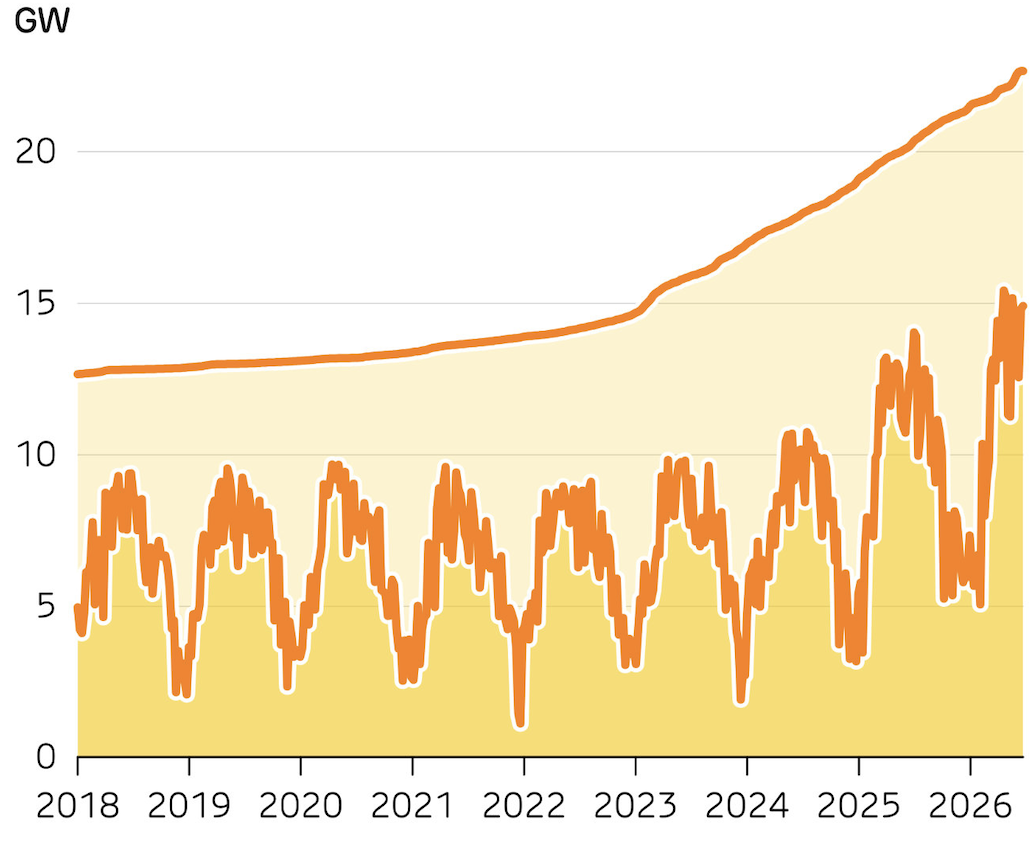
The report found that Britain’s power system can now operate with very high levels of low-carbon generation during periods of strong sunshine. Britain added 2 GW of solar capacity over the past year, and during April, solar generation reached a record 15.4 GW. This helped zero-carbon sources account for a record 98.8% of electricity supply for one half-hour period.

The installed capacity (top line) and peak power output (bottom line) of Britain’s solar panels. 
Strong solar generation reduces Britain’s reliance on gas during the day and helps meet demand for air conditioning during heat waves. The challenge comes later, as solar output falls sharply in the evening, just as electricity demand typically increases, leaving Britain reliant on gas-fired generation to fill the gap. In June, Britain’s wholesale electricity prices after 7pm rose to over double their level at 2pm.

June’s heatwaves exposed the pressures on the system. Wholesale electricity prices rose above £500/MWh, their highest ever recorded in the month of June, while NESO issued its first-ever summertime Electricity Margin Notice.

Heatwaves can put further pressure on the electricity system, as we have seen over the summer. Air conditioning and greater cooling load increases demand just as high temperatures reduce the efficiency of power lines and thermal plants. Calm, low-wind evenings can also add to the pressure, leaving grid operators with fewer sources of generation available to meet the required demand.

Dr Iain Staffell, lead author of the report and Associate Professor at Imperial College London, said:

“Britain’s solar success should not end when the sun goes down. Batteries, pumped hydro and other storage tech can keep that daytime electricity flowing into the evening, which will reduce our reliance on gas and exposure to foreign market price spikes.

“Every new solar panel strengthens the case for storage. We need to build the two together. Otherwise, we risk breaking clean-power records at lunchtime and paying for expensive gas-fired power by dinnertime.”

The Government’s Solar Roadmap aims to put solar panels on an extra 3 million homes, adding a further 10 GW by 2030. The report warns that this will need to be accompanied by investment in electricity storage, flexible infrastructure and other forms of reliable generation if the additional power is to be used effectively.

Will Gardiner, CEO, Drax said:

“There is a feeling that Britain has made real progress in decarbonising its power system and now has a real opportunity to turn some of its energy challenges into solutions that can strengthen energy security, support growth and deliver wider benefits. We need to continue the plan of rolling out homegrown renewables, because they are doing much of the heavy lifting, we are reducing reliance on imported fossil fuels, improving energy security, reducing emissions and lowering bills.

“The key challenge we have is we need to be faster and more joined up. At Drax we’re all about delivering resilient, reliable, renewable power today while investing in the flexible, low-carbon technologies that we need to effectively meet demand. This means looking beyond single technologies, it is a whole-system challenge, where renewable generation, dispatchable low-carbon power, storage and flexibility all need to work together.”

Read the full Electric Insights report here.

ENDS

Media contacts:

Kieran Wilson
E: [email protected]
T: 07729092807

About Drax

Drax’s purpose is to enable a zero carbon, lower cost energy future. Our strategic aims are to be a UK leader in flexible, renewable generation and a global leader in sustainable biomass pellet production.

Our operations

Drax owns and operates a portfolio of flexible, low-carbon and renewable UK power assets – biomass, hydro, pumped storage and OCGT generation – which provide dispatchable power and system support services to the electricity grid.

We are the UK’s largest source of renewable power by output, and Drax Power Station is the UK’s largest single source of renewable electricity by output.

Through our pellet production facilities in North America, Drax is a leading integrated producer of sustainable biomass.

Drax supplies renewable electricity to UK industrial and commercial customers, offering a range of energy-related services including energy optimisation, as well as electric vehicle strategy and management.

Why flexibility has become the UK’s shock absorber

This article has been republished with permission from Enlit World.

Will Gardiner, Drax CEO

Britain’s electricity system has never stood still. Over the past century it has continually reinvented itself to meet the needs of the country it serves.

The first major tasks of energy transformation in the twentieth century included mass electrification and cleaning up power generation – driven by the formation of the National Grid in 1926, the phase out of coal, and the growth of renewable energy.

Today, three major pressures have converged including the continued growth of renewable energy, which is bringing greater intermittency into the electricity system, electricity demand is rising sharply as more sectors electrify and the grid is coming under greater strain as new technologies and infrastructure connect to the network.

These are creating a new defining test: building system flexibility that can respond to more variable supply, volatile demand, and a strained grid. Flexibility is not a nice-to-have. It is the system’s shock absorber.

Essential flexibility

Flexibility operates on both the supply and demand sides of the energy equation, in the form of storage, generation (dispatchable and renewable), smart energy management, and shifting workloads.

Achieving this depends on a range of technologies – including transmission infrastructure, flexible generation assets, long-duration energy storage and battery energy storage systems (BESS), and asset optimisation platforms that help manage electricity demand and supply in real time – each playing an important role in supporting a more resilient grid.

No single technology provides the answer. Together, they help balance intermittent renewable generation, maintain system reliability, improve resilience during periods of high demand and reduce overall system costs.

As energy requirements continue to evolve, flexibility has become just as important as generation itself in ensuring the UK can deliver a secure, reliable and lower-carbon electricity system.

Beyond energy

Getting flexibility right delivers benefits that extend well beyond the energy sector.

Recent geopolitical events – from Russia’s invasion of Ukraine to renewed tensions in the Middle East – have highlighted how quickly international energy markets can become volatile. Energy security and national security are becoming increasingly difficult to separate.

Greater domestic generation and increased system flexibility can help reduce that exposure, improve overall system efficiency, support more stable long-term energy costs, encourage investment and job creation, and strengthen the UK’s industrial competitiveness.

Most importantly, it creates the platform for broader economic modernisation. A flexible and resilient electricity system will help enable the technologies, industries and businesses that will drive the UK’s next chapter of growth.

Powering innovation

Any discussion about the future of the UK’s electricity system quickly turns to artificial intelligence. The UK Government forecasts that the country will need at least 6GW of AI-capable data centre capacity by 2030, which is roughly three times more than today’s capacity.

Data centres’ energy needs constantly fluctuate – sometimes by hundreds of megawatts per minute. As workloads surge, pause and restart, the challenge cannot be met by more power alone, but also needs to account for how that power is managed dynamically.

AI will undoubtedly play an important role in shaping future electricity demand patterns, but it is only one part of a much broader picture.

Reliable electricity underpins almost every area of modern innovation. We often think about breakthroughs in healthcare, advanced manufacturing or artificial intelligence as separate stories. The reality is they are not.

They all have one thing in common: they depend on a resilient, flexible electricity system. From more effective cancer treatments and AI-enabled medical imaging to increasingly automated factories and the data centres powering the digital economy, electricity is what makes those innovations possible.

I’ve always considered energy the silent partner behind economic growth. It may not always be the focus of public attention, but it is fundamental to enabling innovation across every sector. However, flexibility is what will decide whether that partner can keep up.

Without a system that can respond to changing patterns of demand, many of those ambitions simply cannot happen at the same speed, or they come at greater cost.

This changing reality has shaped our own thinking. We’ve been evolving from a predominantly single-technology business into a provider of system flexibility.

Defining test

Today, we’re investing across open cycle gas turbines (OCGTs), BESS and renewable generation. Our recommended offer for Bluefield Solar Income Fund has the potential to add approximately 900MW of solar and wind generation. Combined with our other flexible generation assets, our portfolio could exceed 3GW of power capacity if our offer is accepted.

For me, that’s not simply about growing our portfolio. It’s about ensuring we’re investing in the dynamic capabilities the UK will need to power progress. This is where Drax can play a different role not just producing power but helping the system respond when it matters most.

The UK’s electricity system has continually adapted to meet new challenges over the past century, and effectively managing rising demand, intermittency, and more complex patterns of supply and demand will be no different.

That is why the next phase of our energy transition relies not simply on generating more renewable power, but ensuring we have the flexible infrastructure required to use it effectively.

From boardrooms to classrooms: why energy efficiency matters now more than ever

The debate about Britain’s energy future is often framed in terms of large-scale infrastructure and national policy. But some of the most immediate and meaningful progress happens much closer to home, namely on rooftops, in classrooms, and inside the buildings we use every day. 

That is why energy efficiency is not a “nice to have”. It is one of the fastest, fairest and most costeffective ways to lower bills, cut carbon emissions and strengthen energy resilience, particularly for schools and households under financial pressure. 

Our Scotland Community Manager with Head Teacher and pupils from Taynuilt Primary School

Over recent years, Drax has focused on turning that principle into action. Through the Drax Foundation, we invested over £1.2 million in programmes that improve energy efficiency and tackle fuel poverty in the communities where we operate last year. In 2025 alone, 22 schools benefited from new LED lighting and or solar installations, cutting electricity bills by an average of over 60%, while also reducing emissions and improving energy literacy among pupils. Over the same period, more than 1,000 households experiencing fuel poverty received direct financial and practical support to help keep the lights on and homes warm. 

These are not abstract benefits. For schools, lower energy bills free up scarce budgets to reinvest in teaching, facilities and student support. For families facing fuel poverty, energy efficiency can be the difference between persistent crisis and longterm stability. 

This local impact matters even more in the context of the UK Government’s renewed emphasis on rooftop solar for public buildings. The recent announcement by Ed Miliband, Secretary of State for Energy Security & Net Zero, to extend solar installations to a further 100 schools and colleges recognises something we see firsthand. Energy efficiency and onsite renewables deliver immediate savings and longterm resilience. 

Drax’s work with schools over the past three years reflects that same logic. By pairing physical improvements such as solar panels and efficient lighting with education and dataled energy management tools, schools are empowered not only to cut costs today, but to embed longterm energysmart behaviours across their communities. 

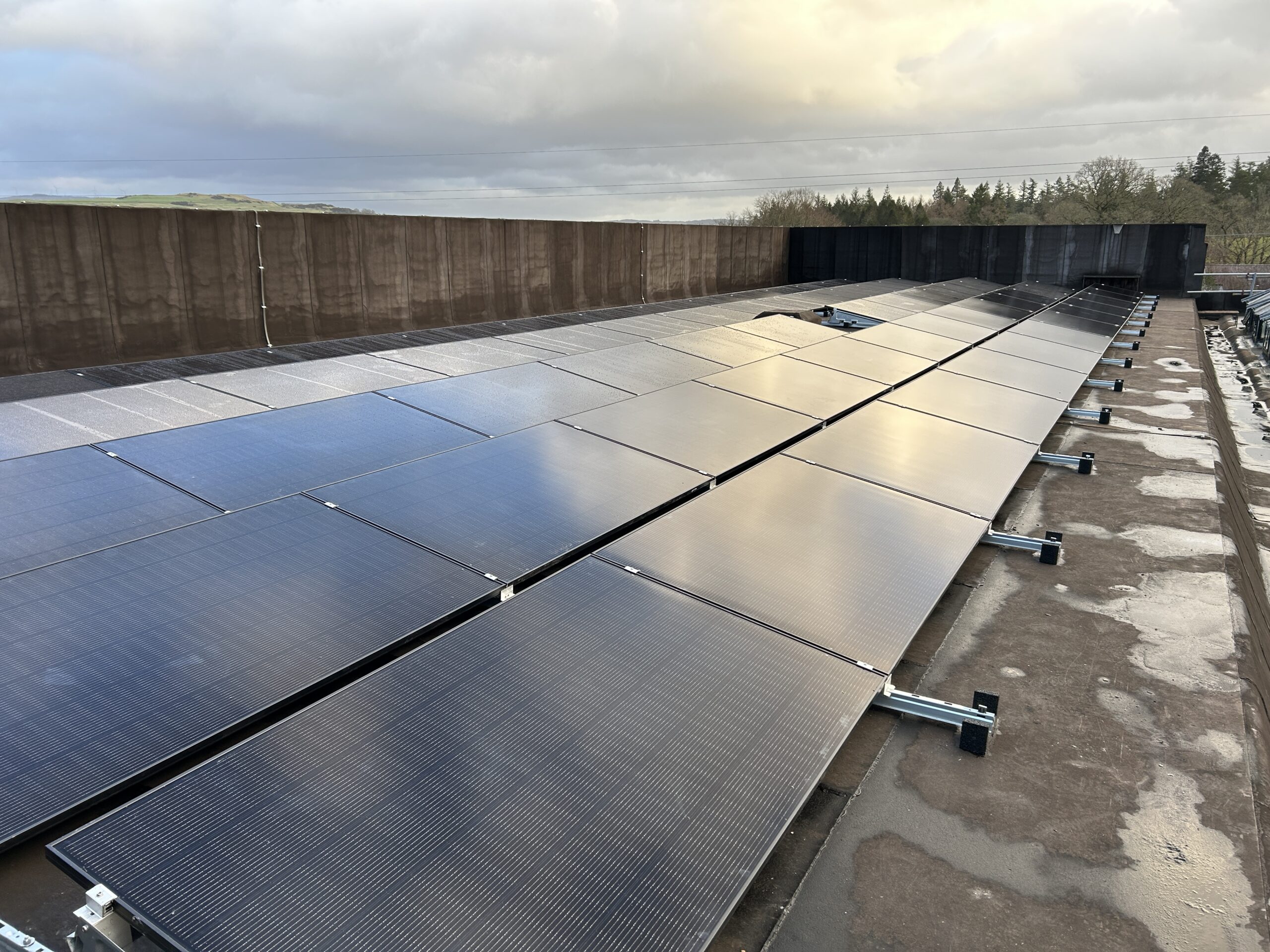
Importantly, this commitment starts at home. In February 2025, Drax Group approved an £850,000 investment to install solar panels across our Lanark and Galloway hydro sites –  once complete, these installations are expected to generate around 480MWh of renewable electricity. The primary aim is to displace our demand for electricity drawn from the grid, with any additional power to be given back to the grid. The project is expected to reduce annual Scope 2 emissions across eight hydro facilities by around 500 tonnes of COe and support the displacement of fossilbased generation within the national grid. 

Delivering this project has required exceptional care and collaboration, from navigating grid connection processes to sensitively installing panels on historic buildings. It highlights both the practical challenges and the longterm value of investing in energy efficiency and onsite renewables. Beyond the emissions savings, the project also demonstrates the strong complementarity of hydro and solar power, which generate at different times and together help strengthen system resilience. 

As pressure on public finances, households and energy systems continues to grow, the lesson is clear. Some of the most impactful climate and affordability solutions are already available. Energy efficiency is fast, proven and scalable and, when combined with targeted solar investment, it delivers benefits that communities can feel almost immediately. 

The transition to a lowercarbon, lowercost energy system will not be achieved by a single policy or technology alone. But by focusing on practical action in schools, in communities, and in our own operations, we can make progress that is both measurable and meaningful.