



Capture the Opportunity
BECCS is the most scalable and affordable carbon removal technology available and can be deployed quickly — playing a key role in achieving net zero by 2050.
What is BECCS?
Bioenergy with carbon capture and storage is the process of capturing and permanently storing carbon dioxide (CO2) that is generated during the production of electricity from sustainable biomass.
This is the only carbon removal technology that also generates low carbon renewable power.
Why is BECCS important for decarbonisation?
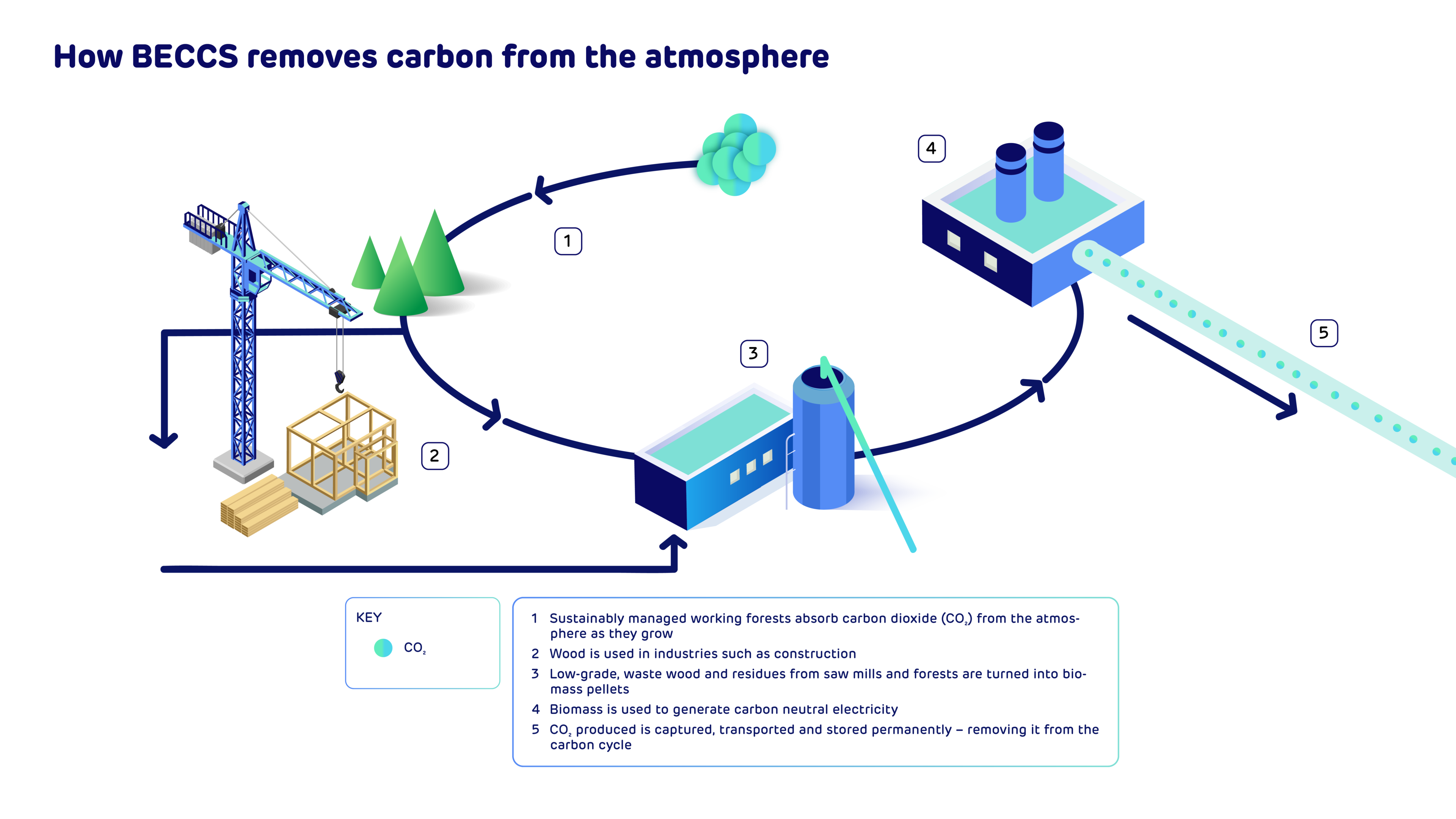
Unlike the linear, irreversible process of emitting carbon from fossil fuels, sustainable biomass exists in a closed carbon cycle.
By adding carbon capture and storage technology, the carbon cycle is broken. Instead of being released into the atmosphere, carbon is transported and stored in a secure, geological formation underground, producing what’s known as an engineered carbon dioxide removal.
The impact of BECCS in the UK
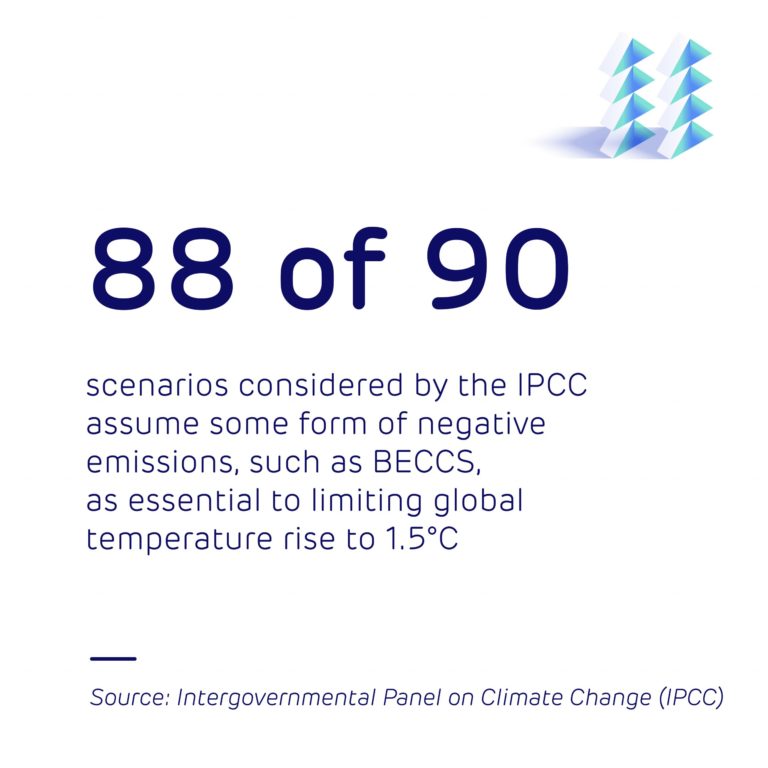
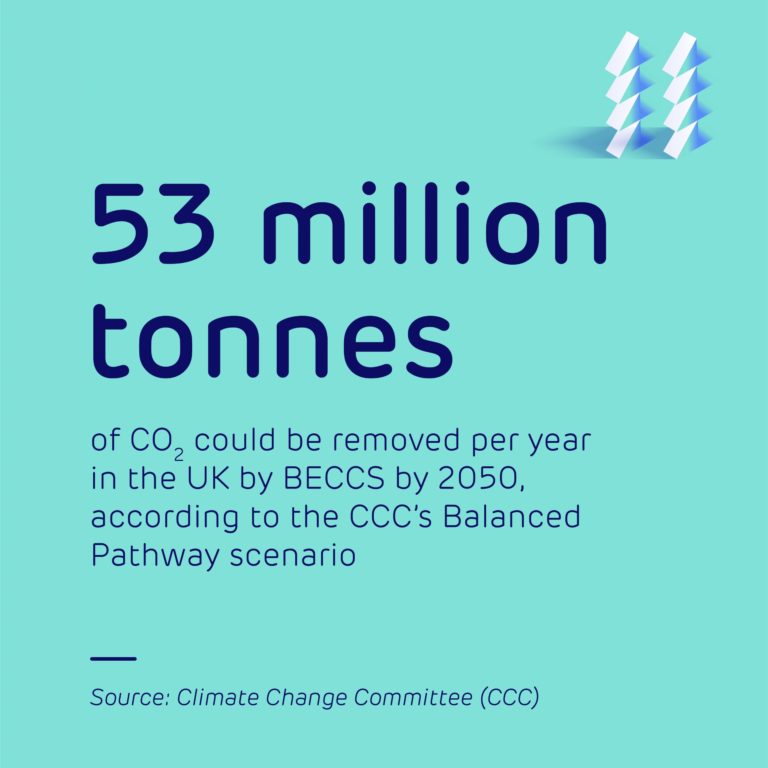
Cutting-edge carbon removal technologies will help the UK, and the world, hit net zero.
CCUS and BECCS present significant export opportunities.
Since the UK has ample storage space for significant levels of CO2 beneath its territorial waters, there is also a significant opportunity for the UK to store CO2 for other countries as part of a larger carbon capture, use and storage (CCUS) export of technology and expertise. The early development of a CCUS industry in the UK will allow us to seize this export and storage opportunity early, otherwise other countries will take our place.
The UK has developed a substantial biomass import logistics network and supply chains that can continue to be utilised in the long term. Deployment of BECCS at plants such as Drax means that these existing supply chains — where significant investment has already been made — would lower the overall capital costs of developing new infrastructure. The economies of scale that large power plants like Drax provide mean that this CO2 can be captured more cost effectively than in smaller plants.
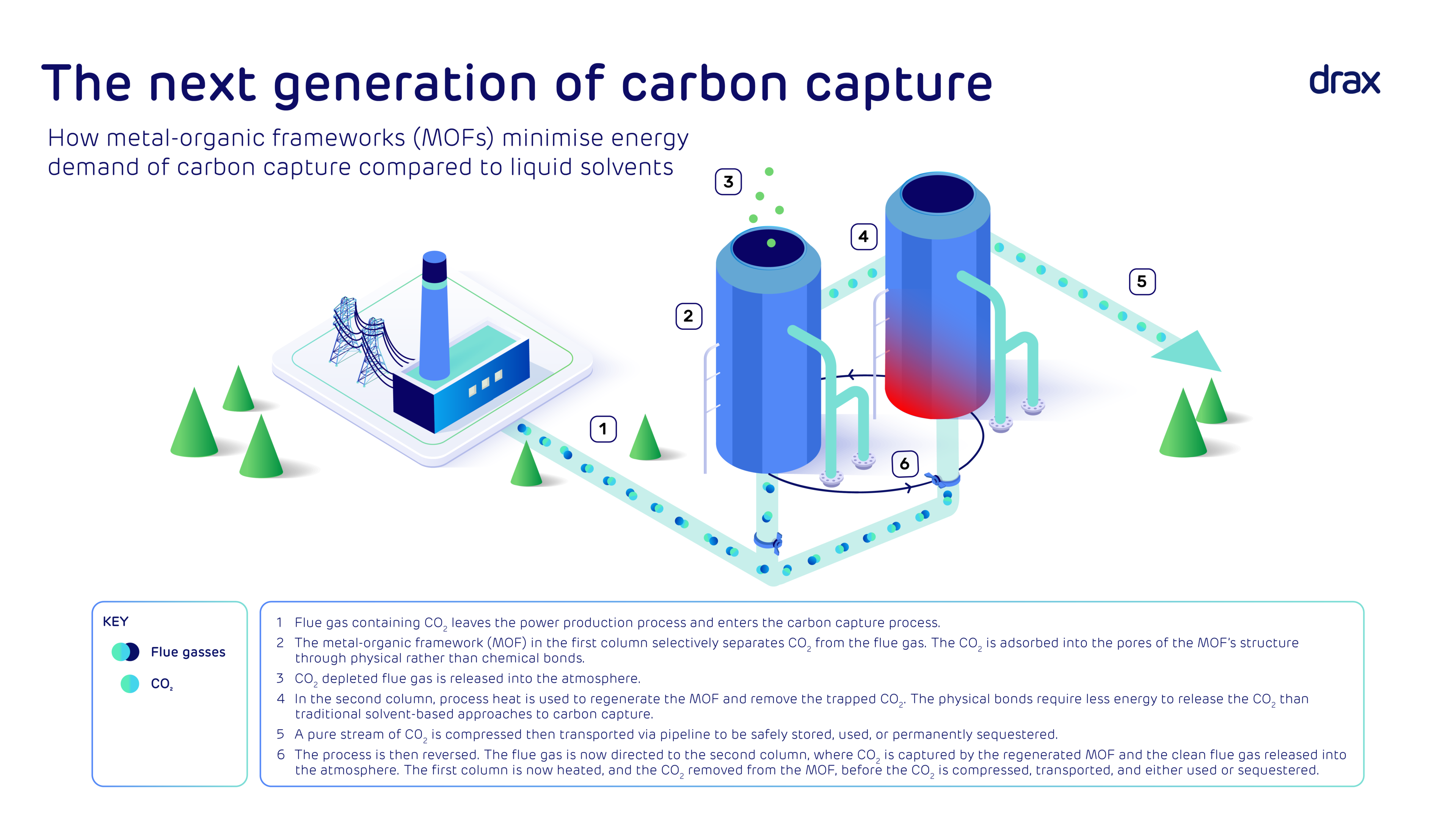
- How the technology could work
- How BECCS removes carbon
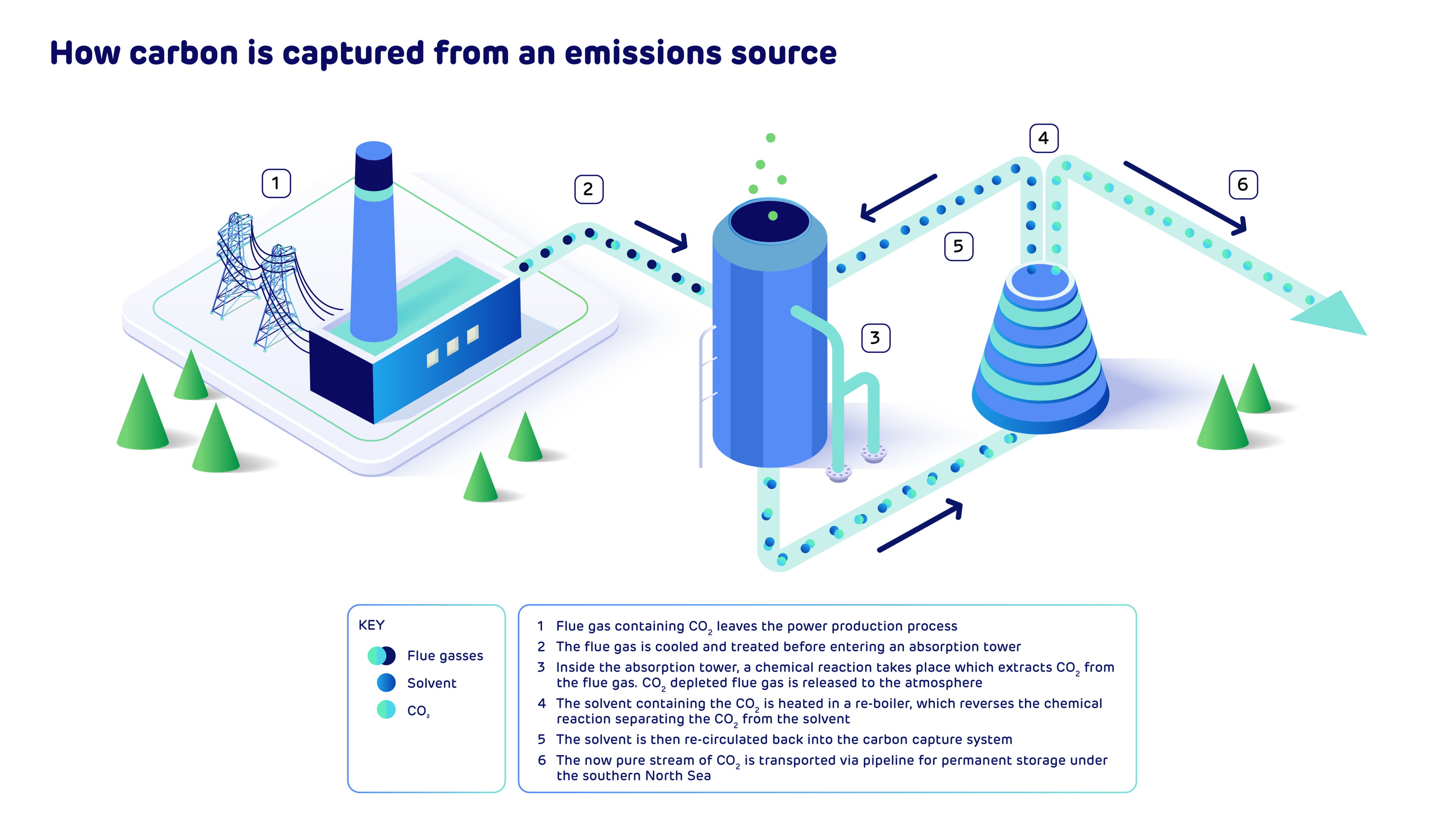
- How carbon is captured
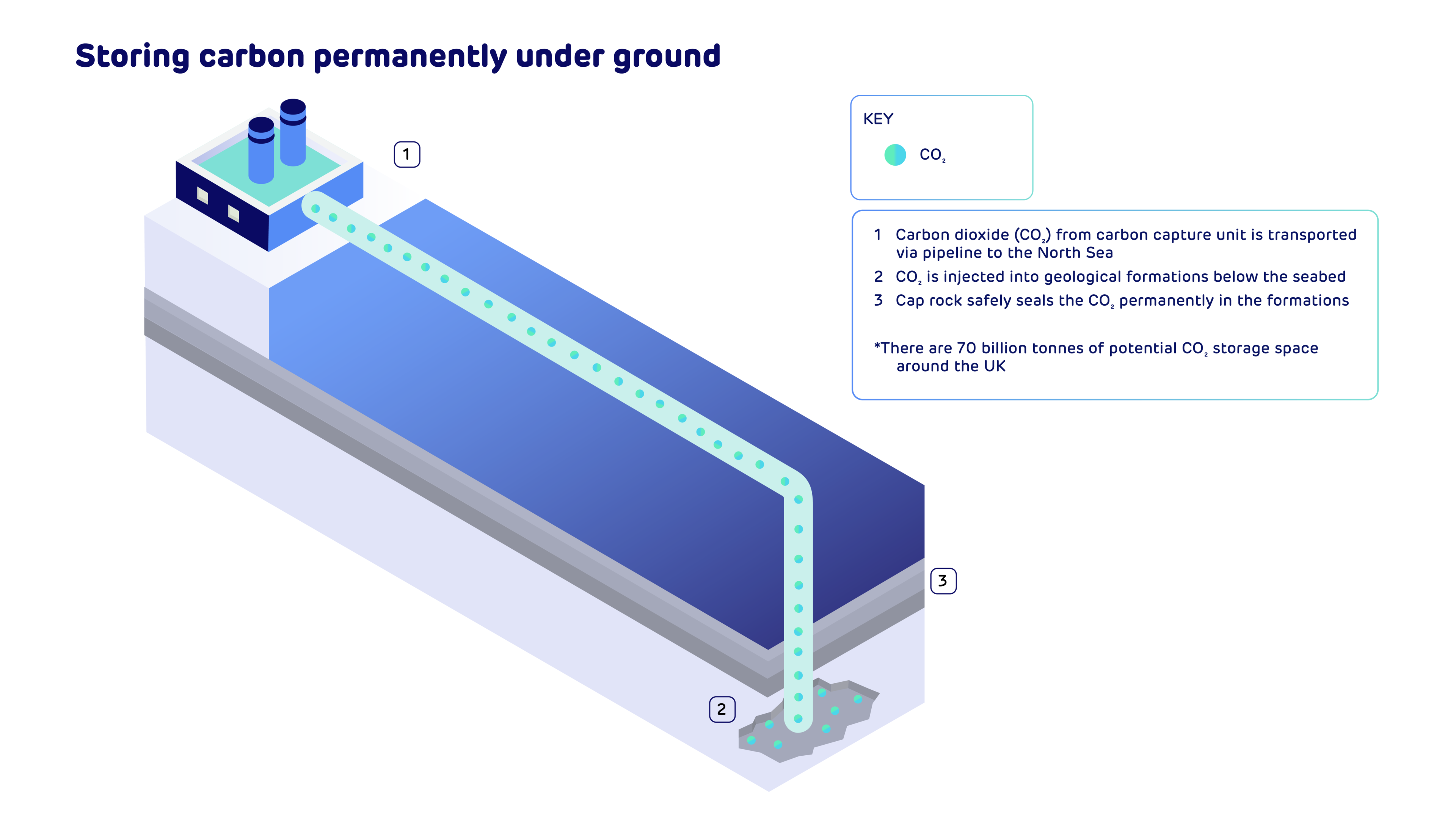
- How carbon is stored
Frequently Asked Questions
- What is BECCS?
- How does BECCS achieve negative emissions?
- Is BECCS a proven technology?
- Is BECCS sustainable?
- Is transporting and storing CO2 safe?
- How will the captured carbon be stored?

BECCS is an innovative technology that has been developed to permanently remove carbon dioxide from the atmosphere.
BECCS provides negative emissions, as well as stable, renewable electricity and will play a vital role in tackling the climate crisis and supporting energy security.
 Negative emissions are created when you permanently remove more CO2 from the atmosphere than is created across your operations.
With BECCS, flue gases are produced when sustainable biomass is used to generate renewable electricity, these gasses are captured through a chemical reaction. The captured CO2 is then stored permanently in deposits such as saline aquifers found under the sea. The process of electricity generation becomes carbon negative, as more CO2 has been removed from the atmosphere than has been added.
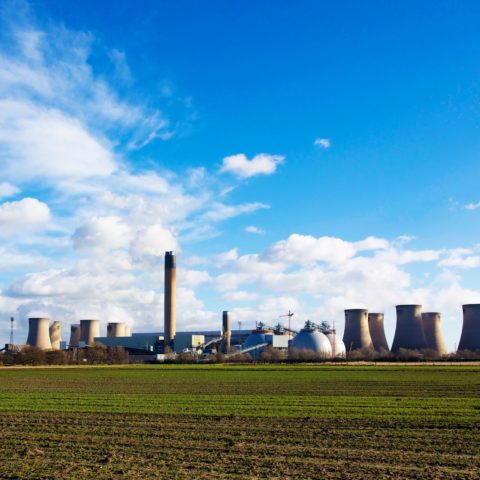 Yes. Drax has been testing a number of carbon capture technologies since our first trial began in 2018.
Carbon capture technology is not new and has been used in the fossil fuel and oil & gas industries for many years. There are currently 26 CCS facilities operating worldwide, with a further 39 either planned or under construction.
 Research commissioned by Drax shows there is enough sustainable biomass available globally to support BECCS projects to capture up to 4GT of CO2 without adversely impacting forest health, biodiversity or food security.
This is equivalent to four times the annual CO2 emissions from commercial aviation.
Learn more about sustainable biomass
 Yes. Drax, alongside our partners – National Grid Ventures and Equinor – have decades of experience safely transporting gas by pipeline and injecting and storing CO2 in saline aquifers offshore.
In the UK, the North Sea is already home to significant CCS projects such as the Equinor-operated Sleipner field in the Norwegian sector which is now capturing and storing around 1 million tonnes of CO2 each year from natural gas. Since the Sleipner project started in 1996 around 20 million tonnes of CO2 has been safely captured and stored under the seabed.
Estimates suggest the UK could have up to 80 billion tonnes of CO2 storage accessible offshore, and the Sleipner field CCS project demonstrates the feasibility of this technology and the potential for Britain to use the North Sea in the fight against climate change.
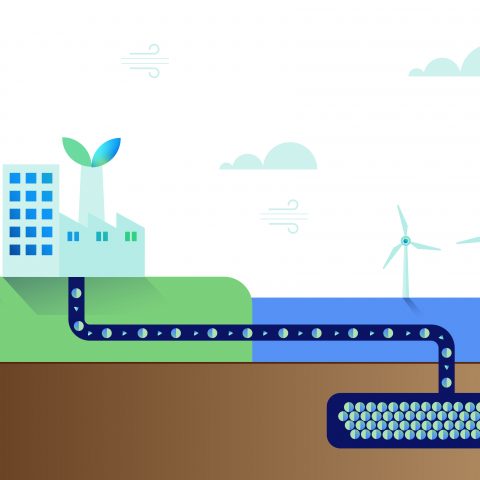
Captured carbon can be safely and permanently injected deep underground into naturally occurring porous rock formations. The carbon is trapped in multiple ways:
- Structurally—animpermeable caprock above the reservoir stops CO2 migrating back to the surface.
- In solution — porous rocks often contain salty water which CO2 dissolves into.
- Residually — as tiny isolated bubbles in the pore space of the rock.
- As a mineral — CO2 can react with the surrounding rock creating new solid minerals.
BECCS is an innovative technology that has been developed to permanently remove carbon dioxide from the atmosphere.
BECCS provides negative emissions, as well as stable, renewable electricity and will play a vital role in tackling the climate crisis and supporting energy security.
View MoreNegative emissions are created when you permanently remove more CO2 from the atmosphere than is created across your operations.
With BECCS, flue gases are produced when sustainable biomass is used to generate renewable electricity, these gasses are captured through a chemical reaction. The captured CO2 is then stored permanently in deposits such as saline aquifers found under the sea. The process of electricity generation becomes carbon negative, as more CO2 has been removed from the atmosphere than has been added.
View MoreYes. Drax has been testing a number of carbon capture technologies since our first trial began in 2018.
Carbon capture technology is not new and has been used in the fossil fuel and oil & gas industries for many years. There are currently 26 CCS facilities operating worldwide, with a further 39 either planned or under construction.
View MoreResearch commissioned by Drax shows there is enough sustainable biomass available globally to support BECCS projects to capture up to 4GT of CO2 without adversely impacting forest health, biodiversity or food security.
This is equivalent to four times the annual CO2 emissions from commercial aviation.
Learn more about sustainable biomass
View MoreYes. Drax, alongside our partners – National Grid Ventures and Equinor – have decades of experience safely transporting gas by pipeline and injecting and storing CO2 in saline aquifers offshore.
In the UK, the North Sea is already home to significant CCS projects such as the Equinor-operated Sleipner field in the Norwegian sector which is now capturing and storing around 1 million tonnes of CO2 each year from natural gas. Since the Sleipner project started in 1996 around 20 million tonnes of CO2 has been safely captured and stored under the seabed.
Estimates suggest the UK could have up to 80 billion tonnes of CO2 storage accessible offshore, and the Sleipner field CCS project demonstrates the feasibility of this technology and the potential for Britain to use the North Sea in the fight against climate change.
View More
Captured carbon can be safely and permanently injected deep underground into naturally occurring porous rock formations. The carbon is trapped in multiple ways:
- Structurally—animpermeable caprock above the reservoir stops CO2 migrating back to the surface.
- In solution — porous rocks often contain salty water which CO2 dissolves into.
- Residually — as tiny isolated bubbles in the pore space of the rock.
- As a mineral — CO2 can react with the surrounding rock creating new solid minerals.