Tag: investors

Appointment of Interim Chief Financial Officer

RNS Number : 7736U
DRAX GROUP PLC
(Symbol: DRX)

Following the recent announcement that Will Gardiner will succeed Dorothy Thompson as Chief Executive Officer of Drax Group from 1 January 2018, the Board is progressing a process to appoint a permanent Chief Financial Officer (CFO) as soon as practicable.

In the meantime, Den Jones has been appointed as Interim CFO of the Group from 1 November 2017 and will work with Will Gardiner to ensure a smooth transition.

Den was previously CFO of Johnson Matthey, a FTSE 100 specialty chemicals company and has held senior and executive positions, including Interim CFO, in BG Group, a major global energy company. He spent the early part of his career in banking and professional services with Citibank and PwC where he held a number of specialist financial management positions.

Enquiries:

Investor Relations:

Mark Strafford

+44 (0) 1757 612 491

Media:

External Communications:

Ali Lewis

+44 (0) 1757 612165

Website: www.drax.com

END

How Drax is boosting jobs and the economy throughout the UK

Whether powering homes across Britain or helping stabilise the national grid, Drax Power Station’s impact to our electricity network is far reaching. But it doesn’t stop at generating and supplying power.

A new report by Oxford Economics, commissioned by Drax, has found that in addition to its important role powering Britain, Drax Group also provides an economic boost to areas across the country.

Here are three ways Drax Group contributed to the UK economy in 2016. 

£1.67 billion added to UK GDP

Drax Group contributed an estimated £1.67 billion to UK gross domestic product (GDP) in 2016, an increase from £1.24 billion in 2015. Of that figure, £301 million was added directly – as a result of the group’s own activities such as the generating and selling of power.

And while this is an impressive 6.1% increase on 2015, the numbers are even more significant when looking at the benefit beyond the group’s core activities.

In 2016, Drax Group’s spending with external suppliers such as rail freight wagon manufacturer WH Davis and IMServ, which supplies Automated Meter Reading technology to Opus Energy, reached £872 million. A further £36m was spent by these suppliers across their own supply chain to help them provide their services to Drax.

There is an even greater impact when considering how this money filters through employees and suppliers into local retail, leisure and service economies. Something which is especially important when the number of jobs Drax supports is taken into account.

18,500 jobs supported across the country

Drax Group directly employed more than 2,000 people in 2016, but across the country it supports far more – 18,500, a significant increase from the 14,150 of 2015.

These jobs are primarily in high-skilled manufacturing, engineering, construction, IT, professional business services and transport. While 3,650 of these were in Drax Power Station’s native Yorkshire and Humber area, this year saw the group’s overall impact extend much further. 

Opus Energy employees holding meeting in Northampton, 2019

 An impact beyond the ‘Northern Powerhouse’

Roughly a quarter (£419 million) of Drax’s total contribution to UK GDP was generated in the Yorkshire and the Humber region. When the North West and North East were included, the company impacted the northern economy to the tune of £577m and supported over 6,000 jobs.

Yorkshire and the Humber was closely followed by the East of England, the home of Haven Power, which saw the second highest impact – registering more than £200 million contributed in GVA – and London and the East Midlands.

This is thanks in part to the growing activities of Drax Group companies. Both Haven Power and Opus Energy (which became a part of Drax Group in February 2017), are helping the UK move towards a low carbon future by supplying an increasing amount of British companies with renewable power. With offices in Ipswich, Oxford, Northampton and Cardiff, Haven Power and Opus Energy highlight how Drax Group businesses are direct drivers for local GDP and employment. Opus Energy supported 1,600 jobs and £130 million in GVA in Wales, while Haven Power contributed £232 million to the East of England.

These numbers are noteworthy, but what makes them all the more significant is how this translates into tax revenue. Operations at Drax Group generated an estimated £327 million for the UK’s public purse – equivalent to the salaries of almost 14,000 nurses or 11,900 teachers.

As the group continues to grow – adding new power generation assets to the national electricity transmission system and helping more businesses use renewable power – Drax can increase its positive impact on the UK’s economy and help to make the country’s low-carbon future a reality more quickly.

To find out more about how Drax has benefited the UK’s economy, visit draximpact.co.ukThe full 2016 report can be downloaded here. Interested in a career at Drax Group? Please visit Careers to find out more.

How electric vehicles will impact global power demand

The future of cars is electric. Globally, governments are laying out plans to ban the sale of petrol and diesel-powered cars, while the falling prices of batteries will serve to make the vehicles more affordable to consumers and more profitable for manufacturers.

A recent report by Bloomberg increased its earlier 2016 forecast for electric vehicle (EV) adoption. It now estimates that by 2040, 54% of new car sales and 33% of the global car fleet will be electric.

This vision of the future points to considerably better air quality in urban and roadside environments across the world. But while EVs emit none of the tailpipe fumes of traditional fossil fuel-powered cars, there is still potential for associated emissions depending on how that electricity is generated.

For example, if the growing demand caused by EVs is met with fossil fuels, then ‘well-to-wheel’ emissions are still in play. However, as electricity grids decarbonise and become smarter and more efficient, EVs will become cleaner. Researchers at Imperial College London have shown that in the UK, year-round average emissions from EVs have fallen by half in the last four years thanks to cleaner electricity generation.

What this greater reliance on electricity for transport will certainly do, however, is massively drive up global power demand. Investment will be needed not only in electricity generation but also in smart technology that can allow the charging and, eventually, usage of EVs to be managed efficiently.

The growing demand of EVs

The Bloomberg report states global electricity consumption from EVs is expected to grow from just 6 TWh in 2016 to 1,800 TWh by 2040. While the figure represents a massive increase in the electricity required to power EVs, 1,800 TWh represents just 5% of the projected global power consumption in 2040. By comparison, the UK as a whole consumed just 304 TWh of electricity in 2016.

This clearly highlights the widespread need for global investment in electricity generation on the whole, beyond just what will be required to power EVs. However, the unique challenge EVs pose is less how they recharge but when they will recharge.

Smoothing spikes

Assuming supporting infrastructure and technology progress to enable widespread on-street and home charging, then the demand for electricity to charge EVs will mostly likely come in the evening. This could result in additional pressure being placed on energy generators and national grids due to mass EV charging.

Utilities and regulators will need to implement policies to encourage off-peak charging (for example overnight) and spread out the demand from EVs. One way these spikes will be managed is through ‘time-of-use’ rates to encourage drivers to charge their vehicles at off-peak times to avoid higher electricity bills. However, technological improvements will also help to manage the demand EVs place on energy systems.

Tech solutions

Smart charging tech is one of the most important aspects of this in allowing cities, utilities and consumers to automate vehicle charging at times when overall demand is lower. Storage technology will also play a key role in managing increasing demand on both consumer and operator ends.

Adoption of home power storage systems is expected to grow as fast as solar photovoltaic energy has in recent years, which will enable consumers with home solar arrays to store energy and charge vehicles at times to avoid peak-hour charges. On the supplier end, advancement in storage technology will allow generators to deliver electricity above their usual capacity and meet spikes in demand.

Autonomous vehicles

While the report suggests autonomous vehicles will not have a significant impact over the next decade, the longer-term influence of self-driving vehicles will have direct consequences on demand.

Autonomous cars will be able to drive in a way that is significantly more efficient than humans by driving closer together and interacting with the surrounding city to prevent congestion. With widespread adoption, this greater efficiency would mean cars would use less energy and require less time to recharge.

However, ownership of these types of vehicles will likely be shared, particularity in urban environments, resulting in fewer overall cars on the roads and, ultimately, plateauing or even declining demand from EVs in the 2040s and beyond.

Globally, investment is needed to meet and support the growth of EVs over the next two decades. Governments and businesses must begin to roll out charging infrastructure and clean energy solutions to meet future demand, as well as the smart city technology that will enable the mass adoption and eventual automation of EVs.

Will Gardiner to succeed Dorothy Thompson as Chief Executive of Drax Group

RNS Number : 3929R
DRAX GROUP PLC
(Symbol: DRX)

Drax Group plc announces that Will Gardiner, currently Group Chief Financial Officer, is to be appointed as Group Chief Executive with effect from 1 January 2018. The appointment results from Dorothy Thompson’s decision to step down after 12 successful years as Group Chief Executive. Dorothy will leave the Group at the end of 2017.

Will joined Drax as Group Chief Financial Officer and a member of the Group Board in November 2015. The Board has kept succession planning well under review and his new appointment comes after a thorough selection process involving internal and external candidates.

Drax Chairman, Philip Cox said: “We are delighted Will is to become Chief Executive. He has been a key architect of our new strategy and is a focused, innovative and engaging leader. His appointment is a natural progression after two years working alongside Dorothy developing an ambitious strategy which I am confident will create significant benefits for all Drax’s stakeholders.

“On behalf of the Board I would like to thank Dorothy for her enormous contribution to Drax. She transformed the business during her tenure and leaves the Group in a strong position with a clear strategy that lays the foundations for further success in a changing energy sector.”

Will Gardiner said: “I am thrilled to be appointed as Group Chief Executive at this exciting time for Drax. The changes we are seeing in the UK energy sector are unprecedented and we have an opportunity to thrive while doing the right thing for the UK energy market. Drax’s people have demonstrated repeatedly their ability to deliver transformational change and I’m delighted to be working with them to build on Dorothy’s strong legacy.”

Dorothy Thompson said: “Drax Group plays a strategic role in the UK electricity sector generating around 16% of UK renewable electricity, is a world leader in the production of wood pellets and is a leading challenger brand in the supply of electricity to businesses. I retire knowing the Group is in excellent shape: it has the right strategy, the right team and in Will, the right leader.”

The Board will now commence a process to appoint a new Group Chief Financial Officer and will also review the option to make an appointment on an interim basis. 

No other disclosure obligations arise under paragraphs (1) to (6) of LR 9.6.13 R of the UK Listing Authority’s Listing Rules in respect of Will Gardiner’s appointment as Chief Executive of Drax Group plc.

Enquiries:

Drax Investor Relations:

Mark Strafford

+44 (0) 1757 612 491

+44 (0) 7730 763 949

Media:

Drax External Communications:

Matt Willey

+44 (0) 1757 612 285

+44 (0) 7711 376 087

Website: www.drax.com

Notes:

Will Gardiner joined Drax in November 2015 as Group Chief Financial Officer and a member of the Group Board. He is currently responsible for Finance, Strategy, and IT Systems.

Prior to joining Drax Will was Chief Financial Officer of CSR plc, a global semiconductor business.  He had previously been a Divisional Finance Director of BSKYB and Chief Financial Officer of Easynet Group plc.

At both CSR and Easynet Will’s focus was on driving transformational change to take advantage of new market opportunities. He is also a non-executive member on the Board of Qardio plc, a wireless medical devices company. Will is also a Trustee of the Institute for War & Peace Reporting, a London-based charity that supports local journalists and civic activists in areas of crisis and change around the world.

Will graduated from Harvard University with a BA Magna Cum Laude in Russian and Soviet Studies and from Johns Hopkins University with an MA in International Relations. He spent the early part of his career in corporate finance with Citibank and JP Morgan.

END

How artificial intelligence will change energy

At the beginning of 2016, the world’s most sophisticated artificial intelligence (AI) beat World Champion Lee Sedol at a game called ‘Go’ – a chess-like board game with more move combinations than there are atoms in the universe. Before this defeat, Go had been considered too complicated for even the most complex computers to beat the top humans.

It was a landmark moment in the development of ever-more sophisticated AI technology. But the future of AI holds more than simply board game victories. It is rapidly finding its way into all aspects of modern life, prompting the promise of a ‘Fourth Industrial Revolution’.

One of the areas AI has huge potential is in our energy system. And this could have implications for generators, consumers and the environment.

Artificial intelligence playing traditional board game Go concept

The National Grid gets wise

Earlier this year the UK’s National Grid revealed it’s making headway in integrating AI technology into Britain’s electricity system. It announced a deal with Google-owned AI company (and creator of the Go Champion-beating system) DeepMind which is set to improve the power network’s transmission efficiency by as much as 10%.

One of the National Grid’s most important tasks is maintaining the frequency of Britain’s power networks to within ±1% of 50Hz. Too high a frequency and electrical equipment gets damaged; too low a frequency and you get blackouts. Managing this relies on ensuring electricity supply and demand are carefully balanced. But this is made increasingly difficult with the growing number of intermittent renewables – such as wind and solar – on the grid.

The ability to process massive amounts of information from a wide variety of data points (from weather forecasts to internet searches to TV listings) and create predictive models means AI can pre-empt surges in demand or instances of oversupply. In short, it can predict when the country will need more power and when it will need less.

More than this, it can respond to these fluctuations in sustainable and low-carbon ways. For example, it can automate demand side response, where energy users scale back their usage at peak times for a reward. Similarly, it can automate the purchasing of power from battery systems storing renewable energy, such as those connected to domestic solar arrays.

These solutions, which would see AI help to manage supply and demand imbalances, would ease some grid management pressures, while large thermal generators controlled by human engineers back up such automation with their continuing focus on maintaining grid stability through ancillary services.

The role of the smart city

An undoubtedly large factor in the growing sophistication of AI in the energy space is the amount of energy use data now being captured. And this has much to do with the increasing prevalence of smart devices and connected technology.

Smart meters – which will be offered to every UK home by 2020 – such as Alphabet’s Nest smart thermostat, and start-up Verdigris’s energy conserving Internet of Things (IoT) devices are just a few of the emerging technologies using data to improve individuals’ abilities to monitor and optimise their household energy use.

But at scale, information collected from these devices can be used by AI to help control energy distribution and efficiency across entire cities – and not just at a macro level, but right down to individual devices.

The idea of a central computer controlling home utilities may seem like a soft invasion of privacy to some, but when it comes to the energy-intensive function of charging electric vehicles (EVs), much of this optimisation will be carried out in public on street charge points.

As AI and smart technology continue to grow more sophisticated, it has the potential to do more than just improve efficiency. Instead, it could fundamentally change consumers’ relationships with energy.

Changing consumer relationships with energy

Start-ups in the energy space, such as Seattle-based Drift, are exploring how trends such as peer-to-peer services and automated trading can be enabled through machine AI and give consumers greater control over their energy for a lower price.

The company offers consumers access to its own network of distributed and renewable energy sources. Currently operating in New York, it uses AI to assess upcoming energy needs based on data collected from individual customers and location-specific weather forecasts. It then uses this to buy power from its network of peer-to-peer energy providers, using high-frequency, algorithmic trading to reduce or eliminate price spikes if demand exceeds expectation.

Yet to be operational in the UK, this sort of automation and peer-to-peer energy supply hints at the increasing decentralisation of energy grids, which are moving away from relying only on a number of large generators. Instead, modern grids are likely to rely on a mix of technologies, generators and suppliers. And this means a more complex system, which is precisely why automation from a central AI system could be a positive step.

Not only could it bring about optimisation and efficiency, but it could slash emissions and costs for consumers. This silent automation may not have the same headline-grabbing qualities as beating a world champion in their chosen sport, but its impact to the country could be far greater.

Inertia: the shock absorbers keeping the grid stable

From the comfort of home, it’s easy to assume Britain’s power is run across a consistently calm and stable system. And while this is for the most part true, keeping it this way relies on a set of carefully calibrated and connected tools.

These include frequency response – which keeps all electricity around the country on the same frequency – and reactive power – the quiet force moving electricity around the grid. But there’s another at play, and at least by name, it’s something you’ve probably heard of: inertia.

System inertia is energy stored in spinning plant that slows down the rate at which frequency changes. Rapid changes in frequency can create instability in the system. Think of it like a car – inertia does the same job as shock absorbers in the suspension, smoothing the sudden bumps and potholes, keeping the wheels on the ground to maintain control.

However, the changing nature of Britain’s energy system is creating challenges in ensuring there is enough inertia available for a stable future grid.

The energy system’s shock absorbers

Inertia describes objects’ natural tendency (whether they’re moving or resting) to keep doing what they’re doing until forced to change. For example, when you kick a pebble, forces like friction and gravity prevent it hurtling endlessly off into the distance.

Electricity generation in thermal power stations such as Drax involves many moving parts, none more important than turbines and generators. In a turbine, high pressure steam hits a set of blades which makes it spin. A little like running a fan in reverse. The spinning motion is used to power the generator which is a rotor wound in electrified copper wire, transforming it into an electro magnet. As this magnetic field passes through copper bars surrounding the rotor it generates electricity.

This spinning turbine has inertia. If the fuel powering it is suddenly switched off it will continue to spin until it is stopped either by friction or by force. Every thermal generator in the UK system spins at 3,000 rpm, has inertia, and generates electricity at a frequency of 50 Hz. In the UK, all electricity is generated at the same frequency and crucially needs to remain stable – even deviations of 1% from this can damage equipment and cause blackouts.

Managing frequency is done by managing generation. If demand exceeds supply, frequency falls; too much supply and frequency rises. National Grid closely monitors frequency across the system and automatically instructs power generators like Drax to respond to changes in frequency by dialing up or down generation.

And ensuring this change in generation is done smoothly and instantaneously relies on using inertia. For example, using the inertial forces of spinning generators, power stations are able to respond instantly to requests to alter generation.

So, inertia is important to the stability of the power system. But because of the changing nature of today’s grid, we are facing challenges when it comes to inertia. Many forms of renewable generation aren’t built around spinning turbines. And this means no inertia.

Future Challenges

Renewable sources like the wind turbines currently operational in the UK and solar PV, alongside energy imported from the continent, do not provide inertia to the grid.

This means as the UK moves to decarbonise the energy system and rely on more intermittent and often embedded renewable energy rather than thermal-generated electricity, questions arise over where the grid will get the inertia needed to remain stable.

One possible solution is synthetic inertia. While wind turbines do not contain inherit inertia, modern suppliers are now enabling the machine’s rotating blades to create synthetic inertia, which can add extra power to the grid to support generation loss. Some regions, including Germany and Quebec, now require inertia-generation in turbines as standard.

This can’t be done with solar PV. However, smart grids and improving storage technologies have the potential to deal with a lack of inertia. Batteries, which can absorb electricity when there is an oversupply and then release it again when demand is high, can respond near-instantly to fluctuations to help maintain the grid’s frequency.

There are, of course, renewable sources that offer natural inertia, including hydro, tidal and biomass generation. But as the UK shifts to more renewable energy sources with no naturally occurring inertia, these turbine-based generation methods will be vital in ensuring wider grid stability.  Gas has an important role too, as a lower carbon alternative to coal power and one that will increasingly shift from being the backbone of Britain’s electricity system to playing a supporting, flexible role.

This short story is adapted from a series on the lesser-known electricity markets within the areas of balancing services, system support services and ancillary services. Read more about black start, frequency response, reactive power and reserve power. View a summary at The great balancing act: what it takes to keep the power grid stable and find out what lies ahead by reading Balancing for the renewable future and Maintaining electricity grid stability during rapid decarbonisation.

The silent force that moves electricity

In the early evening of 14th August 2003, New York City, in the midst of a heatwave, lost its power. Offices, stores, transport networks, Wall Street and the UN building all found their lights and phones cut off. Gridlocked streets and a stalled subway system forced millions to commute home on foot while those unable to make it back to the suburbs set up camp around the city.

It wasn’t just the Big Apple facing blackout – what had started with several power lines in Northern Ohio brushing against an overgrown tree had spread in eight minutes to affect eight US states and two Canadian provinces. In total, more than 50 million people were impacted, $6 billion was lost in damages and 12 deaths were reported.

While a software glitch and the outdated nature of the power system contributed to the disaster, the spread from a few high-voltage power lines to the entire North West was caused by a lack of reactive power.

The pump powering electricity

Electricity that turns on light bulbs and charges phones is what’s known as ‘active power’ — usually measured in Watts (W), kilowatts (kW), megawatts (MW) or in even higher units. However, getting that active power around the energy system efficiently, economically and safely requires something called ‘reactive power’, which is used to pump active power around the grid. Reactive power is measured in mega volt amps reactive (MVAr).

It’s generated in the same way as active power by large power stations, but is fed into the system in a slightly different manner, which leads to limitations on how far it can travel. Reactive power can only be effective locally/regionally – it does not travel far. So, across the country there are regional reactive power distributors servicing each local area (imagine a long hose pipe that needs individual pumps at certain points along the way to provide the thrust necessary to transport water).

But power stations aren’t the only source of reactive power. Some electronic devices like laptops and TVs actually produce and feed small amounts of reactive power back into the grid. In large numbers, this increases the amount of reactive power on the grid, and when this happens power stations must absorb the excess.

This is because, although it’s essential to have reactive power on the grid, it is more important to have the right amount. Too much and power lines can become overloaded, which creates volatility on the network (such as in the New York blackout). Too little and efficiency decreases. Think, once again, of the long hose pipe – if the pressure is too great, the hose is at risk of bursting. If the pressure is too low, water won’t travel through it properly.

This process of managing reactive power is, at its heart, one of ensuring active power is delivered to the places it needs to be. But it is also one of voltage control – a delicate balancing act that, if not closely monitored, can lead to serious problems.

Keeping volatility at bay

Across Britain, all electricity on the national grid must run at the same voltage (either 400kV or 275kV – it is ‘stepped down’ from 132kV to 230V when delivered to homes by regional distribution networks). A deviation as small as 5% above or below can lead to equipment being damaged or large scale blackouts. National Grid monitors and manages the nationwide voltage level to ensure it remains within the safe limit, and doing this relies on managing reactive power.

Ian Foy, Head of Ancillary Services at Drax explains: “When cables are ‘lightly loaded’ [with a low level of power running through them], such as overnight when electricity demand is lower, they start emitting reactive power, causing the voltage to rise.”

To counter this, generators such as Drax Power Station, under instruction from National Grid, can change the conditions in their transformers from exporting to absorbing reactive power in just two minutes.

This relies on 24-hour coordination across the national grid, but as our power system continues to evolve, so do our reactive power requirements. And this is partly down to the economy’s move from heavy industry to business and consumer services.

The changing needs for reactive power

“Large industrial power loads, such as those required for big motors, mills or coal mines, bring voltage down and create a demand for more reactive power,” explains Foy. “Now, with more consumer product usage, the demand for active power is falling and the voltage is rising.”

The result is that Drax and other power stations now spend more time absorbing reactive power rather than exporting it to keep voltage levels down. In the past, by contrast, Foy says the power plant would export reactive energy during the day and absorb it at night.

As Britain’s energy system decarbonises, the load on powerlines also becomes lighter as more and more decentralised power sources such as wind and solar are used to meet local demand, rather than large power plants supplying wider areas.

This falling load on the power system increases the voltage and creates a greater need for generators to absorb reactive power from the system. It highlights that while Drax’s role in balancing reactive power has changed, it remains an essential service.

This short story is adapted from a series on the lesser-known electricity markets within the areas of balancing services, system support services and ancillary services. Read more about black start, system inertia, frequency response and reserve power. View a summary at The great balancing act: what it takes to keep the power grid stable and find out what lies ahead by reading Balancing for the renewable future and Maintaining electricity grid stability during rapid decarbonisation.

What hot weather means for electricity

Power boost, Fan pics

During the penultimate week of June 2017, temperatures of thirty degrees Celsius or more were recorded across the UK for five days straight. It was the hottest continuous spell of weather in the country since the 70s. And while this may sound like a minor headline, it’s evidence of an important fact: the world is getting warmer.

According to the Met Office, experiencing a ‘very hot’ summer is now likely to occur every five years rather than every 50. By the 2040s, more extreme heatwaves could become commonplace, and this could have serious consequences.

The extreme heatwave that hit Europe in 2003 led to a death toll in the tens of thousands and placed extreme strain on the continent – not only on its people, but on its infrastructure, too. If this weather is set to continue, what does it mean for our electricity network?

Electricity in extreme weather

In hot countries, electricity use soars in times of extreme weather due to increased use of cooling devices like air conditioning. One US study predicted an extreme temperature upswing could drive as much as an 7.2% increase in US peak demand.

In Northern Europe including the UK, where air conditioning is less prevalent, the effects of heat aren’t as pronounced, but that could change. In France, hot weather is estimated to have contributed to a 2 GW increase in demand this June.

The UK, which has traditionally only seen demand swings due to cold weather, is also beginning to feel the effects of extreme heat. According to Dr Iain Staffell of Imperial College London, for every degree rise in temperature during June 2017, electricity demand rose by 0.9% (300 MW). For example, on 19th June, when temperature averaged 21.9 degrees Celsius demand reached 32 GW. On the 25th, when temperatures dropped to an average of 15.9 degrees, demand shrank to 26.6 GW.

In the very hottest days of summer this can mean the grid needs to deliver an additional 1.5 GW of power – equivalent to the output of five rapid-response gas power stations or two-and-a-half biomass units at Drax Power Station.

And while heat’s effect on demand is considerable, it’s not the only one it has on electricity.

The problem of cooling water in hot weather

Generating power doesn’t just need fuel, it’s also a water-intensive process. Power stations consume water for two main reasons: to turn into steam to drive generation turbines, and to cool down machinery.

Both rely on raising the temperature of the water. However, this water can’t simply be released back into a river or lake after use – even if nothing has been added to it – as warm water can negatively affect wildlife living in these habitats. First, it has to be cooled – normally via cooling towers – but in hot weather this takes longer and, as a result, power production becomes less efficient and in some cases, plant output must be dialled back.

This had serious consequences for France’s nuclear power plants during the 2003 heatwave. These plants – which provide roughly 75% of the country’s electricity – draw water from nearby rivers to cool their reactors. During the heatwave, however, these rivers were both too hot and too low to safely provide water for the cooling process, which in turn led to the power stations having to either close or drastically reduce capacity.

Coupled with increased demand, France was left on the verge of a large-scale black out. Situations like this are even more critical when considering heat’s effects on electricity’s motorway: the national grid.

How the hot weather impacts electricity

When materials get hot, they expand – this includes those electricity grids are made from. For example, overhead power transmission cables are often clad in aluminium, which is particularly susceptible to expansion in heat. When it expands, overhead lines can slacken and sag, which increases electrical resistance in the cables, leading to a drop in efficiency.

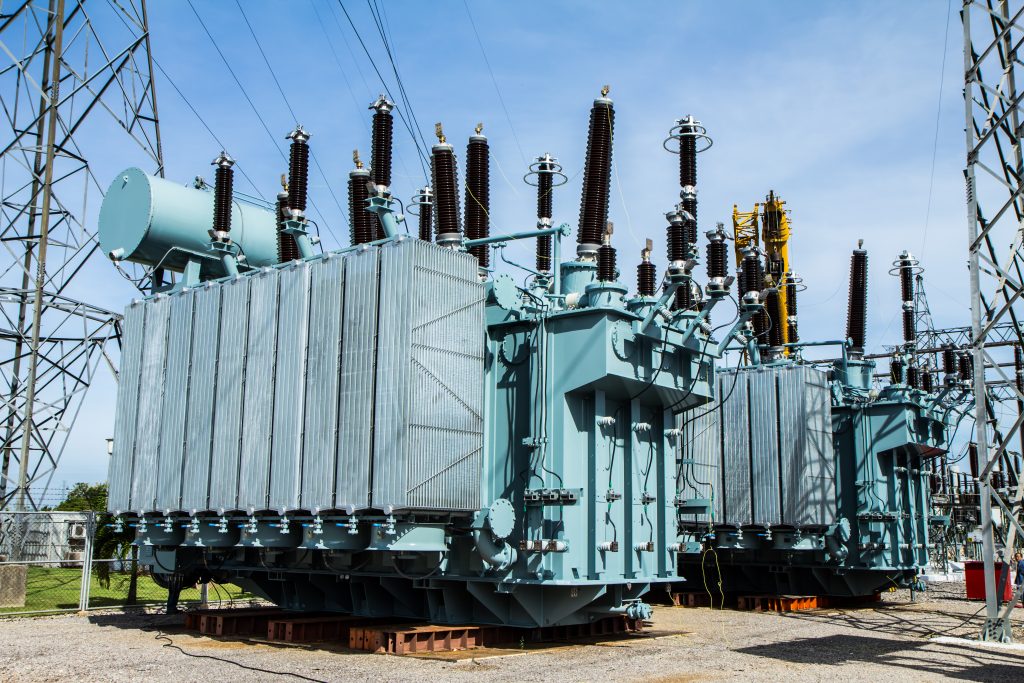
Transformers, which step up and down voltage across grids, are also susceptible. They give off heat as a by-product of their operations. But to keep them within a safe level of operation, they have what’s known as a power rating – the highest temperature at which they can safely function.

When ambient temperatures rise, this ceiling gets lower and their efficiency drops – about 1% for every one degree Celsius gain in temperature. At scale, this can have a significant effect: overall, grids can lose about 1% in efficiency for every three degrees hotter it gets.

As global temperatures continue to rise, these challenges could grow more acute. At UK power stations, such as Drax, important upgrade and maintenance work takes place during the quieter summer months. If this period becomes one in which there is a higher demand for power at peak times, it could lead to new challenges.

Investing in infrastructure and building a power generation landscape that includes a mix of technologies and meets a variety of grid needs is one way in which we can counter the challenges of climate change. This will mean we can not only move towards a lower carbon economy and contribute towards slowing global warming, but respond to climate change by adapting essential national infrastructure to deal with its effects.

The people-powered renewables revolution

For decades the electricity system was relatively straightforward. Power was generated by utility companies, then sold and supplied to consumers and businesses. But this is changing and the power industry may be on the verge of a revolution.

The falling costs and ongoing innovation around technologies like rooftop solar panels and domestic battery storage is enabling the rise of so-called ‘prosumers’ – individuals, businesses or institutions who not only consume electricity, but produce it too.

According to the National Grid’s 2017 Future Energy Scenarios report, this could lead to an almost entirely decentralised, cleaner energy system.

But for this to happen, prosumerism needs to be adopted at scale, and this relies on technological innovation and changes to attitudes and behaviours.

The technology powering prosumers

The biggest barrier to large-scale adoption of prosumerism is technology. Although research and innovation pounds, dollars and euros have been pouring into the technologies that make decentralised power generation possible, there are still developments to be made.

Solar is one of the most prominently used renewables by prosumers thanks to the relative affordability of rooftop solar systems. Even home-interior giant IKEA now offers solar panels and battery systems through a partnership with the UK’s largest solar company, Solarcentury.

But like wind turbines (a more cost-prohibitive solution) solar is an intermittent energy source, which means domestic users may still need to access the grid to fill gaps in their own generation. That is, unless battery technology advances to a point where it can store enough solar- or wind-generated electricity to fully power homes and businesses affordably – all-year round, including in the dark, still days of midwinter.

Until then, a prosumer who wants to have a reliable, flexible self-supply of energy needs to be able to call on a mix of renewable technologies – just as the national system does. Hamerton Zoo in Cambridgeshire, for example, generates its own energy via a mix of solar, wind and biomass. It then sells its excess electricity to an energy supplier.

There are signs that battery technology is starting to take off as an option for powering homes and businesses. Tesla’s Powerwall is currently the closest home battery system to breaking through to mainstream consumers and many firms are following its lead. For example, in the UK, Elon Musk’s company faces new competition from Nissan, which is partnering with US power firm Eaton to build and sell home batteries in the UK. That two electric car manufacturers are in on the act is no surprise – it will be another revolution, that of electric vehicles (EVs) usurping the dominance of petrol and diesel models that is set to bring the boon that batteries need to become a popular choice for prosumers.

The government is also pushing innovation in the space with business and energy secretary Greg Clark announcing plans to invest £264 million into research in the sector over the next four years.
Energy ownership

But what could this mean for the business of electricity? The National Grid report suggests multiple ‘commercial models’ will operate together to facilitate a decentralised, prosumer-based energy system.

These would include homes and businesses who wholly own their energy systems, as well as systems owned and operated by third parties such as aggregators managing energy or solar-rental schemes.

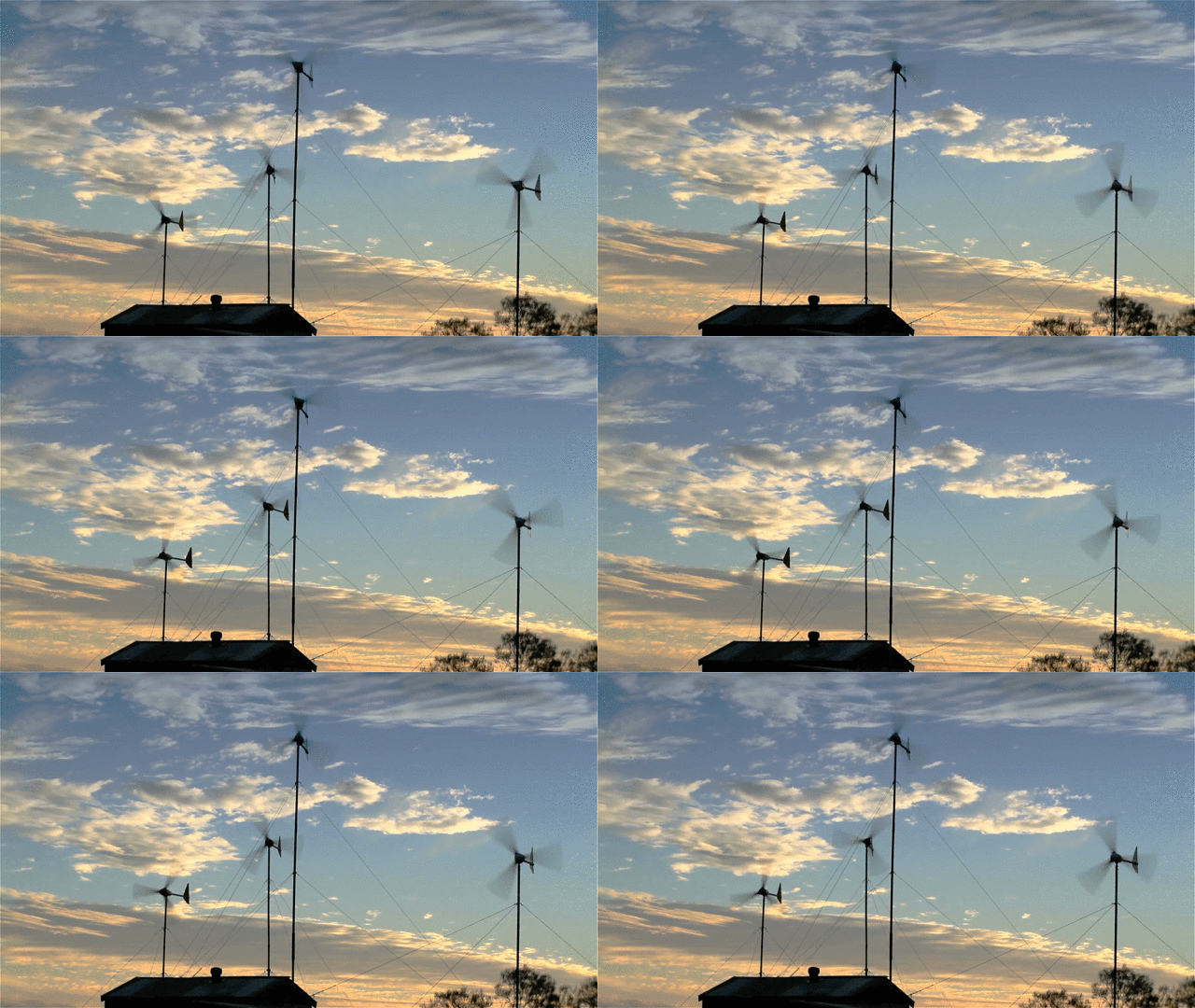
Community-owned projects could also play a role, with small renewable energy facilities supplying residents, such as the wind turbine in the Cambridgeshire village of Gamlingay. Excess energy could also be sold back to the grid with any money earned reinvested in the community, or in its renewable infrastructure.

Similar schemes are already in place in both the business and consumer retail markets. In 2016, for example, Opus Energy – a Drax Group company supplying energy to UK businesses – bought almost 1 TWh of power from over 2,000 small renewable generators who use technologies such as anaerobic digestion, solar, onshore wind and hydro. Opus Energy then sells that power onto its predominantly small and medium-sized enterprise (SME) customer base. This allows it to offer innovative tariffs such as the 100% solar power deal enjoyed by restaurant chain LEON this summer.

Haven Power, the Drax retail business specialising in electricity supply for large corporate and industrial clients, sells on power from over 20 small renewable generators – and it has a number of large clients such as water utilities who self-generate a lot of their own power and work with Haven Power to help manage their self-supply against their demand from regional electricity distribution networks (and further upstream, National Grid and power stations).

For large power generators, an increase in prosumerism in the energy sector could mean likely overall demand may decrease, which would mean a scaling back of operations. However, the increased volatility of the grid will give rise to the need for flexibility and for additional ancillary services like frequency response, which ensures the country’s electricity is all operating at the same frequency.

This would most likely be delivered by flexible generators (such as gas and biomass), which would also be required for winter demand, when more electricity is required and there is less wind and solar generation.

The role of government incentives

Another key part of the rise of consumer generated power will be government regulation and incentive schemes. In the UK, new measures have been put in place to encourage individuals to generate their own electricity.

These intend to make it easier for prosumers to generate their own power through solar, store it in batteries and sell it back to the National Grid, something which regulator Ofgem claims could save consumers between £17 billion and £40 billion by 2050. This isn’t the only scheme of its kind currently in action.

The UK’s Renewable Heat Incentive (RHI) encourages homeowners and businesses to adopt low-carbon heating, offering to pay a certain amount for every kWh of renewable heat generated. Feed-in tariffs, on the other hand, also offer financial incentives, with electricity suppliers paying prosumers for the energy they produce themselves.

Is my home or business big enough?

The prosumer revolution will not happen overnight. Self-generation and self-storage of power and the installation of renewable heat systems are more suited to larger properties or those linked up to community-based projects, so for many people living in properties they own, rent or in social housing the idea of becoming a prosumer could right now be a little far-fetched.

And although there is evidence that the national transmission grid is already decentralising, nor will this revolution mean the complete eradication of all centralised utilities.

Through gradual improvements in small-scale energy generation, power storage, smart technology and government policies, it will become an increasingly affordable and efficient way for communities, businesses and institutions to go green.