





Tag: artificial intelligence

Richard Gwilliam, Future of Drax Power Station Director: “The UK needs to think differently about its electrical infrastructure if it wants to be a leader in AI”

UK electricity demand is changing after years of stability

Drax’s Electric Insights recently published its quarterly report into the state of the electricity market. Amongst the plethora of useful information one metric stood out: electricity demand in the UK is starting to surge.

The report stated that demand in Q4 of last year reached 72.3 TWh over the quarter, up nearly 4% year-on-year. That might not sound much but, Covid rebound aside, that increase represents the fastest uptick in electricity demand since 2011.

From the mid-2000s until the early 2020s, GB’s total electricity demand fell steadily driven by gains in energy efficiency, deindustrialisation and an increase in behind the meter generation like rooftop solar, but it appears that trend is coming to an end.

The electrification of the UK’s economy has long been predicted and the reasons are of no surprise. Electric vehicles reached roughly 27% of new car registrations in 2025 and as the EV fleet grows, charging adds steadily to residential and overall electricity consumption.

Heat pumps too are scaling up – although still a small proportion of heating overall – the trend towards the electrification of heating is continuing and beginning to influence winter power demand profiles.

Finally, whilst some energy-intensive industry demand has grown, partly due to policy support and investment, the rapid increase in new data centres, particularly those serving AI and cloud computing, are emerging as rapidly growing demand centres, adding material loads on the grid.

Data Centres are likely to have a profound effect on the UK grid

Whilst demand for EVs and heat pumps are set to grow, it’s likely the demand for compute capacity will put the most pressure on the grid.

Such is the anticipated change that data centres are arguably no longer just customers of the grid, their scale means they are system actors. They can influence investment signals, dispatch patterns and ultimately the carbon intensity of the electricity system. That means we need to plan for them as part of the system, not bolt them on afterwards.

The processes that underpin new grid connections to meet demand were not designed for growth at the pace or scale that AI is moving. We are already seeing this emerge with:

  • long lead times for new grid capacity
  • constraints around transmission and distribution access
  • rising connection costs

This is important to UK growth, productivity and global competitiveness

The Government identifies AI as a key driver of future productivity growth across the economy: while the UK AI sector currently contributes around £12 billion in GVA, government-cited modelling suggests that widespread AI adoption could raise productivity, adding tens of billions of pounds a year to economic output. Delivering this growth is contingent on access to domestic compute capacity, with the UK Compute Roadmap indicating a need for a substantial expansion in AI-capable data centre capacity by 2030.

On the face of it, the ongoing electrification of our economy and slow adaptation of the grid appears to be a real stumbling block to meeting our AI ambition. But there are options that could see us simply adapt existing infrastructure and re-use what we already have in a more efficient way.

Existing energy infrastructure is a strategic advantage

One of the UK’s greatest, and most under-used asset is the infrastructure we already have.  Sites like Drax Power Station were built to handle very large amounts of power safely and reliably. They already have:

  • substantial grid connections;
  • transformers and electrical infrastructure sized for industrial-scale operations;
  • established sites with an energy and industrial planning context; and
  • experienced workforces and supply chains.

Repurposing and reusing this infrastructure is the fastest and most credible way to support large new electricity demand without waiting years for the system to catch up.

Re-use and re-purposing will keep the UK in the race for AI

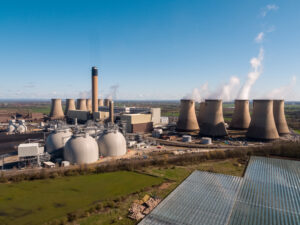
At the end of last year, we unveiled proposals to submit a planning application for an initial <100MW data-centre development at Drax Power Station – an important step towards boosting AI capacity at the site. The project looks to re-use existing infrastructure and capacity, creating a practical and expedient way of meeting demand without waiting a decade for network reinforcement.

Not only that, but it could help pave the way for a >1GW data centre facility on the site before the end of the decade.

The Government is responding but more pace is needed

In December, the UK Government published the terms of reference for a review of AI deployment in the electricity networks. It is good to see that as part of that the Government will attempt to grapple with regulatory constraints and begin to consider AI deployment at a spatial level.

This is an acknowledgement that we need to challenge convention and think differently about this issue, unpick regulations that were devised for a different time and rethink how we maximise efficiency from existing assets. Time is of the essence; left unchecked we’ll likely end up falling behind in the global AI race and be left with an energy system with baked in inefficiencies.

The AI revolution is an energy story

It’s becoming increasingly clear that we’re now at the end of a decades long trend of decline and stability in electricity demand and arguably our systems are not ready to cope. The countries that succeed will not be those that build the most servers the fastest, but those that integrate compute into their power systems.

The UK already has much of the infrastructure it needs. The challenge now is to use it differently. At Drax Power Station, we are focused on how an existing site – which has kept the lights on around the UK for 50 years – can evolve to meet new demands supporting long term economic growth and prosperity for the UK.

Read the full Q4 2025 Electric Insights report here.

Forestry 4.0

Around the world industries are undergoing profound change. The phrase ‘Industry 4.0’ describes this emerging era when the combination of data and automation is transforming long-established practices and business models.

Autonomous cars are perhaps one of most widely-known examples of ‘smart’ technology slowly inching towards daily life, but they are far from the only example. There is almost no sector untouched by this oncoming digital disruption – even industries as old as forestry are being transformed.

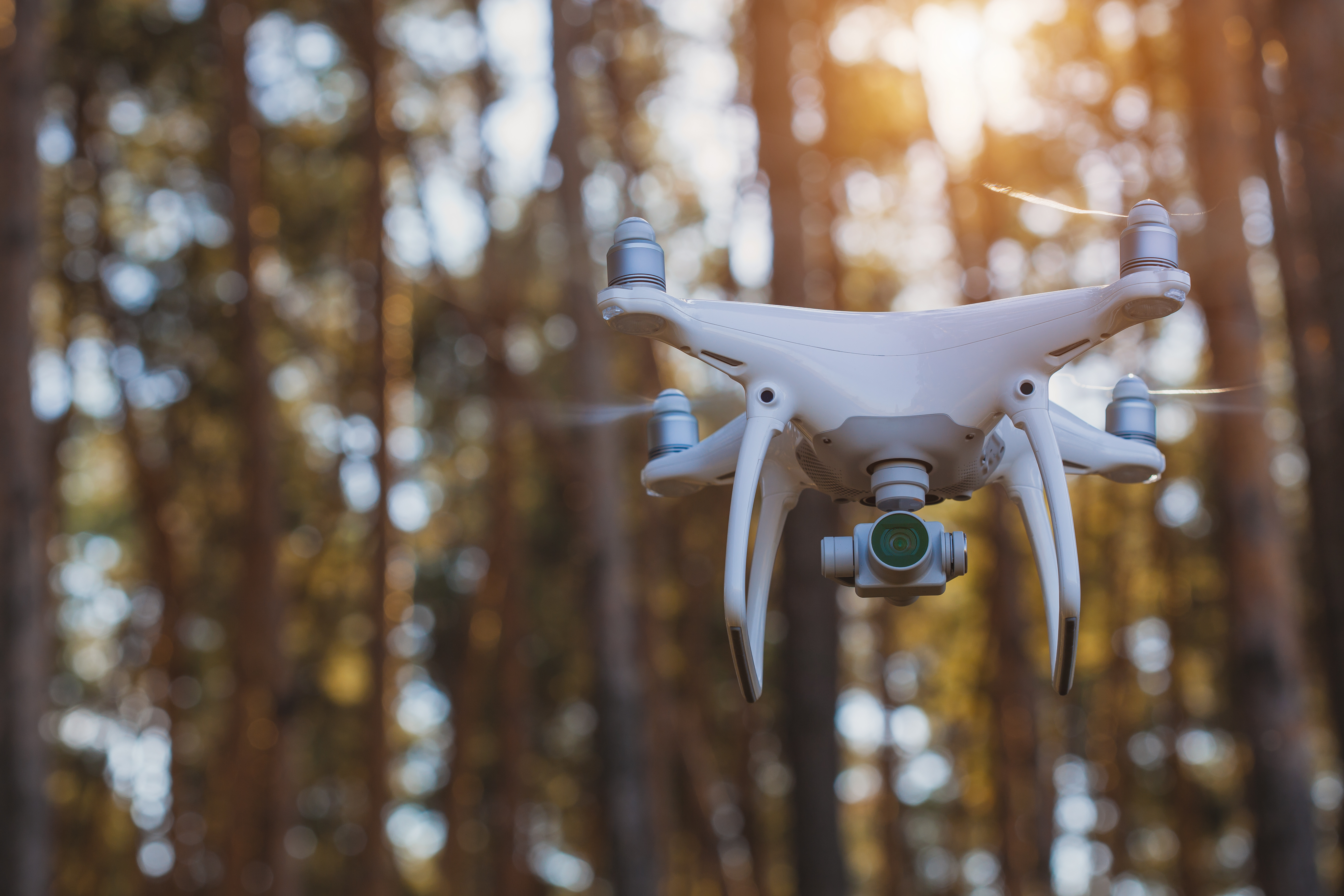
From smart and self-driving vehicles to data-crunching drones, Forestry 4.0 is ushering in a new era for efficient and sustainable forest management.

Drones and data

If the first industrial revolution was powered by steam, the fourth is being powered by data. Collecting information on every aspect of a process allows smart devices and machines to cut out inefficiencies and optimise a task.

In forestry, capturing and utilising huge amounts of data can build a better understanding of the land and trees that make up forests. One of the best ways to gather this data from wide, complex landscapes is through aerial imaging.

Satellites have long been used to monitor the changing nature of the world’s terrain and in 2021, the European Space Agency plans to use radar in orbit to weigh and monitor the weight of earth’s forests. But with the rise of drones, aerial imagining technology is becoming more widely accessible. Now even small-scale farmers and foresters can take a birds-eye view of their land.

Oxford-based company BioCarbon Engineering focuses on replanting areas of forests. It utilises drone technology to scan environments and identify features such as obstacles and terrain types which it uses to design and optimise planting patterns.

A drone then follows this path roughly three to six feet off the ground, shooting biodegradable seed pods into the ground every six seconds along the way. BioCarbon claims this approach can allow it to plant as many as 100,000 trees in a single day.

Gathering data on the health of working forests doesn’t necessarily require cutting-edge equipment either. In the smartphone era, any forestry professional now has the computing power in their pocket to capture detailed information about a forest’s condition.

Mobile app MOTI was designed by researchers at the School of Agricultural, Forest and Food Sciences at the Bern University of Applied Sciences in Switzerland. It allows users to scan an area of forest with a phone’s camera and receive calculated-estimates on variables such as trees per hectare, tree heights and the basal area (land occupied by tree trunks).

Automating the harvest

Capturing data from forests can play a huge part in developing a better understanding of the land, terrain and trees of working forests, which leads to better decision making for healthier forests, including how and when to harvest and thin. But the equipment and technology carrying out these tasks on the ground are also undergoing smart-tech transformations.

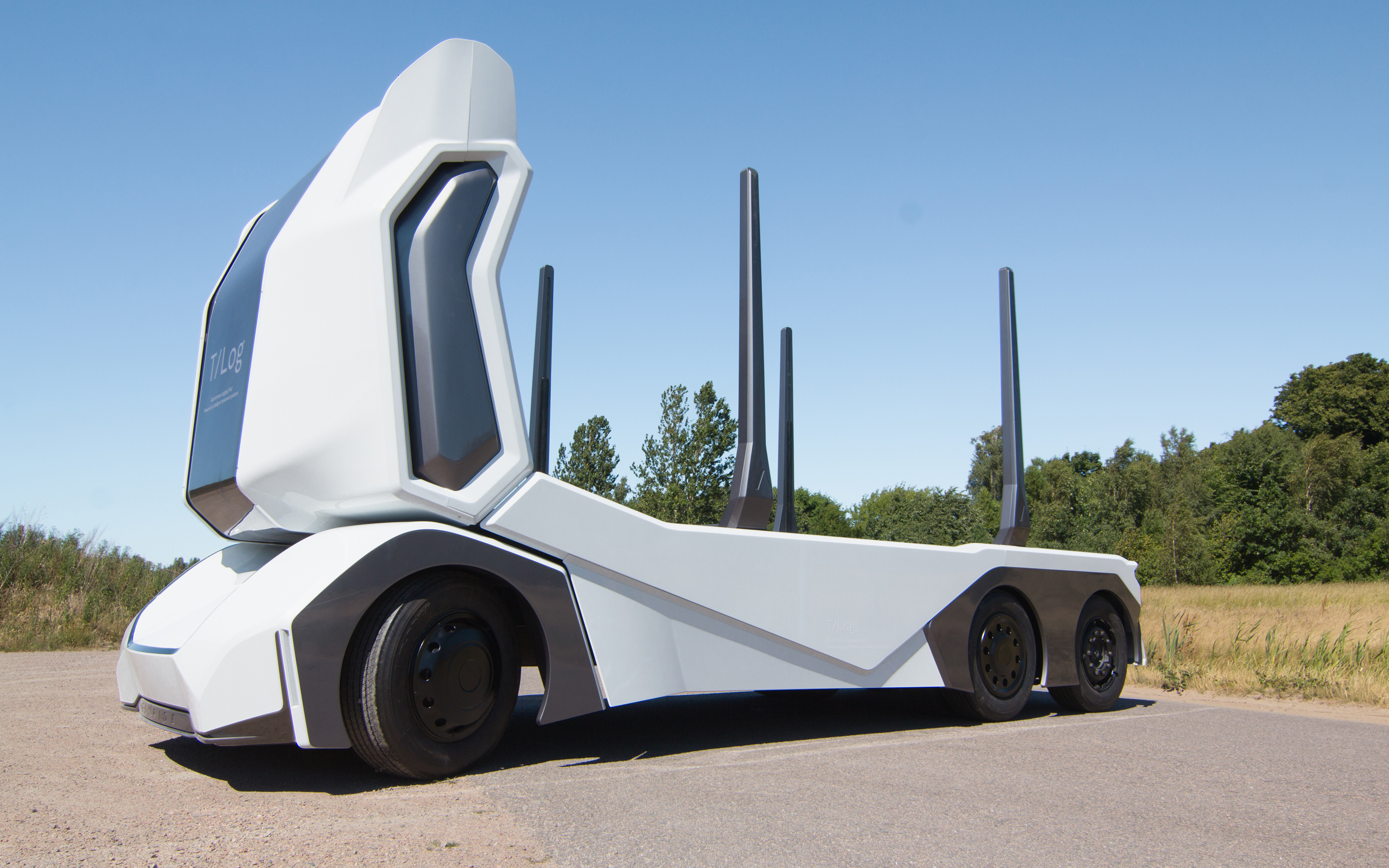
Self-driving and electric vehicles are expected to disrupt multiple industries, including forestry. Swedish startup Einride, recently unveiled a driverless, fully electric truck that can haul as much as 16-tonnes of lumber and is specially designed for off-road, often unmapped, terrain.

There are some pieces of equipment, however, that will be harder to fully automate – for example, harvesters, which are used to fell and remove trees. Their long, digger-like arm normally features a head consisting of a chainsaw, claw-grips and rollers all in one, which are controlled from the vehicle’s cab.

Even as image recognition and sensors improve, automating these types of machines entirely is hugely challenging. An ideal use of artificial intelligence (AI) would be enabling a harvester to identify trees of a particular age or species to remove as part of thinning, for example, without disturbing the rest of the forest. However, trees of the same species and age can differ from each other depending on factors such as regional climates, soil and even lighting at the time of analysis.

This makes programming a machine to harvest a specific species and age of tree is very difficult. Nevertheless, innovation such as intelligent boom control – as John Deere is exploring – can help human operators automate movements and make harvesting safer and more efficient.

Forestry has always changed as technology has advanced – from the invention of the axe to the incorporation of ecology – and the digital revolution is no different. Smart sensors and deeper data will, ultimately, help optimise the lifecycle, biodiversity and health of managed forests.

With thanks to the Institute of Chartered Foresters for inviting us to attend its 2018 National Conference in May – Innovation for Change: New drivers for tomorrow’s forestry.

How artificial intelligence will change energy

At the beginning of 2016, the world’s most sophisticated artificial intelligence (AI) beat World Champion Lee Sedol at a game called ‘Go’ – a chess-like board game with more move combinations than there are atoms in the universe. Before this defeat, Go had been considered too complicated for even the most complex computers to beat the top humans.

It was a landmark moment in the development of ever-more sophisticated AI technology. But the future of AI holds more than simply board game victories. It is rapidly finding its way into all aspects of modern life, prompting the promise of a ‘Fourth Industrial Revolution’.

One of the areas AI has huge potential is in our energy system. And this could have implications for generators, consumers and the environment.

Artificial intelligence playing traditional board game Go concept

The National Grid gets wise

Earlier this year the UK’s National Grid revealed it’s making headway in integrating AI technology into Britain’s electricity system. It announced a deal with Google-owned AI company (and creator of the Go Champion-beating system) DeepMind which is set to improve the power network’s transmission efficiency by as much as 10%.

One of the National Grid’s most important tasks is maintaining the frequency of Britain’s power networks to within ±1% of 50Hz. Too high a frequency and electrical equipment gets damaged; too low a frequency and you get blackouts. Managing this relies on ensuring electricity supply and demand are carefully balanced. But this is made increasingly difficult with the growing number of intermittent renewables – such as wind and solar – on the grid.

The ability to process massive amounts of information from a wide variety of data points (from weather forecasts to internet searches to TV listings) and create predictive models means AI can pre-empt surges in demand or instances of oversupply. In short, it can predict when the country will need more power and when it will need less.

More than this, it can respond to these fluctuations in sustainable and low-carbon ways. For example, it can automate demand side response, where energy users scale back their usage at peak times for a reward. Similarly, it can automate the purchasing of power from battery systems storing renewable energy, such as those connected to domestic solar arrays.

These solutions, which would see AI help to manage supply and demand imbalances, would ease some grid management pressures, while large thermal generators controlled by human engineers back up such automation with their continuing focus on maintaining grid stability through ancillary services.

The role of the smart city

An undoubtedly large factor in the growing sophistication of AI in the energy space is the amount of energy use data now being captured. And this has much to do with the increasing prevalence of smart devices and connected technology.

Smart meters – which will be offered to every UK home by 2020 – such as Alphabet’s Nest smart thermostat, and start-up Verdigris’s energy conserving Internet of Things (IoT) devices are just a few of the emerging technologies using data to improve individuals’ abilities to monitor and optimise their household energy use.

But at scale, information collected from these devices can be used by AI to help control energy distribution and efficiency across entire cities – and not just at a macro level, but right down to individual devices.

The idea of a central computer controlling home utilities may seem like a soft invasion of privacy to some, but when it comes to the energy-intensive function of charging electric vehicles (EVs), much of this optimisation will be carried out in public on street charge points.

As AI and smart technology continue to grow more sophisticated, it has the potential to do more than just improve efficiency. Instead, it could fundamentally change consumers’ relationships with energy.

Changing consumer relationships with energy

Start-ups in the energy space, such as Seattle-based Drift, are exploring how trends such as peer-to-peer services and automated trading can be enabled through machine AI and give consumers greater control over their energy for a lower price.

The company offers consumers access to its own network of distributed and renewable energy sources. Currently operating in New York, it uses AI to assess upcoming energy needs based on data collected from individual customers and location-specific weather forecasts. It then uses this to buy power from its network of peer-to-peer energy providers, using high-frequency, algorithmic trading to reduce or eliminate price spikes if demand exceeds expectation.

Yet to be operational in the UK, this sort of automation and peer-to-peer energy supply hints at the increasing decentralisation of energy grids, which are moving away from relying only on a number of large generators. Instead, modern grids are likely to rely on a mix of technologies, generators and suppliers. And this means a more complex system, which is precisely why automation from a central AI system could be a positive step.

Not only could it bring about optimisation and efficiency, but it could slash emissions and costs for consumers. This silent automation may not have the same headline-grabbing qualities as beating a world champion in their chosen sport, but its impact to the country could be far greater.