




Tag: data centres

The Case for Diversification

A resilient energy system demands multiple sources of power generation, flexible assets that can rapidly respond to spiking demand and supply-stabilizing storage technologies.

This article first appeared in Energy Intelligence

At the onset of the war in the Middle East, global energy markets reacted instantly. Oil prices surged and gas markets tightened, bringing the risk of renewed cost pressure for consumers and industry into focus. In many power markets, gas-fired generation still sets the marginal price of electricity, so when gas prices spike, electricity prices tend to follow. For the UK, a nation overly dependent on natural gas, this is a familiar dynamic following the shockwaves from Russia’s invasion of Ukraine. Meanwhile, the price of gas in the UK — which imports a large portion of its supply — surged by almost 25% following strikes on critical energy infrastructure in the Middle East. These events expose structural weaknesses in modern energy systems. The risk of disruption has long been visible — in geopolitics, supply concentration and infrastructure constraints — and it has been consistently underestimated.

For decades, countries have optimised for efficiency under normal conditions, focusing on low-cost generation, streamlined supply chains and just-in-time delivery. In doing so, systems have been left with limited shock absorbers.

When disruption hits, there is little buffer — only pass-through cost.

The impact is not just being felt in household bills. For energy-intensive industries, this volatility increases uncertainty, which can delay or deter investment. For governments, it translates into fiscal strain and heightened political exposure. For economies, it erodes competitiveness at the margin.

Pricing the Shock

High energy prices are damaging, but unpredictable energy prices can be worse.

The challenge of this unpredictability is even more acute as global electricity demand from data centres accelerates. Data center power demand could increase to 945 terawatt hours by 2030, more than Japan’s total electricity consumption.

Electrification, industrial growth and expanding digital infrastructure will further accelerate power demand. In this context, reliable and affordable power is nonnegotiable; it’s a prerequisite for growth and security.

Geopolitical challenges are increasingly being seen as a structural feature of the energy landscape, not episodic, and the 2020s are a clear lesson for energy security: The risks were always present, and the system hasn’t been designed to absorb them.

Security Trumps Decarbonisation

At CERAWeek this year, that reality was front and center. Across discussions with industry leaders, policymakers and investors, one theme came through clearly — the era of single-solution thinking is over:

  • Decarbonisation, while still an essential part of the conversation, is taking a back seat to energy reliability and affordability.
  • A diversified portfolio approach is progressively becoming the new default.
  • Power demand is a landscape-shaping force that favors flexibility.

Taken together, these shifts suggest the conversation is moving away from focusing on how to decarbonise energy systems toward how to make them durable, recognising that when reliability and affordability come under threat, sustainability is often deprioritised. Without a more holistic approach to balancing all three, we risk repeating that pattern and exacerbating the climate crisis.

Markets Redefined

This shift has profound implications for economic competitiveness. Markets with stable, reliable and affordable power systems will have a decisive advantage.

Those without could face higher costs, slower growth and reduced investment. Energy policy is, in effect, becoming inextricably linked with industrial policy.

Recent geopolitical crises have punctuated the need to avoid replacing one form of dependence with another; instead transitioning toward building energy systems that are more resilient by design. Today, that means diversification.

A resilient energy system demands multiple sources of power generation, flexible assets that can rapidly respond to spiking demand and supply-stabilising storage technologies. No single source can deliver consistent performance across all conditions, so a diversified mix ensures that when one becomes unavailable or costly, others can step in to maintain supply and limit price volatility.

In the wake of the latest energy shock following the war in the Middle East, inadequate long-term planning has left politicians concerned about pricing and rushing to mobilise short-term solutions — some of which could come at the expense of efforts to progress the energy transition, which risks undermining a truly resilient system long term. For example, some European countries called for quick reform to minimise the EU Emission Trading System’s impact on power prices, while others called for a full suspension.

One outlier in Europe is Spain, which saw renewable energy capacity rise to 57% of the country’s electricity mix in 2025. Spain has added over 40 gigawatts of solar and wind capacity since 2019.

As a result, gas sets electricity prices for a significantly smaller share of the day — around 15% — reducing exposure to global gas price volatility relative to other European markets.

On the other hand, the UK’s experience illustrates the cost of limited diversification. Despite rapid growth in renewables, wholesale power prices remain heavily exposed to gas, a dynamic that has contributed to some of the highest electricity bills in Europe.

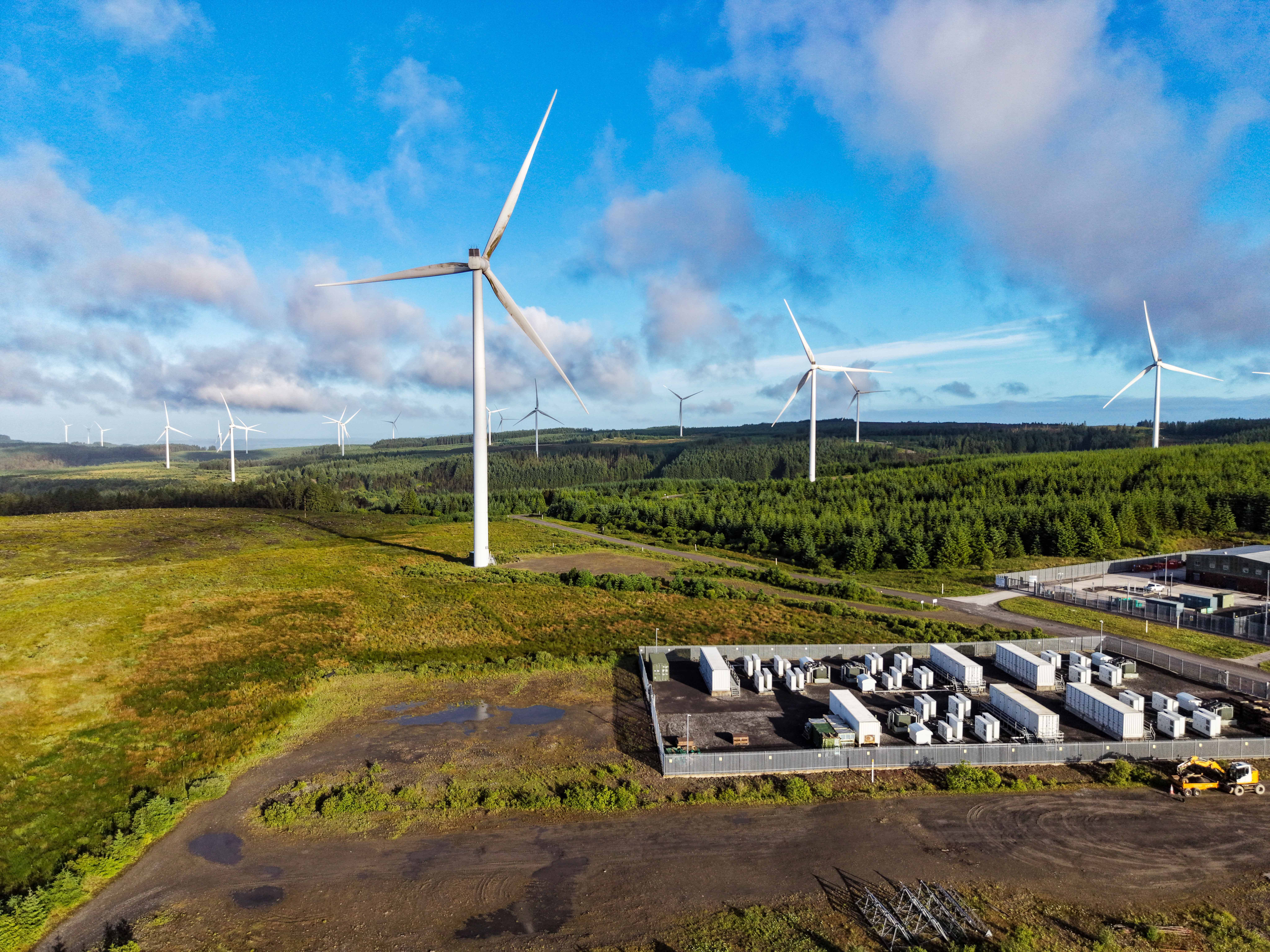
Operators are increasingly responding by building more balanced portfolios that combine generation, storage and flexible assets to manage volatility. Drax’s own portfolio, spanning biomass, pumped storage, battery systems and open cycle gas turbines, reflects this shift, providing dispatchable power and system services that help stabilise the grid when supply tightens.

Resilience by Design

Designing for resilience requires a shift in mindset. Disruption should not be treated as exceptional, but as inevitable. The goal is not to predict the next shock, but to ensure the system can withstand it.

In a more volatile world, resilience is becoming the defining measure of energy security. The countries that succeed in the next phase of the energy transition will not be those with the most generation capacity but those with systems designed to endure disruption.

Ross McKenzie is the chief corporate affairs and sustainability officer for UK electricity generator Drax Group. The views expressed in this article are those of the author.

Richard Gwilliam, Future of Drax Power Station Director: “The UK needs to think differently about its electrical infrastructure if it wants to be a leader in AI”

UK electricity demand is changing after years of stability

Drax’s Electric Insights recently published its quarterly report into the state of the electricity market. Amongst the plethora of useful information one metric stood out: electricity demand in the UK is starting to surge.

The report stated that demand in Q4 of last year reached 72.3 TWh over the quarter, up nearly 4% year-on-year. That might not sound much but, Covid rebound aside, that increase represents the fastest uptick in electricity demand since 2011.

From the mid-2000s until the early 2020s, GB’s total electricity demand fell steadily driven by gains in energy efficiency, deindustrialisation and an increase in behind the meter generation like rooftop solar, but it appears that trend is coming to an end.

The electrification of the UK’s economy has long been predicted and the reasons are of no surprise. Electric vehicles reached roughly 27% of new car registrations in 2025 and as the EV fleet grows, charging adds steadily to residential and overall electricity consumption.

Heat pumps too are scaling up – although still a small proportion of heating overall – the trend towards the electrification of heating is continuing and beginning to influence winter power demand profiles.

Finally, whilst some energy-intensive industry demand has grown, partly due to policy support and investment, the rapid increase in new data centres, particularly those serving AI and cloud computing, are emerging as rapidly growing demand centres, adding material loads on the grid.

Data Centres are likely to have a profound effect on the UK grid

Whilst demand for EVs and heat pumps are set to grow, it’s likely the demand for compute capacity will put the most pressure on the grid.

Such is the anticipated change that data centres are arguably no longer just customers of the grid, their scale means they are system actors. They can influence investment signals, dispatch patterns and ultimately the carbon intensity of the electricity system. That means we need to plan for them as part of the system, not bolt them on afterwards.

The processes that underpin new grid connections to meet demand were not designed for growth at the pace or scale that AI is moving. We are already seeing this emerge with:

  • long lead times for new grid capacity
  • constraints around transmission and distribution access
  • rising connection costs

This is important to UK growth, productivity and global competitiveness

The Government identifies AI as a key driver of future productivity growth across the economy: while the UK AI sector currently contributes around £12 billion in GVA, government-cited modelling suggests that widespread AI adoption could raise productivity, adding tens of billions of pounds a year to economic output. Delivering this growth is contingent on access to domestic compute capacity, with the UK Compute Roadmap indicating a need for a substantial expansion in AI-capable data centre capacity by 2030.

On the face of it, the ongoing electrification of our economy and slow adaptation of the grid appears to be a real stumbling block to meeting our AI ambition. But there are options that could see us simply adapt existing infrastructure and re-use what we already have in a more efficient way.

Existing energy infrastructure is a strategic advantage

One of the UK’s greatest, and most under-used asset is the infrastructure we already have.  Sites like Drax Power Station were built to handle very large amounts of power safely and reliably. They already have:

  • substantial grid connections;
  • transformers and electrical infrastructure sized for industrial-scale operations;
  • established sites with an energy and industrial planning context; and
  • experienced workforces and supply chains.

Repurposing and reusing this infrastructure is the fastest and most credible way to support large new electricity demand without waiting years for the system to catch up.

Re-use and re-purposing will keep the UK in the race for AI

At the end of last year, we unveiled proposals to submit a planning application for an initial <100MW data-centre development at Drax Power Station – an important step towards boosting AI capacity at the site. The project looks to re-use existing infrastructure and capacity, creating a practical and expedient way of meeting demand without waiting a decade for network reinforcement.

Not only that, but it could help pave the way for a >1GW data centre facility on the site before the end of the decade.

The Government is responding but more pace is needed

In December, the UK Government published the terms of reference for a review of AI deployment in the electricity networks. It is good to see that as part of that the Government will attempt to grapple with regulatory constraints and begin to consider AI deployment at a spatial level.

This is an acknowledgement that we need to challenge convention and think differently about this issue, unpick regulations that were devised for a different time and rethink how we maximise efficiency from existing assets. Time is of the essence; left unchecked we’ll likely end up falling behind in the global AI race and be left with an energy system with baked in inefficiencies.

The AI revolution is an energy story

It’s becoming increasingly clear that we’re now at the end of a decades long trend of decline and stability in electricity demand and arguably our systems are not ready to cope. The countries that succeed will not be those that build the most servers the fastest, but those that integrate compute into their power systems.

The UK already has much of the infrastructure it needs. The challenge now is to use it differently. At Drax Power Station, we are focused on how an existing site – which has kept the lights on around the UK for 50 years – can evolve to meet new demands supporting long term economic growth and prosperity for the UK.

Read the full Q4 2025 Electric Insights report here.