





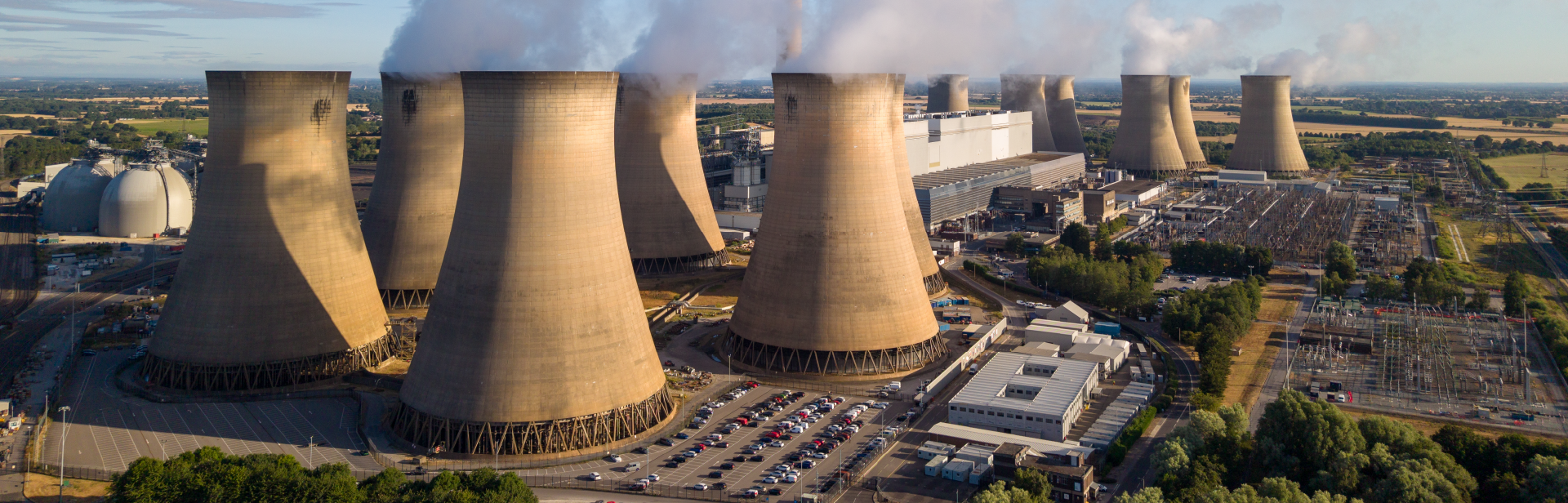
Drax in partnership with Brookfield and Radiant, Brookfield’s UK Headquartered AI Infrastructure Platform, are developing plans for a new data centre of up to 100 MW within the Selby Power Station site.
Data centres are critical national infrastructure, providing the computing power needed to support AI, discover new medicines, advance scientific research and support essential public services. They also help with everyday activities, from supporting internet banking, learning new recipes to planning holidays.
As our use of AI and advanced computing grows, we need more data centre capacity to support the services people and businesses rely on. A new data centre at Drax would help meet this demand on an existing industrial site, and support future economic growth and innovation in the region.
Ahead of submitting a planning application, we want to hear your thoughts. We’ve launched a public consultation on the plans, which closes on 3 December 2026 – read on to find out more about the proposals and to have your say.
The plans
We are proposing a data centre of up to 100 MW, located within the footprint of the Drax Power Station, just off the A645 at the south end of the site.
The Power Station is well-suited to hosting a data centre. The proposed site is on previously developed land within an existing industrial site, with access to grid infrastructure and extremely high level of security. This avoids needing to develop on new land.
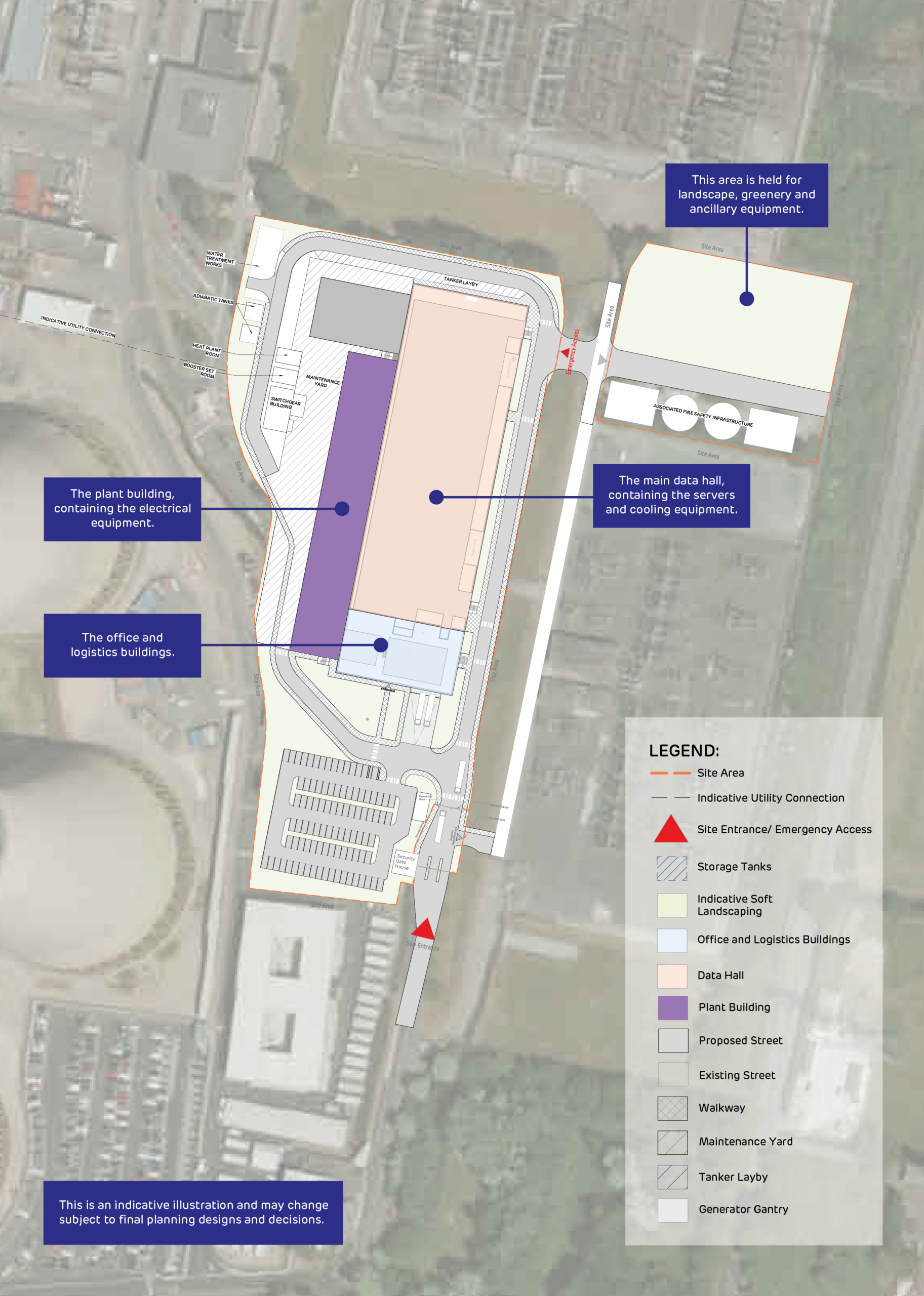
The development would include a data hall housing the advanced computer systems used to support AI applications, together with associated cooling infrastructure, plant buildings for electrical equipment, and an office and logistics building.
The current design intends for the data centre to be powered from the electricity grid using infrastructure already in place at the Power Station. The servers inside the data centres need to be cooled as they operate. Where this requires water, we are exploring the opportunity for water to be supplied through Drax’s existing water infrastructure. This will be confirmed as the design process progresses and subject to the appropriate permitting.
Benefits
Environment
The planning application will be accompanied by a number of environmental reports, covering topics such as landscape and visual, ecology, air quality, noise and traffic. These will consider the potential effects of the proposals and set out any measures needed to minimise impacts on local people and the environment.
Drax in the community
Drax has a long track record of investing in local causes. In 2025, we invested £3.1m in 251 local projects through the Drax Foundation and Drax Community Fund, reaching more than 118,000 people in our local communities and regions.
Drax’s Community & Education team based at the Drax Power Station has a long track record of community engagement and support. The team delivers STEM education in local schools, welcomes school groups for educational tours of the power station and takes part in mentoring and careers events – all designed to inspire young people and introduce them to careers in the energy sector. We also run the Skylark Centre, which hosts regular community events and provides local charities, non-profit organisations and community groups with a welcoming venue, free of charge.
We are exploring ways in which the partners can further contribute to the local community. This includes establishing a voluntary community benefits fund – developed in consultation with communities around the Drax Power Station site – that is separate from and additional to any planning obligations and Drax’s existing community initiatives.

Have your say
We want to hear your thoughts on our plans. You can have your say on the plans by:
- Completing the online questionnaire here: Consultation Questionnaire
- Emailing us: Click here
- Attending a drop-in event at Drax Villlage Hall, 38 Castle Hill Lane, Drax, Selby YO8 8NP on:
- Thursday 19 November, 2pm-5pm
- Friday 20 November, 4pm-7pm
The consultation closes on 3 December 2026. All the feedback received during the consultation will be considered by the project team, ahead of submitting a planning application to North Yorkshire Council in the coming months.
FAQs
- What is a data centre?
- Why are data centres needed for AI?
- What are the benefits of having data centres in the UK?
- Where would the data centre be located?
- What is currently on the site?
- Why is this a suitable site?
- Who will own and operate the data centre?
- How many jobs will be created during construction and operation?
- What training or skills programmes could be offered to local residents?
- Will the development impact the operation of Drax Power Station?
- Are there plans for further data centres in the future?
- What environmental assessments will be carried out?
- How will flood risk and drainage be managed?
- How would noise, air quality and visual effects be addressed?
- Will the data centre be visible from homes and villages surrounding the site?
- How would wildlife and habitats be protected?
A data centre is a building that houses computers, known as servers, which store and process information. These support services such as websites, online banking and video calls.
Some data centres also house the computing equipment used to develop and run artificial intelligence (AI). AI systems can analyse information and carry out tasks such as recognising patterns or generating text.
AI systems need computing capacity both to develop them and to run them when people use them. Data centres house that equipment. The UK’s AI Opportunities Action Plan identifies computing infrastructure as a foundation for developing and using AI.
Data centres are an important part of the UK’s digital infrastructure, supporting services such as cloud computing, online banking, healthcare systems, public services and AI.
Developing more data centres in the UK can help support economic growth, attract investment in technology and infrastructure and strengthen the UK’s AI capabilities. They can also create skilled jobs in construction, engineering, IT, operations and maintenance, while supporting wider supply chains.
The government’s AI Opportunities Action Plan supports investment in domestic computing capacity.
The data centre is located within the power station footprint, just off the A645 at the south end of the site. A site plan can be seen above.
The site is currently a mix of existing hard standing areas including operational car parks, site roads, existing office blocks and some landscaping around the edges of the paved areas.
The location offers access to existing power connections and water infrastructure within an established power station site. Existing infrastructure includes private roads within the secure site. The detailed design and technical assessments will establish how these could serve the proposed development.
Drax has announced a strategic partnership with Brookfield and Radiant, Brookfield’s UK Headquartered AI infrastructure platform, to jointly develop, deliver and operate an AI data centre on the Drax Power Station estate.
Drax is providing the land, power and planning expertise to this project, whilst the data centre itself will be developed and operated by Brookfield and Radiant. We intend to secure a customer for the use of the data centre in the future.
There will be a number of jobs created during both the construction and the operation and maintenance phases.
The exact number of jobs produced by the development will be confirmed as the planning application develops.
Drax has established relationships with regional education providers and would like to explore opportunities to support skills programmes as the proposal develops. This will be delivered in collaboration with the community to identify and respond to local needs.
Any programme linked to the data centre would also need the involvement of its future operator.
We are proposing this development will be powered by the grid and therefore have no impact on the operation of Drax Power Station.
Drax and Brookfield have announced the ambition for >1GW of data centre capacity to be delivered over three phases. This planning application for an up to 100MW data centre represents Phase 1 of the ambition. No subsequent phases have been confirmed at this stage.
The planning application will be supported by a comprehensive suite of technical assessments to identify any environmental effects of the proposed development and any mitigation required. The studies are expected to include ecology, arboriculture, land contamination, landscape and visual impact, air quality, noise, sustainability and energy, flood risk and drainage, and socio-economic effects.
Due to the scale and nature of the proposal, significant environmental effects are not currently expected, and a formal Environmental Impact Assessment (EIA) is not anticipated to be required. However, the need for any additional assessment will continue to be reviewed as the proposals develop.
The proposals are still being developed, but the majority of the site is located within Flood Zone 1, which has the lowest probability of flooding. A Flood Risk Assessment and Drainage Strategy will be prepared to support the planning application.
These assessments will demonstrate that the development is appropriate for the site, can be operated safely, and will not increase flood risk elsewhere. Surface water drainage proposals will be designed in line with national and local planning policy, with measures incorporated where necessary to manage runoff and protect surrounding areas. Maintenance arrangements for the drainage infrastructure will also be set out as part of the application.
Noise, air quality and visual effects will be assessed as the proposals develop, covering construction and operation where relevant. Appropriate mitigation measures will be incorporated into the design.
Landscape and Visual Impact Assessment (LVIA) will be prepared to assess the effects of the proposed development on surrounding views and the wider landscape.
Given the site’s location within the existing Drax complex, visibility is expected to be limited from many surrounding areas. Some views of the development may be possible from public areas. Where necessary, measures such as landscaping and careful design will be incorporated to help reduce visual impacts.
The findings of the assessment will be reported as part of the planning application.
The planning application will be supported by ecological surveys and assessments to identify any potential effects on habitats and species. Current work indicates that the development is not expected to result in significant impacts on priority habitats or protected and priority species.
Measures to protect wildlife during construction will be set out in a Construction Environmental Management Plan (CEMP), while an Arboricultural Method Statement will identify how retained trees and vegetation will be protected. The proposals will also deliver off-site biodiversity enhancements in line with Biodiversity Net Gain requirements.
A data centre is a building that houses computers, known as servers, which store and process information. These support services such as websites, online banking and video calls.
Some data centres also house the computing equipment used to develop and run artificial intelligence (AI). AI systems can analyse information and carry out tasks such as recognising patterns or generating text.
View MoreAI systems need computing capacity both to develop them and to run them when people use them. Data centres house that equipment. The UK’s AI Opportunities Action Plan identifies computing infrastructure as a foundation for developing and using AI.
View MoreData centres are an important part of the UK’s digital infrastructure, supporting services such as cloud computing, online banking, healthcare systems, public services and AI.
Developing more data centres in the UK can help support economic growth, attract investment in technology and infrastructure and strengthen the UK’s AI capabilities. They can also create skilled jobs in construction, engineering, IT, operations and maintenance, while supporting wider supply chains.
The government’s AI Opportunities Action Plan supports investment in domestic computing capacity.
View MoreThe data centre is located within the power station footprint, just off the A645 at the south end of the site. A site plan can be seen above.
View MoreThe site is currently a mix of existing hard standing areas including operational car parks, site roads, existing office blocks and some landscaping around the edges of the paved areas.
View MoreThe location offers access to existing power connections and water infrastructure within an established power station site. Existing infrastructure includes private roads within the secure site. The detailed design and technical assessments will establish how these could serve the proposed development.
View MoreDrax has announced a strategic partnership with Brookfield and Radiant, Brookfield’s UK Headquartered AI infrastructure platform, to jointly develop, deliver and operate an AI data centre on the Drax Power Station estate.
Drax is providing the land, power and planning expertise to this project, whilst the data centre itself will be developed and operated by Brookfield and Radiant. We intend to secure a customer for the use of the data centre in the future.
View MoreThere will be a number of jobs created during both the construction and the operation and maintenance phases.
The exact number of jobs produced by the development will be confirmed as the planning application develops.
View MoreDrax has established relationships with regional education providers and would like to explore opportunities to support skills programmes as the proposal develops. This will be delivered in collaboration with the community to identify and respond to local needs.
Any programme linked to the data centre would also need the involvement of its future operator.
View MoreWe are proposing this development will be powered by the grid and therefore have no impact on the operation of Drax Power Station.
View MoreDrax and Brookfield have announced the ambition for >1GW of data centre capacity to be delivered over three phases. This planning application for an up to 100MW data centre represents Phase 1 of the ambition. No subsequent phases have been confirmed at this stage.
View MoreThe planning application will be supported by a comprehensive suite of technical assessments to identify any environmental effects of the proposed development and any mitigation required. The studies are expected to include ecology, arboriculture, land contamination, landscape and visual impact, air quality, noise, sustainability and energy, flood risk and drainage, and socio-economic effects.
Due to the scale and nature of the proposal, significant environmental effects are not currently expected, and a formal Environmental Impact Assessment (EIA) is not anticipated to be required. However, the need for any additional assessment will continue to be reviewed as the proposals develop.
View MoreThe proposals are still being developed, but the majority of the site is located within Flood Zone 1, which has the lowest probability of flooding. A Flood Risk Assessment and Drainage Strategy will be prepared to support the planning application.
These assessments will demonstrate that the development is appropriate for the site, can be operated safely, and will not increase flood risk elsewhere. Surface water drainage proposals will be designed in line with national and local planning policy, with measures incorporated where necessary to manage runoff and protect surrounding areas. Maintenance arrangements for the drainage infrastructure will also be set out as part of the application.
View MoreNoise, air quality and visual effects will be assessed as the proposals develop, covering construction and operation where relevant. Appropriate mitigation measures will be incorporated into the design.
View MoreLandscape and Visual Impact Assessment (LVIA) will be prepared to assess the effects of the proposed development on surrounding views and the wider landscape.
Given the site’s location within the existing Drax complex, visibility is expected to be limited from many surrounding areas. Some views of the development may be possible from public areas. Where necessary, measures such as landscaping and careful design will be incorporated to help reduce visual impacts.
The findings of the assessment will be reported as part of the planning application.
View MoreThe planning application will be supported by ecological surveys and assessments to identify any potential effects on habitats and species. Current work indicates that the development is not expected to result in significant impacts on priority habitats or protected and priority species.
Measures to protect wildlife during construction will be set out in a Construction Environmental Management Plan (CEMP), while an Arboricultural Method Statement will identify how retained trees and vegetation will be protected. The proposals will also deliver off-site biodiversity enhancements in line with Biodiversity Net Gain requirements.
View More