



Funding secured to accelerate development of UK’s first decarbonised industrial clusters on the east coast of England
We’re committed to enabling a zero carbon, lower cost energy future through engineering, technology and innovation.
We’re building for a sustainable future in how we source our biomass, generate energy, remove carbon dioxide and function as a business.
Read our carbon capture, sustainable bioenergy and power generation stories, as well as thinking from Drax’s leaders and business updates.

The funds donated will help pay for repairs to the roof of Urania’s recreation hall – where the town’s residents gather for dinners to mark Veterans Day and other holidays and to play pool or use the bowling lanes – as well as helping to rebuild the public pavilion in the town of Olla, that hosts events from farmers markets to weddings. Each project received $10,000 from Drax.
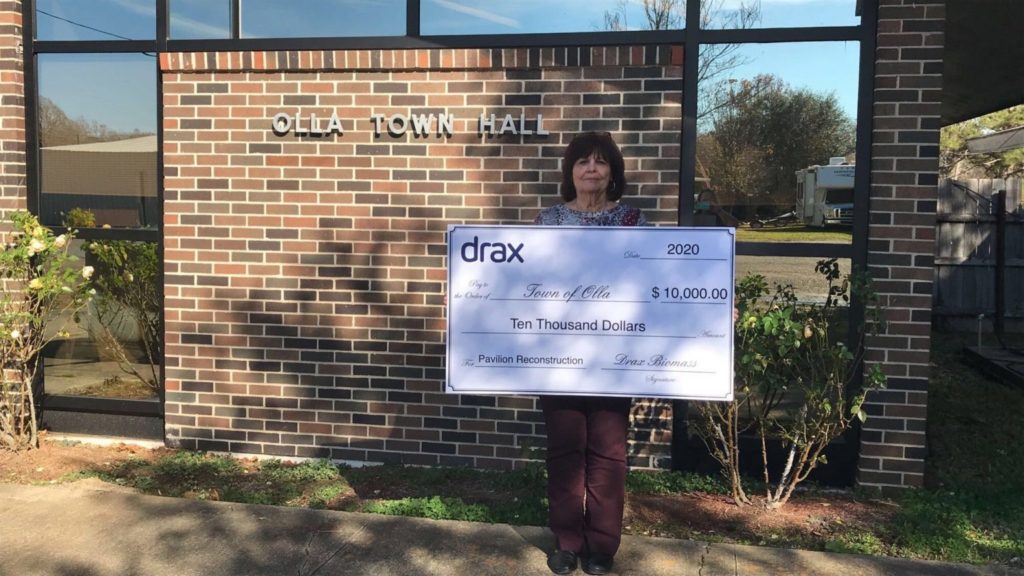
Mayor of Olla, Rhonda Elliott presenting the cheque donated by Drax
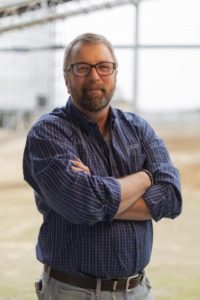
Matt White, SVP Drax Biomass.
“This year has been hard for many people in this region – the Covid-19 pandemic, a tornado and then Hurricane Laura in August, which hit these two buildings at the centre of community life in Olla and Urania.
“It’s important to support the people and communities in the areas where we operate. That’s why we’re donating $20,000 to help repair and rebuild the rec hall in Urania and the public pavilion in Olla.”
Drax Biomass, part of British energy company Drax Group, is headquartered in Monroe, La., with operations in the southeastern U.S. The company is committed to supporting the communities in which it operates by promoting sustainable forestry and investing in local economic development. One of the three pellet mills it owns and operates is located in Urania.
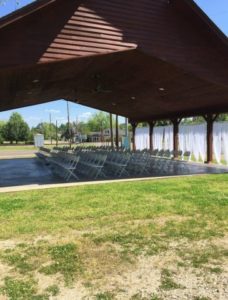
The pavilion in Olla, LA, was a popular location for events ranging from the farmers market to weddings and other celebrations.
“The Urania rec hall is full of memories for all our citizens – both old and new. We are so grateful that Drax, one of the newest members of the Urania family, recognizes the importance of the building and wants to invest in repairing the roof. This will help ensure we get to make more memories for many years to come.”
Olla Mayor Rhonda Elliott said: “We really appreciate this support from Drax Biomass for our small town. The donation will boost our efforts to rebuild the pavilion so we can once again hold the farmers market our town is well known for.”
Drax Biomass produces sustainable compressed wood pellets at its pellet plants in Louisiana and Mississippi. The pellets are shipped to Drax Power Station in England and used to generate renewable electricity for millions of UK homes and businesses.
Around two thirds of the sustainable biomass Drax uses each year comes from the sustainably managed working forests of the US southeast. The plants also deliver economic growth and jobs in the US south.
Top image caption: Damage to the public pavilion in Olla, LA by Hurricane Laura.
Annmarie Sartor
Drax Biomass Communications Officer
E: [email protected]
T: +1 318-801-0046
Selina Williams
Drax Group Media Manager
E: [email protected]
T: +44 7912 230393
Drax Group’s purpose is to enable a zero carbon, lower cost energy future and in 2019 announced a world-leading ambition to be carbon negative by 2030, using Bioenergy with Carbon Capture and Storage (BECCS) technology.
Its 2,900-strong employees operate across three principal areas of activity – electricity generation, electricity sales to business customers and compressed wood pellet production.
Drax owns and operates a portfolio of flexible, low carbon and renewable electricity generation assets across Britain. The assets include the UK’s largest power station, based at Selby, North Yorkshire, which supplies five percent of the country’s electricity needs.
Having converted two thirds of Drax Power Station to use sustainable biomass instead of coal it has become the UK’s biggest renewable power generator and the largest decarbonisation project in Europe. It is also where Drax is piloting the groundbreaking negative emissions technology BECCS within its CCUS (Carbon Capture Utilisation and Storage) Incubation Area.
Its pumped storage, hydro and energy from waste assets in Scotland include Cruachan Power Station – a flexible pumped storage facility within the hollowed-out mountain Ben Cruachan. It also owns and operates four gas power stations in England.
Through its two B2B energy supply brands, Haven Power and Opus Energy, Drax supplies energy to 250,000 businesses across England, Scotland and Wales.
Drax owns and operates three pellet mills in the US South which manufacture compressed wood pellets (biomass) produced from sustainably managed working forests. These pellet mills supply around 20% of the biomass used by Drax Power Station in North Yorkshire to generate flexible, renewable power for the UK’s homes and businesses.
For more information visit www.drax.com
Removing carbon dioxide from the atmosphere through a combination of bioenergy with carbon capture, direct air capture, management of trees and other nature-based solutions will be critical to making net zero a reality in the UK.
Today’s commitment from the Prime Minister to have four industrial clusters in the UK by 2030, supported by £200m of additional funding, will be vital to unlocking the carbon capture infrastructure needed for BECCS and DACCS projects to progress in the 2020s.
In doing so, the UK can become a world leader in these technologies and avoid the costs of delayed action.
The 2030 target of 10 million tonnes per year of CO2 removed should create a competitive market to capture and store CO2 at large scale, as well as usage.
The Coalition for Negative Emissions includes Biomass UK, Carbon Engineering, Carbon Removal Centre, CBI, CCSA, Climeworks, Drax, Energy UK, Heathrow, IAG, REA, NFU and Velocys.



“The IEA’s report today further reinforces the growing consensus from a number of independent advisory bodies and experts that bioenergy with carbon capture and storage (BECCS), which Drax is pioneering, is urgently needed to help the UK and other countries decarbonise and achieve global climate ambitions.”

Drax Group CEO Will Gardiner in the control room at Drax Power Station [Click to view/download]
“As the IEA said in its report, BECCS is the most mature of all the carbon removal technologies.
“It’s also the cheapest and – uniquely – generates renewable power. Scaling up BECCS at Drax can support decarbonisation of Britain’s most carbon-intensive industrial region, safeguarding thousands of jobs and driving clean growth after Covid. It also gives the UK the opportunity to lead in a vital negative emissions technology that will be needed globally to combat the climate emergency.”
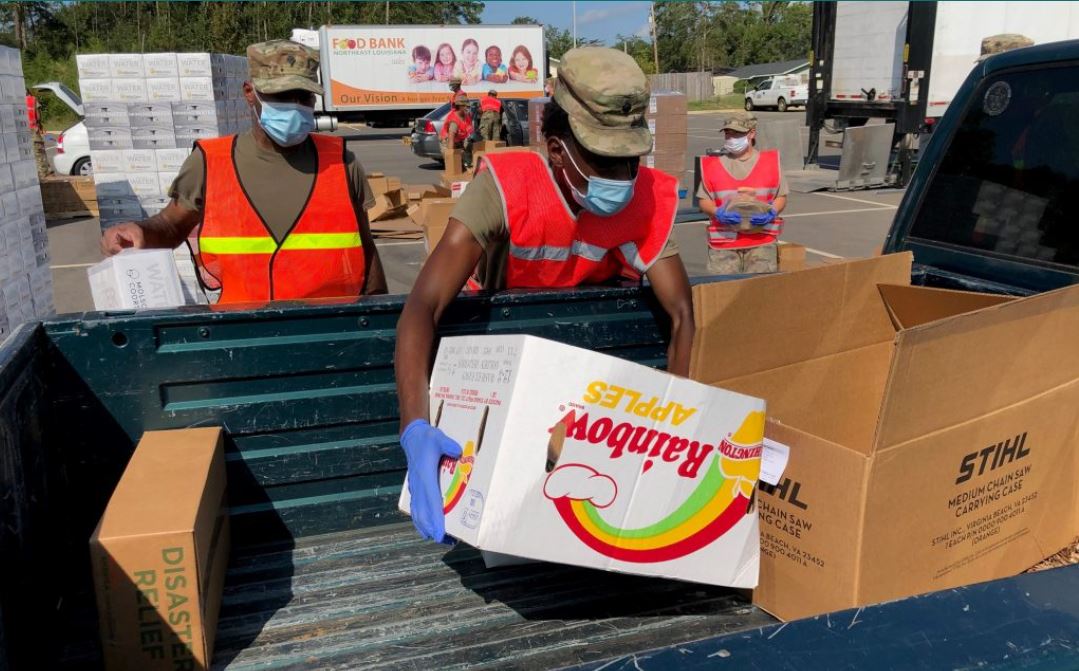
The funds donated are going to hurricane relief efforts driven by the United Way of Northeast Louisiana and the United Way of Central Louisiana, as well as the Food Banks of Northeast and Central Louisiana.
Matt White, SVP Drax Biomass.
“Hurricane Laura has been devastating to many communities in the region. It’s come at a difficult time as we’re all still dealing with the impact of the Covid-19 pandemic.
“It’s important to support the people and communities in the areas where we operate. That’s why we’re donating $20,000 to help local relief efforts. Our thoughts are with everyone affected by the hurricane.”
In the immediate relief efforts, United Way focused on food assistance for vulnerable people with limited resources who can’t access mass food distributions and helped people whose homes were destroyed or severely damaged by the hurricane. The Food Bank distributed food to agencies as well as to people in the impacted areas.
“We’ve faced three disasters this year – the pandemic, a tornado and most recently a hurricane. The support we received from Drax Biomass has helped us set up large, drive-through food distributions in the five most impacted parishes, helping our neighbours replace the food they lost due to power outages.
“Support from local businesses like Drax Biomass has enabled the Food Bank to purchase much-needed food and supplies so we can re-stock our shelves and help those facing hunger in Northeast Louisiana.”
Headquartered in Monroe, LA, with operations in the Southeastern U.S., Drax Biomass is committed to supporting the communities in which it operates by promoting sustainable forestry and investing in local economic development. It is part of British energy company Drax Group.
Drax Biomass produces sustainable compressed wood pellets, which are shipped to Drax Power Station in England and used to generate renewable electricity for millions of UK homes and businesses.
Around two thirds of the sustainable biomass Drax uses each year comes from the US, where Drax owns and operates three pellet plants producing compressed wood pellets sourced from sustainably managed working forests in Louisiana, Arkansas and Mississippi.
The plants also deliver economic growth and jobs in the US south.
“We’ve worked hard to keep our pellet plants operating, while keeping people safe,” White said. “The safety and wellbeing of our employees is paramount, and we have processes in place to ensure people are working safely. We are also in contact with our partners throughout our supply chains to ensure they are doing the same.”
Top image caption: Louisiana National Guard helping at a Food Bank drive-through distribution area in Ruston in Lincoln parish. Credit: Sarah Hoffman
Annmarie Sartor
Drax Biomass Communications Officer
E: [email protected]
T: +1 318-801-0046
Selina Williams
Drax Group Media Manager
E: [email protected]
T: +44 7912 230393
Drax Group’s purpose is to enable a zero carbon, lower cost energy future and in 2019 announced a world-leading ambition to be carbon negative by 2030, using Bioenergy with Carbon Capture and Storage (BECCS) technology.
Its 2,900-strong employees operate across three principal areas of activity – electricity generation, electricity sales to business customers and compressed wood pellet production.
Drax owns and operates three pellet mills in the US South which manufacture compressed wood pellets (biomass) produced from sustainably managed working forests. These pellet mills supply around 20% of the biomass used by Drax Power Station in North Yorkshire to generate flexible, renewable power for the UK’s homes and businesses.
Drax owns and operates a portfolio of flexible, low carbon and renewable electricity generation assets across Britain. The assets include the UK’s largest power station, based at Selby, North Yorkshire, which supplies five percent of the country’s electricity needs.
Having converted two thirds of Drax Power Station to use sustainable biomass instead of coal it has become the UK’s biggest renewable power generator and the largest decarbonisation project in Europe. It is also where Drax is piloting the groundbreaking negative emissions technology BECCS within its CCUS (Carbon Capture Utilisation and Storage) Incubation Area.
Its pumped storage, hydro and energy from waste assets in Scotland include Cruachan Power Station – a flexible pumped storage facility within the hollowed-out mountain Ben Cruachan. It also owns and operates four gas power stations in England.
Through its two B2B energy supply brands, Haven Power and Opus Energy, Drax supplies energy to 250,000 businesses across England, Scotland and Wales.
For more information visit www.drax.com
In its first year of operation, a new $15m rail link has increased the flow of sustainable biomass from one of Drax Group’s US pellet plants to its UK power station, reducing emissions and costs whilst increasing the resilience of the energy company’s supply chain.
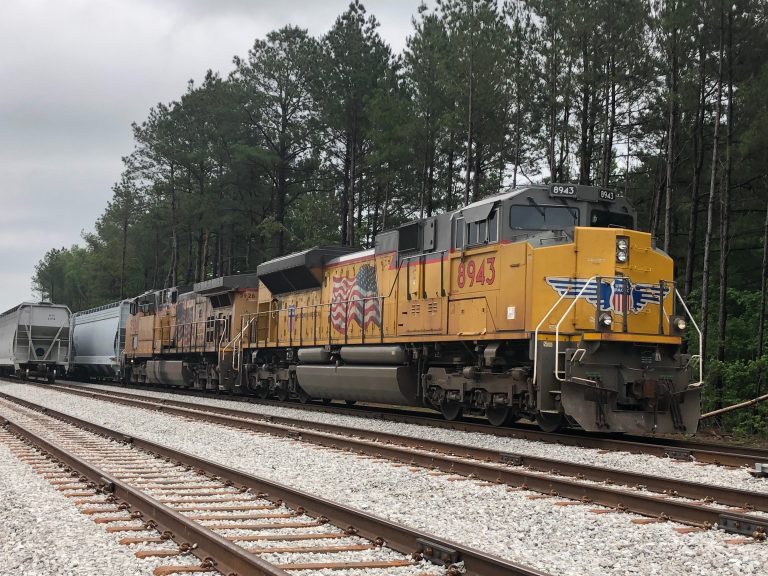
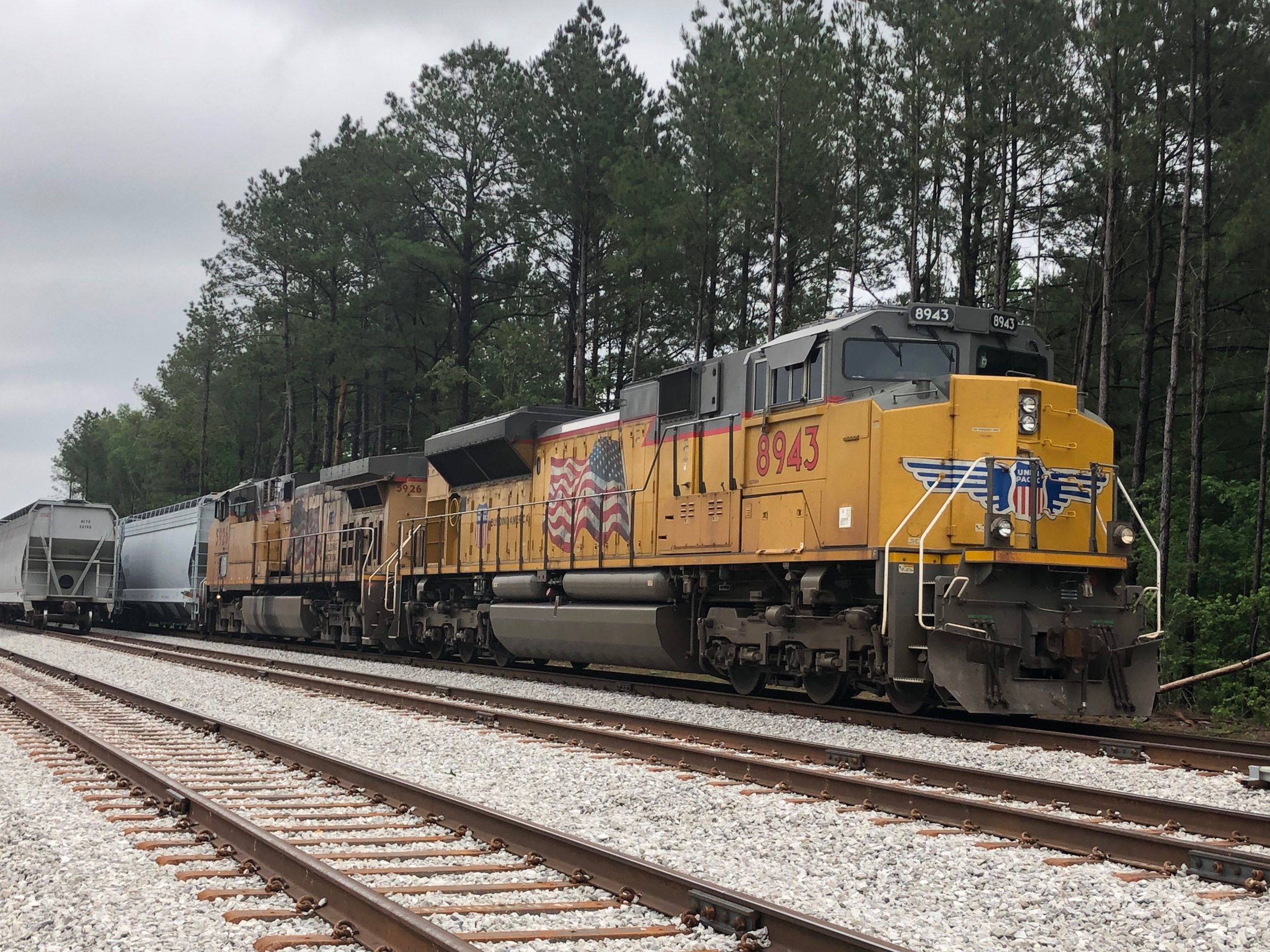
The first train arrives at the LaSalle plant in May 2019. By Rafael Moreno
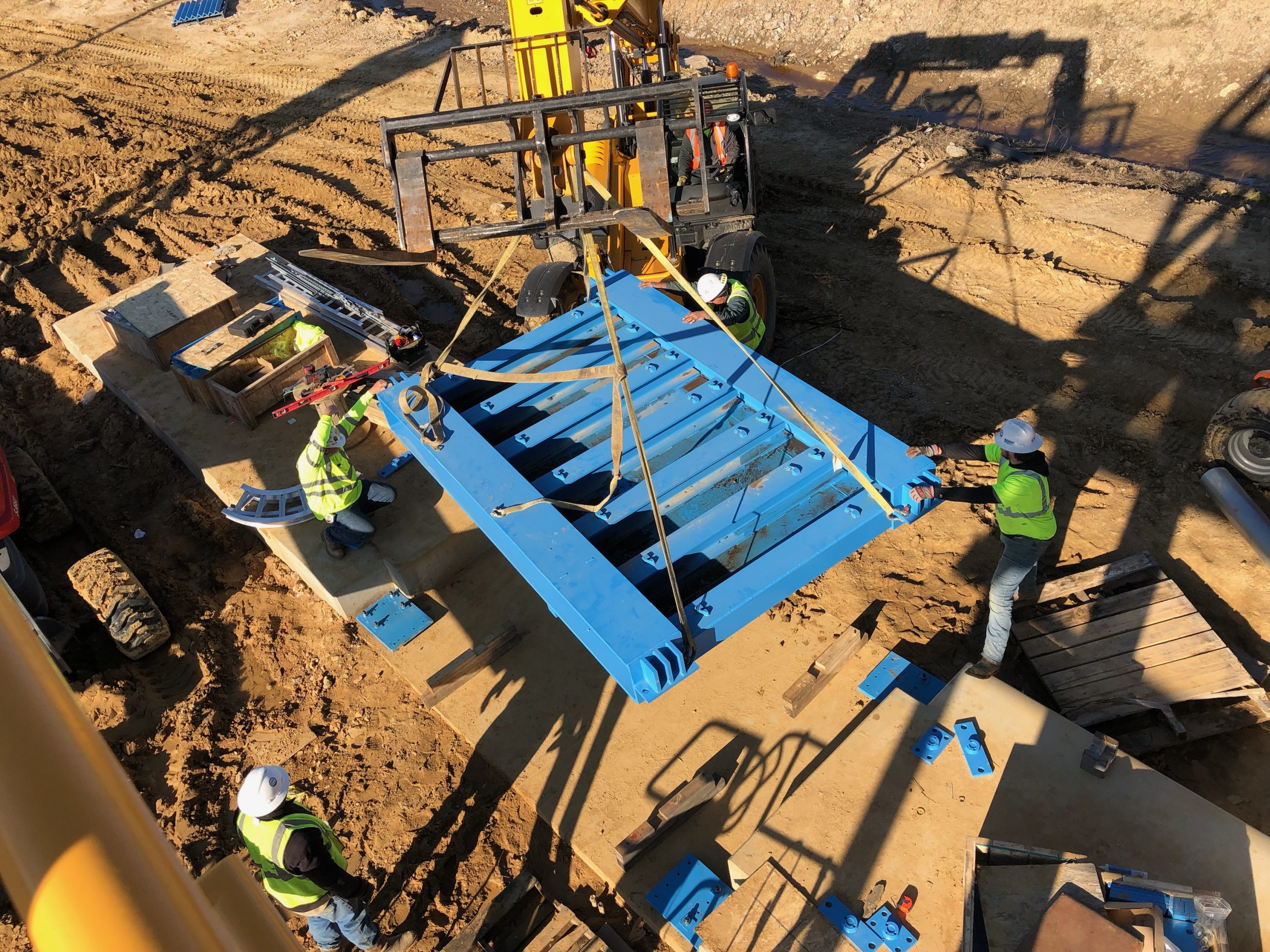
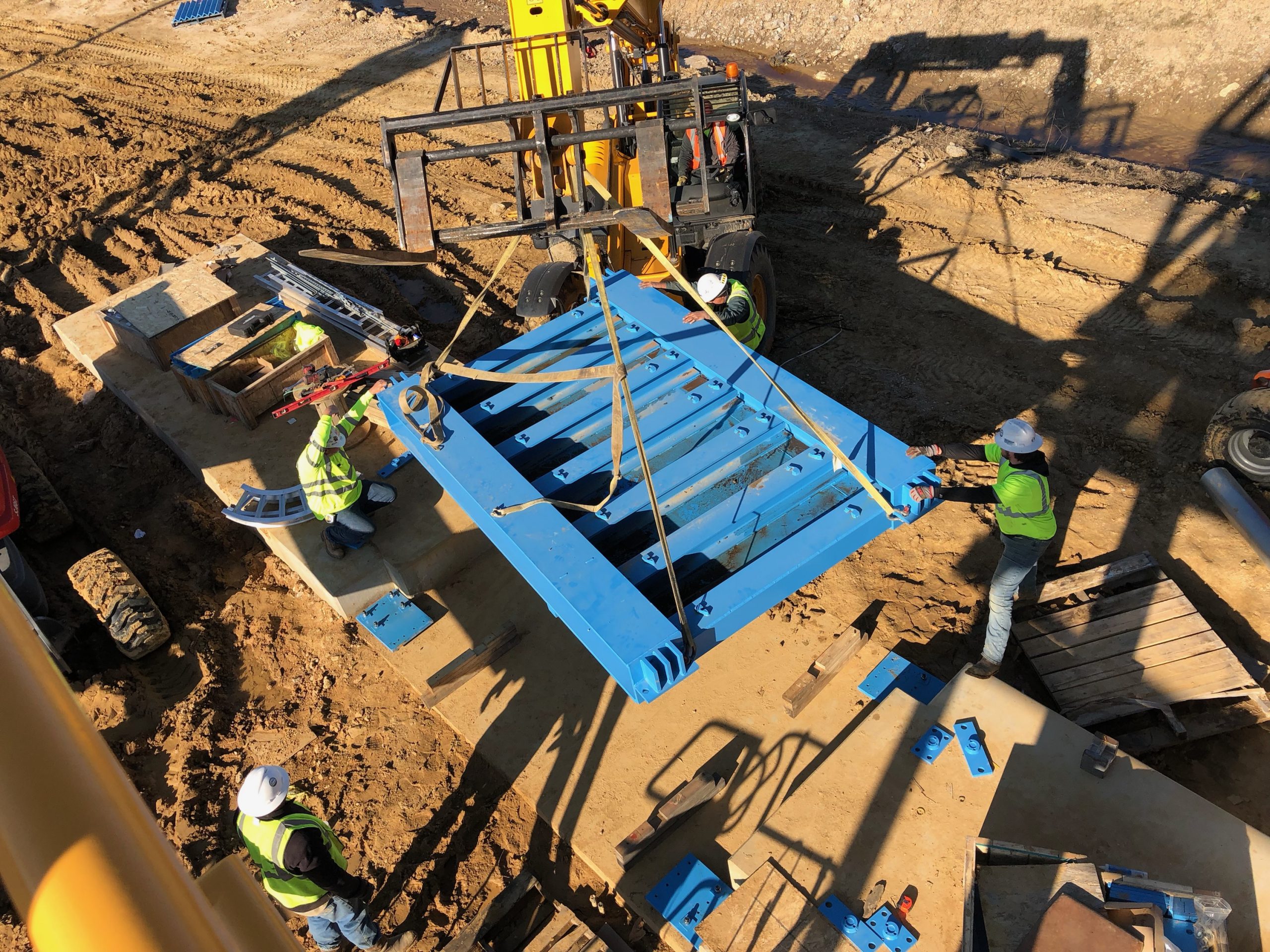
The five miles of rail track connects Drax’s LaSalle pellet plant in northern Louisiana to the regional rail network, enabling freight trains to deliver the pellets to the company’s dedicated export facility at the Port of Greater Baton Rouge.
From there, the pellets are shipped to Drax Power Station in North Yorkshire, which supplies around 12% of the UK’s renewable electricity.
The new rail link allows Drax to deliver around 7,000 tonnes of sustainable biomass to the Port of Greater Baton Rouge in each train, compared to just 27 tonnes that could be transported by each truck previously.
“The new rail spur has been a great success. Since it was commissioned last May it has significantly increased the amount of sustainable biomass we can deliver. It’s also taken thousands of trucks off local roads, unlocking carbon savings and costs in our supply chain as we build a long-term future for the sustainable biomass that provides millions of UK homes and businesses with renewable power.
“Biomass-generated electricity will be an important part of the global climate change solution. It supports healthy forest growth and biodiversity, while providing reliable, flexible renewable power, and could enable bioenergy with carbon capture and storage, known as BECCS – a vital negative emissions technology that will be crucial to meeting net zero targets.”
A team of up to 40 contractors worked through two of the wettest Louisiana winters in decades to clear the site, excavating around 180,000 cubic yards of dirt to level off the ground and stabilise it before three sets of rail tracks could be laid. The work also included installing conveyors to get the pellets to the new rail loading point.
“It was a huge amount of work and the wet winters certainly created some challenges. It’s hard to excavate when everything turns into mud. But the team pulled together and worked through the night to get the track laid and completed so the spur could be commissioned in May last year.”
The rail spur at LaSalle is part of Drax’s wider efforts to cut the costs of its biomass by around a third by 2027. The rail link and other initiatives, including the co-location of a sawmill at the LaSalle site last year, has already contributed to a 3% reduction in biomass production costs to $161/tonne in 2019 compared with $166/tonne in 2018.
Drax acquired the LaSalle BioEnergy plant in Urania in northern Louisiana in 2017. LaSalle BioEnergy is one of three US pellet plants owned by Drax. The three plants produce a total of 1.5 million tonnes of sustainable biomass pellets a year.
ENDS
Picture captions:
Virtual tours:
360 tour of LaSalle: view here and pictured below. Works best on Chrome and Firefox browsers. Good internet connection required.
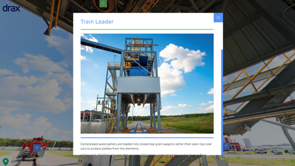
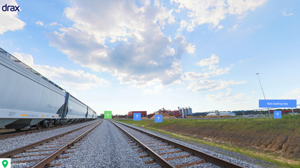
Video tour of LaSalle: watch here or below.
Annmarie Sartor
Drax Biomass Communications Officer
E: [email protected]
T: +1 318-801-0046
Selina Williams
Drax Group Media Manager
E: [email protected]
T: +44 7912 230393
Drax Group’s purpose is to enable a zero carbon, lower cost energy future and in 2019 announced a world-leading ambition to be carbon negative by 2030.
Its 2,900-strong employees operate across three principal areas of activity – electricity generation, electricity sales to business customers and compressed wood pellet production.
Drax owns and operates a portfolio of flexible, low carbon and renewable electricity generation assets across Britain. The assets include the UK’s largest power station, based at Selby, North Yorkshire, which supplies five percent of the country’s electricity needs.
Having converted two thirds of Drax Power Station to use sustainable biomass instead of coal it has become the UK’s biggest renewable power generator and the largest decarbonisation project in Europe.
Its pumped storage, hydro and energy from waste assets in Scotland include Cruachan Power Station – a flexible pumped storage facility within the hollowed-out mountain Ben Cruachan. It also owns and operates four gas power stations in England.
Through its two B2B energy supply brands, Haven Power and Opus Energy, Drax supplies energy to 250,000 businesses across England, Scotland and Wales.
Drax owns and operates three pellet mills in the US South which manufacture compressed wood pellets (biomass) produced from sustainably managed working forests. These pellet mills supply around 20% of the biomass used by Drax Power Station in North Yorkshire to generate flexible, renewable power for the UK’s homes and businesses.
For more information visit www.drax.com

Drax is seeking views from a wide range of experts, including academics, non-governmental organisations and the biomass for energy industry in a consultation on the Biomass Carbon Calculator to ensure that the methodology is as accurate and transparent as possible so it is more effective.
“Drax announced a world-leading ambition to become carbon negative by 2030 by pioneering the groundbreaking negative emissions technology, bioenergy with carbon capture and storage (BECCS).
“As part of this commitment to support the UK’s net zero target, Drax is also ensuring that the supply chain for the sustainable biomass pellets we use to generate renewable electricity is as low carbon as possible.

Sawmill residues used to manufacture sustainable biomass wood pellets at LaSalle BioEnergy in Louisiana [Click to view/download]
“That’s why we’re calling on academics, scientists, regulators and non-governmental organisations, as well as those in the biomass industry, to participate in the consultation to help further improve the modelling for this new calculator and create a higher industry standard for emissions reporting.”
Drax’s Biomass Carbon Calculator has already been independently reviewed against the greenhouse gas calculation methodology laid out in the Renewable Obligation, one of the main support mechanisms for large-scale renewable electricity projects in the UK, which has helped the country to decarbonise faster than any other in the world. This independent review also verified the calculator for compliance with the EU’s Renewable Energy Directive II.
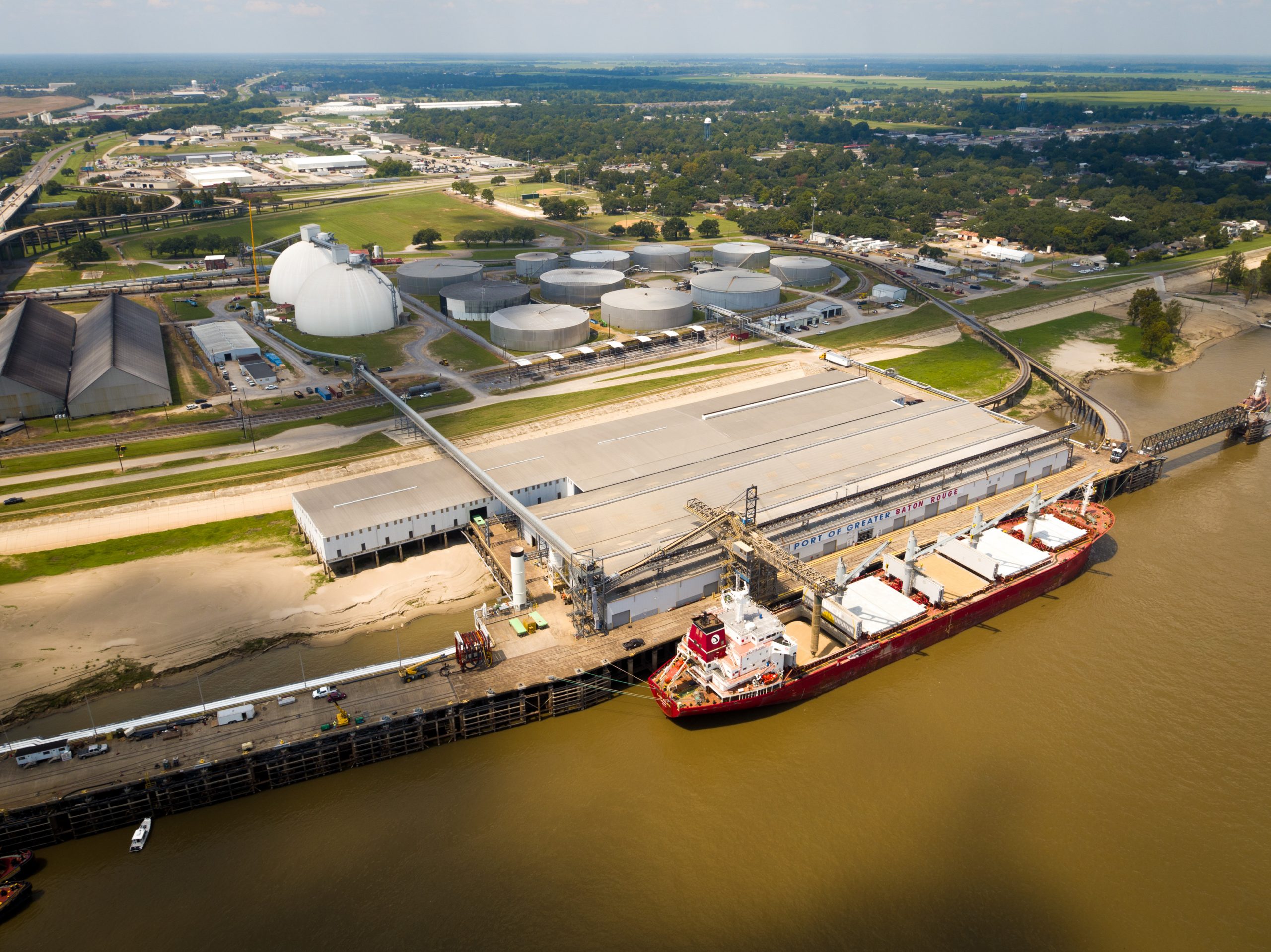
Sustainable biomass wood pellets being safely loaded at the Port of Greater Baton Rouge onto a vessel destined for Drax Power Station [Click to view/download]
The creation of the Biomass Carbon Calculator is one of a number of initiatives Drax is taking to develop world-leading policies and tools to create greater clarity and transparency across the biomass industry.
It follows the creation of an Independent Advisory Board of scientists, academics and forestry experts, led by Sir John Beddington formerly the chief scientific adviser to the UK government, to ensure Drax’s biomass sourcing is in line with latest scientific research and best practice. It has found Drax’s sourcing policies are in line with the Forest Research report, which is widely considered to be the industry gold standard.
ENDS
Ali Lewis
Drax Group Head of Media & PR
E: [email protected]
T: 07712 670 888
Selina Williams
Drax Group Media Manager
E: [email protected]
T: 07912 230 393
Drax Group’s purpose is to enable a zero carbon, lower cost energy future and in 2019 announced a world-leading ambition to be carbon negative by 2030.
Its 2,900-strong employees operate across three principal areas of activity – electricity generation, electricity sales to business customers and compressed wood pellet production.
Drax owns and operates a portfolio of flexible, low carbon and renewable electricity generation assets across Britain. The assets include the UK’s largest power station, based at Selby, North Yorkshire, which supplies five percent of the country’s electricity needs.
Having converted two thirds of Drax Power Station to use sustainable biomass instead of coal it has become the UK’s biggest renewable power generator and the largest decarbonisation project in Europe.
Its pumped storage, hydro and energy from waste assets in Scotland include Cruachan Power Station – a flexible pumped storage facility within the hollowed-out mountain Ben Cruachan. It also owns and operates four gas power stations in England.
Drax owns two B2B energy supply businesses:
Drax owns and operates three pellet mills in the US South which manufacture compressed wood pellets (biomass) produced from sustainably managed working forests. These pellet mills supply around 20% of the biomass used by Drax Power Station in North Yorkshire to generate flexible, renewable power for the UK’s homes and businesses.
For more information visit www.drax.com/us