






Can carbon capture take the UK beyond net zero?
We believe investing in our people goes hand-in-hand with enabling the green energy transformation and positive future growth.
Information about our business, partnerships and campaigns, as well as photos, graphics and multimedia assets for journalists, and educational materials for schools.
Information about our business, partnerships and campaigns, as well as photos, graphics and multimedia assets for journalists, and educational materials for schools.
We’re committed to enabling a zero carbon, lower cost energy future through engineering, technology and innovation.
We’re building for a sustainable future in how we source our biomass, generate energy, remove carbon dioxide and function as a business.
Read our carbon capture, sustainable bioenergy and power generation stories, as well as thinking from Drax’s leaders and business updates.

For the UK to reach net zero CO2 emissions by 2050 and do its part in tackling the biggest challenge of our time, all sectors of the economy must reduce their emissions and do it quickly.
I believe the best approach to tackling climate change is through ‘co-benefit’ solutions: solutions that not only have a positive environmental impact, but that are economically progressive for society today and in the future through training, skills and job creation.
As an energy company, this task is especially important for Drax. We have a responsibility to future generations to innovate and use our engineering skills to deliver power that’s renewable, sustainable and that doesn’t come at a cost to the environment.
Our work on Zero Carbon Humber, in partnership with 11 other forward-thinking organisations, aims to deploy the negative emissions technology BECCS (bioenergy with carbon capture and storage), as well as CCUS (carbon capture, usage and storage) in industry and power, and ramp up hydrogen production as a low carbon fuel. These are all essential technologies in bringing the UK to net zero, but they are also innovative projects at scale that can benefit society and the lives of people in the Humber, and around the UK.
The Humber region has a proud history in heavy industries. What began as a thriving ship building hub has evolved to include chemicals, refining and steel manufacturing. However, these emissions-intensive industries have grown increasingly expensive to operate and many have left for countries where they can be run cheaper, leading to a decline in the Humber region.
If they are not decarbonised, these industries will face an even greater cost. By 2040, emitters could face billions of pounds per year in carbon taxes, making them less competitive and less attractive for international investment.
Deploying carbon capture and hydrogen are essential steps towards modernising these businesses and protecting up to 55,000 manufacturing and engineering jobs in the region.
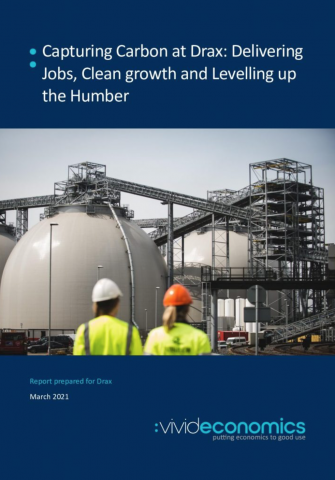
Capturing carbon at Drax: Delivering jobs, clean growth and levelling up the Humber. Click to view executive summary and case studies from Vivid Economics report for Drax.
A report by Vivid Economics commissioned by Drax, found that carbon capture and hydrogen in the Humber could create and support almost 48,000 new jobs at the peak of the construction period in 2027 and provide thousands of long term, skilled jobs in the following decades.
As well as protecting people’s livelihoods, decarbonisation is also a matter of public health. In the Humber alone, higher air quality could save £148 million in avoided public health costs between 2040 and 2050.
I believe the UK is well position to rise to the challenge and lead the world in decarbonisation technology. There is a clear opportunity to export knowledge and skills to other countries embarking on their own decarbonisation journeys. BECCS alone could create many more jobs related to exporting the technology and operational know-how and deliver additional value for the economy. As interest in negative emissions grows around the world, the UK needs to move quickly to secure a competitive advantage.
This is in many ways the start of a new sector in our economy – one that can offer new employment, earnings and economic growth. It comes at just the right time. Without intervention to spur a green recovery, the COVID-19 crisis risks subjecting long-term economic damage.
Being at the beginning of the industrial decarbonisation journey means we also have the power to shape this new industry in a way that spreads the benefits across the whole of the UK.
We’ve previously seen sector deals struck between the government and industry include equality measures. For example, the nuclear industry aims to count women as 40% of its employees by 2030, while offshore wind is committed to sourcing 60% of its supply chain from the UK.
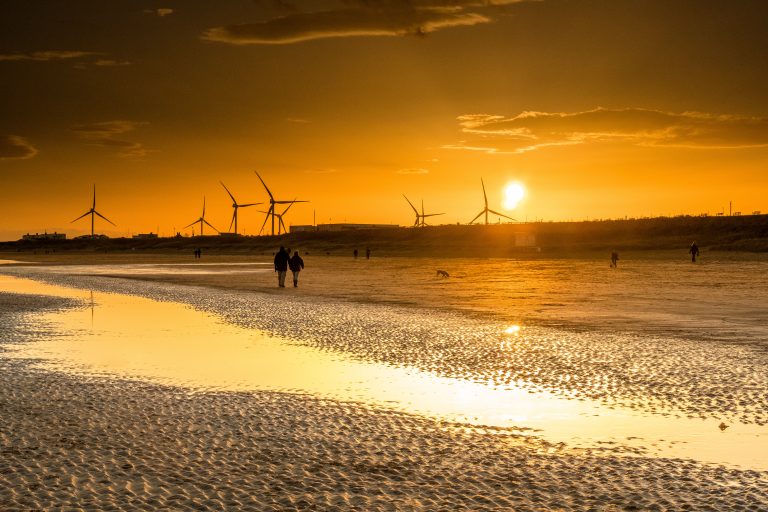
Wind turbines at Bridlington, East Yorkshire
At present, the Humber region receives among the lowest levels of government investment in research and development in the UK, contributing to a pronounced skills gap among the workforce. In addition, almost 60% of construction workers across the wider Yorkshire and Humber region were furloughed as of August 2020.
A project such as Zero Carbon Humber could address this regional imbalance and offer skilled, long term jobs to local communities. That’s why I welcome the Prime Minister’s announcement of £1bn investment to support the establishment of CCUS in the Humber and other ‘SuperPlaces’ around the UK.
As the Government’s Ten Point Plan says, CCUS can ‘help decarbonise our most challenging sectors, provide low carbon power and a pathway to negative emissions’.
The co-benefits of BECCS extend beyond our communities in the UK. We aim to become carbon negative by 2030 by removing our CO2 emissions from the atmosphere and abating emissions that might still exist on the UK’s path to net zero.

This ambition will only be realised if the biomass we use continues to be sourced from sustainable forests that positively benefit the environment and the communities in which we and our suppliers operate.
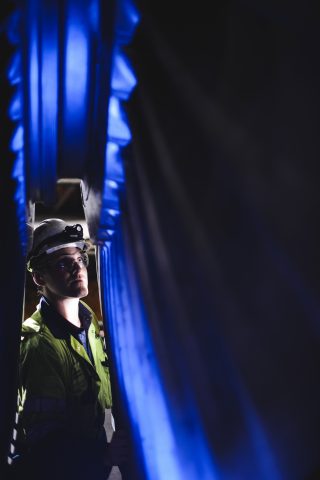
Engineer working in turbine hall, Drax Power Station, North Yorkshire
I believe we must continuously improve our sustainability policy and seek to update it as new findings come to light. We can help ensure the UK’s biomass sourcing is led by the latest science, best practice and transparency, supporting healthy, biodiverse forests around the world; and even apply it internationally.
Delivering deep decarbonisation for the UK will require collaboration from industries, government and society. What we can achieve through large-scale projects like Zero Carbon Humber is more than just the vital issue of reduced emissions. It is also about creating jobs, protecting health and improving livelihoods.
These are more than just benefits, they are the makings of a future filled with opportunity for the Humber and for the UK’s Green Industrial Revolution.
By implementing the Ten Point Plan and publishing its National Determined Contributions (NDCs) ahead of COP26 in Glasgow next year, the UK continues to be an example to the world on climate action.

Drax is pleased to announce that it has completed the refinancing of its revolving credit facility.
The new £300 million facility (“the Facility”) matures in 2025, with an option to extend by one year(1). The Facility replaces the current RCF which matures in 2021 and provides increased liquidity, enabling the full facility to be drawn as cash (the previous facility restricted cash drawn to support liquidity to £165 million). The Facility is currently undrawn for cash.
The Facility has a customary margin grid referenced over LIBOR, which reflects a small reduction in cost versus the current RCF and includes an embedded ESG component which adjusts the margin based on Drax’s carbon intensity measured against an annual benchmark.
Drax has also agreed a change to the Group’s £35 million term-loan facility, maturing in 2022, in order to simplify its capital structure. This facility will now rank as senior, previously super senior.
On 14 September 2020, Drax confirmed that it had agreed a new infrastructure term-loan agreement (the “Agreement”) that provided committed facilities of approximately £160 million with a range of maturities between 2024 and 2030(2). These facilities extended the Group’s maturity profile while also reducing the cost of debt. Drax has now drawn £28 million(2), with the balance to be drawn by February 2021.
The Agreement also included an option for a further £75 million. Under this option Drax has now agreed £53 million maturing in 2028, which will be drawn in December 2020.
On 4 November 2020, Drax issued €250 million of Euro denominated senior secured notes which mature in 2025. The effective Sterling-equivalent interest rate is 3.24% per annum.
The proceeds from this issuance, along with existing cash flows, are being used to redeem the Group’s £350 million 2022 Sterling bond and £125 million ESG term-loan facility.
The notes extend the Group’s debt maturity profile and reduce the overall cost of debt to approximately 3.7%.
| Instrument | Maturity | Description |
|---|---|---|
| Infrastructure facilities (2019) | 2024-2029 | £375m |
| Infrastructure facilities (Sept 2020) | 2024-2030 | approx.£160m (2) (£28m (2) drawn) |
| Infrastructure facilities (Nov 2020) | 2028 | £53m |
| Bonds | 2025 | $500m |
| Bonds | 2025 | €250m |
| RCF | 2025 | £300m (undrawn for cash) |
| Index-linked term-loan | 2022 | £35m |
Drax Investor Relations: Mark Strafford
Drax External Communications: Selina Williams
Website: www.drax.com/uk
END

Drax Group plc (“Drax“) today announced that its indirect wholly owned subsidiary, Drax Finco plc (the “Issuer”), priced its offering (the “Offering“) of euro denominated senior secured notes due 2025 (the “Notes“) in an aggregate principal amount of €250 million.
The Notes will bear interest at an interest rate of 25/8 per cent. per annum and will be issued at 100 per cent. of their nominal value.
Drax has placed cross-currency swaps to convert the proceeds of the Offering into Sterling, as a result of which the effective Sterling-equivalent interest rate is 3.24 per cent. per annum. The Notes will extend the Group’s average debt maturity profile and reduce the Group’s overall cost of debt.
Drax intend to use the gross proceeds of the Offering (i) for general corporate purposes, which may include the repayment of indebtedness, and (ii) to pay estimated fees and expenses of the Offering, including Initial Purchasers’ fees and commissions, professional fees and other associated transaction costs. Drax intend to repay the existing £350 million 4 ¼ per cent. Senior Secured Fixed Rate notes due 2022 issued by the Issuer in full before 31 December 2020.
Drax Investor Relations: Mark Strafford
Drax Head of Media and PR: Ali Lewis
Website: www.drax.com/uk
This release is being issued pursuant to Rule 135c under the U.S. Securities Act of 1933, as amended (the “Securities Act“) and is for information purposes only and does not constitute a prospectus or any offer to sell or the solicitation of an offer to buy any security in the United States of America or in any other jurisdiction. Securities may not be offered or sold in the United States of America absent registration or an exemption from registration under the Securities Act. The Notes and related guarantees were offered in a private offering exempt from the registration requirements of the Securities Act and were accordingly offered only to persons outside the United States in compliance with Regulation S under the Securities Act. No indebtedness incurred in connection with any other financing transactions will be registered under the Securities Act.
This communication is directed only at persons who (i) have professional experience in matters relating to investments falling within Article 19(5) of the Financial Services and Markets Act 2000 (Financial Promotion) Order 2005 as amended (the “Order“), (ii) are persons falling within Article 49(2)(a) to (d) (“high net worth companies, unincorporated associations, etc.”) of the Order, (iii) are persons who are outside the United Kingdom, or (iv) are persons to whom an invitation or inducement to engage in investment activity (within the meaning of section 21 of the Financial Services and Markets Act 2000) in connection with the issue or sale of any notes may otherwise lawfully be communicated or caused to be communicated (all such persons together being referred to as “relevant persons”).
Any investment activity to which this communication relates will only be available to, and will only be engaged in with, relevant persons. Any person who is not a relevant person should not act or rely on this document or any of its contents.
This announcement is not a public offering in the Grand Duchy of Luxembourg or an offer of securities to the public under Regulation (EU) 2017/1129, and any amendments thereto.
The Notes are not intended to be offered, sold or otherwise made available to and should not be offered, sold or otherwise made available to any retail investor in the European Economic Area (the “EEA”) or in the United Kingdom (the “UK”). For these purposes, a retail investor means a person who is one (or more) of: (i) a retail client as defined in point (11) of Article 4(1) of Article 4(1) of MiFID II; (ii) a customer within the meaning of the Insurance Distribution Directive), where that customer would not qualify as a professional client as defined in point (10) of Article 4(1) of MiFID II; or (iii) not a qualified investor as defined in Regulation (EU) 2017/1129 (as amended, the “Prospectus Regulation”). Consequently no key information document required by Regulation (EU) No 1286/2014 (as amended, the “PRIIPs Regulation”) for offering or selling the Notes or otherwise making them available to retail investors in the EEA or in the UK will be prepared. Offering or selling the Notes or otherwise making them available to any retail investor in the EEA or in the UK may be unlawful under the PRIIPs Regulation. Any offer of Notes in any Member State of the EEA or in the UK will be made pursuant to an exemption under the Prospectus Regulation from the requirement to publish a prospectus for offers of Notes.
The Manufacturer target market (MiFID II product governance) is eligible counterparties and professional clients only (all distribution channels).
In connection with any issuance of the Notes, a stabilising manager (or person(s) acting on behalf of such stabilising manager) may over-allot Notes or effect transactions with a view to supporting the market price of the Notes at a level higher than that which might otherwise prevail. However, stabilisation may not necessarily occur. Any stabilisation action may begin on or after the date on which adequate public disclosure of the terms of the offer of the Notes is made and, if begun, may be ended at any time, but it must end no later than 30 days after the date on which the issuer received the proceeds of the issue, or no later than 60 days after the date of the allotment of the Notes, whichever is earlier. Any stabilisation action or over-allotment must be conducted by the stabilising manager (or person(s) acting on behalf of the stabilising manager) in accordance with all applicable laws and rules.
This release includes forward-looking statements within the meaning of the securities laws of certain applicable jurisdictions. These forward-looking statements can be identified by the use of forward-looking terminology, including, but not limited to, terms such as “aim”, “anticipate”, “assume”, “believe”, “continue”, “could”, “estimate”, “expect”, “forecast”, “guidance”, “intend”, “may”, “outlook”, “plan”, “predict”, “project”, “should”, “will” or “would” or, in each case, their negative, or other variations or comparable terminology. These forward-looking statements include, but are not limited to, all statements other than statements of historical facts and include statements regarding Drax’s intentions, beliefs or current expectations concerning, among other things, Drax’s future financial conditions and performance, results of operations and liquidity, strategy, plans, objectives, prospects, growth, goals and targets, future developments in the markets in which Drax participate or are seeking to participate, and anticipated regulatory changes in the industry in which Drax operate. By their nature, forward-looking statements involve known and unknown risks, uncertainties and other factors because they relate to events and depend on circumstances that may or may not occur in the future. Readers are cautioned that forward-looking statements are not guarantees of future performance and are based on numerous assumptions. Given these risks and uncertainties, readers should not rely on forward looking statements as a prediction of actual results.
END
Today our organisations have launched a new coalition with a shared vision: to build back better as part of a sustainable and resilient recovery from Covid-19, by developing pioneering projects that can remove carbon dioxide (CO2) and other pollutants from the atmosphere. Together, we represent hundreds of thousands of workers across some of the UK’s most critical industries, including aviation, energy and farming, each of which contribute billions of pounds each year to the economy.
A growing number of independent experts, including the Committee on Climate Change, Royal Society and Royal Academy of Engineering and the Electricity System Operator, have recognised the crucial role of ‘negative emissions’ or ‘greenhouse gas removal’ technologies in fighting the climate crisis. Whilst we should seek to decarbonise sectors such as aviation, heavy industry and agriculture as far as practically possible, due to technical or commercial barriers it is unlikely we will eliminate their greenhouse gas emissions completely. Negative emissions technologies are critical therefore to balancing out these residual emissions and ensuring we achieve Net Zero in a credible, cost effective and sustainable way.
As well as benefiting the environment, negative emissions technologies and projects can build back a cleaner, greener economy in the wake of Covid-19. The foundations for this are already being laid by our coalition’s members today.
For example:
With COP26 fast approaching, there is a real and compelling opportunity for the UK Government to demonstrate to the world it is taking a leadership position on negative emissions. Conversely if the UK does not act quickly, it could jeopardise the delivery of projects in the 2020s that can support innovation, learning by doing and the scale-up of negative emissions in the 2030s. It also risks Britain falling behind in the race to scale and commercialise these technologies, with a view to exporting them to other countries around the world to support their own decarbonisation efforts.
We would welcome the opportunity to meet with each of you to discuss these points in further detail.
Yours,
 |
 |
 |
 |
 |
 |
 |
 |
 |
 |
 |
RNS Number : 9331Y
Drax Group PLC (Symbol: DRX)
Drax is pleased to announce that it has agreed a new infrastructure term loan facilities agreement (the “Agreement”) that provides committed facilities of approximately £160 million with a range of maturities between 2024 and 2030(1), further extending Drax’s debt maturity profile.
The facilities have an average margin of 2.07%(2). Taken together with Drax’s existing borrowing, including a carbon-linked ESG(3) facility which was recently extended to 2025, this Agreement further reduces the Group’s all-in cost of debt below 4%.
The Agreement also includes an option for Drax to obtain up to a further £75 million of facilities, if agreed between Drax and its lenders. If utilised, these additional facilities could have a maturity of up to 2030.
The facilities under this Agreement also have a delayed draw(4) and proceeds are expected to be used in the ordinary course of business.
Drax Investor Relations: Mark Strafford
+44 (0) 7730 763 949
Drax External Communications: Selina Williams
+44 (0) 7912 230 393
Website: www.drax.com/uk
END
RNS Number : 3978U
Drax Group PLC (Symbol: DRX)
| Six months ended 30 June | H1 2020 | H1 2019 |
|---|---|---|
| Key financial performance measures | ||
| Adjusted EBITDA (£ million) (1)(2) | 179 | 138 |
| Cash generated from operations (£ million) | 226 | 229 |
| Net debt (£ million) (3) | 792 | 924 |
| Interim dividend (pence per share) | 6.8 | 6.4 |
| Adjusted basic earnings per share (pence) (1) | 10.8 | 2 |
| Total financial performance measures | ||
| Coal obsolescence charges | -224 | - |
| Operating (loss) / profit (£ million) | -32 | 34 |
| (Loss) / profit before tax (£ million) | -61 | 4 |
| Basic (loss) / earnings per share (pence) | -14 | 1 |

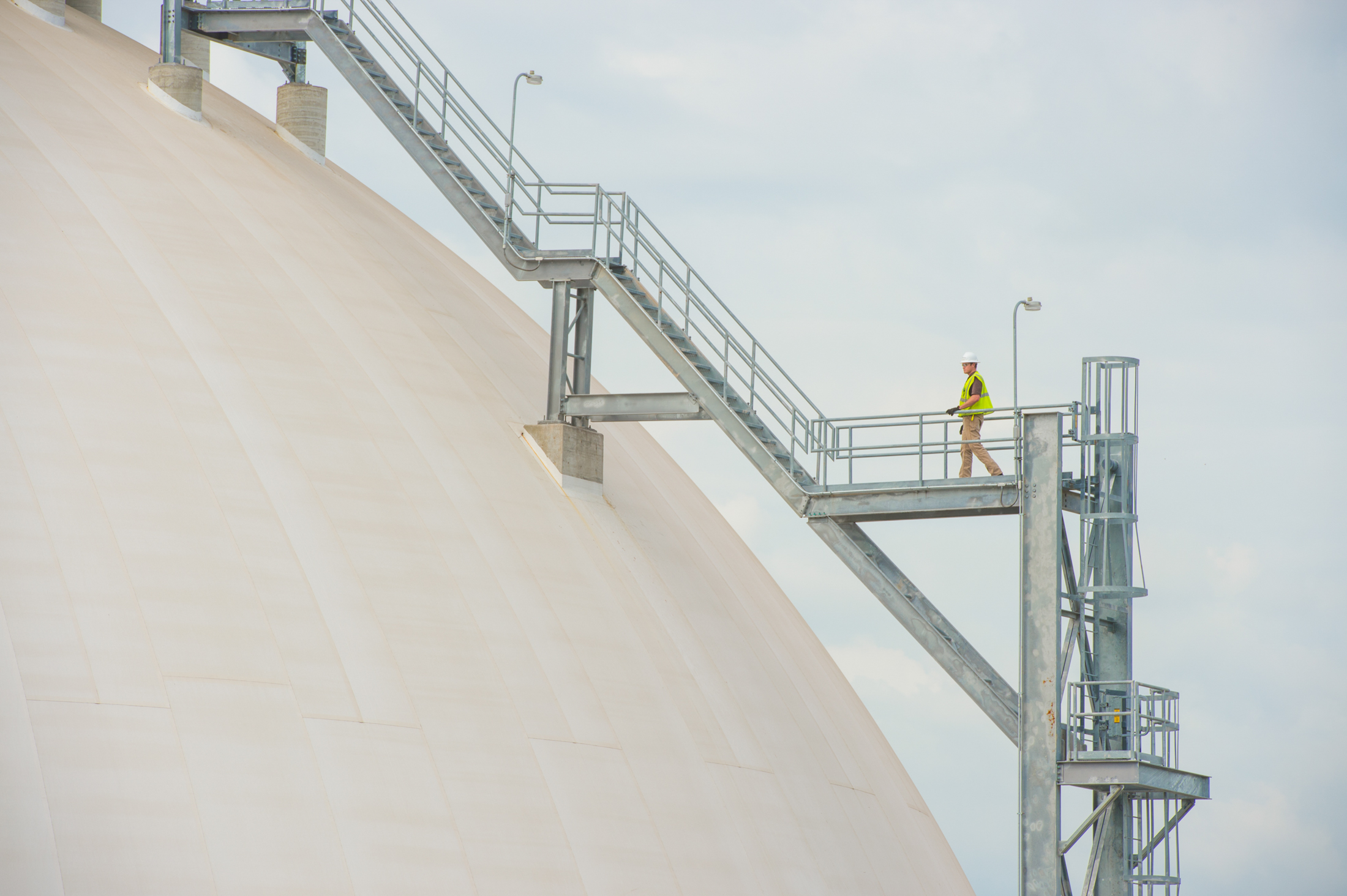
Biomass storage dome with conveyor in the foreground, Drax Power Station, North Yorkshire [Click to view/download]
“With these robust half-year results, Drax is delivering for shareholders with an increased dividend while continuing to support our employees, communities and customers during the Covid-19 crisis.

Drax Group CEO Will Gardiner in the control room at Drax Power Station [Click to view/download]
“National Grid stated this week that the UK can’t reach net zero by 2050 without negative emissions from bioenergy with carbon capture and storage. BECCS delivers for the environment and also provides an opportunity to create jobs and clean economic growth in the North and around the country.”
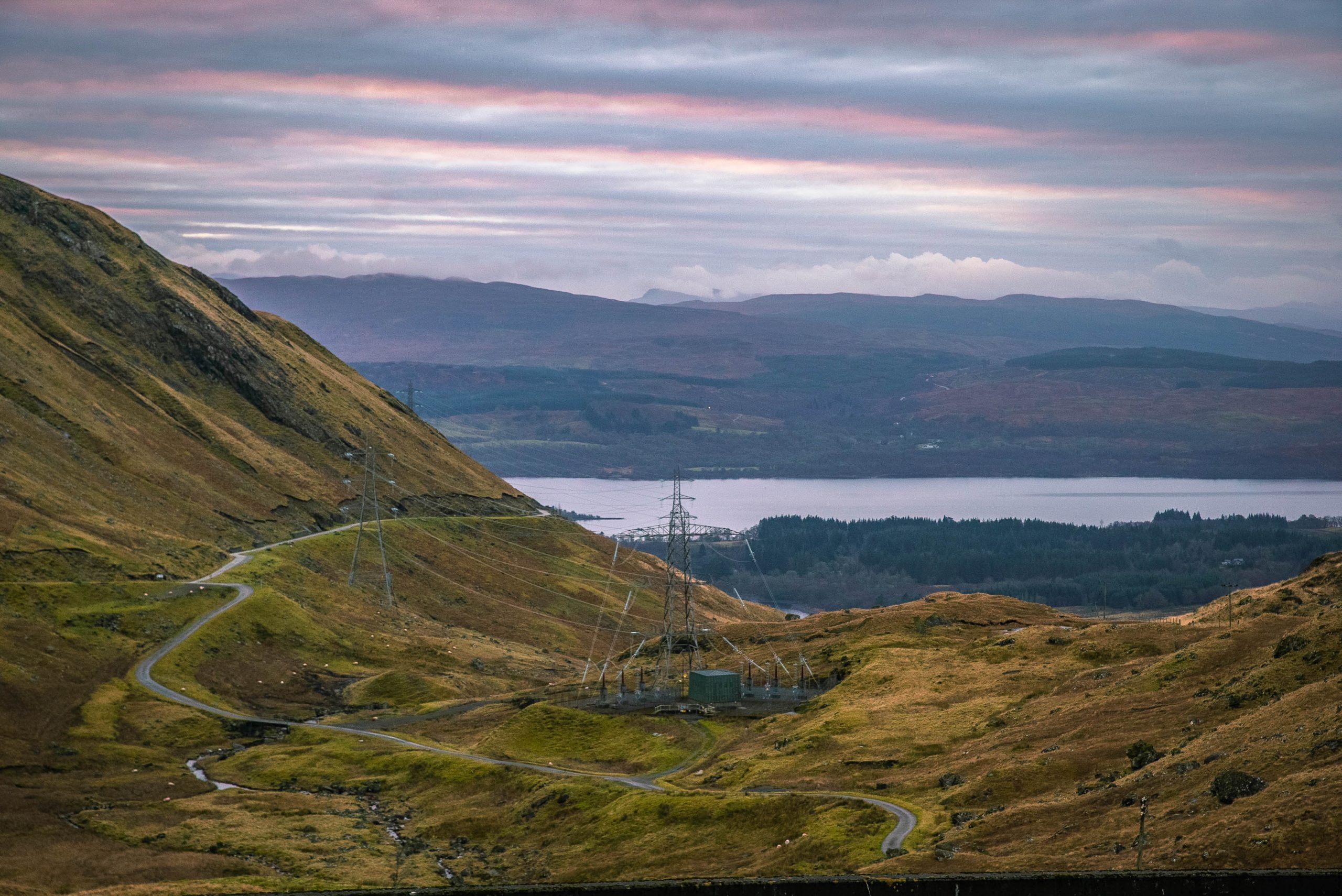
Power lines and pylon above Cruachan Power Station, viewed from Ben Cruachan above [Click to view/download]
View complete half year report
View analyst presentation
Listen to webcast
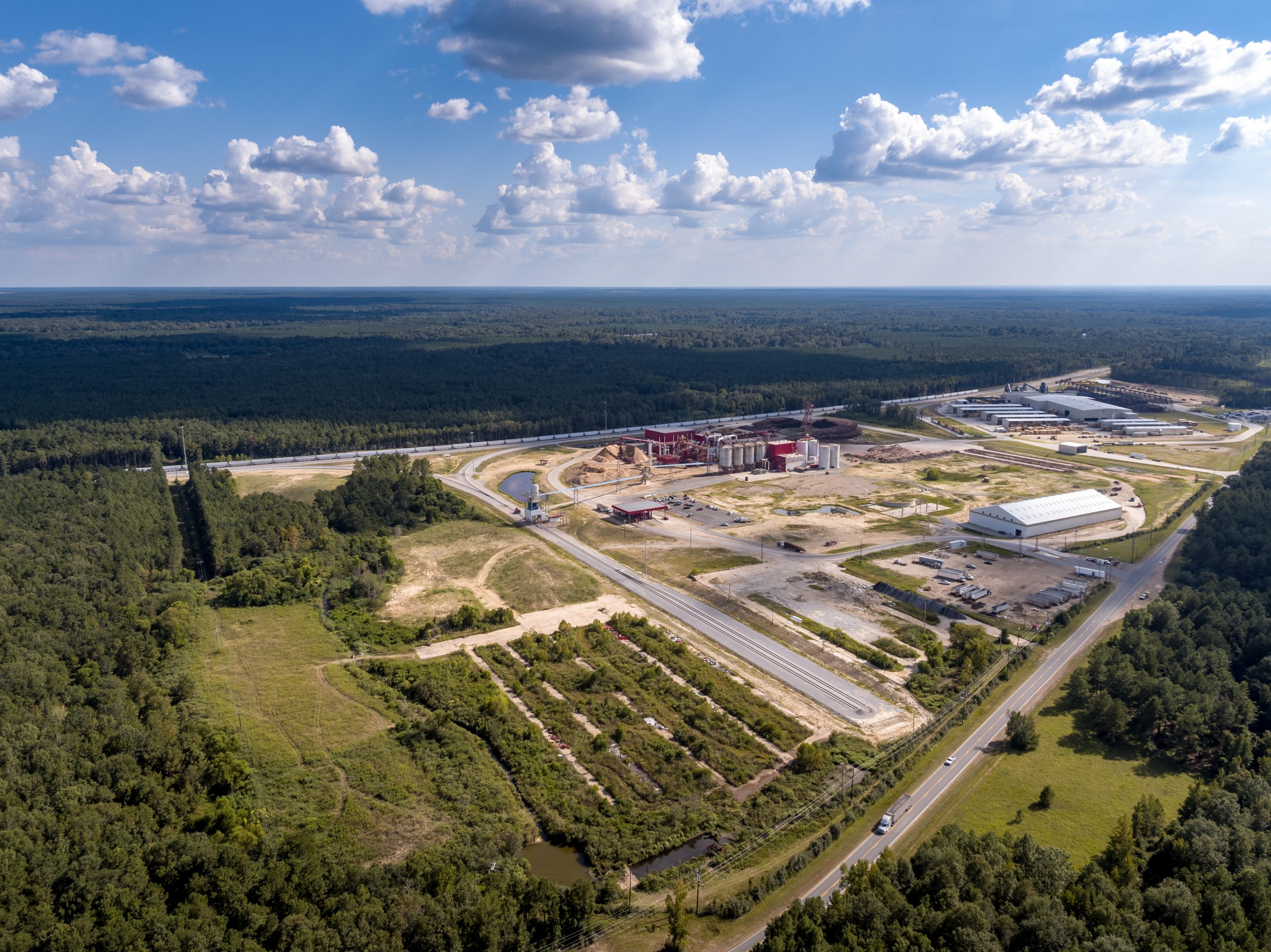
View/download main image. Caption: LaSalle BioEnergy (centre) and co-located sawmill (right), Louisiana