Think of the phrase ‘3D’ and may people instantly think of video games, television or cinema, along with the special glasses you needed to watch it.
But another form of 3D is, I believe, going to be at the heart of the energy revolution which is rapidly gathering place.
The three Ds in this case are Data, Diversification and Decarbonisation. Together, they will transform the way businesses buy, use and sell their energy, help companies take control of their energy use and save money and also play a key part in our journey towards a zero carbon, lower cost energy future.
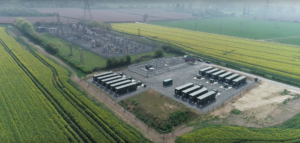
We’re already seeing some real innovations in the energy sector. Our trial of a storage battery with a customer of Opus Energy is an example, offering a farming business in Northampton the chance to sell stored energy generated by solar panels back to the grid at times of peak demand – a potential new revenue stream.
But other innovations and advances will maintain the pace of change and data will be at the core of this now the new generation of smart meters are being installed in businesses, revolutionising customer relationships with their energy suppliers.
The data from the new meters will finally give customers insight into where and when they use energy. Suppliers will have to work much more closely with customers to help them access new opportunities for cost savings, access to new markets and even new revenue streams.

An example would be a restaurant. With the data smart meters will provide, the restaurant’s supplier will be able to tell the owners how their energy use compares to the local competition and where improvements can be made.
The detail could go as far as identifying whether the restaurant’s equipment is older and less efficient, whether rivals have installed newer kit or whether other businesses are switching off their equipment earlier or using it at different, cheaper times.
Using energy during the peak weekday morning and early evening hours is often the most expensive time to do so. Data will give businesses the insight into how they can use energy more efficiently and when they use it, offering them the chance to avoid buying at peak times whenever possible and driving efficiencies.
This is why Haven Power’s trading team is now working closely with GridBeyond. The partnership allows our customers to trade the power they produce as well as optimise their operations to help balance the grid at times of peak demand. The really smart thing is that in doing so, customers are reducing their energy costs and making their operations more sustainable.
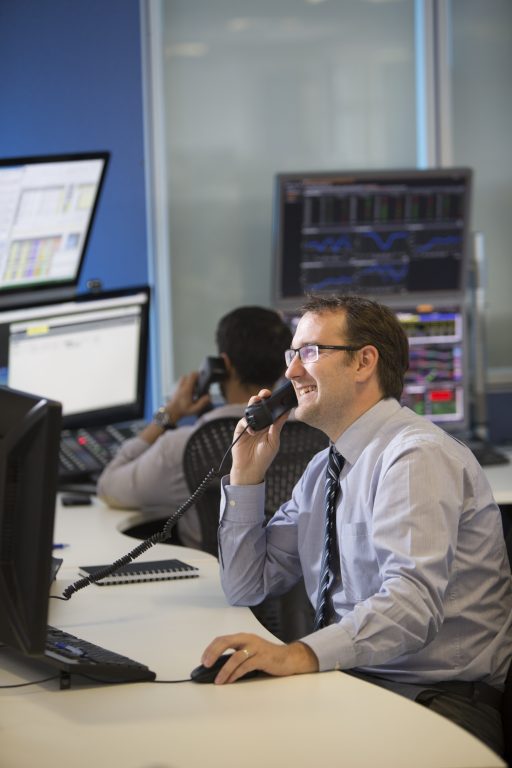
Trading desks at Haven Power’s Ipswich HQ
The way demand changes and is managed by businesses and consumers on a diversified power system will also be key. The business energy sector is already diversifying as many customers are able to generate and store their own power but the next step is for more customers to be paid to reduce their usage at peak times.
Think of a busy time for the National Grid – half time in the FA Cup Final or after the results in Strictly Come Dancing. Previously, the grid would have to pay a power station to ramp up generation to meet demand but these days, customers are paid to reduce demand for 30 minutes or so – in effect becoming a huge virtual power station.
This has happened for some time of course with larger, industrial customers but now, smaller companies can benefit from this too, thanks to the data and insight they will have from their smart meters. This empowers customers and puts them, not the energy companies, in control of the key decisions about their energy.
A close, advisory relationship between energy suppliers and their customers will become ever more important to make sure business can choose to avoid the high demand periods, and maximises use during the lower, cheaper times. In fact, I can see a time when customers will end up paying more for insight and advice than they do for the power they buy – and they’ll save money overall in doing so.
And if we get all this right, it will help drive one of the most important of the three Ds – decarbonisation.
Sustainability is increasingly becoming a primary focus for businesses and demand for renewable energy is growing because it is now cost-effective. That will help us in our drive towards a zero carbon future as more and more renewable energy comes onstream, though the UK will continue to need power generated from more flexible assets as well.
So there are huge opportunities out there to transform our energy landscape but they have to be viewed positively. The smart metering programme can be viewed as a regulatory burden or it can be seen as an opportunity. We take the positive view.
Likewise, batteries were once the preserve of massive companies only but now, as technology develops, they are becoming available for smaller firms too. The more we can innovative on a larger scale, the more the technology will work its way into smaller markets too, adding momentum to the energy revolution.
The opportunities are huge. If we get it right, so too will be the benefits to one of the biggest priorities of all – the work to decarbonise the UK and create the lower carbon future we all want.