



Tag: investors

The new Renewable Energy Directive and what it means for biomass

European union flag against parliament in Brussels, Belgium

***This story was published the day before the announcement by the European Commission. Please scroll to the bottom of this page for the Drax view ***.

When the European Union set out its policy for the promotion of renewable energy in the 2009 Renewable Energy Directive (RED) it set a very ambitious target: by 2020, renewables should make up 20% of the EU’s energy consumption. Each Member State was given a specific goal and made to detail exactly how it would hit this.

The Directive was comprehensive in many ways, but it didn’t include a clear sustainability policy for solid biomass, including compressed wood pellets. As one of the largest sources of renewable energy in Europe, this left a policy gap that many voices – including Drax – have called to be filled.

It’s a wish that will now be granted. A revised RED is set to be published by the EU that will specify clear criteria for all biomass.

“Sustainability has always been absolutely central to our biomass strategy but Drax has always argued that there is a right way to source biomass and a wrong way.”

Dorothy Thompson, Drax Group CEO, July 2014

Importance of sustainable biomass

Biomass is a well-established and essential part of the renewable energy mix. It offers a unique mix of reliability, flexibility and affordability, all while helping to deliver carbon reductions. This makes it particularly important as countries like the UK seek to phase out coal generation and hit the targets set out in the Paris Agreement.

However, in order to secure these carbon benefits biomass needs to be produced sustainably. This means that it comes from responsibly-managed, growing forests, and that the emissions from the supply chain are measured and minimised.

In the UK there are already binding sustainability criteria but this isn’t the case across the EU. Biomass use in the UK is regulated under the EU Timber Regulations and UK’s own Renewable Obligation (RO) biomass sustainability criteria.

The RO is a form of government support designed to incentivise large scale renewable electricity generation in the UK, and to qualify for this, energy companies must adhere to sustainability standards such as properly accounting for their greenhouse gas (GHG) emissions and only sourcing from responsibly managed land and forests.

An EU-wide approach to biomass that follows the UK’s could see the implementation of a risk-based scheme that asks large energy companies to prove how they mitigate against a set of identified risks – like those in the RO criteria. However, it’s important that compliance with these is independently verified – something that could be done by using independent schemes such as the Sustainable Biomass Program (SBP).

The SBP carries out supply-base evaluation of pellet producers to ensure the wood they’re using is qualified as sustainable and they’re meeting the RO criteria. Programmes like the SBP are already being used by most major biomass power generators in the EU and could act as a blueprint for the future.

Two workers stand next to machinery at the Morehouse facility in the USA.

Efficiency where effective

Only a few of the power stations across the EU are suitable for conversion from coal to biomass but those that are, like Drax, can deliver fast, significant carbon savings.

The thermal efficiency of such stations may not be as high as a newly built plant, but they do allow governments to quickly move away from coal. More than that, these plants can continue to provide the critical services – such as voltage control and black start – the grid needs to remain stable and that other renewables can’t.

Drax is one of these stations, and in the first half of 2016 it was able to deliver around 20% of the UK’s renewable power. Thanks to its conversion to biomass, it now does this with over 80% carbon reductions relative to coal.

With the abundance of suitable and sustainably-grown fibre that can be used for biomass electricity generation, there is a strong case for the EU to encourage the coal phase out by encouraging others to undergo conversion from coal to biomass.

But what’s also needed is a clear set of sustainability criteria for biomass. The move to define this is a step in the right direction but the final EU proposal needs to be a practical one.

If the updated RED achieves this, it will mean a bright future for renewable energy in Europe and a clearer path for meeting the continent’s Paris Agreement targets.

*** 30 November, 2016 UPDATE ***

Drax welcomes Renewable Energy Directive proposal

Drax welcomes the publication of the Renewable Energy Directive and bioenergy policy proposal. Drax has been at the forefront of calling for standards based on a risk-assessment to demonstrate the sustainability of biomass used for energy production.

Matt Willey, Public Affairs Director of Drax Power had said that:

“Drax has campaigned for a robust, pragmatic biomass sustainability policy for the whole EU for many years and today is a step in the right direction. It is important that large users of biomass can demonstrate forest regeneration is taking place, that areas of high conservation value are protected, that soil and water quality is maintained and that harvesting does not exceed the long-term production capacity of the forest. We welcome the fact the Commission proposes that voluntary national or international schemes, including those which use a risk based approach, can be used to provide evidence of sustainability.”

“The UK already has the toughest sustainability rules in the world so Drax can be sure our compressed wood pellets are sustainable but it makes sense to have a common policy across the EU.”

Drax Power has made huge efforts to demonstrate the sustainability of its biomass. Sourcing from regions with large surpluses combined with low wood paying capability, Drax is able to track and trace every shipment back to low risk areas, which assures that biodiversity is protected and promotes sustainable forest management.

Should the carbon tax be scrapped? Definitely not

Coal field at Drax Power Station

Carbon emissions from electricity consumption in Britain are at their lowest level ever. Each unit of electricity produced now contains less than half the carbon it did four years ago. This pace of decarbonisation is ahead of expectations – it’s also entirely necessary.

Carbon dioxide (CO2) contributes to the warming of the planet and so limiting how much of it is released into the atmosphere is critical. Nowhere is this more important than in the power sector – one that has relied on carbon-intensive fossil fuels like coal for its lifetime.

The UK government has recently ramped up plans to end coal power generation by 2025, and since 2013, one of its methods for doing so has been an economic one: making organisations pay for every tonne of CO2 they release.

It makes carbon emissions an economic disincentive for businesses, but surprisingly, some of CO2’s biggest emitters fully support it – Drax included.

How do you put a price on carbon?

The EU was the first region to put such a scheme in place when, in 2005, it introduced the EU Emissions Trading System (EU ETS). Under this system, energy companies have to buy permits that allow them to emit CO2. But the price of those permits has historically been volatile – dropping as low as below £3 per tonne in 2014.

In 2013 the UK introduced the Carbon Price Floor (CPF), a means of bolstering the EU’s cost of carbon by setting a minimum price on emissions. Currently this is set at £18 per tonne, more than four times the value of an EU carbon permit.

More recently the CPF has become a point of contention as some industries claim it stifles progress and have called for it to be scrapped in the upcoming Autumn Statement.

This opposition has already caused blockers. Plans to raise the CPF to £30 per tonne by 2020 were halted by previous Chancellor George Osborne, who instead froze it at £18 until the end of the decade.
But this view isn’t universally shared. Drax, along with a number of other energy companies, including SSE and Calon Energy, recently wrote to the current Chancellor Philip Hammond to argue to keep the price in place until at least 2025.

In the letter we state the reason for our support plainly: we believe the Carbon Price Floor is central to the UK’s efforts to decarbonise its electricity system. In short, if we want a cleaner future, the CPF needs to remain in place.

Andu Koss Standing in front of turbines

Why price carbon?

Not only does a carbon tax disincentivise using CO2-heavy fuels and processes, it encourages investment in lower carbon and renewable energy sources by making them more cost effective relative to coal, diesel and fuel oil.

More than that, it places the decisions on how to reduce CO2 emissions into the hands of those making them. As long there is a societal cost to global warming, it makes sense to put a cost to the emissions that cause it.

In 2009 Drax began an upgrade of our power station to run on biomass. It was a decision to pursue decarbonisation on our own terms made by people with the knowledge of how best to achieve it. Today three of our six units are powered by compressed wood pellets, which has seen an 80% reduction in carbon emissions when compared to coal.

It’s also a significant revenue driver for the country. The levy is expected to raise £1 billion this year, while globally the World Bank estimates the value of implementing carbon pricing initiatives at a little under $50 billion dollars.

The revenue is significant, but so too are the impacts on emissions. Since 2012, the UK’s carbon emissions have fallen by over 4.5% a year and on May 5th, the country reached a milestone: the first time since 1881 the UK was powered without burning any coal.

This evidence sets out a clear argument. The CPF contributes to reducing carbon emissions, and for this reason it’s important it remains a part of the UK’s decarbonisation strategy. Scrapping it would be a grave error in the UK’s future energy plans and could limit our ability to meet the Paris Agreement targets.

2016 has already been an historic year for the electricity industry in Britain. But if the CPF is scrapped it will become a milestone year for different reasons. Rather than the year in which low-CO2 power generation took a step forward, it will be the year a decarbonised electricity future drifted further from our reach.

Hinkley may be an important milestone, but it’s no silver bullet to the UK’s energy challenges

In September, the Prime Minister gave the go-ahead for the construction of two new nuclear reactors at Hinkley Point in Somerset, setting in motion the process for what could be the biggest and most expensive nuclear power station ever built.

While this monumental decision will provide some long overdue clarity for Britain’s energy sector, it has dangerously diverted the attention from a far bigger energy challenge facing the UK – replacing the contribution currently made by coal.

In November last year the Government made a commitment that the UK must stop generating power from coal by 2025. For the sake of future generations, this was the right decision to take – coal is, after all, a fossil fuel of the past that’s damaging the environment. However, it still provides up to one fifth of the UK’s electricity, and plugging that gap will be far from easy. Doing so in a way that allows the country to meet its carbon targets while supporting technologies that will deliver a modern energy system fit for the 21st century only adds to this challenge.

Hinkley Point C will play an important role in the future energy mix, but let’s be clear – it’s no silver bullet.

When finally complete, Hinkley Point C is expected to provide seven percent of the UK’s electricity – less than a third of what is needed to replace coal. What’s more, this new generation isn’t even expected to come ‘on grid’ much before 2030, by which point all but one of the UK’s operating nuclear reactors, which provide around 20% of the UK’s current needs, are scheduled to close.

In short, Hinkley will be replacing lost nuclear capacity, and nowhere near all of it, rather than providing the ‘new’ energy we desperately need to plug the gap the end of coal will create. This raises the question – what can replace outgoing coal in the necessary timescale?

While we have seen a huge and welcome expansion in renewable sources of generation like wind and solar in the UK, they are intermittent so cannot fill the void alone; they still need to be supported by a constant supply of electricity that can be flexed up and down when the wind does not blow and the sun does not shine – a regular scenario on these shores.

Gas and nuclear will form part of the solution, but as we’ve seen with Hinkley, planning, funding and building new power stations can be a long and costly process – it took over a decade to reach the decision on Hinkley Point. Gas fired power stations can be up and running far quicker, but obviously planning and approval are still required, and only a handful have been built in the last 10 years.

Alternative technologies – like small modular nuclear reactors and electricity storage – held in some quarters as the answer, certainly hold potential. However, the reality is they aren’t yet fit for purpose at scale and will need much more research and development and in some cases regulatory approval, before they become viable.

Dorothy Thompson

Dorothy Thompson, CEO, Drax Group

Time, unfortunately, is not a luxury we have. This year alone, more than six gigawatts (GW) of coal power generation could come off grid – almost twice the generating capacity of Hinkley Point. Every day lost adds to the cost and complexity of addressing the challenge we face – making a solution less likely.

A recognised, cost-effective renewable option does exist though, but it is often unmentioned in the debate – it’s called biomass.

Using the latest technology at Drax Power Station we have upgraded half of the coal facilities to generate electricity using sustainable compressed wood pellets instead of coal. Since this re-uses existing coal infrastructure, it’s quicker and more efficient than building new power stations, while also providing a reliable and flexible flow of electricity that can help the UK meet its carbon targets. The compressed wood pellets we use, for example, perform in much the same way as coal but deliver a more than 80% CO2 saving.

This solution is proven and ready to go. Already Drax’s facility is powering more than three million homes and delivering 20% of the UK’s renewable electricity, making it the biggest single site renewable generator in the country. Drax can go further though, with the right government support and a level-playing field, delivered via technology-neutral auctions for energy contracts.

With all six Drax generation units converted plus Lynemouth power station – which already has that future secured – and one or two other, smaller biomass power stations, around 10% of the UK’s electricity could be generated using this technology well before 2025.

Finding the right mix of power generation will not be easy, but it is important to make every effort to get it right.

Like Hinkley Point C, biomass is no silver bullet, but it is ideally placed to play an even greater role in helping the country transform to a low-carbon future.

How a new industrial revolution in green energy is transforming the North once again

The North of England has long been a proving ground for the kind of engineering innovations that have transformed the world. The heartland of the First Industrial Revolution, it is now at the centre of a new revolution focused on clean energy production and sustainable power, led by organisations like Drax.

Europe’s largest decarbonisation project

Over the last decade, Drax has been carrying out a major high-tech engineering and infrastructure project to upgrade half its generating units to use sustainable biomass in place of coal.

These converted units now produce enough electricity to power Birmingham, Leeds, Sheffield, Liverpool, Manchester and Newcastle – all using compressed wood pellets, cutting carbon emissions by more than 80%.

But more than just having environmental benefits, it’s provided a huge boost to the economy.

Boosting the UK economy

In 2015, Drax contributed more than £1 billion to the UK’s GDP and supported some 14,000 jobs across the country.

“The economic benefit has reached all parts of the country,” says CEO Dorothy Thompson. “We’ve been the catalyst for rejuvenation and growth across the Northern Powerhouse, with port expansion on the coasts of East Yorkshire, the North West and North East.”

This boost was particularly significant in the North, where Drax generated over £620 million for the local economy.

Innovation driving a better future for Britain

It’s these kinds of innovative upgrades that are helping to tackle the urgent environmental challenges that our society faces as we make the transition to lower carbon and renewable power, and changing the way we think about producing energy in the UK.

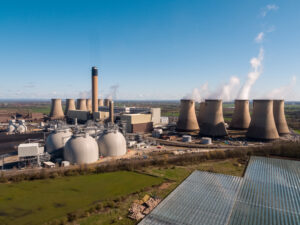
Having nurtured the Industrial Revolution, today the North of England is again the focus of a major paradigm shift. Where once coal fields and smoke stacks dominated the local landscape, now Drax’s giant biomass storage domes speak of a new future for the region, for the UK, and for renewable energy production as a whole.

To find out more about how Drax has benefited the UK’s economy, please visit https://www.draximpact.co.uk/

Forbes: Drax joint-second most trustworthy company in Europe

I’m delighted that Drax Group plc has been named by Forbes magazine and MSCI ESG Research as one of the 50 most trustworthy companies in Europe.

In fact, Drax came joint second across the whole continent among companies judged who ‘consistently demonstrated transparent accounting practices and solid corporate governance’.

It’s a massive tribute to everyone involved with Drax that world-leading business experts have recognised our commitment to trust and integrity in this way.

Of course, that commitment goes much further than our accounting practices alone. (I believe my British colleagues would say that it runs right through Drax like the writing in a stick of rock.)

Indeed, it was one of the reasons I was so honoured to be asked to join Drax as CFO. From my very first meeting with CEO Dorothy Thompson, I could see that Drax would always strive do the right thing, in the right way.

That’s just as true for our sustainability data as it is for our business data.

It was our commitment to doing the right thing that led Drax to take on the decision to convert Drax power station from coal to compressed wood pellets.

It is our commitment to doing the right thing that means Drax is reducing emissions by over 80 per cent while giving people and businesses all over the UK the reliable, renewable power that they need.

And we know we can save bill-payers money at the same time.

The UK is lagging far behind the rest of Europe when it comes to generating energy from compressed wood pellets. Drax is committed to bringing us closer to the European average, while helping us move from the fossil fuels of the past to the renewables of the future. And yes, you can trust us on that.

We can make a difference in 2016 and beyond

Today we released our financial results for 2015.  I’ll be the first to admit that they are not good.  What makes it all the more painful is that one of the strongest operational performances the business has achieved in the last decade, was more than wiped out by factors well outside of our control.

Let’s be frank, for any business operating in the UK energy market 2015 was a tough year. The deterioration in the commodity markets were some of the most severe I have seen in my career. This was then accompanied by a series of unexpected regulatory announcements which caused many to question the UK governments commitment to decarbonisation.

Like any CEO on results day I have spent this morning speaking to investors, journalists and financial analysts. Instead of focusing too much on what hasn’t gone our way in 2015, I’ve focused on where I think we can make a difference in 2016 and beyond, and I’ve been pleased with their positive reaction.

The affordable way to end coal

In November Amber Rudd announced the government’s proposal to consult on setting a clear end date for coal of March 2025. Given it still provides around 25% of the country’s electricity this is an ambitious target. Part of the solution is new nuclear and gas. But as a recent report by the Institute of Mechanical Engineers noted, the country will find it very hard to build enough new facilities to replace coal capacity in time.

Instead of having to take all the existing coal power stations off the grid and build new facilities, the country could use the world leading biomass technology that Drax has pioneered to upgrade some of them to use compressed wood pellets instead of coal. The economic consultancy NERA found that more biomass conversions are one of the most sensible ways for the UK to get off coal at the fairest price to the taxpayer. With the right support we stand ready to convert our remaining coal units to become a fully renewable generator.

Helping society and creating shareholder value

I fundamentally believe that Drax is making a valuable contribution in helping society deal with one of the most pressing issues of our time – cutting carbon emissions to limit climate change. We have an approach which is both affordable and reliable. So long as we remain operationally strong, which I am very confident about, then shareholder value will accrue.

Throughout 2016 and beyond, we will build on our expertise and continue to evaluate a range of longer term strategic options. I lead a strong business that will use the opportunities available to us to create value for our shareholders and help bring about a reliable, renewable future that we can all afford.

Three ways to judge a CFO

It’s a good question, because you can’t build a great company without a great chief financial officer (CFO). But as a shareholder, how can you judge how well your CFO is doing? Without setting myself up for a fall, the answer I gave our investor broke down into these three questions:

  1. Are they keeping control? At its heart, the first part of any CFO’s role is to make sure that their business is under control and that all risks are being properly managed. They need to maintain a strong balance sheet and keep reporting and communications clear and transparent. Above all, they need to make sure there are no surprises.
  2. Are they improving efficiency? The second part is making sure the organisation is always working as efficiently as possible, keeping a strong hand on costs and ensuring that current revenue streams are always optimised. Above all, they need to be making sure that less money is going out and more money is coming into the organisation.
  3. Are they allocating capital wisely? The final task of any CFO is investing shareholder’s money in the best projects – first internally and second externally. Above all, they need to have a clear consideration of cash returns for shareholders.

So now the next time you wonder how well your CFO is doing, you know how to judge them.

This article was originally published by Will on LinkedIn.