






Tag: electric insights

Some like it hot: how temperature affects electricity prices

misty-british-county-landscape

In 2012, Europe faced an extreme cold wave. Temperatures in France dropped to minus four degrees Celsius, far below its average of five above.

As people huddled indoors, electric heaters were dialled up and lights were switched on. Electricity demand soared. It topped at 102 GW, surpassing the country’s previous peak by more than 20 GW. France had to import power from neighbouring countries.

The low temperatures drove demand so high the country couldn’t manage on its own. It’s something we see across the world – temperature peaks drive how and when we use electricity, increasing demand in the colder Northern European countries as the temperature falls, and acting inversely in hotter Southern countries.

But more than just driving up how much electricity we need, the temperature can affect how much we pay for it, too.

Putting a price on electricity

In the UK electricity is bought and sold by power generators, energy suppliers and the National Grid by the megawatt hour (MWh). One MWh is roughly enough power to boil 400 kettles and although prices fluctuate significantly, on average one MWh costs roughly £50 in the UK. In winter, when UK electricity demand peaks it’s estimated that for every degree the temperature drops below 15 Celsius, demand rises by 820 MW.

Electric Insights, an independent report produced by researchers at Imperial College London and commissioned by Drax via Imperial Consultants, looks at the UK’s publicly available electricity data and clearly shows the trend.

Electricity demand, temperature and prices

As the temperature drops, demand rises.

This raised demand affects the price of electricity in one obvious way: consumers’ bills rise because they’re using more of it. A less obvious impact is its effect on the production and supply cost of electricity from generator to the high voltage electricity transmission grid.

How temperature affects supply

In cold weather power plants work better. Cooling towers are more efficient, power cables are more conductive, and less energy is needed to help keep generating equipment from overheating. This all adds to small cost savings, which in turn can make electricity cheaper.

However, during colder weather the amount of gas used in the UK goes up – largely due to the rise in heating – which raises its price and this has a knock effect on electricity. For every 1p increase in the cost of gas, the cost of generating 1 MWh by a CCGT (combined cycle gas turbine) power station increases by around 70p. As CCGTs generate a large percentage of Britain’s electricity, the overall price of electricity also goes up.

But a bigger cost-determining factor is the increasing variety in today’s energy make up. Renewables like wind and solar are intermittent energy sources. Solar can’t function at night or when it’s overcast; wind turbines don’t rotate when it’s still, so when it is especially cold, dark or without much wind, the Grid needs to bring in additional flexible power generated by sources like biomass, gas and coal. These technologies can either deliver power to the Grid all the time – known as baseload – or just when demand rises, when they can be dialled up quickly.

But in the event of extreme weather, the demand for power can surge and the Grid needs to bring in additional generation capacity. In Britain, there are smaller power stations fuelled by diesel, oil or gas that lie dormant for much of the year but can start up at short notice to provide this boost of generation to meet demand.

Activating and running these plants quickly for short amounts of time can be expensive, and this can subsequently affect electricity price and lead to spikes in the winter.
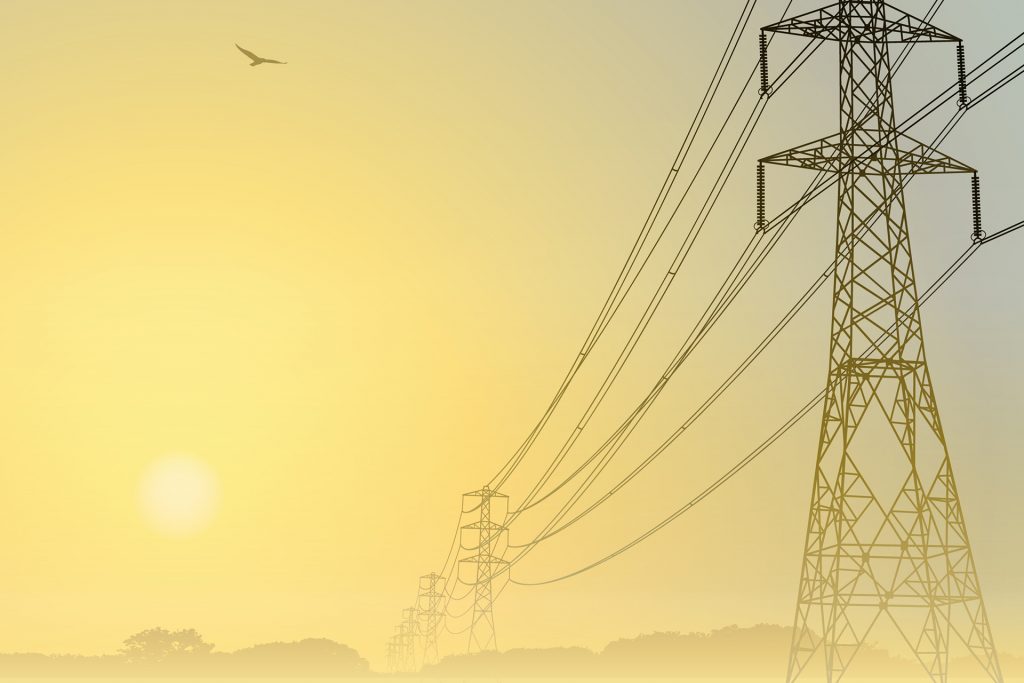
Pylons in the countryside with the sun behind themThe effect on the bottom line

This leads to the following trend: for every degree Celsius the temperature falls below 10, there is a corresponding rise of £1.10 MWh. It is also possible for increases in temperature to cause increased prices, but this is usually in countries where air conditioners and electrically-powered cooling units are hooked up to their own national or regional electricity grid. For better or worse, this is not a problem that affects the UK, but it’s important to understand that maintaining grid stability will always have its costs, whatever the weather.
 

The cleanest year in Britain’s electricity

Cleanest year in Britain's electricity history

Amid the political upheaval that is characterising 2016 you may have missed the quiet victory of the UK’s low-carbon energy sector: for the first time ever, the third quarter (Q3) of 2016 saw more than 50% of the Britain’s power come from low-carbon energy sources. Five years ago, low-carbon sources made up just over a quarter.

This doesn’t necessarily mean that renewable energy sources made up the full 50% – in fact, nuclear made up a considerable chunk – but it hints at the big changes we’re seeing in the way the country is sourcing its power.

For one, it’s a further sign of coal’s diminishing life. During the period July to September 2012 coal supplied 38% of Britain’s electricity – during this year’s Q3 it supplied just 3%. As a result, per-unit carbon emissions from electricity consumption are at their lowest levels ever. The Carbon Price Floor – also known as the carbon tax and designed to assist energy companies like Drax invest in renewable and lower carbon generation – has played a big role in reducing coal’s contribution.

The findings come from Electric Insights, an independent report produced by researchers from Imperial College London and commissioned by Drax, that looks at the UK’s publicly available electricity data and aims to inform the debate on Britain’s electricity system.

Beyond the continued decline of coal, it shows there’s a growing diversity in low-carbon energy sources fuelling the country and that there’s a positive outlook for a cleaner electricity future.

Here we look at those low-carbon sources and how their use has changed over the last five years.

Nuclear produces 26% of Britain's power (Q3, 2016)

Nuclear

At 26% of the total, nuclear made up the largest proportion of low-carbon power generation across Q3 2016.

That was good news for the sector, which went through a turbulent summer after plans for the Hinkley Point C reactor were momentarily threatened following the dissolution of the Department for Energy and Climate Change (DECC) after the Brexit vote.

The eventual decision to continue with Hinkley C, however, means that more baseload nuclear power, in the form of large power stations and also possibly small modular nuclear reactors (SMRs), will be coming on to the system in the coming years. They will in the main replace older nuclear power stations set to be decommissioned.

Wind produces 10% of Britain's power (Q3, 2016)

Wind

Wind power made up 10% of total low-carbon power generation between July and September, and was the largest renewable source of the quarter.

As recently as 2011, electricity generated by wind accounted for just 4% of Britain’s low carbon energy supplies – a 150% increase in just five years. This is in part due to huge offshore projects such as the 630 MW London Array in the Thames Estuary and the 576MW Gwynt y Môr situated off the coast of North Wales, which have contributed to bringing the UK’s installed capacity to around 14 GW

The UK is now the world’s sixth largest producer of wind power behind China, the USA, India, Germany and Spain.

Solar produces 5% of Britain's power (Q3, 2016)

Solar

Following wind power as the second largest renewable contributor to the country’s low-carbon energy needs was solar.

Five years ago solar’s contribution was so negligible it didn’t even chart in the Electric Insights data. Fast forward to 2016 and Britain has a total installed solar capacity of nearly 10 GW. Again, this places the country sixth in the world for capacity behind China, Germany, Japan, the USA and Italy.

Biomass produces 4% of Britain's power (Q3, 2016)

Biomass

Biomass – a unique low-carbon fuel in that it can deliver both baseload and flexible power – made up 4% of the UK’s power needs in Q3 2016. A good proportion of that came from Drax, which has over the last five years been upgrading from coal to run on compressed wood pellets.

Like solar, biomass generation didn’t even chart in 2011, but today. In fact, between July and September biomass, along with solar and wind, supplied 20% of the country’s electricity – a huge proof point for the rise of renewables. Where biomass sits apart from those two sources, however, is that it isn’t dependent on weather and even though the country has less much less biomass generation capacity than the two intermittent technologies, it produces nearly as much energy as them. This makes it an ideal baseload partner for sources that do (i.e. wind and solar) as it can be dialled up and down to meet the energy demand of the country in seconds.

In the future there’s potential to increase this biomass capacity while saving bill payers money. Three of Drax’s six generating units run on biomass, but if all were to be upgraded as they could be in less than three years – Drax plus Lynemouth power station and one or two smaller biomass power stations – could generate roughly 10% of Britain’s electricity using compressed wood pellets by the time unabated coal power stations come off the system before the end of 2025.

Hydro produces 1% of Britain's power (Q3, 2016)

Hydro

Hydropower made up just 1% of Britain’s power generation over the quarter. However, this is still up by 20% since 2011, when hydropower contributed just 0.8%. Total installed hydropower capacity is around 1.65GW.

However, studies have found the country has a potential hydropower capacity of close to double this amount, but as many of these sources are located in mountainous, rural landscape areas of natural importance, it’s doubtful whether hydropower will be deployed up to its full capabilities in the coming years.

Closing an historic year

May the 5th was an historic day in the UK – it was the first time since 1881 Britain burnt no coal to produce its electricity. It wasn’t an isolated incident, either. In the third quarter of 2016 Britain was completely coal free for nearly six days.

It’s a situation that is likely to continue in the future as low carbon energy sources – and in particular renewables – continue to grow in the country’s energy makeup. The outlook is a positive one. 2016 may have been the cleanest year in UK electricity we’ve seen so far, but it won’t be the cleanest year ever.

Explore the data in detail by visiting ElectricInsights.co.uk

Commissioned by Drax, Electric Insights is produced independently by a team of academics from Imperial College London, led by Dr Iain Staffell and facilitated by the College’s consultancy company – Imperial Consultants.