


Tag: net zero

Alicia Newton, Senior Scientific Officer at Drax: “Here comes the science bit – concentrate!”

As Senior Scientist at Drax, it’s my job to bring the latest science into our business. My team and I are the “science bit”.

We take the latest scientific thinking on everything from sustainable biomass sourcing to electricity grid resilience and make sure it shapes how we think and operate as a business.

Science, by its nature, is dynamic and keeping a business at the leading edge is a full-time endeavour, requiring collaboration with the science and academic community, as well as Government and regulators.

This month we held our inaugural science summit, Positively Net Zero, which brought together these groups to assess the underpinning science and future science needed to deliver positive outcomes for people, climate, and nature in Yorkshire, the Humber and beyond.

Richard Gwilliam, our Future of DPS Director, speaking on a panel “Powering Net Zero Energy Transition, Industrial Clusters and a Just Transition in the North of England”

Here are my personal, 4 key takeaways from the event.

Jack Cunningham, our Group Sustainability Director, in conversation with Patricia Thornley of Aston University, during a fireside chat

  1. Science, industry, and government must align to achieve our climate and environment goals. It’s an obvious one, but critical if we’re going to meet our climate goals at lowest cost while also hitting other goals like nature restoration and economic growth. For example, we heard at the event how scientists and corporates have developed to innovative bio-based packaging to reduce plastic waste. But misalignment with existing infrastructure means the UK’s waste sector isn’t ready to handle it and it’s ending up in landfill or incinerators. A huge, missed opportunity.
  2. Decarbonising industrial clusters, like the Humber, will be a catalyst for social, economic and environmental change. Decarbonising industrial clusters like the Humber is achievable with existing technology, will make a material difference in the UK’s carbon emissions, and helps deliver a just transition for people and communities. But achieving decarbonisation requires a supportive policy environment to ensure that individual companies aren’t carrying all the risk and that communities can capture the economic benefit through localised value chains and secure employment.
  3. The right policy frameworks unlock private investment. The UK’s consultation on a common biomass sustainability framework was highlighted as a particularly welcome example of policy enabling industrial investment. Bioenergy is a key part of the UK’s low carbon energy mix and will play an increasingly important role in supporting the expansion of intermittent renewables. Clear, evidence-based guidance, informed by academic research, on how bioenergy operators should source sustainable biomass gives the industry the certainty they need to secure, grow, and innovate their supply chains.
  4. Corporates can meaningfully contribute to the recovery of nature. The discussion on nature has rightly shifted from do no harm to actively promoting biodiversity and nature gains. Leading regulation from the UK on biodiversity net gain is creating the investment required to fund land restoration and encouraging developers to make space for nature. All enabled by the rapid scientific development of sophisticated data packages and models and the distilling of that data into easy-to-use platforms for corporates and citizen scientists. A perfect example of the positive outcomes achievable when science, policy, and industry align.

Creating a forum for dissemination was the ambitious aim of our summit and judging from the lively discussions amongst panellists and during breaks, we more than achieved our aim. And we left the day with the recognition that it’s up to us to work together to deliver the promise held by the Humber and surrounding industrial clusters to deliver a just, nature positive, net zero future.

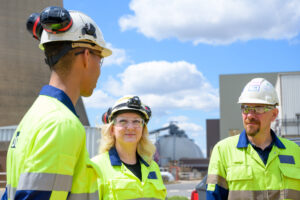
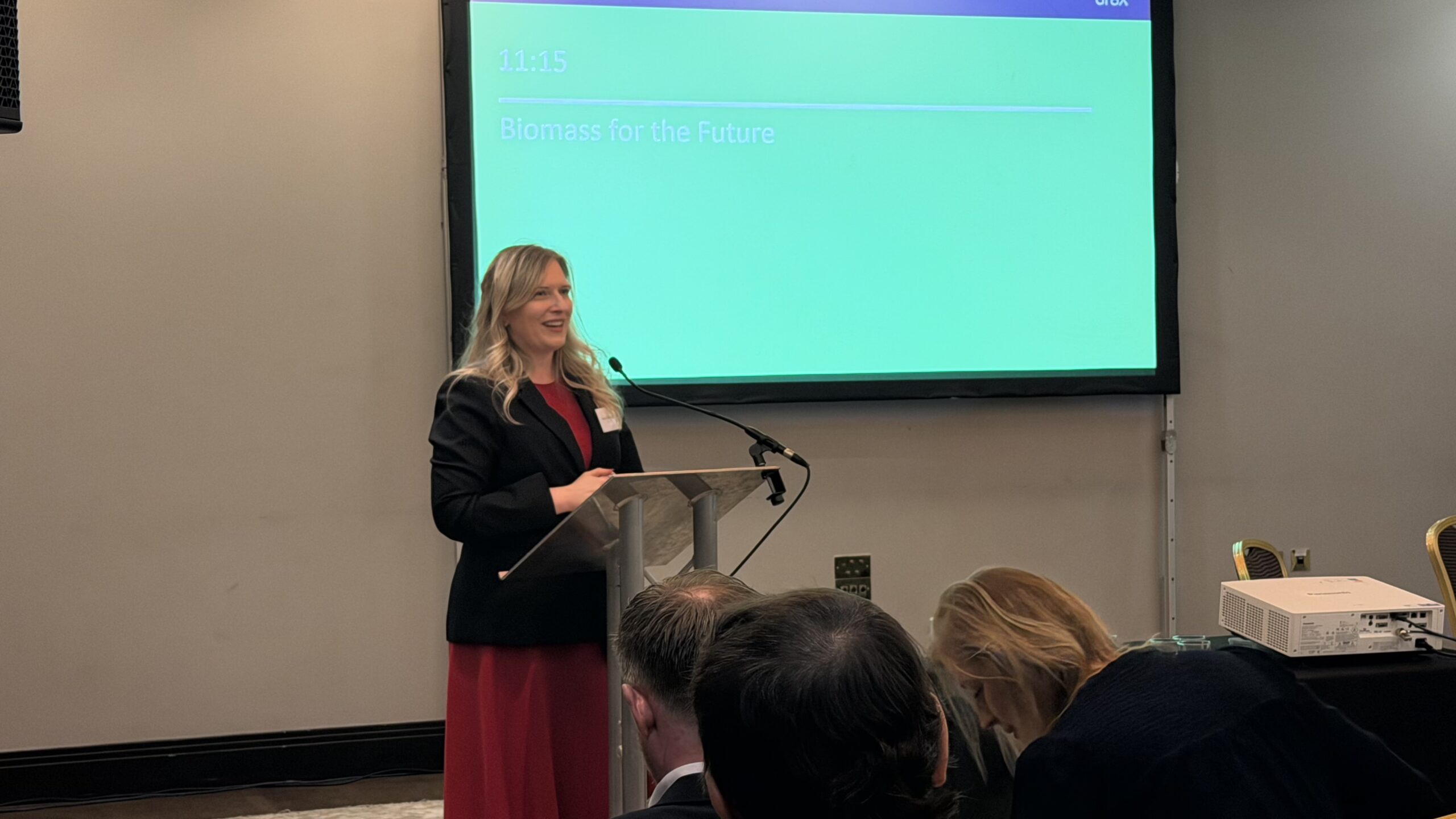
Featured image caption: Alicia Newton, Senior Scientific Officer at Drax, speaking during the event
Why the Humber represents Britain’s biggest decarbonisation opportunity

Richard Gwilliam, Head of Cluster Development at Drax

Key takeaways:

  • The Humber industrial cluster contributes £18 billion a year to the UK economy and supports 360,000 jobs in heavy industry and manufacturing.
  • As demand for industrial products with green credentials rises and net zero targets demand decarbonisation, businesses in the Humber need to begin implementing carbon capture at scale.
  • The size of the Humber and diversity of industries make it a significant challenge but if we get it right, the Humber will be a world leader in decarbonisation.
  • Without investment in decarbonisation infrastructure the region risks losing its status as a world leading industrial cluster putting hundreds of thousands of jobs at risk.

When the iconic Humber Bridge opened in June 1981, it did more than just set records for its size. It connected the region, uniting both communities and industries, and allowing the Humber to become what it is today: a thriving industrial hub that contributes more than £18 billion to the UK economy and supports some 360,000 jobs.

As the UK works towards a low-carbon future, the shift to a green economy will require new regional infrastructure, that once again unites the Humber’s people and businesses around a shared goal.

While the Humber Bridge connected the region across the estuary waters, a new subterranean pipeline that can transport the carbon captured from industries, will unify the region’s decarbonisation efforts.

It’s infrastructure that will be crucial in helping the UK reach its net zero goals, but also cement the Humber’s position as a global decarbonisation leader.

The Humber Bridge

Capturing carbon across the Humber

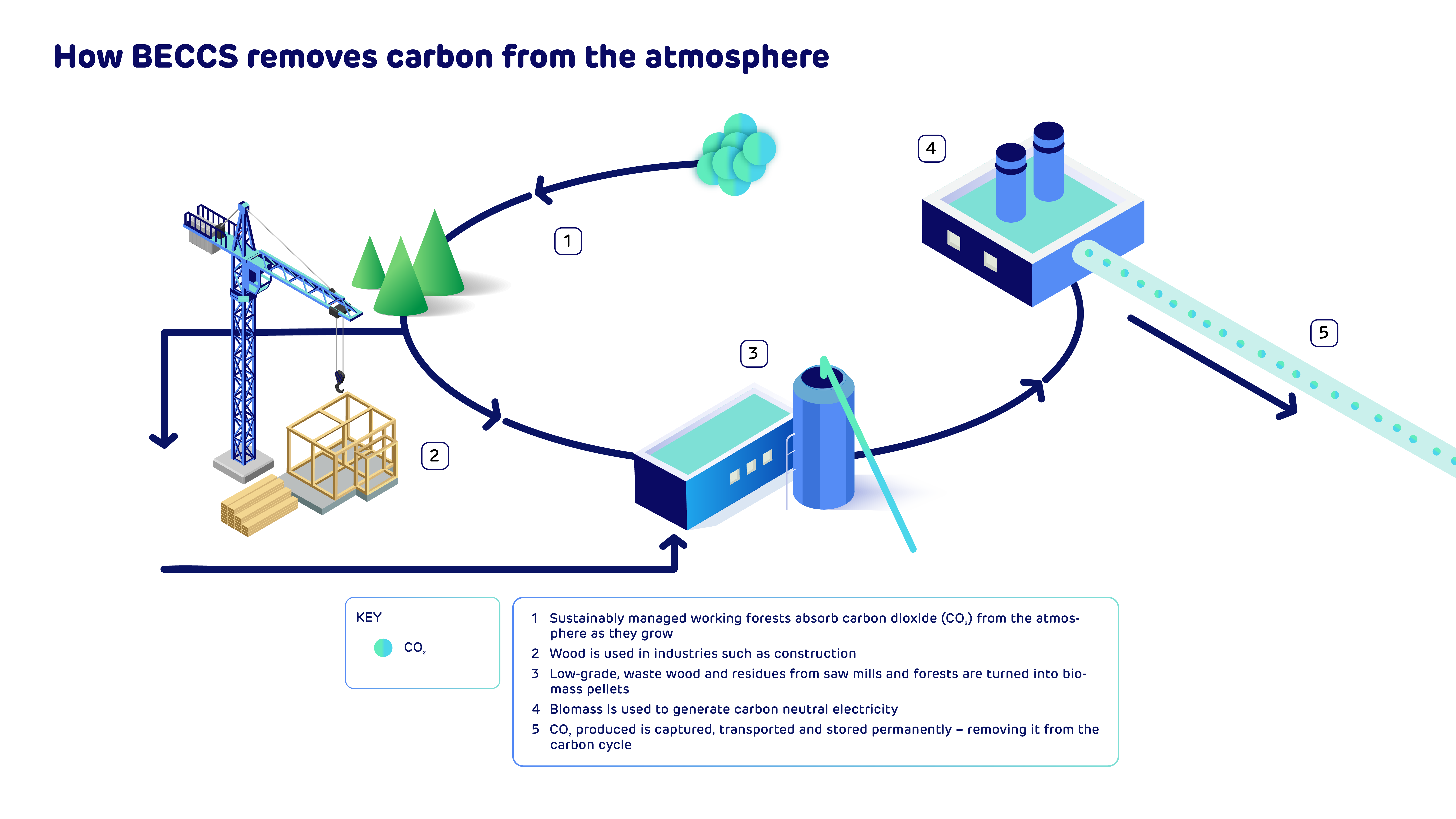
Capturing carbon, preventing emissions from entering the atmosphere and storing them safely and permanently, is a fundamental part of decarbonising the economy and tackling climate change. Aside from the chemical engineering required to extract carbon dioxide (CO2) from industrial emissions, one of the key challenges of carbon capture is how you transport it at scale to secure storage locations, such as below the North Sea bed where the carbon can be permanently trapped and sequestered.

Click to view/download

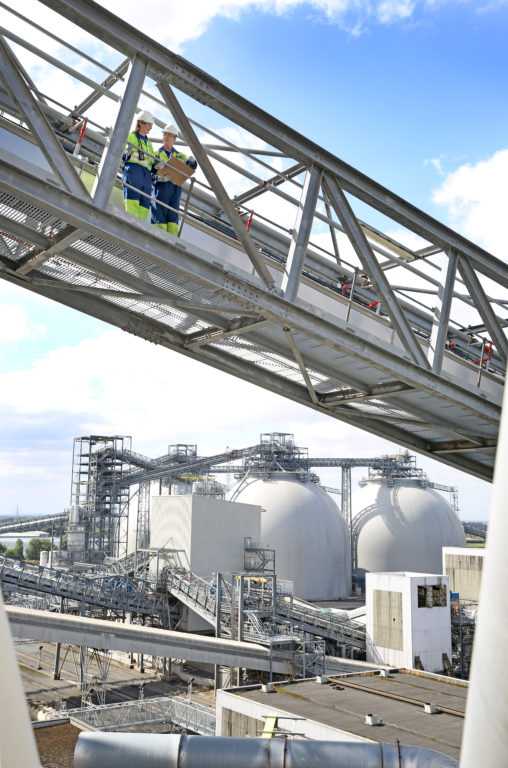
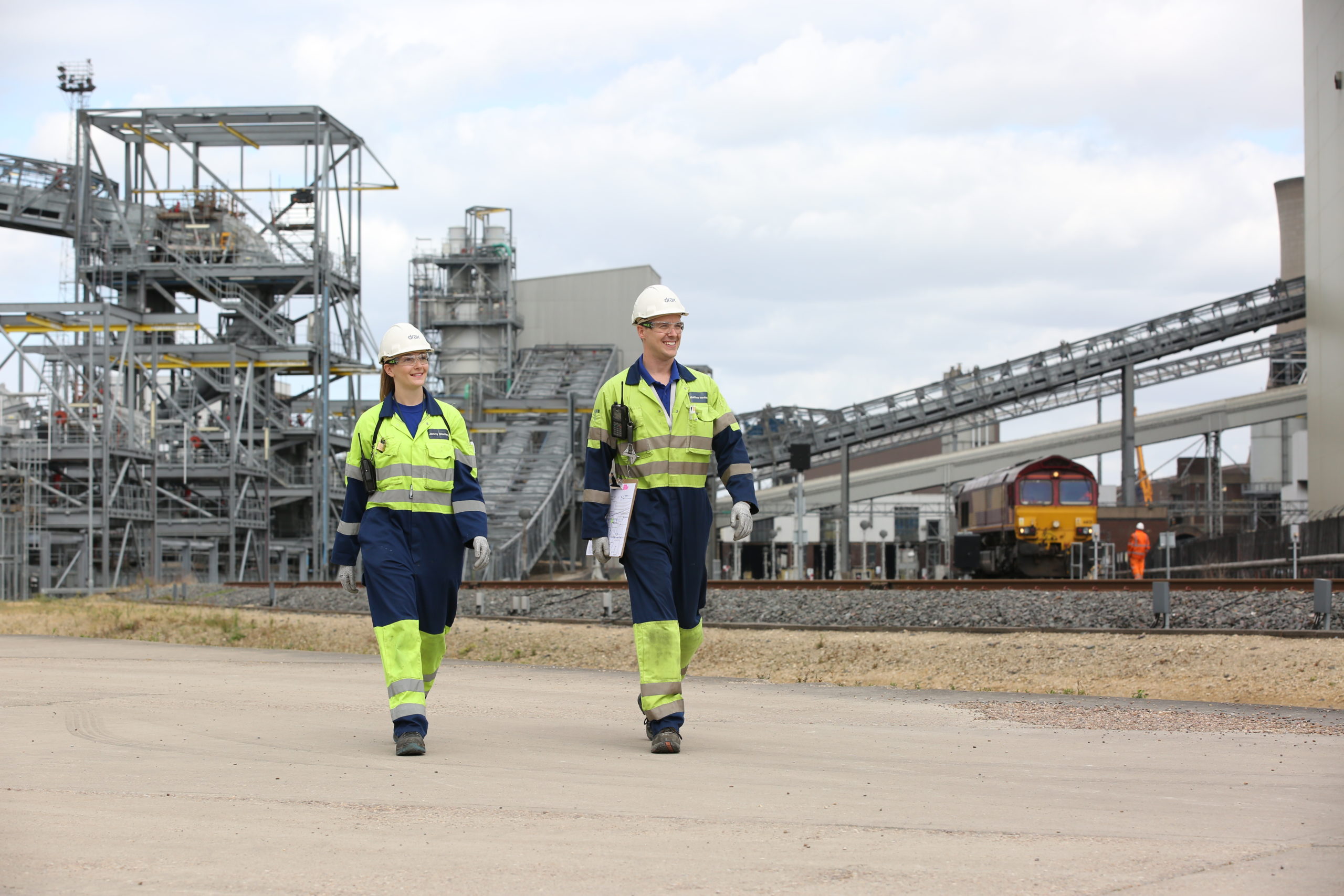
Engineers at Drax Power Station

At Drax, we’re pioneering bioenergy with carbon capture and storage (BECCS) technology. But carbon capture will play an important role in decarbonising a wide range of industries. The Humber region not only produces about 20% of the UK’s electricity, it’s also a major hub for chemicals, refining, steel making and other carbon-intensive industries.

The consequence of this industrial mix is that the Humber’s carbon footprint per head of population is bigger than anywhere else in the country. At an international level it’s the second largest industrial cluster by CO2 emissions in the whole of Western Europe. If the UK is to reach net zero, the Humber must decarbonise. And carbon capture and storage will be instrumental in achieving that.

The scale of the challenge in the Humber also makes it an opportunity to significantly reduce the country’s overall emissions and break new ground, implementing carbon capture innovations across a wide range of industries. These diverse businesses can be united in their collective efforts and connected through shared decarbonisation infrastructure – equipment to capture emissions, pipelines to transport them, and a shared site to store them safely and permanently.

Economies of scale through shared infrastructure

The idea of a CO2 transport pipeline traversing the Humber might sound unusual, but large-scale natural gas pipelines have criss-crossed the region since the late 1960s when gas was dispatched from the Easington Terminal on the east Yorkshire coast under the Humber to Killingholme in North Lincolnshire. Further, the UK’s existing legislation creates an environment to ensure they can be operated safely and effectively. CO2 is a very stable molecule, compared to natural gas, and there are already thousands of miles of CO2 pipelines operating around the US, where it’s historically been used in oil recovery.

A shared pipeline also offers economies of scale for companies to implement carbon capture, allowing the Humber’s cluster of carbon-intensive industries to invest in vital infrastructure in a cost-effective way. The diversity of different industries in the region, from renewable baseload power generation at Drax to cutting-edge hydrogen production, also offers a chance to experiment and showcase what’s possible at scale.

The Humber’s position as an estuary onto the North Sea is also advantageous. Its expansive layers of porous sandstone offer an estimated 70 billion tonnes of potential CO2 storage space.

The Humber Estuary


But this isn’t just an opportunity to decarbonise the UK’s most emissions-intensive region, it’s a stage to present a new green industrial hub to the world. A hub that could create as many as 47,800 jobs, including high quality technical and construction roles, as well as other jobs throughout supply chains and the wider UK economy.

British innovation as a global export

As industries of all kinds across the world race to decarbonise, there’s an increasing demand for products with green credentials. If we can decarbonise products from the region, such as steel, it will give UK businesses a global edge. Failure to follow through on environmental ambitions, however, will not just damage the cluster’s status, it will put hundreds of thousands of jobs at risk.

Breaking new ground is difficult but there are first-mover advantages. The products and processes trialled and run at scale within the Humber offer intellectual property that industrial hubs around the world are searching for, creating a new export for the UK.

But this vision of a decarbonised Humber, that exports both its products and knowledge to the world, is only possible if we take the right action now. We have a genuine global leadership position. If we don’t act now, that will be lost.

Through projects like Zero Carbon Humber and the East Coast Cluster, alongside Net Zero Teesside, the region’s businesses have shown our collective commitment to implementing decarbonisation at scale through collaboration.

As a Track 1 cluster, the Humber presents one of the UK’s greatest opportunities to level up – attracting global businesses and investors, as well as protecting and creating skilled jobs. We need to seize this moment and put in place the infrastructure that will put the Humber at the forefront of a low-carbon future.