



By Kyla Cheynet, Director of Sustainability, Drax
When we think of clean energy, solar panels and wind turbines often dominate the conversation, but as we work to enable a zero carbon, lower cost energy future, it’s going to take all clean energy industries working together. Biomass, in the form of wood pellets, has been quietly making a big impact by helping countries reduce carbon emissions, support sustainable forestry, and transition away from fossil fuels.
What Are Wood Pellets?
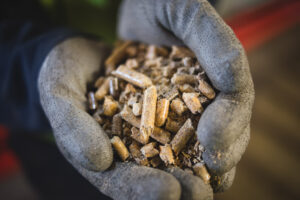
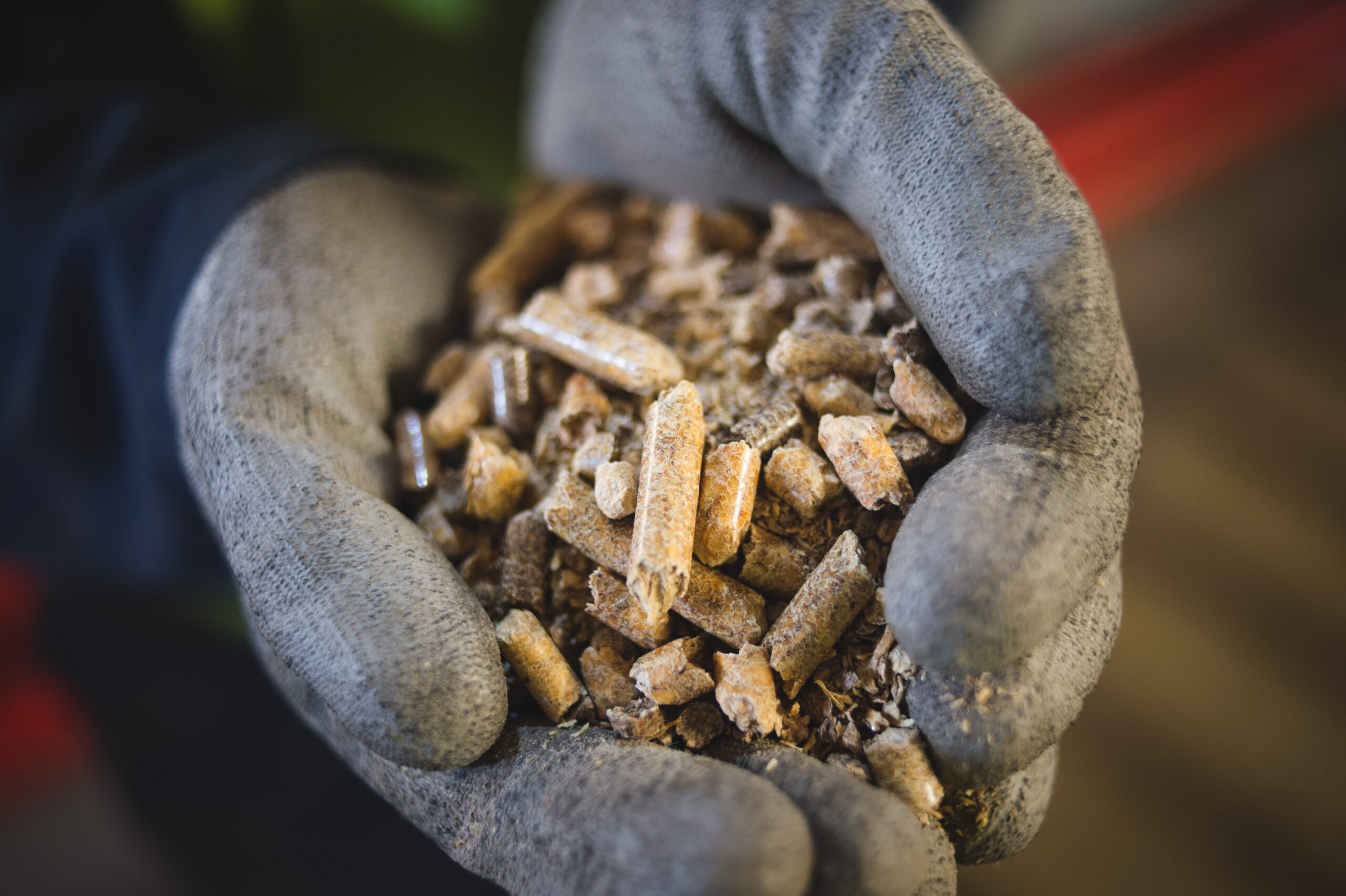
At Drax, we operate within the larger forest industry, making our wood pellets from sawmill residues and low-grade wood from the forest. Mill residuals come in the form of shavings, sawdust and chips, while material sourced from sustainable harvests comes from tree trunks, tops, and limbs which are too small or malformed to make sawtimber. Wood that arrives in roundwood form is debarked and chipped on-site, with bark being used as fuel to dry the high-moisture chips and sawdust. Once the fiber is dried it, is resized by “hammermills” into a very small particles which are then compressed under high pressure by “pellet mills” which cause the natural resins in the wood to bind together forming small wood pellets that look just like those used for pellet burning grills or home heating. The wood pellets we produce are:
- Renewable: Sourced from sustainably managed forests and manufacturing residuals.
- Efficient: Low moisture content means high energy output.
- Easily transported: Pellets can be loaded on trucks, railcars, and ships with ease.
Supporting Sustainable Forestry
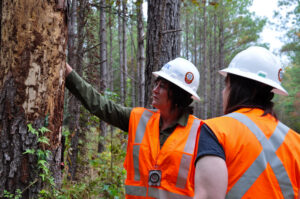
The forests that we source our biomass from are managed in accordance with best practices designed to support the health and growth of these forests over the long term. We have strict criteria in place to ensure our fiber sourcing helps maintain or improve forest health, landscape-level carbon stocks, biodiversity, and forest-related values communities depend on.
In the U.S. South, forest inventory has expanded rapidly in recent decades, largely due to improved forest management on private lands These vigorously growing forests are considered a wood basket to the world. Active forest management is essential to maintaining the productivity and ecological value of these forests. Thinning, an intermediate harvest aimed at reducing tree density, is essential to maintaining forest health. Thinning not only increases future sawtimber yields by allocating greater resources to “crop trees”, but also improves the forest’s resilience to pests, disease, and wildfire, all while enhancing understory plant diversity and wildlife habitat.
Most trees removed during thinning operations are generally undersized or unsuitable for lumber, but they are ideal for producing wood pellets! In this way, the biomass market creates an incentive for managers to engage in practices that increase the health and vigor of forests on their land.
Why Is This Important?
At Drax, our mission is to help meet the world’s increasing demand for secure energy, sustainably. Sustainably sourced biomass plays an important role in supporting energy security as the world decarbonizes, displacing fossil fuels with renewable, dispatchable power that supports intermittent renewables like wind and solar.
Biomass markets also bring business to rural communities. In addition to direct employment opportunities in manufacturing Drax’s operations supports hundreds of jobs throughout the larger forest industry in Mississippi. Drax pellet plants also create market opportunities for landowners hoping to generate a return on their forest investment. Markets for low-grade biomass incentivize landowners to continue managing forests rather than converting or selling them off to other uses. And we all benefit when forests remain forests!
To learn more about Drax’s impact in Gloster, Mississippi, visit www.drax.com/gloster

