


Tag: electricity generation

Acquisition of flexible, low-carbon and renewable UK power generation from Iberdrola

RNS Number : 1562E
Drax Group PLC
THIS ANNOUNCEMENT CONTAINS INSIDE INFORMATION

Highlights

  • A unique portfolio of pumped storage, hydro and gas-fired generation assets
  • Compelling strategic rationale
    • Growing system support opportunity for the UK energy system
    • Significant expansion of Drax’s flexible, low-carbon and renewable generation model
    • Diversified generation capacity – multi-site, multi-technology
    • Opportunities in trading and operations
  • Strong financial investment case
    • High quality earnings
    • Expected returns significantly ahead of Weighted Average Cost of Capital (WACC)
    • Expected EBITDA(1) of £90-110 million in 2019
    • Debt facility agreed, net debt/EBITDA expected to be around 2x by the end of 2019
    • Supportive of credit rating and reduced risk profile for Drax
    • Strengthens ability to pay a growing and sustainable dividend

Will Gardiner, CEO, Drax Group

Commenting on today’s announcement Will Gardiner, Chief Executive Officer of Drax Group, said:

“I am excited by the opportunity to acquire this unique and complementary portfolio of flexible, low-carbon and renewable generation assets. It’s a critical time in the UK power sector. As the system transitions towards renewable technologies, the demand for flexible, secure energy sources is set to grow. We believe there is a compelling logic in our move to add further flexible sources of power to our offering, accelerating our strategic vision to deliver a lower-carbon, lower-cost energy future for the UK.

“This acquisition makes great financial and strategic sense, delivering material value to our shareholders through long-term earnings and attractive returns.

“We are combining our existing operational expertise with the specialist technical skills of our new colleagues and I am looking forward to what we can achieve together.”

A flexible, low-carbon and renewable portfolio

The Portfolio consists of Cruachan pumped storage hydro (440MW), run-of-river hydro locations at Galloway and Lanark (126MW), four CCGT(2) stations: Damhead Creek (805MW), Rye House (715MW), Shoreham (420MW) and Blackburn Mill (60MW), and a biomass-from-waste facility (Daldowie).

Attractive high quality earnings and returns

The Portfolio is expected, based on recent power and commodity prices, to generate EBITDA in a range of £90-110 million, from gross profits of £155 million to £175 million, of which around two thirds is expected to come from non-commodity market sources, including system support services, capacity payments, Daldowie and ROCs(3). Pumped storage and hydro activities represent a significant proportion of the earnings associated with the portfolio. Further information is set out in Appendix 2 of this Announcement.

Capital expenditure in 2019 is expected to be in the region of £30-35 million.

For the year ended 31 December 2017, the Portfolio generated EBITDA of £36 million(4). EBITDA in 2019 is expected to be higher due to incremental contracted capacity payments (c.£42 million), no availability restrictions (Cruachan’s access to the UK grid during 2017 was limited by network transformer works) (c.£8 million), a lower level of corporate cost charged to the portfolio (c.£9 million) and revenues from system support services and current power prices. Gross assets as at 31 December 2017 were £419 million(5).

The Acquisition represents an attractive opportunity to create significant value for shareholders and is expected to deliver returns significantly in excess of the Group’s WACC and to be highly accretive to underlying earnings in 2019.

The Acquisition strengthens the Group’s ability to pay a growing and sustainable dividend. Drax remains committed to its capital allocation policy and to its current £50 million share buy-back programme, with £32 million of shares purchased to date.

Financing the Acquisition

Drax has entered into a fully underwritten £725 million secured acquisition bridge facility agreement to finance the Acquisition. Assuming performance in line with current expectations, net debt to EBITDA is expected to fall to Drax’s long-term target of around 2x by the end of 2019.

Drax expects its credit rating agencies to view the Acquisition as contributing to a reduced risk profile for the Group and to reaffirm their ratings.

Conditions for completion

The Acquisition is expected to complete on 31 December 2018 and is conditional upon the approval of the Acquisition by Drax’s shareholders and clearance by UK Competition and Markets Authority (the “CMA”). A summary of the terms of the Acquisition agreement (the “Acquisition Agreement”) is set out in Appendix 1 to this announcement.

Drax trading and operational performance

Since publishing its half year results on 24 July 2018 Drax has commenced operation of a fourth biomass unit at Drax Power Station, which is performing in line with plan, and availability across biomass units has been good.
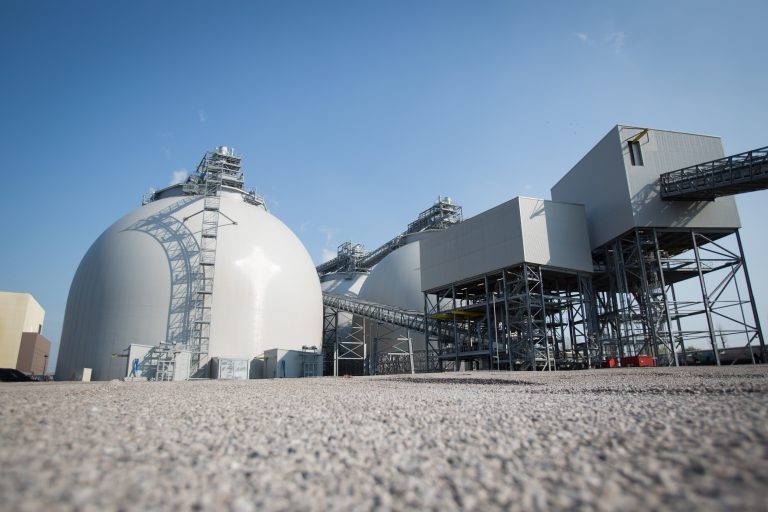
Biomass storage domes at Drax Power Station

Taking these factors into account, alongside a strong 2018 hedged position and assuming good operational availability for the remainder of the year, Drax’s EBITDA expectations for the full year remain unchanged, with net debt to EBITDA now expected to be around 1.5x for the full year, excluding the impact of the Acquisition.

Biomass generation is now fully contracted for 2019.

Contracted power sales at 30 September 2018

201820192020
Power sales (TWh) comprising:18.611.55.7
TWh including expected CfD sales18.615.611.2
– Fixed price power sales (TWh) 18.611.05.1
At an average achieved price (per MWh)at £46.8at £50.4at £48.3
– Gas hedges (TWh)-0.50.6
At an achieved price per therm-43.5p47.4p

Drax intends to hedge up to 1TWh of the commodity exposures in the Portfolio ahead of completion in line with the Group’s existing hedging strategy.

Other matters

In light of the Acquisition and the expected timing of the general meeting to approve it, Drax will postpone the planned Capital Markets Day on 13 November 2018.

Drax expects to announce its full year results for the year ending 31 December 2018 on 26 February 2019.

Enquiries:
Drax Investor Relations: Mark Strafford
+44 (0) 1757 612 491
+44 (0) 7730 763949

Media:
Drax External Communications:
Matt Willey
+44 (0) 7711 376087

Ali Lewis
+44 (0) 77126 70888

J.P. Morgan Cazenove (Financial Adviser and Joint Corporate Broker):
+44 (0) 207 742 6000
Robert Constant
Jeanette Smits van Oyen
Carsten Woehrn

Royal Bank of Canada (Joint Corporate Broker):
+44 (0) 20 7653 4000
James Agnew
Jonathan Hardy


Acquisition presentation meeting and webcast arrangements

Management will host a presentation for analysts and media at 9:00am (UK Time), Tuesday 16 October 2018, at FTI Consulting, 200 Aldersgate, Aldersgate Street, London EC1A 4HD.

Would anyone wishing to attend please confirm by e-mailing [email protected] or calling Christopher Laing at FTI Consulting on +44 (0) 20 3727 1355 / 07809 234 126.

The meeting can also be accessed remotely via a live webcast, as detailed below. After the meeting, the webcast will be made available and access details of this recording are also set out below.

A copy of the presentation will be made available from 9am (UK time) on Tuesday 16 October 2018 for download at: www.drax.com/uk>>investors>>results-reports-agm>> #investor-relations-presentations or use the link below.

Event Title:Drax Group plc: Acquisition of flexible, low-carbon and renewable UK power generation from Iberdrola
Event Date:Tuesday 16 October 2018
Event Time9:00am (UK time)
Webcast Live Event Linkhttps://www.drax.com/uk/investors/16-oct-2018-webcast
020 3059 5868 (UK)
+44 20 3059 5868 (from all other locations)
Start Date:Tuesday 16 October 2018
Delete Date:Monday 14 October 2019
Archive Link:https://www.drax.com/uk/investors/16-oct-2018-webcast

For further information please contact Christopher Laing on +44 (0) 20 3727 1355 / 07809 234 126.

Website: www.drax.com/uk


Acquisition of the Portfolio from Iberdrola

Drax Smart Generation Holdco Limited (“Drax Smart Generation”), a wholly owned subsidiary of Drax, has entered into the Acquisition Agreement with Scottish Power Generation Holdings Limited (the “Seller”), a wholly-owned subsidiary of Iberdrola S.A., for the acquisition of ScottishPower Generation Limited (“SPGEN”), for £702 million in cash.

Strong asset base

The Portfolio principally consists of 2.6GW of assets which are highly complementary to Drax’s existing generation portfolio and play an important role in the UK energy system. The assets include:

Cruachan Pumped Storage Hydro

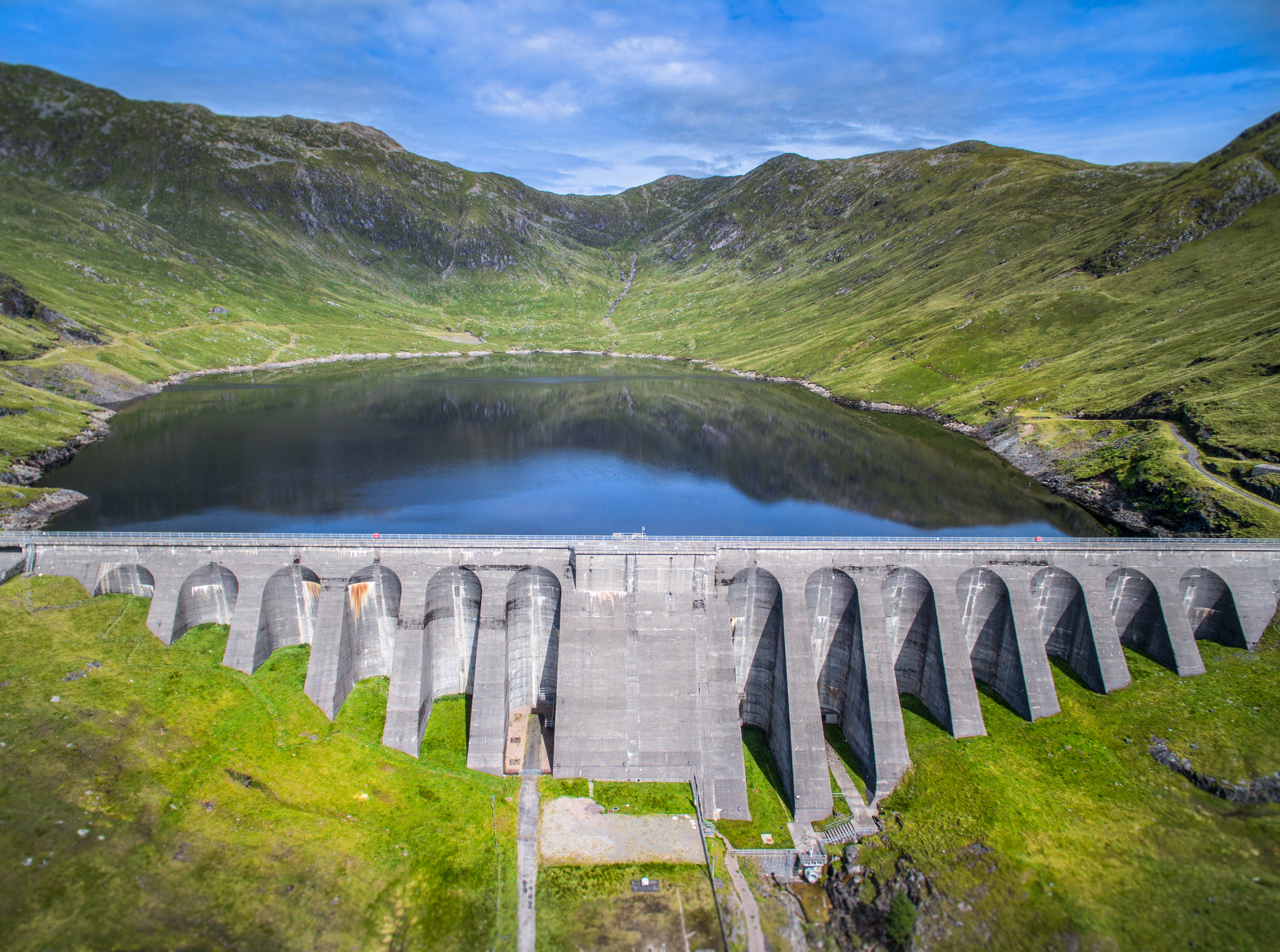
440MW of large-scale storage and flexible low-carbon generation situated in Argyll and Bute, Scotland.

Cruachan provides a wide range of system support services to the UK energy market, in addition to providing merchant power generation. Cruachan has £35 million of contracted capacity payments for the period 2019 to 2022.

Cruachan, which provides over 35% of the UK’s pumped storage by volume, can provide long-duration storage with the ability to achieve full load in 30 seconds, which it can maintain for over 16 hours, making it a strategically important asset remunerated by a broad range of non-commodity based revenues.


Galloway and Lanark Run-of-River Hydro

126MW of stable and reliable renewable generation situated in South-west Scotland.

Both locations benefit from index-linked ROC revenues extending to 2027 and Galloway, in addition to renewable power generation, operates a reservoir and dam system providing storage capabilities and opportunities for peaking generation and system support services. It also has £4 million of contracted capacity payments for the period 2019 to 2022.


Combined Cycle Gas Generation (CCGT)

1,940MW of capacity at Damhead Creek (805MW), Rye House (715MW) and Shoreham (420MW) all strategically located in South-east England.

These assets provide baseload and/or peak power generation in addition to other system support services and benefit from attractive grid access income associated with their location. The three plants have contracted capacity payments of £127 million for the period 2019 to 2022.

Damhead Creek also benefits from an attractive option for the development of a second CCGT asset, Damhead Creek II, which provides additional gas generation optionality alongside Drax’s existing coal-to-gas repowering and OCGT(6) projects. All options could be developed subject to an appropriate level of support. Damhead Creek II is eligible for the 2019 capacity market auction along with two of Drax’s existing OCGT projects.

Other smaller sites

The portfolio also includes a small CCGT in Blackburn (60MW) and a 50K tonne biomass-from-waste facility in Daldowie, which benefits from a firm offtake contract agreement with Scottish Water until 2026.

Benefits of the Acquisition

A leading provider of flexible, low-carbon and renewable generation in the UK

The UK has a target to reduce carbon emissions by 80% by 2050. The transition to a low-carbon economy requires decarbonisation of heating, transport and generation. This will in turn require additional low-carbon sources of generation to be developed in the UK. As much as 85%(7) of future generation could come from renewables – predominantly wind and solar. This will lead, at times, to high levels of power price volatility and increasing demand for system support services. Managing an energy system with these characteristics will only be possible if it is supported by the right mix of flexible assets to manage volatility, balance the system and provide crucial non-generation services which a stable energy system requires.

The Acquisition is closely aligned with this structural need and the operation of Drax’s existing biomass and gas options which provide the flexibility required to enable higher levels of intermittent renewable generation.

The Acquisition is in line with these system needs and when combined with Drax’s existing flexible, biomass generation and gas options offers the Group increased exposure to the growing need for system support and power price volatility.

Increased earnings potential aligned with generation strategy and UK energy needs

The Acquisition is closely aligned with this structural need and the operation of Drax’s existing biomass and gas options which provide the flexibility required to enable higher levels of intermittent renewable generation.

The Acquisition is in line with these system needs and when combined with Drax’s existing flexible, biomass generation and gas options offers the Group increased exposure to the growing need for system support and power price volatility.

High quality earnings

Two thirds of the gross profits of the Portfolio is expected to come from non-commodity market sources, including system support services, capacity payments, Daldowie and ROCs, in addition to power generation activities. Due to the expected growing demand for these assets and the contract-based nature of many of these services Drax expects to improve long-term earnings visibility through structured non-commodity earnings streams, whilst retaining significant opportunity to benefit from power price volatility.

When combined with renewable earnings and system support from existing biomass generation, the Acquisition is expected to lead to an increase in the quality of earnings.

Diversified generation and portfolio benefits
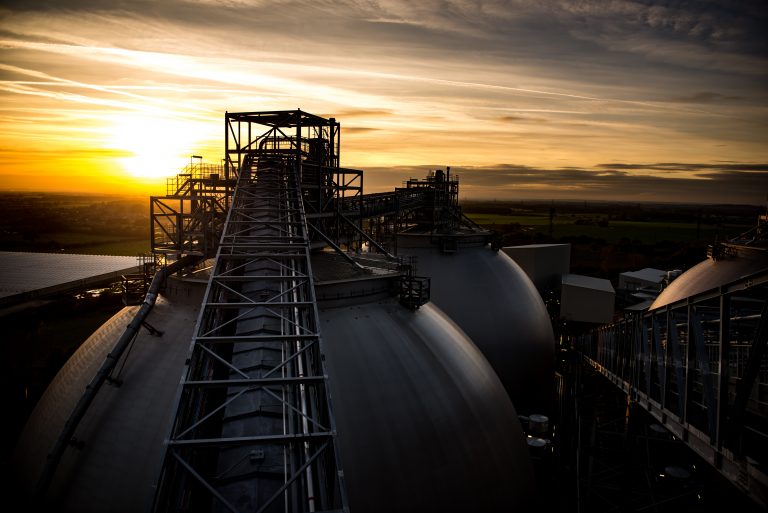
Wood pellet storage domes at Drax Power Station, Selby, North Yorkshire

The Acquisition accelerates Drax’s development from a single-site generation business into a multi-site, multi-technology operator.

With the acquisition of this portfolio, a fall in gas prices could be mitigated by an increase in gas-fired generation reflecting the relative dispatch economics of the different technologies.

Drax expects to benefit from the management of generation across a broader asset base, leveraging the Group’s expertise in the operation, trading and optimisation of large rotating mass generation.

Drax believes that the team operating the Portfolio has a strong engineering culture which is closely aligned with the Drax model and will enhance the Group’s strong capabilities across engineering disciplines.

Around 260 operational roles will transfer to Drax as part of the Acquisition, complementing and reinforcing Drax’s existing engineering and operational capabilities.

Financing and capital structure

Drax has entered into a fully underwritten £725 million secured acquisition bridge facility to finance the Acquisition, with a term of 12 months from the first date of utilisation of the facility (with a seven-month extension option) and interest payable at a rate of LIBOR plus the applicable margin (the “Acquisition Facility Agreement”). The facility is competitively priced and below Drax’s current cost of debt.

Drax will consider its options for its long-term financing strategy in 2019.

Assuming performance in line with current expectations, net debt to EBITDA is expected to return to Drax’s long-term target of around 2x by the end of 2019.

Drax expects credit rating agencies to view the Acquisition as supportive of the rating and contributing to a reduced risk profile for the Group.

Process and integration plan

Drax is progressing a detailed integration plan to combine the Acquisition as part of the existing Power Generation business.

The transaction is subject to shareholder approval. A combined Shareholder Circular and notice of General Meeting will be posted as soon as practicable.

The transaction is expected to complete on 31 December 2018.

Notes:

(1)    EBITDA is defined as earnings before interest, tax, depreciation, amortisation and material one-off items that do not reflect the underlying trading performance of the business. 2019 EBITDA is stated before any allocation of Group overheads.
(2)    Combined Cycle Gas Turbine.
(3)    Renewable Obligation Certificates.
(4)    2017 EBITDA is unaudited and based on the audited financial statements of Scottish Power Generation Limited and SMW Limited, adjusted to exclude results of assets that do not form part of the Portfolio and restated in accordance with Drax accounting policies.
(5)    On an unaudited historic cost basis, inclusive of an historic write down and other changes arising from the application of Drax’s accounting policies, and incorporating intercompany debtors which will be replaced by Drax going forward.
(6)    Open Cycle Gas Turbines.
(7)    Intergovernmental Panel on Climate Change. In a 1.5c pathway renewables are projected to be 70-85% of global electricity in 2050.

IMPORTANT NOTICE

The contents of this announcement have been prepared by and are the sole responsibility of Drax Group plc (the “Company”).

J.P. Morgan Limited (which conducts its UK investment banking business as J.P. Morgan Cazenove) (“J.P. Morgan Cazenove”) and RBC Europe Limited (“RBC”), which are both authorised by the Prudential Regulation Authority (the “PRA”) and regulated in the United Kingdom by the FCA and the PRA, are each acting exclusively for the Company and for no one else in connection with the Acquisition, the content of this announcement and other matters described in this announcement and will not regard any other person as their respective clients in relation to the Acquisition, the content of this announcement and other matters described in this announcement and will not be responsible to anyone other than the Company for providing the protections afforded to their respective clients nor for providing advice to any other person in relation to the Acquisition, the content of this announcement or any other matters referred to in this announcement.

J.P. Morgan Cazenove, RBC and their respective affiliates do not accept any responsibility or liability whatsoever and make no representations or warranties, express or implied, in relation to the contents of this announcement, including its accuracy, fairness, sufficient, completeness or verification or for any other statement made or purported to be made by it, or on its behalf, in connection with the Acquisition and nothing in this announcement is, or shall be relied upon as, a promise or representation in this respect, whether as to the past or the future. Each of J.P. Morgan Cazenove, RBC and their respective affiliates accordingly disclaims to the fullest extent permitted by law all and any responsibility and liability whether arising in tort, contract or otherwise which it might otherwise be found to have in respect of this announcement or any such statement.

Certain statements in this announcement may be forward-looking. Any forward-looking statements reflect the Company’s current view with respect to future events and are subject to risks relating to future events and other risks, uncertainties and assumptions relating to the Company and its group’s, the Portfolio’s and/or, following completion, the enlarged group’s business, results of operations, financial position, liquidity, prospects, growth, strategies, integration of the business organisations and achievement of anticipated combination benefits in a timely manner. Forward-looking statements speak only as of the date they are made. Although the Company believes that the expectations reflected in these forward looking statements are reasonable, it can give no assurance or guarantee that these expectations will prove to have been correct. Because these statements involve risks and uncertainties, actual results may differ materially from those expressed or implied by these forward looking statements.

Each of the Company, J.P. Morgan Cazenove, RBC and their respective affiliates expressly disclaim any obligation or undertaking to supplement, amend, update, review or revise any of the forward looking statements made herein, except as required by law.

You are advised to read this announcement and any circular (if and when published) in their entirety for a further discussion of the factors that could affect the Company and its group, the Portfolio and/or, following completion, the enlarged group’s future performance. In light of these risks, uncertainties and assumptions, the events described in the forward-looking statements in this announcement may not occur.

Neither the content of the Company’s website (or any other website) nor any website accessible by hyperlinks on the Company’s website (or any other website) is incorporated in, or forms part of, this announcement.


Appendix 1

Principal Terms of the Acquisition

The following is a summary of the principal terms of the Acquisition Agreement.

  1. Acquisition Agreement

Parties and consideration

The Acquisition Agreement was entered into on 16 October 2018 between Drax Smart Generation and the Seller. Pursuant to the Acquisition Agreement, the Seller has agreed to sell, and Drax Smart Generation has agreed to acquire, the whole of the issued share capital of SPGEN for £702 million, subject to certain customary adjustments in respect of cash, debt and working capital.

Drax Group Holdings Limited has agreed to guarantee the payment obligations of Drax Smart Generation under the Acquisition Agreement. Scottish Power UK plc has agreed to guarantee the payment obligations of the Seller under the Acquisition Agreement.

Conditions to Completion

The Acquisition is conditional on:

  • the approval of the Acquisition by Drax shareholders, which is required as the Acquisition constitutes a Class 1 transaction under the Listing Rules (the “Shareholder Approval Condition”); and
  • the CMA having indicated that it has no further questions at that stage in response to pre-Completion engagement by Drax or the CMA having provided a decision that the Acquisition will not be subject to a reference under the UK merger control regime.

Completion is currently expected to occur on 31 December 2018 assuming that the conditions are satisfied by that date.

Termination for material reduction in available generation capacity

Drax Smart Generation has the right to terminate the Acquisition Agreement upon the occurrence of a material reduction in available generation capacity at any of the Cruachan, Galloway and Lanark or Damhead Creek facilities which subsists, or is reasonably likely to subsist, for a continuous period of three months. The right of Drax Smart Generation to terminate in these circumstances is subject to the Seller’s right to defer Completion if the relevant material reduction in available generation capacity can be resolved by end of the month following the anticipated date of Completion.

Break fee

A break fee of £14.6 million (equal to 1% of Drax’s market capitalisation at close of business on the day before announcement) is payable if the Shareholder Approval Condition is not met, save where this is as a result of a material reduction in available generation capacity as described above.

Pre-completion covenants

The Seller has given certain customary covenants in relation to the period between signing of the Acquisition Agreement and completion, including to carry on the SPGEN business in the ordinary and usual course.  The Seller will carry out certain reorganisation steps prior to completion.

Pension liabilities

Drax Smart Generation has agreed to assume the accrued defined benefit pension liabilities associated with the employees of the SPGEN group as at the date of signing the Acquisition Agreement. Following Completion, the SPGEN group will continue to participate in the Seller’s group defined benefit pension scheme, known as the ScottishPower Pension Scheme (“SPPS”) for an interim period of 12 months unless agreed otherwise (the “Interim Period”) while a new pension scheme is set up by the SPGEN group for the benefit of its employees (the “New Scheme”).

At the end of the Interim Period, the SPPS trustees will be requested to transfer from the SPPS to the New Scheme an amount of liabilities (and corresponding share of assets) agreed between the Seller and Drax Smart Generation (or failing agreement, an amount determined by an independent actuary) in respect of the past service liabilities relating to the SPGEN group employees.  If the amount of assets transferred to the New Scheme does not match the amount agreed (or independently determined), there will be a true-up between the Seller and Drax Smart Generation.

If the SPPS trustees do not make any transfer to the New Scheme within the period of 18 months following the Interim Period (unless this was caused by a breach of the Acquisition Agreement by the Seller), Drax Smart Generation has agreed to pay £16 million (plus base rate interest) to the Seller as compensation for the SPPS liabilities not taken on by the New Scheme.

Seller’s warranties, indemnities and tax covenant

The Seller has provided customary warranties in the Acquisition Agreement.  The Seller also has provided Drax Smart Generation with indemnities in respect of certain specific matters, including for any losses associated with the reorganisation referred to above.  A customary tax covenant is also provided in the Acquisition Agreement.

  1. Transitional Services Agreement

The Seller and SPGEN will enter into a transitional services agreement effective at Completion. The specific nature, terms and charges relating to the services to be provided will be agreed between the Seller and SPGEN prior to Completion. The Seller will also provide assistance in relation to the extraction and separation of the SPGEN group from the systems of the Seller and integration of the SPGEN group onto the systems of the Drax Group.


Appendix 2

Profit Forecast

Profit forecast for the Portfolio for the year ending 31 December 2019 including bases and assumptions.

The Portfolio is expected, based on recent power and commodity prices, to generate EBITDA in a range of £90-110 million (“Profit Forecast”), and gross profits of £155 million to £175 million, of which around two thirds is expected to come from non-commodity market sources, including system support services, capacity payments, Daldowie and ROCs. Pumped storage and hydro activities represent a significant proportion of the earnings associated with the portfolio.

For the purpose of the Profit Forecast, EBITDA is stated before any allocation of Group overheads (as these will be an allocation of the existing Drax Group cost base which is not expected to increase as a result of the acquisition of the Portfolio).

Basis of preparation

The Profit Forecast has been compiled on the basis of the assumptions stated below, and on the basis of the accounting policies of the Drax Group adopted in its financial statements for the year ended 31 December 2017. Subsequent accounting policy changes include the application of IFRS15 and IFRS9 which are not initially expected to change the EBITDA results of the Portfolio. It also does not reflect the impact of IFRS16 which would apply in respect of the 2019 Annual Report and Accounts.

The Profit Forecast has been prepared with reference to:

  • Unaudited 2017 financial statements based on the audited financial statements of Scottish Power Generation Limited and SMW Limited, adjusted to exclude results of assets that do not form part of the Portfolio and restated in accordance with Drax accounting policies
  • The audited financial statements of the entities forming the Portfolio for the year ending 31 December 2017
  • The unaudited management accounts of the Portfolio for the nine months ending 30 September 2018
  • And on the basis of the projected financial performance of the Portfolio for the year ending 31 December 2019

The Profit Forecast is a best estimate of the EBITDA that the Portfolio will generate for a future period of a year in respect of assets and operations that are not yet under the control of Drax. Accordingly the degree of uncertainty relating to the assumptions underpinning the Profit Forecast is inherently greater than would be the case for a profit forecast based on assets and operation under the control of Drax and/or which covered a shorter future period. The Profit Forecast has been prepared as at today and will be updated in the shareholder circular.

The forecast cost base reflects the expectations of the Drax Directors of the operating regime of the Portfolio under Drax’s ownership and the central support it will require.

Principal assumptions

The Profit Forecast has been prepared on the basis of the following principal assumptions:

Assumptions within management’s control

  1. There is no change in the composition of the Portfolio.
  2. There is no material change to the manner in which these assets are operated.
  3. There are no material changes to the existing running costs / operating costs of the Portfolio.
  4. There will be no material restrictions on running each of the assets in the Portfolio other than those that would be envisaged in the ordinary course.
  5. No material issues with the migration of services including trading and information technology from Scottish Power to Drax.
  6. No hedges are transferred as part of the Transaction.
  7. Transaction costs and one-off costs associated with the Integration are not included.

Assumptions outside of management’s control

  1. The acquisition of the Portfolio is completed on 31 December 2018.
  2. There is no material change to existing prevailing UK macroeconomic and political conditions prior to 31 December 2019.
  3. There are no material changes in market conditions in electricity generating market and no change to the UK energy supply mix.
  4. There are no material changes in legislation or regulatory requirements (e.g. ROCs, capacity market, grid charges) impacting the operations or accounting policies of the Portfolio.
  5. There are no changes to recent market prices for clean spark spread, power, carbon and other commodities.
  6. There is no material change from the historical 10-year average rainfall.
  7. There are no material adverse events that have a significant impact on the financial performance of any of the acquired assets, including any more unplanned outages than would be expected in the ordinary course.
  8. Prior to completion, the business will be operated in the ordinary course.
  9. There are no material issues with the transitional services provided by Scottish Power to Drax pursuant to the TSA, including the migration of such services to Drax.
  10. There is no material change in the management or control of the Drax group.


END

Electricity has been causing clocks in Europe to run slowly. This is why

On ‘the continent’ – in the cultured, sun-blushed terraces of the Mediterranean, time moves slowly. Or at least, that’s the view from the grey British Isles. It turns out, however, it’s true.

Or at least for the first weeks of 2018, it was true. At first, it was small – perhaps too small to notice. But by early March, electrical clocks in Europe were running nearly six minutes slow. What caused this mass scale time loss? Electricity.

But to understand how electricity was causing clocks to lose time, you first need to understand how it helps them keep time.

How does electricity keep time?

Almost all clocks (save for the earliest sundials and hourglasses), measure time using a simple dynamic: oscillation – the repetitive and rhythmic movement of something between two points.

For example, in a pendulum clock, each swing (or oscillation) of a suspended weight between two points shifts a single tooth of a gear, which in turn shifts other gears and eventually the hands of a clock face. Because that movement is consistent and regular, it can be used as a measurement of time.

Clock technology has advanced beyond the abilities of a pendulum, but it remains driven by this principle of measuring oscillation. A quartz clock measures the vibration (or oscillation) of a piece of quartz, an atomic clock measures the vibration of atoms and electrons, and an electrical clock measures the oscillation of electricity –  otherwise known as its frequency.

The fundamentals of electrical frequency

In the UK and across Europe, all electricity operates at a frequency of 50 hertz (Hz), which is determined by the number of directional changes alternating current (AC) electricity makes every second. A synchronous electrical clock – the kind found in ovens, microwaves and digital alarm clocks – uses this consistent oscillation to measure seconds and tell time.

Electrical clocks have been designed this way because electricity’s frequency is consistent – it needs to be. Any slight deviations above or below 50 Hz can damage electrical devices and equipment. In Great Britain, National Grid and service operators around the country – including Drax Power Station – work to maintain this consistent frequency through a service called frequency response, which instructs generators to either increase or decrease generation depending on overall network demand, which in turn controls frequency.

This is because frequency is regulated by keeping generation and demand across a network perfectly balanced. Too much generation drives frequency higher, not enough causes it to fall.

It’s this that caused Europe’s electrical clocks to run slowly. But to understand the source of the frequency imbalance, you first need to understand how Europe’s grid works.

How six minutes dropped off the map

The ‘Continental Europe’ power system connects 25 countries from Spain to Turkey in one synchronous electrical network which runs on the same frequency and can all share power.

Within this there are smaller transmission system operators (TSOs) that balance the power supply of smaller groups of countries like National Grid does for GB’s network.

One of these zones includes Serbia, Macedonia and Montenegro, a region with well-known longstanding political tensions. Kosovo declared independence from Serbia in 2008, however Serbia refuses to recognise its sovereignty – a feeling which extends to some parts of Kosovo’s population.

Night view of Pristina, capital city of Kosovo.

In the Northern parts of Kosovo (along the Serbian border) the population is largely of Serbian origin and side with Serbia on the question of Kosovo’s independence. They also refuse to pay for its power. This leaves the rest of the country – who are largely of Albanian descent – to pay the cost of the country’s overall electricity, which they do via subsidies added to their bills.

But when Kosovo’s energy regulator removed the subsidy earlier this year it led to a sudden hole in the money paying generators, which in turn led to a fall in how much electricity was being generated. Crucially, however, demand didn’t fall with it.

Instead, Kosovo was using more power than it was generating, causing electrical frequency on the network to drop. And because Kosovo is part of a shared and synchronous network that stretches across the continent, that frequency imbalance (although incredibly small) spread across the network.

Overall frequency dropped 0.01% drop over the Continental European grid – too small to trigger a full system shut down, but big enough to mean that every second electrical clocks were counting was slightly slower than it should be. Big enough to mean that over time Europe lost six minutes.

As of 8 March an agreement has been met between the countries to meet demand and so, although the power that wasn’t being generated hasn’t been ‘replaced’, there is no longer an ongoing imbalance.

Frequency has normalised and clocks – now reset – are running on time.

How electricity is made

Every morning we take electricity as a given. We switch on lights, charge phones and boil kettles without thinking about where this power comes from.

The electronic devices and appliances that make up our daily routines are not particularly energy intensive. Boiling a kettle only uses 93 watts, toasting for three minutes only requires 60 watts, while cooking in a microwave for five minutes takes 100 watts.

However, when people are waking up and making breakfast in almost 30 million households around the UK, those small amounts soon create a significant demand for electricity. On a typical winter’s morning, this combined demand spikes to more than 45 gigawatts (GW).

So this is what it takes to power your breakfast – from the everyday toaster in your kitchen backwards through thousands of miles of cables to the hundreds of thousands of tonnes of machinery in wind farms, hydro-electric dams and at power stations such as Drax where electricity generation begins.

The grid 

The journey starts in the home where all our electricity usage is tracked by meters. These are becoming increasingly ‘smart’, displaying near real-time information on energy consumption in financial terms and allowing more accurate billing. There are already 7.7 million smart meters installed around the UK, but that number is set to triple this year, paving the way for a smarter grid overall.

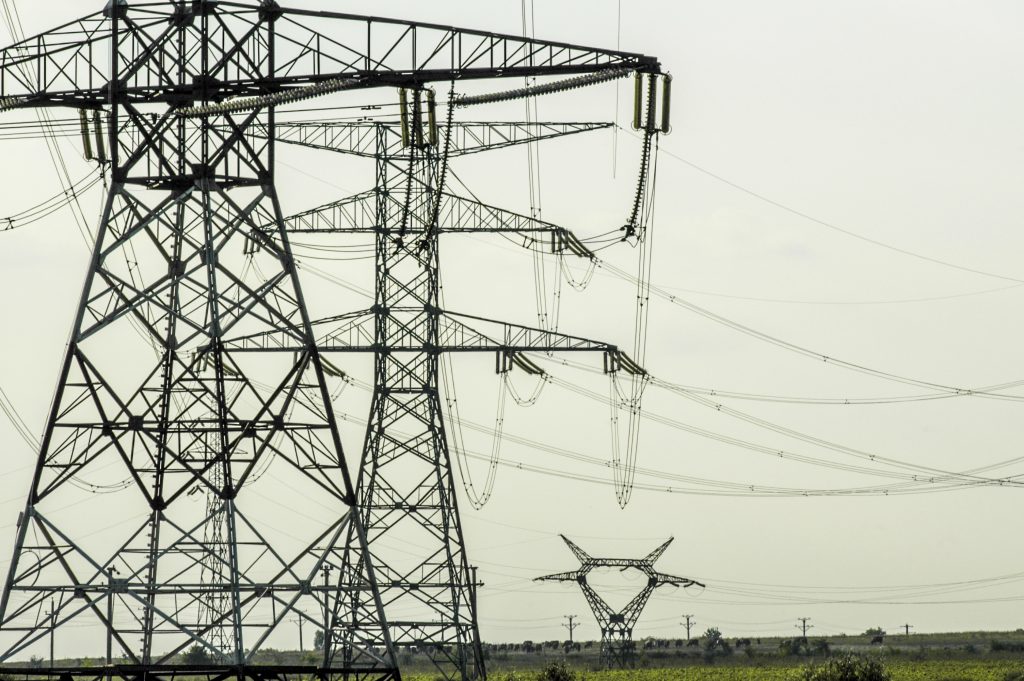
What brings electricity into homes is perhaps the most visible part of the energy system on the UK’s landscape. The transmission system is made up of almost 4,500 miles of overhead electricity lines, nearly 90,000 pylons and 342 substations, all bringing electricity from power stations into our homes.

Making sure all this happens safely and as efficiently as possible falls to the UK’s nine regional electricity networks and National Grid. Regional networks ensure all the equipment is in place and properly maintained to bring electricity safely across the country, while National Grid is tasked with making sure demand for electricity is met and that the entire grid remains balanced.

The station cools down

One of the most distinctive symbols of power generation, cooling towers carry out an important task on a massive scale.

Water plays a crucial role in electricity generation, but before it can be safely returned to the environment it must be cooled. Water enters cooling towers at around 40 degrees Celsius, and is cooled by air naturally pulled into the structure by its unique shape.

This means those plumes exiting from the top of the towers are, rather than any form of pollution, only water vapour. And this accounts for just 2% of the water pumped into the towers.

Drax counts 12 cooling towers, each 114 metres tall – enough to hold the Statue of Liberty with room to spare. Once the water is cooled it is safe to re-enter the nearby River Ouse.

The station’s bird’s-eye view

The control room is the nerve centre of Drax Power Station. From here technicians have a view into every stage of the power generation process.  The entire system controls roughly 100,000 signals from across the power station’s six generating units, water cooling, air compressors and more.

While once this area was made up of analogue dials and controls, it has recently been updated and modernised to include digital interfaces, display screens and workstations specially designed by Drax to enable operators to monitor and adjust activity around the plant.

The heart of power generation 

At the epicentre of electricity generation is Drax’s six turbines. These heavy-duty pieces of equipment do the major work involved in generating electricity.

High-pressure steam drive the blades which rotates the turbine at 3,000 revolutions per minute (rpm). This in turn spins the generator where energy is converted into the electricity that will eventually make it into our homes.

These are rugged pieces of kit operating in extreme conditions of 165 bar of pressure and temperatures of 565 degrees Celsius. Each of the six turbine shaft lines weighs 300 tonnes and is capable of exporting over 600 megawatts (MW) into the grid.

One of the most important parts of the entire process, turbines are carefully maintained to ensure maximum efficiency. Even a slight percentage increase in performance can translate into millions of pounds in savings.

Turning fuel to fire

To create the steam needed to spin turbines at 3,000 rpm, Drax needs to heat up vast amounts of water quickly and this takes a lot of heat.

The power station’s furnaces swirl with clouds of the burning fuel to heat the boiler. Biomass is injected into the furnace in the form of a finely ground powder. This gives the solid fuel the properties of a gas, enabling it to ignite quickly. Additional air is pumped into the boiler to drive further combustion and optimise the fuel’s performance.

Pulveriser

How do you turn hundreds of tonnes of biomass pellets into a powder every day? That’s the task the pulveriser take on. In each of the power plant’s 60 mills, 10 steel and nickel balls, each weighing 1.2 tonnes, operate in extreme conditions to crush, crunch and pulverise fuel.

These metal balls rotate 37 times a minute at roughly 3 mph, exerting 80 tonnes of pressure, crushing all fuel in their path. Air is then blasted in at 190 degrees Celsius to dry the crushed fuel and blow it into the boiler at a rate of 40 tonnes per hour.

The journey begins: biomass arrives

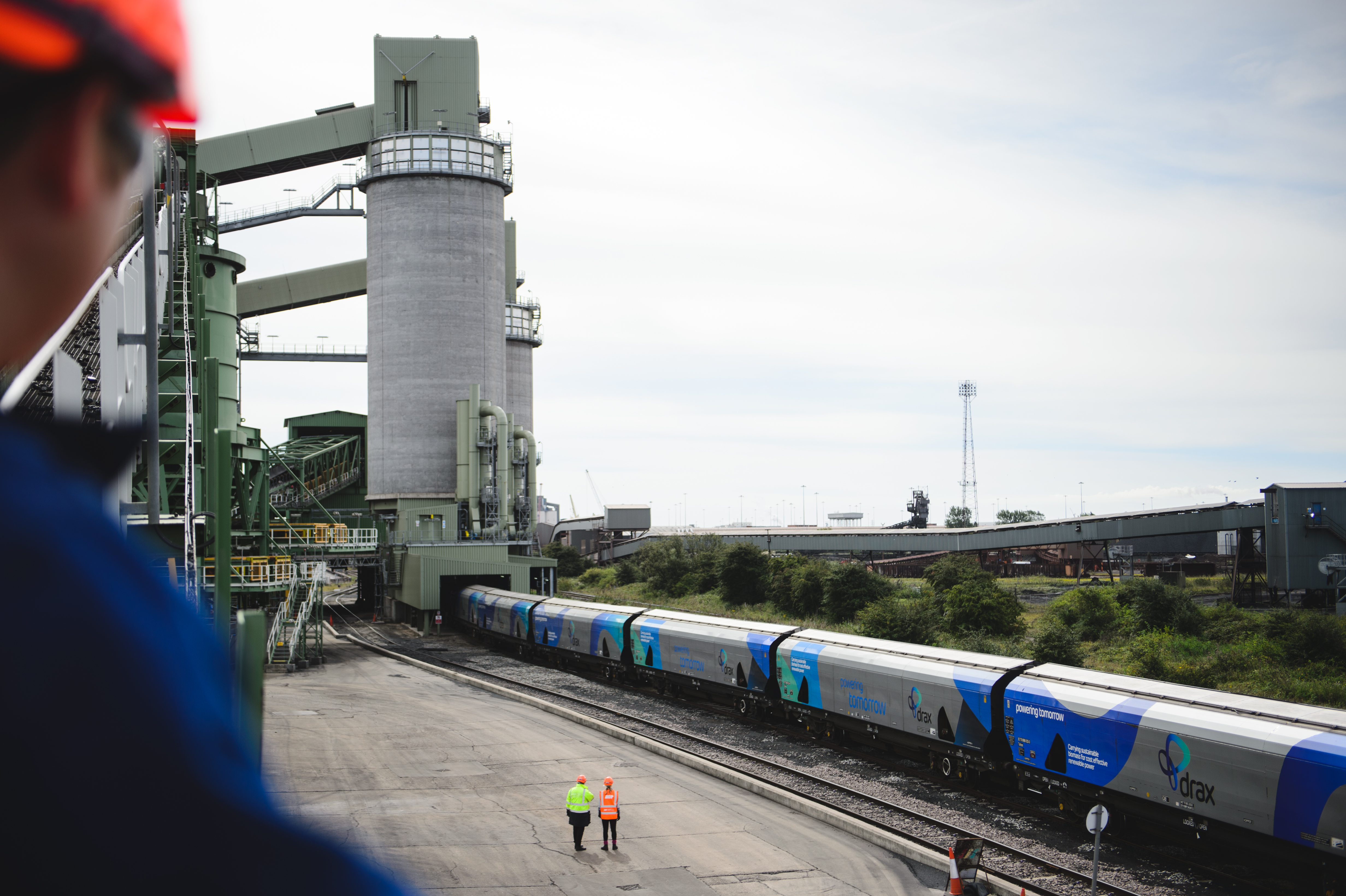
Biomass arrives at Drax by the train-load. Roughly 14 arrive every day at the power station, delivering up to 20,000 tonnes ready to be used as fuel.

These trains arrive from ports in Liverpool, Tyne, Immingham and Hull and are specially designed to maximise the efficiency of the entire delivery process, allowing a full train to unload in 40 minutes without stopping.

The biomass is then taken to be stored inside Drax’s four huge storage domes. Each capable of fitting the Albert Hall inside, the domes can hold 300,000 tonnes of compressed wood pellets between them.

Here the biomass waits until it’s needed, at which point it makes its way along a conveyor belt to the pulveriser and the process of generating the electricity that powers your breakfast begins.

Trading update

RNS Number: 0238Z
DRAX GROUP PLC
(Symbol: DRX) 

Trading and Operational Performance

Since publishing its half year results on 19 July 2017, trading conditions in the markets in which Drax operates have remained in line with expectations.

Generation

A major planned outage on the CfD(1) unit was completed in November 2017 and the unit has now returned to service. Both biomass and coal operations are currently performing well.

Retail

Retail operations remain in line with expectations, with the integration of Opus Energy progressing well and continued improvement in profitability at Haven Power.

US biomass self-supply

At the Morehouse and Amite pellet plants, the installation of a further 150K tonnes of capacity – allowing access to incrementally cheaper local wood residues – as part of the previously announced plans to optimise operations, is now complete.

The third pellet plant at LaSalle began commissioning in November 2017, with pellets now being produced and an increase in production scheduled through 2018.

Taking these factors into account and based on good operational availability for the remainder of the year, our expectations remain unchanged.

Contracted Power Sales for 2017 and 2018

As at 7 December 2017, the power sales contracted for 2017 and 2018 were as follows:

20172018
Power sales (TWh) comprising:20.116.8
– Fixed price power sales (TWh)20.115.9
at an average achieved price (per MWh)
at £46.9at £44.1
– Gas hedges (TWh)(2)-0.9
at an achieved price (per therm)
-44.4p

Strategy Update

Drax continues to develop options for 1.2GW of new Open Cycle Gas Turbine (OCGT) capacity, providing peaking power and system support services to the grid. The first two projects – Progress Power and Hirwaun Power – will participate in the next capacity market auction in February 2018. Negotiations for engineering and construction contracts are progressing well, with competitive tenders received from a number of providers.

If developed, these projects would be underpinned by a fifteen year, index-linked capacity market contract, extending earnings visibility into the 2030s.

Drax also continues to develop options for its remaining coal assets, including further low cost biomass and coal-to-gas conversions, the latter of which is progressing through a public planning consultation.

Through these options for growth and improved earnings Drax continues its transformation, helping change the way energy is generated, supplied and used for a better future.

Other matters

As part of its core market focus Drax completed the sale of BBE(3) to AMPH(4) in October 2017. Drax retains an equity holding in AMPH(4).

Drax will announce its full year results for the year ending 31 December 2017 on 27 February 2018.

Enquiries

Drax Investor Relations:

Mark Strafford

+44 (0) 1757 612 491

Media

Drax External Communications

Matt Willey

+44 (0) 1757 612 285

Ali Lewis

+44 (0) 1757 612 165

Website: www.drax.com/uk

Notes:

  1. Contract for Difference.
  2. Structured power sales (and equivalents) include forward gas sales, providing additional liquidity for forward sales, highly correlated to the power market and acting as a substitute for forward power sales.
  3. Billington Bioenergy.
  4. Aggregated Micro Power Holdings.

END

What you need to know about Britain’s electricity last quarter

Drax EI header

For an hour over lunch on Wednesday, 7th June, more than 50% of Britain’s electricity came from renewables. It was only the second time this had ever happened – the first had come just two months earlier, in April.

The second quarter (Q2) of 2017 was a period largely made up of firsts for Britain’s electricity system. While there were only two instances of renewable power tipping the 50% mark between April and June, overall, wind, solar, biomass and hydro energy made up more than a quarter of all Britain’s electricity for the first time ever.

These findings come from Electric Insights, research on Britain’s power system, commissioned by Drax and written by top university academics. Over the past year, the quarterly report has shown breaking renewable records is becoming the new normal for Britain’s electricity. Last quarter was no different.

Here, we look at the key findings from Q2 2017 and what they mean for the changing nature of the energy sector.

Daily electricity generation graph

More than half Great Britain’s electricity came from renewables. Twice

Wind, solar, biomass and hydro accounted for 51.5% of the UK’s electricity for an hour on 7th June, generating 19.1 gigawatts (GW). Combined with nuclear power and imports from France, low-carbon output was a record 28.6 GW – a massive 89% of total demand. This followed 30th April, when Britain’s electricity edged over the 50% renewable mark for a shorter, but no less significant, period.

The percentage of renewables making up our power supply is set to grow as additional renewable capacity comes onto the grid. There is currently 6 GW of additional wind capacity being constructed in Britain. Solar capacity has already hit 12.4 GW – more solar panels than analysts thought would be installed by 2050. Plans to convert more of Britain’s coal units to biomass will increase the availability of renewable power further, still.

25% electricity infographic

Electricity was cleaner than ever

There was a key date in the history of coal during Q2. On 21st April, Britain recorded the first full day it had gone without burning any coal since 1882 – the year Holborn Viaduct power station became the world’s first coal-fired public electricity station.

While that date is symbolic of the UK’s shift away from coal, in practice, it means carbon emissions are also dropping to historically low levels. Carbon intensity reached a new low in Q2, averaging 199 g/kWh over the quarter – 10% lower than the previous minimum set last year. For context, carbon intensity averaged 740 g/kWh in the 1980s and 500 g/kWh in the 2000s.

An important indicator of this falling carbon intensity is that Britain’s electricity now regularly drops below 100 g/kWh, and reached an all-time low of 71 g/kWh on the sunny and windy Sunday of 11th June.

100,000 electric vehicles infographic

Electric cars are cleaner than before

One of the greatest decarbonisation challenges moving forward is how we transform transport. Electrification is the primary driver of change in this sector, and Q2 saw Britain hit a significant milestone as the total number of electric vehicles (EVs) in the country surpassed 100,000.

The potential of EVs in cleaning up transport is significant, but there are also concerns they could, in some cases, increase CO2 levels due to pollution from power stations. However, as the last quarter’s data shows, EVs are in fact twice as carbon efficient as conventional cars thanks to the amount of renewable and low carbon electricity on the system.

“According to our analysis, looking at a few of the most popular models, EVs weren’t as green as you might think up until quite recently,” says Dr Iain Staffell From Imperial College London. “But now, thanks to the rapid decarbonisation of electricity generation in the UK they are delivering much better results.”

25% solar infographic

The most solar power a quarter has ever seen

The longer days in Q2 enabled solar power to become a key source of electricity, and for eight hours over the quarter it generated more than all fossil fuels combined. It also set output records by supplying 25% of total demand on 8th April, and producing 8.91 GW on 26th May.

While wind remains the largest source of renewable energy generation in the UK, solar’s influence is growing – especially as decentralisation of the power system continues to proliferate.

Of Britain’s 12.4 GW solar capacity, 57% is concentrated in 1,400 solar farms of around 5 MW each, while the rest is distributed across almost one million rooftop arrays in homes, businesses and other institutions. In fact, during June, 10% of all Britain’s electricity came from these sorts of decentralised sources – sources of power not on the national grid.

This is unlikely to spell a fundamental shift to an entirely decentralised power grid in the short term, but it does hint at the changes the sector is seeing. From its carbon profile, to its variety, to its flexibility, Britain’s power system is changing – and that’s a good thing.

10% decentralised energy infographic

Explore the data in detail by visiting ElectricInsights.co.uk

Commissioned by Drax, Electric Insights is produced independently by a team of academics from Imperial College London, led by Dr Iain Staffell and facilitated by the College’s consultancy company – Imperial Consultants.

Understanding the pounds behind the power

Editor’s note: On 21st September 2017 the Board announced that Will Gardiner would replace Dorothy Thompson as Chief Executive, Drax Group as of 1st January 2018. Read the announcement to the London Stock Exchange. This story was written by Will two months prior to that announcement and remains unedited below.

The UK electricity market used to be simpler. Coal, gas and nuclear plants generated energy and fed power into the National Grid. Retail companies then delivered that power to homes and businesses across the country thanks to regional distribution network operators. Today, it’s not as simple. The energy system of Great Britain has grown more complex – it needed to.

The push to lower carbon emissions led to the introduction of an array of different power generation technologies and fuels to the energy mix. These all generate power in different ways, at different times and in different conditions. Added to this are government schemes that have changed how this is all funded. In short, our electricity market is now more complex.

Drax Group has transformed itself to align with this new system. It is now an energy company with complementary operations across its supply chain – sourcing fuel, generating 17% of Great Britain’s renewable power and then selling much of that electricity directly to business customers in the retail market. This has fundamentally changed both how we do business and the financial mechanisms behind the business.

Where are we now?

Drax’s financial and operating strategies are very much inter-linked. Shifting how we generate energy changes how we generate revenue. The company is structured according to a set of distinct business segments, each of which is treated in a slightly different way.

The generation business

Drax has adapted its business model to the UK government’s regulatory framework, which through successive administrations has broadly promoted investment in renewable and low carbon power generation. Three of our six electricity generation units – accounting for 68% of our output in the first half of 2017 – have been upgraded from coal to produce renewable electricity from sustainable compressed wood pellets. These units are a core part of Britain’s renewable energy mix. Guaranteed income from the third unit conversion has given us a significantly higher degree of earnings visibility and reduced our exposure to commodity prices.

H1, 2017: 10.7 TWh total generation; 7.3 TWh biomass generation

Our coal generation units no longer provide 24/7 baseload electricity. This means we primarily use our coal generation as a support system. When the grid needs it we can ramp up and down coal generation responding to demand and ancillary service needs. Our renewable generation units do this too. Ultimately, however, our long-term goal is to convert the remaining coal units – either to renewables or to gas. Our Research and Innovation team is currently looking into how we might be able to do this, but early indications show that coal-to-gas conversion could be an attractive option for delivering flexible and reliable generation capacity for the UK.

Drax Power is doing well and generated £137m of EBITDA in the first half of this year, a £51m increase compared to the first half of 2016.

We are confident about the projected growth of our power generation business to £300 million EBITDA by 2025. That plan is aided by our move into rapid response gas – a technology that can meet urgent needs of a power system that includes an increasing amount of weather-dependent renewables. Two of the four rapid response gas projects we’re developing are ready to bid for 15-year capacity market contracts this coming February. They are designed to start up from cold faster than coal and combined cycle gas turbine (CCGT) units. These small-yet-powerful plants will respond to short-term power market price signals and be capable of providing other, ancillary services to further enhance security of supply.

These projects should add an attractive additional source of earnings to our generation business. They also will have attractive characteristics, as a significant element of their earnings will come from the capacity market – guaranteed government income for 15 years.

The retail business

We directly serve the retail market through Haven Power, which supplies renewable electricity primarily to industrial and commercial customers. Last week we announced that Haven Power was able to break-even six months ahead of schedule. Retail is an area we’re growing, and in February 2017 we acquired Opus Energy, the largest non-domestic UK energy company by meters installed outside the Big Six. This has had a marked effect – today we’re the largest challenger B2B energy retailer in the UK.

There is a healthy and regular annuity coming in through the existing retail business, and we believe this can generate £80 million of EBITDA by 2025, which, together with our growing biomass supply business, will make up a third of our earnings. We demonstrated good progress in the first half of the year, earning £11m of EBITDA.

The biomass business

Our two operational wood pellet manufacturing plants in Louisiana and Mississippi are progressing well. They are both still ramping up to full production and have seen marked improvements in pellet quality and production.

We are looking to grow our US business and as part of this we’ll need to build on the recent addition of LaSalle BioEnergy with further acquisitions. Expansion will grow our capacity for the self-supply of pellets from 15% to 30% of Drax Power Station’s requirements, adding an additional one million tonnes of production.

In the second half of 2017, we expect the profitability of Drax Biomass to increase. LaSalle will be commissioned in the first half of 2018 and reach capacity in 2019.

What’s next?

The energy landscape continues to change and we’ll need to change with it. Phasing out coal entirely is priority number one. For this we’ll continue to look at options. How and when we can convert more units to sustainable biomass depends on trials that we are conducting at Drax Power Station during 2017-18. The right government support would also make further conversions cost effective.

We also recognise that it’s important to look at alternative possibilities for our remaining coal units. This is why we are seeking planning permission to convert one or more of our 645 MW (megawatt) coal units to 1,300 MW of gas. Such an upgrade would be at a discount to a new-build, combined cycle gas turbine (CCGT) power station of equivalent capacity. And that’s simply because we would use much of the existing infrastructure and equipment.

Another major prospect is in the technology space and so we’re continuing to invest in research and innovation. Batteries and storage are a huge opportunity for us – both in how they could benefit our retail customers, and how they could provide solutions for large-scale centralised energy systems. In short, it’s an area with huge potential. We welcome the government’s recent initiatives designed to stimulate the development of battery technology, as well as encourage the use of electric vehicles.

Drax has gone through a period of considerable change and that will continue as we meet the UK’s low-carbon energy demands. We are improving the quality of our earnings, reducing our exposure to commodities, and positioning to take advantage of future opportunities. As we told investors in June, if we deliver on these plans, we can expect >£425 million of EBITDA in 2025.

4 of the most exciting emerging technologies in electricity generation

Petri dish with microbe colony

Since the dawn of the industrial age, the world has been powered by a relatively small set of technologies. The 20th century was the age of coal, but this side of 2000, that’s changed.

The need to curb emissions and the rise of renewables, from wind to solar to biomass, has significantly changed how we fuel our power generation.

Today, some of the world’s most interesting and exciting emerging technologies are those designed to generate electricity.

Microbial fuel cells – harnessing the power of bacteria

Bacteria are all around us. Some are harmful, some are beneficial, but all of them ‘breathe’. When they breathe oxidation occurs, which is when something combines with oxygen at a chemical level, and when bacteria do this, electrons are released.

By connecting breathing microbes to a cathode and an anode (the positive and negative rods of a battery), the flow of these released electrons can be harnessed to generate power. This is what’s known as a microbial fuel cell (MFC). MFCs are used largely to generate electricity from waste water, but are expanding into more exotic uses, like powering miniature aquatic robots.

New developments are constantly expanding the power and applications of MFCs. Researchers at Binghamton University, New York found that combining phototropic (light-consuming) and heterotrophic (matter-consuming) bacteria in microbial fuel reactions generates currents 70 times more powerful than in conventional setups.

Building with sun shining through glass windows

Solar – a new dawn

Solar power may not be a new technology, but where it’s going is.

One of the most promising developments in the space is solar voltaic glass, which has the properties of a sheet of window glass but can also generate solar power.

Rather than collecting photons like normal solar does (and which transparent materials by definition can’t do) photovoltaic glass uses salts to absorb energy from non-visible wavelengths and deflects these to conventional solar cells embedded at the edge of each panel.

Or there’s solar PV paint, which contains tiny light sensitive particles coated with conductive materials. When layered over electrodes you’ve got a spray-on power generator.

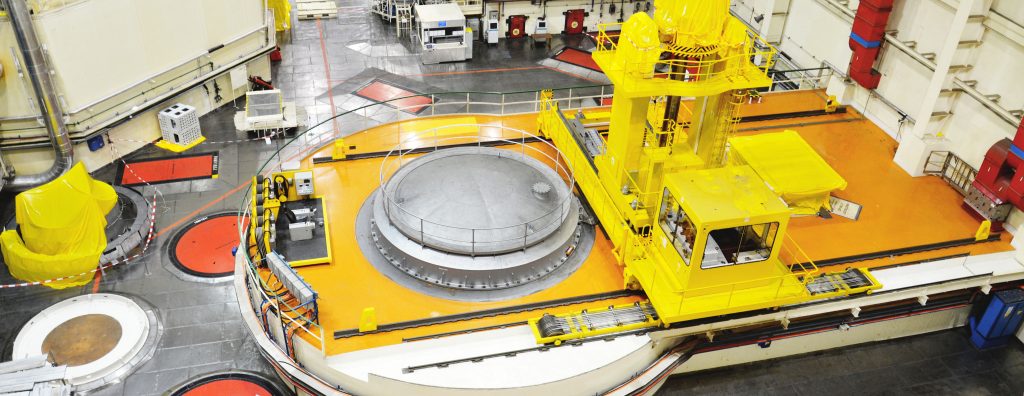
Nuclear reactor hall in a power plant

Betavoltaics – nothing wasted from nuclear waste

Nuclear material is constantly decaying and in the process emits radioactive particles. This is why extremely radioactive material is so dangerous and why properly storing nuclear waste is so important and so expensive. But this waste can actually be put to good use. Betavoltaic devices use the waste particles produced by low-level radioactive materials to capture electrons and generate electricity.

The output from these devices can be fairly low and decreases over long periods of time, but because of the consistent output of nuclear decay they can be extremely long-lasting. For example, one betavoltaic battery could provide one watt of power continuously for 30 years.

And while they aren’t currently fit to work on a large scale, their longevity (and very compact size) make them ideal power sources for devices such as sensors installed on equipment that needs to be operational for long periods.

Ocean wave crashing at shore

Tidal power – changing tides

A more predictable power source than intermittent renewables like wind and solar, tidal power isn’t new, however its growth and development has typically been restrained by high costs and limited availability. That’s changing. Last year saw the launch of the first of 269 1.5 MW (megawatt) underwater turbines, part of world’s first large scale tidal energy farm in Scotland.

Around the world there are existing tidal power stations – such as the Sihwa Lake Tidal Power Station in South Korea, which has a capacity of 254MW – but the MeyGen array in Scotland will be able to take the potential of the technology further. It’s hoped that when fully operational it will generate 398MW, or enough to power 175,000 homes.

We might not know exactly how the electricity of tomorrow will be generated, but it’s likely some or all of these technologies will play a part. What is clear is that our energy is changing.

I am an engineer

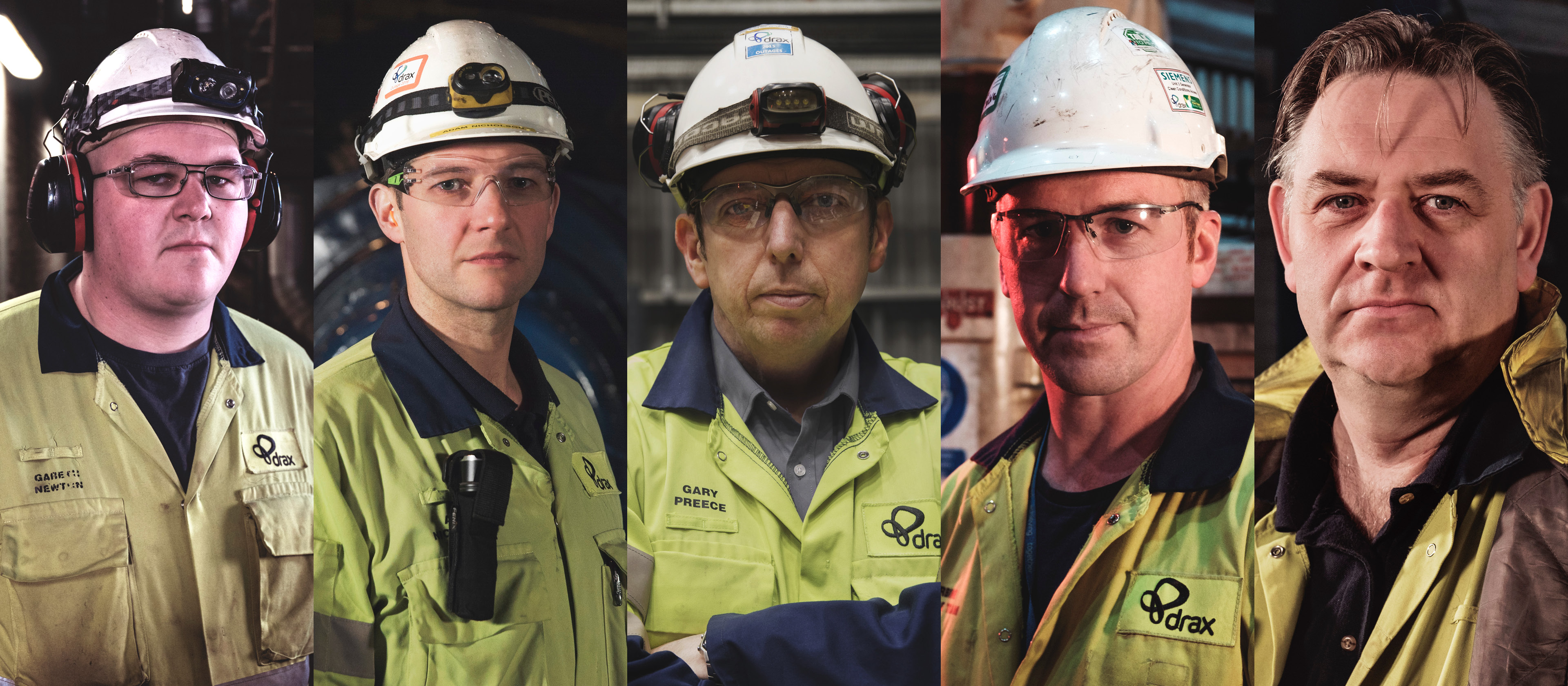
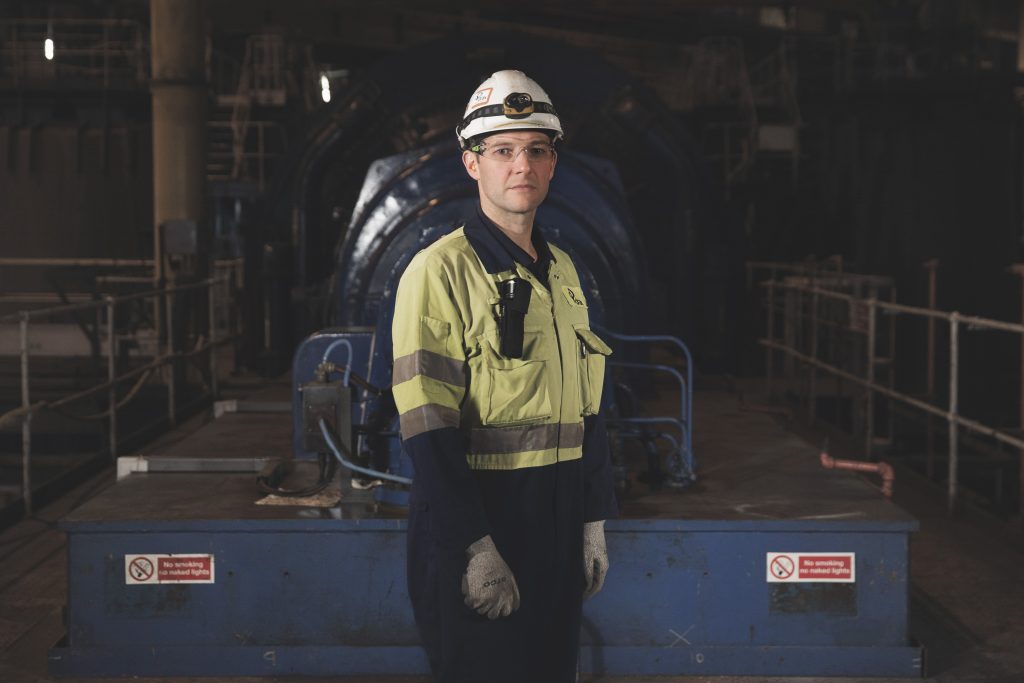
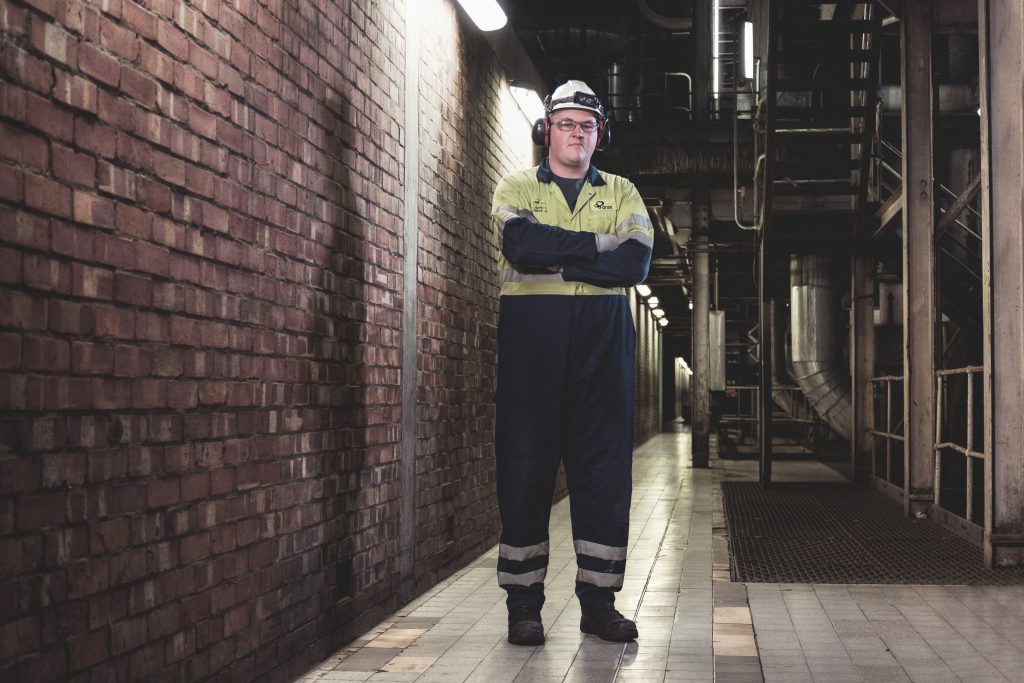
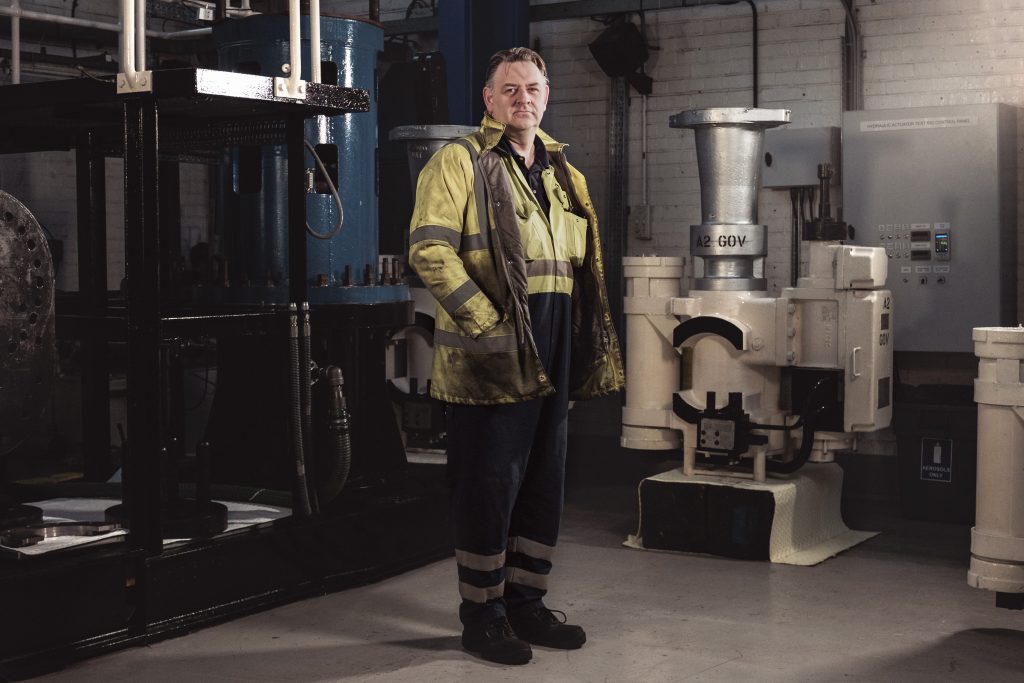
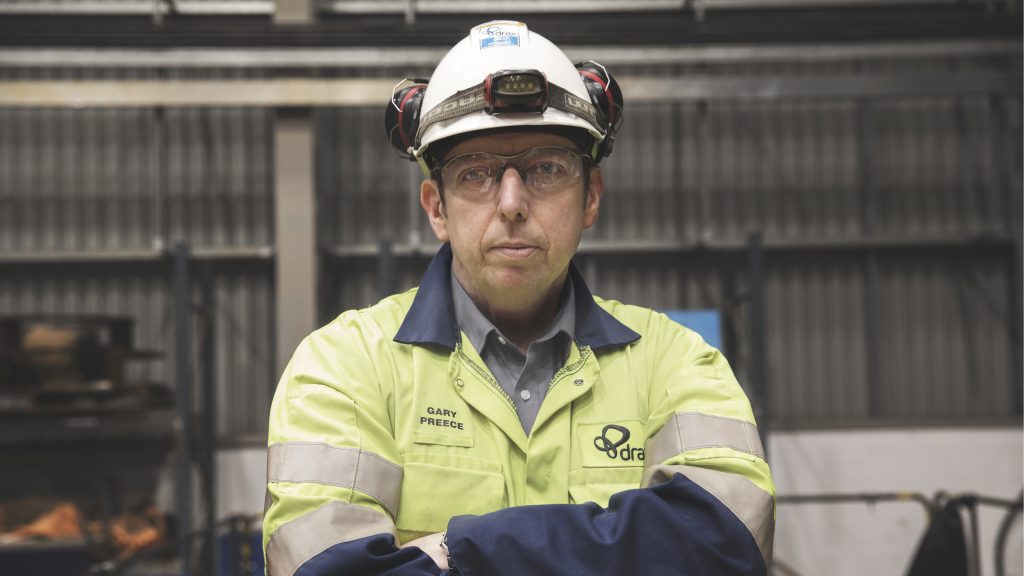
Producing 16% of Great Britain’s renewable power requires innovative people with the right mix of skills, experience and determination. Running the country’s biggest power station is a team effort – but it’s worth taking a moment to hear from the individuals at the top of their game. Meet Luke Varley, Adam Nicholson, Gareth Newton, Andrew Storr and Gary Preece.

Getting more from less

There are few things in a power station as integral to generating electricity as the turbines. Making sure they run efficiently at Drax is down to Luke Varley and his team.

Luke Varley

Varley is the lead engineer in the turbine section at Drax Power Station. His team who look after what’s arguably the heart of the plant: the steam turbines that drive electricity generation. As well as managing day-to-day maintenance, the engineers and craftspeople within TSG deliver the major overhaul activities on the turbines to keep them running efficiently and safely.

Read Luke’s story

The problem solver

How do you convert a power station built for one fuel to run on another? It takes engineers with out-of-the-box thinking like Adam Nicholson.

Adam Nicholson

Nicholson is Process Performance Section Head at Drax Power Station. He has an eagerness to find solutions. That makes him the ideal candidate for his current job: managing day-to-day improvements at Drax.

His team makes sure the turbines, boiler, emissions, combustion, and mills are not just working, but running as smoothly as possible. It’s a job that brings up constant challenges.

Read Adam’s story

Taming the electric beast

To keep a site as big and complex as Drax Power Station running, you need to be ready to mend a few faults. That’s where Gareth Newton comes in.

Gareth Newton

As a mechanical engineer in one of the power station’s maintenance teams, he’s a man with a closer eye on that animal than most.

And when something does need fixing or improving, it’s his job to make sure it happens. It’s a task that keeps him busy.

Read Gareth’s story

The toolmaster

What do you do when a piece of equipment in the UK’s largest power station breaks down? More often than not, the answer is send it to Andrew Storr’s workshop.

Andrew Storr

Before Drax Power Station was a part of Andrew Storr’s career, it was a part of his local environment.

Today, Storr does more than strip the turbines, he’s part of the engineering team that oversees them – a job that needs to be taken seriously.

Read Andrew’s story

The life of an electrical engineer

Unsurprisingly, running the country’s biggest single site electricity generator requires top-class electrical engineers. That’s where Gary Preece comes in.

Gary Preece

A station like Drax doesn’t run itself. Its six turbines generate nearly 4,000 megawatts (MW) of power when operating at full load. Unsurprisingly, for a site that produces 7% of Britain’s electricity needs, the role of an electrical engineer is an important one – both when managing how power is connected to the high-voltage electricity transmission grid, and how the giant electrical machines generating the energy work.

Read Gary’s story

Why we need the whole country on the same frequency

Electricity frequency

The modern world sits on a volatile, fizzing web of electricity. In 2015 the UK consumed roughly 303 terawatt hours (TWh) of electricity, according to government statistics. That’s an awful lot of power humming around and, in this country, we take it for granted that electricity is controlled. This means the power supply coming into your home or place of work is reliable and won’t trip your fuse box. In short, it means your mobile phone will keep on charging and your washing machine will keep on spinning.

But generating and circulating electricity at safe, usable levels is not an easy task. One of the most overlooked aspects of doing this is electrical frequency – and how it’s regulated.

What is electrical frequency?

To understand the importance of frequency, we need to understand a couple of important things about power generation. Generators work by converting the kinetic energy of a spinning turbine into electrical energy. In a steam-driven generator (like those at Drax Power Station), high pressure steam turns a turbine, which turns a rotor mounted inside a stator. Copper wire is wound around the rotor energised with electricity, this turns it into an electromagnet with a north and south pole.

The stator is made up of large, heavy duty copper bars which enclose the rotor. As the rotor turns, its magnetic field passes through the copper bars and induces an electric current which is sent out onto the transmission system.

As the magnetic field has a north and south pole, the copper bars experience a change in direction of the magnetic field each time the rotor turns. This makes the electric current change direction twice per revolution and is called an alternating current (AC). There are in fact three sets of copper bars in the stator, producing three electrical outputs or phases termed red, yellow and blue.

Electrical frequency is the measure of the rate of that oscillation and is measured in the number of changes per second – also called hertz (Hz). A generator running at 3,000 rpm, with two magnetic poles, produces electricity at a frequency of 50Hz.

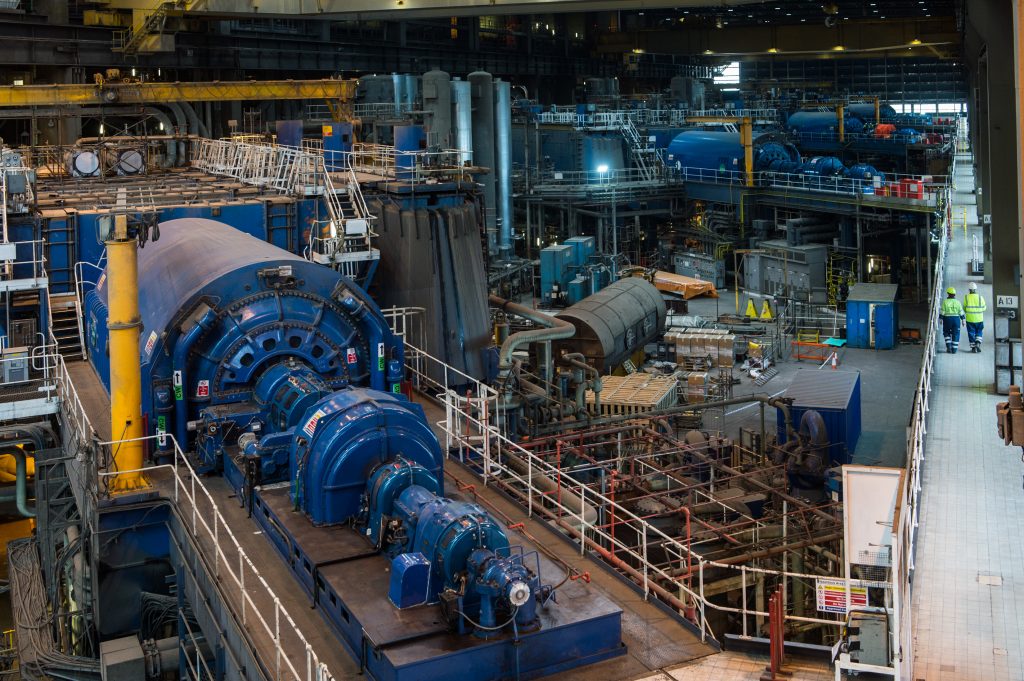
Turbine Hall at Drax Power Station

Why is this important? 

Maintaining a consistent electrical frequency is important because multiple frequencies cannot operate alongside each other without damaging equipment. This has serious implications when providing electricity at a national scale.

The exact figure is less important than the need to keep frequency stable across all connected systems. In Great Britain, the grid frequency is 50Hz. In the US, it’s 60Hz. In Japan, the western half of the country runs at 60Hz, and the eastern half of the country runs at 50Hz – a string of power stations across the middle of the country steps up and down the frequency of the electricity as it flows between the two grids.

Sticking to one national frequency is a team effort. Every generator in England, Scotland and Wales connected to the high voltage transmission system is synchronised to every other generator.

When the output of any of the three phases – the red, yellow or blue – is at a peak, the output from all other phases of the same colour on every other generating unit in Great Britain is also at a peak. They are all locked together – synchronised – to form a single homogenous supply which provides stability and guaranteed quality.

How is frequency managed?

The problem is, frequency can be difficult to control – if the exact amount of electricity being used is not matched by generation it can affect the frequency of the electricity on the grid.

For example, if there’s more demand for electricity than there is supply, frequency will fall. If there is too much supply, frequency will rise. To make matters more delicate, there’s a very slim margin of error. In Great Britain, anything just 1% above or below the standard 50Hz risks damaging equipment and infrastructure. (See how far the country’s frequency is currently deviating from 50 Hz.)

Managing electrical frequency falls to a country’s high voltage transmission system operator (the National Grid in the UK). The Grid can instruct power generators like Drax to make their generating units automatically respond to changes in frequency. If the frequency rises, the turbine reduces its steam flow. If it falls it will increase, changing the electrical output – a change that needs to happen in seconds.

In the case of generating units at Drax Power Station, the response starts less than a second from the initial frequency deviation. The inertial forces in a spinning generator help slow the rate of frequency change, acting like dampers on car suspension, which minimises large frequency swings.

Frequency on a fast-changing system

Not all power generation technologies are suited for providing high quality frequency response roles and as the UK transitions to a lower-carbon economy, ancillary services such as stabilisation of frequency are becoming more important.

Neither solar nor wind can be as easily controlled. It’s possible to regulate wind output down or hold back wind turbines to enable upward frequency response when there is sufficient wind.

Similarly, solar panels can be switched on and off to simulate frequency response. As solar farms are so widely dispersed and tend to be embedded – meaning they operate outside of the national system, it is not as easy for National Grid to instruct and monitor them. Both wind and solar have no inertia so the all-important damping effect is missing too. Using these intermittent or weather-dependent power generation technologies to help manage frequency can be expensive compared to thermal power stations.

Nor are the current fleet of nuclear reactors flexible – nuclear reactors in Great Britain were designed to run continuously at high loads (known as a baseload power). Although they cannot deliver frequency response services, the country’s nuclear power stations do provide inertia.

UK plug on blue wall

Twenty times faster

Thermal power generation technologies such as renewable biomass or fossil fuels such as coal and gas are ideal for frequency response services at scale, because they can be easily dialled up or down. As both the fuel supply to their boilers and steam within their turbines can be regulated, the 645 MW thermal power units at Drax have the capability to respond to the grid’s needs in as little as half a second or less, complete their change in output in under one second and maintain their response for many minutes or even hours.

Before the introduction of high volumes of wind and solar generation almost all generators (excluding nuclear) running on the system could provide frequency response. As these generators are increasingly replaced by intermittent technologies, the system operator must look for new services to maintain system stability.

An example is National Grid’s recent Enhanced Frequency Response tender, which asked for a solution that can deliver frequency stabilisation in under a second – 20 times faster than the Primary Response provided by existing thermal power stations. Drax was the only participating thermal power station, however all contracts were all won by battery storage projects.

Frequency future

Given the decline in fossil fuel generation and uncertainty around our power makeup in future decades, National Grid is consulting on how best to source services such as frequency response. The ideal scenario for National Grid is one where services can be increasingly sourced from reliable, flexible and affordable forms of low carbon generation or demand response.

The next generation of nuclear power stations, as with some already operating in France, can provide frequency response services. However the first of the new crop, Hinkley C, is around a decade away from being operational. Likewise, solar or wind coupled with battery, molten salt or flywheel storage will provide an increasing level of flexibility in the decades ahead as storage costs come down.

Thanks to power generation at Drax with compressed wood pellets, a form of sustainable biomass, Britain has already begun moving into an era where lower carbon frequency response can begin to form the foundation of a more reliable and cleaner system.

This story is part of a series on the lesser-known electricity markets within the areas of balancing services, system support services and ancillary services. Read more about black startsystem inertiareserve power and reactive power.  View a summary at The great balancing act: what it takes to keep the power grid stable and find out what lies ahead by reading Balancing for the renewable future and Maintaining electricity grid stability during rapid decarbonisation.