


Tag: nature

Creating and maintaining wildlife habitats through prescribed burns

By Jackson Martini, Quail Forever Louisiana State Coordinator

The 2025 U.S. State of the Birds report reveals continued widespread declines in American bird populations, especially grassland birds, with 229 species requiring urgent conservation action. When done thoughtfully, forest management practices can mimic natural disturbances, maintain healthy ecosystems, and create diverse habitats that birds need to thrive.

Quail Forever works to restore habitats

This is where conservation organizations like Quail Forever tap in. In 2005, as quail numbers continued to decline nationwide, Pheasants Forever worked with and activated passionate conservationists across the country to form Quail Forever. Quail Forever is a division within Pheasants Forever that works throughout the quail ranges of North America, creating and restoring wildlife habitat. Pheasants Forever and Quail Forever’s mission is to conserve pheasants, quail, and other wildlife populations through habitat improvements, public access, education and conservation advocacy. Drax is supporting Quail Forever in their conservation efforts by funding a prescribed burn trailer.

Drax is a long-time supporter of Quail Forever in Louisiana – the partnership existed before we had a team of biologists in the state. When Drax heard we were seeking funding opportunities to purchase and equip a prescribed burn trailer to support the local Prescribed Burn Association and Quail Forever Chapter, they were quick to step in. Their support made this dream a reality and is a testament to Drax’s commitment to investing in local communities, ecosystems, and conservation.

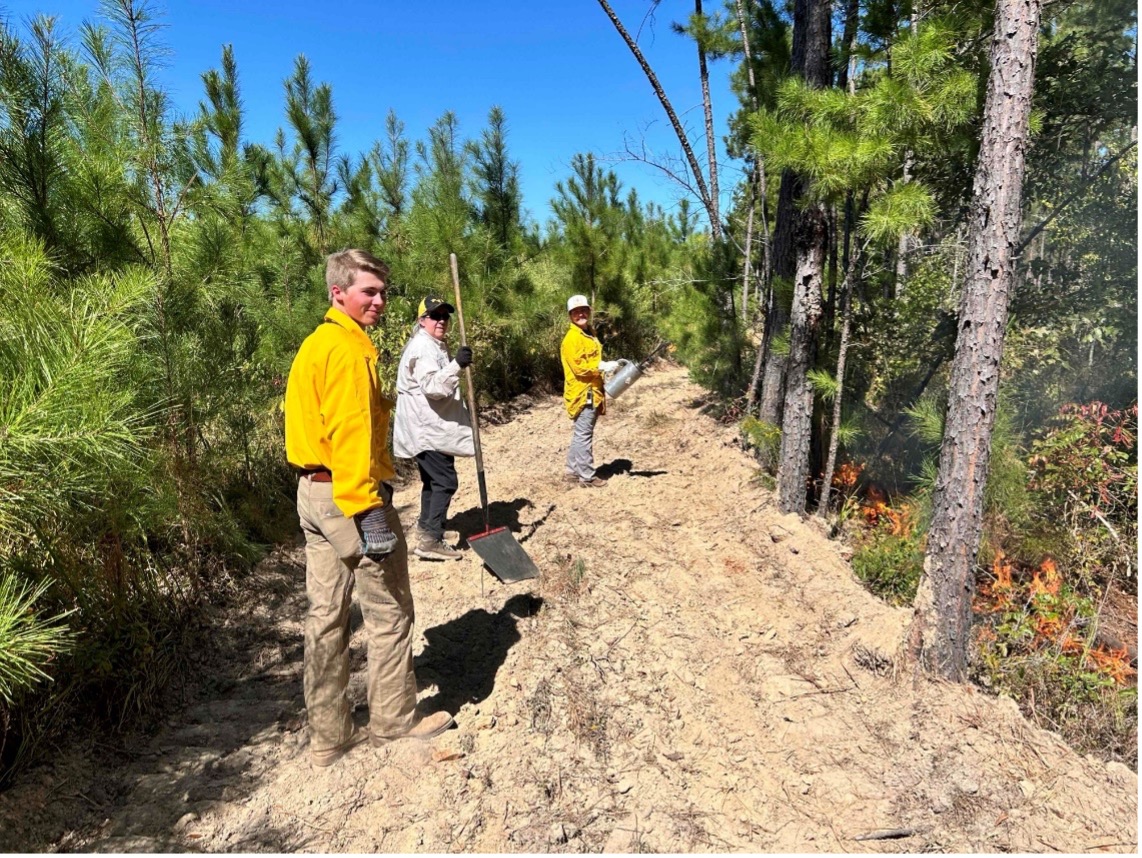
Prescribed fire, sometimes called a “controlled burn” or “prescribed burn” is one of many tools used to meet land management objectives. Prescribed burns are an efficient method of creating and maintaining wildlife habitats. Fire removes dense underbrush, creating critical space for birds like quail, wild turkeys, and woodpeckers that thrive in open, fire-maintained woodlands and savannas. Prescribed fire mimics natural processes that many native species of plants and wildlife rely on.
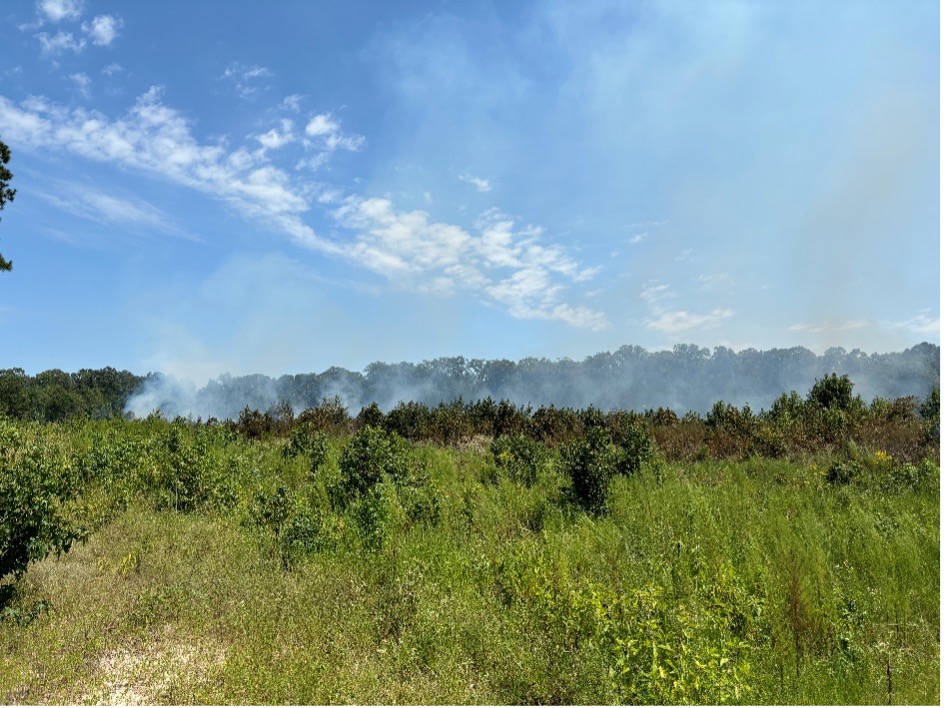
Ecosystem maintenance through the natural process of fire

Fire is a natural process which maintains ecosystems. Because of human development, fire suppression, and changes in land use, non-native and invasive species gained a stronghold, and forests have become very dense. Areas of Louisiana which historically had healthy numbers of quail, turkeys, and even prairie chickens have become overgrown forests which cannot support those grassland and savannah bird species. This habitat loss and fragmentation is the primary reason we’ve been experiencing these long-term population declines. To counter this, we need to thin the forests and get fire back on the landscape. This will control invasive plant species, allow sunlight to reach the soil, and stimulate the growth of a wide diversity of plants that provide food and cover for wildlife.

Improving the health of forests

Prescribed burns also improve and maintain the health of forests. For example, prescribed burning mitigates the risk of devastating wildfire by reducing the accumulation of dead vegetation, woody debris and brush.  This “fuel” can turn a lightning strike or campfire spark into a devastating wildfire.

Prescribed fire also removes unhealthy and diseased trees, as well as invasive species, which improves the overall ecological health of the stand. Removal of these weakened and non-desirable species allows for more light to hit the forest floor, encouraging native plant growth. Establishment of  native fire-adapted species improves the resilience and health of the ecosystem.
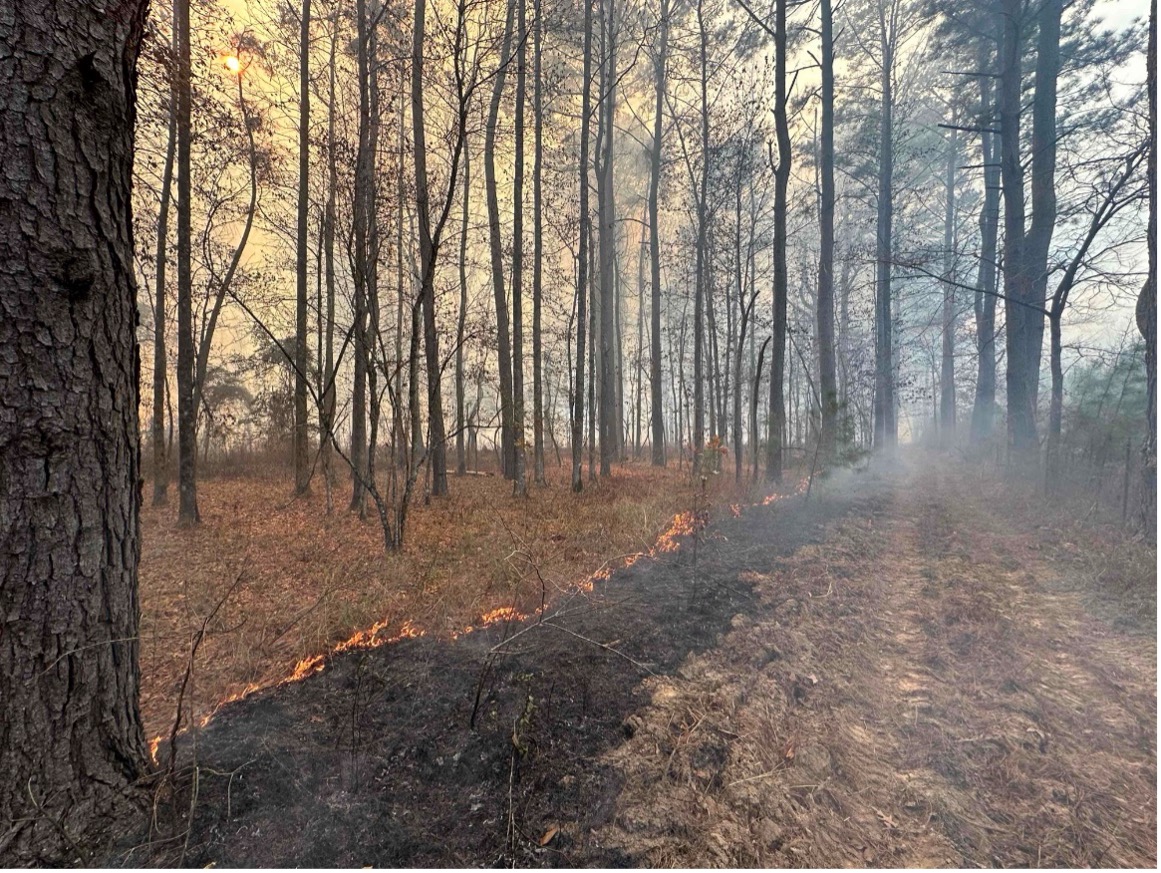
Prescribed burns can be conducted year-round depending on the management goal but generally take place from December to April in Louisiana. These understory burns are controlled so that they burn at a low intensity, targeting the lower vegetation layers. The fire should consume accumulated debris, and invasive plants, while sparing larger trees and native vegetation. This practice is planned in coordination with the local forestry agency.

The burn trailer and its equipment will be stored and maintained by the Piney Hills Prescribed Burn Association (PBA) out of Ruston and made available to Piney Hills PBA members. Quail Forever, a partner of the Piney Hills PBA, plans to help activate volunteers to support the PBA. PBA members pay annual dues and are required to complete training to earn prescribed fire credentials through LSU Ag Center. PBA members work together to manage their properties using prescribed fire in North Central Louisiana.

To learn more about Quail Forever, visit here. Or contact Jackson Martini, Quail Forever Louisiana State Coordinator at [email protected] or 814-771-3679.

To learn more about the Piney Hills Prescribed Burn Association, contact Jessie Davis at 318-278-1030.

Featured image caption: PBA members lighting a controlled burn.

Image caption 1: A growing season burn conducted by the Piney Hills PBA in August 2024.

Image caption 2: A low intensity, controlled burn cleaning up fuel load and killing invasive woody stems.

The impact of BECCS Done Well on Drax

BECCS Done Well findings

In late 2022 a report authored by Jonathon Porritt and his High Level Panel, concerning how bioenergy with carbon capture and storage (BECCS) can be implemented in ways that have a positive impact on climate, nature and people, was published. The report, entitled , ‘BECCS Done Well’, outlines 30 conditions required for BECCS to deliver positive outcomes. We published a first response to the report in July 2023, and subsequently a more detailed and final response in April 2024. During the 18 months between report publication and our final response, BECCS Done Well and its 30 conditions not only stirred many invaluable discussions within and amongst teams, it also inspired mindsets and has been embedded in decision-making processes.

Here are some of the commitments we’ve made and how we’re meeting those

We committed to compiling an Evidence Hub sharing scientific evidence underpinning BECCS scale up, to be consistently updated with the latest scientific findings. In the last month we’ve published our new Evidence Hub on the Drax website, including four papers, and with more to come.

Climate Positive

  • Only sourcing from catchments where our activity, alongside others in the area, collectively has a neutral or positive effect on carbon stocks at a timescale appropriate to the ecosystem and its current condition.
    • We’re actively developing a forest carbon appraisal methodology and will have this completed by end of year as we committed in the Sustainability Framework.
  • Avoiding Enhanced Oil Recovery (EOR).
    • We remain committed to not capturing carbon for EOR by screening out EOR only projects in our new-build BECCS selection process and ensuring that this commitment is reflected in the selected BECCS carbon crediting methodology. We’ve also commissioned a study on the use of mass balance for shared transportation infrastructure. Where our CO2 will be transported in shared infrastructure (e.g. pipelines serving multiple emitters, geological stores and EOR projects) a mass balance accounting approach ensures that for every ton of CO2 we put into the system a ton goes to permanent geological storage.

People Positive

  • Developing Community Advisory Panels in some areas local to our North American operations.
    • Community Advisory Panels, starting in Gloster, USA, have been launched by the Community team, with more locations to come. A new First Nations Advisory Council is now also up and running in Canada, and we’ve developed an Indigenous Peoples Policy to codify best practice in our activities.
  • Seeking to establish resolution (grievance) mechanisms for our operational sites.
    • A new grievance mechanism is under development by the Community team.

Nature Positive

  • Identifying baselines for biodiversity and ecosystem functioning for the land we own, manage and/or buy from, and use this information to support biodiversity across our sites and in our value chain.
    • We’ve been working with NatureServe, a leading authority on biodiversity, to establish a biodiversity baseline for our sourcing areas in the US South East.
  • Establishing processes for studying and mitigating impact on nature.
    • We’ve progressed our review of nature related dependencies, impacts, risks and opportunities aligned to the Taskforce for Nature Related Financial Disclosures (TNFD) at our operations.
    • We’ve published our first Nature Positive Action Plan for Drax Power Station internally, with corresponding plans for other locations coming soon.

The above examples are only a handful of the actions we’re taking to follow through on these commitments we made with a lot of work being done behind the scenes.

What we’ve learned

The response process to the BECCS Done Well report enabled sustainability focused discussions across the business, and brought multiple functions together to discuss how we can achieve positive outcomes through our operations. Our internal and external conversations set us up well to discuss and develop the Sustainability Framework targets, helping us advance towards an action plan keeping us accountable.

We’ve codified the BECCS Done Well commitments, and more, through the new Sustainability Framework and the updated Biomass Sourcing Policy. As we move forward, we’ll continue to work together to make positive action and hold ourselves accountable to our commitments.

Progress on building a positive future for climate, people and nature

As I come to the end of my second year with Drax, it is naturally time to reflect on my time with the company to date and the progress we have made.

Through delivery of its strategy, Drax is making three significant positive contributions to the climate; the elimination of fossil fuels in power generation; being a meaningful partner in the forestry and timber sector; and taking a lead in making large scale carbon-dioxide removals a commercial reality. We have made substantial progress already and my objective here is to ensure that Drax’s commercial success continues to be strongly aligned with proven positive outcomes for people, the climate and nature and I have been drawing heavily on my past experience in order to do this.

I previously worked with a retailer of wood products and back then the ask from campaigners was for the company to boycott tropical timber. After considering that ask, the company took a leading role in creating the Forest Stewardship Council (FSC), which in turn led to the Programme for the Endorsement of Forest Certification (PEFC) and Sustainable Forestry Initiative (SFI), and this process created the space for collaboration for interested parties to learn from each other, agreeing to forest management principles and verification processes.

During this period, I visited numerous forests and sawmills around the world and what always struck me was how forest residues in many cases went unused, were often burned, or were left to decay. Drax’s ability to utilise the by-products of the timber industry and forest fibre, and turn these into renewable power, is a much more productive use of that material.

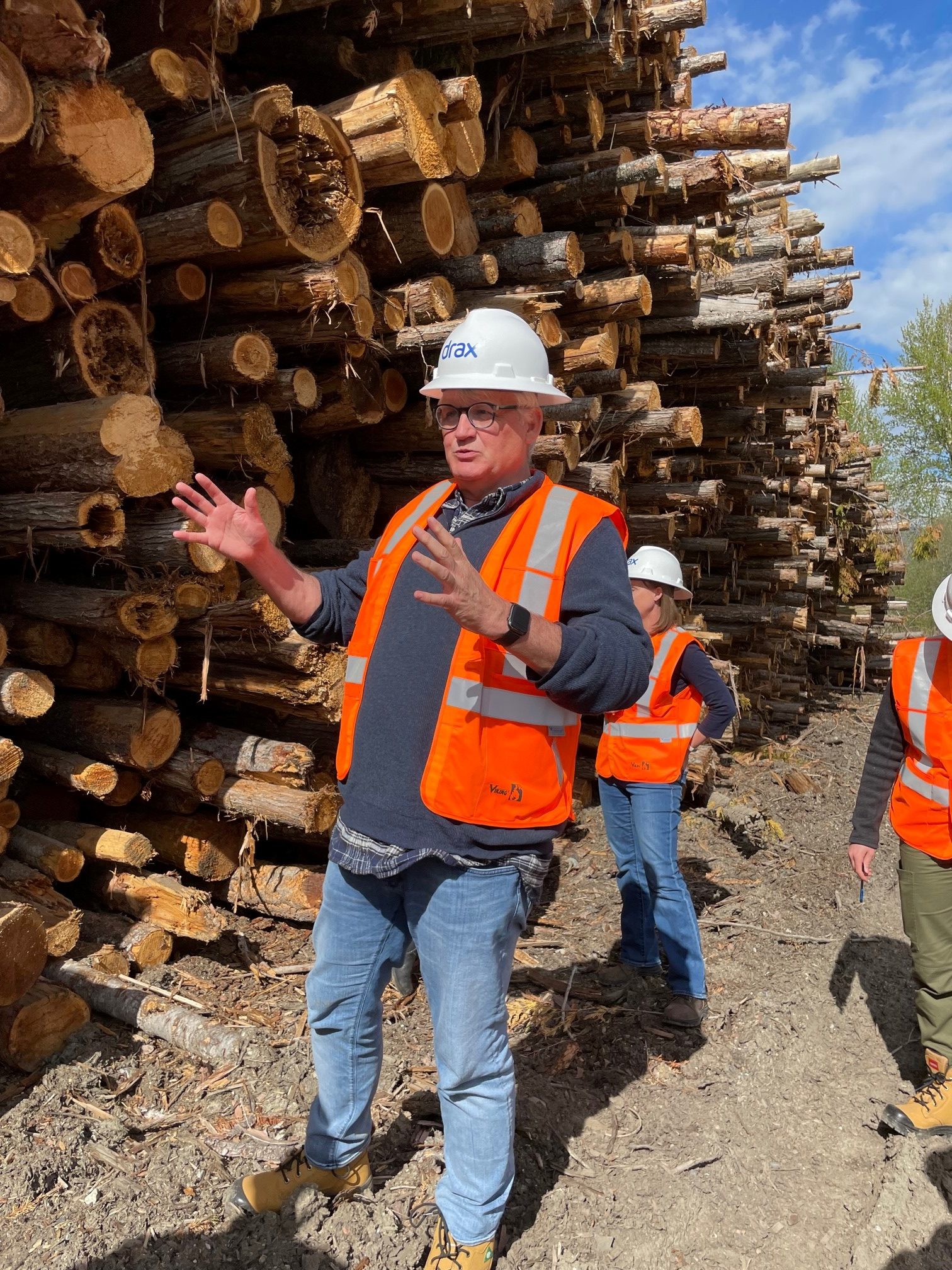
Alan Knight at the log yard for Lavington Pellet Mill in British Columbia

As I look toward the future, it’s clear to me that our business and our industry at large could improve on how we communicate what we do in order to better demonstrate how the biomass we source delivers positive outcomes for the climate, for nature and for the communities in which we operate.

As a leader in biomass our business is aligned to this commitment through the evidence-based approach and robust standards which govern our sourcing and operations and the science from leading global organisations like the Intergovernmental Panel on Climate Change (IPCC) and International Energy Agency (IEA) which underpins our methodology. We have robust standards in place to align our biomass sourcing to the strict sustainability requirements of the UK, US, and Canadian governments, as well as those of the EU.

We work with our stakeholders, partners, and colleagues to champion this as best practice, not only throughout our operations and supply chain, but across the wider industry. An example of this is our work with the Glasgow Declaration on Sustainable Bioenergy, a joint effort by a group of businesses and organisations in the sector that have come together to further sustainability standards in the industry.

A core element of this is ensuring that we are transparent and that we are communicating clearly about what we do, why we do it and how it contributes to enabling a zero carbon, lower cost energy future. The science we rely on is complicated, nuanced and continues to evolve. We take our responsibility to track its evolution and represent it very seriously.

Drax Power Station is one of Europe’s largest single site decarbonisation projects. As a result, since 2012, Drax has reduced its generation scope 1 and 2 emissions by ~99%, an achievement that brings pride to our business. It is important to clearly explain what this means, primarily by distinguishing between the carbon emitted from the burning of fossil fuels for power generation (i.e. fossil emissions, which fall under scope 1 and 2) and that produced from biomass power generation (i.e. biogenic emissions, which do not fall under scope 1 and 2 and which are therefore reported on separately). Fossil fuels introduce new carbon emissions into the atmosphere and drastically reduce the planet’s ability to tackle climate change. However, emissions from the combustion of sustainable biomass stay within the biogenic carbon cycle, which involves the continuous exchange of carbon between the biosphere and atmosphere and therefore ensuring carbon levels remain in balance.

The principles of the biogenic carbon cycle have been set out by the IPCC and relevant EU and UK regulatory requirements suggest that when sourced under strict conditions and overseen by robust governance, carbon outputs from biomass should be treated as zero. These principles, however, are complex and multi-faceted, so we will continue to develop our explanation of them and thereby add to our stakeholders’ understanding.

As a business, we are required to meet strict regulatory and legal requirements. Biomass is more heavily regulated than other timber using sectors, which affects how we report on our supply chain emissions. We meet all reporting requirements placed on us as a biomass user and we aim to be transparent in our reporting. Drax annually publishes independently audited reports which cover our scope 1 and 2 supply chain emissions and separate biogenic emissions directly linked to our operations and stack emissions. And we are always looking to go further. We already voluntarily report our stack emissions and as of this year we have also committed to specifying biogenic CO2 emitted during pellet manufacturing from our overarching biogenic emissions figure and to voluntarily report on this as well.

We source our biomass from sawmill residues, harvesting residues, and fibre which has little other use or market value. We also use low-grade roundwood that is not suitable for sawmilling or cannot access higher-value markets and this often includes pulpwood and, for example, the by-product of thinning operations.

These types of fibre are regularly referred to as “whole trees”. This phrase implies that biomass is produced from the harvesting of sawlog grade trees and whole forests, which is unhelpful. We aim to be precise when describing our sources of biomass and we hope that others in the industry will do the same in order that there is a better understanding of biomass across the board.

Learn more about wood grading.

As I have travelled around our sourcing operations, I have witnessed the deep and committed role Drax plays in the forestry industries in which it operates, providing a market for the otherwise unmarketable fibre, and supporting communities through the creation of thousands of jobs across our supply chain.

But I also know we, as a leader in our industry, must continue to enhance how we engage, listen to, and inform our stakeholders on our work and our role within the UK’s energy transition. Without creating a foundation of mutual understanding and collaboration it will be difficult to foster productive relationships and make progress toward our shared goals. We have always been willing to engage with our stakeholders and we often take them to the regions from where we source fibre, our operations and our power station in Yorkshire.

In addition, we are leading players in the Sustainable Biomass Program (SBP) and are proactive in discussions relating to the development of standards for carbon removals. Recently, we also engaged Forum for the Future who worked with many stakeholders to identify how bioenergy with carbon capture and storage (BECCS) can be done well. We are actively considering the findings of this work.

I am, like all my colleagues at Drax, committed to delivering on this crucial work and clearly demonstrating the positive contribution that biomass can make to the climate, for nature and for people around the world and my ask of stakeholders is that they embrace the opportunities that this business works hard to make a reality and work closely with us to optimise those contributions.