







This article was originally published by Fera.
Long-term monitoring has shown that Arctic charr populations are under increasing pressure in several UK lakes but understanding exactly why remains a scientific challenge.
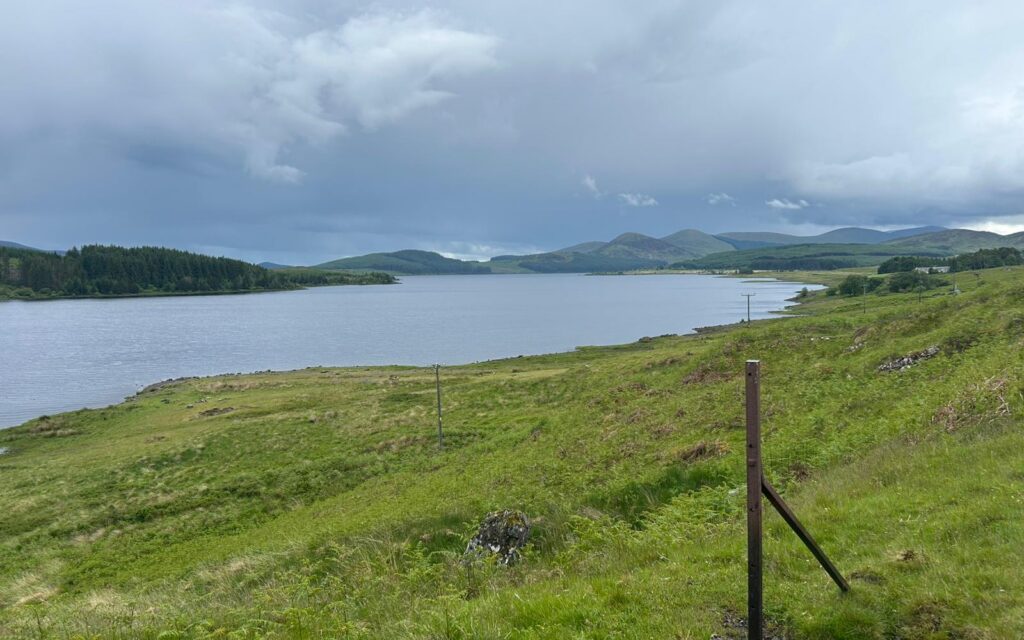
At Loch Doon in south-west Scotland, researchers are bringing together scientific evidence, environmental data and stakeholder expertise to better understand the factors influencing one vulnerable population.
Rather than seeking to confirm a single cause, the project aims to build a shared, evidence-based understanding of the multiple pressures that may be affecting the population before drawing conclusions.
This reflects a wider challenge facing freshwater conservation: understanding how environmental pressures interact before effective management decisions can be made.
But what makes Arctic charr so important, and why are scientists paying such close attention to its decline?
What is Arctic charr?
Arctic charr (Salvelinus alpinus) is a cold-water fish belonging to the salmon family. Having colonised Britain’s lakes following the last Ice Age around 10,000 years ago, it is often described as an Ice Age relic.
In the UK, Arctic charr is found primarily in deep, cold lakes and lochs across Scotland, the Lake District and parts of North Wales. These populations exist close to the southern edge of the species’ natural range, making them particularly sensitive to environmental change.
Over recent decades, scientific studies have associated Arctic charr declines with a combination of pressures, including invasive fish species, habitat degradation, pollution and climate change. While these drivers are well recognised, their relative importance varies between locations, and there is still much to learn about the condition of individual populations and how different pressures interact at specific sites.
Because Arctic charr relies on clean, cold, oxygen-rich water, it is considered an important indicator of freshwater ecosystem health. Changes in its population can provide valuable insight into wider environmental pressures affecting lakes and rivers.
Why are Arctic charr declining?
One of the greatest challenges in understanding Arctic charr decline is that there is unlikely to be a single cause.
Instead, evidence from scientific research suggests populations are influenced by multiple environmental pressures that interact over time. The significance of each factor can vary between lakes, making site-specific evidence essential to understanding individual populations.
Research has identified several potential contributors to decline, including:
- Introduced fish species, including perch, which may alter food webs or increase pressure on young Arctic charr.
- Changes in lake and loch conditions, such as fluctuating water levels, rising water temperatures and changes in water chemistry, including pH.
- Catchment and land management, where changes in surrounding landscapes, such as commercial forestry or land use, can influence water quality, sediment movement and habitat condition.
- Long-term environmental change, including climate change, which may intensify many of these pressures over time.
While each of these factors has been linked to Arctic charr decline in the scientific literature, their relative influence differs between locations. Understanding how these pressures interact within individual catchments remains an important research priority.
Why does the decline matter?
The decline of Arctic charr has implications beyond the species itself.
As a sensitive cold-water fish, Arctic charr plays an important role within freshwater food webs and is widely recognised as an indicator of lake and loch ecosystem health. Declining populations may signal broader environmental changes affecting biodiversity, water quality and ecosystem resilience.
The species also forms an important part of the UK’s natural heritage. Many populations have remained isolated in individual lakes and lochs for thousands of years, developing characteristics unique to those environments. Protecting these populations helps conserve not only biodiversity but also an important part of Britain’s ecological history.
Understanding why Arctic charr populations are changing can therefore provide valuable evidence to support the long-term management and conservation of freshwater habitats.
Building the evidence at Loch Doon
Long-term monitoring has shown that the Arctic charr population in Loch Doon is under increasing pressure, but the reasons remain uncertain.
To help improve understanding, Drax has commissioned Fera, working alongside Arup, to develop a shared, evidence-based understanding of the factors that may be influencing the population.
Rather than investigating a single cause, the project brings together published scientific research with environmental data provided by organisations including NatureScot, the Scottish Environment Protection Agency (SEPA) and Forestry and Land Scotland.
No single organisation holds all of the information needed to understand complex ecological change. Scientific literature, long-term environmental monitoring, local datasets and stakeholder knowledge each provide different pieces of the picture. Bringing these sources together helps build a more robust evidence base and supports informed, transparent decision-making.
Working collaboratively with stakeholders, the project will develop a co-designed problem statement that:
- Summarises the current scientific evidence
- Explores the range of factors that may be affecting the population
- Identifies gaps in existing knowledge
- Recommends priorities for future investigation.
By combining scientific literature, local monitoring data and stakeholder expertise, the project aims to strengthen the evidence base available to support future environmental management.
Looking ahead
One of the key lessons from Arctic charr conservation is that complex environmental challenges rarely have simple solutions.
Before effective management decisions can be made, it is essential to understand how different environmental pressures interact, which factors have the greatest influence and where further research is needed.
Projects such as the work at Loch Doon demonstrate the value of bringing together scientific research, long-term monitoring and local expertise to build that understanding.
The project will provide a stronger evidence base to help stakeholders prioritise future monitoring, identify areas where further research is needed and support informed decisions about potential management or conservation actions.
By improving understanding of the factors affecting Arctic charr, the work will also contribute to the long-term stewardship of the wider freshwater ecosystems on which the species depends.