







- Battery projects becoming increasingly important in balancing Britain’s electricity system
- Growing demand from AI and electrification is increasing the need for flexible energy infrastructure
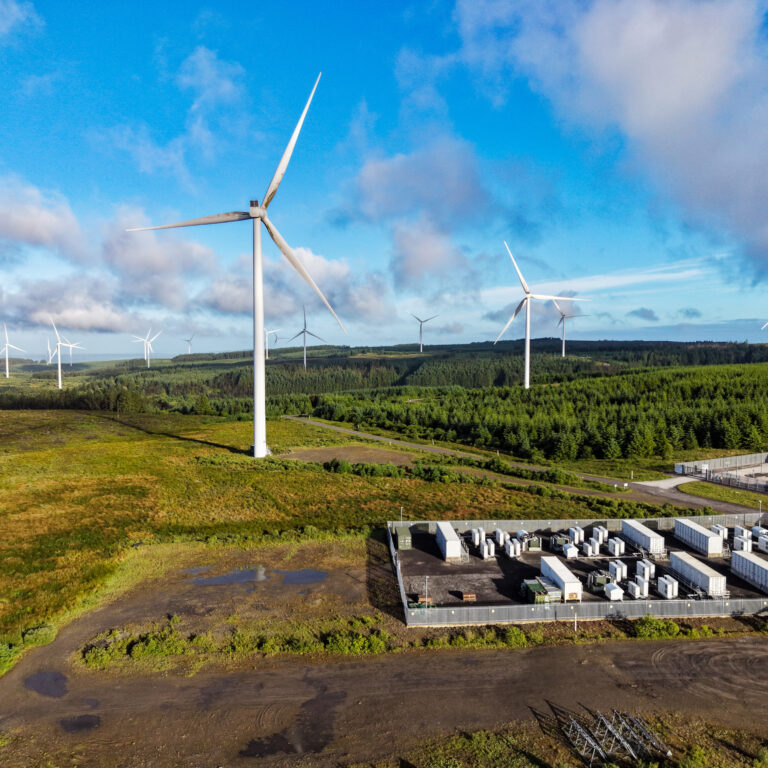
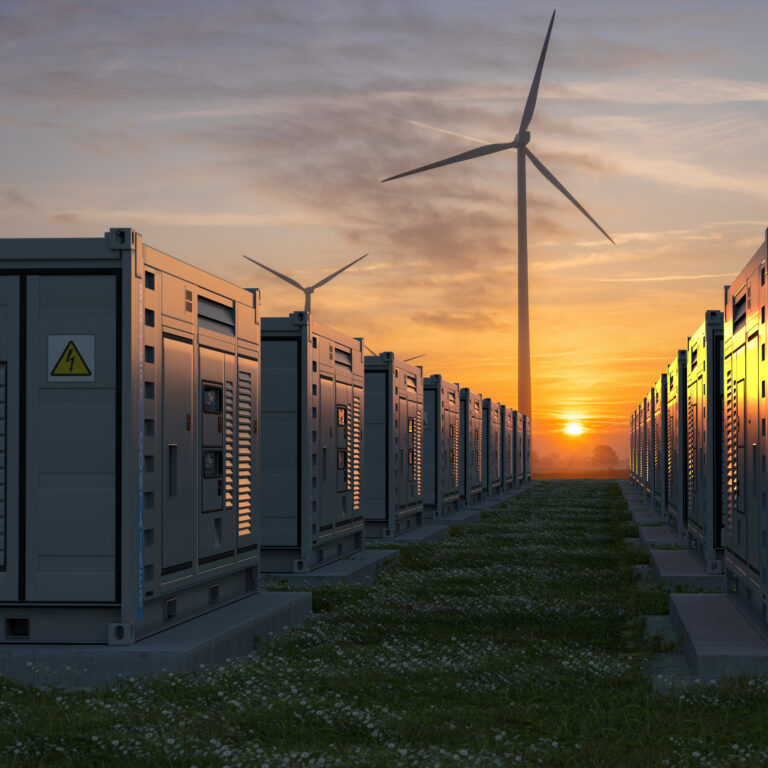
Battery storage has reached a major milestone in Britain’s energy transition, with installed battery energy storage system (BESS) capacity surpassing the country’s nuclear generating capacity for the first time, according to the latest analysis from Drax Electric Insights.
The report, produced independently by academics from Imperial College London and commissioned by Drax, highlights the growing role battery storage is playing in supporting Britain’s electricity system as demand for flexible power continues to grow.
Installed battery capacity has risen from just 10 MW to nearly 7 GW in under a decade, now exceeding the combined capacity of Britain’s nuclear reactor fleet.
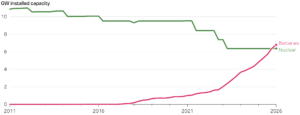
Britain’s Nuclear and Battery Storage capacity since 2011 (GW)
While batteries and nuclear power serve different roles within the energy system, the milestone underlines the rapid pace of investment in storage technologies. Batteries are increasingly helping to balance supply and demand, absorb electricity when it is abundant and release it when it is needed most.
Dr Iain Staffell, lead author of the report and Associate Professor in Sustainable Energy at Imperial College London, said:
“Battery storage has become one of the fastest-growing parts of Britain’s electricity system. The fact that installed battery capacity has now surpassed nuclear generating capacity demonstrates just how rapidly storage technologies are scaling.
“As the power system evolves, batteries are playing an increasingly important role in maintaining reliability, managing network constraints and supporting a more flexible electricity grid. They are already changing how the system operates on a day-to-day basis.”
Analysis also points to rising electricity demand from AI data centres and wider electrification across the economy, increasing the need for technologies that can provide flexibility and support grid stability.
The report highlights how battery projects can respond to changes in system conditions within seconds, helping grid operators manage fluctuations, reduce network constraints and support the UK’s energy security.
Ian Kinnaird, FlexGen Assets Director at Drax said:
“Battery storage is moving from a supporting technology to a critical part of Britain’s energy infrastructure. While nuclear power continues to provide an important source of baseload generation, batteries are becoming indispensable in helping the electricity system operate efficiently and reliably.
“The rapid growth of battery storage reflects the increasing value of flexibility across the power system. As electricity demand grows, batteries will play an ever-greater role in supporting economic growth, enabling new technologies and strengthening Britain’s energy resilience, alongside other forms flexible generation.”
For more information and to access the report, visit Drax Electric Insights.
ENDS
Media contacts:
Kieran Wilson
E: [email protected]
T: 07729092807
About Drax
Drax’s purpose is to enable a zero carbon, lower cost energy future. Our strategic aims are to be a UK leader in flexible, renewable generation and a global leader in sustainable biomass pellet production.
Our operations
Drax owns and operates a portfolio of flexible, low-carbon and renewable UK power assets – biomass, hydro, pumped storage and OCGT generation – which provide dispatchable power and system support services to the electricity grid.
We are the UK’s largest source of renewable power by output, and Drax Power Station is the UK’s largest single source of renewable electricity by output.
Through our pellet production facilities in North America, Drax is a leading integrated producer of sustainable biomass.
Drax supplies renewable electricity to UK industrial and commercial customers, offering a range of energy-related services including energy optimisation, as well as electric vehicle strategy and management.