









UK electricity demand is changing after years of stability
Drax’s Electric Insights recently published its quarterly report into the state of the electricity market. Amongst the plethora of useful information one metric stood out: electricity demand in the UK is starting to surge.
The report stated that demand in Q4 of last year reached 72.3 TWh over the quarter, up nearly 4% year-on-year. That might not sound much but, Covid rebound aside, that increase represents the fastest uptick in electricity demand since 2011.
From the mid-2000s until the early 2020s, GB’s total electricity demand fell steadily driven by gains in energy efficiency, deindustrialisation and an increase in behind the meter generation like rooftop solar, but it appears that trend is coming to an end.
The electrification of the UK’s economy has long been predicted and the reasons are of no surprise. Electric vehicles reached roughly 27% of new car registrations in 2025 and as the EV fleet grows, charging adds steadily to residential and overall electricity consumption.
Heat pumps too are scaling up – although still a small proportion of heating overall – the trend towards the electrification of heating is continuing and beginning to influence winter power demand profiles.
Finally, whilst some energy-intensive industry demand has grown, partly due to policy support and investment, the rapid increase in new data centres, particularly those serving AI and cloud computing, are emerging as rapidly growing demand centres, adding material loads on the grid.
Data Centres are likely to have a profound effect on the UK grid
Whilst demand for EVs and heat pumps are set to grow, it’s likely the demand for compute capacity will put the most pressure on the grid.
Such is the anticipated change that data centres are arguably no longer just customers of the grid, their scale means they are system actors. They can influence investment signals, dispatch patterns and ultimately the carbon intensity of the electricity system. That means we need to plan for them as part of the system, not bolt them on afterwards.
The processes that underpin new grid connections to meet demand were not designed for growth at the pace or scale that AI is moving. We are already seeing this emerge with:
- long lead times for new grid capacity
- constraints around transmission and distribution access
- rising connection costs
This is important to UK growth, productivity and global competitiveness
The Government identifies AI as a key driver of future productivity growth across the economy: while the UK AI sector currently contributes around £12 billion in GVA, government-cited modelling suggests that widespread AI adoption could raise productivity, adding tens of billions of pounds a year to economic output. Delivering this growth is contingent on access to domestic compute capacity, with the UK Compute Roadmap indicating a need for a substantial expansion in AI-capable data centre capacity by 2030.
On the face of it, the ongoing electrification of our economy and slow adaptation of the grid appears to be a real stumbling block to meeting our AI ambition. But there are options that could see us simply adapt existing infrastructure and re-use what we already have in a more efficient way.
Existing energy infrastructure is a strategic advantage
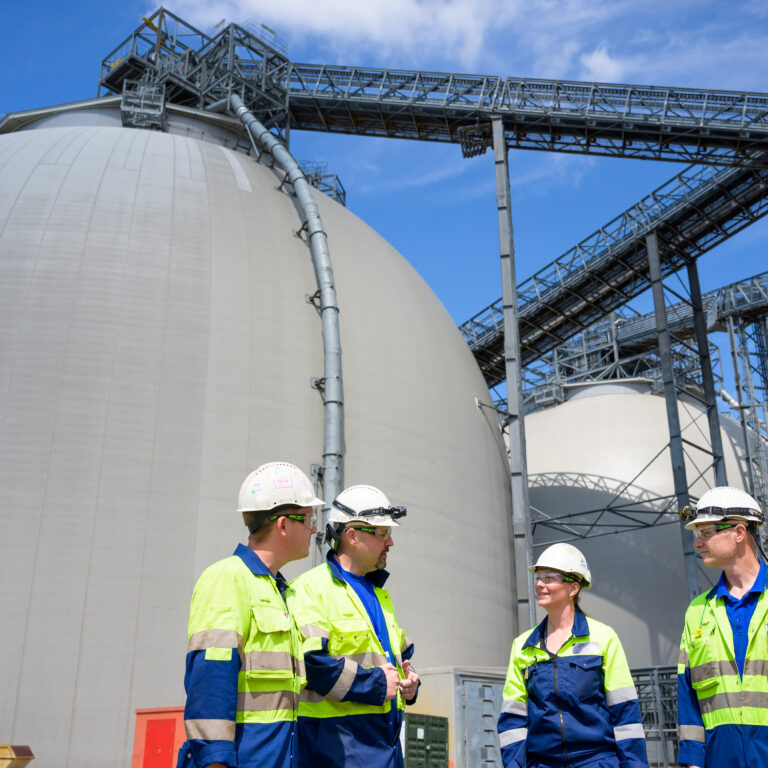
One of the UK’s greatest, and most under-used asset is the infrastructure we already have. Sites like Drax Power Station were built to handle very large amounts of power safely and reliably. They already have:
- substantial grid connections;
- transformers and electrical infrastructure sized for industrial-scale operations;
- established sites with an energy and industrial planning context; and
- experienced workforces and supply chains.
Repurposing and reusing this infrastructure is the fastest and most credible way to support large new electricity demand without waiting years for the system to catch up.
Re-use and re-purposing will keep the UK in the race for AI
At the end of last year, we unveiled proposals to submit a planning application for an initial <100MW data-centre development at Drax Power Station – an important step towards boosting AI capacity at the site. The project looks to re-use existing infrastructure and capacity, creating a practical and expedient way of meeting demand without waiting a decade for network reinforcement.
Not only that, but it could help pave the way for a >1GW data centre facility on the site before the end of the decade.
The Government is responding but more pace is needed
In December, the UK Government published the terms of reference for a review of AI deployment in the electricity networks. It is good to see that as part of that the Government will attempt to grapple with regulatory constraints and begin to consider AI deployment at a spatial level.
This is an acknowledgement that we need to challenge convention and think differently about this issue, unpick regulations that were devised for a different time and rethink how we maximise efficiency from existing assets. Time is of the essence; left unchecked we’ll likely end up falling behind in the global AI race and be left with an energy system with baked in inefficiencies.
The AI revolution is an energy story
It’s becoming increasingly clear that we’re now at the end of a decades long trend of decline and stability in electricity demand and arguably our systems are not ready to cope. The countries that succeed will not be those that build the most servers the fastest, but those that integrate compute into their power systems.
The UK already has much of the infrastructure it needs. The challenge now is to use it differently. At Drax Power Station, we are focused on how an existing site – which has kept the lights on around the UK for 50 years – can evolve to meet new demands supporting long term economic growth and prosperity for the UK.