






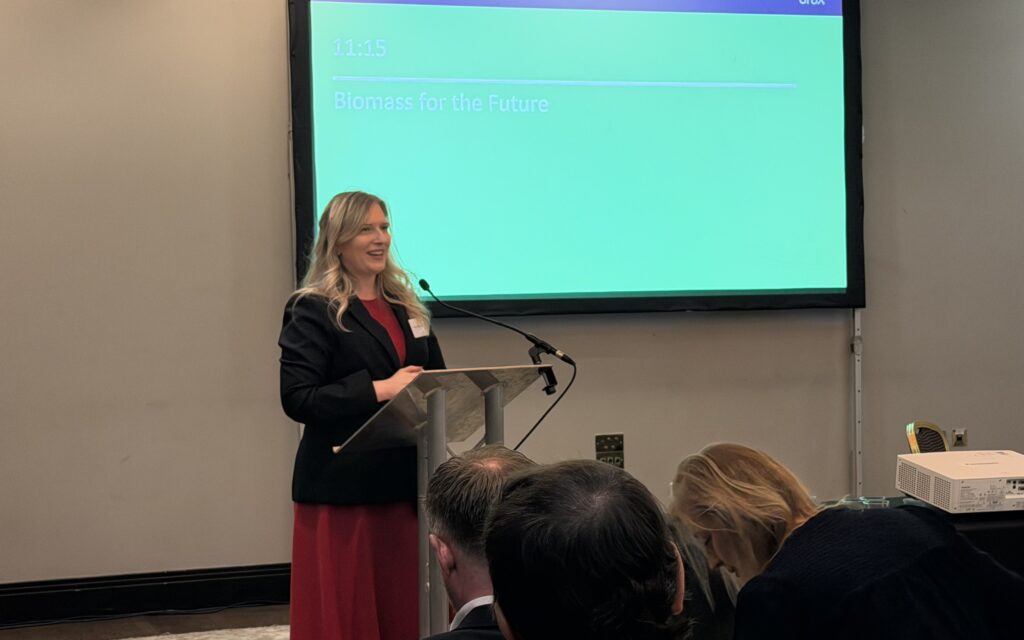

As Senior Scientist at Drax, it’s my job to bring the latest science into our business. My team and I are the “science bit”.
We take the latest scientific thinking on everything from sustainable biomass sourcing to electricity grid resilience and make sure it shapes how we think and operate as a business.
Science, by its nature, is dynamic and keeping a business at the leading edge is a full-time endeavour, requiring collaboration with the science and academic community, as well as Government and regulators.
This month we held our inaugural science summit, Positively Net Zero, which brought together these groups to assess the underpinning science and future science needed to deliver positive outcomes for people, climate, and nature in Yorkshire, the Humber and beyond.

Richard Gwilliam, our Future of DPS Director, speaking on a panel “Powering Net Zero Energy Transition, Industrial Clusters and a Just Transition in the North of England”
Here are my personal, 4 key takeaways from the event.
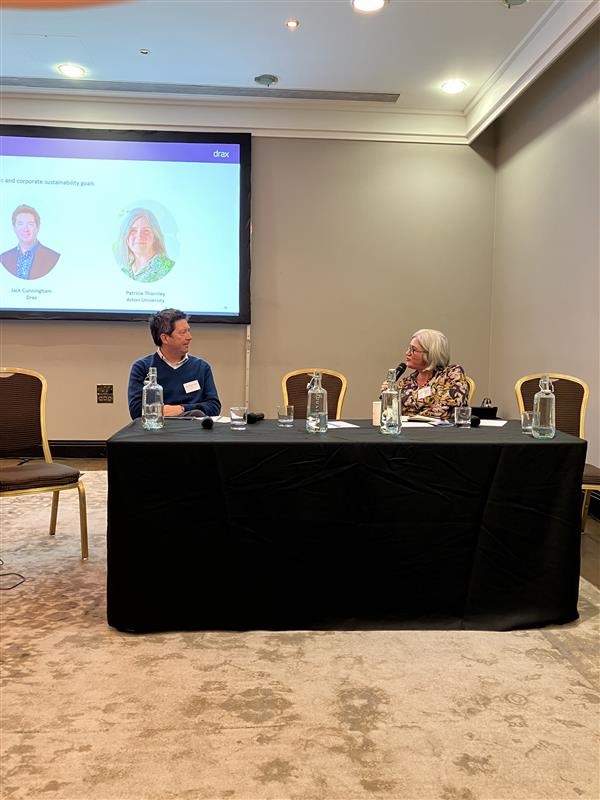
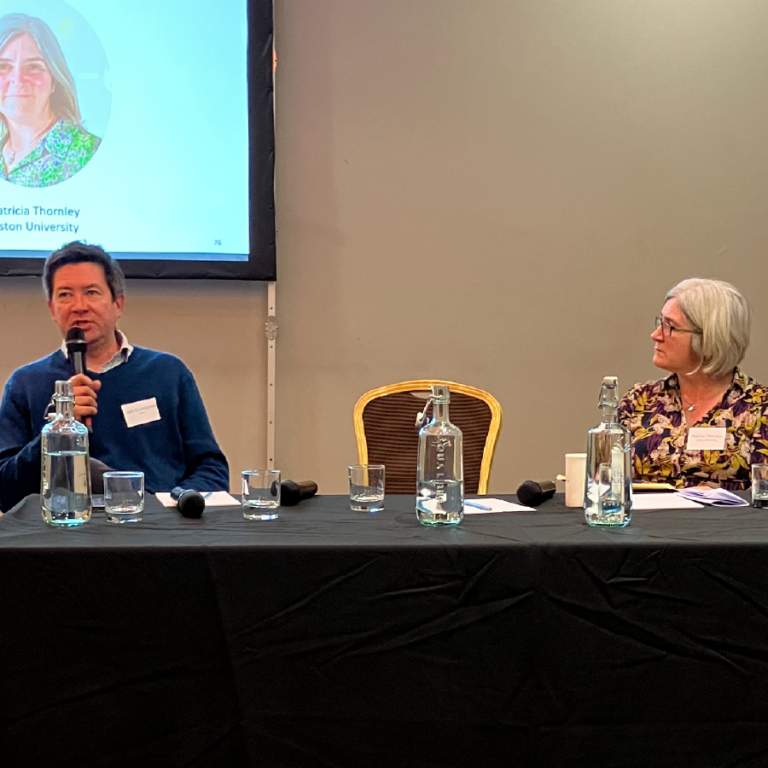
Jack Cunningham, our Group Sustainability Director, in conversation with Patricia Thornley of Aston University, during a fireside chat
- Science, industry, and government must align to achieve our climate and environment goals. It’s an obvious one, but critical if we’re going to meet our climate goals at lowest cost while also hitting other goals like nature restoration and economic growth. For example, we heard at the event how scientists and corporates have developed to innovative bio-based packaging to reduce plastic waste. But misalignment with existing infrastructure means the UK’s waste sector isn’t ready to handle it and it’s ending up in landfill or incinerators. A huge, missed opportunity.
- Decarbonising industrial clusters, like the Humber, will be a catalyst for social, economic and environmental change. Decarbonising industrial clusters like the Humber is achievable with existing technology, will make a material difference in the UK’s carbon emissions, and helps deliver a just transition for people and communities. But achieving decarbonisation requires a supportive policy environment to ensure that individual companies aren’t carrying all the risk and that communities can capture the economic benefit through localised value chains and secure employment.
- The right policy frameworks unlock private investment. The UK’s consultation on a common biomass sustainability framework was highlighted as a particularly welcome example of policy enabling industrial investment. Bioenergy is a key part of the UK’s low carbon energy mix and will play an increasingly important role in supporting the expansion of intermittent renewables. Clear, evidence-based guidance, informed by academic research, on how bioenergy operators should source sustainable biomass gives the industry the certainty they need to secure, grow, and innovate their supply chains.
- Corporates can meaningfully contribute to the recovery of nature. The discussion on nature has rightly shifted from do no harm to actively promoting biodiversity and nature gains. Leading regulation from the UK on biodiversity net gain is creating the investment required to fund land restoration and encouraging developers to make space for nature. All enabled by the rapid scientific development of sophisticated data packages and models and the distilling of that data into easy-to-use platforms for corporates and citizen scientists. A perfect example of the positive outcomes achievable when science, policy, and industry align.
Creating a forum for dissemination was the ambitious aim of our summit and judging from the lively discussions amongst panellists and during breaks, we more than achieved our aim. And we left the day with the recognition that it’s up to us to work together to deliver the promise held by the Humber and surrounding industrial clusters to deliver a just, nature positive, net zero future.
Featured image caption: Alicia Newton, Senior Scientific Officer at Drax, speaking during the event