


Tag: electricity generation

Why you shouldn’t be surprised by another record-breaking quarter for renewable energy

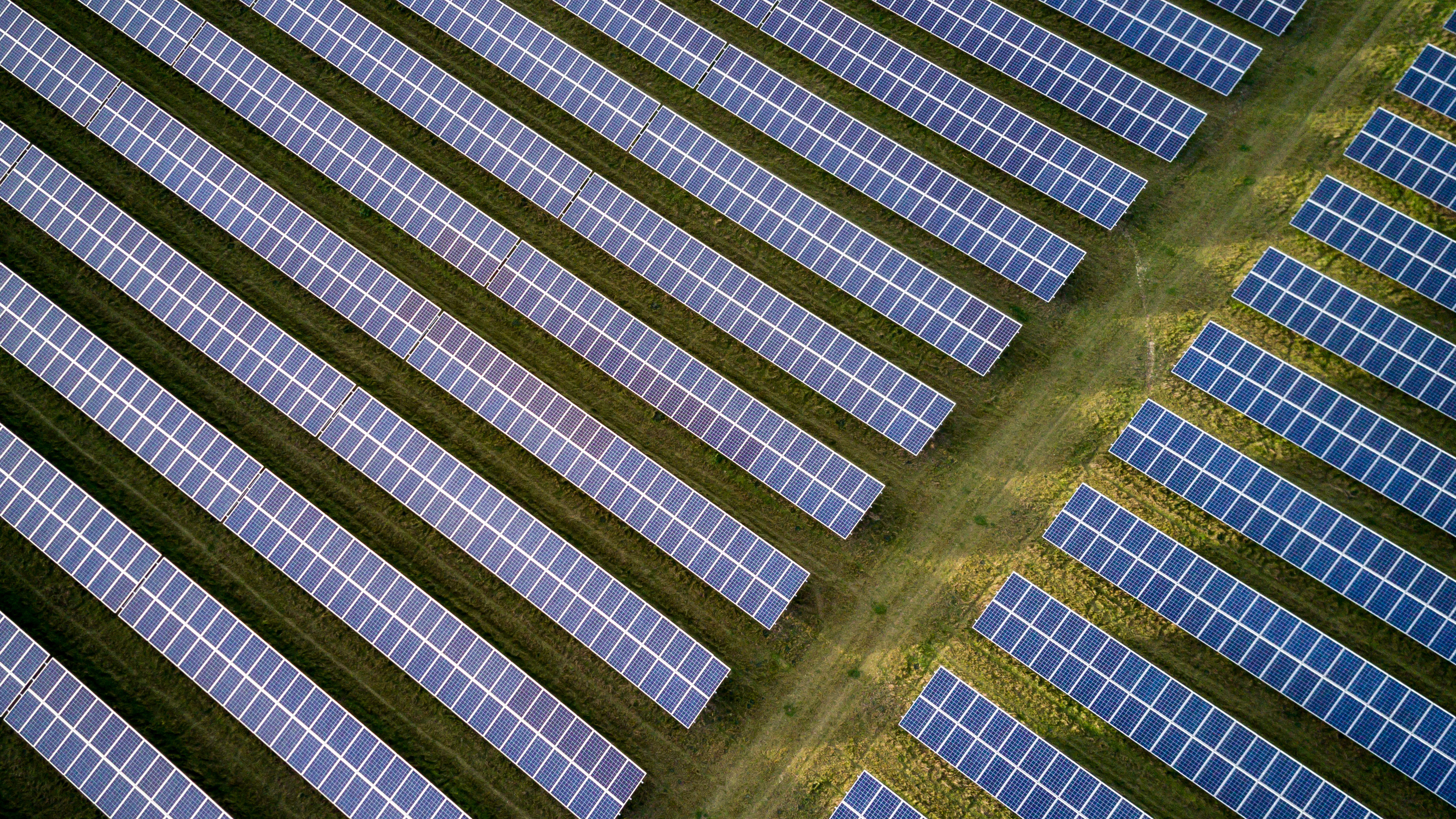
Field of solar panels shot from above

It’s been another record-breaking quarter for Britain’s power system. During the first three months of 2017, biomass, wind and hydro all registered their highest energy production ever, while solar recorded its highest ever peak output.

And while this is all worth celebrating, it shouldn’t come as a surprise – the last few years have seen Britain’s power system take several significant steps toward decarbonisation and this year is no different. Electric Insights, the quarterly report on Britain’s power system by Dr Iain Staffell from Imperial College London, commissioned by Drax via Imperial Consultants, documents the new gains and confirms the trend: renewables are fast becoming the new norm and in 2017 they continued their growth.

Biomass domes at Drax Power Station

The renewable record breakers

Over this quarter biomass electricity generation hit a record production figure of 4.4 TWh, which means that biomass generators ran at 95% of full capacity – higher than any other technology has achieved over the last decade.

Hydro went 4% better than its previous energy production best by generating 1.6 TWh, while Britain’s wind farms produced 11.3 TWh (10% higher than the previous record, set in 2015). This was helped in part by several new farms being built which increased installed capacity by 5% over last year, but it was also indebted to the mild, windy weather.

Wind farms produced more electricity than coal, 57 days out of 90 during the first three months of 2017

Solar hit a new record peak output at the end of March, when it generated 7.67 GW – enough to power a fifth of the country. In fact, during the last weekend of March, for the first time ever, the country’s demand for electricity from the national grid was lower during an afternoon than during the night. This was because solar panels, which only generate power when the sun is up, tend to sit outside of the national high voltage transmission grid.

Understanding how this happened is to understand how solar energy is changing our national power system.

A reverse of the trend

Electricity demand on the national grid – think of it as the power system’s motorways – is typically higher during the day and early evening (when people are most active, using lights and gadgets) than overnight. However, on the last weekend in March 2017, the opposite was true because of how much solar energy was generated.

Solar panels and some smaller onshore windfarms are ‘invisible’ – they don’t feed into the national grid. Instead, these sources either feed into the regional electricity distribution networks – the power system’s A and B roads – or, as many of them are on people’s roofs and used in their own homes or business premises, it never gets down their driveway. This can mean when solar panels are generating a lot of electricity, there is a lower demand for power from the grid, making it appear that less of the country is using electricity than it actually is.

This was the case during the last weekend of March, when solar generated enough power to satisfy a large part of Britain’s demand. And while this is another positive step towards a lower carbon energy mix, it is about to change the way our power system works, particularly when it comes to the remaining coal power stations.

What the power system needs to provide, today and in the future, is flexibility – to ramp up and down to accommodate for the shifting demand based on supply of intermittent – weather dependent – renewables. Thermal power stations such as gas, coal and biomass can meet much of this demand, but even more rapid response from technologies such as the Open Cycle Gas Turbines that Drax is developing and batteries could fulfil these needs quicker.

Today’s dirty is yesterday’s clean

The record breaking and increased renewable generation of the period from January to March 2017 would mean nothing if it wasn’t matched by a decrease in emissions. During the first three months of 2017, emissions dropped 10% lower than the same period in 2016 and a massive 33% lower than 2015. Coal output alone fell 30% this quarter compared to Q1 2016.

To put the scale of this progress into context we need only look at the quarter’s ‘dirtiest hour’ – the hour in which carbon intensity from electricity generation is at its highest. Between January and March, it peaked on a calm and cold January evening with 424 grams of CO2 released per kWh (g/kWh). The average for generation between 2009 and 2013 was 471 g/kWh. In short, this quarter’s dirtiest hour was cleaner than the average figure just four years ago – yesterday’s average is today’s extremity.

If we want to continue to break records and further progress towards a fully decarbonised power system, this needs to be a consistent aim: making the averages of today tomorrow’s extremes.

Top line stats

Highest energy production ever

  • Wind – 11.3 TWh
  • Biomass – 4.4 TWh
  • Hydro – 1.6 TWh

Record peak output

  • Solar – 7.67 GW
  • Enough to power 1/5 of the country

Yesterday’s average is today’s extremity

  • Average carbon emissions per kWh – 2009-2013
    • 471 g/kWh
  • Average carbon emissions per kWh – Q1 2017
    • 284 g/kWh
  • Peak carbon emissions per kWh – 2009-2013
    • 704 g/kWh
  • Peak carbon emissions per kWh – Q1 2017
    • 424 g/kWh


Explore the data in detail by visiting ElectricInsights.co.uk

Commissioned by Drax, Electric Insights is produced independently by a team of academics from Imperial College London, led by Dr Iain Staffell and facilitated by the College’s consultancy company – Imperial Consultants.
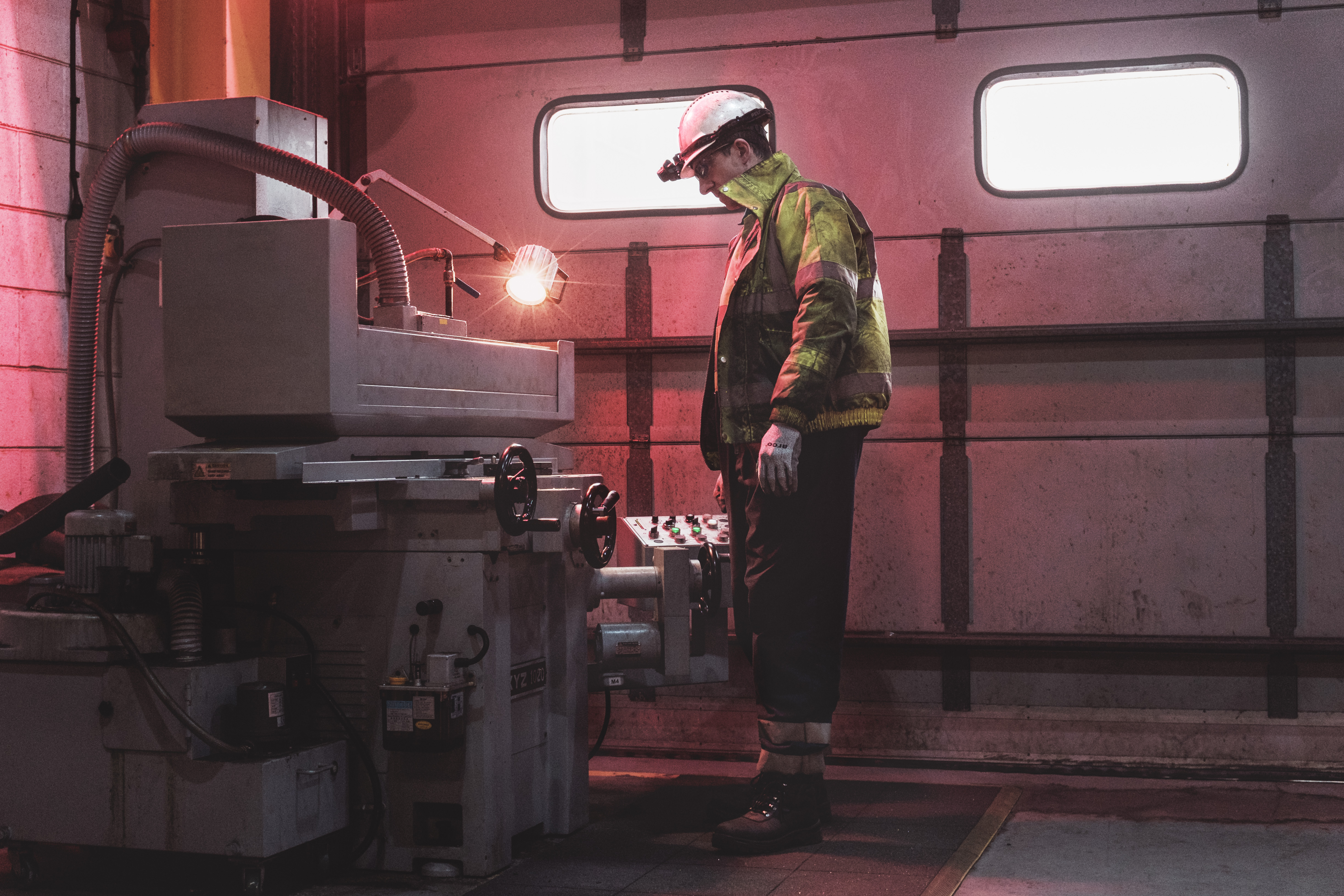
Inside the machine shop

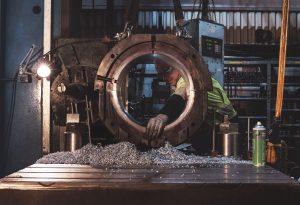
A klaxon sounds and a crane big enough to lift 160 tonnes moves slowly across the inside of a cavernous warehouse. Below, a team of engineers stand around a turbine spindle the size of a double decker bus but weighing four times as much at 65 tonnes, waiting for the crane’s descent.

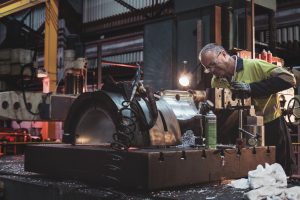
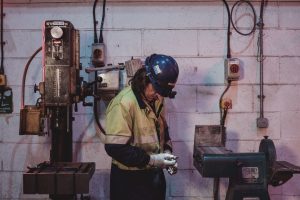
Around them, other engineers work on similar-sized equipment. One uses a wrench the size of an arm. Another programs a computerised lever to carefully strip millimetres from a piece of steel. It’s just a normal day inside Drax Power Station’s machine workshop.

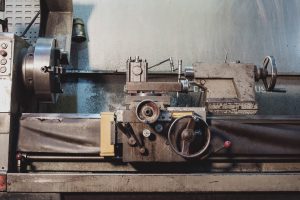
For the last 15 years, this workshop has been refurbishing, repairing and manufacturing tools and equipment for use at the power station – a fact that sets Drax apart from other stations like it.

“We’re envied by a few stations because we do most things in-house,” says Turbine Engineer and head of the workshop, Andrew Storr. “We’re leagues in front of everyone else in the UK because we’ve got our own manufacturing and machining facility. We can do all this work on site. We’re not relying on other people.”

Storr set up the workshop in 2001 after being asked to reverse engineer a replacement set of governor relays (components that help regulate the flow of steam going into the turbines) for one of Drax’s steam turbines. Today, it’s a thriving centre of activity filled with heavy-duty machinery and ingenious engineers.

A look inside the workshop

“When you’re manufacturing spares it’s not a matter of going down to our machine shop and just saying ‘make one of those’. You’ve got to have the correct grade of material, the correct size, the correct certification for the material – you can’t just have a scrappy piece of steel that you find. It’s got to have paperwork with it to say it’s certified up to whatever it’s supposed to be,” says Storr.

Turbine bearings need to be bored to size using a horizontal borer that very accurately shaves out the lining of the inner bearing. Getting it right is incredibly important, explains Storr: “If it’s made too large it causes the turbine shaft to vibrate. If it’s made too small the bearing becomes too hot and the white metal will melt and pour out the bearing. We need to avoid both of these issues at all cost.”

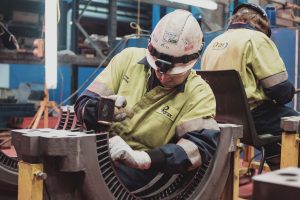
The inside of the turbine blading needs to have seal strips administered by hand as they’re delicately made to limit any damage to the spinning shaft should they touch each other. Despite the wealth of equipment at the disposal of the team in the shop, success depends on the skill of the engineers using it.

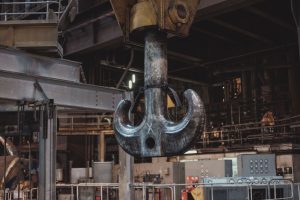
There are three 160-tonne cranes in the turbine hall, each installed before the turbines were built. This meant the construction companies who erected the turbines could lift all heavy components into place with ease. “Due to their size they move slowly. It takes approximately 20 minutes for the largest hook to travel from the ground all the way to the top,” says Storr.

“In mechanical engineering it’s sometimes necessary to fit one part inside another, and once these parts are assembled they must stay locked together and not come apart,” Storr says. One way the team does this is by shrinking some components, and for this they use liquid nitrogen.

The team places the component that needs to fit inside another into a bath of liquid nitrogen and shrink it at -190 degrees Celsius. Once shrunk, the team assembles the two, placing the now smaller component into the larger one. “Eventually the inner part warms up to ambient temperature and grows in size, making the fit very tight and preventing them from coming apart,” explains Storr.

In the past, Drax would send the work they now do in the machine shop to companies off site. And because all other power stations in the area would do the same thing, wait times would often be long and the quality of the output could vary.

“When we do it in-house I can keep my eye on it,” says Storr. “I can re-prioritise things depending on what is going to be needed back on the turbine first – we’ve got 100% control over it. We can make sure everything’s hunky-dory.”

North Yorkshire tops chart for renewable energy

A new survey from the Green Alliance and Regen SW shows that Selby in North Yorkshire produces the most renewable energy of any area in England and Wales. As you can see, Drax’s home tops the chart by a large margin.

That’s because between three and four per cent of the UK’s electricity is generated from sustainable biomass here at Drax power station.

We’ve already converted half the station to use compressed wood pellets. That half of Drax has reduced its carbon emissions by more than 80 per cent as a result.

But there’s so much more Drax could do to help the UK get more coal off the grid. And if the Green Alliance’s next data visualization pitted renewables against fossil fuels, a renewable-only Drax as our country’s biggest power station would give low carbon technologies an even bigger share than would be the case today.

Drax can not only generate more renewable power ourselves, but also help solar and wind power to cope with demand as some of the older coal, gas and nuclear plant retire over the coming years.

Moving towards a balanced mix of renewables including further biomass upgrades at Drax could save bill payers billions of pounds found research carried out by NERA and Imperial College London.

This was commissioned by Drax to establish the ‘true’ cost of the main forms of renewable energy – wind, solar and biomass.

The UK is already far below the European average when it comes to using wood for energy.

If the government made the right decision and levelled the playing field for biomass in the UK, Drax could help our country climb the table, meet our national climate change targets more quickly and contribute to saving bill payers billions of pounds. Upgrading from coal to wood pellets is also ensuring Drax Group – which employs more than 1,400 people – has a real future at the heart of the Northern Powerhouse.

However it’s not just for government to change the status quo – businesses have a role to play too. Many UK businesses have made firm commitments to limit and reduce their impact on the environment. For all, their use of energy is a critical area to consider and address. Some of the biggest electricity users such as Thames Water and Manchester Airport Group are increasingly demanding renewable electricity. Drax Group’s Haven Power is proud to offer the only 100% guaranteed renewable electricity product in the market to businesses big and small.

Perhaps that’s what the Green Alliance’s next index could investigate – which businesses have taken practical steps towards a renewable future.