





Transparency across our Biomass Supply Chain
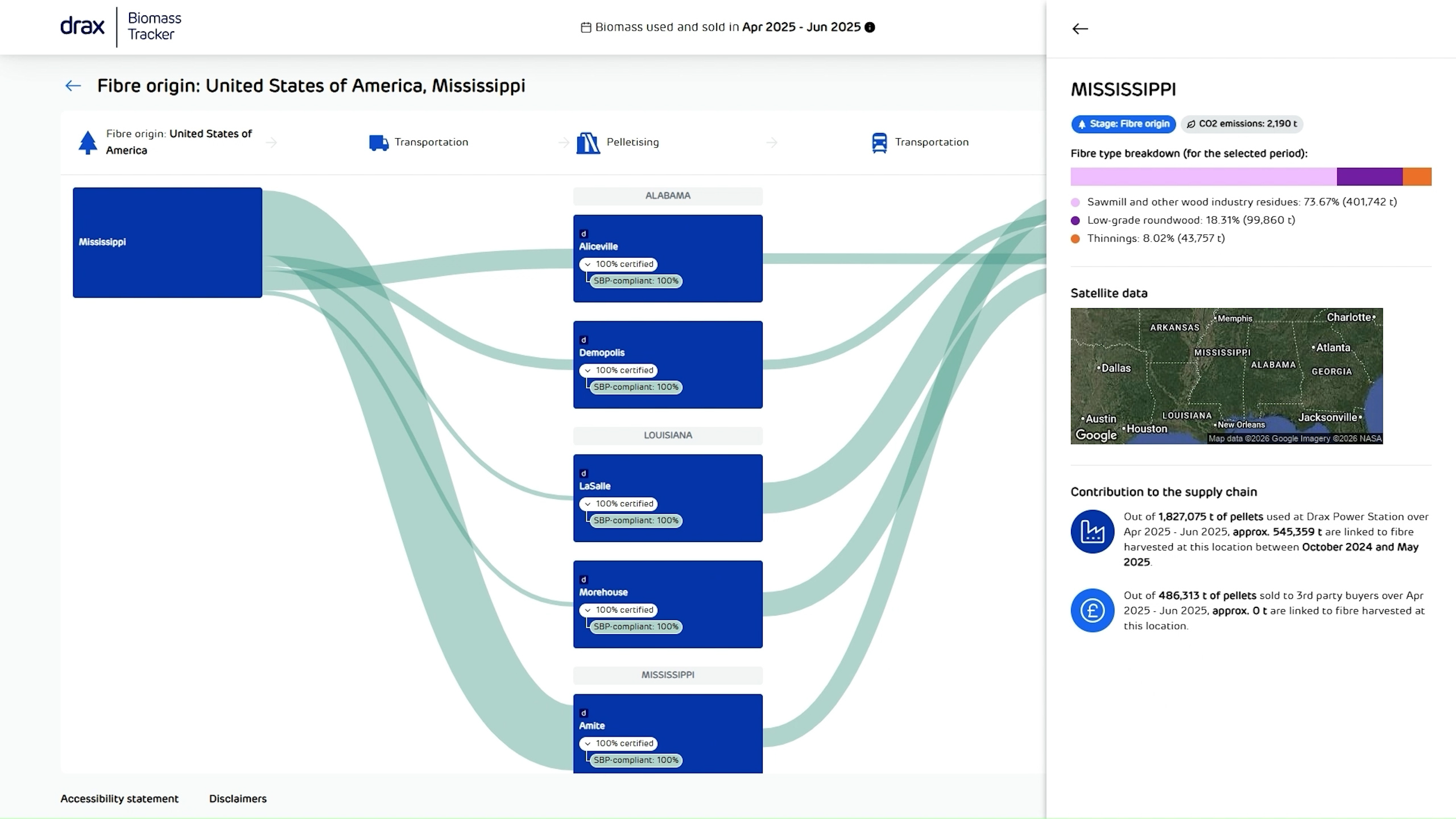
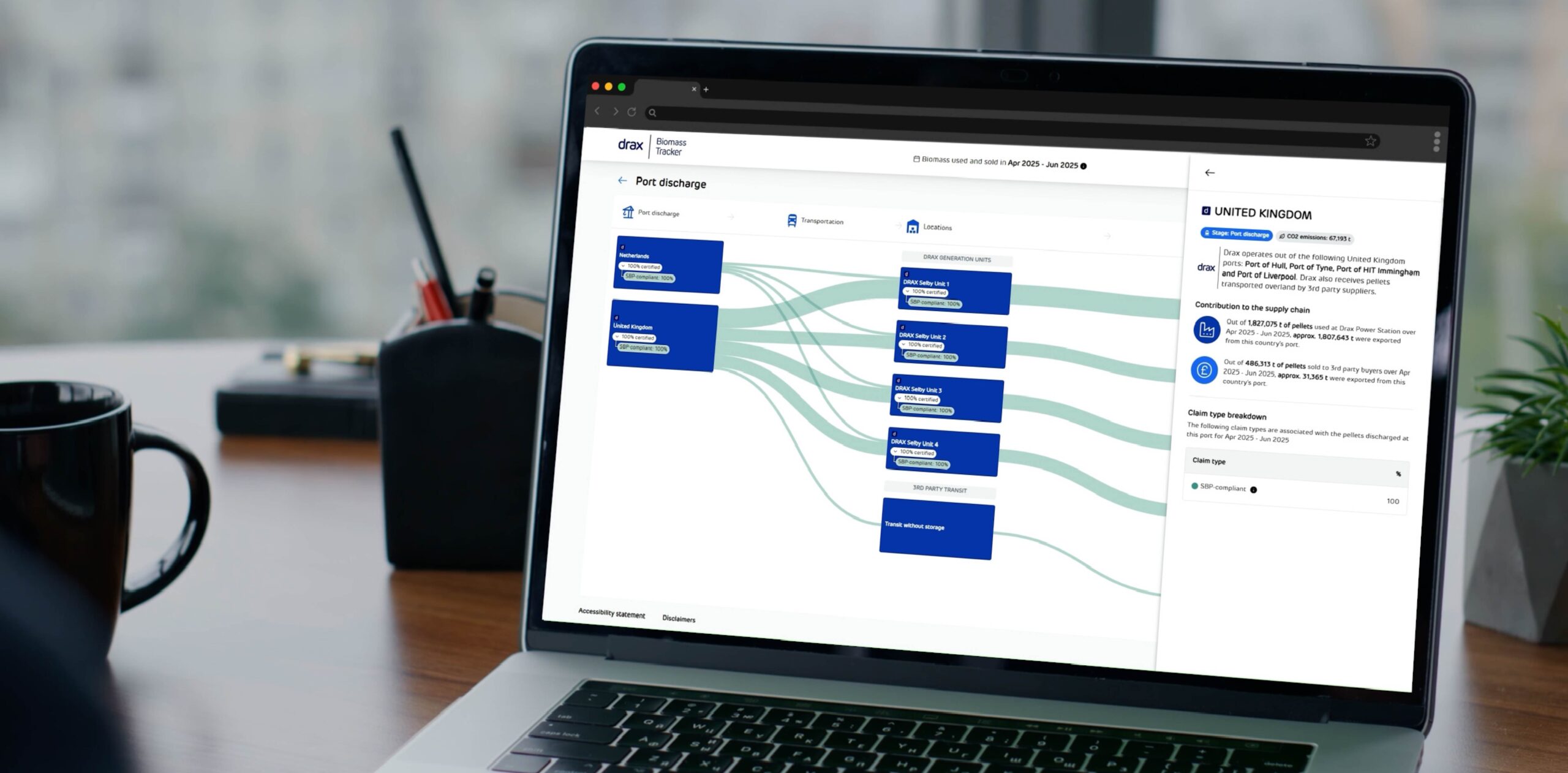
The Drax Biomass Tracker is a digital tool showing the journey our woody biomass takes through the supply chain, from fibre origin to its final use at Drax Power Station or by third-party customers.
About the tracker
The interactive tool shows where Drax sources its biomass, the types of fibre used, how it is transported, and the carbon associated with each stage of its journey to Drax Power Station or to third-party customers. It also includes data on independent sustainability certifications.
What the tracker shows
The Biomass Tracker uses quarterly real-world data to show:
- The countries and states we source from.
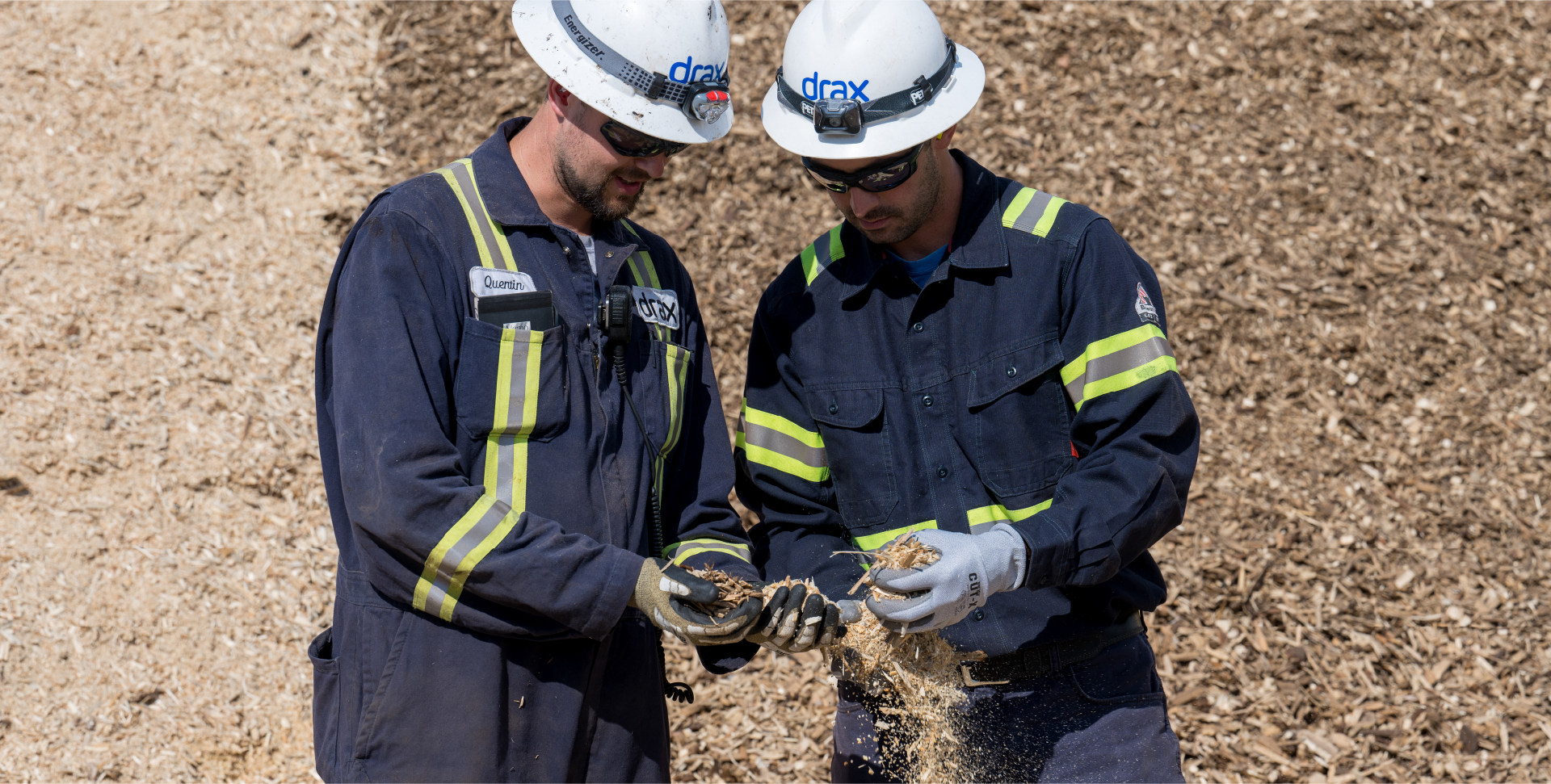
- The different types of fibre used in our woody biomass, including sawmill residues, wood that doesn’t meet timber quality standards, and more.
- How our woody biomass is transported, including the truck, train and shipping journeys, and the carbon accrued at each stage.
- Information about sustainability certification standards and accreditation.
We’re continuing to develop this tracker, including exploring options for where we can add further data and functionality over time. We hope to create an industry-leading approach to championing biomass transparency. This tracker is one step towards that goal.
Boosting transparency across our biomass supply chain
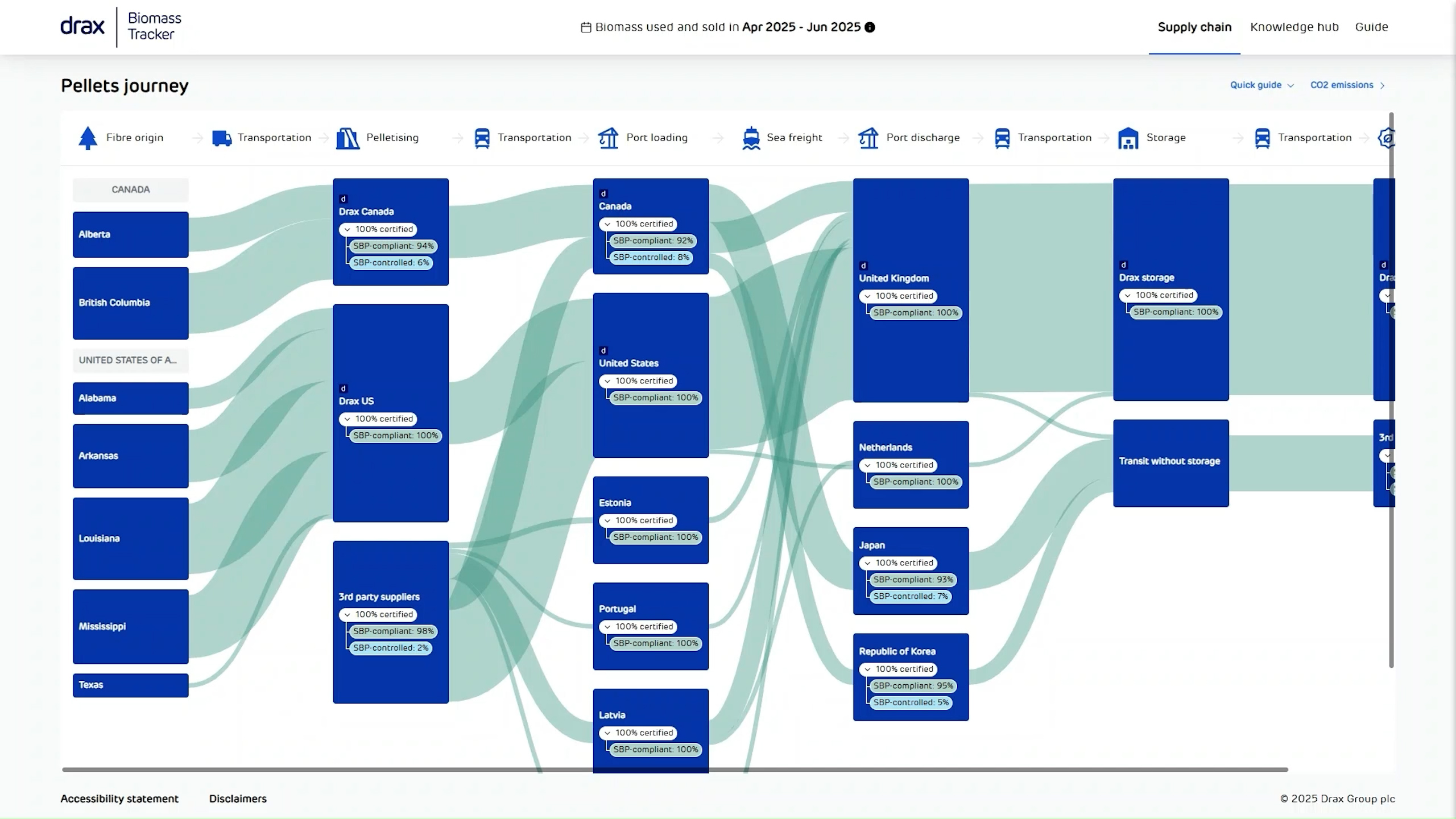
The Biomass Tracker supports the commitments set out in Drax’s Sustainability Framework, introduced in February 2025.
It advances the company’s focus on enhancing transparency, harnessing data and digital innovation to strengthen sustainability reporting, and demonstrating responsible sourcing across the biomass supply chain.
By visualising how and where biomass is produced, transported and used, the tool brings greater clarity to the complex systems that underpin sustainable renewable energy.
How to read the tracker?
The Biomass Tracker is a Sankey diagram, using data visualisation that shows how woody biomass moves through each stage of the supply chain.
The preselected quarterly time period shown at the top of the chart refers to when the biomass was either used at Drax Power Station or sold to third party buyers. The earlier stages in the supply chain, such as fibre sourcing, pelletising, and transportation, took place prior to this period.