





We aim to explain energy clearly, but some technical terms may need a little more detail. This glossary helps you understand the language used across renewable electricity, energy security, solar and wind, biomass, sustainability and the UK power system.
Battery Energy Storage System (BESS)
Battery energy storage systems (BESS) store electricity in rechargeable batteries and release it when it is needed.
They charge when renewable generation is abundant or demand is low, and can return power to the grid within seconds. As part of Drax’s energy storage portfolio, battery energy storage provides fast-response flexibility that helps balance supply and demand and support a more reliable electricity system.
Source: Drax (2026), Battery Energy Storage System (BESS)
Bioenergy With Carbon Capture and Storage (BECCS)
Bioenergy with Carbon Capture and Storage (BECCS) is the process of capturing and permanently storing carbon dioxide (CO2) that is generated during the production of electricity from sustainable biomass.
Instead of being released into the atmosphere, carbon is transported and stored in a secure, geological formation underground, producing what’s known as an engineered carbon dioxide removal.
Source: Drax (2026), Bioenergy with Carbon Capture and Storage (BECCS)
Biomass
Our woody biomass comes from a range of fibre types, including sawmill and other wood industry residues, low-grade roundwood, thinnings, branches and tops, salvage trees and non-woody biomass.
All the biomass we use is governed by our Biomass Sourcing Policy, which sets out our commitments to sustainable sourcing and delivering climate, nature and people positive outcomes across our supply chain.
Our commitments include sourcing biomass that does not lead to deforestation, degradation or conversion of forest resources, does not degrade ecosystems with high biodiversity value, delivers net lifecycle greenhouse gas emissions savings and supports local communities.
Source: Drax (2026), Responsibly Sourced Biomass
Biomass Supply Chain
The Biomass Supply Chain outlines the journey our woody biomass takes through the supply chain, from fibre origin to its final use at Drax Power Station or by third-party customers.
Drax will only source woody biomass from well-managed, sustainable forests including sawmill residues, low-grade roundwood and forest residues where these promote forest health or reduce the risk of fire or disease. Drax will also utilise alternative feedstocks such as agricultural residues or energy crops where these can support the circular economy and provide benefits for the climate, ecosystem, and communities.
Source: Drax (2026), Biomass Tracker; Drax (2026), Biomass sourcing policy
Carbon Dioxide Removal (CDR)
The IPCC’s (Intergovernmental Panel on Climate Change) definition of Carbon Dioxide Removal (CDR) includes capture and storage as well as the anthropogenic enhancement of natural biological and geochemical sinks.
Carbon Dioxide Removal (CDR) results in carbon durably stored in geological, marine, or terrestrial reservoirs, or in long-lived products.
Carbon Dioxide Removal (CDR) can accelerate the pace of emissions reductions and offset residual emissions from hard-to-abate sectors.
Source: Drax (2025), Do We Need Carbon Removals?
Contract for Difference (CfD)
The Contract for Difference (CfD) is a government mechanism that’s been supporting low-carbon electricity generation since 2014. It provides protection from volatile wholesale prices, while protecting consumers from paying increased costs when electricity prices are high.
When Drax confirmed that it has signed a contract with the UK Government for a low-carbon dispatchable CfD (Contract for Difference) agreement, independent analysis by Baringa indicated that the mechanism implementation is expected to result in a net saving for consumers of between £1.6-3.1bn over the agreement term. This is by avoiding the need to produce additional capacity, and reducing the UK’s reliance on gas and interconnectors – resulting in a lower overall wholesale price.
Source: Drax (2026), Support Mechanism for Drax Power Station
Dispatchable Generation
An electricity generator produces dispatchable power when the power can be ramped up and down, or switched on or off, at short notice to provide a flexible response to changes in electricity demand.
Drax Power Station (DPS)
Drax Power Station – UK’s largest power station situated near Selby in North Yorkshire, providing the most renewable power of any single location in the UK. Providing a secure, reliable and flexible source of renewable energy to support more intermittent renewables, such as solar and wind.
Source: Drax (2026), Drax Power Station
Energy Security
Energy security means having reliable, affordable and resilient energy supplies that can meet demand. It is important for the UK because electricity powers homes, businesses, industry, public services and critical infrastructure.
The UK can improve energy security by increasing domestic low-carbon generation, building more storage and flexibility, strengthening networks, improving energy efficiency, diversifying supply chains and protecting infrastructure from physical and cyber risks.
Source: Drax (2025), The vital aspects of UK energy security you probably didn’t know about
Energy Storage
Energy storage helps balance electricity supply and demand by storing energy when it is abundant and making it available when it is needed.
Energy storage systems can absorb electricity when power is abundant and release it when the system requires additional capacity, helping make more efficient use of renewable generation while strengthening network resilience.
Source: Drax (2026), Battery Energy Storage System (BESS)
Energy Trilemma
The energy trilemma is the balance between affordability, security, and sustainability.
The global energy transition has unlocked new technologies that make balancing the trilemma, affordability, security, and sustainability, possible for the first time. A more balanced system, combining different technologies that can provide both low-carbon and reliable, dispatchable power, will be essential to making this work in practice.
Source: Drax (2026), The UK’s Energy Trilemma Requires More Than Price Reform
Flexible Generation (FlexGen)
Flexible Generation (also known as FlexGen) is the part of the electricity system that can respond when supply or demand changes. It includes technologies and services that can generate power quickly, store energy for later use, or optimise when assets export electricity to the grid. In a power system with more intermittent renewables, this flexibility becomes increasingly important because renewable output varies with the weather and time of day.
Source: Drax (2026), Flexible Generation
Grid Balancing
Grid balancing ensures that electricity consumption matches electricity production of an electrical grid at any moment.
Flexible technologies that can respond quickly to changes in supply and demand will play a critical role in maintaining system reliability and energy security.
Source: Drax (2026), Battery Energy Storage System (BESS); Wikipedia, Grid balancing
Grid Resilience
Grid resilience refers to the grid’s ability to withstand and reduce the magnitude and/or duration of disruptive events on the system. A resilient system can manage variability and remain secure, even during periods of geopolitical disruption or supply chain volatility.
Flexible generation, energy storage, optimisation services and system support capabilities can help improve this resilience.
Source: Drax (2026), How Biomass Delivers System Stability in an Uncertain Energy Landscape; Wikipedia, Resilience (power system)
Hydroelectric Power
Hydroelectric power is electricity generated from hydropower, typically by using the energy of water to drive turbines connected to generators.
Hydropower supplies 15% of the world’s electricity and can provide large amounts of low-carbon electricity on demand, making it a key element for creating secure and clean electricity systems.
Source: Drax (2026), Hydro Electric Schemes; Wikipedia, Hydroelectricity
Intermittent Renewables
Solar and wind are intermittent renewables, meaning their electricity output varies depending on daylight and weather conditions. As renewable generation increases across the UK, the energy system must be able to respond when output is higher or lower than demand, while continuing to provide reliable power to homes and businesses.
Source: Drax (2026), Solar and Wind
Long-Duration Energy Storage (LDES)
Long-Duration Energy Storage (LDES) is typically defined as storage with discharge durations of 10 hours or more.
Long-Duration Energy Storage (LDES) has been used for more than half a century to balance demand on Great Britain’s electricity grid and accounts for more than 99% of bulk energy storage capacity worldwide.
Source: Drax (2025), UK Urgently Needs More Energy Storage to Avoid Wasting Wind Power; Wikipedia, List of long-duration energy storage technologies
Net Zero
Net Zero means balancing the amount of greenhouse gases released into the atmosphere with the amount removed.
Our Net Zero target commits us to reduce emissions in line with the SBTi stated reductions and neutralise any residual emissions using permanent carbon removals. While we pursue options for carbon removals, we are also focused on finding opportunities to reduce our absolute emissions across Scopes 1, 2 and 3.
Source: BBC; Drax (2026), Our Purpose & Strategy; Drax (2026), Climate Positive
Open Cycle Gas Turbine (OCGT)
The flexibility of Open Cycle Gas Turbines (OCGTs) allows them to switch on and off quickly to meet periods of high demand, which supports the increased use of intermittent renewables across the UK system, supporting energy security, with a reduced dependence on fossil fuels and a reduction in net carbon emissions.
Source: Drax (2026), Open Cycle Gas Turbines (OCGTs); Drax (2026), Commissioning of First OCGT Plant
Optimisation
Electric asset optimisation focuses on the effective management of electrical systems and technologies that consume, store, or generate electricity, enabling large energy-intensive businesses to improve operational efficiency, reduce energy consumption, and lower costs.
Source: Drax (2026), Flextricity
Positive Action – Drax’s Sustainability Framework
Positive Action is Drax’s Sustainability Framework to make Drax climate, nature and people positive.
At Drax, our mission is to help meet the world’s increasing demand for secure energy, sustainably.
The sustainability framework has been developed in consultation with a wide range of stakeholders, including representatives from the scientific community, academics, employees, investors and eNGOs (environmental non-government organisations).
The plan includes specific, measurable and time-bound targets which will govern the business’ approach, helping to further improve how it interacts with key issues such as emissions reduction, forestry, biodiversity, water efficiency and supporting local communities.
Source: Drax (2026), Positive Action; Drax (2025), Drax launches enhanced approach to global sustainability
Pumped Storage Hydro (PSH)
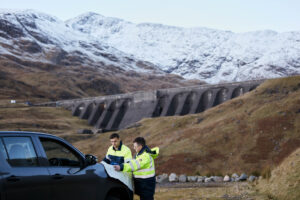
Pumped storage hydro (PSH) is a large-scale method of storing energy that can be converted into hydroelectric power.
Pumped storage facilities have two water reservoirs at different elevations on a steep slope. When there is excess power on the grid and demand for electricity is low, the power is used to pump water from the lower to the upper reservoir using reversible turbines. When demand is high, the water is released downhill into the lower reservoir, driving the turbines the other direction to generate electricity.
With the UK increasingly reliant on intermittent sources of electricity such as wind power, pumped storage hydro is becoming even more important to national energy security.
Source: Drax (2026), Pumped Storage Hydro
Renewable Electricity
Renewable energy (also called green energy) is energy made from renewable natural resources that are replenished on a human timescale. The most widely used renewable energy types are solar energy, wind power, and hydropower.
Source: Wikipedia, Renewable Electricity
Solar
Solar panels convert solar energy into electricity, providing renewable generation during daylight hours.
Solar power is identified as one of the quickest and lowest-cost renewable technologies to deploy at scale.
Source: Drax (2026), Solar and Wind
Wind
A wind turbine generates electricity by converting energy from the wind into power that can be supplied to homes and businesses across the country. Wind generation can occur day or night and is often stronger in winter.
Source: Drax (2026), Solar and Wind
Page updated October 2026