





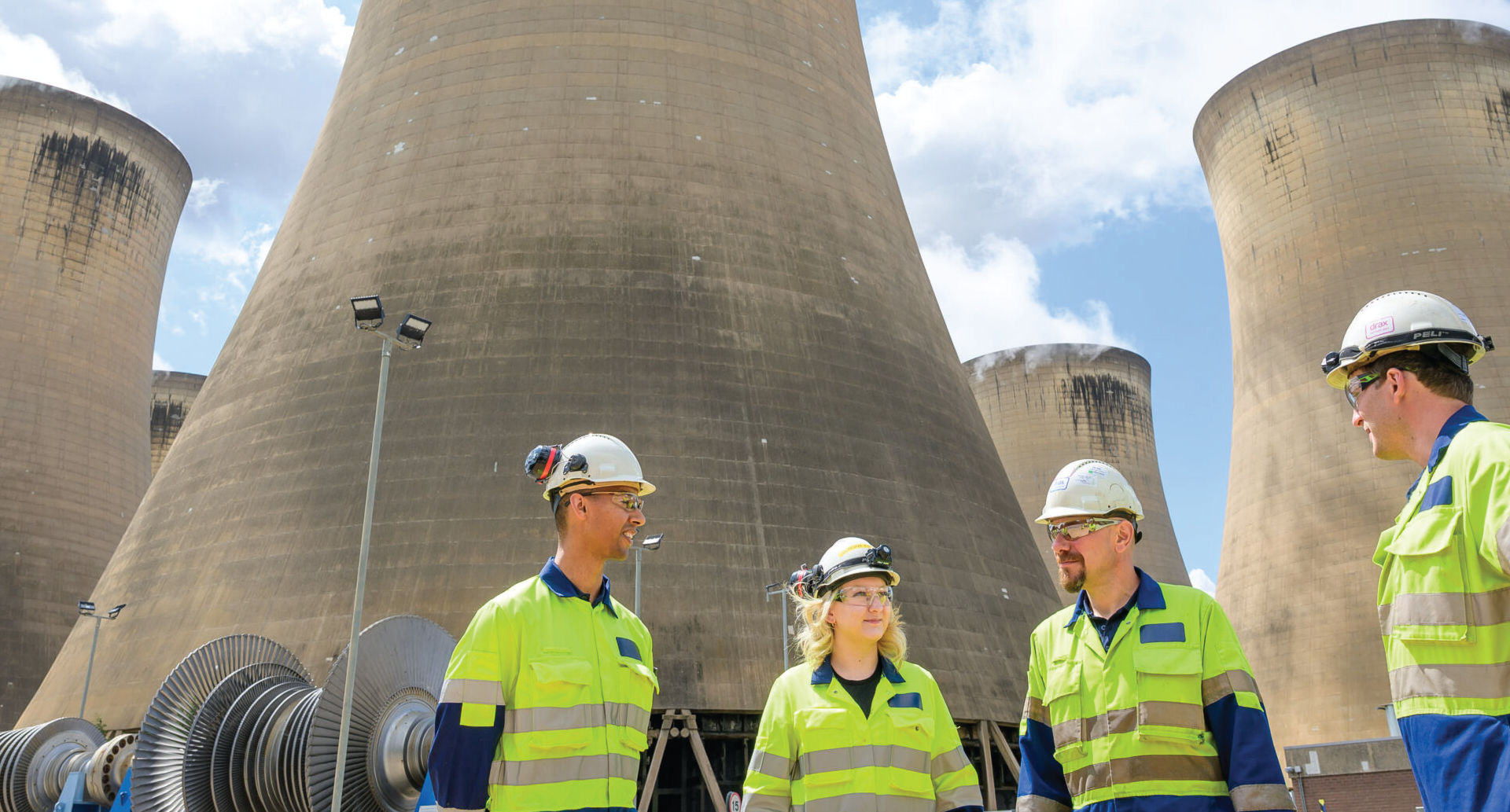
Government support for low-carbon dispatchable generation from 2027
Drax confirms that it has signed a contract with the UK Government for a low-carbon dispatchable CfD (Contract for Difference) agreement to cover all four biomass units at Drax Power Station over the period April 2027 to March 2031.
We are pleased to have agreed this new contract with the UK Government, which will support UK energy security into the 2030s and deliver a net saving for consumers compared to alternative sources of dispatchable generation.
Under the agreement, Drax Power Station can step in to increase generation when there isn’t enough electricity, potentially avoiding the need to burn more gas or import power from Europe. When there’s too much electricity, Drax can turn down and help to balance the system.
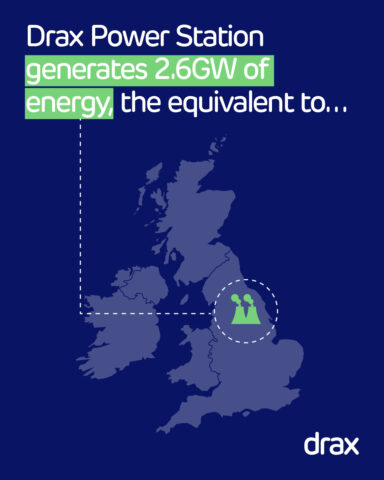
Analysis from Baringa has indicated that the short-term support for Drax Power Station is expected to result in a net saving for consumers of between £1.6-3.1bn over the term of the agreement, compared to alternative sources of dispatchable generation.
The agreement includes enhanced biomass sustainability requirements, including ensuring that all biomass used at Drax Power Station is sustainably sourced and substantiated through monitoring, reporting, and verification requirements, including enhanced auditing of the biomass supply chain. We welcome these enhancements to our existing procedures, which demonstrate the Group’s commitment to delivering climate, nature and people positive outcomes.

Keeping the lights on
- In 2024, Drax Power Station provided the grid with enough power for c.5 million homes – equivalent to every home in London, or Wales and Scotland combined.
- Under this agreement, when there is not enough electricity Drax can step in to increase generation, potentially avoiding the need to burn more gas or import more power from Europe. When there is too much electricity, Drax can turn down and help to balance the system.
- Annually, Drax Power Station provided on average 5% of the UK’s energy in 2024. On gloomy, windless days, when output from wind and solar can dip dramatically, it could generate up to 8% of the UK’s energy.
- Drax Power Station’s capacity is greater than the UK’s two largest operational nuclear power stations.


Keeping costs down for billpayers
- Analysis from Baringa has indicated that the short-term support for Drax Power Station is expected to result in a net saving for consumers of between £1.6-3.1bn over the term of the agreement, compared to alternative sources of dispatchable generation.
- In a scenario where gas prices spike in a similar way to levels seen in 2022, the mechanism is expected to result in even higher savings of between £2.5-4bn.
- As the UK moves towards Clean Power in 2030 and beyond, our energy system will increasingly need forms of electricity generation that can be used flexibly to serve demand when most needed.
- This support mechanism provides option value from potential future conversion to BECCS, which is projected to deliver savings of c.£15bn.
Driving economic growth
- Analysis from Oxford Economics indicated that in 2021, Drax Power Station supported over 7,000 jobs across the UK, including over 900 direct employees at Drax Power Station.
- We’re improving access to STEM education and green skills training within underserved communities through the Drax Foundation.
- The support mechanism will reduce the UK’s reliance on gas and imports, result in a net saving for consumers, contribute to the UK’s economic growth and, maintain future options at Drax Power Station including power-BECCS and data centres.
Taking positive action on sustainability
- The agreement includes enhanced biomass sustainability requirements, including ensuring that all biomass used at Drax Power Station is sustainably sourced and substantiated through monitoring, reporting, and verification requirements, including enhanced auditing of the biomass supply chain.
- We welcome these enhancements to our existing procedures, which demonstrate the Group’s commitment to delivering climate, nature and people positive outcomes.
Helping the UK lead the way on climate action
- The mechanism helps maintain the option for power-BECCS, which, subject to further policy development, and the right investment framework, could help facilitate billions of pounds of additional investment from Drax to transition the site into the world’s largest carbon removal facility.
- By displacing higher carbon thermal generation, Drax will save around 4 million tonnes of CO2e over the term – equivalent to taking an additional 375,000 internal combustion engine cars off the road.
- The mechanism also maintains the option of hosting a data centre at Drax Power Station which could be complementary to our BECCS plans and potentially attract billions in investment into the region.
- Drax’s generation will also contribute to the Clean Power 2030 target.
Questions answered
- What does CfD mean?
- How does the mechanism save billpayers money?
- How does Drax Power Station support energy security?
- Does biomass emit more carbon dioxide than coal?
- Why are the carbon emissions from Drax counted as zero in the UK?
- What’s Drax doing to reduce emissions from transporting biomass to the UK?
The CfD (Contract for Difference) is a government mechanism that’s been supporting low-carbon electricity generation since 2014. It provides protection from volatile wholesale prices, while protecting consumers from paying increased costs when electricity prices are high.
Independent analysis by Baringa has indicated that the mechanism implementation is expected to result in a net saving for consumers of between £1.6-3.1bn over the agreement term. This is by avoiding the need to produce additional capacity, and reducing the UK’s reliance on gas and interconnectors – resulting in a lower overall wholesale price.
Drax Power Station’s 2.6GW of secure renewable power helps to keep the lights on in homes and businesses across the UK. Last winter, cold and windless weather stretched the UK’s energy system, leading NESO to issue three capacity market notices and bring gas operators online to prevent blackouts.
No. Biomass is a renewable energy source, defined by the UN International Panel on Climate Change (IPCC). On a lifecycle basis, when sourced sustainably from well-managed forests, biomass represents an overall emissions reduction compared to coal. Since 2012, when Drax Power Station started its conversion from coal to sustainable biomass, we’ve reduced our reported generation scope 1 and 2 carbon emissions by approximately 99%.
The UN IPCC counts carbon emissions from the combustion of biomass in the Agriculture, Forestry and Other Land-Use (AFOLU) sector in the country of origin, not the country of use. This prevents double counting, while still ensuring the full life cycle emissions – production, cultivation, harvesting, collection, transportation, and processing of biomass – are accounted for. We report all of our own supply chain emissions in our Annual Report and ESG performance report, including biogenic emissions from the combustion of biomass in the UK.
We’re taking a range of actions to reduce our shipping, rail freight and wider supply chain emissions. In 2024, we provided £1m funding to help develop new ‘FastRig’ technology, which will be used to help decarbonise the shipping sector. This can reduce fuel consmuption and resulting emissions by up to 30% per year. We’re also working with DB Cargo to switch trains supplying Drax Power Station to Hydro-treated Vegetable Oil (HVO) – estimated to reduce rail freight emissions by 90%.
The CfD (Contract for Difference) is a government mechanism that’s been supporting low-carbon electricity generation since 2014. It provides protection from volatile wholesale prices, while protecting consumers from paying increased costs when electricity prices are high.
View MoreIndependent analysis by Baringa has indicated that the mechanism implementation is expected to result in a net saving for consumers of between £1.6-3.1bn over the agreement term. This is by avoiding the need to produce additional capacity, and reducing the UK’s reliance on gas and interconnectors – resulting in a lower overall wholesale price.
View MoreDrax Power Station’s 2.6GW of secure renewable power helps to keep the lights on in homes and businesses across the UK. Last winter, cold and windless weather stretched the UK’s energy system, leading NESO to issue three capacity market notices and bring gas operators online to prevent blackouts.
View MoreNo. Biomass is a renewable energy source, defined by the UN International Panel on Climate Change (IPCC). On a lifecycle basis, when sourced sustainably from well-managed forests, biomass represents an overall emissions reduction compared to coal. Since 2012, when Drax Power Station started its conversion from coal to sustainable biomass, we’ve reduced our reported generation scope 1 and 2 carbon emissions by approximately 99%.
View MoreThe UN IPCC counts carbon emissions from the combustion of biomass in the Agriculture, Forestry and Other Land-Use (AFOLU) sector in the country of origin, not the country of use. This prevents double counting, while still ensuring the full life cycle emissions – production, cultivation, harvesting, collection, transportation, and processing of biomass – are accounted for. We report all of our own supply chain emissions in our Annual Report and ESG performance report, including biogenic emissions from the combustion of biomass in the UK.
View MoreWe’re taking a range of actions to reduce our shipping, rail freight and wider supply chain emissions. In 2024, we provided £1m funding to help develop new ‘FastRig’ technology, which will be used to help decarbonise the shipping sector. This can reduce fuel consmuption and resulting emissions by up to 30% per year. We’re also working with DB Cargo to switch trains supplying Drax Power Station to Hydro-treated Vegetable Oil (HVO) – estimated to reduce rail freight emissions by 90%.
View MoreLearn more
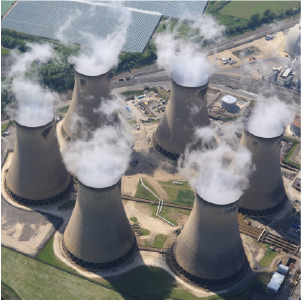
Lowering the cost of the energy transition – hear from Drax’s Commercial Director.
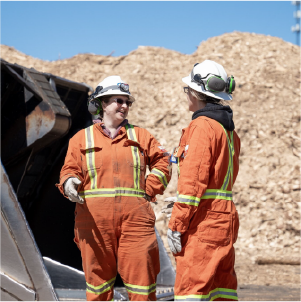
How wood pellets support clean energy goals, forests, and communities.

Analysis by Electric Insights shows how wind droughts demonstrate the need for low-carbon flexible generation.
Page updated June 2026