Tag: Will Gardiner

Drax Group plc Chief Executive comments on full year results

Will Gardiner, CEO, Drax Group

We continued to transform the business in 2017, delivering a strong EBITDA performance, in line with expectations. This was delivered by all parts of the business making positive contributions for the first time.

We also made good progress delivering our strategy, which is clear and unchanged. We are increasing biomass self-supply, developing projects to diversify our generation mix and growing our B2B energy supply business.

The UK is undergoing an energy revolution, starting with a significant reduction in carbon emissions, and to support that we are helping to change the way energy is generated, supplied and used.

View full report

View investor relations presentation

Drax Group plc: Full year results for the twelve months ended 31 December 2017

RNS Number : 9871F
Drax Group PLC
Twelve months ended 31 December20172016
Key financial performance measures
EBITDA (£ million)(1)229140
Underlying profit after tax (£ million)(2)321
Underlying earnings per share (pence)(2)0.75.0
Total dividends (pence per share)12.32.5
Net cash from operating activities (£ million)315191
Net debt (£ million)(3)36793
Statutory accounting measures
(Loss) / profit before tax (£ million)(183)197
Reported basic (loss) / earnings per share (pence)(37.2)47.7

All areas of the business contributing to positive EBITDA for the first time

  • EBITDA up 64% to £229 million – improving earnings quality from biomass generation and Opus Energy
    • Pellet Production – EBITDA up £12 million to £6 million – 35% growth in production
    • Power Generation – EBITDA up £64 million to £238 million – contribution from biomass generation
    • B2B Energy Supply – EBITDA up £33 million to £29 million –acquisition of Opus Energy
  • Strong cash flow generation and balance sheet – 1.6x net debt to EBITDA
  • Final dividend of £30 million, representing 60% of the recommended full year – £50 million
  • £50 million share buy back programme consistent with capital allocation policy
  • Statutory loss before tax principally driven by unrealised losses related to foreign currency hedging of £156 million

Delivering strategy and remain on course to hit >£425 million EBITDA target by 2025

  • Accelerated energy supply growth with acquisition and on-boarding of Opus Energy
  • Increased biomass self-supply through acquisition and commissioning of third biomass pellet plant, LaSalle Bioenergy
  • Government support received for fourth biomass unit conversion at Drax Power Station
  • Development of options for future generation: coal-to-gas repowering option, two OCGTs (4) to enter next capacity market auction in December 2018

Focused on operational excellence and investment in strategy

  • Continued focus on safety, operational excellence and project development
  • Targeted investment in long-term growth opportunities
  • Continued growth in EBITDA and cash generation
  • Sustainable and growing dividend, with opportunities to return capital in line with policy

Will Gardiner, Chief Executive of Drax Group plc, said:

“We continued to transform the business in 2017, delivering a strong EBITDA performance, in line with expectations. This was delivered by all parts of the business making positive contributions for the first time.

“We also made good progress delivering our strategy, which is clear and unchanged. We are increasing biomass self-supply, developing projects to diversify our generation mix and growing our B2B energy supply business.

“The UK is undergoing an energy revolution, starting with a significant reduction in carbon emissions, and to support that we are helping to change the way energy is generated, supplied and used.”

Notes for analysts and editors

2017 Group Financial Review

  • Underlying earnings per share decreased to 0.7 pence
    • Accelerated depreciation of coal-specific assets, amortisation of intangible assets associated with the acquisition of Opus Energy and an increase in net finance charges.
  • Reported basic earnings per share – a loss of 37 pence, which includes unrealised losses on derivative contracts of £156 million (principally related to the foreign currency hedging programme) in addition to one-off items – transaction costs relating to the acquisition of Opus Energy (£8 million) and refinancing (£24 million)
  • Tax – one-off non-cash charge of £16 million – a reduction in US federal tax rates from 35% to 21% resulting in a revaluation of deferred tax balances, offset by £13 million cash tax credit from UK Patent Box tax regime, which rewards Drax patented innovation in biomass generation
  • Investment in line with guidance
    • Acquisition of Opus Energy (£367 million)
    • Acquisition and commissioning of LaSalle Bioenergy (£48 million)
    • Maintenance and improvement (£133 million) including pellet plant optimisation, strategic spares, Haven Power information systems, research and innovation and Opus Energy office consolidation
    • Continue to expect ongoing maintenance capital investment of £50-60 million per year
  • Net debt of £367 million (31 Dec 2016: £93 million), including cash on hand of £222 million

2017 Operational Review

Pellet ProductionFocus on good quality pellets at lowest cost

  • 35% increase in pellet production to 0.8M tonnes (2016 0.6M tonnes)
  • Low-cost expansion of Amite and Morehouse plants complete
  • Improving operational performance whilst providing supply chain flexibility
  • LaSalle Bioenergy commissioning ahead of plan from November 2017, increasing output through 2018
  • Biomass self-supply increased

Power GenerationFocus on optimisation of existing assets and development of projects

  • Electricity output (net sales) 20.0TWh (2016: 19.6TWh)
  • 65% of generation from renewables (2016: 65%)
  • £88 million from system support and flexibility
  • £90 million capacity market payments secured for 2017-2022

B2B Energy SupplyProfitable business with growth in sales and customer meters

  • 12% increase in customer meter points to more than 375,000
  • 46% of energy sales from renewables
  • Opus Energy EBITDA in line with plan; Haven Power exceeded EBITDA breakeven target
  • Continued investment in next generation IT systems

Notes:

(1)  EBITDA is defined as earnings before interest, tax, depreciation, amortisation and material one-off items that do not reflect the underlying trading performance of the business.

(2)  2017 underlying earnings exclude unrealised losses on derivative contracts of £156 million and material one-off items that do not reflect the underlying performance of the business (2016: unrealised gains of £177 million).

(3)  Borrowings less cash and cash equivalents.

(4)  Open Cycle Gas Turbine.

Contacts

Enquiries:

Drax Investor Relations: Mark Strafford

+44 (0) 1757 612 491

Media:

Drax External Communications: Ali Lewis

+44 (0) 1757 612 165


View full report

View investor relations presentation

Appointment of Interim Chief Financial Officer

RNS Number : 7736U
DRAX GROUP PLC
(Symbol: DRX)

Following the recent announcement that Will Gardiner will succeed Dorothy Thompson as Chief Executive Officer of Drax Group from 1 January 2018, the Board is progressing a process to appoint a permanent Chief Financial Officer (CFO) as soon as practicable.

In the meantime, Den Jones has been appointed as Interim CFO of the Group from 1 November 2017 and will work with Will Gardiner to ensure a smooth transition.

Den was previously CFO of Johnson Matthey, a FTSE 100 specialty chemicals company and has held senior and executive positions, including Interim CFO, in BG Group, a major global energy company. He spent the early part of his career in banking and professional services with Citibank and PwC where he held a number of specialist financial management positions.

Enquiries:

Investor Relations:

Mark Strafford

+44 (0) 1757 612 491

Media:

External Communications:

Ali Lewis

+44 (0) 1757 612165

Website: www.drax.com/uk

END

Will Gardiner to succeed Dorothy Thompson as Chief Executive of Drax Group

RNS Number : 3929R
DRAX GROUP PLC
(Symbol: DRX)

Drax Group plc announces that Will Gardiner, currently Group Chief Financial Officer, is to be appointed as Group Chief Executive with effect from 1 January 2018. The appointment results from Dorothy Thompson’s decision to step down after 12 successful years as Group Chief Executive. Dorothy will leave the Group at the end of 2017.

Will joined Drax as Group Chief Financial Officer and a member of the Group Board in November 2015. The Board has kept succession planning well under review and his new appointment comes after a thorough selection process involving internal and external candidates.

Drax Chairman, Philip Cox said: “We are delighted Will is to become Chief Executive. He has been a key architect of our new strategy and is a focused, innovative and engaging leader. His appointment is a natural progression after two years working alongside Dorothy developing an ambitious strategy which I am confident will create significant benefits for all Drax’s stakeholders.

“On behalf of the Board I would like to thank Dorothy for her enormous contribution to Drax. She transformed the business during her tenure and leaves the Group in a strong position with a clear strategy that lays the foundations for further success in a changing energy sector.”

Will Gardiner said: “I am thrilled to be appointed as Group Chief Executive at this exciting time for Drax. The changes we are seeing in the UK energy sector are unprecedented and we have an opportunity to thrive while doing the right thing for the UK energy market. Drax’s people have demonstrated repeatedly their ability to deliver transformational change and I’m delighted to be working with them to build on Dorothy’s strong legacy.”

Dorothy Thompson said: “Drax Group plays a strategic role in the UK electricity sector generating around 16% of UK renewable electricity, is a world leader in the production of wood pellets and is a leading challenger brand in the supply of electricity to businesses. I retire knowing the Group is in excellent shape: it has the right strategy, the right team and in Will, the right leader.”

The Board will now commence a process to appoint a new Group Chief Financial Officer and will also review the option to make an appointment on an interim basis. 

No other disclosure obligations arise under paragraphs (1) to (6) of LR 9.6.13 R of the UK Listing Authority’s Listing Rules in respect of Will Gardiner’s appointment as Chief Executive of Drax Group plc.

Enquiries:

Drax Investor Relations:

Mark Strafford

+44 (0) 1757 612 491

+44 (0) 7730 763 949

Media:

Drax External Communications:

Matt Willey

+44 (0) 1757 612 285

+44 (0) 7711 376 087

Website: www.drax.com/uk

Notes:

Will Gardiner joined Drax in November 2015 as Group Chief Financial Officer and a member of the Group Board. He is currently responsible for Finance, Strategy, and IT Systems.

Prior to joining Drax Will was Chief Financial Officer of CSR plc, a global semiconductor business.  He had previously been a Divisional Finance Director of BSKYB and Chief Financial Officer of Easynet Group plc.

At both CSR and Easynet Will’s focus was on driving transformational change to take advantage of new market opportunities. He is also a non-executive member on the Board of Qardio plc, a wireless medical devices company. Will is also a Trustee of the Institute for War & Peace Reporting, a London-based charity that supports local journalists and civic activists in areas of crisis and change around the world.

Will graduated from Harvard University with a BA Magna Cum Laude in Russian and Soviet Studies and from Johns Hopkins University with an MA in International Relations. He spent the early part of his career in corporate finance with Citibank and JP Morgan.

END

Understanding the pounds behind the power

Editor’s note: On 21st September 2017 the Board announced that Will Gardiner would replace Dorothy Thompson as Chief Executive, Drax Group as of 1st January 2018. Read the announcement to the London Stock Exchange. This story was written by Will two months prior to that announcement and remains unedited below.

The UK electricity market used to be simpler. Coal, gas and nuclear plants generated energy and fed power into the National Grid. Retail companies then delivered that power to homes and businesses across the country thanks to regional distribution network operators. Today, it’s not as simple. The energy system of Great Britain has grown more complex – it needed to.

The push to lower carbon emissions led to the introduction of an array of different power generation technologies and fuels to the energy mix. These all generate power in different ways, at different times and in different conditions. Added to this are government schemes that have changed how this is all funded. In short, our electricity market is now more complex.

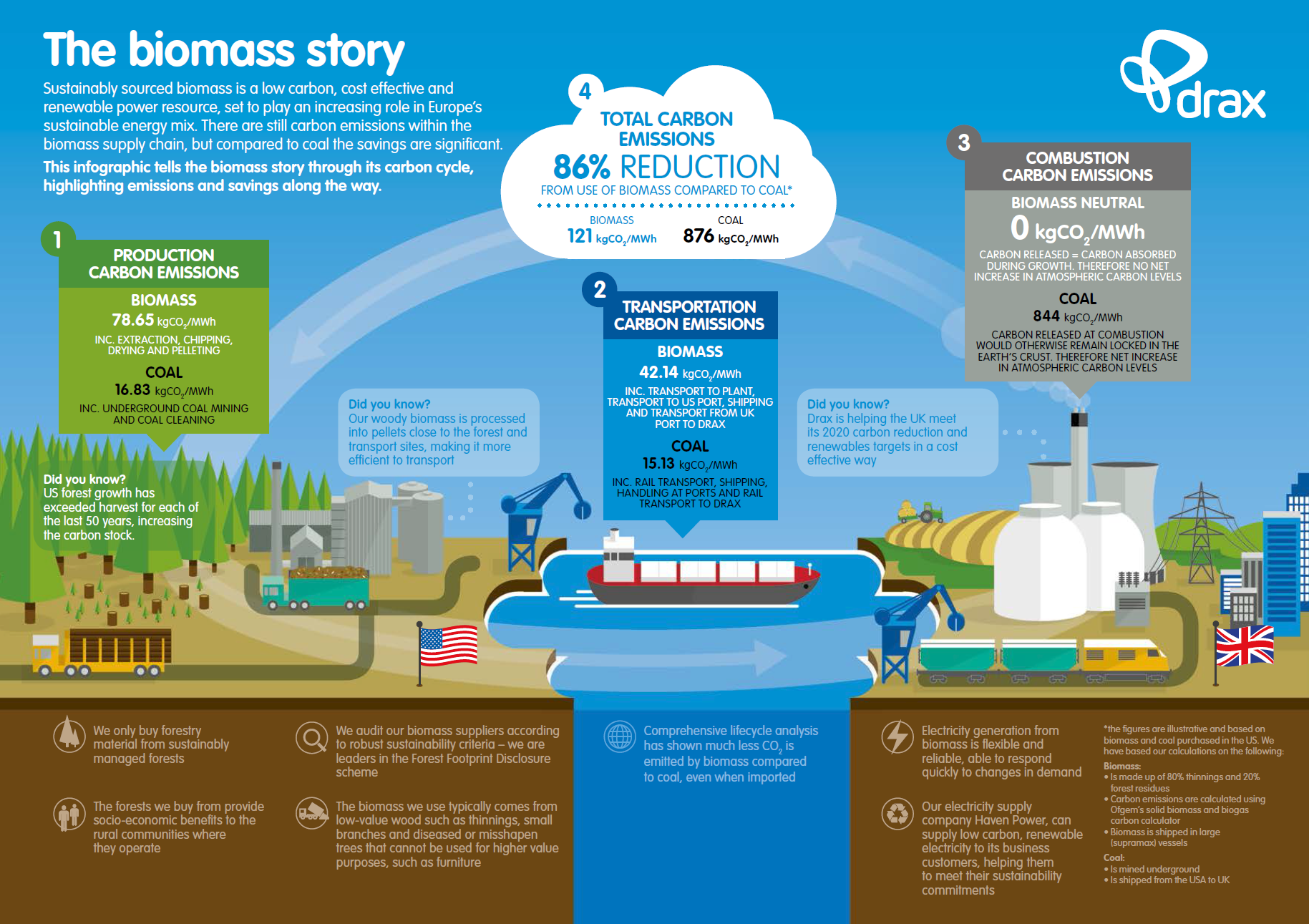
Drax Group has transformed itself to align with this new system. It is now an energy company with complementary operations across its supply chain – sourcing fuel, generating 17% of Great Britain’s renewable power and then selling much of that electricity directly to business customers in the retail market. This has fundamentally changed both how we do business and the financial mechanisms behind the business.
Where are we now?

Drax’s financial and operating strategies are very much inter-linked. Shifting how we generate energy changes how we generate revenue. The company is structured according to a set of distinct business segments, each of which is treated in a slightly different way.

The generation business

Drax has adapted its business model to the UK government’s regulatory framework, which through successive administrations has broadly promoted investment in renewable and low carbon power generation. Three of our six electricity generation units – accounting for 68% of our output in the first half of 2017 – have been upgraded from coal to produce renewable electricity from sustainable compressed wood pellets. These units are a core part of Britain’s renewable energy mix. Guaranteed income from the third unit conversion has given us a significantly higher degree of earnings visibility and reduced our exposure to commodity prices.

H1, 2017: 10.7 TWh total generation; 7.3 TWh biomass generation

Our coal generation units no longer provide 24/7 baseload electricity. This means we primarily use our coal generation as a support system. When the grid needs it we can ramp up and down coal generation responding to demand and ancillary service needs. Our renewable generation units do this too. Ultimately, however, our long-term goal is to convert the remaining coal units – either to renewables or to gas. Our Research and Innovation team is currently looking into how we might be able to do this, but early indications show that coal-to-gas conversion could be an attractive option for delivering flexible and reliable generation capacity for the UK.

Drax Power is doing well and generated £137m of EBITDA in the first half of this year, a £51m increase compared to the first half of 2016.

We are confident about the projected growth of our power generation business to £300 million EBITDA by 2025. That plan is aided by our move into rapid response gas – a technology that can meet urgent needs of a power system that includes an increasing amount of weather-dependent renewables. Two of the four rapid response gas projects we’re developing are ready to bid for 15-year capacity market contracts this coming February. They are designed to start up from cold faster than coal and combined cycle gas turbine (CCGT) units. These small-yet-powerful plants will respond to short-term power market price signals and be capable of providing other, ancillary services to further enhance security of supply.

These projects should add an attractive additional source of earnings to our generation business. They also will have attractive characteristics, as a significant element of their earnings will come from the capacity market – guaranteed government income for 15 years.

The retail business

We directly serve the retail market through Haven Power, which supplies renewable electricity primarily to industrial and commercial customers. Last week we announced that Haven Power was able to break-even six months ahead of schedule. Retail is an area we’re growing, and in February 2017 we acquired Opus Energy, the largest non-domestic UK energy company by meters installed outside the Big Six. This has had a marked effect – today we’re the largest challenger B2B energy retailer in the UK.

There is a healthy and regular annuity coming in through the existing retail business, and we believe this can generate £80 million of EBITDA by 2025, which, together with our growing biomass supply business, will make up a third of our earnings. We demonstrated good progress in the first half of the year, earning £11m of EBITDA.

The biomass business

Our two operational wood pellet manufacturing plants in Louisiana and Mississippi are progressing well. They are both still ramping up to full production and have seen marked improvements in pellet quality and production.

We are looking to grow our US business and as part of this we’ll need to build on the recent addition of LaSalle BioEnergy with further acquisitions. Expansion will grow our capacity for the self-supply of pellets from 15% to 30% of Drax Power Station’s requirements, adding an additional one million tonnes of production.

In the second half of 2017, we expect the profitability of Drax Biomass to increase. LaSalle will be commissioned in the first half of 2018 and reach capacity in 2019.

What’s next?

The energy landscape continues to change and we’ll need to change with it. Phasing out coal entirely is priority number one. For this we’ll continue to look at options. How and when we can convert more units to sustainable biomass depends on trials that we are conducting at Drax Power Station during 2017-18. The right government support would also make further conversions cost effective.

We also recognise that it’s important to look at alternative possibilities for our remaining coal units. This is why we are seeking planning permission to convert one or more of our 645 MW (megawatt) coal units to 1,300 MW of gas. Such an upgrade would be at a discount to a new-build, combined cycle gas turbine (CCGT) power station of equivalent capacity. And that’s simply because we would use much of the existing infrastructure and equipment.

Another major prospect is in the technology space and so we’re continuing to invest in research and innovation. Batteries and storage are a huge opportunity for us – both in how they could benefit our retail customers, and how they could provide solutions for large-scale centralised energy systems. In short, it’s an area with huge potential. We welcome the government’s recent initiatives designed to stimulate the development of battery technology, as well as encourage the use of electric vehicles.

Drax has gone through a period of considerable change and that will continue as we meet the UK’s low-carbon energy demands. We are improving the quality of our earnings, reducing our exposure to commodities, and positioning to take advantage of future opportunities. As we told investors in June, if we deliver on these plans, we can expect >£425 million of EBITDA in 2025.


Forbes: Drax joint-second most trustworthy company in Europe

I’m delighted that Drax Group plc has been named by Forbes magazine and MSCI ESG Research as one of the 50 most trustworthy companies in Europe.

In fact, Drax came joint second across the whole continent among companies judged who ‘consistently demonstrated transparent accounting practices and solid corporate governance’.

It’s a massive tribute to everyone involved with Drax that world-leading business experts have recognised our commitment to trust and integrity in this way.

Of course, that commitment goes much further than our accounting practices alone. (I believe my British colleagues would say that it runs right through Drax like the writing in a stick of rock.)

Indeed, it was one of the reasons I was so honoured to be asked to join Drax as CFO. From my very first meeting with CEO Dorothy Thompson, I could see that Drax would always strive do the right thing, in the right way.

That’s just as true for our sustainability data as it is for our business data.

It was our commitment to doing the right thing that led Drax to take on the decision to convert Drax power station from coal to compressed wood pellets.

It is our commitment to doing the right thing that means Drax is reducing emissions by over 80 per cent while giving people and businesses all over the UK the reliable, renewable power that they need.

And we know we can save bill-payers money at the same time.

The UK is lagging far behind the rest of Europe when it comes to generating energy from compressed wood pellets. Drax is committed to bringing us closer to the European average, while helping us move from the fossil fuels of the past to the renewables of the future. And yes, you can trust us on that.

Three ways to judge a CFO

It’s a good question, because you can’t build a great company without a great chief financial officer (CFO). But as a shareholder, how can you judge how well your CFO is doing? Without setting myself up for a fall, the answer I gave our investor broke down into these three questions:

  1. Are they keeping control? At its heart, the first part of any CFO’s role is to make sure that their business is under control and that all risks are being properly managed. They need to maintain a strong balance sheet and keep reporting and communications clear and transparent. Above all, they need to make sure there are no surprises.
  2. Are they improving efficiency? The second part is making sure the organisation is always working as efficiently as possible, keeping a strong hand on costs and ensuring that current revenue streams are always optimised. Above all, they need to be making sure that less money is going out and more money is coming into the organisation.
  3. Are they allocating capital wisely? The final task of any CFO is investing shareholder’s money in the best projects – first internally and second externally. Above all, they need to have a clear consideration of cash returns for shareholders.

So now the next time you wonder how well your CFO is doing, you know how to judge them.

This article was originally published by Will on LinkedIn.