Tag: investors

Climate change is the biggest challenge of our time

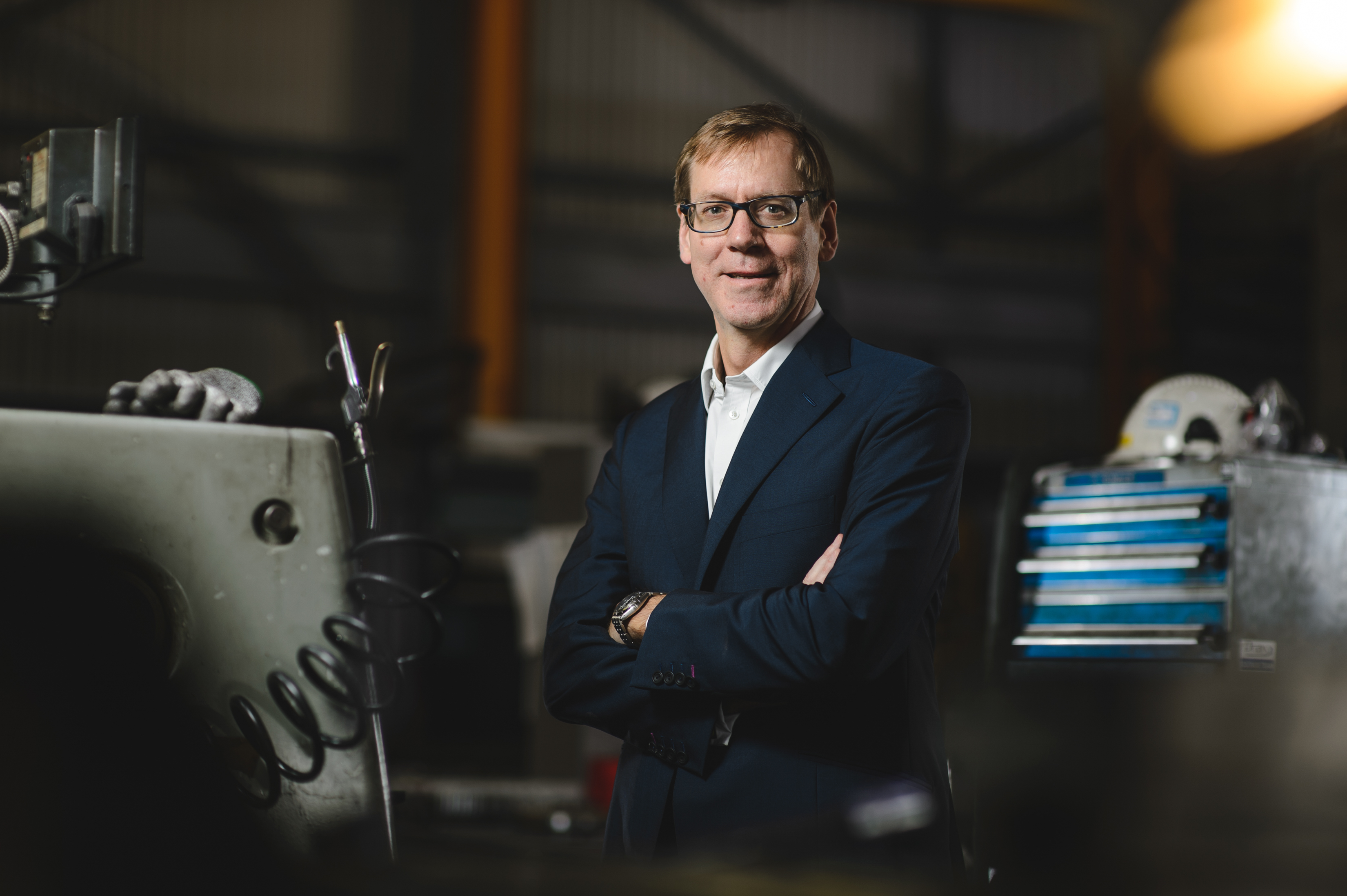
Drax Group CEO Will Gardiner

Climate change is the biggest challenge of our time and Drax has a crucial role in tackling it.

All countries around the world need to reduce carbon emissions while at the same time growing their economies. Creating enough clean, secure energy for industry, transport and people’s daily lives has never been more important.

Drax is at the heart of the UK energy system. Recently the UK government committed to delivering a net-zero carbon emissions by 2050 and Drax is equally committed to helping make that possible.

We’ve recently had some questions about what we’re doing and I’d like to set the record straight.

How is Drax helping the UK reach its climate goals?

At Drax we’re committed to a zero-carbon, lower-cost energy future.

And we’ve accelerated our efforts to help the UK get off coal by converting our power station to using sustainable biomass. And now we’re the largest decarbonisation project in Europe.

We’re exploring how Drax Power Station can become the anchor to enable revolutionary technologies to capture carbon in the North of England.

And we’re creating more energy stability, so that more wind and solar power can come onto the grid.

And finally, we’re helping our customers take control of their energy – so they can use it more efficiently and spend less.

Is Drax the largest carbon polluter in the UK?

No. Since 2012 we’ve reduced our CO2 emissions by 84%. In that time, we moved from being western Europe’s largest polluter to being the home of the largest decarbonisation project in Europe.

And we want to do more.

We’ve expanded our operations to include hydro power, storage and natural gas and we’ve continued to bring coal off the system.

By the mid 2020s, our ambition is to create a power station that both generates electricity and removes carbon from the atmosphere at the same time.

Does building gas power stations mean the UK will be tied into fossil fuels for decades to come?

Our energy system is changing rapidly as we move to use more wind and solar power.

At the same time, we need new technologies that can operate when the wind is not blowing and the sun is not shining.

A new, more efficient gas plant can fill that gap and help make it possible for the UK to come off coal before the government’s deadline of 2025.

Importantly, if we put new gas in place we need to make sure that there’s a route through for making that zero-carbon over time by being able to capture the CO2 or by converting those power plants into hydrogen.

Are forests destroyed when Drax uses biomass and is biomass power a major source of carbon emissions?

No.

Sustainable biomass from healthy managed forests is helping decarbonise the UK’s energy system as well as helping to promote healthy forest growth.

Biomass has been a critical element in the UK’s decarbonisation journey. Helping us get off coal much faster than anyone thought possible.

The biomass that we use comes from sustainably managed forests that supply industries like construction. We use residues, like sawdust and waste wood, that other parts of industry don’t use.

We support healthy forests and biodiversity. The biomass that we use is renewable because the forests are growing and continue to capture more carbon than we emit from the power station.

What’s exciting is that this technology enables us to do more. We are piloting carbon capture with bioenergy at the power station. Which could enable us to become the first carbon-negative power station in the world and also the anchor for new zero-carbon cluster across the Humber and the North.

How do you justify working at Drax?

I took this job because Drax has already done a tremendous amount to help fight climate change in the UK. But I also believe passionately that there is more that we can do.

I want to use all of our capabilities to continue fighting climate change.

I also want to make sure that we listen to what everyone else has to say to ensure that we continue to do the right thing.

Is biomass demand out of control?

Electricity systems around the world are decarbonising and increasingly switching to renewable power sources. While intermittent sources, such as solar and wind, are the fastest growing types of renewables being installed globally, the reliability and flexibility of biomass and its ability to offer grid stabilisation services such as frequency control and inertia make it an increasingly necessary source of renewable power. According to the International Energy Agency biomass generation is forecast to expand as planned projects come online.
Sustainable wood pellets

A versatile resource

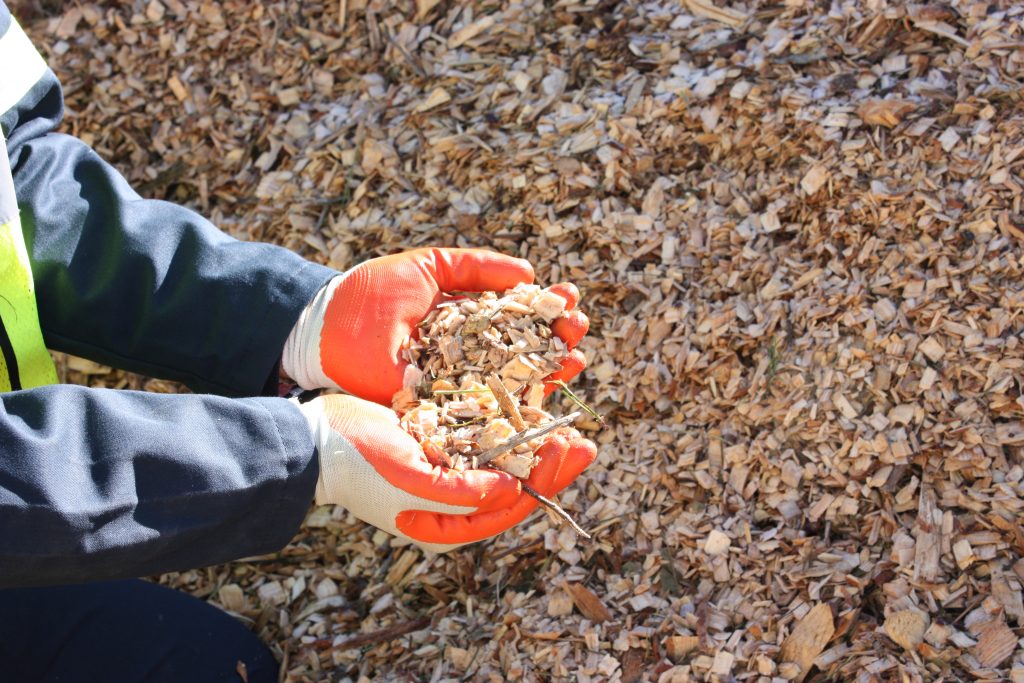
Biomass comes in many different forms.  When looking to assess future demand and use, it is important to recognise benefits that different types of biomass bring. Compressed wood pellets are just one small part of the biomass spectrum, which includes many forms of agricultural and livestock residues, waste and bi-products – much of which is currently discarded or underutilised.

Maximising the use of these wastes and residues provides plenty of scope for expansion of the biomass energy sector around the world. The global installed capacity for biomass generation is expected to reach close to 140 gigawatts (GW) by 2026, which will be fuelled primarily by expansion in Asia using residues from food production and the forestry processing industry.

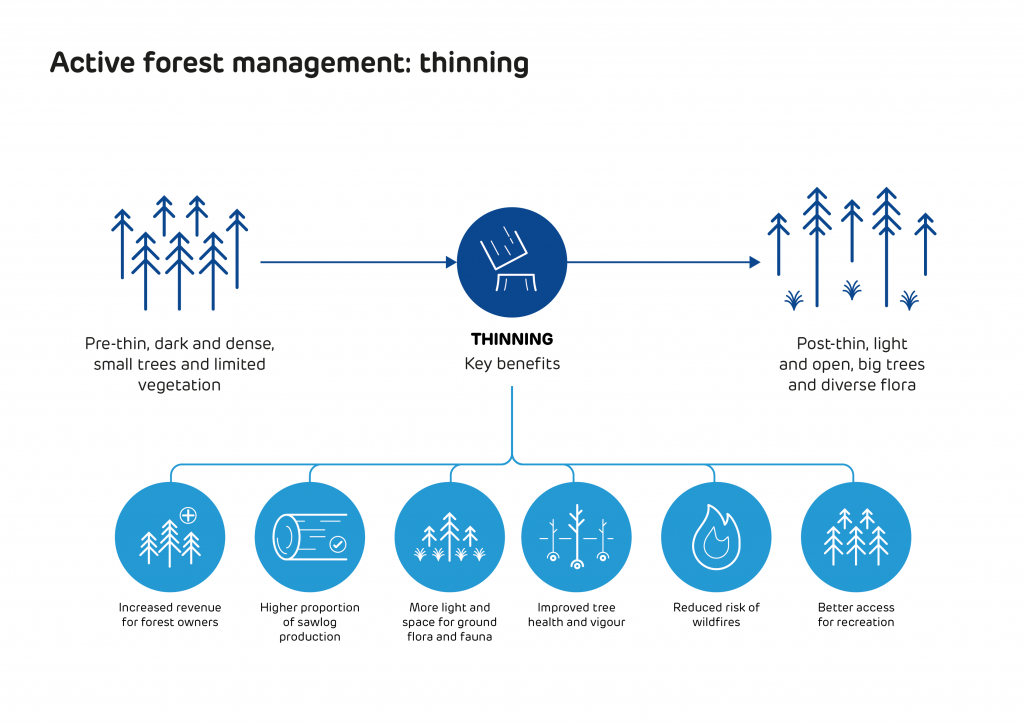
However, the use of woody biomass can also provide many benefits too, such as supplying a market for thinnings, providing a use for harvesting residues, encouraging better forest management practices and generating increased revenue for forest owners.
How much surplus exists?

In areas like the US South, traditional markets for forest products have declined, whilst forest growth has significantly increased. According to the USDA Forest Inventory and Analysis (FIA) data, there is an average annual surplus of growth in the US South of more than 176 million cubic metres compared to removals – that’s enough to make around 84 million tonnes of wood pellets a year, from just one supply region.

Of course, not all of this surplus growth could or should be used for bio-energy, much of it is suitable for high value markets like saw-timber or construction and some of it is located on inaccessible or protected sites. However, new and additional markets are essential to maintain the health of the forest resource and to encourage forest owners to retain and maintain their forest assets.

In the current wood pellet supply regions for Europe, Pöyry management consulting has calculated that there is a surplus of low grade wood fibre and residues that could make an additional 140 million tonnes of wood pellets each year.

Wood pellets in context
Sustainable wood pellets for biomass

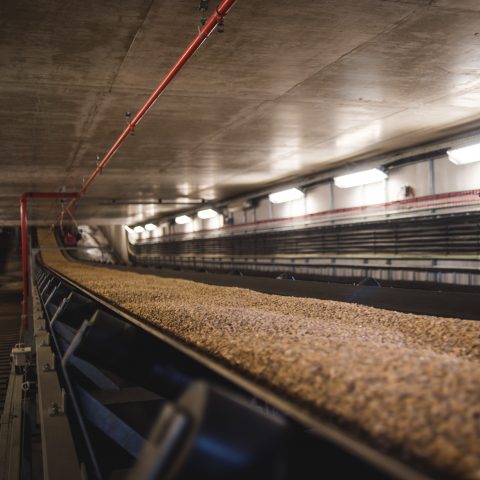
Compressed wood pellets on a conveyor belt

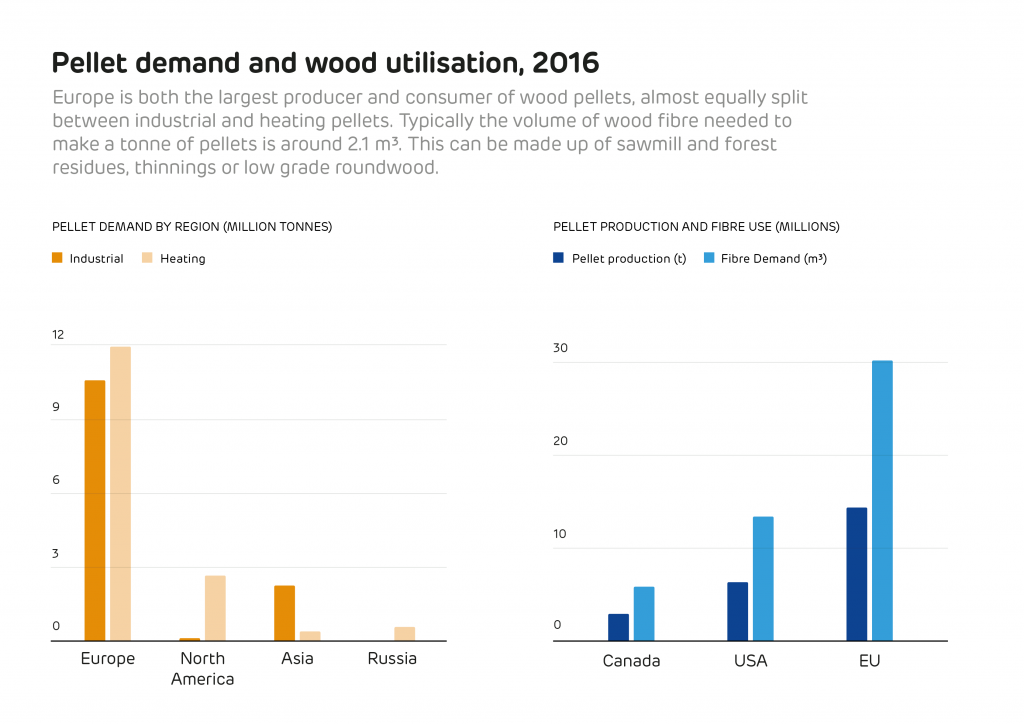
It is also necessary to look at the global production of all wood products to put wood pellet production into context. In 2016 the global production of industrial roundwood (the raw material used for construction, furniture, paper and other wood products) was 1.87 billion cubic metres, while the global production of wood fuel (used for domestic heating and cooking) was 1.86 billion cubic metres[1]. Only around 1.6% of this feedstock was used to make wood pellets, both for industrial energy and residential heat. The total production of wood pellets in 2016 was 28.4 million tonnes, of which only 45% was used for industrial energy[2].

While Forestry consulting and research firm Forisk predicts demand for industrial wood pellets (those used in electricity generation rather than residential heating) will grow globally at an annual rate of 15% for the next five years, reaching 27.5 megatonnes (Mt) by 2023, they are also clear that this growth, in context, will not impact forest volumes or other markets:

‘The wood pellet industry in the US South is not exploding, it is a tiny component of the overall market. Forest volumes in the South in total will continue to grow for decades no matter what bioenergy markets or housing markets do. The wood pellet sector simply and unequivocally cannot compete economically with US pulp and paper mills (80% of pulpwood demand in South) for raw material on a head-to-head basis[3].’

So, while demand for wood pellets is likely to increase over the next 10 years, this increase will be well within the scope of existing surplus fibre. The question, therefore, is can suppliers keep up with this demand? And can they do this while ensuring it remains sustainable, reliable and renewable?
What’s driving demand?

In the short-term, intelligence firm Hawkins Wright estimates global demand will increase by almost 30% during 2018 to reach 20.4 Mt, while Forisk predicts a smaller jump: an almost 5 Mt increase compared to 2017.

Most of this will continue to come from Europe (73% of global demand by 2021, more than 80% in 2018), where projects such as Lynemouth Power Station’s conversion from coal to biomass, as well as five co-firing units in the Netherlands are all set to come online very soon. While smaller in number, Asia is also developing a growing appetite for biomass and in 2018 demand is forecast to grow by 1.98 Mt.

These estimates might paint a picture of a continually soaring demand, but Forisk’s forecast actually expect this growth to plateau, levelling off around 2023 at 27.5 Mt. Hawkins Wright expects a similar slow down, forecasting manageable growth of under 15% between 2023 and 2026.
A forestry specialist at Drax Group, believes this plateau could come even sooner.

“Current and future forecasts in industrial wood pellet demand are based on a series of planned conversions and projects coming online,” he explains.

“But once these projects are active, demand in Europe will likely plateau around 2021 and then gradually reduce as various EU support schemes for industrial biomass come to an end. Any long term use of biomass is likely to be based on agricultural residues and wastes.”

But even with this expected slowdown, the biomass demand of the near future will be substantially higher than it is right now. So, the question remains, can suppliers meet the need for biomass pellets?
Responding to today’s growing demand

Meeting this growing demand depends on two factors: sufficient raw materials and the production capabilities to turn those materials into biomass pellets.

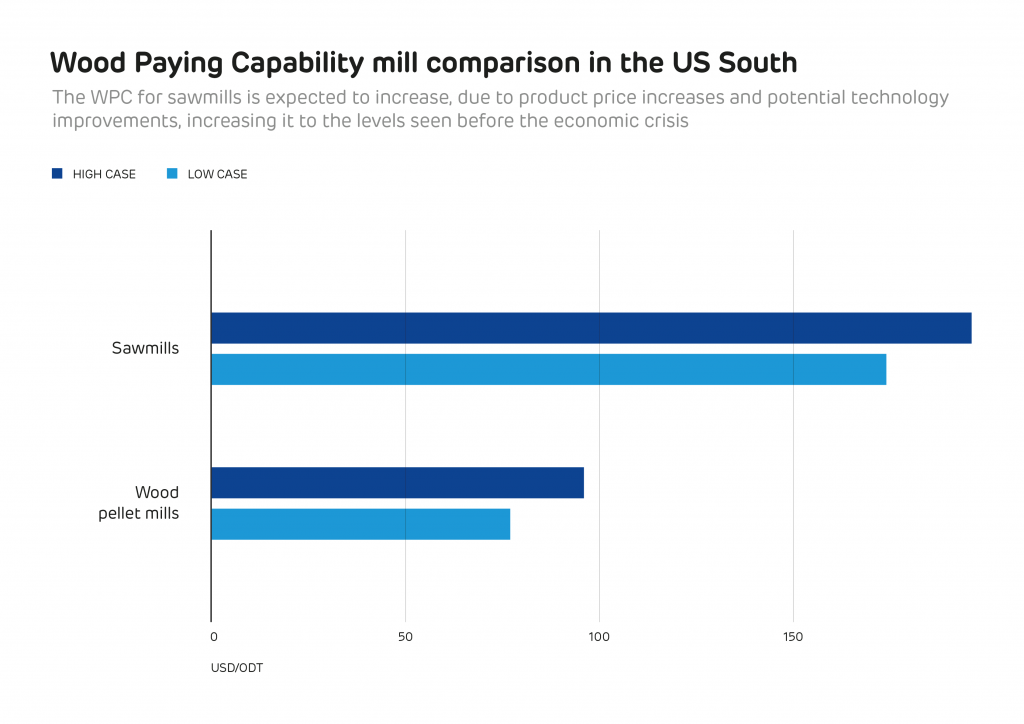
In today’s market, there’s no shortage of raw materials and low grade fibre. Instead, what could cause challenges is the production of pellets.

Hawkins Wright reports the capacity for global industrial pellet production was roughly 21.4 Mt a year at the end of 2017 and will increase by a further 3 Mt by 2019 as facilities currently under construction reach completion.

It means that to meet even Forisk’s conservative 27.5 Mt prediction by 2023, pellet production needs to increase. However, Drax’s forestry specialist points to the three to four years needed to complete pellet facilities and the relatively short period of time financial support programmes will remain in place as something that could lead to a slowdown in new plants coming online. Instead, he says, expansions of existing plants and the increased use of small-scale facilities will become crucial to increasing overall production.

However the biomass market changes and develops, it remains critical that proper regulation is in place, efficiencies are found and that technological innovation continues within the forestry industry so forests are grown and managed sustainably.

As we move into a low-carbon future we know that biomass demand will increase. But for this to be truly beneficial and sustainable we need to ensure we are not only meeting the demand of today but also of tomorrow, the day after tomorrow and beyond.

Discover the steps we take to ensure our wood pellet supply chain is better for our forests, our planet and our future. Visit ForestScope.info. 

[1] Source: FAOSTAT

[2] Source: Hawkins Wright, The Outlook for Wood Pellets, Q4 2017

[3] https://www.forisk.com/blog/2015/10/23/nibbling-on-a-chicken-or-nibbling-on-an-elephant-another-example-of-incomplete-and-misleading-analysis-of-us-forest-sustainability-and-wood-bioenergy-markets/

Building a sustainable business

The UK energy sector is changing rapidly. The boundaries between users, suppliers and generators are blurring as energy users are choosing to generate their own energy and are managing their energy use more proactively while, conversely, generators are increasingly seeing users as potential sources of generation and providers of demand management.

“The UK is undergoing an unprecedented energy revolution with electricity at its heart – a transition to a low-carbon society requiring new energy solutions for power generation, heating, transport and the wider economy”

In that context, our Group’s purpose is to help change the way energy is generated, supplied and used for a better future. This means that sustainability, in its broadest sense, must be at the very core of what we do. Successful delivery of our purpose depends on all our people, across all our businesses, doing the right thing, every day. With the right products and services, we can go even further and help our customers make the right, sustainable energy choices.

As our businesses transform and we embrace a larger customer base, different generation technologies and operate internationally, the range of sustainability issues we face is widening and becoming more complex. At the same time, the range of stakeholders looking to Drax for responsible leadership on sustainability is increasing. The need for transparency is greater than ever, so our website’s sustainability section provides a comprehensive insight into the Group’s environmental, social and governance management and performance during 2017.

Some of the highlights include:

  • Carbon reduction: I am pleased that, in 2017, the proportion of our energy generation from renewable sources remained high. 65% of our generation during the year came from sustainable biomass and accounted for 15% of the country’s overall renewable generation. We maintained our rigorous and robust approach to ensure that we only ever use biomass that is sustainably produced and legally sourced.
  • People: Another key achievement was the roll out of our people strategy to 2020 – One Drax – which focuses on talent to deliver on our strategic and operational objectives.
  • Safety: The health and safety of all our employees and contractors is of paramount importance to Drax. While the Group’s safety incident rate remained on target in 2017, the fire at our biomass rail unloading facilities in December did cause an outage, with disruption lasting into 2018. It highlighted once again that the risks of generating using biomass must be mitigated through robust safety procedures and a risk-based plant investment and maintenance programme. Safety therefore remains at the centre of our operational philosophy and we are determined to do even better.
  • Customers: Our business to business (B2B) Energy Supply business received recognition for their dedication to customer service. Opus Energy won “Utilities Provider of the Year” at the British Small Business Awards 2017.

We initiated a process which would allow us to participate in the United Nations Global Compact (UNGC). We are committed to the initiative and its ten principles, which align with our culture of doing the right thing.

Our website’s sustainability section also sets out our commitment to achieving the United Nations’ Sustainable Development Goals through our operations, the services we deliver to our customers and in partnership with others.

Global ambitions and goals are important, but so too are our ambitions for our local and regional communities. As such, we have played a key role in the UK Northern Powerhouse Partnership, initiatives such as POWERful Women and a comprehensive programme of stakeholder engagement.

“Sustainability, in its broadest sense, must be at the very core of what we do”

Finally, I do not believe any organisation, however well intentioned, can get its commitment to sustainability perfect on its own and I am very keen for Drax to learn from people reading our website’s sustainability section. It sets out what we see as our achievements and aspects in which we believe we need to do better. I would like to invite any stakeholder with an interest to comment on what we’re doing and help us improve where we can. Feedback can be submitted at Contact us or via our Twitter account or Facebook page.

Read the Chief Executive’s Review in the Drax Group plc annual report and accounts

The sustainable development goals

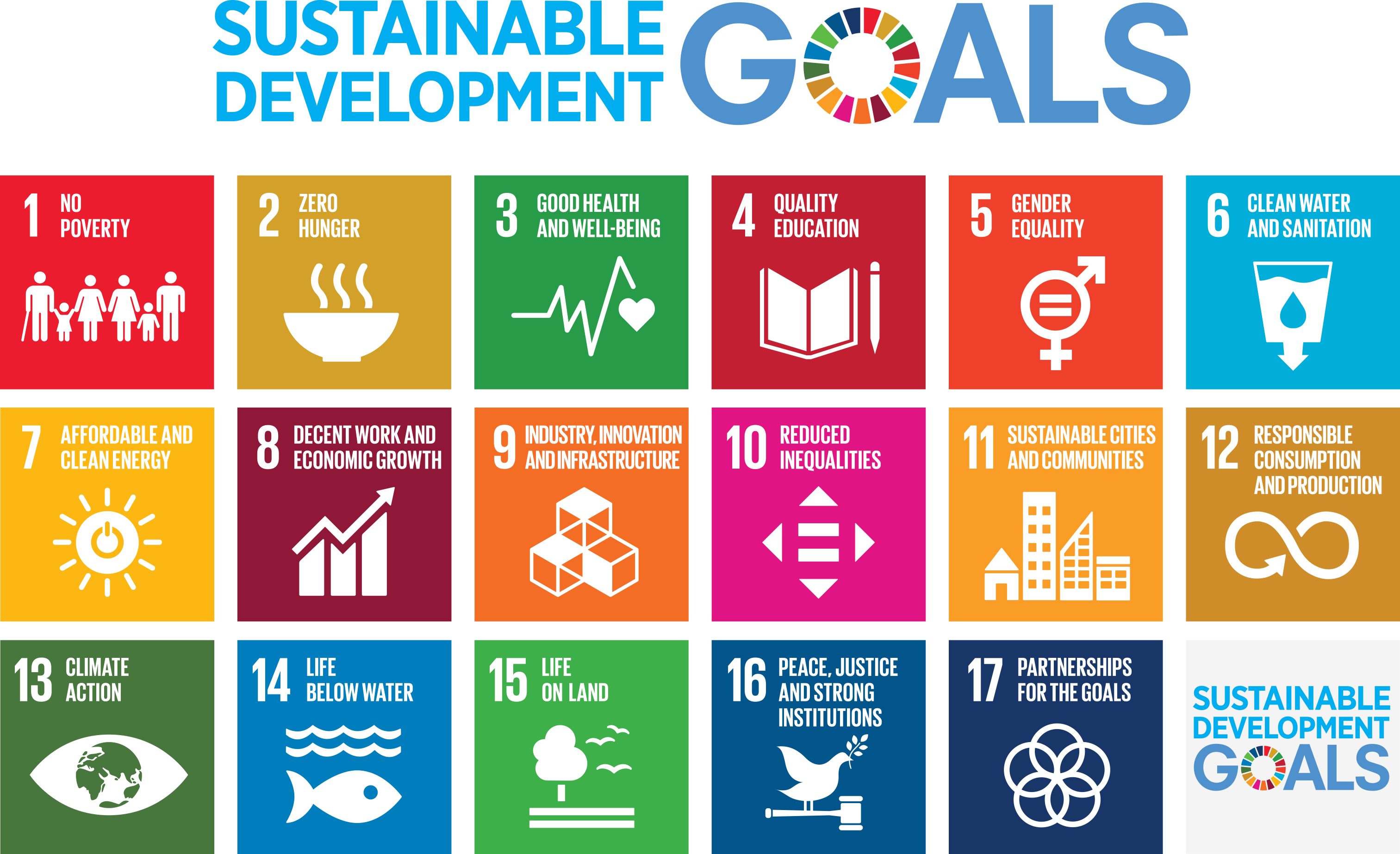
In 2015, the United Nations launched 17 Sustainable Development Goals (SDGs) to end poverty, protect the planet and ensure prosperity for all by 2030. At Drax, improved performance has guided our business purpose for over four decades. We are committed to play our part in achieving the UN SDGs through our operations, the services we deliver to our customers and in partnership with others.

Drax Group has the most significant impact on the Global Goals listed below:

Affordable and clean energy

We provide 6% of the UK’s electricity and play a vital role in helping change the way energy is generated, supplied and used as the UK moves to a low-carbon future. In 2017, 65% of the electricity we produced came from biomass, rather than coal. Our B2B Energy Supply businesses encourage customers to be more sustainable, including through the provision of reliable, renewable electricity at no premium compared to fossil fuel-generated electricity.

Customers

Low Carbon

Decent work and economic growth

We directly employ over 2,500 people in the United Kingdom and United States and their health, safety and wellbeing remains our highest priority. Our B2B Energy Supply business offers energy solutions and value-added services to industrial, corporate and small business customers across the UK.

Society

Industry, innovation and infrastructure

We develop innovative energy solutions to enable the flexible generation and lower-carbon energy supply needed for a low-carbon future. We also innovate to improve the efficiency of our operations and increase our production capacity, notably in our biomass supply chain. Our B2B Energy Supply business offers “intelligent sustainability” and innovative products and services to our customers.

Customers

Low Carbon

Climate action

Our electricity generation activities are a source of carbon emissions. We are committed to helping a low-carbon future by moving away from coal and towards renewable and cleaner fuels, including biomass electricity generation and our planned rapid-response gas plants. We also help our business customers to be more sustainable through the supply of renewable electricity.

Low Carbon

Life on land

We source sustainable biomass for our electricity generation activities and engage proactively with our supply chain to ensure that the forests we source from are responsibly managed. We work closely with our suppliers and through tough screening and audits ensure that we never cause deforestation, forest decline or source from areas officially protected from forestry activities or where endangered species may be harmed.

Low Carbon

Sourcing

Environment

Partnerships for the goals

We engage with stakeholders regularly and build relationships with partners to raise our standards and maximise what can be achieved. Our collaborations align closely with our business, purpose and strategy.

Stakeholder Engagement

Society

Commitment to the UNGC

In 2017, we initiated a process which will allow us to participate in the United Nations Global Compact (UNGC) a global sustainability initiative and we will evidence progress next year. We made progress in preparing for participation outlined in the following sections:

Human rights

We seek to safeguard fundamental human rights for our employees, contractors and anyone that is affected by our business. We ensure that our suppliers apply high standards to protect human rights.

Modern Slavery Statement

Labour

We have policies and standards in place to safeguard our employees and contractors. We respect our employees’ rights in areas such as freedom of association and collective bargaining and we do not tolerate forced, compulsory or child labour. We are committed to providing a safe and healthy workplace for all our people and we strive to prevent discrimination and promote diversity in our workforce.

People

Environment

As a generator and supplier of electricity, we take our responsibility to protect the environment very seriously. We have transformed our generation business and are seeking to further reduce our environmental impact. We focus on reducing our emissions to air, discharges to water, disposal of waste, and on protecting biodiversity and using natural resources responsibly. We have invested heavily in lower-carbon technology as we continue to transition away from coal to renewable and lower-carbon fuels.

Customers

Low Carbon

Environment

Anti-corruption

We do not tolerate any forms of bribery, corruption or improper business conduct. Our “Doing the Right Thing” framework sets out the ethical principles our people must uphold, which is supported by the Group corporate crime policy. Our strict ethical business principles apply to all employees and contractors and we expect the same high standards from anyone we do business with.

Ethics and Integrity

How lasers reduce emissions

Drax laser

Of the air that makes up our atmosphere, the most abundant elements are nitrogen and oxygen. In isolation, these elements are harmless. But when exposed to extremely high temperatures, such as in a power station boiler or in nature such as in lightning strikes, they cling together to form NOx.

NOx is a collective term for waste nitrogen oxide products – specifically nitric oxide (NO) and nitrogen dioxide (NO2) – and when released into the atmosphere, they can cause problems like smog and acid rain.

At a power station, where fuel is combusted to generate electricity, some NOx is inevitable as air is used in boilers to generate heat. But it is possible to reduce how much is formed and emitted. At Drax Power Station, a system installed by Siemens is doing just that.

It begins with a look into swirling clouds of fire.

Not your average fireplace

“Getting rid of NOx is, at heart, a problem of getting combustion temperatures to a point where they are hot enough to burn fuel effectively. Too hot and the combustion will form excess amounts of NOx gases. Too cool and it won’t combust efficiently,” says Julian Groganz, a Process Control Engineer who helped install the SPPA-P3000 combustion optimisation system at Drax. “Combustion temperatures are the result of the given ratio of fuel and air in each spot of the furnace. This is our starting point for optimisation.”

An industrial boiler works in a very different way to your average fireplace. In Drax’s boilers, the fuel, be it compressed wood pellets or coal, is ground up into a fine powder before it enters the furnace. This powder has the properties of a gas and is combusted in the boilers.

“The space inside the boiler is filled with swirling clouds of burning fuel dust,” says Groganz. Ensuring uniform combustion at appropriate temperatures within this burning chamber – a necessary step for limiting NOx emissions – becomes rather difficult.

Heat up the cold spots, cool down the hotspots

If you’re looking to balance the heat inside a boiler you need to understand where to intervene.

The SPPA-P3000 system does this by beaming an array of lasers across the inside of the boiler. “Lasers are used because different gases absorb light at different wavelengths,” explains Groganz. By collecting and analysing the data from either end of the lasers – specifically, which wavelengths have been absorbed during each beam’s journey across the boiler – it’s possible to identify areas within it burning fuel at different rates and potentially producing NOx emissions.

For example, some areas may be full of lots of unburnt particles, meaning there is a lack of air causing cold spots in the furnace. Other areas may be burning too hot, forcing together nitrogen and oxygen molecules into NOx molecules. The lasers detect these imbalances and give the system a clear understanding of what’s happening inside. But knowing this is only half the battle.

A breath of fresher air

“The next job is optimising the rate of burning within the boiler so fuel can be burnt more efficiently,” explains Groganz. This is achieved by selectively pumping air into the combustion process to areas where the combustion is too poor, or limiting air in areas which is too rich.

“If you limit the air being fed into air-rich, overheated areas, temperatures come down, which reduces the production of NOx gases,” says Groganz. “If you add air into air-poor, cooler areas, temperatures go up, burning the remaining particles of fuel more efficiently.”

Drax Laser 2

It’s a two-for-one deal: not only does balancing temperatures inside the boiler limit the production of NOx gases, but also improves the overall efficiency of the boiler, bringing costs down across the board. It even helps limit damage to the materials on the inside the boiler itself.

Thanks to this system, and thanks to its increased use of sustainable biomass (which naturally produces less NOx than coal), Drax has cut NOx emissions by 53% since the solution was installed. More than that, it is the first biomass power station to install a system of this sophistication at such scale. This means it is not just a feat of technical and engineering innovation, but one paving the way to a cleaner, more efficient future.

4 of the most exciting emerging technologies in electricity generation

Petri dish with microbe colony

Since the dawn of the industrial age, the world has been powered by a relatively small set of technologies. The 20th century was the age of coal, but this side of 2000, that’s changed.

The need to curb emissions and the rise of renewables, from wind to solar to biomass, has significantly changed how we fuel our power generation.

Today, some of the world’s most interesting and exciting emerging technologies are those designed to generate electricity.

Microbial fuel cells – harnessing the power of bacteria

Bacteria are all around us. Some are harmful, some are beneficial, but all of them ‘breathe’. When they breathe oxidation occurs, which is when something combines with oxygen at a chemical level, and when bacteria do this, electrons are released.

By connecting breathing microbes to a cathode and an anode (the positive and negative rods of a battery), the flow of these released electrons can be harnessed to generate power. This is what’s known as a microbial fuel cell (MFC). MFCs are used largely to generate electricity from waste water, but are expanding into more exotic uses, like powering miniature aquatic robots.

New developments are constantly expanding the power and applications of MFCs. Researchers at Binghamton University, New York found that combining phototropic (light-consuming) and heterotrophic (matter-consuming) bacteria in microbial fuel reactions generates currents 70 times more powerful than in conventional setups.

Building with sun shining through glass windows

Solar – a new dawn

Solar power may not be a new technology, but where it’s going is.

One of the most promising developments in the space is solar voltaic glass, which has the properties of a sheet of window glass but can also generate solar power.

Rather than collecting photons like normal solar does (and which transparent materials by definition can’t do) photovoltaic glass uses salts to absorb energy from non-visible wavelengths and deflects these to conventional solar cells embedded at the edge of each panel.

Or there’s solar PV paint, which contains tiny light sensitive particles coated with conductive materials. When layered over electrodes you’ve got a spray-on power generator.

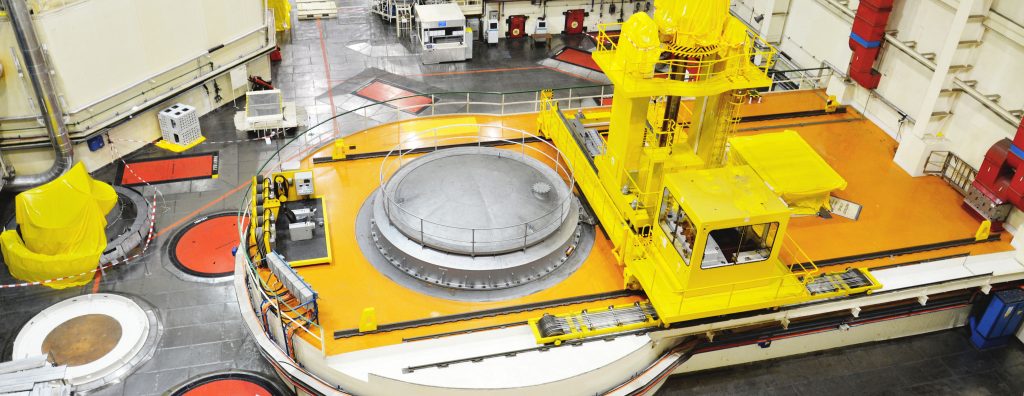
Nuclear reactor hall in a power plant

Betavoltaics – nothing wasted from nuclear waste

Nuclear material is constantly decaying and in the process emits radioactive particles. This is why extremely radioactive material is so dangerous and why properly storing nuclear waste is so important and so expensive. But this waste can actually be put to good use. Betavoltaic devices use the waste particles produced by low-level radioactive materials to capture electrons and generate electricity.

The output from these devices can be fairly low and decreases over long periods of time, but because of the consistent output of nuclear decay they can be extremely long-lasting. For example, one betavoltaic battery could provide one watt of power continuously for 30 years.

And while they aren’t currently fit to work on a large scale, their longevity (and very compact size) make them ideal power sources for devices such as sensors installed on equipment that needs to be operational for long periods.

Ocean wave crashing at shore

Tidal power – changing tides

A more predictable power source than intermittent renewables like wind and solar, tidal power isn’t new, however its growth and development has typically been restrained by high costs and limited availability. That’s changing. Last year saw the launch of the first of 269 1.5 MW (megawatt) underwater turbines, part of world’s first large scale tidal energy farm in Scotland.

Around the world there are existing tidal power stations – such as the Sihwa Lake Tidal Power Station in South Korea, which has a capacity of 254MW – but the MeyGen array in Scotland will be able to take the potential of the technology further. It’s hoped that when fully operational it will generate 398MW, or enough to power 175,000 homes.

We might not know exactly how the electricity of tomorrow will be generated, but it’s likely some or all of these technologies will play a part. What is clear is that our energy is changing.

This is how you unload a wood chip truck

Truck raising and lowering

A truck arrives at an industrial facility deep in the expanding forestland of the south-eastern USA. It passes through a set of gates, over a massive scale, then onto a metal platform.

The driver steps out and pushes a button on a nearby console. Slowly, the platform beneath the truck tilts and rises. As it does, the truck’s cargo empties into a large container behind it. Two minutes later it’s empty.

This is how you unload a wood fuel truck at Drax Biomass’ compressed wood pellet plants in Louisiana and Mississippi.

What is a tipper?

“Some people call them truck dumpers, but it depends on who you talk to,” says Jim Stemple, Senior Director of Procurement at Drax Biomass. “We just call it the tipper.” Regardless of what it’s called, what the tipper does is easy to explain: it lifts trucks and uses the power of gravity to empty them quickly and efficiently.

The sight of a truck being lifted into the air might be a rare one across the Atlantic, however at industrial facilities in the United States it’s more common. “Tippers are used to unload trucks carrying cargo such as corn, grain, and gravel,” Stemple explains. “Basically anything that can be unloaded just by tipping.”

Both of Drax Biomass’ two operational pellet facilities (a third is currently idle while being upgraded) use tippers to unload the daily deliveries of bark – known in the forestry industry as hog fuel, which is used to heat the plants’ wood chip dryers – sawdust and raw wood chips, which are used to make the compressed wood pellets.

close-up of truck raising and lowering

How does it work?

The tipper uses hydraulic pistons to lift the truck platform at one end while the truck itself rests against a reinforced barrier at the other. To ensure safety, each vehicle must be reinforced at the very end (where the load is emptying from) so they can hold the weight of the truck above it as it tips.

Each tipper can lift up to 60 tonnes and can accommodate vehicles over 50 feet long. Once tipped far enough (each platform tips to a roughly 60-degree angle), the renewable fuel begins to unload and a diverter guides it to one of two places depending on what it will be used for.

“One way takes it to the chip and sawdust piles – which then goes through the pelleting process of the hammer mills, the dryer and the pellet mill,” says Stemple. “The other way takes it to the fuel pile, which goes to the furnace.”

The furnace heats the dryer which ensures wood chips have a moisture level between 11.5% and 12% before they go through the pelleting process.

“If everything goes right you can tip four to five trucks an hour,” says Stemple. From full and tipping to empty and exiting takes only a few minutes before the trucks are on the road to pick up another load.

Efficiency benefits

Using the power of gravity to unload a truck might seem a rudimentary approach, but it’s also an efficient one. Firstly, there’s the speed it allows. Multiple trucks can arrive and unload every hour. And because cargo is delivered straight into the system, there’s no time lost between unloading the wood from truck to container to system.

Secondly, for the truck owners, the benefits are they don’t need to carry out costly hydraulic maintenance on their trucks. Instead, it’s just the tipper – one piece of equipment – which is maintained to keep operations on track.

However, there is one thing drivers need to be wary of: what they leave in their driver cabins. Open coffee cups, food containers – anything not firmly secured – all quickly become potential hazards once the tipper comes into play.

“I guess leaving something like that in the cab only happens once,” Stemple says. “The first time a trucker has to clean out a mess from his cab is probably the last time.”

3 ways decarbonisation could change the world

Mitigating climate change is a difficult challenge. But it’s one well within the grasp of governments, companies and individuals around the world if we can start thinking strategically.

On the behalf of the German government, The Internal Energy Agency (IEA) and the International Renewable Energy Agency (IRENA) have jointly published a report outlining the long-term targets of a worldwide decarbonisation process, and how those targets can be achieved through long-term investment and policy strategies.

At the heart of the report is a commitment to the ‘66% two degrees Celsius scenario’, which the report defines as, ‘limiting the rise in global mean temperature to two degrees Celsius by 2100 with a probability of 66%’. This is in line with the Paris Agreement, which agreed on limiting global average temperature increase to below two degrees Celsius.

Here are three of the findings from the report that highlight how decarbonisation could change the world.

The energy landscape will change – and that’s a good thing

Decarbonisation will by definition mean reducing the use of carbon-intensive fossil fuels. Today, 81% of the world’s power is generated by fossil fuels. But by 2050, that will need to come down to 39% to meet the 66% two degrees Celsius scenario, according to the report. But, this doesn’t mean all fossil fuels will be treated equally.

Coal will be the most extensively reduced, while other fossil fuels will be less affected. Oil use in 2050 is expected to stand at 45% of today’s levels, but will likely still feature in the energy landscape due its use in industries like petrochemicals.

Gas will likely also remain a key part of the energy makeup, thanks to its ability to provide auxiliary grid functions like frequency response and black-starting in the event of grid failure.

Renewables like biomass will likely play an increasing role here as well, particularly when combined with carbon capture and storage (CCS) technology.

Overall, renewable energy sources will need to increase substantially. In the report’s global roadmap for the future, renewables make up two thirds of the primary energy supply. Reaching this figure will be no mean feat – it will mean renewable growth rates doubling compared with today.

Everyday electricity use will become more efficient 

The report highlights the need for ‘end-use’ behaviour to change. This can mean everyday energy users choosing to use a bit less heat, power and fuel for transport in our day-to-day activities, but a bigger driver of change will be by investment in better, more efficient end-use technology – the technology, devices and household appliances we use every day.

In fact, the study argues that net investment in energy supply doesn’t need to increase beyond today’s level – what needs to increase is investment in these technologies. For instance, by 2050, 70% of new cars must be electric cars to meet decarbonisation targets.

Infrastructure design could also be improved for energy efficiency – smart grids, battery storage and buildings retrofitted with energy efficient features such as LED lighting will be essential. There’s also the possibility of increased use of cleaner building materials and processes – for example, constructing large scale buildings out of wood rather than carbon-intensive materials such as concrete and steel.

Decarbonisation will cost, but not decarbonising will cost more

The upfront costs of meeting temperature targets will be substantial. A case study used in the report estimates that $119 trillion would need to be spent on low-carbon technologies between 2015 and 2050. But it also suggests another $29 trillion may be needed to meet targets.

However, failure to act could mean the world will pay out an even higher figure in healthcare costs, or in other economic costs associated with climate change, such as flood damage or drought. Therefore, the sum for decarbonisation could end up costing between two and six times less than what failing to decarbonise could cost.

On top of this, the new jobs (including those in renewable fuel industries that will replace those lost in fossil fuels) and opportunities that will be created between 2015 and 2050 could add $19 trillion to the global economy. More than that, global GDP could be increased by 0.8% in 2050, thanks to added stimulus from the low carbon economy.

Achieving a cleaner future won’t be easy – it requires planning, effort, and the will to see beyond short-term goals and think about the long-term benefits. But as the report demonstrates, get it right and the results could be considerable.